

Bonnie Schroeder started telling stories in the Fifth Grade and never stopped. After escaping from the business world, she began writing full-time and has authored novels, short stories and screenplays, as well as non-fiction articles and a newsletter for an American Red Cross chapter. Her debut novel, Mending Dreams, was published by Champlain Avenue Books.
Science and I have never been good friends—except for high school physics, which was very cool because we learned how to make a hydrogen bomb. And lest this set off any Homeland Security alarms, I write “learned how to make” very abstractly here. It’s not like they gave us a recipe; the teacher merely explained the difference between fission (atom bomb) and fusion (hydrogen bomb), but my 17-year-old brain found it fascinating.
Flash forward several decades and I began work on a new novel, about a woman who suddenly and inexplicably begins growing younger. This has nothing to do with hydrogen bombs, but rather than writing the story as a fantasy—a gigantic case of wish fulfillment—I started asking questions. Could such a thing happen? How?
And this, inevitably, led me back to science.
Full disclosure: I did not find the Fountain of Youth in my travels, but I did learn more than I’ll ever need to know about genetics and cells and chromosomes. I’m not going to lay all that out for you, but I will share a few of my research techniques. Sooner or later, most writers will find they need knowledge, scientific or otherwise, that they don’t yet possess. Here’s how I went about getting it.
- I did some general reading first
I began my quest by reading several articles about the work doctors and scientists are doing to slow the aging process and extend our healthy lifespans. I noticed several names popping up over and over. Googling these names, I discovered contact information for several scientists—at places like Harvard and the National Institutes of Health.
2. I was audacious
I sent emails to several of these doctors and scientists, explaining my project and shamelessly asking for a few minutes of their time to review the initial premise I’d constructed and tell me if it seemed totally preposterous.
Most of them never replied, but three did, and I learned something from this exercise: Scientists are really nice! They like to be helpful and to share their knowledge, and they can talk in plain English when they want to!
The first scientist I spoke with—via Skype, at his suggestion—reviewed my premise, diplomatically explained it was, in his words, “too specific and too unbelievable,” and sent me on a quest to learn about epigenetics (for the uninitiated, this is “the study of changes in organisms caused by modification of gene expression rather than alteration of the genetic code itself.” Got that?) He felt the clue to my premise lay in this area.
- I then read more specific material
My next stop was Amazon, to buy a book called Genetics for Dummies. Yes, there actually is a book by that title. I understood little of what I read, but it ga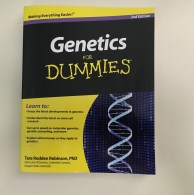 ve me the vocabulary I needed to comprehend the technical articles I encountered as I chased down epigenetics and followed the threads that spun out from there.
- I was flexible
One of the scientists I contacted responded that she didn’t work with writers as a general practice, but she gave me the name of another scientist who was not on my initial “hit list.” This kind man turned out to be a goldmine of information and enthusiasm and not only gave me notes on my story’s outline, but also offered to read the narrative once I get to the point where science enters the picture and tell me if I got the jargon right.
- I was respectful of my sources’ time
This goes without saying, of course. Experts are busy people, so if one of them suggested a time and a method of contact (both Skype and teleconferencing seem popular), I was prepared to cooperate, and I was punctual.
- I expressed my gratitude often
There are not enough words in the language to thank these fine people who generously took time from their work to help a struggling novelist. I did thank each of them copiously during our discussions, and of course I will include a big, gushy acknowledgement in the book when it’s published. Because I was dealing with scientists in government and academia, I made sure to get their permission to mention them, because this won’t be the usual place where their name appears. And of course they will all get signed copies of the book, because without them it would have been banished to that box in the garage with all my thwarted projects.
Now I have to write the darned book, of course, and as we all know that’s a long and winding road itself. I have extra motivation on this particular trip, however, because I want to apply the knowledge I gained from my new scientist friends and prove their time wasn’t wasted in talking with me.
Has anyone else out there ever tackled a subject way beyond their area of expertise? How did you go about it? How did it turn out?


You must be logged in to post a comment.