Retirement?

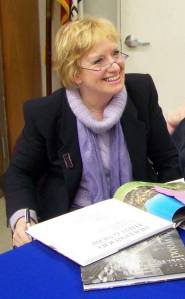
by Linda O Johnston

Do writers ever retire? 

Oh, I know what retirement is. I used to be an attorney and practiced law for quite a few years. Most of that time, I was an in-house real estate attorney for Union Oil Company of California, but eventually Unocal wound down, selling off its assets. When I left, I continued to practice real estate law, primarily assisting other attorneys, but I never took on another actual job. And eventually, I allowed my law license to become officially inactive. Retirement of sorts. 

I was writing all that time, and even before that. I started my first story as a kid and kept on going. Now, I’m no longer a kid, and I’m a retired attorney. But will I ever retire from writing? 

Oh, I’ve slowed down some, but I still have a couple of deadlines to meet. And when I think about stopping, I remind myself that I’ve already been researching a new idea for quite a while and that keeps going. I kind of know where I’m going with it. And yes, it will require—what else?—more writing. 

So, retirement? I doubt that will ever be on my schedule. I might get even slower, perhaps. Spend more time researching than writing. But there’s always a computer around, as well as my ideas. 

How about you, other writers reading this? Are you slowing down? Will you ever retire?

A WORLD OF BOOKS…

by Rosemary Lord

Books. That’s what most of us aspire to write. And most of us writers read – a lot!

As Cicero said: “A room without books is like a body without a soul.”  I wholeheartedly agree!

Baudelaire wrote: “A book is a garden, an orchard, a storehouse, a party, a company by the way, a counselor, a multitude of counselors.”

And J.K. Rowling believes that “something magical happens when you read a book.”

While Honore de Balzac wrote, “Reading brings us unknown friends.” How true.

And I think that the books people have in their homes says a lot about themselves.

I remember visiting Rudyard Kipling’s house, Bateman, in Sussex, England. The 17th-century, wood-paneled house is filled with souvenirs from his travels to India and beyond, his dark, imposing library has floor-to-ceiling shelves crammed with encyclopedias, travel books, biographies and local-culture tomes from his exotic wanderings.

A much brighter house further west in England is Agatha Christie’s beloved Greenway House, situated in a rambling woodland garden on the River Dart in Devon, England. Like the rest of the sprawling house, Christie’s library is bright and sunny. The cream-colored shelves are filled with an array of crime-writer’s reference books of deadly poisons, murder weapons, infamous murderers, biographies as well as her travel pursuits. There are many books on archeology, Egypt, Syria and the Middle East. Christie accompanied her archeologist second- husband, Max Mallowen on his trips to the Middle East. She would catalogue the finds, methodically taking notes which would often later be used in her novels, such as ‘Death On The Nile.’  But in that sunny library, the most admired books are the shelves brimming with copies of all her own novels in their original or amended titles in English and a host of other languages.

Whilst most of us don’t have room in our homes for our very own designated ‘library,’ we do have bookshelves, or places to store or display books.

On the other end of the spectrum from Agatha Christie’s spacious, airy and very comfortable library, my own ‘library’ in my small Hollywood apartment is simply five bookcases in my living room crammed with my life readings.

The shelves are filled with books on the Golden Era of Hollywood and the history of Los Angeles. I have all of Agatha Christie’s novels, various mystery writers both past and present and a vast selection of ‘cozies.’ I have a lot of books written by fellow author friends. Of course, there are the mystery-writers’ required reading: ‘How to commit a murder’ books, forensics, poisons and other reference books.  On my bedroom shelves are my escapist novels by Rosamunde Pilcher, Victoria Hislop, Santa Montefiore and Paul Gallico.

Most of my writer friends have fascinating collections of murder/mystery/crime books, romance-novel or science-fiction ‘How-to’ publications, as well as assorted guides to publishers, literary agents, self-publishing and more. I have a friend who has wall-to-wall shelves filled with books about every musical ever produced, books of lyrics, sheet-music and musical biographies. Guess what his interest is?! Others have an array of nutrition, cook-books, photography or – like my late-husband – motor-racing or herpetology: the study of snakes.

The contents of people’s bookshelves reveal their focus in life: be it travel, biographies, photography, bird-watching, theatre or needlework.

I recall a brief visit to a young wanna-be Hollywood actress’s apartment. It was sleek, cool and very trendy, her wardrobe similarly up-to-the-minute. But there was not one book – or even a magazine – in the place. “Books?” she shrugged dismissively, “I’m not interested.”

 I still reel with shock at that image! (She only booked a couple of small non-speaking acting jobs then disappeared!)

Conversely, when my family and I stayed in an old house in Portugal, my room had bookshelves crammed with books on Mussolini, Stalin, Hitler, ‘Mass Murderers of the World,’ Nazis, World Wars, battles, ‘Mr. Nice: the international drug smuggler,’ Napoleon, Fidel Castro, ‘The Bin Ladens,’ ‘The Mind of a Murderer,’ and some Lee Childs’ Jack Reacher novels for light reading. All in Portuguese. There was a large, framed poster of a hand-drawn man’s face with several stab-marks, red slashes and undecipherable scrawled slogans. I quickly removed this and hid it behind an armchair. But the bed was very comfy and, surprisingly, I slept better there than I had in a long time.

One of the other bedrooms had a brighter selection of Hitler and Nazi books, mixed in with Winston Churchill and world political leaders. All in Portuguese. Another room had some travel books. How did that person fit in?

The general décor of this 1887-built house was grand but somber. The walls in the rather grim, marble-floored entrance lobby, and the walls of the sweeping staircase were filled with neat rows of gilt-framed, black-and-white etchings of various battles, warriors, death, solemn religious figures and crucifixions. So were the walls of the formal front parlor and the even-more formal dining room.  The walls in each of the bedrooms and the long corridor leading to one of the spacious, marble floored bathrooms were similarly adorned.  All the drawers throughout the house were locked. Even the Canaletto print over the fireplace was mournful and colorless. And so the selection of the books in this rambling old house was not surprising.

I remember my dad’s bookshelves were full of mysteries and police stories. His father had been a detective in the Bristol Constabulary. Dad had his Agatha Christie selection, of course. But his favorites were Arthur Conan Doyle, G.K. Chesterton, P.G. Wodehouse and George Simenon – which he read in English and the original French.

Mum, on the other hand, had favorite authors that included H.E. Bates, Laurie Lee, F. Tennyson Jesse (A Pin to See the Peep Show), Paul Gallico, John Steinbeck and W. Somerset Maugham, with whom she became regular ‘pen pals.’

I’m very blessed that I grew up in a book-loving family. For as long as I can remember, so many family conversations have turned to books old and new. Our mum wrote magazine articles, and all of my siblings have always been involved in the book or writing world in some way.

So, I guess they’re in my blood. Books, that is.

So, what books would we find on your bookshelves and what does it reveal about you?


………………………………………


FOR THE LOVE OF (OUR) WORDS

by Miko Johnston

Whenever I read books on my Kindle, I find sentences, paragraphs, and dialogue highlighted by readers, in some cases by a multitude of readers. Lines that speak a certain truth to them, that are beautiful to read, or capture an emotion that hovers near the surface of our consciousness. Lines that express what many of us feel or know to be true, but we can’t articulate because we can’t say it as well, or at all.

Every time I write something, whether it’s a post for this blog, a correspondence, or an entire novel, I always have a line or two that makes me proud. Something I feel not only encapsulates what I want to say, but does so in a way that goes above and beyond what I normally write. Genius may be too strong (not to mention immodest), but the words raise the bar from good to superb, in my opinion. They capture a small moment in life, a bit of character. They illustrate what I mean to express in a unique, visual, and impactful way. At least, in my eyes.

Alas, I rarely hear others who’ve read the words and phrases I most prize and commended them. Don’t they get it? Or am I wrong? It frustrates me sometimes.

I always want readers to enjoy my work, page by page, cover to cover, but I also want them to savor what I consider to be extra-tasty bits. I can point to at least one example, and often more, in each of my novels, but I’ve yet to see them mentioned in reviews, or highlighted, figuratively or literally, throughout the pages. Even when I’ve repeated some examples of these lines and dialogue from an earlier Petal In The Wind novel, using them as flashbacks in a later book. Even when I’ve used a few examples in my posts on this blog to illustrate a point.

Okay, sometimes my writers group members have praised a particular line, but we always have to say something complementary. It might be like wine tasting – after sampling them all, the one you like best may not be great, just better than the rest.

Am I alone in thinking this? Do you ever wonder if readers have the same reaction to the lines you prize most as you? If they remember the passages you believe particularly memorable, repeat the lines you consider most quotable? Does it matter to you?

Miko Johnston, a founding member of The Writers in Residence, is the author of the historical fiction series, “A Petal in the Wind”, as well as a contributor to several anthologies including the about-t0-be-released “Whidbey Island: An Insider’s Guide”. Miko lives in Washington (the big one) with her rocket scientist husband. Contact her at mikojohnstonauthor@gmail.com

An Interview with Author, Maureen Jennings

By Jill Amadio

It hasn’t yet run as long as Agatha Christie’s “Mousetrap” in the West End, the theater district of London, U.K.,  but Maureen Jennings’ Detective Murdoch television series is well on its way to a record fourteenth year for the mystery author. A “Brummie” from Birmingham in the north of  England who emigrated to Canada as a 17-year-old and now lives in Toronto, she lends her British roots to one of her three series, the World War II DCI Tom Tyler cases, setting the books in the market town of Ludlow, in the Shropshires, U.K.

“I visit Ludlow annually”, she said a few days after being honored at the 2019 Left Coast Crime conference in Vancouver, British Columbia. “I love being in Ludlow. I wanted to write the Tyler series there because of the war years, which affected people so deeply.”

Her first foray into creative writing was three stage plays, all of which were produced, although she says, at very small theaters. She then turned to books.

As one of the top and most popular mystery authors in Canada, the Jennings’ Murdoch Mysteries (titled The Artful Detective in the US) was brought to the viewing public first as three Movies of the Week and then as a television series. Set in Toronto in Victorian days, ‘When people tended to be much more aware of good manners and polite behavior,’ the crime novels number eight so far, although the TV episodes number many more. A team of six writers creates the scripts, with Maureen writing one show a season and acting as creative consultant for the others.

After ensuring that the Murdoch books were pretty well established, but still writing a couple more later, Maureen launched the private investigator Christine Morris series. Although its future as a film is currently in limbo, she notes.

Another project, a drama titled  ‘Bomb Girls,’ was a concept derived from a Tom Tyler mystery and has become a TV series, written by Maureen with a partner. Thus, Maureen successfully mixes stage, screen, and literature. Indeed, she is regarded as a national treasure in Canada and has won so many literary awards in North America and in other countries, that it staggers the mind. The Toronto Star newspaper named her as one of 180 people who have influenced the history of their city through her mysteries.

So who is Maureen Jennings?

Married to photographer Iden Ford, who is also her literary agent, she has a constant reminder (at her feet) of her fictional Toronto detective. A dog called Murdoch. ‘He requires a daily morning walk, and that sets me up beautifully. I come back and can get going. In the evenings, I have less energy and usually use that time to read and do research.

As regards the books, I wanted to commune with ghosts of the past in Toronto, which has largely disappeared, and [back then] it was easier to include forensics, which was not as advanced as it is now.’

All the Brits from the Golden Age were and still are her inspiration, especially Arthur Conan Doyle and John Le Carré.  ‘I have always loved reading mysteries. Fell in love with Sherlock, still am. I like the notion of two-for-one, that is, you get a good story and learn something at the same time. For me, that’s typically history, which I love,’ she said.

Maureen calls getting her first book published a stroke of luck when Ruth Calvin at St Martin’s Press took a look at her manuscript at the urging of a friend, and bought it. Since then, she has mastered just about every writing discipline: books, scripts, short stories, and poetry. Yet this woman who streams so many, many words didn’t start out to be a writer. She studied psychology and philosophy at the University of Windsor and received an M.A. in English Literature at the University of Toronto.

She turned to teaching at Ryerson Polytechnic Institute, then practiced as a psychotherapist. Maureen believes that her expertise in that field has helped her create characters that are believable and their motives credible, although keeping them straight requires making careful notes. Her latest is the PI Charlotte Frayne series, starting with ‘The Heat Wave,’ which launched in March 2019 and brings the character into contact with Murdoch’s police detective son.

Her writing process involves outlining in detail. ‘That might change in small ways as the book grows, but I have found that if I don’t do that, I waste a terrible amount of time. I know some writers say they just start off, but I couldn’t imagine that. It would be like getting in the car and saying I’m going to drive somewhere now, but I don’t know where exactly. I’m not that kind of traveler. I have to have the hotel booked.’

A lover of history and a meticulous researcher, Maureen delves into primary sources, including newspapers and Coroner and Chief Constable reports, bringing her skills in particular to one of her latest mysteries, ‘A Journeyman to Grief,’ a recounting of life in the small black community in 19th century Toronto, much of it unknown to most of the city’s present residents.

Maureen’s biggest challenge?

‘Making sure Tyler didn’t look and sound like Murdoch. As for themes, they sort of come to me unbidden as I am researching. For instance, I was recently reading about Safety in the Workplace and how late that was in being established. That immediately became the focus of my next book, which is set in 1936.’

Any advice for first-time writers?

‘Oh dear. I know how hard it can be and how easy it is to get discouraged. But I absolutely believe that passion plus preparation leads to opportunity. I love horse racing and often think of it as a metaphor. Most of the horses and jockeys are more or less of equal ability, but the ones that win do so because they seize the opportunity when the gap opens up ahead of them and they gallop through. They’re ready. They’ve done their homework.

Also, I don’t think you should ever stop studying the craft, whether it be novels or theatre or film.’

AI as a Beta-Reader?

by Jill Amadio

Many of my writer friends are “gung-ho enthusiasts” of Artificial Intelligence,  or AI. They run their projects through, often chapter by chapter, to test their writing skills.

When the results come through, there is great interest in what the non-human synthetic experts have to say. While AI is a huge help, I suppose, if we need to be assured that our style and other fundamentals of our writing are up to par, does AI also diminish our confidence in our creativity?

Why do we trust an automatic machine to judge our writing rather than a person with a brain, a soul, and emotions, muddled as they may be? Why do writers believe that feelings expressed by AI have more depth and provide more compelling characters than those from human intelligence?

Certainly, we often feel a need for support when we aren’t sure we are on the right path with our plots and settings, but research can frequently send us on fascinating journeys when we use that old-fashioned tool.

Then, too, a friend might shoot down our joy by criticizing work we’ve spent weeks creating, but at least we can open a debate with said friend to challenge their viewpoint.

I read online that writers should not wait until a first draft is completed before checking it through AI. One should pass our writing chapter by chapter or paragraph by paragraph if we want our books to sell well.

However, brainstorming with AI can be a revolving door if we rely solely on it to give us feedback with which we disagree. We already have Spell Check in our Word program, and there are also grammar sites if we are unsure. Yet, do we want that advice?

I recently edited a book for a client from Liverpool, U.K., who writes in the way he speaks, a style that is occasionally ungrammatical but beautifully reflects his upbringing in a poverty-stricken family. He writes honestly and in detail about his criminal activities before reforming and brings the reader into his world in a personal, delightfully unself-conscious and un-generated-by-AI manner. His style takes us into heartfelt statements about his culture, his bitterness growing up, and how he turned his life around.

His book doesn’t flow strategically or logically. Instead, it takes us on a journey most of us could not imagine but feel compelled to follow to its happy ending. Would AI have come up with anything as mind-blowing as this man’s true story? Granted, AI is consulted mostly for its judgment of our writing, even its relevance to a central theme, but it seems to create doubt rather than determination to follow our own path.

All of which leads to the question of who is actually writing AI’s advice and training AI, and who is instructing us with strategic decisions we are told to make. Perhaps the AI originators are best-selling authors. Maybe they are paid a royalty for each bit of AI advice activated.

I read that AI can be biased and can misrepresent your writing style. It can tell you to make changes with which you disagree, but you can’t help believing that AI knows best.

Seems to me that human creativity is one of the most perfect parts of our mind, albeit for good or evil, and that if AI flags it, then we follow patterns and look twice at what we are thinking.

It also appears that AI can figure out if you are falling into the trap of writing patterns that annoy readers or structures that don’t make sense. All of which leads us to wonder if we could be accused of plagiarism if two or three writers receive the same rewriting from AI. Maybe we need to become our own amateur detectives to discover such an activity, and instead of fact-checkers, we need to become text-checkers for artificial intelligence.

I admit that AI is an excellent tool for writers who dither and are unsure of their characters, plots, and settings. It is normal to want an outside opinion, but there can be a nagging worry that AI cannot truly understand where our plot is going, or how characters can change as we write. Taking the guesswork out of our plots, sub-pots, and themes can lose us readers for future books in our series, and perhaps even prompt an admission that we used AI as an assistant to write the book in a Disclaimer or Introduction.

In conclusion, I am honestly pleased that some of my writer friends enjoy a foray into AI. I just ask them to be transparent and honest about it.