
The last few items in this multi-paged blog for your consideration.
by Gayle Bartos-Pool

Point #9
- Your Inner Ham. This one might be scary, but if you really want to cut the mustard as a writer, you have to be able to stand up in front of strangers and read your work out loud.
If you haven’t passed out from the mere thought of that, you might think, “Oh, how hard can that be?” Go ahead and try it. Have some friends watch you and honestly critique you. Try reading stories to a children’s group. If they start laughing or fall asleep, maybe you should improve your technique. If you mumble in a monotone with your head down, it’s time to take a Toastmasters course or maybe acting lessons.
Reading to an audience is more than saying the words out loud. You must be able to project to the back of the room. You should use varied tones and moods. Your face should suggest the different characters you are portraying. In other words, you should give a performance.
Not all authors are good at public readings. Many mumble. Others stumble over their own written words while maintaining a monotone throughout the entire read. That is telling the audience that there is nothing exciting happening on those pages even if the selection would have been interesting if it had been read with the proper emotion and gusto.
Many books are sold at author readings when the author makes his or her book sound like a performance. It can be done, with practice. Read your own work out loud. It will help you discover some great sections to read to an audience.
It’s actually a good strategy in writing to open your book or short story with a bang. It grabs the attention of the reader who might be a potential agent or editor. And the guy in the bookstore might buy your book if the opening grabs his attention. So when you are reading to an audience, starting at the beginning is always a plus. But even if your opening isn’t a grabber, pick an exciting part to read and keep going over it until it sounds like a stage performance.
As a bonus, while still in the editing phase of your writing, try reading your work out loud. You will detect mistakes that you had overlooked while just reading the words off the computer screen. To kill two birds with one stone: record yourself as you read. You will hear your literary errors and you can judge your own presentation.
Remember: It is a performance. Lights. Camera. Action.
Point #10
- “Mr. DeMille, I’m ready for my close-up.” If you have anything published, even self-published, do TV interviews to get face time and experience. Local TV stations in many areas do segments on local authors. Public access stations do round-tables with authors. Call them up; tell them what you have done. Suggest doing a panel of several of your writer friends for their station. It never hurts to ask.

Point #11
- Don’t Drop the Ball Now. If you have gotten this far, take time to update your website, keep people informed on your Facebook page, or Twitter your latest event. Let your targeted audience (chefs, lawyers, senior citizen groups) know what you are doing. Visit all those Internet communities you have joined and let them know what you are up to. Leave a comment on a fellow writer’s blog when they have a new book out. Review somebody’s book on Amazon.com. (Wouldn’t you like somebody to do that to your book?)
 As you learn new skills, like doing a TV interview, let people know about it on your website. Polish old skills. (You can always improve.) You should have learned a hundred great writing techniques and mistakes to avoid in that writing group you joined. (We can all learn from other’s mistakes as well as our own.)
Update your short, one-paragraph biography often, so when someone is doing publicity on you (or you are sending out your own Press Release) you have the latest news on yourself at hand. Something you did in college probably won’t interest anybody ten or fifteen years later, but guest blogging on someone else’s blog is Big News. The fact you wrote poems in high school isn’t very news worthy. The fact you interviewed a fellow writer on your blog is exciting. Read other people’s biographies on their websites. You’ll spot the pro from the novice by what the pro leaves out.
Point #12
- Go for the Gold. Once you have a book in print, try creating a video book trailer for your website. Windows Movie Maker software can help you turn out a mighty nice one. Hey! If you have done all the previous points, you can do the book trailer. It’s the latest thing out there. Other writers are doing them.

Tough love segment: Agents and publishers are looking for any excuse to say “no” to you and your manuscript. But if you have most of these twelve bullet points mastered, they are going to find it hard to turn you down. You show initiative and you follow through. That means they won’t have worry about expending time and money on a newcomer. (Let them spend their time and money when your efforts pay off and you have a Best Seller.) Do your homework now and maybe your publisher will spring for the book trailer and book tour later.
A Final Thought
You aren’t alone out there. There are plenty of people who are at the same level in their career as you. There are some a little further along, some even more of a newcomer than you are. Writers today are learning that they need to master these same silly skills in order to get themselves noticed. Why not you?
These bullet points are meant to give you a heads up in this business and to urge you learn them, try them, and to get your name plastered all over the Internet along with your terrific face. You have a vested interest in getting a book published and selling those books. You are also the best salesman of your work. Nobody knows you like you.
Use all these “platforms” to climb up to the top of the heap and shout your name from the rooftops. Each one will make you a better writer and more interesting to an agent or publisher.
All the best with your writing career.
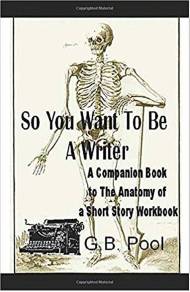
If you found these various postings about Building a Platform helpful, you might like to know where they came from. These helpful hints as well as a bunch of other timely tips can be found in a little book called So You Want to be a Writer by Yours Truly. There are also a few short stories for your reading enjoyment in the rather thick book. It’s a companion piece to The Anatomy of a Short Story that came out several years ago. I do love to teach. Write On!


 In the spring of 2010, just six months after I published
 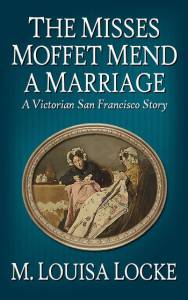 For example, in Maids of Misfortune, I had created two elderly dressmakers who lived in the O’Farrell Street boardinghouse. One of these sisters talked all the time, the other never said a word. And that was about all a reader learned of them in that first book. But I had developed a whole history for them and I wanted my readers to learn that backstory. So, in my second short story,
 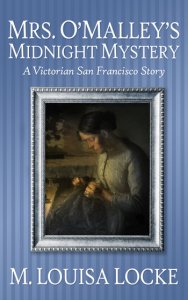 Finally, I write these stories so I can explore historical themes in more detail. In
 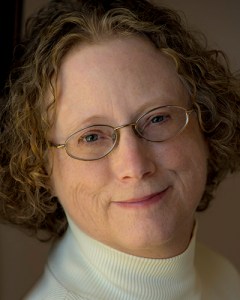 Louisa Locke, a retired professor of U.S. and Women’s History, is the author of the USA Today best-selling cozy Victorian San Francisco Mystery series. This series features Annie, a young boardinghouse keeper, and Nate Dawson, a local San Francisco lawyer, as they investigate crimes with the help of their friends and family in the O’Farrell Street boardinghouse. Not content with just exploring the past, Locke also helped create an open source, multi-author science fiction series called the Paradisi Chronicles. You can find out more about Locke’s books from both of these series at
 I love to write. I love to write novels that contain romance. I love to write novels that contain mystery or suspense.
 My kind of story, and I follow their bible and have my characters interact with the protagonists of other Colton stories in the various mini-series that are part of the Colton series. When I write stories that are all my own I fit a lot of dogs into them, and occasionally have been able to slip one in to a Colton story.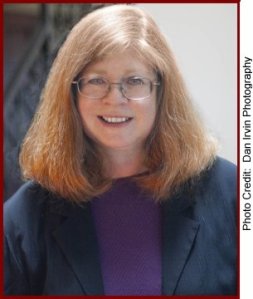


 During the Covid 19 enforced solitary confinement, my writing methods have changed somewhat. Partly because, after all the Woman’s Club administrative work,
  So now, sitting in my newly arranged office space, with smartly labeled files and clearly focused folders – I can’t find anything. I do a lot of research and have copious folders of notes, print-outs and clippings; now all neatly categorized. Normally, when I sit at my desk in my very small ‘office’ (in reality, a corner of the living room) I can reach my arm out and grab the stack of papers I need. Or reach the other arm out and grab the specific notebook. Everything’s at arms length and very convenient. Except now I have to stop and think “which arm?” “Is it to the left or to the right or behind me? My color-coded files are in upheaval because I have re-arranged them methodically. But my creative mind doesn’t work that way. Now I have to rethink my steps as to why I re-filed things and where my logic was going with the new system.

 After ordering restaurant take-out, my husband drove there to pick up dinner. It would take him almost an hour, leaving me time to explore a newly bloomed section of our garden, planted with rhododendrons. If you’re not familiar with the plant, they’re like azaleas on steroids, with flower clusters, some as big as your face, nestled against dark green leaves. Some grow as tall as trees; others have been pruned knee- or chest-high, their blossoms a riot of pinks, fuchsias, purples and reds.
 In the shelter of the garden, hidden beneath a canopy of lavender and laurel trees, I sauntered the path that wends through the rhododendrons. As I neared the end of the path, where it rejoins the lawn, I spotted something crescent-shaped sparkling on a branch. A closer look revealed a young bird, judging by its downy feathers of gray, which blended in with the bark. She (as I later discovered) had a curved beak, bright yellow, which stood out like a slice of sunlight in the darkness of the overgrowth.
 I so wanted to hear her sing, but she didn’t. Silently she sat there, occasionally darting her head, watching everything around her as I watched her, delighting in her curiosity, her seeming amazement with the world she’d recently entered. She hadn’t mastered flying yet. Her wings fluttered to help her balance on the branches as she hopped along, taking in the sights and sounds all around her. I’d been feeling blue awhile, in a rut. All that changed with my encounter with this fledgling. I found myself transfixed by her utter joy, and that joy flowed through me for the first time in months.

 The Writers in Residence
You must be logged in to post a comment.