A DILEMMA OF BOOKS… 

by Rosemary Lord

There I was, puffing and panting in the 90-degree sun, lugging box after box of books out to the car….

But I’m getting ahead of myself.

I have always felt that one can tell a dedicated writer by the books with which they surround themselves. Although I know that nowadays, if you’re technically and digitally proficient, you can do and find everything on your computer or even on your phone.

But it’s not the same. Not for real writers! You need to READ books to be able to WRITE books. Real, actual books, that is – with carefully designed crisp paper pages, glued and sewn together – or however they do the spines now. Enticingly designed covers, beautifully matched colors, and perfect fonts. There’s a lot of work that goes into every book.

Many of those who dedicate themselves to the magical world of writing have fascinating, eclectic book collections.

I recently culled 432 books from my overwhelming assortment. And I still have many left!

How did it ever come to this?

In my defense, as a book lover, I began with just a few small (only 6”x4”) volumes I brought with me when I moved here from England: ‘Poetical Works of Tennyson,’ some Edgar Allan Poe tales, Poems of Elizabeth Barrett Browning, and a worn 1915 printing of Gene Stratton Porter’s Girl of the Limberlost, that I knew would not take up much space.

Over the years of attending so many writers’ conferences all over North America, I kept those heavy bags filled with the new books publishers gave us.

To support my fellow writers, I loyally bought the latest book by the authors I knew.

I’m a sucker for an appealing jacket cover, too – especially when Amazon made special offers so affordable, as a way to discover new writers.

I still buy books for my writing research. I have a great collection of books on Old Hollywood. And then there was my late husband, Rick’s, assortment of books on motor racing, motorbikes, animals, snakes (don’t ask!), music, finances, and the Stock Market.

And so my library grew.

But my small apartment didn’t.

I had seven tall bookcases crammed, with more books stacked on the floor in front of them.

Time for a serious cull.

I kept books that fellow writers had inscribed to me. I boxed up Rick’s books. I found several duplicate copies of paperback mysteries and ‘cozies.’  Out they go.

Of course, I kept my rare and special Hollywood books. But I was strong in my intent.

No, it’s not: ‘make room for more books,’ I tell myself!

But then, knee deep in book piles, I realized they had to go somewhere.  Most of the charity shops where I donate clothes or household items are not taking any more books.

Hmmm. Where?…

Then I remembered The Last Bookstore. Years ago, my brother and I had schlepped half a dozen bags of books there to donate. It is downtown Los Angeles, at 453 Spring Street in an old bank building with marble columns and vaults filled with vintage books.  Owner Josh Spenser has created an intriguing world of not just shelves and stacks of books, but enthralling shapes – a tunnel of books, higgledy-piggledy towers of hardbacks and paperbacks, with comfy armchairs and leather couches to sit and gaze and get inspired by the fantastical displays of books, vinyl records, gargoyles, and dolls.
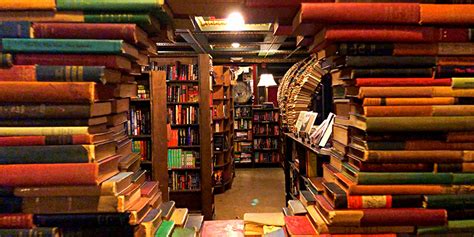
The Last Bookstore has a free community service called Re-Book It: to ensure that books don’t end up in landfills. They will pick up your unwanted books and find new homes for them, dispersing books to schools, charities, hospitals, and retirement homes. Currently, they’re focusing on getting books into the hands of children and families who lost homes in the L.A. fires.

“Hooray!” I had found such a great solution. Then came the fun task of packing the books in boxes and bags, counting and labeling them. Of course, lots of lifting is involved, squatting and bending, too. Quite tough on the knees and the back! But I reminded myself that I was getting a free workout! And lots of empty apartment space.

The 432 books packed into 24 boxes and bags were amassed by the front door, ready for collection. Then, I learned that Re-Book It was short-staffed and could not complete the pick-up that day.

“Why don’t you bring it to our store on Lankersham?”

“Okay,” I foolishly agreed, anxious to complete this project.

It was about 8 boxes in that I began to regret my fervor of “I can do this!”  The books were VERY heavy to carry across the patio, to the front lobby, and then outside to my car. What was I thinking?  And it was the hottest day of the year – of course. Over 90 degrees.

I had to stop every so often, sit down with a large glass of water, and cool off in front of a fan.

But once my car was overstuffed with boxes and bags of books, I made it safely to the Valley location of The Last Bookstore on Lankersham Boulevard, just past Universal Studios.

Just as the Downtown store was a magical, mystical store – so is this one. Odd, beautiful old doors, parts of wonderful, vintage walls surrounded by an eclectic mix of books and, well, just fascinating ‘things’ to look at, curios to examine. And, of course, books: from best sellers to first editions. A book-lover’s treasure hunt. Had I not been so exhausted carrying all those books earlier, I could have easily spent an hour or three browsing there.

I was very happy that my books were going to such a lovely new home. And I returned to my apartment happy I had made more space, promising myself not to fill it back up with more books. I wonder how long that promise will last!

So, this is where we came in. My exhausting but therapeutic adventures in book culling ….

Have you ever tried culling your book collections?

…………………….

GROUP QUESTION #3 – Settings & Research, Where & How Much?

By WinR members & guests

  1. Where & when do you set your stories? 
  2.  How much research do you do on that time & place?

MIKO JOHNSTON: I’ve done extensive research for my historical fiction series, set primarily in and around Prague during the first half of the 20th Century, to give it authenticity. That includes using real places, people, events – even moon cycles accurate to the day – alongside my fictional characters. Some information has been unobtainable (at least in English), so when I can’t make it accurate, I aim for plausible. 

*

G. B. POOL (Gayle):  The setting I use in my novels or short stories depends on what the story is. So many of my private detective stories are set in Los Angeles because that city is known for its “high crimes and misdemeanors,” as we saw in these old black and white detective movies from the 40s and the great TV detective series from the 60s and 70s. I watched them all. I like having my contemporary private detectives walk that same turf. My spy novels are set in various countries during WWII, the Cold War, and into the later part of the last century. That might sound like a long time ago, but I lived through part of that time, so I know the later era.

As for how I write about those other times before I came on the scene, I watch a lot of old B&W movies and see what places looked like back when they filmed them and how they dressed. It’s a great way to “see” history when you didn’t live through it.

*

JACKIE HOUCHIN:  My dozen stories for 4th to 6th grade kids are set in present-day Malawi, Africa. However, many of the people in the surrounding areas still live in very primitive circumstances.  My goal in these stories was to show upper elementary kids in America how a missionary family (with 6 children) would live among and interact with less than modern circumstances, and still have fun. (And get into trouble!)

Most of the research I did was hands-on.  I visited Malawi five times, spending a couple of weeks each. I went into villages, watched kids doing chores, caring for babies and animals, and playing primitive games.  I ate the food and learned a few words. I cringed at the sight of humongous insects and scary witch doctors. I lived with a missionary family each time, seeing how they “made do.” I had lots of fun, asked questions, and took copious notes!  I also never caught malaria, meningitis, typhoid, or HIV. Whew!

*

DIANE ASCROFT (Guest): My Century Cottage Cozy Mysteries are set in Fenwater, a fictional small town in Canada, during the 1980s. The place is far from where I now live in Northern Ireland, but I grew up in Toronto, Canada, and often visited the real town of Fergus that Fenwater is inspired by. I loved the place and thought it would be a great setting for my stories.

For my series, I wanted to create a place that beckons readers to step in and stay a while, so a fictional version of Fergus was perfect. Setting my books in Canada during the 1980s is also a nostalgic journey back to my homeland. It was forty years ago when I was a young woman, so it’s a pleasure to spend time writing about the place.

*

JILL AMADIO:  I set my contemporary mystery series on Balboa Island, Newport Beach, CA. My amateur sleuth is a British gossip columnist banished for a year at the request of the royal family, tired of her perceptive comments. She is from the fishing village of St. Ives, Cornwall, my own hometown, which allows me to recall its pub built in 1310, my school, the beaches, my father’s pharmacy, my mother’s dance academy, and the pantomimes she produced every Christmas.

My research to jog my memory is a delight as I have several travel books on the British Isles, reminding me, too, of London, where I was a newspaper reporter. I also keep up with the news in Cornwall.

*

ROSEMARY LORD:  I have been writing mostly about Hollywood in the 1920s and 1930s.  I’ve always been fascinated with this era, and learned a lot more when researching my non-fiction books, Hollywood Then and Now and Los Angeles Then and Now.

I do a lot of research, which I find fascinating, and sometimes get far too carried away with that!  I love to show how either simple or how difficult life was one hundred years ago,  compared with today’s world.

I must confess that writing mysteries set today, when crimes may be solved using cell phones and today’s technology rather than old-fashioned “gum-shoe” sleuthing, leaves me cold!

*

MAGGIE KING:  My stories are set in Virginia in the present day. Most take place in Richmond, the state capital. It’s a city rich in history and culture, and it boasts two major universities. Many of the residents, myself included, moved here from other parts of the country and the world.

Charlottesville and Fredericksburg are also Virginia cities featured in my work. A few months ago, I posted here about a research trip I took to Charlottesville. It’s important to get the details right!

To date, I’ve been content to set my stories in contemporary times. But contemporary times are distressing, so I’m tempted to try my hand at something historical that will involve significant research.

*

LINDA JOHNSTON:  These days, I set all my stories in the present, although I used to also write time travel romances. But these days. my romances, romantic suspense, and mystery stories are set today, since I now enjoy the present more than the past. 

I’m currently writing mostly romantic suspense stories, in my own successive miniseries for Harlequin Romantic Suspense. They’re all set primarily in fictional towns, so my characters can get into different kinds of trouble with the law and get out of it without my stepping on real law enforcement toes. My recent mysteries, though, were set in real areas in Alaska, for fun. And of course, I’d visited Alaska.

*

Thank you, ladies! 

I GOTTA NEW GIG!

by ROSEMARY LORD

It’s about twenty years since I was hired to write my first non-fiction book, Los Angeles Then and Now. Hollywood Then and Now followed. It was for a small London publisher. Both books were a huge success and on the Best Sellers’ list. Great for the publishers; however, as I was a writer-for-hire and they had the copyright on all the Then and Now books, I don’t receive royalties. But it was a tremendous boost for my writing career and a good ‘calling card.’ I did a lot of publicity and promotion, so I learned a lot on the publishers’ dime.

It got my name out there.

Over the years, after the first flush of success, I did the occasional book signing and promotional appearance. I continued to lecture on the history of Hollywood and attend charity events, so it kept my name out there. These books really have ‘legs’! Like the Energizer Bunny, they go on and on. Every so often, the publishers would ask me to write updates and additions for the new editions.

But then, a couple of weeks ago, I received an email from Harper Collins, one of the ‘Big Five’ publishers in London. They had bought Pavilion Publishing and bought my Then and Now books.  “Would you be interested,” they wrote, “in writing a completely new updated version of Los Angeles Then and Now?”

Let me think… um…er….   “Yes!” I cooly responded: “I’ll move my schedule around.”

And so, my fiction writing and novels will be cast aside for a while as I focus on this enormous task. I won’t totally abandon them, but for a while, they will take a back seat.

The original contract was quite daunting: selecting 77 sites representing Los Angeles. Because it is such a sprawling city in search of an identity, I started downtown at its origins in Olvera Street, then drew a line going west to the beach at Malibu, illuminating sites along the way. That was (and is) my plot line. The money was not great, but the opportunity was.

Over the next year, I will be updating the existing 77 sites throughout Los Angeles, giving a fresh view of the history. I will be changing about 15 of them, removing sites that may not be of such great interest and adding those I consider more fascinating. I get to select new sites with greater appeal for today’s readers. As well as researching new, previously hidden facts to give each history a new look, I will be sourcing archive photos and new, updated photos of all the sites. I will also take a new approach to writing the main history of Los Angeles that comes at the front of the book.

There is so much history to write about, examining different aspects of what went before, and the myriad of characters and how they built up this amazing city from scrubland in the desert with no water and very few people. The main challenge is to condense it all, keeping the most salient points. The publishers have very strict word counts on every page.

It’s very easy for me to wax lyrical about each place’s history and the colorful individuals involved, and if I’m not careful, I can write on forever. The skill with this assignment is to give “Just the facts, ma’am,” but keep it interesting.

And I really do have to rearrange my life to focus on this job. I always seem to have several writing things on the go at once, with research books, clippings, and files everywhere – as well as the Woman’s Club work that still lingers. My workspace is always busy. But this task is large, so everything else must be put away for now.

I’m Yack Shaving again! (That’s when you get sidetracked and taken on a circuitous route, with multiple small tasks that need to be completed before you can accomplish your main, original goal.)

I have a couple of mesh-sided carts on wheels that hold hanging files that I use for specific projects. I’ve cleaned these out of copious miscellaneous papers, ready for the 77 separate new files for each of the Los Angeles sites, plus the main history and archive photographs.

I’m going through boxes of old research files, culling as needed, making room for new information. I can’t wait to get back into investigating at some of the old libraries and hidden private collections to discover newly unearthed tidbits of history that so often get overlooked. Research is where I can spend far too much distracted time.

Many of my handwritten notes have faded, and as I struggle to read the pencil-scribbled file tags, I realize I need to dig out my label maker – and borrow a five-year-old to show me how to use it!

Lately, I’m getting really good at organizing my files. I recall the late Professor Randy Pausch complaining that his wife thought he was way too compulsive, filing everything alphabetically and neatly. “Because,” he decided, “that was so much better than searching for something in a panic, saying, “I know it was blue, and I was eating something when I had it.”

And of course, I’ll be driving all over Los Angeles to check on old and new sites, taking copious photographs and notes along the way. So, I have to fit that into my schedule.

But now, I have a stack of new notepads and pencils, a pencil sharpener and erasers, my Thesaurus, and OED at the ready. A clean, empty desk awaits.

I’m ready for my next literary adventure.…

How do you prepare for your next big writing project?

IT’S A SMALL WORLD – OR IS IT…?


By Rosemary Lord

Did you notice how small our world became during the Covid-19 lock-down?
For those of us in California it’s been over eighteen months of confinement, and it’s not over yet. We were prohibited from travelling, other than for emergency/essential needs. We were discouraged from meeting anyone, other than those we lived with. For those of us who live alone – too bad!  In case we caught or spread the Dreaded Disease. 

Our in-person Writers’ Conferences were cancelled. First the Left Coast Crime Conference in San Diego was cancelled March 2020, just after I’d checked in!

Even last month’s ‘Blood on the Bayou’ Bouchercon Writers’ Conference in New Orleans, was cancelled at the last minute.

Our hardworking conference organizers must have wept as years of planning were wiped away. But you can’t keep writers down for long. We always find a way… They came up with various creative online offerings.

There was no travelling to meet other writers or to research places for our stories. We stayed home, becoming ‘shut-ins,’ locked in our own little castles – be it one room or a whole rambling house. We were still ‘confined to barracks.’ We didn’t drive – there was nowhere to go. People had everything delivered. (Cardboard box-makers must be making a fortune!)

Lives the world over changed. We became resourceful. We helped relatives, friends and neighbors. We re-evaluated our world. But the fear the Media shared, became pervasive. It was – and still is – difficult to escape.

But, as writers, we had our own escape – into our  private, isolated writing world. Some writers flourished, with no distractions, completing novels, articles, scripts – all sorts. Other writers struggled, unable to concentrate. I wrote some, but not as much as I wanted.

I read a lot more. Most of us did. Unable to get the creative juices flowing and seeking diversion, I found something quick and easy, re-reading  “Eats, shoots and leaves” – which I’ve written about before. It’s Lynn Truss’s witty book on sloppy punctuation. It still made me laugh. Just what I needed. Lynn Truss bemoaned the fate of proper punctuation, claiming that it was an endangered species, due to low standards on the internet, email communication and “txt msgs”  She explained, “Eats shoots and leaves” is a joke about pandas. They eat (bamboo) shoots and leaves – and not, by the simple addition of an errant comma, a comment about a violent criminal act. (Although pandas can give a very nasty bite.)

Then there’s Michael Caine’s interpretation of a line in a script that read,  “What’s that in the road ahead?” By adding a simple dash, Caine had his fellow actors in fits of laughter when he announced: “What’s that in the road – a head?”

Or the Australian take on bad punctuation, taught in schools as a way of making students remember the grammatical rules: “Let’s eat Grandpa,” sends Aussie kids into helpless giggles with such a picture. But it’s not a cannibalistic suggestion, merely the absence of a comma in a sentence that should read:  “Let’s eat, Grandpa.”  That’s why Eats, Shoots and Leaves became so popular, reminding us of school lessons that seem to have vanished in today’s hurried world.

So, my lock-down reading provided some laughs, and I learned a lot of new things. (Just don’t get me started on Social Media for Dummies, or U-Tube attempts to teach me ‘techie’ things with my computer or Social Media. Urgghh!)

But at least I discovered a terrific search engine: DuckDuckGo – where you don’t get followed by advertisements and constantly besieged by sales pitches for something you were looking up. 

My reading veered from my usual research about Old Hollywood, to total escapism. Mysteries in far off places: Peter Mayle’s The Marseille Caper, Victoria Hislop’s The Island and Rosanna Ley’s The Saffron Trail – to name just three. Clearly a theme here: my yearning to travel again!

Unless you’re half of a writing partnership – we write alone. Although, when I’m immersed in my writing, I’m enjoying a world with all sorts of characters – so I don’t feel alone. Our writing community is filled with a smart, imaginative assortment of writers. But this long, lock-down was different.  And as much as we did Zoom Meetings, phone-calls and Webinars, we missed that personal interaction, spontaneity, the regular Coffee Shop meetings sharing our latest pages and new ideas. We missed meeting friends – especially the hugs. Waving at the end of a Zoom meeting is not the same.

So now, as we venture out again, we are cautious. Driving any distance, after eighteen months of only running local errands, was most disconcerting. The intrepid journey on not just one, but three, freeways, took me back to learning to drive when I was seventeen – in a clunky old Morris that would not go much faster than thirty miles an hour. I was right back there on that quiet English road, holding my breath until I reached my destination. I found going to a shopping center almost overwhelming. Where did all these people come from? I’d got used to the quiet isolation of my apartment building. But I wasn’t alone. We had stopped interacting with each other. Stopped those lovely unexpected meetings of friends and acquaintances we bumped into on the street. We’d not been out on the street for eighteen months.

 But I discovered that friends and family were going through the same thing. The enforced isolation was more difficult than many of us realized. Not wanting to make light of kidnap victim’s suffering – but many people appear to be suffering from a form of Stockholm Syndrome.

We’d learned to keep ourselves ‘safe.’  Our world had become so small. Walking out again into the big, brash, noisy world was scary. It was tempting to run back inside and close the door. But, adventurers at heart, we writers have stepped back into the fray. Into that great big, bright, scary world again, that’s just waiting for our participation and our imagination. Hey, World, we’re back!


……..end……..

Photo by Clay Banks on Unsplash

OH, TO BE IN ENGLAND….by Rosemary Lord

just-rosie-3

Rosemary wrote her first book when she was ten years old – for her little brother. She also illustrated it herself. It was later rejected by Random House!

She has been writing ever since.

The author of Best Sellers Hollywood Then and Now and Los Angeles Then and Now,  English born Rosemary Lord has lived in Hollywood for over 25 years. An actress, a former journalist (interviewing Cary Grant, James Stewart, Tony Hopkins, John Huston amongst others) and a Senior Publicist at Columbia Pictures, she lectures on Hollywood history. Rosemary is currently writing the second in a series of murder mysteries set in the 1920s Jazz Age Hollywood featuring Lottie Topaz, an extra in silent movies.


OH, TO BE IN ENGLAND….

… So begins Robert Browning’s poem Home Thoughts From Abroad. Browning extols the wonders of the English countryside and the changing seasons as Spring emerges.

But it’s not the green fields, buttercups and bluebells that I am missing so much lately – although the thought of those always brightens my heart – but I miss the British magazines that I used to read and, indeed, where I was first published as a writer.

When you’re in the midst of writing a novel and you’re stuck at page 218, knowing you have a hundred or more pages to fill, writing a 1,000-word article for a magazine is most appealing.

But then too, reading a magazine is appealing, when you don’t have the time or the attention-span to devour a lengthy novel. Problem is that today’s magazines seem so frivolous; filled with glaring advertisements and little or no content.

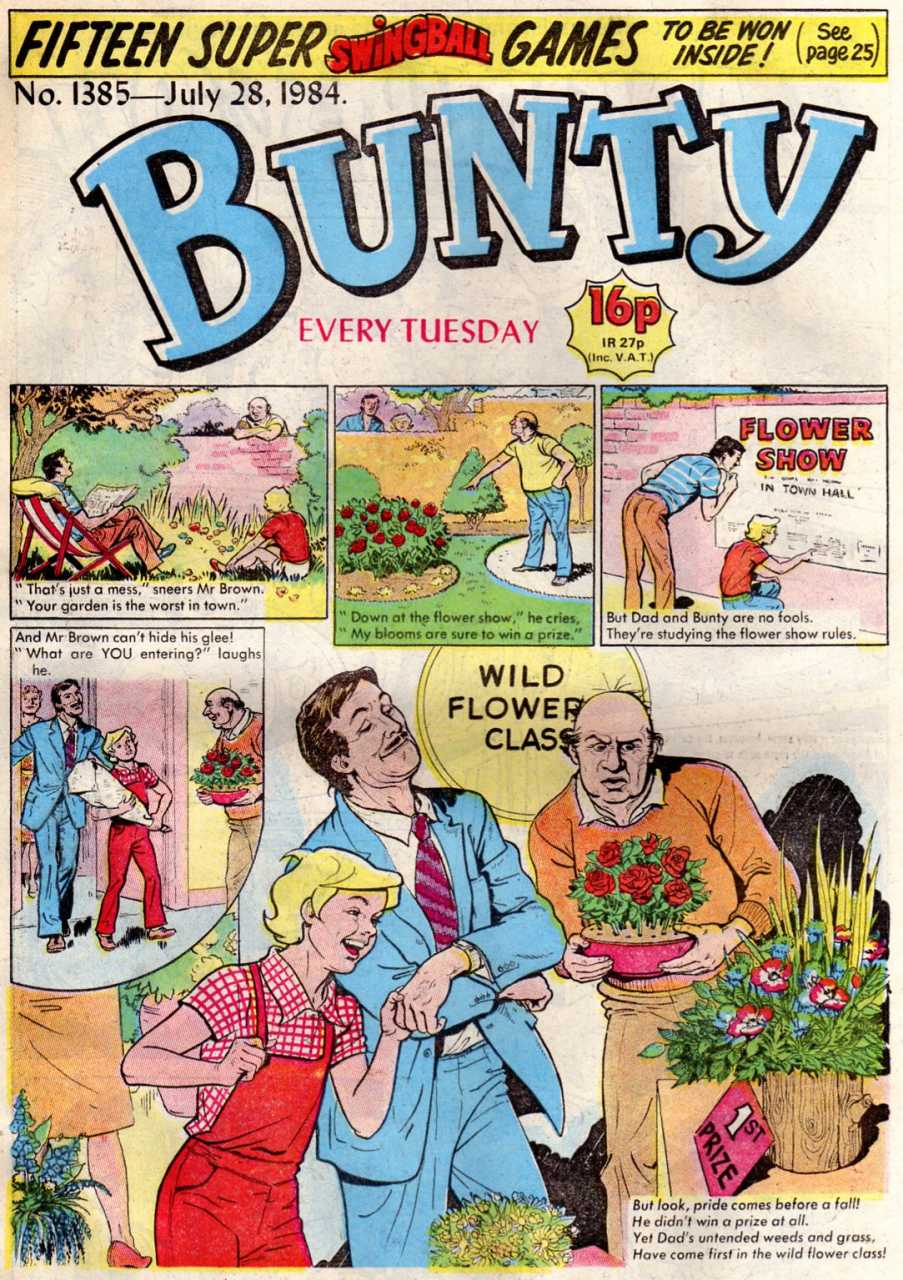
We writers start young as readers. Growing up in England, we had a wide assortment of children’s magazines and comics to choose from: Twinkle, Mandy, Judy and my favorite, Bunty. Then we progressed to Schoolfriend, Girl and eventually Jackie – the teen magazine. I suppose the names are a give-away, that these were for us girls.

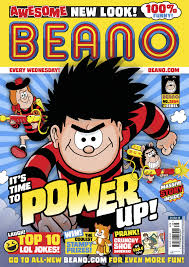
beanoThe boys had more serious comics and magazines such as The Boy’s Own Paper, The Beano, The Dandy. I guess adding a “The” made them more weighty. But then what about Buster, Topper and Beezer? Not so serious-sounding now, eh boys? As they got older, the boys progressed to The Eagle, Valiant, Look and Learn and Tiger. The Eagle was my older brother Ted’s favorite.

The paper-boy would deliver these treasures every Tuesday. They were a main form of entertainment for children until recent years and stemmed from the 19th century “penny-dreadfuls,” that led to the publishing of serial mystery stories such as Arthur Conan Doyle’s Sherlock Holmes exploits. The magazines introduced pirate tales and adventures of such legends as highwayman Dick Turpin and detective Sexton Blake.

Scottish publishing house D.C. Thompson Inc, started The Beano and The Dandy in the 1930s. The Beano is still published today.

The Dundee-based D.C. Thompson was my first publisher, when I wrote articles for My Weekly, People’s Friend and ended up having my own column in Jackie Magazine for several years – including my Letter From Hollywood column, once I moved Stateside. They were the nicest people to work for and My Weekly and People’s Friend are still going strong.

I also wrote a lot of pieces for IPC Magazines in London, for their teen magazines petticoatPetticoat, Mirabelle  and New Musical Express, as well as the women’s periodicals Woman and Woman’s Own. IPC (International Publishing Corporation) was founded in 1963, but its’ umbrella group goes back to the 1800s and covered the Suffragette Movement, two World Wars, the Swingin’ 60s and today’s revolutions. Taken over by Time Warner in 2001 and renamed Time Inc.UK in 2014, the groups periodicals include Horse and Hound, Woman’s Weekly, InStyle UK, TV Times, Woman, Country Life, Homes and Gardens and seemingly hundreds more.

But back to the children’s magazines that are so dear to me and others of a certain age. They included cartoon-style comic strip stories, but mostly were filled with how-to articles, history pieces and tales of adventure, romance and mystery – letting imaginations run wild. Yarns of super-heroes, dastardly villains, schoolboys-and-girls-to-the-rescue and hilarious school-days tales of characters like Billy Bunter, filled the boy’s comics. Often very “un-PC” – or un-Politically Correct: Billy Bunter was very overweight and always eating cakes and buns. Not to be outdone, his sister Bessie Bunter turned up in the girls’ magazines, preferring cake to croquet or hockey.

For us girls, there was page after page of  “The Secret Adventures of…” – plucky-heroine stories, romantic tales (often nurses falling for doctors), legends, fairy-tales and Cinderella-finds-her-Prince-Charming stories. There was no noticeable class divide, either. We could all dream of being a ballerina, champion jockey, Olympic medalist, a pilot, hospital-matron or doctor – or a princess. There was usually a moral theme to these, where the baddy gets his or her come-uppance and a good deed gets rewarded. Where honesty and loyalty were the benchmarks for everyone. No wonder our generation grew up to be such virtuous, practically-perfect goddesses!

The backdrop for the girls’ tales were often ballet schools, nursing, Boarding Schools, pony-clubs, gymkhanas, ice-skating – and school-holidays in Scotland or England’s West Country: Devon and Cornwall, home of pirates, smugglers, Agatha Christie and cream-teas.

So, as a writer, this was a great market to get started in and learn one’s trade. The money was pitiful – not that it’s much better today. But there were so many magazines that devoured articles and stories every week, that editors would give unknown writers a chance.

Often those short stories developed into books, like the Bunchy, Milly-Molly-Mandy, Marigold books, for readers who grew into Enid Blyton, Noel Streatfield or Nancy Drew fans. My Aunty Marjory gave me Gene Stratton-Porter’s book, A Girl of the Limberlost and Freckles set in the Indiana wetlands. I read Eleanor H. Porter’s Pollyanna, too. (Were they related?) No wonder I ended living in America.

But it wasn’t just the stories we read in those childhood comics and magazines – there were gifts, too, taped to the inside. Perhaps a slim, brightly-colored plastic bangle, a teeny pink lipstick, a plastic ring, a packet of flower seeds for the garden or an envelope of colored sparkly dust for art projects. And the last page of Bunty featured a cut-out doll’s cut-out wardrobe. Such value for money in every edition!

Bunty survived until 2001, Jackie Magazine lasted longer. The Beano lives on.

Today’s magazines for the young seem filled with advertisements and gossip about pop-icons like Justin Bieber.  Not quite the same. Where are the fanciful tales for kids today, taking them to other worlds, other planets, even, to get their imaginations stirring? Harry Potter was the exception, of course. But that was a book – not a comic magazine. Hmmm. Thank goodness we had Bunty, Twinkle, Schoolfriend and Judy….

Methinks I’ll stay with my tales of plucky heroines and lonely ballerinas, thank you very much.


A Monkey’s Tail… by Rosemary Lord

just-rosie-3Rosemary wrote her first book when she was ten years old – for her little brother. She also illustrated it herself. It was later rejected by Random House!

She has been writing ever since.

The author of Best Sellers Hollywood Then and Now and Los Angeles Then and Now,  English born Rosemary Lord has lived in Hollywood for over 25 years. An actress, a former journalist (interviewing Cary Grant, James Stewart, Tony Hopkins, John Huston amongst others) and a Senior Publicist at Columbia Pictures, she lectures on Hollywood history. Rosemary is currently writing the second in a series of murder mysteries set in the 1920s Jazz Age Hollywood featuring Lottie Topaz, an extra in silent movies.


*  *  *


When it was suggested we bloggers write about our pets, I panicked.

My first reaction was “You must be joking. I am not allowed pets where I live. I am terrified of dogs (a childhood incident – don’t ask…) and I am allergic to cats…” Where does that leave me? Not wishing to be a spoilsport, I had a good, long think. So here goes:

I once had a monkey called Poggy. I was four years old and living with my family on the Mediterranean island of Malta, where my dad was stationed in the navy. I loved Poggy. Poggy was brown and white, with a long tail and red felt feet and paws. He was very cuddly.

But when we returned to live in England, Poggy stayed behind. In readiness for our big move back to England, Poggy was carefully washed, so he would be smart for the journey, and pegged on the washing line to dry. But somehow, with all the turmoil, soggy Poggy was left hanging on the washing-line in the back-garden, next to the well, amidst grapevines in the Mediterranean sunshine. I hope that the family that found Poggy, loved him as much as I did.

I’m quite good with turtles, though. Or was. My late husband, Rick, taught me to rescue turtles. In Kentucky, over the many years we spent visiting and taking care of his late-mother in the small town, south of Louisville, we frequently encountered turtles ambling across the narrow country lanes. Rick would stop the car and wait. If they didn’t get a move on – before cars or farm vehicles would come barreling down the road from the opposite direction – it became my job to get out of the car and carefully pick up the wandering turtle and place it on the far grass verge, out of harms way. They were often quite mad at me, spitting, wriggling or peeing as I lifted them to safety, before a speeding vehicle could  run them over. Road-kill abounded on those winding trails.

red eared sliderSo did Red-eared Sliders. So-called, because they have a narrow red stripe around their ears. The ‘slider’ bit comes from their ability to slide off rocks and such into the water quickly. Then there’s the common Snapping Turtle. I learned to grab them more towards the back of the shell, because they have longer necks and would, of course, snap at me. Hence the name. They can be vicious little what-nots, craning their necks, trying to reach my fingers and glaring at me as if to say, “Leave me alone, I was on my way to the pond up by the crossroads.”  Mind you, the Alligator Snapping Turtles can be huge, like some prehistoric creation. Their faces look a bit like E.T. on a bad day. My mother-in-law’s doctor had a collection of these in his garden. Some were as big as 75 lbs. Then, of course, there is the  Yellow-Bellied Slider: with a yellow under-belly and sometimes yellow stripes on its’ top shell. Not to be confused with the Eastern River Cooters, who have yellow stripes, too. Here endeth the turtle lesson. See. I used to know my turtles!
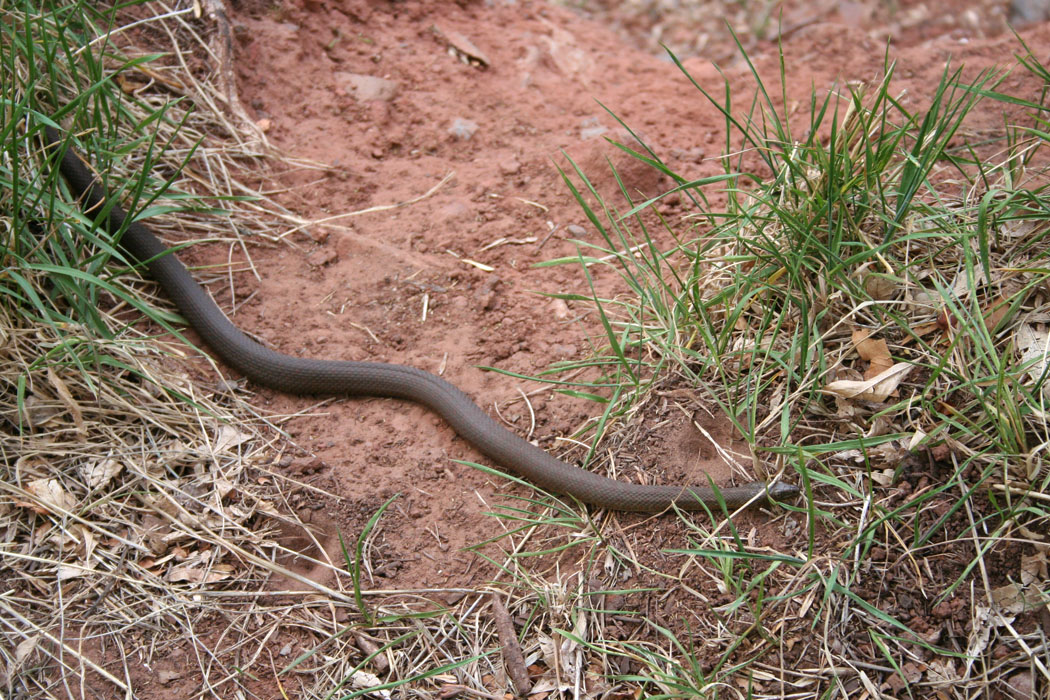
Rick was a goodfile00065284551 teacher. He loved all living creatures and had the most amazing knowledge, experience and affinity with them. Turtles and snakes were his favorite. We would go snake hunting, too. That’s when I usually stayed in the car. But sometimes I would have to handle the smaller ones. Or, if he found a large, wriggling snake and didn’t have a big sack to put it in, he would hold it gently out of the car-window with one hand, (careful not to injure the delicate vertebrae) while he drove – very slowly – back to the farm. He often promised (or threatened?) to take me to Death Valley in the summer, in search of the striped Rosy Boa!

Goodness, it’s all coming back to me. Maybe I should think about including some of this herpetological information in my writing. Not sure how ‘Lottie Topaz and the Red- Eared Slider’ would sound…

A QUICK ESCAPE…

just-rosie-3 Where do you escape to when it all gets too much? When that sleep that you really, really need alludes you? For those stressed with over-work, with family or money worries or health problems – a respite is definitely needed.  Other than flying away from it all and off to an exotic desert island, what are we ordinary mortals supposed to do?  I have discovered my best escape is found between the pages of a book.

I guess I have always escaped into the magical world of stories. I have been reading all my life. My brother, Phil, reminded me that I started my own library – ‘The Leafy Way Public Library’ – in my bedroom as a small child. I had a little rubber stamp that imprinted the logo in my books. Phil remembers my issuing him with a library ticket that I date-stamped to take out books! My ‘library’ included the different Enid Blyton mystery series, The Famous Five, The Secret Seven and the Mary Mouse tales. Phil was not interested in the more girlie books that I loved:  the Pamela Brown adventures about theatre life: The Swish of the Curtain, Blue Door Ventures and Golden Pavements – or Noel Streatfield’s Ballet Shoes and the  Dancing Shoes series.  the-secret-seven

Even at that very young age I found an escape into these magical books. I even wrote my own first book, Make Believe Mondays, when I was ten – carefully handwritten, with an orange, pencil- illustrated cover. I wrote it for my brother Phil, I recall! The love of books clearly stayed with me throughout my growing up. I know I have written before about these books that colored my life.  Books have always been a wonderful escape for me.

But I think this is true for most of us writers. I know that with my fellow bloggers we often talk about the books that we lose ourselves in. Reading is truly a wonderful way of retreating from the woes that life sometimes presents. Even if it is a snatched fifteen minutes on a train or bus ride to work, or a quick read on a short coffee-break. What a relief to vanish from today’s world, for a glimpse into someone else’s fictional world.

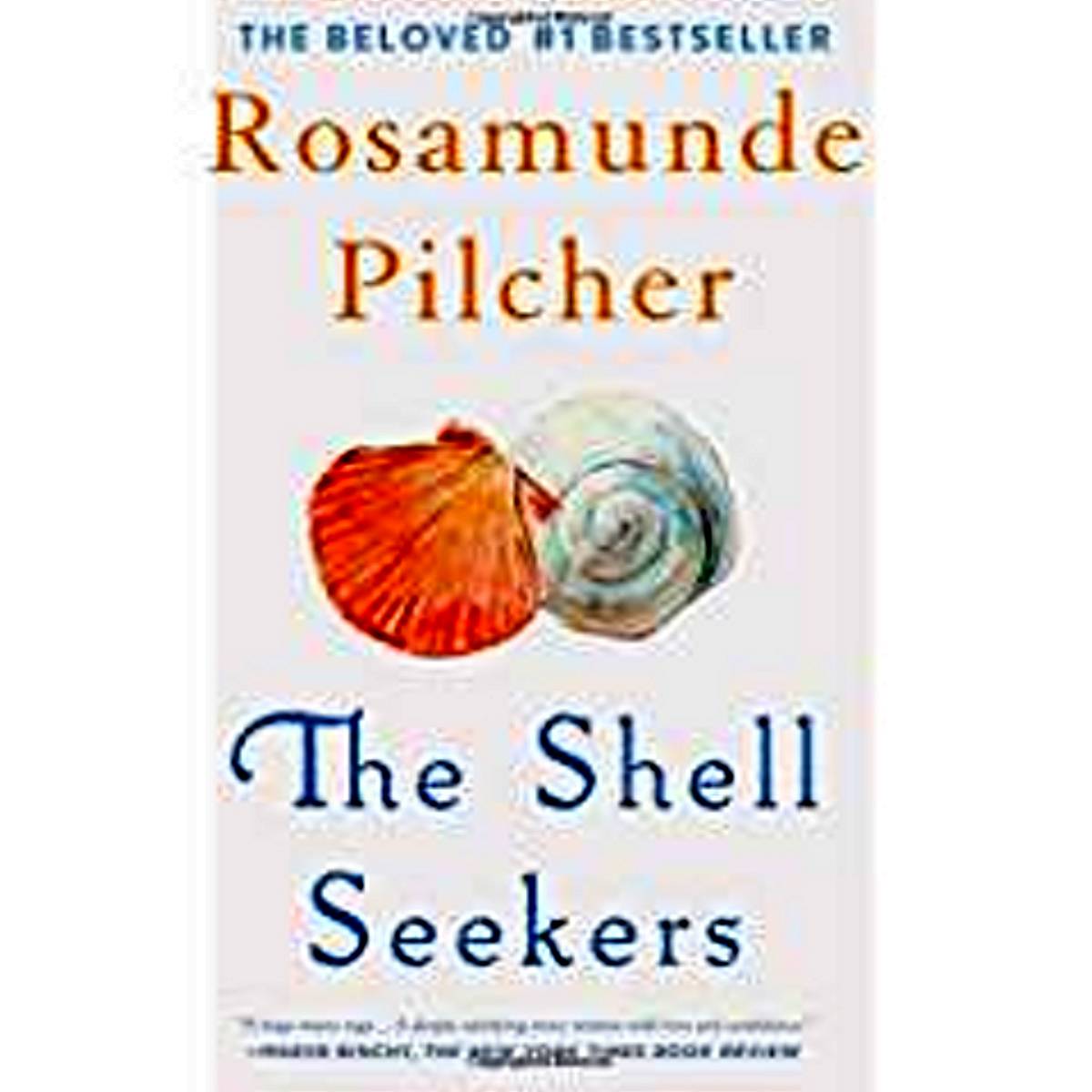
the-shell-seekers  And in the middle of the night, instead of tossing and turning and sheep-counting – reach for a book. I do. I currently have a favorite Rhys Bowen novel about Molly Murphy in the turn-of-the-century New York mystery series. In a different mood, I will re-read Rosamund Pilcher’s The Shell Seekers, a Maeve Binchy novel, a Marcia Willet story, one of Carol Drinkwater’s books set in the South of France, or Victoria Hislop’s The Island and her other Mediterranean-set novels. I just love anything set in the sunny Mediterranean. No rush-hour traffic jams, no screaming police sirens, angry crowds pushing and shoving. Just gentle walks though olive grows, planning delicious simple meals, folk watching the tides come in and go out again under breath-taking sunsets. What’s not to like?

heidi         Although my all-time favorite remains the childhood classic, Heidi, by Johanna Spyri, about the little girl who goes to live with her grandfather in the Swiss mountains. Some years ago I learned to refocus my mind while in the dentist’s dreaded chair – and would whisk myself off to that Swiss mountain side with Heidi and her goat-herd friend Peter.

As a writer, I love to think that someone else might lose themselves in a story that I have created. I write about another world I like to lose myself in: Lottie Topaz’s discovery of Hollywood in the 1920s. It’s quite exhilarating to inhabit this other reality.

As we lose ourselves in someone else’s stories, one forgets – for a while – the troubles and stresses that surround us.

So the next time that bedroom clock relentlessly blinks 3:30 am at you, and you find yourself start back at number one with your counting sheep, reach for a book instead – a gentle, charming story. Nothing too violent or thought-provoking. Just a beautiful, exotic island of words, with a gentle breeze blowing across the pages and the scent of tropical flowers to lull you into that other realm that will take you out of yourself for a while. Sleep then comes more easily when you leave reality behind. To sleep – perchance to dream – of inhabiting the world of your favorite books… written by your favorite authors….

…………………………………

ROSEMARY LORD BIOGRAPHY

c19f5-hlwdtandnThe author of Best Selling non-fiction Hollywood Then and Now and Los Angeles Then and Now, English born ROSEMARY LORD has lived in Hollywood for over 25 years. As an actress, her credits include Monty Python, Rivals of Sherlock Holmes, Days of Our Lives, L.A. Heat and more. She did voice-work on Titanic, Star Trek, Shakespeare In Love, The Holiday and Pirates of the Caribbean amongst many others. A former journalist,  she is published in many magazines such as Woman’s Journal, Atlantic Review, Woman, Films & Filming, Jackie, Field newspapers and more in the UK, USA and Australia, where she wrote about Hollywood’s Golden Age, interviewing such luminaries as Cary Grant, James Stewart, Tony Hopkins, John Huston. She was a Senior Publicist at Columbia Pictures. Rosemary lectures on Hollywood history and is the Historian of the Woman’s Club of Hollywood. She is a member of MWA, Sisters-in-Crime, SAG, BAFTA and contributes to The Writers In Residence Blog.
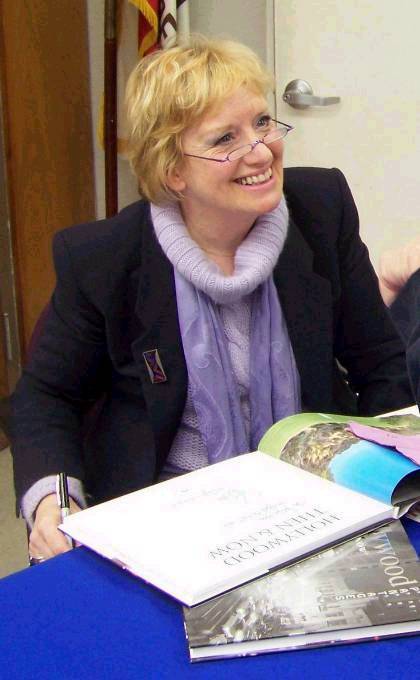
 

Her first mystery novel Lottie Topaz and the Flicker Murders… is set in the 1920s Jazz Age Hollywood featuring Lottie Topaz, an extra in silent movies.

_____________________________________________________________

Rosemary’s Blog posted by…


A FUNNY THING HAPPENED on my way to becoming organized …. by Rosemary Lord

06694-rosemaryatburbanklibraryjpgRosemary wrote her first book when she was ten years old – for her little brother. She also illustrated it herself. It was later rejected by Random House!
She has been writing ever since.

The author of Best Sellers Hollywood Then and Now and Los Angeles Then and Now,  English born Rosemary Lord has lived in Hollywood for over 25 years. An actress, a former journalist (interviewing Cary Grant, James Stewart, Tony Hopkins, John Huston amongst others) and a Senior Publicist at Columbia Pictures, she lectures on Hollywood history. Rosemary is currently writing the second in a series of murder mysteries set in the 1920s Jazz Age Hollywood featuring Lottie Topaz, an extra in silent movies.


  #  #  #

What I was trying to do was organize my life. Organize my life better – as I had so much writing to do, as well as a life to live.  I had – still have – several books, short stories and some magazine articles I wanted to write. I actually managed to finish a couple of mystery novels and started another. I wrote a magazine article and revised and updated two of my published non fiction books, Hollywood Then & Now and Los Angeles Then & Now. But this was not enough. I decided I really must get properly organized, so that I can increase my literary output.

 But hey – this is me. Remember all my notes on little bits of paper? And my “…I know it was blue – and I was eating something when I last saw it..”?   What chance do I have?

chartThen someone told me about “Org. Charts”… Online Organizational Charts that are supposed to make your life easier. Some of the versions can be very expensive, I was told. I was excited. Perhaps this is the magical cure I had been seeking?

But when I went online and perused various Org Charts, I realized that – uh – this is kind of how I always map out my writing. I just didn’t have a name for it.

 I have a large notice board and cover it with post-its. Each post-it has a chapter number and a brief outline. On a different colored post-it, characters in that chapter are listed underneath. Another sticky note has specific plot details for that chapter. I add to this ‘organizational chart’ of sticky post-its as I finish each chapter.

Towards the end, I review the arc of the story and how I got to this point. Then I sometimes move the post-its around to an earlier or later chapter, as I realize what needs to be revealed at certain times. On a read-through of my first draft, I might decide to cut a whole scene or even a chapter. If it is sounding too busy, I may chose to cut a lesser character out.  So I go back to my board and remove the relevant sticky-note or two and put them at the very bottom of the board, so I can see what I have taken out. I might be able to use those pages elsewhere – or even in another book. I find this method very helpful.

 Now along the way I get many interruptions from my writing time.

A major interruption was when an elderly lady rang me a few years ago and, with a shaky voice, said “…they’ve taken our club, changed the locks – can you help us get it back?” So began my long journey into saving the Woman’s Club of Hollywood from a real-estate grab and  from being turned into a luxury condominium resort.

2015-clubhse-from-front-drive-jpg_orig
Women’s Club of Hollywood;picture from their website

Founded in 1905, this club is where Mary Pickford attended events and handed-out award-cups for various flower shows. It is where Charlie Chaplin entertained and later on Gloria Swanson lectured on nutrition. Joan Crawford, Gary Cooper and other Hollywood legends attended fundraising luncheons. Big Bands used to play there. The property is on the site of the old Hollywood School for Girls, where Jean Harlow, Douglas Fairbanks Jr., Joel McRae, (boys were allowed in kindergarten there) and daughters of the early film pioneers Cecil B. DeMille and Louis B. Mayer and even David Selznick’s mom attended school. Oscar winning costume designer Edith Head was one of the teachers. Actor Charles Laughton came in to teach Shakespeare. The old 1903 school house still stands in the rear of the Spanish-style clubhouse. Property developers salivate at the thought of replacing this historic landmark with gleaming towers of condominiums and apartments.

But it’s not over yet. With huge legal fees accrued, there is a Federal judge and a Federal Trustee overseeing and scrutinizing how it is run. But at least we got the building back for the older ladies to do their charitable works and to save a piece of Hollywood history. Many younger women – and men – now enjoy the social hours and the philanthropic events at this historic club. And this is where I heard ‘The Org Chart’ again.  As a charitable, non-profit business I was told that an Org Chart is essential. Archive materials abound, historic documents, boxes of photos juxtaposed with legal documents, IRS papers and current documents.  So lately my head has been buried in setting up an Org Chart for the Woman’s Club, delegating committee work and assigning volunteers who offer to share the responsibility to keep this Hollywood legend flourishing. Those are the serious, grown-up Org Charts.

 But the Org charts of my own making, to do with my writing, are the real fun ones.  When I was revising and updating Hollywood Then & Now, my board was covered with thumbnail pictures of the various Hollywood landmarks I was writing about, as I attempted to weave the story of the origins of legendary places – and what they look like now.  Of course, throughout all of that writing, my desk, my floor and any other available surface was covered in sheets of paper and many hand-scribbled notes on scraps of envelopes and such. But I knew where everything was and could find the relevant note easily. I was organized. Honest!

 I think (I hope) there are other writers who  operate in this ‘organized chaos’ fashion.  I realize that I am perfectly, creatively organized when I am actually writing. I have to be – so much I write about has historical data and information in it. I can’t fudge that.

 It is my life that is not organized – and my time. Which is why I am often writing so late into the night… and I haven’t managed an Org Chart for that yet.

Any ideas?