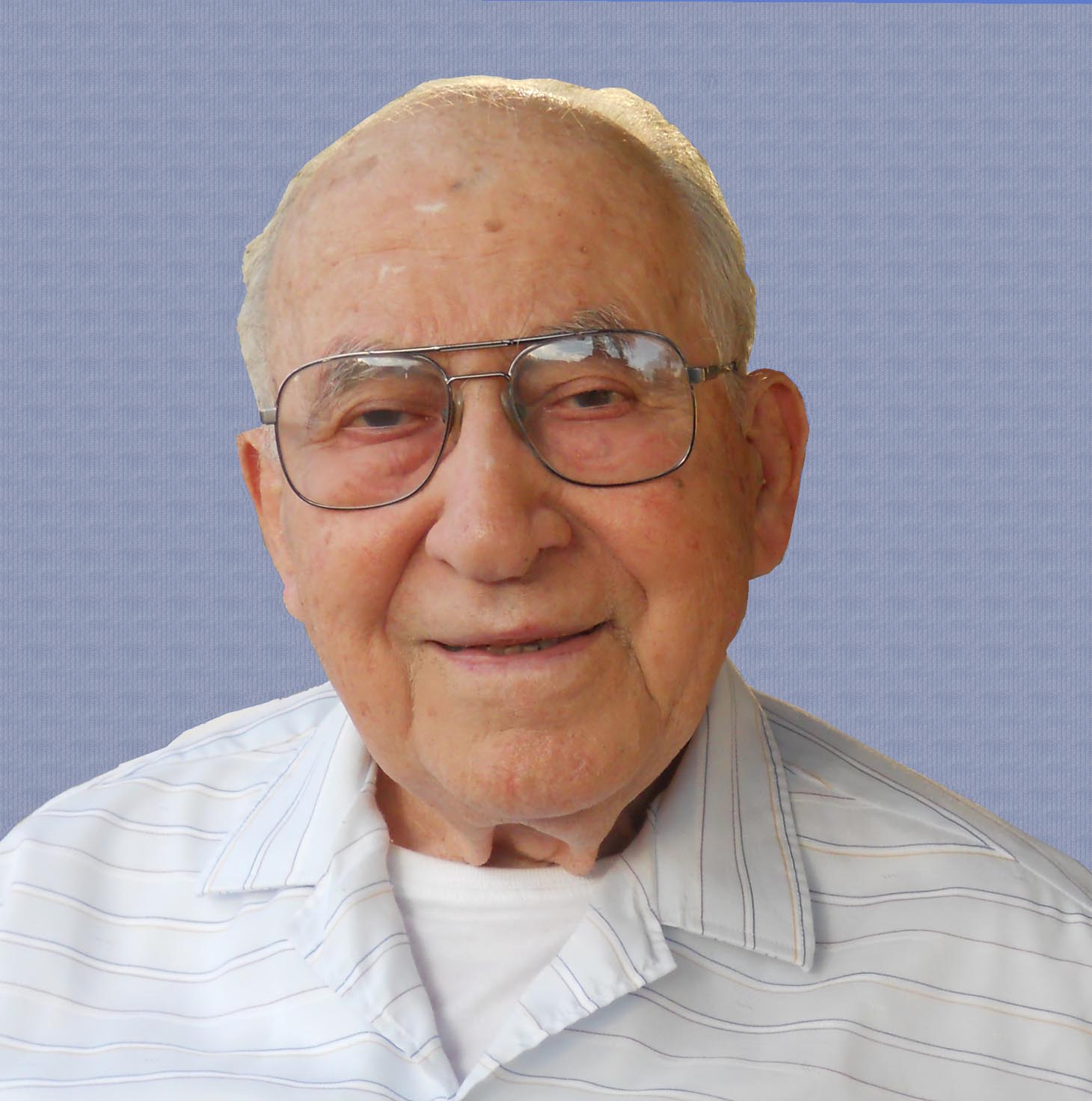
Interview with WinR Jackie Houchin

Most people know Jackie Houchin as that lady who shows up with pen, paper and camera and churns out articles that make the rest of us look good, whether she’s covering an author event or a play. She has her own blog at Jackie Houchin’s News & Reviews and writes regularly for Sisters in Crime and local newspapers. Her book reviews can be see in magazines such as CrimeSpree and Mystery Scene.

Welcome, Jackie!

You’re a photojournalist, a children’s book writer, a book reviewer and a theater critic. What’s your favorite type of writing and why?

I really, really enjoyed writing the serialized stories for my three granddaughters (a different one for each of them). It was fun making up the characters, plotting the story lines, and seeing the girls eagerly awaiting the next installments. Sometimes I drew simple illustrations to make them more fun. When I wrote the two “Kinko-published” children’s books for them, I also included simple line drawings in each chapter. However, my “Drawing Muse” isn’t always so cooperative!
The reviews and articles I write for my “News & Reviews” website and the various local newspapers and newsletters are ways to use my “teaching gift” if you want to call it that. (Yes, I’ve always been sort of bossy and “know it all.” Ha-ha) I enjoy meeting all the interesting people I interview. I use photography instead of drawing in this genre.
I also love seeing theatre plays (for free!) and reading books before they’re published. But lately this writing angle is becoming stressful for me. Call it writer’s block, but I seem to approach each new review with trepidation, even dread! Help!
How does someone with so much to do plan her writing time?
Funny you should ask! For one who enjoys everything organized and in order (some would call me OCD – ha-ha!), I don’t plan my writing time well. Usually it’s a looming deadline that gets me in the chair in front of the computer, frantically pounding the keys, while guzzling an entire pot of coffee.
Of course I have to be responsible about dates & times for the events I cover and the people I interview (these are faithfully marked on my calendar), but the actual writing is usually a last minute scramble. (Does it show?)
As a book reviewer, what mistakes do you find repeated, and what brings joy to your work?
Mistakes in the BOOKS, or MY mistakes? In books, I often see typos, of course. They are less evident with big-name authors and publishers. Occasionally I’ve seen name changes mid book, and even sex changes. (Yikes, I didn’t mean it THAT way!)
As for MY reviews, sometimes when they are printed – and I cringe here – I see a typo I’ve forgotten to correct, or two words remaining where I changed one and forgot to take out the other. Gulp!
The joy comes from seeing my work in print, and in the feedback I sometimes get from authors (or actors in the case of theatre reviews).
What’s your favorite type of book to read?
Absolutely my favorite reads are mysteries – strongly plotted ones without too much grit, grizzle or gore. I also enjoy “adult” women’s fiction (not chick lit) and historic novels. I will listen to audio books on history and biography, IF the author gives his information in “story” form. And, surprisingly, lately I’ve enjoyed a few Westerns. Go figure!
Christian fiction is a huge and growing market. Have you thought about writing either fiction or non-fiction for that market?
I’m a Christian, and ALL my writing is influence by that. My children’s stories always have a moral to them (be it vague or bold), and often use Bible passages, proverbs, or parables as a foundation. (Don’t worry! They aren’t “preachy.”)
I try to keep all my writing clean, and as positive as possible. (Even the newspaper events I cover.) I also won’t review books or plays that are offensive to me (sacrilegious, sexually explicit, or with overt violence or language). And, while I’m no academic, I did write curriculum for a 10-year Bible study I taught.
Are there any fiction projects in the works for you?
Fiction…. hmm. Do I dare share my secret?
I have a women’s fiction novel started and languishing in my files. It’s an ambitious work (or so I’ve been told) and tracks the stories of three sisters, each in a potentially life or lifestyle-threatening dilemma. I’ve been told I should tell each story separately, like Nora Lofts does in her trilogy books. But these women’s lives and problems are inexorably entwined, as are the eventual solutions, each dependent on what the other does.
So will “Sister Secrets” ever see the light of day and be at least “e” or self-published?
Your guess is as good as mine!
Thank you, Jackie.
Just a note: I’ve read Jackie’s books and they are some of the most entertaining, well-written children’s fiction I’ve ever read. Please get them published!!!

Interview with Author Marilyn Meredith

We at WinR are pleased to welcome back author Marilyn Meredith!

When she last visited, Marilyn shared great information about the writing craft. This time she is generous enough to share some marketing tips as well as a peek into her recent release, “Lingering Spirit”.

Welcome, Marilyn!

Marilyn, you have your finger in so many pies! You have the Rocky Bluff PD series, the Deputy Tempe Crabtree series, Christian horror novels, and your stand alone paranormal romance, “Lingering Spirit”, just became available.

Is it possible to market so many different series and genres at events? What is your approach?

I don’t always market all my books at every event. The Apple Festival in Springville where I live, a two-day event, I take copies of all my books and do very well. I never know which books will sell.

Recently I was invited to a Jane Austen Festival and I only took copies of my Tempe books and the two latest books in my Rocky Bluff P.D. series. I felt a bit like a fish out of water, but did surprisingly well.

The Springville Library invited me to bring my books to their celebration of 100 years of the Tulare County Library and I knew there would not be many people there, so I just took my Tempe books which are set in a place like Springville. I still managed to sell four books in a very short period of time. When I do an event over on the coast, I take more of my Rocky Bluff P.D. series since it is set on the coast.

You attend conferences, book fairs, craft fairs, and other events. Where do you have the most success selling your books?

I love conferences and conventions but I’m not a big name writer so don’t sell a lot of books, but if I can get on a panel or give a presentation, I do pretty well. Book and craft fairs work pretty well for me. Craft fairs are fun because there usually aren’t many authors and so being a “real” author is a novelty to people who don’t go to bookstores and book events. This year I’ve been to Celebration of the Whales and I’m going to be at the Fourth of July Celebration at Channel Islands Harbor. Because my Rocky Bluff P.D. books were inspired by the Oxnard P.D. they sell well there. I’m also going to the Central Coast Art and Book Festival in San Luis Obispo, which is also a good venue. I go to much smaller fairs too, heading to one at the Lompoc library in August. I’m pretty much “up” for any event like that.

I mentioned in your into that you have your finger in a lot of pies! You’re latest book is an example of that.

“Lingering Spirit” is a departure from your usual writings in that it includes a paranormal element. Could you tell us about the story and the characters?

“Lingering Spirit” came about because of a tragic event that happened in our family. Though the idea developed from a real and very sad event, the story is fiction. It’s about the death of a law enforcement officer in the line of duty, leaving his young wife a widow and his two daughters fatherless. His spirit remains around for quite some time. Did that part really happen? Not as I wrote it, but there is an inkling of truth in the supernatural part.

This book began as an e-book. I parted company with the publisher and the book was unavailable. The publisher of my Rocky Bluff P.D. books asked if I had older books I’d like her to put on Kindle and I gave her “Lingering Spirit”. She loved it and it’s been available on Kindle for awhile. At the beginning of this year she asked me if I’d like to have “Lingering Spirit” as a trade paperback. Of course I said yes, and she put it on fast-track so it would be available this month.

Many of your books are available both in paper editions and as e-books. You tried e-books before they were such a hot topic. What are the pros and cons of publishing electronically over publishing in print?

I was e-pubbed before there were any e-reading devices. Didn’t work so well back then. Once the e-readers started coming on the market things changed and they keep on changing. Nearly all of my books have been published in electronic format as well as in paper. The two publishers I’m working with now always do both types of publishing.

The e-publishers know what they are doing as far as e-publishing is concerned, where the New York publishers are making all sorts of mistakes—but are slowly catching on. Most e-publishers accept queries and manuscript submission as attachments and the whole submission process is much faster and more personal. The finished product is done in a far shorter time than with a New York publisher. Most e-publishers do not give advances, but the royalties are usually a bigger percentage for either kind of book than the New York publishers give.

What are you working on next?

I have a Deputy Tempe Crabtree mystery, Invisible Path, coming out this fall. I have another that I’m finishing up the editing on now. My next Rocky Bluff P.D., Angel Lost, is ready for the first part of 2011. I’m starting another Rocky Bluff P.D. now, and have written four chapters so far. Been hard with all the promotion I’ve been doing for all my books and because I’m the program chair for the Public Safety Writers Conference, which has kept me busy too. I must confess though, I love it. I’m doing exactly what I dreamed about doing when I was younger.

Thank you, Marilyn!

Interview with Author Michael J. Manno

Mike Manno practices law in West Des Moines, Iowa. He also teaches law and political science at Upper Iowa University. An amateur ventriloquist, he has done numerous school shows and has also appeared twice at the Iowa State Fair. For nine seasons he raced Formula Vees with SCCA. Mike is the author of “Murder Most Holy”, and his new book, End of the Line, featuring former star prosecutor, Parker Noble, will be out this spring.

Welcome Mike!

Practicing attorney, race car driver, ventriloquist. What led you to add mystery writing to your resume?

Actually, I was a writer first. I always enjoyed writing and my mother tells me that even as a kid my favorite school classes were those where I had to write. My undergraduate major was journalism and I spent the better part of my first four years out of college news writing and editing. And, of course, practicing law means spending a lot of time drafting and editing legal briefs and documents.

Were there any websites or books you found especially helpful?

Yes, probably too many to list here. There is a series of books that I do recommend to budding mystery writers: The Howdunit Series by Writers Digest Books. They cover all the things you need to know to write accurately about crime, such as poisons, motives, police practices, autopsies, etc.

I realize that writers have to take some license to create a good story, but I think you should try to be as factual as you can. Avid mystery readers will be able to pick apart a writer who is writing about something he doesn’t know. I think this series will help writers keep on track. I also recommend my friend Todd Stone’s Novelist’s Boot Camp, also from Writers Digest Books, and Robert McKee’s Story.

There are also plenty of web sites out there that are writer friendly. Joe (J. A.) Konrath has a particularly good site for writers. My friend Jerry Hooton also has a great site and offers a free monthly newsletter. Jerry has given advice to many “big name” writers, such as Michael Connelly.

You also might try your favorite author’s web site. Many have great links and very valuable information for writers.

You certainly jumped into the genre with a bang—the murder of a nun! Please tell us how you came up with your first Parker Noble story.

Actually, I came up with the motive first, then created the characters around it. I don’t want to say anything more or I might give something away. The murder of a nun, however, probably came from so many years in a parochial school! No, not really. I did enjoy the nuns, but like most kids, I have a fonder memory of them than I had opinion back then.

I can’t help wondering: Did being Catholic influence your writing or your story line? (And were you waiting for the wrath of the local convent over your choice of victim?)

No, being Catholic doesn’t have an obvious influence on my writing, but it does have some subtle influences. I am Catholic, and as every writer has heard, write about what you know. So if I need a religious influence or story line I go back to my roots. I also try to write books that parents would not mind letting their teen-aged kids read, so I don’t have a lot of profanity, sex or violence in the book. Those things can all be hinted at without being too graphic.

In the first book, you paired Parker with Detective Sergeant Jerome (Stan) Stankowski, making a delightful duo who play well off each other. What does each character bring to the story?

I think they bring a great tension into the story; Parker is an attorney and thinks like one while Stan is a cop and thinks like a cop. Putting them together where people mistakenly believe that Parker is in charge sets Stan up for a lot of frustration – especially when Parker seems to come up with the solution for the crime. It’s also a challenge telling the story first person through Stan when Parker is the main character.

Will the two remain together in your series?

Yes, definitely! Both will continue, as will Buffy Coyle, the news reporter who doesn’t know what she wants more: Stan or a scoop.

You were a recent presenter at the Catholic Writers Conference*. Tell us what it’s like to prepare a class on mystery writing and what it’s like to give this class online versus the way you usually teach–in person. Any difficulties? Is it a surprisingly easy format to use?

I teach college law and political science in a regular college classroom. Obviously you can connect better with students in person and the classroom discussions are easier to follow.

On-line is more difficult as a teacher since you can’t see the students so you don’t know if you are connecting with them. You can do that in a classroom and if you see the students are not picking up on something you can change focus and approach the issue from another direction.

Classroom discussions are a bit better in person, too, since on-line there is a lag time from when a student types a comment or question and when it appears on the screen and often there is more than one at a time. However, that having been said, the on-line conferences are still a great way to pick up valuable information without the added expense of travel and lodging that you would incur in a traditional conference. And, once you get use to the on-line format it is surprisingly easy to use.

What’s the one piece of advice that you hope the attendees took away with them about writing a mystery?

Actually, three things: One is to outline your story so you know where you are going. I think that is very important when writing in any genre.

The second is to make sure your facts are correct. I’ve seen (actually read) writers who get some important facts – especially the legal ones – wrong.

Finally, lay out all the clues for your reader – they need not be obvious, but the reader will feel cheated if at the end of the book the clue that tripped up the culprit was hidden from them.

In your class (which was excellent!) you stressed the importance of outlining a mystery. Do you outline every detail or do you lay out a general path for your characters to follow?

I lay out a general path. I liken outlining to a road map. You decide where you want to go and find it on your map then sketch a route to your destination. You know where you are going to end up, but you are free to take any interesting side trips that might appeal to you on the way.

It’s the same way with my writing. I know where I’m going to end up, but along the writing “trip” I might find an interesting side trip (sub plot) to follow. You might call this “flexible certainty,” and I think it is important when writing a mystery since you will always be looking for ways to hide clues and red herrings.

“End of the Line” was just released. Was the second mystery more difficult or easier to write than the first book?
A bit easier, mainly because the characters had already been developed in my first book, Murder Most Holy. The hardest part is to keep the relationship between the characters fresh. Their relationship is like a kaleidoscope that has to give a slightly different view each time it is turned.
What can we look forward to next from you?
I’m working on the third book in the series, which is about a college dean who is shot to death at his desk during spring break. I also am working on a non-mystery about a little girl who sees a vision in a church yard.
Thank you!

You can find some tips for writers along with links on Mike’s blog, and visit his web page for upcoming events and the release date of end of the line. You can order “Murder Most Holy” and “End of the Line” from the usual online booksellers such as Amazon. We recommend you support your local independant bookstores. Find them here.
* You do not have to be Catholic to take advantage of the fabulous AND free Catholic Writers Conference Online. More info to follow when the next conference is set up.

Interview with Short Story Guru Kate Thornton

With stories in three of SINC/LA’s anthologies and numerous books and magazines, retired US Army officer and federal agent Kate Thornton has been writing for publication for over ten years. She teaches workshops on writing short stories and enjoys writing both mysteries and science fiction. She lives in a marvelous mid-century modern house with her husband of 30 years and their pets.

Welcome Kate!

With more than a hundred short stories in print, you are the queen. Why do you think you are so successful?

I just keep on writing – then submitting – then writing more. There are many more writers with many more stories in print than I, but there is only one way to get your stuff out there. It’s persistence that makes your writing better and allows you to get your work published.

You teach a fabulous short story class. Which question are you most often asked and what is your answer?

Everyone always wants to know how to turn their idea into a story. If you break it down to a beginning, middle and some sort of satisfying ending, then you’ve got a story.

The first thing a writer should do is check the guidelines, but when you market your mysteries and science fiction, do you find that mainstream sites, if they don’t specifically state a preference, are receptive to genre fiction?

Yes – all good stories, regardless of genre, are about some aspect of the human condition. If your story appeals to that common thread, is well-written, and provides a satisfying experience, then genre fiction transcends its label.

How long should a writer wait for a response before she submits to another market?

If response times are not specified, I usually find out what the average is for that particular market, give them an extra couple of weeks, and then query. Sometimes, they never received the submission or lost it.

You’re going on your second mystery cruise next year. Can you tell us what that‘s like and what the cruise expects from you as an author?

Well, the first one wasn’t specifically a mystery cruise, but mystery author Sue Ann Jaffarian was aboard and gave a bang up presentation in which I participated. This year’s cruise, Mystery on the High Seas, is going to be quite a production. I believe I am going to speak on one of several formal panels, and the cruise is chock full of authors, agents, producers, editors and fans. Here’s the site: http://www.2010mysterycruise.blogspot.com/

Tell us about the book you have coming out in November!

I am working hard, although I’m not sure I’m going to make my self-imposed deadline on this one. It’s The Inhuman Condition: Tales of Mystery and Imagination and is a collection of twenty of my favorite stories.
Thank you!

Visit Kate’s blog It Doesn’t Take a Genius for great articles and short fiction that will entertain and move you.

Let it Rest

Let it rest.

We hear it again and again as writers–“Let it rest”–and each time we “let it rest” we wonder, right at the moment of completion, when we’re awed by our own brilliance, if maybe, just this once, just this one time, this particular piece of writing shouldn’t be on display for the world to see as soon as possible.

Hmmm. A little breathing room might have saved that first paragraph.

Last night, the hubby had to work through the night. Unable to sleep, I decided to take advantage of the extra time and write. Isn’t everybody in the perfect frame of mind to pen a blog at 3 AM?

Once I finished my masterpiece, that tiny voice said, “Let it rest.” Although positive my piece was ready for the send button, I took my own advice and walked away.

Things look much different at 8 AM. Last night, I was rehearsing my acceptance speech for the Nobel Prize in Literature. This morning, I saw a mess.
Are there warning signs that you should walk away and air out your writing before subjecting other people to reading it?

1. You think you’ve been extremely clever.
2. The subject matter rouses strong emotions.
3. Your sides still hurt from laughing over your own jokes.
4. You were in a hurry.

I had titled my wandering, blathering blog “Stick to the Point”.

My subconscious was having a laugh.

Interview with WinR Bonnie Schroeder

We are very excited to introduce you to WinR Bonnie Schroeder. An author of women’s fiction and short stories, Bonnie can effortlessly move her readers from tears to spine-tingling chills. She can also make you laugh while you squirm, recognizing yourself in her characters. You can read a sample of her fiction on The Rose City Sisters blog by clicking here.

Bonnie, you are one of the most positive people I know. Good fiction includes tension, but it surprises me how well you are able to show pain and anger and frustration in your characters. How do you access these “darker” places without bringing yourself down?

Therapy, and years of practice! Seriously, it’s kind of cathartic for me, to let all that dark stuff out, transfer my own bad feelings and experiences onto the page and give them to someone else. I learned in writing classes that you have to “let your characters get dirty.” And after dragging my protagonist through the mud, I can look at my own life and think, “Heck, it’s not so bad.” And when all else fails, I hug my sweet Elvie cat; it is impossible to feel down when a cat is purring in your ear.

I’ve heard speakers dismiss writing groups as a waste of time. You belong to several as well as a book club. What would you say are the benefits offered by both types of groups?

Each has its own advantages. From my writing groups I get support, encouragement and specific suggestions on how to improve my craft. Seeing my fellow writers struggle with language, plot, characterization, internal logic, etc., is priceless reassurance that I’m not alone on this weird journey.

And I’m very blessed to have found some amazing, insightful, sensitive writers whose work I admire and who have mastered the art of the critique: first tell the writer what worked, so he or she doesn’t want to give up and knows what strengths to build on. Then move on to what didn’t work, without rewriting the story from the ground up.

There are not that many writing groups around who can pull this off. But don’t give up until you find one, or build one yourself. Trust me: it’s worth the struggle.

My book club also contains several writers – fortunately none are in direct competition! The club introduces me to work by writers I might otherwise have overlooked and suggests new directions for my own fiction. The members are all intelligent, perceptive people with strong and specific opinions on the books we read. Their comments and reactions give me a ton of insight into what appeals to readers, and what turns them off.

You read a wide range of subjects. Can you tell us what your favorite type of fiction is?

I have a lot of faves. I like well done suspense thrillers like Michael Connelly’s Harry Bosch series, and then again I’m a sucker for anything by Alice Hoffman or Anne Tyler, those sweetly incisive, literary, relationship-type novels.

I also enjoy well-written fiction that involves animals, such as Spencer Quinn’s “Chet and Bernie” mystery series, or The Art of Racing in the Rain – a two-hankie novel if ever there was one!!!

I’m a huge fan of Stieg Larsson’s Millennium Trilogy (The Girl with the Dragon Tattoo, etc.) with all its violence and gore. I know, go figure. . .

Actually, my favorite book is one that doesn’t cheat the reader, that delivers on its initial promise. I can tolerate a few technical errors if the book meets that mark.

I know how to plot a murder mystery, but how do you plot a literary novel or women’s fiction? Do you start with a character? An inciting incident? A character goal?

It’s weird, because they come to me in different ways. Sometimes it’s a “situation”: for example in my novel Remember to Breathe, it started out as an idea involving a woman whose husband had left her for another man. What if. . . . what if she learned he was dying? How would she feel? What would she do? What kind of woman would she be? And the story evolved from that.

My latest project is mostly character-driven. I started by seeing the two main characters and am in the process of following them around and trying to figure out who they are and what they want. I know the beginning and the very end, but everything in between is still a mystery to me.

Can you tell us anything about your current project?

I’m kind of superstitious in that I think telling the story dissipates its energy. . . and other such whoo-whoo beliefs. But it’s (I hope) a literary/commercial novel about a woman who marries an artist. Starts in 1966 and ends in 2000-something. Famous artists romp through the pages, along with pot-smoking hippies, corporate pirates, and a folksinger/rock star. All of which is subject to change, of course.

My main challenge is that I was actually married to an artist in the swinging 60’s, and although the story is purely the product of my imagination, I worry people will think, “Oh, that’s all about her and John.” Take my word for it: it’s not. If only my life had been that interesting!

My Tried (and sometimes True) Interview Techniques

Last time, I wrote about where I got my ideas for the articles and profiles I write. I started out by getting the assignments from my editor.

Then I began seeing possibilities for my own stories everywhere i.e. in Starbucks, at bookstores, or on the street. I followed up on referrals from friends and information I found in newspapers, newsletters, or around my neighborhood. I let my curiosity lead me to hobbyists, collectors, and folks with unusual occupations.

So many people: so many interesting stories! Next I needed to to pick their brains, pry out their deepest secrets, find out how and why they do what they do! I had to interview them.

There are three main steps (or methods to my madness) in how I interview folks.

Before the interview

I first decide why I want to interview the person, what I hope to learn, what kind of story I want to write. (A lot of this will depend on where I hope to place or sell the story.) Will it be informative, inspiring, promotional, or…simply someone I personally want to know more about. (Having my own News & Reviews website, helps with that last one.)

I contact the person (on the spot or by phone) and set up a time and date. I let them know who I am, who I write for, and the general topic I want to cover.

Then I do a little research on the person or their specialty, occupation or craft. From my “research” I make a list of questions I want to ask.

I make sure I have a notebook, pens, MY CAMERA, and a tape recorder if it’s going to be a fact-heavy interview. (Fresh or recharged batteries are a given, of course)

During the Interview

I try to establish a conversational mood by commenting or complimenting (depending on where we meet) on our surroundings. I thank them for letting me interview them, tell them what I hope to write about, and get a bit of basic info from them (correct spelling of name, title if any, etc.)

Then I pick up my notebook and pen, turn on the recorder if using it, and dig right in with the first (and easiest) questions. I never stick strictly to my written questions. If something more interesting (or tantalizing) comes up in their answers, I will follow it like a vein of silver in a Colorado mine. And – confession-time here – sometimes I will ask a question I have no intention of using in my story, just because I want to know.

I mostly listen and add questions as promptings to keep them talking. I smile and encourage them with nods or soft, sympathetic sounds. I haven’t mastered the “silence strategy” yet, but I’m told that if you can simply remain silent, your subject will begin to fill it with more info. It’s usually too uncomfortable for me to do that.

I take “off the record” seriously and will never write something I’m asked not to. That doesn’t mean I don’t want to hear it, however. Secret confessions sometimes help me to understand where the person is coming from. I’ll take notes, and I might use the revelation to shade or slant the story, but not even that, if it is too sensitive.

If I get behind on my note taking, I ask them to repeat, slow down, or clarify what they said, especially if I plan to quote it in the story. (Quotes must be 100% accurate!) If they are showing me objects they’ve collected or made, I will ask if I can photograph them. Always at the end of the interview I will get several shots of them with something meaningful to the story. (Projects, pets, creations, gardens, workplace, etc.)

When the interview is winding down, I quickly look over my questions to see if I got everything I need, then I’ll ask if they want to tell me anything I didn’t ask about. (Great stuff sometimes comes out this way.)

I thank them, give them my card with contact info, and offer to send them a hard copy of the finished story (or the link, if it appears in an online magazine).

After the Interview

I review my notes (it’s easier to decipher my scribbling if I do this right away), underlining key words and looking for a really cool approach to the story. I also try to come up with a good strong opening statement – whether it’s dramatic, provocative, humorous, or teasing. What I want is something that will suck in the reader. Wait, that’s called a “hook” right?

I also look for facts that I might need clarified or explained. If I find any, I’ll do a brief call-back by phone.

And, the rule is to never show the interviewee the piece before it is published. But on occasion, under special circumstances, I have been known to do that.

(I’m such a softie!)

Next time: How I Edit or “Weight-watching for Writers”

Interview with Pamela Samuels-Young

There is a very exciting workshop coming up in July! In conjunction with Sisters in Crime Los Angeles, author/attorney Pamela Samuels-Young will present a “The Business of Books: Everything You Need to Know About Self-Publishing…And Then Some.”

The details follow, and we’ve also re-posted our interview with Pamela so you can get reacquainted with this fabulous writer!

Date:July 17, 2010

Time: 10 a.m. – 2 p.m.

Place: Hill Avenue Grace Lutheran Church, 73 N. Hill Avenue, Pasadena.

Author of the edge-of-your-seat Vernetta Henderson series, Ms. Samuels-Young will focus on the economics of self-publishing and distribution channels as well as promotional opportunities for the self-published author. Most writers do a lousy job of promoting their books. So whether you’re self-published or with a major publisher, this workshop will show you unique and cost-efficient ways to get your book in the hands of readers.

There will be time for lunch between the two sessions. Either bring your own lunch, or there are a few fast food places in the area. There is a refrigerator on the premises.
Cost for the workshop will be $25 for SinC members, $35 for non-members. (This might be the time to join SinC.) Checks may be sent to: SinC/LA, 1107 Fair Oaks. Ave., PMB 338, South Pasadena, CA 91030. NOTE: This workshop will fill up fast, so sign up early.
Workshops can also be paid through PayPal (if you have set up an account) by:
Going to the PayPal website: http://www.paypal.com
Clicking on: Send Money
Typing in recipient: sistersincrimela@gmail.com
Putting in dollar amount
Adding a note explaining what the payment is for; i.e. The Business of Books, July 17th
All questions should be directed to: lillianpritchard@earthlink.net

And now, for our interview with Pamela!

We are happy to have with us today author Pamela Samuels-Young, author of the Vernetta Henderson legal thrillers and a new stand-alone, Buying Time. Pamela is also an accomplished motivational speaker and corporate attorney. Welcome, Pamela! 

In Murder on the Down Low, the victims are all successful African-American men who claim to be straight, but have sex with men. Your latest book, Buying Time, involves buying the life insurance policies of terminally ill patients for profit. Where do you get such unusual and interesting ideas?

I find ideas everywhere. The Oprah show gets credit for Murder on the Down Low. I can still remember the day I watched in stunned silence as Oprah interviewed JL King, the author of On the Down Low. He boldly professed to sleeping with men, but at the same time, claimed that he was heterosexual. His shocking revelations about the secret world of men on the “down low” really shook me up. The very next day while I was driving to work, the plot for Murder on the Down Low came to me: What if attractive, successful African-African men were being gunned down on the streets of L.A. and no one knew why?
The idea for Buying Time came to me while chatting with a friend at a party. I knew he was in the insurance business, but when he explained that he was a viatical broker, I started asking lots of questions because I’d never heard of the viatical industry. When he finished explaining how he brokers the insurance policies of terminally ill patients, I knew there was a thriller in there someone. On the ride home, I thought to myself: What if a disbarred lawyer stumbles into the viatical business and his clients start dying before their time and he becomes the prime murder suspect?

I’m always on the lookout for interesting stories. My background as a television news writer helps me spot a unique and compelling story when I hear one. I don’t ever foresee having a problem coming up with interesting story ideas.

You have such strong female characters in your books. They are also complex—the level-headed female cop, the fiercely loyal friend who is ruled by her emotions, and the brilliant but insecure attorney. Are these characters a compilation of people you’ve met? And did you intentionally set out to make them so diverse?

While I outline my novels before I begin writing, I don’t have all the elements of the characters nailed down at the beginning. I spend a lot time on plot and very little on the specific personality traits of my characters. When I start writing, I simply let the characters develop. It’s a lot of fun to see where they go. I’m rarely thinking of specific people when I write. I do, however, set out to create a diverse cast of characters in terms of race, sex and class. I definitely like having strong female characters.
Murder on the Down Low deals with “straight” men having sex with men. Did you encounter any resistance or criticism from readers? And are you nervous about tackling controversial subjects?
I did receive an angry email from someone who accused me of “promoting homosexuality” in Murder on the Down Low. Someone else let me know that they did not plan to read the book (even though they enjoyed my other books) because it dealt with gay men. But that did not faze me one bit. I learned a great deal about HIV and AIDS while researching the book and I made a point of passing on what I learned to readers. For instance, before writing the book, I had no idea of the high HIV infection rates among African-American and Latina women. We are only 24% of the female population in the U.S., but more than 80% of new HIV diagnoses among women. There’s a clear message in the book that women must take responsibility for their own bodies. Murder on the Down Low is entertaining people, but educating them too.

New York Times bestselling author, Sheldon Siegel, refers to your “deft plotting” in Buying Time. I know from reading Murder on the Down Low that your books are impossible to put down. Do you have any advice for authors on how to keep the reader turning the page?
Before I became a published author, I spent lot of time studying the structure of books that I thought were page turners. Two of the earlier books that I literally took apart were The Firm by John Grisham and Roses are Red by James Patterson. I actually studied the dialogue, the action, the description, the length of the chapters, how the authors opened and closed each chapter. I asked myself: Why did I race through these books at lightning speed? After structurally dissecting several books, I came up with four techniques that I apply to each of my novels: 1) begin the book with something explosive that will immediately grab readers’ attention and pull them into the story; 2) hook readers at the end of the every chapter so that they are dying to know what happens next; 3) keep the chapters short, which makes readers feel as if they’re moving through the book at a faster pace than they really are; and 4) read the finished manuscript into a tape recorder and listen to the story as if it were a book on tape (editing while listening). It’s amazing the kinds of writing flaws that you can “hear” but not “see”. These techniques have helped me create novels that I’m proud to say are consistently described as page turners.
What made a successful and busy attorney step into the role of author?
Frankly, I got tired of never seeing women or African-Americans depicted as attorneys in the legal thrillers I read. I would close the books feeling satisfied with the story, but disappointed about the lack of diversity of the characters. One day, I decided that I would write the kind of characters that I wanted to see. In the process, I discovered my passion. At the time, I was an associate at O’Melveny & Myers, a large corporate law firm. Despite the demands of my law practice, I somehow managed to get up at four in the morning to squeeze in a couple of hours of writing before work. I wrote all weekend, in hotels, in airports, whenever and wherever I could find the time. I never really had a true passion until I discovered mystery writing. I’m currently practicing law as an in-house employment attorney for Toyota, yet I’ve still managed to publish a book a year for the last four years. Nothing short of passion made that possible.
There are plenty of sites that dispute the crime solving methods that investigators use on television and in books. Are there any attorney practices in fiction today that make you roll your eyes?
I will sometimes read something in a novel that is procedurally incorrect. I do roll my eyes and wonder why they didn’t do the research. But then again, mistakes are easy to make when you don’t write what you know. So if I’m off track with some of the non-law aspects of my novels, please forgive me!
Buying Time is your fourth book and your first stand-alone novel. When you parted ways with your publisher, you chose to self-publish a couple of your books in order to keep your name and books in the public eye. How has this worked for you? And would you recommend the experience to other authors?
I would definitely recommend self-publishing. Initially, I did not want to be self-published and resisted it every step of the way. But it has turned out to be a great experience for me. I felt very strongly that Murder on the Down Low was an entertaining book that readers would enjoy. After my previous publisher rejected it and my agent was unable to sell it to another publisher, I had three options: 1) put it on the shelf; 2) continue to try to sell it; or 3) publish it myself.
After developing a fan base with my first two books, I was really concerned about staying out of the market with a new book while I hoped and prayed that Murder on the Down Low was picked up. Victoria Christopher Murray, a very successful (financially successful!) Christian fiction writer, told me that publishing a book a year was one of the keys to her success. I definitely wanted to do the same. I felt that if I stayed out of the market, I would lose the momentum created by my first two books.
After a great deal of prodding from my husband, it finally dawned on me that if I really wanted to be a writer, I would have to take charge of my own career. I thoroughly researched the various publishing options and decided to create my own publishing company and find my own printer rather than go with a print-on-demand company. The distribution deal that I signed with the Independent Publishers Group (“IPG”) was definitely a Godsend. IPG got Murder on the Down Low on store shelves nationwide and even sold book club rights. As a result, both Murder on the Down Low and Buying Time are published in both hard cover and trade paperback.
I self-published Buying Time without giving my agent a chance to sell it because I knew that even if he got me a deal, it would be more than a year before the book made it to store shelves. Wherever I go, people are always asking me when the next book will be out, so I felt it would be a mistake to sit on the sidelines and wait for a book deal.
If a publisher decides to pick up one of my self-published books, great. If not, I’ll keep writing and publishing them myself. I’m about to enter my third printing of Murder on the Down Low and have made back my investment. In fact, Murder on the Down Low made more money than my first two book advances combined. So for me, that’s success.
Booksellers have their own ideas about how to categorize books. Have you ever had a problem with a bookstore wanting to place your mysteries solely in the African-American Fiction section? Where is your preference?
I’ve gone back and forth on this issue. Borders has my books in the African-American section. Barnes & Noble has me shelved in the general fiction section. Since I don’t have name recognition, I don’t mind having my books in the African-American section because they have a special appeal to African-American readers. But store placement isn’t a major concern for me. Most people don’t buy books solely by browsing bookstore shelves. There are so many other ways to reach readers. (Thank God for the Internet!) After the release of my first book, a bookstore owner in Atlanta told me that if I focus on my core audience, “crossing over” would happen in due course. I truly believe that. Once I nail down my core audience, I know my fan base will broaden. Mystery readers don’t care what color your characters are. They just want an engaging story, and that’s what I strive to write.
You are also a motivational speaker, and your topics range from the practical (how to self-publish) and the motivational (finishing your book despite your day job) to the spiritual (using faith to pick yourself up). If you had to pick one piece of advice that would most help our readers, what would it be?
Don’t let anyone deter you from pursuing your dream. Most successful authors experienced years of rejection. John Grisham, for instance, received 45 rejection letters and self-published A Time to Kill because people told him no one wanted to read about lawyers. How wrong they were! So if you think you have a marketable book, don’t give up on your dream. My goal is to become a New York Times bestselling author and to eventually write full time. I recognize that few authors ever achieve that level of success. That fact doesn’t stop me from dreaming big. I feel very strongly that there’s a significant market for my legal thrillers and I’m confident that I’ll eventually break out of the pack. Until that happens, I plan to continue publishing a book a year and watching my fan base grow. My best quality is my ability to get back up after a fall. The publishing industry may knock me down, but I’ll keep getting back up again and again and again.
As a follow up to the previous question, how would a group go about booking you as a speaker?
I love meeting new people and I enjoy public speaking and encouraging others to pursue their passion. (Take a look at my packed tour schedule!) To schedule me for a book club meeting or speaking engagement, visit my website at http://www.pamelasamuelsyoung.com or email me at author@pamelasamuelsyoung.com. I’ve attended more than 100 book club meetings either in person, via speaker phone or via webcam. My goal for 2010 is to double that number. So all invitations are welcomed!
Finally, could you tell us what you’re working on now? The next Vernetta Henderson mystery? Something completely different?
The legal thriller I’m currently working on is another Vernetta Henderson mystery and will be the fourth book in the series. It’s called Attorney-Client Privilege. Vernetta squares off against an unscrupulous female attorney in an explosive gender discrimination case that could bring down a corporation. The story line involving her best friend Special will make you laugh, cry and root for her until the very end. Assuming I can continue to keep all my balls in the air, Attorney-Client Privilege will be released in November 2010.
Thank you so much for sharing your time with us. Pamela has a website where you can check out her novels her audiobook Writing a Novel Despite Your Day Job, a great tip sheet 101 Essential Resources for Fiction Writers. You can order her latest book Buying Time .

Interview with Kay Mouradian

Kay Mouradian, Ed.D, is an author and educator whose writing, until recently, focused primarily on yoga and meditation. When her mother, a survivor of the 1915 Armenian genocide, predicted, “You’re going to write a book about my life,” Kay began an odyssey into her family’s past. The result was her novel, A Gift in the Sunlight.


You can find out more about Kay and her work at http://www.agiftinthesunlight.com


Welcome, Kay.

A Gift in the Sunlight was inspired by actual events that happened to your mother. How were you able to distance yourself emotionally from that traumatic history and craft a novel out of historical fact?

It was tough at times. I went through a lot of Kleenex and wrote a lot in a meditative state where the scenes would just come to me so I could write them. The driving force for me was a sense of responsibility to history. Some say I was too easy on the Turks in my novel, but that was intentional. I did not want to write something inflammatory or too painful to read. I just wanted to educate people about what really happened.

What sparked your interest in writing this book? You’ve remarked that you used to be uninterested in the story; what changed your attitude?

In the last five years of my mother’s life, she made some remarkable recoveries from death’s door, and her entire attitude and personality transformed. Her life until then had understandably been affected by the Armenian tragedy, and she held much anger and self-pity. However, in a series of miraculous physical recoveries, she also became more loving and appeared to have released her hatred of the Turks. In witnessing these changes in my mother, I became curious about the events that had shaped her life. Of course, she’d often told me stories about her childhood in Turkey, but I’d dismissed them as not relevant to me. However, my interest in my family’s history grew as I started reading about events that happened in the Ottoman Empire during World War I, and this research really opened my eyes.

You manage to avoid stereotypes in the characters of this novel; for example Captain Khourshid, who leads the Turkish soldiers enforcing the deportation order, is shown as a kind and honorable man. How did you manage to create such well-rounded characters?

Many of the characters are based on real people, so that helped. For example, the Captain really existed, and he did break his leg in my family’s village before the war. My mother’s aunt was actually the healer who treated him, but I needed to fictionalize some parts of the real story, to keep number of characters manageable, so she isn’t included. Some of the other characters were based on stories my mother told me.

Miss Webb, the missionary, was also based on a real person (in fact one of the translators I consulted regarding my family’s documents happened to know her.) I wanted readers to know she existed, as she was a very noble human being who made huge sacrifices to help the Armenians.

Your book is full of authentic details about life in that era and environment. Can you tell us a bit about how you went about your research?

There’s a saying: “If you want to know the facts, read the newspaper. If you want to know the truth, read a novel.” I kept that in mind as I became overwhelmed by the amount of material that confronted me.

I went to Turkey four times, and visited the village of Hadjin, where my family’s journey began. I followed their route into Syria, although I had to make two separates trips – you couldn’t just cross the border because of the political situation. I’d heard Hadjin described as a beautiful place, and it was – but also something of a letdown in comparison to some of the other scenery I encountered; it’s fairly isolated, as there aren’t many roads going there. In my family’s day, there were 20,000 to 30,000 people living there, but the number had dwindled to about 5,000 by the time of my visit, and these were mostly Kurds. Many Armenians, of course, didn’t survive the massacre.

I also read a lot of my family’s letters, although they were in Old Arabic and Turkish so I had to find translators.

And I did a lot of reading. I read books by diplomats, missionaries, and journalists. At Bart’s Books in Ojai, I looked at all their histories and memoirs, and if I saw “Constantinople” in the table of contents, I bought the book. At the UCLA Library, I researched Turkey during World War I. I contacted the Library of Congress and ordered ten reels of microfilmed documents written by Henry Morgenthau [who was the U.S. Ambassador to the Ottoman Empire during the First World War and the most prominent American to speak out against the genocide.]

I also contacted the Franklin Delano Roosevelt Library and got copies of Morgenthau’s “letters to his brother” which were essentially his typewritten diaries from that era.

Overall, I spent about three years doing the research.

You faced another set of challenges in getting published. How many times did you submit the novel to agents/publishers? How did you ultimately find your publisher?

My novel was rejected by 60 agents. One told me, “Only Armenians will read it.” I then located a small London publisher who specialized in historical works and emailed him the first chapter. He called me from London and said, “I want it.” It turned out that his family came from the same town as my grandparents.

You’ve written nonfiction books on yoga and meditation, as well as newspaper and magazine articles. What prompted the move into fiction?

I would’ve been too limited if I’d stuck to just the facts. I wanted to tell the whole story, not just pieces I knew to be facts. I wanted to be able to amplify the story, make it more emotional.

Because most of my writing until then had been academic, I had to learn how to write a different way. I enrolled in a class at Pasadena City College on getting published, and it led me into library research where I studied books on how to write a novel and began to understand principles like point of view and character development.

Have you been able to incorporate any of your experiences as an educator into your writing?

Yes, since so much of the studying for my Doctorate was research-oriented. And one of the real skills I learned in the process was determination. My social life, however, has never recovered!

You’ve “taken your show on the road” with presentations at libraries and other venues to explain the background to A Gift in the Sunlight. How has that worked out for you?

I’ve had to do most of my own publicity for the book. I started by phoning libraries and asking about speaking engagements. Persistence paid off at the Pasadena Library, and they asked me to speak to one of their book groups. After I created a Power Point presentation, the head librarian gave me advice on it. One of my tennis partners belonged to a book club, so I had an “in” there.

Some recent exciting developments are that Congressman Adam’s Schiff’s Deputy Director saw my Power Point presentation and requested a copy to Fed Ex to Washington DC. I also sent copies of my book to President Obama and Secretary of State Clinton; when I contacted Congressman Schiff’s office for the mailing addresses, they suggested I also send a copy to Michelle Obama – which of course I did.

Is there anything else you’d like our readers to know about you and/or your work?

My objective is to fulfill my responsibility to history. I have a strong desire to educate and a sense that there’s more for me to do. The Armenian story still feels like it hasn’t released me. Every time I think about releasing myself from it, something comes up to pull me back in. I have to see where it all leads me.

What’s up next in your writing agenda?

No more novels! You have to have a story. With A Gift in the Sunlight, I knew I had a story, and a structural understanding of how novels are written, but that’s it for me. I want to work on my yoga stuff, to rewrite my original book Reflective Meditation. It’s hard to find the time to do it all.