The Three R’s for Writers and Those Who Love Them by Miko Johnston

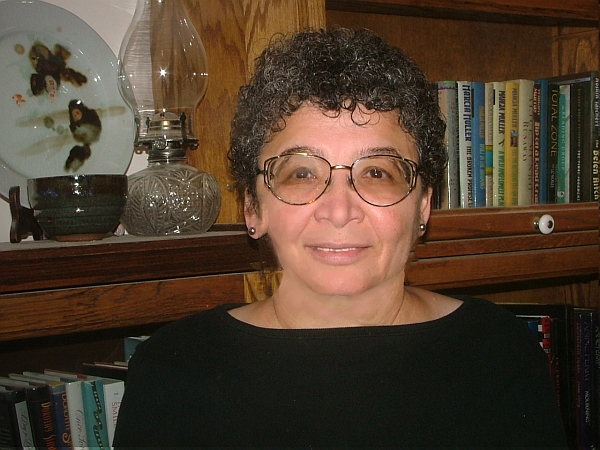
Miko Johnston is the author of Petals in the Wind.  
She first first contemplated a writing career as a poet at age six. That notion ended four years later when she found no ‘help wanted’ ads for poets in the Sunday NY Times classified section, but her desire to write persisted. After graduating from NY University, she headed west to pursue a career as a journalist before switching to fiction. Miko lives on Whidbey Island in Washington. You can find out more about her books and follow her for her latest releases at Amazon


FOR WRITERS AND THOSE WHO LOVE THEM
I plead guilty. Let me explain.
Writers may work alone, but we’re part of a community. In March I wrote a post about critique groups, which I consider a great way for writers to find the encouragement and support they need.  But there’s an even better way for us to help each other that is being virtually ignored. I call it THE THREE ‘R’s:

READ
REVIEW
RECOMMEND
READ: One of the best ways we can support our fellow writers is to purchase their books. Why not devote a bookshelf to their work. I put my colleagues’ books in a guestroom so visitors can be introduced to their writing and it’s worked brilliantly. If you worry about the cost or where you’ll put all those paperbacks, invest in an e-reader. A basic model is modestly priced and you’ll recoup the cost fairly quickly since electronic versions of books are often less expensive than print copies. You’ll also be able to buy books that are only available in electronic format. Then think of a clever way to get your friends to ‘sign’ your copy. If you’re in a writers group, suggest a book swap and trade a copy of your book for theirs. A signed copy of a book makes a great gift as well, so buy a few from the author for those last-minute occasions and offer to do the same for them.

REVIEW: “Readers always tell me they like my books, but why don’t they write a review?” Sound familiar? And it’s more baffling when the readers are other writers.
Reviews are the lifeblood of book sales and marketing. There is no better way for writers to support each other than by reading and reviewing each other’s work. We writers all know this, and yet…. How many reviews do you have from other writers, and have you posted reviews of their books?
Non-writers may not realize the importance of online reviews, perhaps more important than purchasing the book. Ask everyone you know who’s read your published work to leave a review on Amazon (also suggest Barnes & Noble, Goodreads and Smashwords). Then check to make sure the review is posted; Amazon removes comments for reasons other than ‘inappropriate’.
Do tell your reviewers to be truthful; while anything less than three stars counts negatively on Amazon, their algorithms are based on an average score, so a few low ones won’t hurt if you get enough good reviews. The key is to get enoughreviews. No one cares if you get five star evaluations if you only get a few; they’re meaningless because readers assume it’s your mom and BFFs writing them. You must be honest as well. If you feel you can’t praise someone’s book, and that happens, then at least tell that to the author – I wouldn’t want to post anything less than three stars for a writer I know. And keep in mind the generation gap when it comes to technology. I didn’t know whether to laugh or cry when I read this on Anne R. Allen’s blog –
One sweet woman in her seventies had been devastated to find out that giving a book “a gold star” wasn’t letting people know she liked the book. She thought one star was a good thing.
If Grandma is uncomfortable posting a review, have her express what she wants to say and let her ten-year-old grandkid post it for her.

RECOMMEND: We tend to recommend books we enjoy, but we don’t always include those by authors we personally know. Recommending is perfect for those who feel uncomfortable writing or posting reviews online, or who want to do more to help your writing career.
If they liked your book, ask your family and friends to recommend it to their family and friends, as well as their neighbors, fellow worshippers, volunteer groups, clubs, and co-workers (especially the ones who always ask them to buy the cards/wrapping paper/candy their kids have to sell for school!). If they have a blog or Facebook page, ask if they’d mention your book and include a link to your author home page. Suggest they buy additional copies, which you’ll graciously sign, for last-minute gifts. And advise them to recommend your book only to people who’d enjoy it – if cousin Flora’s idea of the great outdoors is a parking lot without lines, she probably won’t be interested in your camping memoir.
People outside our writing community who want to help need to be shown how.  And if we truly want to encourage and support each other, we all must make the effort to do it, in the most effective way. If we do, then ultimately we’ll all benefit. Isn’t that what a community is all about?
I confess to some failings – on how many counts do you plead ‘Guilty’?

I AM NOT A ROBOT…. by Rosemary Lord

Actress and author Rosemary Lord shares many characteristics in common with her character Lottie Topaz, including an indomitable spirit.  So, when she stepped off a plane from England the other night, her body was exhausted and jet-lagged, but her wit and determination were intact. She brings the Writers in Residence blog her thoughts on a topic that will cause many heads to nod in agreement as they read her latest post. Enjoy!


I AM NOT A ROBOT

Okay, so I have to copy that squirrelly lettering to prove I am a person and not a robot. I can do that. But the rest of all that trickery appearing on my computer leaves me cold. Well, more like frozen with panic.
            I am a writer. I like to write – and have done so since I was about 4 years old. I am most content with a large legal pad or exercise book, a selection of well sharpened pencils and a good eraser. From there I can happily write away the hours.
            So when our fearless WinR techie Jackie Vick sent our group a carefully written explanation of how to participate in the new blog, I almost had a case of the vapors.
            But I gritted my teeth and followed her instructions. And so, in those early days, for 1-2 hours every day I determinedly followed these instructions to the letter, attempting to send a literary contribution. But Google was one step ahead of me. “Not so fast,” it seemed to say. “Password not recognized” and other phrases that stopped me going further, kept popping up on my screen. I did as bid and changed my password so many times that many, many days later, umpteenth new password added, I ran out of ideas and used a rude word. Google was not shocked, and repeated “Password not recognized.”
            I considered chucking my computer through the window, but thought better of it and spoke with Jackie. My new un-techie system is to simply send my words to her and she does the rest.
            But why won’t my brain grasp this new knowledge? Why am I so resistant? Is it just me? Admittedly, my writing is usually of a world one hundred years past: quill pens and an abacus. Ah, that’s what I need – a quill pen and an abacus.  But I seem to have developed an allergy to this brazen new world of MAC versus PC, Twitters and Blogs, Excel Spreadsheets, Quick Books, Drop-Box and such.
            Now if one is writing a journalist piece with photographs, I can understand all that trickery. And I can actually do that stuff, too, from my journalism days. But it’s the submitting bits of text and the passwords and not really knowing how to get it there. And “what ever happened to that page I just spent 2 hours writing, that has now vanished from the screen?” that stumps me.
            Now I’m not a stupid person. In fact I have several GCEs and other clever things from my English Education at Tiffin’s Girls’ School (consistently in the top 3 best schools in England, my family remind me) to prove it – sort of. So I can’t be that stupid. But it’s all this new techie stuff that is my down-fall.
            “It’s simple,” my 18 year old Australian friend Maddi tells me as she taps away on my i-pad. “There: done,” she hands it back to me – and I am none the wiser. So I feel that I’ve become really stupid… “You’re thinking too hard,” Maddi tells me. “Don’t try to work it out – just do it.” Easy to say.
            But then, when I start writing about Hollywood one hundred years ago, or trotting out facts about my travels in various countries and my adventures through the years, I comfort myself with the recognition that I can do some things. Plenty of things. Just not the techie stuff. I really am not a robot – thank goodness…


The WinRs are Brainstorming

From Wikicommons, Bundesarchiv Bild 183-13800-0006,
Berlin, Frauen beim Selbststudium, Weiterbildung.jpg

Writers need to take time to regroup, restore, and refill their mental reservoirs! 


The members of Writers in Residence are off this week to do just that. We’ll be back again next week with a post from Miko Johnston!

Until then, keep your pencils sharp and your typing fingers limber.

Rewrites Are Like the Movie "Groundhog Day" by Jacqueline Vick

Every morning, Phil Connors wakes up in Punxsutawney, PA, and it’s Groundhog Day. He has to relive the same day over…and over…and over…until he finally gets it right. That’s the premise of the movie Groundhog Day.

When Phil first realizes that he has freedom from consequences, he does all the naughty things he’d never get away with if the day didn’t start over fresh at 6:00 AM the next morning, like pigging out on pastries…while smoking. This is the writer at the beginning of the project. Authors read the same thing over…and over…and over again, trying to get the right outcome so they can move on to the next project. When we’re fresh into the rewrites, we might come up with ideas that seem crazy, but we try them anyway.

Then Phil starts to seduce the women of Punxsutawney, sussing out their likes and dislikes day by day so he can bed them. When he finds a woman who is worthy of love, he discovers that he can’t manipulate her into a seduction. It fails every time, and it becomes an obsession until finally he despairs and tries to kill himself every conceivable way, only to wake up in one piece the next morning. In the writer’s next passes through the manuscript, we try to seduce the reader with just the right phrase, but as we work through to something worthwhile, all the manipulation becomes obvious. It reaches the point where we think the whole work is crap and we want to “kill it”and start over.

Phil finally accepts his position,  and he starts to do one thing every day to improve himself. He finds out where danger lurks, and he’s always in time to save the day. He takes piano lessons until he gradually becomes a great jazz pianist. He stops focusing on his wants and looks outside himself, and he becomes the great guy who wins the heroine’s heart.  Eventually, we writers stop working at being funny or pulling heartstrings or making a point, and we just let go and make it all about the reader’s experience, and that’s when things fall into place.

The journey isn’t always as fun as the movie Groundhog Day, but the results are worth the effort. Now if only we could figure out a way to skip the first steps… .

Story Telling—Yet More Thoughts on Setting by M.M. Gornell

A few weeks back, a wonderful letter from Bill Thornton to his sister Kate Thornton, was posted here at Writers in Residence  talking about setting, characters, and much more. His letter was eloquent and on the mark (I think!). In the same time period I wrote out some thoughts on setting for the Public Safety Writers (PSWA) newsletter. And most recently, Gayle Bartos-Poole added some very smart how-to thoughts in Location, Location, Location.And since I (clearly in good company!) also think setting is so important, I thought I might take the topic to my personal level.

When trying to figure out what to do writing-wise, I rely upon what I like to read—what pulls me into a novel and what keeps me reading. Character and Setting are always my first thoughts,with all the elements Bill and Gayle talked about coming into play. Of course, story is also important. However, I might have in my hands the most intriguing story every written, but if I don’t like the protagonist, or at a minimum, care about what happens to him or her, I won’t read the book. And equally important, if I’m not mentally or emotionally “taken away”,once again, the book won’t get read. So for me, it is so true. Setting done well is a key ingredient—actually, an essential ingredient—for an enjoyable reading experience.
Adding to those thoughts for my own personal writing, there’s the additional aspect that setting has also been my story inspiration. Whether walking through a lush green evergreen forest in the Pacific Northwest, or mesmerized by the sight of long abandoned structures, silhouetted against lower Sierra foothills by a brilliant sunset, or mentally captivated by a rundown mini-mart, neglected and lonely in the Mojave desert, or standing in awe, taking in the expansive view from a Michigan Avenue high-rise apartment of Lake Shore Drive and the lake beyond. Add to the list a few more setting inspiration points like abandoned A-frames, Quonset huts, mining caves, defunct swimming pools—the list goes on; all with tales to tell, stories fanciful or real—all inspiration.
Which brings me back around to what I like to read. The authors I consistently read with anticipation and joy are the ones that have memorable characters that take me to a place—setting—I don’t want to leave. A place where I’m sorry I have to leave at book’s end. Developing “setting” as best we (I) can, I think is well worth the time and effort. Challenging, I think. But aiming for a strong sense of place, I also think, is a key ingredient to the “art and craft” of storytelling. Bill and Gayle talked so eloquently about setting I hesitate to add my little list. Nonetheless, here it is:

  •          Fully developed, setting adds the underlying layer for a story—the glue so to speak that holds everything together. (Maybe not the best metaphor, but similar to the background in a photo.) It establishes a protagonist and reader firmly on the time-space-continuum, and in a particular place in the universe.
  •          Where a protagonist “is,” determines in a multitude of ways, what and how characters face and deal with the dilemmas thrown their way. And what physical items and constraints are available, not only in daily life, but at hand to maybe save a life? Or solve a crime?
  •          The comparison between a protagonist’s current setting versus ones from the past can add an emotional level—e.g., guilt from deeds in a past setting, hope for the future from where they are now, even being part of their understanding of the present.
  •          Enables the reader to experience through words and a character’s eyes, the tastes, smells, sounds, sights, and feel of your protagonist’s world. Emotional and visual pictures readers can’t forget. (I have several such pictures from books I’ve read that I will never forget.)
  •          Setting is a key way to show personalities—how they deal with their environment. If a character can see, feel, love or hate a desert, a lake, a city, or???—that response to the landscape can be a key for a reader to love or hate a character.

A picture I took out my kitchen window, that along with rereading The Moonstone by Wilkie Collins inspired my latest book.

"Episodic Kid Lit"

by Jackie Houchin
Or, how I got started writing serialized children’s fiction.
I guess it began with verbal bedtime stories. When my three granddaughters were quite young I would tell them impromptu stories about anything in their lives – toys, pets, games, etc.  I tried to make them exciting and vivid, and always managed to finish the story before it was time for prayers and sleep. Next visit I would begin where I left off.
When the first granddaughter was about six and already an eager reader, I decided I wanted her to love mystery stories as much as I did. But how would I do that? There were Nancy Drew chapter books available, and I collected them for later, but I wanted to start her right away.
Then she broke her arm, and I got an idea.
I created a little girl who had a family and lived on a street much like hers, a little girl who also broke her arm, but under some mysterious circumstances.  Then I introduced the two girls with a letter, like this:

Hi Shannon –

My name is Molly Duncan.  I know your Grandma.  We see each other at the park sometimes. 
Last time she told me how you broke your arm when you were riding a scooter.  And, you know what?  I broke my arm too. Not just now, but way last summer, in July. Your Grandma said I should write to you and tell you about it.
Do you know what I was doing?  I was riding my bike when it happened.  But, I’ll tell you about that later, and what happened because of it.
But first I want to tell you about myself.  (I was going to send you a picture of me, but I lost it.) 
I’m 7 years old and I’m in the second grade.
I havered hair, which is very curly. It is kind of long, and I usually wear it in two French braids that my Mom fixes for me. But sometimes, some of the hairs get loose and frizz out from the braids. 
My eyes are green, “just like Granny Smith apples” my mom likes to say.  I wish they were blue like Benji’s. Mom says his eyes are “like the sky”.  Oh, I forgot to tell you.  Benji is my little brother. When he grows up he will probably be called Benjamin or Ben, but right now we call him Benji. He’s four years old.
I also have freckles. Do you know what freckles are? They are tiny, light-brown spots that most people have on their faces, and sometimes their arms, if they have red hair. I only have them on my nose!  They remind me of sesame seeds on hamburger buns!  When I think of that, it makes me giggle.
And last of all, I wear glasses, thick ones that keep sliding down my nose all the time. I hate wearing them, but Mom says the doctor promised if I wear them all the time now, I won’t have to wear them after “poo-ber-tee” (or something like that).
Well, anyway, about my broken arm. I want to tell you how it happened and what happened after that.  There is a mystery and a surprise about it... etc., etc.
And that’s how an eight year letter-friendship began.  (I don’t call them Pen Pals, because Shannon didn’t write back.)  For a great long while, Shannon thought Molly was a real girl that I knew!  But when she asked about it one day, I told her the truth and she was able to enjoy the installments like chapters in a book.
As Shannon and Molly got older, the stories got longer. I introduced other characters, friends at school, neighbors, older people (shop-keepers, a grandmotherly babysitter, teachers, a friendly policeman). The town took on a character too and I soon drew a poster-sized cartoonish map of the streets, shops, school, parks, church, hospitals and police station to walk through in my mind.
 I wrote about age-related situations; new-girl jealousies, pre-teen angst, and a few quite serious events; a brother in a car accident, a search for a runaway girl, a mother’s stay in a mental home. But they always had a mystery twist to be discovered over a series of letters. God, the Bible, and prayer played a big part in solving the mysteries and in learning important lessons. 
Think Jan Karon’s Mitford Series, but for kids.  (http://www.mitfordbooks.com/ )
Before long, the other granddaughters said they wished they had letter friends too.  Soon Kerry was getting letters from pet-loving Annie Black, and Jana heard from Kim Ling, a girl with four brothers. The letter-friends were all from the same neighborhood, knew each other, and occasionally crossed paths.
What fun to keep three story lines going! (I was also illustrating these episodic stories with cartoon-like characters.)
The big step came when Shannon said she couldn’t wait so long between letters. “Can’t you put them all into a book, Grandma,” she asked.  So I did, and “Molly Duncan and the Case of the Missing Kitten” was born.  Soon after that came “Princess Ebony and the Silver Wolf.” (Ebony was an ancestor of Annie Black. Think how The Princess Bride was told.)  Later “Kim Ling, Cub Reporter” was imagined.  I illustrated (very simply) each book, and included a map of the area in the front pages. 
So…. What – besides entertaining little relatives and friends – can be done with serialized children’s stories?
1.  Writers could choose a favorite age group, invent a winsome character in a compelling situation, write about her/him/them, and begin publishing the episodes as 99c short stories to promote a Children’s Book series you write, or to be given away free to those who sign up for your newsletter, or visit your blog. You could even print up a few and hand them out at panel or signing events.
2.  Episodic stories – as long as they are written like short stories with a beginning, a middle, and a satisfying ending, even if the main mystery is not solved until later – can be gathered together into a novel or novella and published. Hugh Howey did this very successfully with his Sci-Fi Woolseries.  
3. Serialized stories don’t have to be just for kids. Try a few episodes in your adult genre, or perhaps with a TV series in mind (the writers of LOST did it well on the fly… until the end that is, when it all fell apart!).
4. Or, write them just for fun to sharpen your writing skills or get over a major writer’s block. 

Location, Location, Location by Gayle Bartos-Pool


In many novels and even short stories, location acts almost like a character. A great setting sets the stage for greater challenges whether it be physical places (Mt. Rushmore/North by Northwest), climatic as in climate (hurricanes/Key Largo or Herman Wouk’s Don’t Stop the Carnival), or the local natives (from Tarzan’s Africa to the characters on Hollywood Blvd.)
For a short story, pick an easily understood setting because it needs less description; a dilapidated factory vs. a giant industrial firm making computer components for the military weapons used in…. If you get too technical, you will lose your audience and use up your word limit.
Get most of your facts right about places you only visit on the Internet; some readers are finicky about accurate descriptions of locales. If in doubt, fictionalize your locale. All the research you do will change your perception of that area even though you won’t use every bit of information that you discover. But your understanding of a region will color the entire story whether it is the incessant rain, blistering heat or rugged rocks.

Description of settings can educate the reader, but don’t get too detailed. Too much description stops the action. Some settings act as a general background. A short description such as: the local pub, conjures up a picture in the reader’s mind so you don’t have to go into elaborate detail. Some word pictures set the era and mood like the longer descriptions used by Anne Perry in her description of Queen Victoria’s England. The type of book and the mood you want to achieve should dictate the length of your descriptions.
Setting denotes the background of the character living there. A person living in a penthouse and running a huge corporation has a different outlook on life than does a guy living in a garage apartment working in a filling station. Whether you are describing a residence or a business, a character from one economic background will view the same setting through his or her own eyes. Where one person sees an efficient, profitable corporation, another will see it as a greedy, industrial monolith.
Setting also tells us how much time has passed (After two days a thick layer of dust covered every surface.)
If your story gets bogged down with too much description and it starts sounding like that travel log, describe those locations through dialogue. It will set the scene and add information from a particular character’s POV, so you not only see the surroundings, but you know how that character feels about it. Different characters can view settings differently depending on his or her personal perspective. (A woman in love can smell the flowers in the park, while her friend who just lost her job can see the wad of gum on the sidewalk.)
Use descriptions (sight, sound, smell) of locations to evoke an emotion, reaction, or establish mood. (A scummy swimming pool tells the reader the motel is seedy.) Setting can also take reader into another world (Tony Hillerman’s Indian reservation, Dick Francis’s racetrack.)
Remember “Chekov’s Gun” story. Don’t put something in a scene if it’s not going to be used. “One must not put a loaded rifle on the stage if no one is thinking of firing it.” (Anton Chekov 1889.) This tactic was used constantly in Murder, She Wrote.The camera always zoomed in on the “clue” about eight minutes into the show. During the last seven minutes Jessica Fletcher would recall that “clue” and solve the case. You always knew that clue would make a reappearance before the final credits rolled. The “clue” was part of the setting.

Treat your locations like a character. They have a lot to say.

The Effective Writer

Here is a piece written by BILL THORNTON. He sent this me in a letter – as a letter, actually – and I got his permission to post it here for you. He calls it “The Effective Writer” but I want to call it “The Character Plays the Part.”  Kate Thornton, author

The Effective Writer


In order to create a believable scene, one must take the reader to that specific place. The reader must sense the scene, its particular environment, its smells, flavors, sounds and colors, its season and atmosphere. Similarly, the reader must feel the raw emotions of the characters, the urgency of the moment, and the emotional or political climate of the particular scene. He must, in a very real sense, live in the scene if not as a player, at least as a present observing bystander.

Descriptions of the scene must be rich and vibrant, colorful and dramatic. The characters may even be a bit more than real in their ability to express their particular part in the story line. Given the need for realism, muted, subdued even melancholy effects are critical to tapping into the reader’s emotions. These are real sensations that real people feel and sense, and it’s that sensitivity and realism that make a scene believable.

A writer may express deeply committed love, raging anger, explosive happiness, or crushing emotional pain, any number of real human emotions complete with their character’s physical reactions and responses.

Anything less is not honest writing, and conveys less than the actual scene.

While the writer may have personally known these feelings and sensations, it’s his ability to convey accurately those very awareness’s to the believing reader that makes the scene work.

“Dry wiregrass rustled in the early afternoon breeze, buzzing cicadas and the rich scent of cinnamon and fresh peaches drifted over the well worn path to the creek just at the tree line.” Well, what color is the wiregrass? Describe “rustled”. Was it a light breeze, or a near wind? Were the cicadas bussing loudly, or were they a distant background effect? What kind of peaches were they? Was it a dirt path? Did it run through heady scent of lush green freshly mown lawn, or were they long creeping tentacles of aged and unkempt crabgrass? Was the creek silent and melancholy, rich with the pain of the widowed fly fisherman, or brightly babbling and filled with the memories of laughing children? Was that just a tree line, or was it a stand of rustling, quaking aspens, their brilliant trunks contrasting with deep, thick underbrush or heavy clumps of wayward field grasses?

Be in the scene to make it believable.

The writer need not actually be experiencing the emotions he conveys, though experience is the “real” of realism. It’s often said that the successful writer writes about things he knows. One cannot take the reader to rural Southern Georgia in the 1920’s unless he has been there and walked those well worn paths to the creeks, smelled that peach pie cooling on the window sill on a heavy, humid southern afternoon in the dog days of summer. He may not have actually been at the scene in those literal times, but that’s the stuff of research, and interviews, and imagination combined. Atmosphere is the stuff of creating realism. Raw emotion, drama and contrast are the stuff of the writer’s skills and talent.

When a scene is created that conveys these senses, does it leave the reader feeling angry, hurt, elated, melancholy, inspired? These are the meat of the writer’s fare. Listen to his footsteps echo, fading down a long, wet alley amongst towering brick walls rich with the sounds of unnamed apartment dwellers in the bowels of a rotting city, rife with tenements, screaming windows into the lives of those imprisoned in the confines of their own desperation. The stench of leaking sewer lines, greasy Chinese food, and diesel hangs heavy in the late afternoon stillness of a filthy, cracked and weathered doorway, its once bright and vibrant red now grease and dirt colored, thick with years of neglect and apathy.

Does the writer take you into his world to bring you into the scene and make you part of it, or are you just reading words on a printed page? The flatness of the print on the flat page is often the stuff of boredom. Living words and emotions are the stuff of writing.

Did I give you my anger, or the anger of the character? How different are they? It’s the character that plays the part. An angry scene does not reflect an angry writer. Nor does a happy holiday scene, filled with laughter, reflect a happy writer.

THE DOG ATE MY . . . [FILL IN THE BLANK]
 
Novelist Bonnie Schroeder shares some of her favorite excuses for not writing. Visit her Author’s Page on Amazon.


Meet Thunder, the newest addition to my family. She is a Swiss shepherd, close cousin of the German shepherd. She blasted into my life on November 1, 2014. As it happened, I was working on the final act of my new novel, and I was stuck. I didn’t have a satisfactory, or satisfying, ending.
So I shoved the manuscript aside, having been handed the best excuse in the world: I had a new puppy. Housebreaking. Crate training. Socializing. Bonding. And generally enjoying the fun, excitement and disruption a new baby, human or animal, introduces to one’s life.
The trouble was, three months later I hadn’t picked up the threads of my novel, and by then Thunder had fairly well merged into the household routine. But, somehow, I still “didn’t have time” to work on my novel.
Normally, I am pretty adept at squeezing maximum usage out of my time. I wrote the first few drafts of Mending Dreams while working ten-hour days with an hour-long commute tacked on both ends of the workday.
So what was up? I avoided thinking about it as we started obedience school and I focused on training my puppy. Thunder, however, did some teaching of her own. Among other things, she made me realize I needed to curb my perfectionist tendencies. A six-month-old puppy will not and should not become an obedience champion overnight. She’s a work in progress.
That got me to thinking about my unfinished manuscript, and—duh! I finally figured it out. I did not have the perfect ending for the book. I was stumped. It wasn’t lack of time that kept me from working; it was lack of direction.
Somewhere along the line I’d forgotten a crucial fact about being a writer: you can’t fix what isn’t on the page. I’ve made enough false starts over the years that this lesson should have been permanently engraved in my brain. But it wasn’t.
So I took a deep breath and dived into the chilly waters of revision, crafting a new ending, better than the one that had left me stuck. Well, maybe “better” is an overstatement. It was different.
And something very weird happened, although I should have seen it coming. As I typed up my hand-scribbled draft, ideas began to float around in my brain. Hey, maybe instead of ABC, let’s try XYZ. Yeah, not bad. But maybe MNOPQ would make more sense? Try it. And try again, until you have something that kinda sorta approximates the vision in your head.
That’s how I did it, bit by bit, while Thunder was taking naps. Puppies sleep a lot, so I had many half-hours and hours to do what I thought I “didn’t have time” for.
Another thing Thunder taught me is that imperfections aren’t fatal. My puppy was born with a stubby tail, which some might consider a flaw. But to me she’s unique and special, and that little metronome tail is always wagging. Likewise, no piece of writing is perfect, and often it’s the flaws that give it depth and worth.
Thunder is flunking novice obedience—well, I’m flunking, and I’m taking her with me, but we’re learning a little. Next time around, or the time after that, we’ll do better. But if we didn’t start somewhere. . . Well, you know how it goes.
As I worked through all this angst, I came face to face with some truths about myself: I’m lazy. I like excuses. But underneath all that, writing is in my DNA. I may not be the world’s best dog trainer, but I am nothing if not persistent (some would say “stubborn”.) And, most important, I am a writer, and always will be.
So let me ask: what’s yourfavorite excuse for avoiding stumbling blocks in your writing? And how did you overcome it?


The Value of Critique Groups

THE VALUE OF CRITIQUE GROUPS 
by Miko Johnston
Did you know that Writers in Residence began as a critique group? Gayle, Bonnie, Rosemary, the Jackies and I met monthly to discuss one member’s set of pages. Although we all benefited from the peer review, we grew to enjoy each other’s company and finally accepted that work interfered too much with play. From then on we became a social group, meeting monthly for lunch and conversation. We relegate critiquing to a by request as needed basis (to which we always say yes).
As much as I enjoy getting together with my WinR friends, which now includes Kate and Madeline, I must credit their critiques for my success as a published author. Aside from their helpful comments to me, evaluating their work sharpened my ability to judge my own. Critique groups have been invaluable in my personal life as well. Last year I moved from California to Washington, where I knew no one. After spending over a week alone in my house, I researched local writing groups and found one in my new hometown. The members welcomed me and since then we’ve become good friends.  I also belong to two other groups dedicated to critique – one strictly online, one in-person.
Membership in a writers group can provide support, encouragement and networking opportunities for the independent writer. You’re probably aware of the national organizations that champion a popular genre like romance or mystery. However, if you want to join a critique group, here are some things to consider:
There are two basic types – public and private. Public groups tend to be large organizations like the Ventura County Writers Club, Whidbey Island Writers Association, and the recently defunct Alameda Writers Group.  They hold monthly general meetings featuring a guest speaker and offer various special interest groups – SIGs – geared to a specific genre of writing. You pay an annual membership fee, which entitles you to participate in their SIGs. The group I found in Washington, Just Write, is a unique public group anyone can attend. We gather once a week at a coffeehouse with our notepads or computers and just write for two hours. Afterward, we head to a nearby pub to socialize.
Members of public groups who want more autonomy or have different aspirations often form private groups like WinR. Membership is by invitation only and usually requires a probation period, where the newbie participates in a set number of critiquing sessions before presenting his or her own work.  Some private groups meet in person, where members read their work aloud. Others exchange pages online and email their comments to the author.
Which type of group is better? That depends on what you need. I always recommend public groups for beginners – if you’re interested in writing but haven’t done much, if you’re unsure of what genre suits you, if you’re unsure if you truly want to write. Public group SIGs host a variety of skill levels. You can experiment with different genres to find one you like. You’ll learn a lot very quickly, for you’ll get to read some awful stuff. Since membership tends to fluctuate you’ll interact with many more writers and get a broad diversity of opinions in these groups. Best of all, if you find other members with whom you’re simpatico, you can start your own group.
If you’re well on your way to publishing or have published already, then consider a private group. Working with people you know builds trust and you minimize overexposure of your pre-published manuscripts. There is some debate as to whether it’s better to limit a group to a specific genre. I think that makes sense if you’re working outside mainstream fiction, particularly controversial or quirky sub-genres that traditionalists might not ‘get’. Otherwise seek or form a mixed genre group comprised of writers with a comparable skill level.
Writing is such a solitary endeavor we often get lost in our own head. It helps to connect with like-minded people who can spot the glitches in our work that we sense but can’t quite see.  So does sharing a common goal, whether it’s completing that first novel or getting it published.
Do you, or did you ever, belong to a writers critique group? Share your experiences with us.