 by Paul D. Marks
As writers we want to convey certain thoughts, emotions and ideas to our readers. To do that we may use literary or historical allusions, scientific and cultural references. And, for the most part, we expect our reader base to have a degree of shared knowledge so that when we mention certain things, anything from Freud and Shakespeare to Billie Holiday or Queen Victoria—who gave her name to a whole era—to the simple phrase “the straw that broke the camel’s back,” they’ll be able to understand what we’re saying and relate to it. And if they don’t know something to hopefully look it up.
Unfortunately, our cultural ties-that-bind are breaking down, not being passed on to younger generations. Yes, I know, every generation says this regarding the successive generation. But I think it’s gotten worse in the last few decades. Blame the media or social media, blame the internet, video games, teachers, the educational system, parents, the breakdown of the nuclear family. Blame whatever you want, from whichever side you’re on, but it seems to be true regardless of the cause.
For a variety of reasons, younger people today seem very uninformed about history, literature, pop culture (except their own pop culture), high culture and most other things that came before them. And sure, in every generation something gets left behind. When I was a kid I might not have known who Catherine the Great or Katharine Hepburn were. W.E.B. Du Bois or Jorge Luis Borges. Or the difference between Benny Goodman and Beethoven. But eventually they came into my consciousness, because I was curious and because I was exposed to them one way or another. But people today don’t know major figures from the recent past or even from the present. They don’t know what major wars were about or even have a clue as to when—or that—they occurred. And they barely know major figures from the past, who they were and what they did, people like George Washington, FDR. Lincoln. Cesar Chavez. And for many of them it doesn’t seem as if this knowledge ever seeps into their consciousness.
 When I was going to pitch meetings in Hollywood, I would start off talking “normally,” as if the people I was pitching to had a shared base of knowledge with me. I quickly learned that wasn’t the case, so I dumbed down my pitches to not include anything that might make them feel insecure or ignorant. Hell, they didn’t even know the great movies, so it was hard to reference them as well. Sure, they’d heard of Casablanca, but most had never seen it. So if I was pitching something that was “a modern day Casablanca,” I had to do it by describing the plot in detail and maybe, or maybe not, throwing in a line about it being a modern day Casablanca.
And these were not dumb people; many of them came from and still come from Ivy League schools. Even so, they wouldn’t know such basic things as World War II or who fought on which side in Viet Nam or what the Cold War was and who was on which side there. Or that a “black comedy” doesn’t necessarily mean it has African-American characters. They also might not know basic phrases or expressions, like the one about the camel and the straws mentioned above, so you’d have to explain the meaning to them. Once you have to do that you’ve lost.
And this doesn’t only apply to Hollywood people, I’ve run across it talking with psychologists and other professionals while doing research, as well as people I meet in everyday life. Basically many under the age of forty or so, and plenty over forty too. What I’m saying here may be anecdotal, but there have also been studies and “quizzes” that prove the same thing. Some years ago, I remember seeing a questionnaire of, I believe, journalism students, showing how little they knew of the world around them, past and present. I was shocked by it, because if anyone should be curious about history, their history, world history, current events, you’d think it would be journalism students.
Many of the great works of literature have biblical references, but again, these people are unaware of them. Hemingway uses biblical allusions in The Old Man and the Sea, The Sun Also Rises and other works. Moby Dick, considered by many to be the greatest American novel, is filled with them. T.S. Eliot uses them in The Wasteland. And Bob Dylan uses biblical allusions in many songs that would go over most people’s heads today. Even the TV show Lost used biblical and literary influences. I wonder how many in the audience knew what they were or bothered to look them up. How can they know what any of these people are talking about or trying to say if we don’t know what they’re referencing?


The same goes for Shakespeare, Greek mythology and other references to great works of the past that our society was built on. Even popular author Stephen King uses biblical and Greek mythology references and foreign phrases in some of his writing.
I remember looking up foreign phrases all the time when reading various things. So much so that in the pre-internet days I used to keep both a regular dictionary and a dictionary of foreign phrases close by when I was reading. I would look up references I was unfamiliar with. Pre-internet, I’d also look things up in the Britannica and other reference sources. I wanted to learn all of that and I didn’t feel inferior for not knowing it. But today, even though it’s easier with the internet and hyperlinks, it seems that many people lack the curiosity to expand their horizons.
On occasion, I like to use various cultural references in my writing. But if we have to think twice about including such references, it dumbs down our work and society too, as well as the cultural ties that bind us together.
When working on scripts, for both film and radio, I was actually told to dumb things down. On a radio show another writer and I were called on the carpet and given a condescending lecture by the producer about using words that were too big…like condescending. I’m sure it was because he didn’t know what they were.
All one has to do is recall Jay Leno’s Jaywalking segments to see how little people know, if people today, a few years after he left the Tonight Show, even remember Leno had a show before his cars show. He would show people on the street pictures of Presidents Bush and Obama and many couldn’t recognize them. He would ask simple questions like who is Joe Biden or who crossed the Delaware. And he has said that, contrary to what some believe, they didn’t have to search for “dumb” people. Basically they just went with the first few people they came across, because they didn’t have to search any further. And maybe Jaywalking isn’t scientific, but my own personal experience has borne out those numbers. It’s not that they’re stupid, it’s that they’re apathetic. The why of that is for another article.
 Wrapped up in their own little narcissistic worlds, many people don’t know what’s going on in the Ukraine or the Middle East—or across town. They know little about historic figures and literature as well. Of course nobody can know everything, but it seems that a thirst for knowledge has been lost to a great extent and that some people even seem to wear their ignorance as a badge of honor. Well, I guess I do that too. Aside from Kim, I can’t name another Kardashian. Aside from Pookie or Gooby or Snookie (hmm, the spell checker didn’t recognize Snookie’s name, but I guess it won’t be too long until it does), I can’t name another Jersey Shoreite—my badges of honor—assuming they’re even still around spreading their own special brand of sunshine.
 While we have more options than ever for learning, do you think most people are using the net to look up Madame Curie or Plato? Of course there are some bright lights out there like the Khan Academy website where you can take courses on everything from art history to calculus. And Wikipedia is a great resource, but one that has to be used with caution, as a lot of the internet is filled with misinformation, conspiracy theories, celebrity gossip sites and pseudo news websites that are really thinly veiled advertising sites.
The use of computers, cell phones, social media and Twitter, etc., have changed the way we interact with each other and the world, along with the fact that, because everyone is so spread out these days, they don’t have their grandparents nearby to pass on that generation’s knowledge. People today have shorter attention spans, don’t want to read long articles, often don’t read about the past or even watch history shows on TV. And, of course, there’s little about literature and history, besides Nazis, on TV. The Discovery Channel shows BattleBots (a lot to discover there) and the Learning Channel runs OutDaughtered. And when there was a Biography Channel and it was actually running biographies (which was rare) they were generally about movie and TV stars of little significance and only once in a while could you find a biography of some truly important historical figure. And these days the Biography Channel has given way to some other amalgamation. But why is this? Well, one can only surmise it’s because people don’t want to learn about “real” people. They want to learn about vapid celebrities or watch superficial reality shows. So the Discovery Channel shows Naked and Afraid and the Biography Channel becomes a PR flack’s best friend. Hey, I watched some of those too, but it’s not all I watch or read.

All of that said, it goes both ways. I frequently don’t know who this or that “important” person of the current pop culture is. But I also often look them up to see what I’m missing. There are more options today and more niches catering to smaller groups of people and that’s fine. But we still need a shared knowledge of our past, who we were and what makes us who we are.
I don’t like writing down to people. I think writers should challenge their readers to want to learn more, look things up, expand their vocabularies and their worlds. The writer needs to challenge them to pick up an encyclopedia, history book, or surf the web beyond the paparazzi photos and cute cat videos (hey, I like them too!). I love using examples from history and literature, etc., in my writing. And I’d hate to see those get lost in the quicksand of lethargy and jaded narcissism that is our society today. There’s more to life than celebrities and more to know than the latest housewives’ gossip and what’s happened just in the span of someone’s conscious memory. There’s more to life than selfies, in both the literal and figurative sense.
***
And thank you for hosting me, Gayle and the Writers in Residence. I’ve enjoyed being here.
***
 BIO: Broken Windows, the sequel to Paul D. Marks’ Shamus Award-winning mystery-thriller White Heat hit the shelves 9/10/18. Publishers Weekly called White Heat a “taut crime yarn” and said of Broken Windows: “Fans of downbeat PI fiction will be satisfied…with Shamus Award winner Marks’s solid sequel to… White Heat.” Though thrillers and set in the 1990s, both novels deal with issues that are hot and relevant today: racism and immigration, respectively. Marks says “Broken Windows holds up a prism from which we can view the events burning up today’s headlines, like the passionate immigration debate,
 through the lens of the recent past. It all comes down to the saying we know so well, ‘the more things change, the more they stay the same’.” His short stories appear in Ellery Queen and Alfred Hitchcock Mystery Magazines, among others, and have won or been nominated for many awards, including the Anthony, Derringer and Macavity. His story “Windward,” has been selected for the Best American Mystery Stories of 2018, edited by Louise Penny & Otto Penzler, and has also been nominated for both a 2018 Shamus Award and Macavity Award for Best Short Story. Ghosts of Bunker Hill was voted #1 in the 2016 Ellery Queen Readers Poll. He is co-editor of the multi-award nominated anthology Coast to Coast: Private Eyes from Sea to Shining Sea. www.PaulDMarks.com
###
Posted for Paul D. Marks by Gayle Bartos-Pool. Thanks for joining us today, Paul, and for your words of wisdom.

 “Why do we do it, eh? Write, I mean…”
 For me, it’s my way of having a voice. Not everyone wants to sit and listen to me pontificating. But when I write, my readers can choose – or not – to read what I have written whenever they want.
 As I grew older, I became fascinated with the old Hollywood movies and my writing morphed into something else.
 I realized I loved sharing the knowledge I uncovered about Hollywood in those very early days. I want people to know what it was really like back then. I want to share what I know: To show what the old movie sets were like during silent movies – the open top stages standing cheek-by-jowl with each other. Because there was no sound recorded in those days, there was a cacophony of music, actors talking, the director calling out directions, laughter, screams – all at the same time from different corners of the movie lot. I write about the little details of Lottie’s make-up case, showing what make-up was used in 1925; a lot of this was gleaned from my mum who devoured Hollywood magazines as a young girl and subsequently instilled in me a fascination for that era.
 I write about my travels – sharing those experiences on the page. I have had a lot of adventures in my travels, mostly throughout Europe on film locations when I worked first as an actress and then later as a journalist, and I love to share those times – especially on the written page.
 Ironically, I found a Blog called Planet Grief. It was written by English children’s author Helen Bailey, after her husband tragically drowned in Barbados in 2011. “A wife at breakfast. A widow by lunch,” she later wrote. Grief stricken, Helen was unable to get back to her children’s books, so she began writing the blog. She called it Planet Grief, because she felt that without her beloved husband John, she was living on another planet. Others who had lost loved ones responded to her blog that was filled with tears and laughter and tales of their pet dachshund. She even met some of her followers in a local Coffee Shop, to commiserate.



 A few authors still take
  He’s happy that talented people at Bantam, his publishing house, produce his e-newsletter and send it floating into cyberspace where computers grab it for those who‘ve signed up. “I don’t know much about digital marketing”, he admits. But the
 “The better solution is to provide value to the reader,” he said. “My e-newsletter is called The Snitch and talks about how to avoid scams as well as a little about my writing news. Authors should find subjects that readers like to read about, and make it the primary focus. Your books should feature secondarily most of the time.”
 There’s a TV show I no longer often watch, but in its day with me, I absolutely loved. The show’s name is/was, a variant, of “How’s it made.” When I watched faithfully, they often visited the manufacturing processes for different foods, many I knew about, or ate. With that idea in the background, I thought sharing another twisting-turn and stop on my winding-writing-road might be fun (and cathartic for me). This time, stopping at the “plotting-land” rest stop.
 Created a character (a villain) in my last Rhodes adventure that I’ve become fond of, and now want him to have a key part in my current story-line. Yes, my mind says, Mugs Nightshade needs to be in the mix somehow,
 Easy putting all that together, right? Just move the puzzle pieces around until they all fit together intriguingly. Ha!
 A few days later I threw out some stale bread crusts that I’d cut into tiny squares. (I’d hesitated only briefly as the thought of making croutons crossed my mind.) Too much trouble, and besides, maybe my new feathered friends would come again.
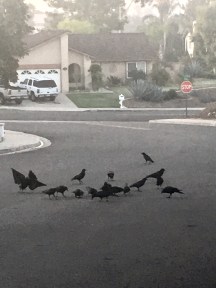 Now I have twenty-four black birds each morning. And they are beginning to make a lot of noise if I’m late. A man down the street came out with hands on hips and frowned at me. Dog walkers give my house that “look” as their dogs pull on their leashes towards the kibble mix.


 Here is one really cool way to make a character different: Whether he or she is a major or a minor actor in the piece, give him or her an accent. That doesn’t mean you have to write their dialogue all in French or Pig Latin. In fact, too much of a good thing can turn off your readers. But a word or phrase sprinkled in to give the reader a taste of that foreign accent, regional twang, or distinctive way of speaking… speaks volumes.


 What do writers do with old ideas?



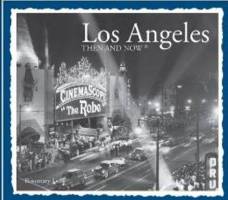
 by Rosemary Lord
 There is a series of things we are told never to begin a story with: The weather, the phrase
  Then, there’s the ending. Always leave ’em wanting more! Of course, you have to tie up the
  When I shattered both ankles some years ago I was earning my living as an actress, while writing on the side. That acting door closed because I was in a wheelchair for several months, before I learned to walk again. So my writing career was reborn, starting with my
  Who knows how this new chapter will end or when this door will close and a new door – or window – open. But I know that whatever I write I will start with a great ‘hook’ and at the end endeavor to leave my readers wanting more!

 The Writers in Residence
You must be logged in to post a comment.