
When Jackie H. asked me to talk about indie publishing, or self-publishing, I wanted to write something helpful for those who are considering going the indie route. You will find plenty of people online ready to tell you the pros and cons, but once you’ve made up your mind, what’s the best way to go about it?
There are people who can help you step-by-step through the processes of self-publishing. The absolute best is Sarah Cannon at Publish and Thrive. There isn’t much you won’t learn from her.
The question is, should you go this route. It is a LOT of work. You will need to commit both time and money. Here are the top five things that anyone considering the indie author route needs to know.

1. Your writing is your business. Treat it as such.
If you are writing as a hobby, or if you simply want to publish a book of recipes or family memoirs for your own group, no worries. However, if you intend to make an income at this, then treat it like a business. That means:
- Showing up to write when you don’t want to. You wouldn’t skip your office job if you weren’t in the mood.
- Take continuing education, especially in those areas where you are weak. Every profession requires continuing education. You’re responsible for yours.
- Track your expenses. And there will be expenses. Cover artists. Editors. Software. Subscriptions. Know how much you are spending on your career.
- Have a budget. It’s easy to go overboard with advertising, etc.
2. You Will Have to Do Things You Don’t Like.
I’m not fond of social media, but that is where readers are. So, I do it. With all the emerging social sites (have you heard of TikTok?) there is a learning curve. Consider it part of your continuing education.
If blogging is something you plan to do, (or YouTube or Facebook Lives) learn it. Don’t depend on others to do it for you. If they are busy or decide they no longer want to help you out for whatever reason, you’ll be stuck. Don’t let your career be at anyone else’s mercy.
Someday, when you have enough income, you can hire a virtual assistant to do these tasks for you. 🙂
3. Know Your Limits
You can’t do everything. You aren’t good at everything. Unless you are a social media wiz, focus on one platform and do it well. You can always expand.
The same goes for volunteering. This is an excellent way to network and get your name out there, but you still must find time to write, right? Know when to say No.
You may have seven wonderful ideas for seven different series. I understand. Pick one. Once you get the first few books out, if time permits, you can branch out.
4. You Can’t Do It Alone
Although writers tend to be introverts, you can’t live in a bubble and sell books. I’m sure there are exceptions, but they are probably not you.
Join writers’ groups. Make sure they are professional and supportive. If you write mysteries, Sisters in Crime and Mystery Writers of America are excellent groups, though not the only ones. For Romance, you can join Romance Writers of America. Every genre probably has a group.
Through these groups, you can also make connections and form smaller groups to help critique, promote, or whatever your group decides to focus on.
Subscribe to Indie Author Magazine. Join Indie Author groups on LinkedIn or Facebook or wherever you find them. Check them out first. You don’t want to waste times on groups that don’t match your needs.
I’m a member of three Sisters in Crime chapters–Los Angeles, Phoenix, and Chicago. I also belong to Novelitics, a group of writers who critique each other’s work and offer support. It’s led by author Kim Taylor Blakemore, and she keeps creativity alive through workshops, challenges, and targeted topics. You can check out a free trial here.
5. Enjoy the Process
Overnight Success is a rare animal. As rare as unicorns and dragons. It will take time to build a career. Probably years.
We all have “those days”, but if you aren’t enjoying the writing and you break out in hives when you need to tend to the business side, indie publishing might not be a good fit for you. Because if you’re going to invest the time it takes to become successful, you certainly don’t want to dread each day.
For those who are super serious about following this path, I highly recommend bestselling author Sarra Cannon’s Publish and Thrive course. She covers everything you might want to know step-by-step, and there are weekly Zoom sessions as well as a Facebook Group where you can ask questions. She just closed her last class for 2021, but work on your book until the next one opens and follow her YouTube videos until then. You will learn a lot from her.
Good luck!



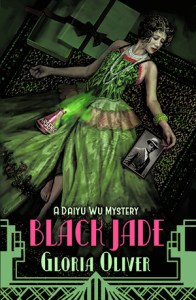 What a fascinating book! It’s very different from the usual historical cozy mysteries out today. It has a main character who is unique and amazing in her disability, living in a disguised house with her once royal parents and a pair of staff who love and protect on her.
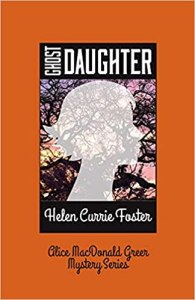 This is an amazing, sometimes jaw-dropping, mystery-adventure in which the heroine, Texas lawyer Alice Greer, risks life and limb to fulfill the last wishes of her friend Ellie. In Ghost Daughter, the newly widowed Ellie has discovered her long-lost daughter, conceived at age 17 and given up for adoption decades earlier. She wants to include her somehow in her estate and asks Alice to be executor if/when she dies.


 It’s HER UNDERCOVER REFUGE, the first in my new Shelter of Secrets miniseries for Harlequin Romantic Suspense. That miniseries is a spin-off of another, also for HRS, that was called K-9 Ranch Rescue.
 Oh, and in the meantime, my next Harlequin Romantic Suspense, UNCOVERING COLTON’S FAMILY SECRET, part of the Coltons of Grave Gulch miniseries, will be a November 2021 release.







 Scenery and characters—for me, writing’s “Holy Grail!”
 So thinking and looking back, I’ve unconsciously been using—first a characters words (through dialogue/interactive and solo), second, what they are thinking (in narrative exposition parts), and then what they actually do (storytelling and action bits). Sometimes, their words, thoughts, and deeds are contradictory, which can also define their character.
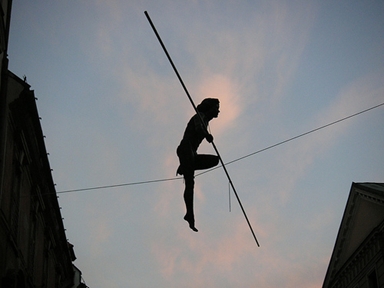 glimpses into him. For sure, I know exactly how Leiv Everett Rhodes looks in my eyes, but not sure if my readers do. Although I don’t think I want a reader to see “my” Leiv in their eyes, but a Leiv they like looking at. Another tightrope!






You must be logged in to post a comment.