A “Hot” Cool Book for Summer!

By Bonnie Schroeder

How are you coping with what feels like the hottest summer on record, everywhere except maybe Antarctica?

When I was a kid, I sought refuge in the local library, which had two ways to escape the heat: good books and air conditioning. Still not a bad way to go, right? But today you don’t even have to leave your air-conditioned home (if you have one) because you can rent eBooks right from your phone or computer.

I haven’t spent the entire summer loafing. In fact, I have at least resurrected one of my novels from the internet oblivion where it languished after my publisher closed its doors at the end of last year. Yes—it’s true! Mending Dreams has been reissued in a second edition and is back in circulation, through Amazon, Barnes & Noble, Apple iBooks, and a ton of other retailers as well. Readers may even be able to order it through their local bookstore, since I’m publishing with IngramSpark as well as Amazon.
The text of the book is unchanged except for some small grammatical corrections, but I’ve added bonus material at the end—a list of book group questions, and a sample of my second novel, Write My Name on the Sky, which will be next up for reissuance.

Check out Mending Dreams’ spiffy new cover, designed by the amazing Paula Johnson, who also guided me through the indie publishing maze on this, my first-ever attempt. There were a few bumps in the twisty road to publication, but it was worth all the angst and hand-wringing to see my novel back on virtual bookshelves, and to hold a copy in my hands.

I can now honestly say that writing a book is easy compared to publishing it. This has been a true learning experience, and I tell myself all this new education has been good for my brain. I’d be glad to share my experiences with you—simply reply to this email, and we’ll talk.

Now, here’s your reward for reading this shameless self-promotion. I’m not much of a cook, but I recently discovered a terrific idea for breakfast on these sultry summer days: overnight oatmeal. I found this on the Weight Watchers website (being a Lifetime member since 1989) and modified it a little to suit my tastes.
Start with ½ cup uncooked rolled oats and add ½ cup fat free milk. Mix them together in a storage container, cover and refrigerate overnight.

In the morning top with crushed berries, bananas, peaches or whatever fresh fruit strikes your fancy. Stir in about ¼ cup plain fat free Greek yogurt.

And—presto! You have a nice, cool, nutritious breakfast at your fingertips.

Some recipes suggest you make this in a glass Mason jar, adding the toppings in pretty layers, but I like my glass cereal bowl with a top that seals. You can find a ton of variations on the internet, too—so let your imagination run wild.

Meanwhile, my dog Thunder and I have some reading to do.

Metaphors by a Kingly Author

by Jackie Houchin

How many of you have ever read the Book (or parts of the book) of Ecclesiastes in the Bible? It’s in the Old Testament, right after Psalms and Proverbs (other excellent books to read!).

Ecclesiastes is written by King Soloman (the wise) toward the end of his life. He’s thinking back on all the “things” he has accumulated and accomplished. He calls them futile, useless, and vanity. It’s a bit depressing, however true.

Then in the last chapter he writes a fantastic – and rather gruesome – metaphor on aging, with a brilliant comment at the end. If you use metaphor in your writing, you will really appreciate it. If you are older and things about your body are “wearing out” (hearing, eyesight, energy, knees, memory) like me, you will maybe get a rueful kick out of it as well.

Here is King Solomon…

1Remember your Creator

in the days of your youth,

before the days of trouble come

and the years approach when you will say,

“I find no pleasure in them”—

..

2before the sun and the light

and the moon and the stars grow dark,

and the clouds return after the rain;

..

3when the keepers of the house tremble,

and the strong men stoop,

when the grinders cease because they are few,

and those looking through the windows grow dim;

..

4when the doors to the street are closed

and the sound of grinding fades;

when people rise up at the sound of birds,

but all their songs grow faint;

..

5when people are afraid of heights

and of dangers in the streets;

when the almond tree blossoms

and the grasshopper drags itself along

and desire no longer is stirred.

Then people go to their eternal home

and mourners go about the streets.

..

6Remember Him—before the silver cord is severed,

and the golden bowl is broken;

before the pitcher is shattered at the spring,

and the wheel broken at the well,

..

7and the dust returns to the ground it came from,

and the spirit returns to God who gave it.

..

How many of those metaphors did you catch?  I know personally about the diming vision and fading hearing, and definitely the white “almond blossom” hair!  So far, my “grinders” are still in fair shape, but I know about energy lagging with that old grasshopper.

And then in conclusion the wise old king writes…

..

12But, my child, let me give you some further advice: Be careful, for writing books is endless, and much study wears you out.

13That’s the whole story. Here now is my final conclusion: Fear God and obey his commands, for this is everyone’s duty. 14God will judge us for everything we do, including every secret thing, whether good or bad.

..

#

How have you used metaphors recently in your writing?  Do you enjoy reading them when other writers use these methods…sparingly, of course?

**** If you want to learn more about Metaphors, Similes, Analogies, Allegories and Idioms to use in your writing, check out this article in  The Free Dictionary for explanations and samples of each.

..

Photo by Matt Bennett on Unsplash

Holy Bible, New International Version®, NIV® Copyright © 1973, 1978, 1984, 2011 by Biblica, Inc.®.

Now About that Memoir…

By Gayle Bartos-Pool

GlendaleEvent2018cropped

Several of us on The Writers-in-Residence blog have been mentioning writing a memoir recently. Maybe you’re thinking that it must be associated with people “of a certain age,” but frankly, younger people haven’t lived through nearly as many adventures, ups, downs, and life in general as we folks in that upper age bracket, so we do have more to write about, but that doesn’t mean you can’t start writing your own memoir now and keep adding to it.

But it is true that older folks have survived it all, the good, the bad, and what life threw in our path to make us who we are. And you want to know something else? We all learn from those things. I’m sure you all have stories to tell. So why not let others laugh and cry and say Wow! along with you? Your friends and family will enjoy reading about your life because they weren’t with you every step of the way unless you’re a Siamese twin. Younger people can actually learn things when they read how you became you.

And there is a bonus in there, too. You will start to understand who you are as well. There will be some things that you recall, maybe some that have been buried for a while, that will let you reevaluate your life and see that you were and still are a very interesting person. You won’t be able to change the past, but you can see what you did along the way. If there were problems in your life, what did you do to overcome them? Not everybody starts out a Rockefeller.

As for John D. Rockefeller, the head of one of the wealthiest families in America, he started out as a bookkeeper at sixteen in Cleveland in 1855. He sold and moved produce during the Civil War to the Union Army. He was an abolitionist, voted for Lincoln, and after the war when the need arose switched from food stuffs to oil. An oil glut had some refiners dump the excess in rivers and streams, J.D. used the surplus to run his refineries and turned the rest into other by-products. He wasn’t going to pollute the waterways or waste all that product. He founded Standard Oil. The guy had a philosophy: He said God had provided the opportunity to earn all the money he had made; J.D. didn’t mind making it. He also wanted to save as much as he could and give away as much as he could. He was a philanthropist and considered one of the richest men ever in American history. There were downsides to his businesses, but he did a lot of good in his life. But that is what makes people so interesting no matter what they have in the bank. The good, the bad and the interesting.

dad-and-meI had the opportunity to have a father in the United States Air Force. We lived on the island of Okinawa when I was 5-7 and in France when I was a teenager. I went to a boarding school that provided an education that exceeded my first year in college in Memphis. I switched schools because I wanted to actually learn something. To pay for my college education, my wonderful dad sold some of the French clocks he and my mom had collected while we lived in France. I worked a year between my sophomore and junior years in college as a private detective to earn money myself and to see what the world was all about. That was probably as important as the four years in college. After I graduated from Rhodes College in Memphis and worked another year to earn money, I moved to California. I took acting lessons so I could learn about the movie industry and especially how to write dialogue because I wanted to write for TV or the movies. I had a few scripts looked at, but none sold. I decided to write mystery novels instead. There is even a story in how that came about, but you’ll have to read my upcoming memoir to see how that happened. It’s a good story. Oh, I went on to write 24 books. I guess all this preparation in life laid the groundwork for that little endeavor.

I have a little saying that I wrote a while back:

It doesn’t matter what you don’t have; It’s what you do with what you have.

OLYMPUS DIGITAL CAMERA

I have been working on my memoir for nearly a year. I have over 40 scrapbooks with bits and pieces of my life from the time I was born to today. I even have my mom’s family album that I redid when it started to fall apart that has the family’s history in pictures. What a joy to look through it now with my niece and her kids. My brother and I still recall old stories and some of them are in the book. It’s full of pictures and memorabilia and stories of my family and me. It shows how I became who I am.

So when you are writing your memoir, even if it takes you a few years to go through your scrapbooks or diaries or old photographs or spend a few holidays with family and talk about old times, discover who you are and share it with others. We all have a story to tell. Frankly, we are all interesting. Write On!

From PI to Mystery Writer

Memoir: What it is/What it isn’t

By guest blogger, Alison Wearing

I think it’s so much easier to define memoir by what it’s not…Memoir is not a chronological recitation of a life. It’s not therapy. It’s not an accusation. It’s not a boast. It’s not fiction. It’s not gossip. Memoir is a search to understand the human condition—to tell a personal, resonating story. Memoir writers look back with empathy—toward themselves and toward others. They fabricate nothing on purpose. They know what to leave out. And they recognize—explicitly and implicitly—they are not the only ones in the room. Their readers matter, too.” 
Beth Kephart, author of Handling the Truth

It used to be that only famous people wrote about their lives: retired politicians, Hollywood personalities, rock stars. They wrote their memoirs; they still do. The aim of a person’s memoirs is to cover as much of a life as possible, to draft an overview that touches on all the essential points: family, education, relationships, influences, crucial turning points, successes, failures, accomplishments. Memoirs can also be called autobiographies.

More often than not, memoirs and autobiographies are structured chronologically, and generally, we are drawn to read them because the authors (or, in the case of ghostwritten autobiographies, the subjects) are people already familiar to us. There is absolutely nothing wrong with writing an autobiography, as long as your intended audience is your family or those close to you (unless you are famous, in which case your fans await your story!).

I once had a woman in one of my workshops who was creating a handwritten and hand-bound autobiography, complete with sketches of floor plans of the houses the family had lived in, paintings of significant buildings, black-and-white photographs. It was a magnificent creation and will be a priceless treasure for her family and future generations. Those of us in the workshop enjoyed paging through the volumes, admiring certain drawings and photographs, but the story itself didn’t invite or include us. It was a series of details that had relevance only to the people involved in the life described. For what it was, it was spectacular. I don’t want to detract from that approach and the author was very clear about what she was doing and for whom. The reason she joined my workshop was to learn how to write more personally, to delve into the realm of communicating emotion rather than simply the facts. I’m not sure she’ll choose to include that kind of writing in her book, but her family might treasure that intimacy if she does. Either way, this kind of a work isn’t a memoir. It’s an autobiography. It’s the whole kit and caboodle. It’s the wide-angle photo of a life.

An autobiography can be a beautiful endeavor, but it is markedly different from a memoir. For while an autobiography is the story of a life, a memoir is a story from a life.

A memoir may visit different parts and elements of a person’s life, but the intention is not to tell or describe the whole thing. It may deal with a period of time, a place, a relationship, a journey, or several of those things, but the story is delineated, it has a container far smaller than the span of the writer’s life. A memoir has a focus; ideally, it has a clear and narrow focus. And paradoxically, the narrower the focus, the greater the freedom the writer may have to talk about the breadth and fullness of her life. We’ll delve into that more deeply when we get into structure, but for now, let’s just cover the basics of the genre.

In addition to a clear focus, a memoir has, at its heart, a transformation of some kind, a shift in perspective or understanding, a new way of seeing one’s life, a place, a relationship, the world, whatever the theme of the story.

In this way, a memoir often chronicles an emotional journey of some kind, a departure from one aspect of oneself and an arrival at another (often more enlightened) state of being. The author might be trying to achieve resolution, to solve of a problem, or to achieve a higher understanding or acceptance of circumstances, events.

Or, as Mary Karr, author of the now-classic memoir The Liar’s Club, puts it: “In a great memoir, some aspect of the writer’s struggle for self often serves as the book’s organizing principle, and the narrator’s battle to become whole rages over the book’s trajectory.”

The “battle” Karr refers to may take a variety of forms, and it might not be a dramatic fist-fight-of-a-battle so much as a peaceful and gradual unfolding. It could be a recollection of travels written from a broader perspective than what was available at the time.

It could be a revisiting of a traumatic incident from a place of recovery or empathy. Whatever its focus, a memoir is more than just an honest account of an event or a time, more than a simple recounting of events, more than a detailed reportage of a journey from A to B.

It is an effort to make sense of—and perhaps make peace with—an aspect of the writer’s life.

It is an exterior and interior expedition, a quest for meaning.

“Memoir is not about you, or me. It’s about something universal. That is, if you want anyone else to read it.  Good memoir takes on something universal and uses you as the illustration of that larger idea.”                                                                                     ~ Marion Roach Smith, author of The Memoir Project

##

Alison Wearing is a best-selling, multiple-award winning writer, playwright, and performer.

She is also the creator and facilitator of Memoir Writing Ink, an interactive online program that guides people through the process of transforming personal stories into memoir.

Do you have a personal story you wish to write?

Do you wonder how to craft your story to make it compelling reading for others? Or how to structure it so it holds together? Or how to write about difficult memories? Or how to write truthfully about something that happened decades ago? Or what to do if someone else remembers the same events differently, or if they don’t want you to write your story?

These questions can paralyze us, but that doesn’t need to be the case. In fact, those same questions can be the doorways to the finest iterations of your story.

If you’d like to learn more about her 12-week course, visit: Memoir Writing, Ink

##

Alison also leads Memoir Writing Retreats – next up is in Tuscany, Italy in October 2022 and in April 2023.  Interested?  Tuscany Retreats

..

I’M READY FOR MY TAKE OFF…

by ROSEMARY LORD

Of course, first I scrubbed the kitchen sink, did a load of laundry, sent belated birthday cards, and read a “Be Kind to your Kidneys” article. All essential stuff – when you’re supposed to be writing your current book…

YakIs it ‘Yak Shaving’ again? For those of you who weren’t there: ‘Yak Shaving’ is when you find yourself doing something as irrelevant as shaving a yak (don’t ask!), instead of the goal you set out to accomplish. MIT student Carlin Vieri invented the term and blogger Seth Gordon, explained, “the seemingly unrelated, endless series of small tasks that have to be completed before the next step in a project can move forward.” Hmmm.

Don’t get me wrong. I have increased my writing accomplishments ten-fold.

I started a strange mystery about a young, dark-haired girl (so not autobiographical!) in London climbing out of a window to escape… you get the gist. I’ve written many pages of another new mystery set in a small, Greek coastal village. A 60-year-old widow returns to the site of her honeymoon, hoping to find some direction in her life – but finds mayhem instead…I wonder where that ideal came from? Perhaps I should go back and do some more research in that village. What a great idea! Then there’s a World War Two mystery – only six pages done on that one. I’m also still fiddling with my Lottie Topaz Book Two. I’ve written several chapters, know where I’m going – I thought. But the rest is still foggy. So, I took Jackie Vick’s advice and moved away from that book to focus on another project. All these other new storylines. She’s right about the insights you get as you write the draft of another book. Answers to the one you were stuck on filter through whilst writing the next.

As you can see, I’m all over the place. I share this with my fellow writers and readers, not as a cry for help. Well maybe a smidge. More as a warning. Don’t do as I do!

When I see what fellow blogger Linda Johnson accomplishes – she’s a prolific novelist, meeting deadlines with her strict writing schedules. Gayle Pool, Jill Amadio and Miko Johnson all do it. And Jacki H. continues to promote all of us and write children’s stories, as well.

I ask myself, what is wrong with me? I know better. I think I’m missing a gene…

Pushing RockSometimes I feel like  Sisyphus – the Greek Mythology, evil sinner Sisyphus was condemned to an eternity of pushing a boulder up a mountain. Once he got to the top, the weight of the boulder forced it to start rolling down to the bottom, wherein he had to start again.  According to Albert Camus, the Greek gods felt that there is no more dreadful punishment than this futile and hopeless labor for Sisyphus. Hmmm.

So,  I’ll stop whining! I think this is the way writers’ lives go – seasons of fruitfulness and seasons of distractions.

Stephen King said of writers: “Talent is cheaper than table salt. What separates the talented individual from the successful one is a lot of hard work.” And I’m certainly not afraid of hard work. Just sometimes need a push in the right direction to get over that hump!

When you think of it, we’re really lucky. This is what we choose to do: write. Yes, most of us have ‘day jobs’ – other ways to survive, whilst we feed our muses. Or they feed us. I think most of us have managed several careers – often simultaneously. Which become wonderful sources of material for our writing. And I can’t complain.

It’s not as if we have to study for years, as doctors, nurses and medical professionals do in order to improve and save people’s lives. Or go through really tough, brutal training and then, literally, put ones’ life on the line every day as our police officers and military do, in order to protect us all.

Computer filesWe sit at our computers – or with pad and pen – and spill our imaginations onto the page. We aim to entertain, to educate, to inspire, to elevate people’s lives and show them different possibilities – escape into other worlds. Or perhaps just to make them laugh. Everyone needs to laugh. Charlie Chaplin said, “A day without laughter is a day wasted.”  And then some of us write because we just want to.

And so I get back to the writing. To the completion of writing. Of getting unstuck and moving forward with all the storylines and characters coursing through my brain and – sometimes – tumbling out onto the written page. Hooray!

Fortunately, I’m not alone. As very successful and prolific author M.C. Beaton  – author of the Hamish Macbeth and the Agatha Raisin series – once said when asked her worst habit – “Procrastination!” she replied. Yay! There’s hope for me yet! The interview continued with her philosophy: “Stop projecting. Tomorrow’s a mystery. This is not a rehearsal. I’m on stage now.”  Although my favorite was her answer was to the question, “What do you collect?” M.C.’s immediate response: “Dust. I’m a lousy housekeeper.”

Thankfully, after this cathartic Blog, I’m ready to get going again. Move to the next stage. Be disciplined. Finish one book before moving on to the next. Get going.

Someone once said, “Move forward. Aim high. Plan a takeoff. Don’t just sit on the runway and hope someone will come along and push the airplane. It simply won’t happen. Change your attitude and gain some altitude. Believe me, you’ll love it up here. “

I’m ready for my take off. How do you get unstuck and move forward?      

Rosie and sister 2 cropped……………………………

A Do-Over Dilemma

by Miko Johnston

If you had your life to live over, would you change it in any way? And assuming the answer is yes, how – or more to the point,  how much – would you change it?

For me that’s not a philosophical question. I actually have the opportunity to change an entire life, only it isn’t mine. It’s my characters’.

When CAB, the publisher of my first three books, ceased operations, the rights reverted to me. I was fortunate to find a new publisher to accept all four books and after some consideration, decided to focus on getting the new book published before reissuing the previously issued novels.

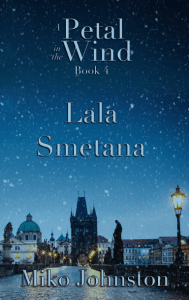
I received my original publishing contract on July 4, 2014 for the first two books of the series, already completed, and first right of refusal for the next two. Six years later to the day, my new publisher notified me that proof copies for A Petal In The Wind 4 were on order. While I wait, I’m preparing the earlier three books.

I knew of two mistakes in the series that needed correcting: an engagement ring that mysteriously wound up on a different finger and a currency that wasn’t in use at the time the book took place. I felt certain I would also find some spelling, grammatical, and punctuation errors as I reread each book in order, which I did and noted for correcting. I also found something I didn’t consider – signs of an inexperienced writer.

If you’ve read this blog over time, you may recall me saying my writing has matured along with my character Lala, and that statement became abundantly clear as I returned to my earlier works.

As a novice working on my first book, I lacked confidence in my writing and kept many aspects simple. I didn’t understand how to show the passage of time, other than having the characters go to bed one night and wake up the next morning. The idea of carrying a story over weeks, let alone years, felt too complicated, so my first book takes place in the course of a week and has a linear plotline. Very few scenes have more than three characters interacting, and I kept the language simple. One reader, who gave me my worst review ever (two stars), said, “The book reads like it was written by a child.” My protagonist was a child, “almost eight”, so I relied on subtext to convey some plot points. I will admit I found some of it overly dramatic.

By the second book, I felt able to carry the main story over the course of several months and comfortably handle scenes with four or more characters. In it, Lala is a young woman who’s about to experience romantic love for the first time. My reaction was similar to the first book – very dramatic, perhaps overly so. If I were writing it today, I would have been more subtle, but does the heightened drama and verbal hand-wringing reflect the character, even if it no longer reflects my writing?

Now I’m faced with a dilemma similar to what Lala faced in that book, when a ruse she devises backfires and she finds herself trapped. She observes what she fears most “…hadn’t taken place—yet. It could be stopped. She could stop it.” Ultimately she does.

What about me? Should I correct the mistakes and leave the rest as is, or make changes to the book to reflect the writer I am today? I can do it, but it doesn’t mean I ought to.

Have you found yourself in a similar situation? What did you do? What would you advise me to do?

What will I choose to do? Keep posted.

Miko Johnston, a founding member of The Writers in Residence, is the author of the historical fiction saga A PETAL IN THE WIND, as well as a contributor to anthologies, including “LAst Exit to Murder” and the soon-to-be-released “Whidbey Landmarks.”

The fourth book in her series is available now.

Miko lives in Washington (the big one) with her rocket scientist husband. Contact her at mikojohnstonauthor@gmail.com


.

What’s On YOUR Bookshelf?

by Jill amadio

Books, books, books.  Does the possession of them denote one’s mental state, intelligence, or expertise? I have often been forced to come to some conclusion when I have watched pundits and talking heads expound on television, especially during Zoom interviews during the pandemic. Invariably they place themselves in a chair in front a bulging bookcase. Who tells them to do this?

The bookshelves appear to be mostly Ikea white and perhaps hastily purchased when asked to appear on TV from home. Do these people rush out to second-hand bookstores to load up books with which to fill the shelves? Leading, of course, to viewers wanting to know, “What are you reading?”

One pundit had his books arranged by spine color and seemed particularly attracted to blue with three shelves of them. Another, a doctor, had a stethoscope dangling from the top shelf. A female psychiatrist had a full shelf of Very Large Tomes behind her head, and a couple of attorneys stood in front of their office law libraries while being interviewed. I haven’t seen a chef interviewed unless he was in the kitchen and I imagine he’d never sink so low as to stand in front of other chefs’ cookbooks. The exception, of course, would be his own recipe book but usually cooks teach by showing rather than telling; the same advice impressed upon authors.

Writers, of course, have more sense. They place their books full frontal on the shelf unless they have only a single book so far. A handful of years ago I went to the Barnes and Noble bookstore in the South Bay where my friend, Christopher J. Lynch, was signing his biography of “Leave It to Beaver” star, Ken Osmond. The store manager had commandeered an entire wall of bookshelves, and filled them with copies of the books facing out. It was a stunning display for an author.

Many writers I know run out of bookshelf space and begin piling books on the floor or finding nooks and crannies to fill. One client for whom I ghostwrote a biography kept a small shelf of paperbacks in her bathroom as many people do. I spotted another who had a penchant for refusing to return library books and not even bothering to removing their old category tags.

Sol Stein, of Stein and Day publishing, invited me to lunch at his baronial estate on the Hudson River in New York. He led me through four rooms completely occupied by books, piled precariously halfway up the walls and all over the floor. Most of them were not new editions from his company but appeared to be his lust for reading. His book, “Stein on Writing” is still my bible when I get stuck trying to figure out plot points and character.

Since my move to Connecticut I haven’t been invited into anyone’s home yet as people here tend to meet at cafes, parks, or the beach. Just as well. We really shouldn’t judge a person by their books.  I have brought many of my books with me and I will cling to them forever, especially the how-to-murder manuals and other crime research books. My favorites include “The Secret Service” which inexplicably details their crime-fighting methods; how the witness protection program works, and their training sessions. Another is “The Writer’s Complete Crime reference Book,” and a well-thumbed edition of an 11-lb. book describing just about every opera ever composed, debuted, and by whom sung.

It’s no secret that many authors find titles from the classics including poetry on their bookshelves. Shakespeare’s works are a prime target for this kind of research. I used my extremely heavy “The Oxford Dictionary of Quotations,” published in 1953, to find the title for my latest book, “In Terror’s Deadly Clasp,” within a poem by John Donne.

Although Google and other online search engines have replaced the need for consulting hard copies and trips to the library, reading a print book for ideas can often lead to more ideas if you happen to turn to the wrong page and discover a piece of information you can use in your writing. As I grow older I find myself more frequently reading “A Thematic Dictionary.” It is a ‘discriptionary’ with cross-references three different ways for those of us who know what something is but not what it is called, although it may be just on the tip of the tongue. The section on lungs is fascinating for its explanation of devil’s grip and goblet cells.

Perhaps paying a visit to your own bookshelves will reveal a treasure you had forgotten. I wish I had bought a book I found at an airport gift shop in Jakarta. It was bound in beautiful red leather and titled “Sukarno.” I opened it up and every page was blank. I guess the publisher wanted to titillate buyers before the Indonesian leader passed away and there would be no repercussions about his controversial reign while he still lived.

Bookshelves and their contents are food for thought. What is on yours?

.

Photo by Dakota Corbin on Unsplash
Photo by Florencia Viadana on Unsplash

Character Immortality

Recently, I’ve been thinking about character immortality. Not just in regards to my reading, but my writing too. Indeed, I don’t think I’ve ever killed off a “good guy” main character that readers have gotten to know, and hopefully like, in any of my books—so why and how did I get here in my meanderings?

Here’s the trail that got me started on character mortality thinking…. G.B. Pool and Jackie Houchin recently delved into the importance, scope, and all around “goodness” of reading. Then—once again—a book club happening moved my thoughts further on. That’s what reading will do for you, make you think! And thirdly, while mentally contemplating a chapter I’m currently working on, my writing-brain wished a character wasn’t there. Should I kill him off? Flashed across my thoughts. No. Was my answer. But, why not?

Starting with the reading part—if I know from the beginning a lead and/or beloved character is going to be killed off—I seldom will read the book. “But you’re always killing off people,” my hubby (a non mystery-genre reader) would probably point out. To explain the difference between a “plot-revolving-around” murder victim, and a key “on-stage” character is hard to explain to him—but for me, there definitely is a big difference.

On to Book Club. Members pick the books that go on our list, mainly I think, because it’s a book by an author they like, or it’s a book they’ve already read and think everyone else will like. The Hamish MacBeth series written by M. C. Beaton (Marion Chesney) is one of my favorites—and having read many of Hamish’s adventures—I put one on our list. In the book I recommended, a character I really liked died, and it soured me on the whole book. Why, I asked myself?

I’m a bleeding-heart-nitwit was my answer. not an “answer” befitting my mystery writer/reader ego. But in fact, I’ve never read/or watched a Morse or Poirot outing where either protagonist got seriously ill, much less die. Avoided on purpose. Indeed, I guess I want me literary heroes to be immortal. Aging is okay, but you can’t go too far.

But time does pass in our stories. As it does in life, and one can only squeeze so much activity in a storytelling year! You have to adopt either a false conceit about time, or ?? Then when it comes to animals, even worse—sigh. I was told by a relative—that even as a child (this was way back when in the dark ages!) when leaving the movie theater after watching “Bambi” I proclaimed I’d never watch another movie like that again in my whole life.

This winding and contradictory mortality thinking road is snaking back and forth for me… For example, in my Rhodes series, it all starts with LC Rhodes setting everything in motion for Leiv’s adventures on his deathbed. And throughout the few books I’ve subsequently written in the series, Leiv often talks to his deceased grandfather, LC.

Clearly, my ramblings here have not brought me a clear understanding—or even a “why”—when it comes to immortality for some, and not for others? Indeed, in my writing reality conundrum mentioned earlier, I’m not killing off one of Leiv’s compadres, but decided to make him fit in. This time. But why?  I’m currently leaning toward considerations such as, “what kind of character are they?” Main, supporting, likable, gender, looks, age… I haven’t sorted it out yet.

And why am I continuing down this character immortality road—despite the lack of a clear answer? I didn’t like not liking one of my favorite author’s books! Indeed, Marion Chesney was(still is) very much a guiding-light “STAR” for me. Consequently, I would very much prefer that–not enjoying this particular offering–has to do with wrong-headed thinking on my part!

All thoughts on character mortality are definitely welcome…because as I’ve so often jabbered on about before —I think characters and scenery are the essence of good storytelling. And a key character’s mortality, is probably pretty important to good character development.

Happy Writing Trails!

Hey, I’ve Been There!!

by Jackie Houchin

Hi all. Are you ready for a tome? (I don’t mind if you skim this post!) If you hate reading about vacation itineraries, I hope you won’t cringe as you begin this. But it really IS about books & reading.

I’m bouncing off my fellow Writer in Residence friend, Gayle Bartos-Pool who wrote that wonderful post last week about how reading fired and inspired her own successful writing history. Her last words “Read On!” were terrific.

I am a prolific reader. I LOVE to read or listen to books. A while back, I wrote about The 52 Bookclub Reading Challenge that I’ve been in for three years now. Each of the 52 books must match a book category that the moderators come up with each year. So far, I’ve met the challenges. For this year I have but 14 of the 52 yet to read, and it’s just June. 52 bookclub page

However, I’ve read many, many other books in 2022. And when I say read, I include print books, eBooks, and audiobooks. Non-fiction, novels, inspirational books, study books, and children’s books fill in the gaps around my favorite genre – mystery.

So, when my husband and I went on a 23-day cruise in the Mediterranean and Aegean Seas, I decided to read a book set in every country we visited, including the ship itself, and a jet plane.  What fun!  I’ve read 13 and have about 6 left to read.

 I began this quest waiting at LAX for the flight that would take us to Portugal to meet our ship (with a stop in Montreal). I started with Agatha Christie’s DESTINATION UNKNOWN. (We knew where we were headed, but hey, you never know – as the protagonist in that book soon found out!)

We spent so little time in Lisbon, Portugal, that I haven’t considered a book set there, but I just recently came across 300 DAYS IN THE SUN by Deborah Lawrenson or A SMALL DEATH IN LISBON by Robert Wilson. Not sure I will get to them. They are a bit long. But who knows, maybe.

 As for that 4-hour stop in Montreal, I chose A DISAPPEARANCE AT THE BONNE NUIT HOTEL by Dominique Daoust, about a young female newspaper reporter who goes to Montreal in search of that “big story.”  It’s the first book of a trilogy.

(This is yet to be read.)

Our ship docked in five ports in Spain, with a stop at Gibraltar (a British Overseas Territory) after the first. I read Aaron Elkins, UNEASY RELATIONS, set in and on that famous rock. Wow, what fun to follow Gideon Oliver, the bone detective, up the cable car to the top for a really scary view, and then inside to St. Michael’s cave where stalactites come together to form of figure of an angel. There is a lecture hall beside it and Gideon spoke there!  It totally makes a difference reading a book when you have BEEN THERE!

 I read A FATALITY IN SPAIN by Blake Pierce, which is set in Barcelona (also in Pamplona). Oh, yes, I definitely remember that weird Antoni Gaudi modernistic church in town! And the dancing “giants” with the wooden heads!  Reading the story…I was there too, hearing, seeing, smelling. (Although we chose to wear a mask there because of the packed crowds in the streets.)

I am currently reading MISTAKENLY IN MALLORCA by Roderic Jeffries, an Inspector Alvarez mystery. It’s number one of 37! (And perhaps I’ll also read HOTEL MALLORCA; AN ELAINE PEARSON MYSTERY by Susan Linden Emde, if I finish the rest in good time.  It looks very interesting.

We also docked in Seville, Malaga and Cartagena, Spain, but I’ll maybe be happy with the two books I have already for that country.

By the way, I am also reviewing each book I read on my new and very simple WordPress blog – Words and Reviews blog.

 At Marseilles, France, we took a bus an hour inland to Avignon, France.  Since high school French classes, I’ve always dreamed of “dancing on the Bridge of Avignon” as the children’s song goes. Finally, after 50 years – I did it!   To remember that beautiful time in Provence, with everything lavender, I read, TO PROVENCE, WITH LOVE by T.A. Williams. More of a light romance than mystery, the protagonist is a writer and teacher, who came from England to write the biography of an elderly Hollywood film star. (Rosemary Lord, you would like this one!)

 ONE SUMMER IN MONTE CARLO by Jennifer Bohnet is a sort-of mystery and again a light romance, set in the Principality of Monaco.  It featured a lot of action and information about the F-1 Auto Racing circuit. While we were there, they indeed were setting up grandstands, pitstops, and pilon curve barriers for the race that would happen two weeks after we left.

 I was able to take my husband to Florence, Italy – a city I’d visited on my own three times before. Sadly, we were not able to go out into Tuscany for a visit to a vineyard and chateau. (Excursion cancelled.) But I was able to show him around one of my favorite cities, eat gelato, have spaghetti Bolognaise at my favorite café.  (Sigh) I’ve chosen A DEATH IN FLORENCE by Blake Pierce, or DREAMING OF FLORENCE by T.A. Williams.  I’ve read books by both of these authors (A Fatality, and To Provence), so I’m hoping for a different one.  Any Suggestions?

 I read AUNTIE POLDI AND THE SICILIAN LIONS by Mario Giordano, while in Sicily, and we actually took a private taxi to Taormino because of that book. We didn’t have an excursion booked there, and, well, why not?  It only cost E100.00 for the 30-minute trip each way, and a patient driver while we toured the town for a couple hours.  It made the book more real, although we did NOT visit Palermo, where the “mob” lived in the book. Hahaha.

 I have yet to begin DEATH IN THE SILENT CITY by E.M. Ali, but I can’t wait.  I loved Malta from the moment we first docked.  And indeed, the old city has red-stone walls protecting houses in the narrow winding streets just like on the cover. We entered one of those bolted doors with our tour guide, and into a beautiful studio where he was restoring stained glass windows they’d found buried after World War II. I always thought Malta was a part of Italy, but it is a country on its own.

 We had only two “at sea” days between distant ports, so I read two cruise ship mysteries. VANISHING VACATIONERS by Hope Callaghan and PINEAPPLE CRUISE by Amy Vansant.

Both settings in staterooms, dining rooms, decks, lounges, pool, etc., were so very familiar as I roamed our ship – the Nautilus, er, I mean, Oceania’s Nautica.

 Ah, Greece! I finally got to visit the setting of my all-time favorite book by Mary Stewart – THIS ROUGH MAGIC.  It is set on the Isle of Corfu in the beautiful Aegean Sea.  A romantic-suspense mystery that I first read when I was about 13 or 14. I’m sure I’ve reread it a dozen or more times since. I love it.  And now, I’ve seen those lovely clear-water coves and sandy beaches, the castle-like homes way up on the steep mountainside, the winding dirt roads suitable only for a motorbike, the enchanting Corfu Town and the harbor. (sighhh)

I read A CRUISE TO DIE FOR by Charlotte & Aaron Elkins, an art-forgery mystery set on a fantastic mega-yacht, on Corfu, and in Athens.

It reminded me of that sleek, black super-sailing yacht, The Maltese Falcon, docked near our ship in Corfu harbor. Oh, my, what an uber-expensive 180-foot beauty!  Seriously, “Google” this super-yacht by name and you will be aghast!

 I just finished the most fun, interesting, and un-put-downable audio book that I have listened to in a long time. SACRED GAMES by Gary Corby is set in ancient Olympia, Greece in 460 BC. The still-active archeological dig that we visited and loved is portrayed so clearly in this book (the author must also have visited the old Olympic Games site) that I was sharing bits of it here and there with my husband. “Oh, yeah! I remember that!” he would say.  The book is a murder mystery that takes place during the games, and a young Athenian man is the investigator. He has 4 days to find the murderer before the Games end and his best friend is executed. The action, intrigue, fast pace, brutality of the sports, and the setting, well, it was like walking there in person again.

Have you ever done this?  I mean read your favorite genre set in the places you have visited, be they in another part of the world, or nearby?  It’s amazing. It makes reading so much richer. Can you think of a book right now that is set in the last place you vacationed or visited?  Think hard, then go buy or rent it and READ IT.

I can’t believe I actually found a book – another light romance – set in Croatia (and part of it actually in Split, where we visited)!  CLUELESS IN CROATIA by Joy Skye was a fun book, and the scenes in the harbor, in the city of Split, even a mention of the cruise ships there was fun.

After Croatia we cruised across the Aegean Sea to the East side of Italy for a 1-hour long trip into Ravenna to see the glorious mosaics there. It was an eyes and mouth open wide to see all that fine work. But alas, I’ve found no mystery/ romance books set in this smallish, inland city, or any with Italian mosaics. Do YOU know of any?

Our last port of call was again across the Aegean, in Koper, Slovenia. As I said, I haven’t found a book set in Slovenia  yet. It was a beautiful town as we strolled through it. We bought a wood craft that I hope my hubby can duplicate for gifts for Christmas. We ate gelato, sat by an unusual fountain that reminded me of a dandelion puff! And we strolled by the small sunshine-bathed beach. I bought a little cup at a souvenier shop with the LOVE emphasized in the country’s name sLOVEnia.

Neither have I founda mystery set in Trieste, Italy where we disembarked.  At Trieste when we got off the ship with our luggage, VERY early in the morning, the Nautica was surrounded in the water by shimmering, semi-transparent jelly fish!  It was amazing!

 I hope to read A GIRL FROM VENICE by Siobhan Daiko, or maybe Jennifer S. Alderson’s DEATH BY GONDOLA, or maybe even one of Donna Leon’s more recent Commissario Brunetti mysteries, set in the floating city. We were not able to visit Venice – I really cried about that – but itineraries change and we make do. We did bus to Venice from Trieste and fly out of the Marco Polo Airport to Heathrow on our way home.

 For the UK, I read Victoria Tait’s book two in her new Dotty Sayers antiques mysteries VALUED FOR MURDER set in the CotswoldsAnd I read another UK book since we had that glitch in the British Airways jet – did you hear about that?

An hour out from London to LAX, the plane abruptly turned around, dumped fuel, and hi-tailed it back to Heathrow. It seems the captain was very ill with extreme lower-abdominal pain (appendicitis?) and had to return. Back at Heathrow, we all waited patiently till the paramedics took him off the plane.

THEN – after hours and hours we were bussed to a hotel for a free over-night stay in London, free dinner and breakfast, and then back to Heathrow for another try at LAX the next morning. Because of the additional day in the UK, I read THE CURIOUS CASE OF THE COPPER CORPSE, a Flavia de Luce novella by Alan Bradley set in England.

And finally, I will read DEAR PASSENGER: WELCOME TO MY WACKY WORLD AS A FLIGHT ATTENDANT by Elizabeth Calwell. It’s a very short, humorous little book and will top off my vacation reading adventure.

Okay, this is a really long post I know, and if you skimmed or stopped reading a quarter of the way down, that’s fine.  But, tell me, have you ever done what I did? Not the cruise, but read books set in places you’ve traveled (either before or right after).  Did it make the books better? More fun to read? Can you do it this summer?

And let me know if you know of a mystery/adventure/light romance book set in Ravenna, Italy (or mosaics), Slovenia, or Trieste, Italy!