Missing Author Found!

Missing Mystery Authors … whatever happened to your favorites? Do you ever ask yourself that question? I sure do. That’s what prompted the “Missing Author” series that I launched several years ago on my blog. It always drew traffic and prompted readers to ask about their own favorites who, for whatever reason, hadn’t published in a while.

While finding information for some authors wasn’t difficult, it was for others. Fortunately, many weren’t technically “missing.” They maintained websites and were active on social media, so I could contact them. Often life circumstances put her or his writing on hold—illness, care giving, changing job responsibilities are a few examples—but some made a comeback with a new series or picked up an old one. Earlene Fowler made things easy: she wrote on her website that she retired from writing when social media started taking over and she didn’t care to participate.

Others stopped writing altogether when publishers dropped their series or their agents retired. Sadly, some passed on.

Others have seemingly vanished. Does that spark story ideas for anyone?

How did the Missing Authors series start? I was a big fan of Rochelle Krich and have read just about everything she ever wrote. In 2003, she came to Richmond, Virginia and I took off work to hear her speak at the local Jewish Community Center. She last published in 2005. I’ve not been able to learn a reason for her retreat from the writing community. I don’t hunt down these authors, I don’t pry, and don’t publish anything without their permission. I had to let Rochelle go.

The same held true for many other authors. But I made some great connections. I found and became email pals with Corinne Holt Sawyer, Connie Archer (I’m interviewing her for my June newsletter), and Judith Van Gieson (sadly, she passed away few years ago). Author and blogger Charlotte Rains Dixon, who was also searching for Gabrielle Kraft, told me about a memorable writing class Ms. Kraft presented years ago in Portland, Oregon. Charlotte details the class here. To date, neither of us has located Ms. Kraft.

Readers of my blog participated with either information on the authors, or with requests about the whereabouts of their own favorites. They introduced me to some great new-to-me authors.

You can visit my blog and read the posts. I’ll list the links below. I started the series featuring one missing author per post. When requests started flooding my inbox, I included several authors per post. But I haven’t pursued this project in recent years (you may have noticed my use of the past tense), so you won’t find current information on the authors–but if you have any, please share.

This brings me to what prompted today’s post about the missing authors: I found one! A couple of weeks ago, author John J. Lamb, who I posted about in 2014, contacted me out of the blue.

John J. Lamb was a homicide detective and hostage negotiator in Southern California before retiring to Virginia’s Shenandoah Valley where he and his wife became teddy bear collectors. John also penned a series of mysteries featuring a homicide detective who retires to Virginia and collects teddy bears.

I met John several times, at book signings, when he led a writers’ workshop, and when he spoke to our local Sisters in Crime chapter. He gave me good advice about realistically depicting an amateur detective interacting with the police. He was kind, funny, irreverent, and loved sharing stories of his law enforcement career.

Then poof—he became one of those vanishing authors. He took down his website, and the email address on the card he had given me bounced.

On April 7, to my surprise and delight, I found the following message from John in my inbox (by the way, I have his permission to publish this exchange):

Good Morning, Maggie,

It’s been a long time and I hope you are well. I was taking a digital stroll down memory lane and came upon an old website posting where you wondered why I’d vanished. The abbreviated answer is:
a) Berkeley didn’t want any more Teddy books and my agent was unable to sell a standalone thriller.

b) Heart attack, from which I fully recovered.
c) Needing health insurance, I returned to work as a civilian evidence custodian at a large Shenandoah Valley PD.
d) My wife is battling Parkinson’s Disease, which takes up a great deal of my time.

I think that covers it. Anyway, I’m glad so see that you are still writing.

Take Care,
John Lamb

Excerpt from the resulting message thread:
I’m writing my memoirs of my life as a cop. I finished the first volume (Entitled: Service With a Sneer) of what I anticipate will be four books. My original intent was to make this anecdotal history available to my grandchildren, but only after they’re adults because this is definitely not cozy mystery territory. But my test readers have convinced me to try once more to get published. So, I’ve been querying agents and have actually received a couple of nice personal rejections.

Another excerpt from the thread:
Service With a Sneer covers my time as a USAF cop and deputy sheriff in the desert near Palm Springs. I’m at work on Beach Blanket Bedlam, which covers my first two years as a patrol cop in Oceanside. Next comes Bring Out Your Dead, recounting my history as a homicide detective. The final volume will be Three Stripes, Yer Out, which alludes to my terminal rank of sergeant. Not that I wanted to promote to a higher rank. I was always worried about surgical scars from the frontal lobotomy required for collar brass.

John’s books, including his standalones, are available on Amazon and at libraries.

The Missing Authors series has been fun and, as you can see, often rewarding. If there’s an author you’ve been missing, let me know in the comments. I could be persuaded to resurrect the series.

Here are the links to the series:

Missing Rochelle Krich

Discovering a Lost Author: John J. Lamb

Whatever Happened to Gabrielle Kraft?

Whatever Happened to (Name an Author)?

In Memory of My Favorite Mystery Authors (And Maybe Yours)

Those Missing Authors: An Update

Missing Author Found!

Missing Authors: Update 2

“Missing Authors: Update 3”

“Missing Authors: Update 4”

“Missing Authors: Update 5”

“Missing Authors: Update 6”

“Missing Authors: Update 7”

Dropping Clues Along the Way

by Gayle Bartos-Pool

Gayle at Bill's House Sept 2022

I have read a lot of mysteries over the years and have written quite a few myself. My detectives, whether they are a professional or a talented amateur, always gets the bad guy or gal. Writers like a happy ending.

Most detectives, private or otherwise, usually spot a few clues toward the end of the story that help them pinpoint the culprit responsible for the previous mayhem. Jessica Fletcher in the Murder She Wrote TV series usually came across a major clue early on in the hour show, but she doesn’t put two and two together until after the last commercial break. It might be formulaic, but most of us like the show and the redundant plotline enough to come back for more.

KNIFE

But there are a few variations of the theme that are kind of fun to write. While I was writing one of the new stories in my latest book called The Four Detectives, I was having trouble with how I was going to finally catch the would-be killer. In this new book, I have taken the three private detectives from my three previous mystery series, added a retired cop from a stand-alone book, and have them join forces in a new detective agency. But I couldn’t figure out how to get this one P.I. to catch the killer before she struck again.

First, I was going to have the killer turn the tables on Ginger Caulfield and blame her for the killing she was planning, but after researching how long it would take for Gin to go to court and deal with lawyers and judges and the media was way too time consuming. Some of these court cases take years. This was to be a short story, not Gone with the Wind.

People 5

I knew how I wanted Gin to get ensnared in the plot against her, but getting her out was taking too long, so I had another thought. What if she smelled a rat early on and turns the tables on this would-be menace?

Not that this hasn’t been done before, but I wanted to actually drop a ton of clues throughout the story so my readers might start getting the hint early on and guess what was coming. This method would allow the reader become the detective, too.

I did this by putting quotation marks around a few words. That usually means the word has a double meaning. And I have a character grin at certain times after they say something that might not require a grin. That telegraphs to the reader that the statement probably has a hidden implication. Or I had a character hesitate when they shouldn’t be hesitating. That usually means somebody’s lying. I added a number of these “tells” just like a bad poker player does when his actions let other players know what kind of a poker hand the guy is holding. Usually a bad one.

As for me, the writer, I wanted to give the reader some clues that they might put in their fertile brain to see if they could solve the case along with my detective. It was a fun journey and I think my private detective got a laugh out of it, too.

Writers always need a way to tell a story that entertains the reader, but it’s fun for the writer when they can have some fun as well. Write On!

typewriter-and-desk

Getting Out There

by Linda O. Johnston

Writers write. But to help sell what we write, we need to do promotion not only online, but also in person. So, we have to get out there.

Okay, I admit I’m doing it less than I used to before the pandemic. Not that I’m terrified about getting sick, but I kind of got used to not going to as many conferences as I used to. I previously attended Malice Domestic, Left Coast Crime and Bouchercon and the Romance Writers of America conferences often, as well as local meetings.

Now—well, I did go to Bouchercon and an RWA conference last year. This year, I’ve mostly just gone to meetings of local chapters of Sisters in Crime, Mystery Writers of America and Orange County Romance Writers, sometimes on Zoom.

Oh, and coming up will be the Los Angeles Times Festival of Books, and I’ll be signing at the local SinC and MWA booths there on Sunday, April 21.

Enjoyable? Yes. It’s always fun to see other writers in person, and to sell as many books as possible and get to autograph them for the buyers.

And I have to admit I miss the frequent lunches I used to attend with other Writers in Residence members. But some have moved away and it’s become more difficult to get together with any of them.

More conferences in the future? I hope to.

So—well, how do you get together with other writers these days? With readers? Only online, or do you see them in person too?

LAVENDER and BURNT TOAST

      By ROSEMARY LORD

“Lavender and burnt toast.” A book title? A recipe? Sounds intriguing.

I have racked my brain to figure what this was about. I had written this in a notebook of story ideas. But then I have a plethora of such notes, squiggles, post-its, unfinished paragraphs in multiple notebooks and single pages – of ideas that swirl around my head – spilling as hurried notes in these many notebooks. But, over the years, I have become a lot more organized. I have actual files – with labels!

            It took me back to Professor Randy Pausch’s gem of a book, The Last Lecture, which he undertook during the last months of his life after a terminal cancer diagnosis. It was about overcoming obstacles and seizing every moment. “Because,” he said, “time is all you have – and you may find one day that you have less than you think.”   

“Time must be explicitly managed, like money,” he observed. And “Ask yourself, are you spending your time on the right things?”  Most useful was, “You can always change your plan, but only if you have one.”

But the thing I remember most was his thoughts on being really, super organized. Randy’s wife was against having everything filed and alphabetized. She said it sounded way too compulsive. Randy responded, “Filing in alphabetical order is better than running around saying, “I know it was blue and I was eating something when I had it.” Sounds familiar. How often have I been heard to mutter, “…It was blue and I was eating something……” as I rummage through my boxes of writing files for some specific pages of an unfinished manuscript.

“It’s not where you start – it’s where you finish…” wrote Dorothy Fields, lyricist for the 1973 Tony Award winning Broadway musical Seesaw, which was based on the William Gibson play, Two for the Seesaw.  “…It’s not how you go, it’s how you land.”

I’m not so sure about that…I’ve always favored the maxim that it’s the journey that counts. It was Ralph Waldo Emerson who said, “Life is a journey, not a destination.”

            Do you ever look back at the journeys you have been on – or had thrust upon you? Journeys are adventures. Because it’s on those journeys that we discover exciting detours and encounter fascinating people.

Even if it’s literally a train, plane, bus or car journey we’re taking. Just think of people you met along the way, places you saw. This is, after all, where many of us writers find our inspiration. From the people and happenstances along the way.

We can see how things have never got back to the way they were, since the Covid lockdowns. So much changed. We’re in a different reality now. We were shut-ins. As writers, we had more time to ourselves to write during the shutdowns. But the regular writer gatherings and frequent workshops and writers’ conferences have been very slow to return. And they were such fun, where we caught up with fellow writers from across the world, met new writers, editors, experts and publishers, heard new ideas, discovered new talent. I’ve missed them. Zoom meetings are not the same.

Sometimes one feels like Sisyphus, earnestly toiling away to survive and thrive in this new world, dealing with the puddles that life frequently presents for us to jump over.    

In Greek Mythology, Sisyphus was condemned to an eternity of pushing a boulder up a mountain. Once he got to the top, the weight of the boulder forced it to start rolling down to the bottom, wherein he had to start again.  According to Albert Camus, the Greek gods felt that there is no more dreadful punishment than this futile and hopeless labor for Sisyphus. Hmmm. Sometimes life feels like that. Oh well. We soldier on, dealing with the adventures and challenges of our regular lives and balancing our writer’s goals and dreams.

Then, just when we least expect it, something magical happens. We discover a new author whose words inspire us to try something new, encourage us to take a leap of faith into the unknown. We hear a new piece of music or see a new painting that re-awakens that creative spark. We make a new friend or meet someone who has that missing piece of life’s jigsaw we have been trying to complete. We never know where or when that serendipity appears.

And with the freezing winter and endless rain we have all been living through, hopefully now in the rear-view mirror, Spring is just around the corner. So it really is the time to start thinking of planting new seeds. New plants. New crops. In our gardens, window-boxes and in our lives. Maybe something different this year. Read something different. Write something different. But most of all – time to make fresh plans for the year ahead, seek new ventures, add new goals to our To Do lists.

Whilst I try to remember what Lavender and burnt toast was all about….

SEPARATING CRITIQUE FROM CRITICISM

by Miko Johnston

Unlike some of you, I never took creative writing classes. Early in my adult life, thanks to dropping out of college, I floundered in various low-level clerical positions to earn my way, but writing was my dream job. By luck I got to meet a writer whom I admired, and told him of my goal. “I want to be a writer,” I said. He responded, “Then why aren’t you?” I realized I’d asked a meaningless question. I should have been more specific – “I want to write professionally”. That’s when I returned to college and eventually became a journalist. I lost that career after a car crash and five year recovery period. Still, the urge to write persisted.

About forty years ago I decided to switch to writing fiction and began working on a series of short stories based on a childhood pet, thinking they might make good children’s books. I showed them to a good friend, who knew me ‘back when’, as well as the critter in question. I thought the stories were cute, funny and clever; as the character grew up, the storylines and maturity of the writing grew with her. My friend’s reaction? “They’re terrible.” Disheartened, I filed the stories away in a drawer. Care to guess how long it took for me to write again?

Eventually I dipped my toe in the writing world once more, this time with the idea of writing a novel. I slowly built my skills by writing, studying authors whom I respected, and reading books on the subject, but mostly by participating in writers groups.

I joined an established critique group about twenty-five years ago, where I met several of my fellow WInRs. I credit the core members with guiding me though the completion and polishing of my manuscript for publication, and like most who stuck around in the group, I eventually did get it published.

I can still recall presenting Chapters 1 – 5 of what is now my first novel, A Petal in the Wind. I’d compressed what eventually became my entire novel into fifty pages. I also recall the group’s unanimous opinion: to put it kindly, not good, but they explained WHY. No character development, hardly any scene setting or sensory details, and worst of all, an unrealistic reaction by my protagonist, thereby committing the worst crime in fiction by presenting a totally unbelievable situation. Their comments were tough to hear, but I listened and took them to heart. The next time I presented pages for critique, I received a very different response.

I see now the group doubted my ability to write well, based on my initial submission, a reasonable assumption. However, the next time I presented pages, which incorporated their suggestions and advice, the revisions not only impressed them, but convinced them I could do this. Frankly, it convinced me as well. The group treated me differently from then on.

Whenever my turn for submitting pages came up, they mixed praise for the good stuff with very useful suggestions for the problematic parts. Some members had a specialty; one focused on the big picture issues, while another (okay, it was Jackie Houchin) scrutinized each word with forensic precision. The group kept me going with positive and constructive feedback until I finished my first draft. When I presented multiple premises for my follow-up book, their comments helped me find the right path forward in continuing my saga.

I also learned how to give critique. In one of my first meetings, I listened to a short story being read aloud by the writer (okay, it was Jackie Houchin), and all I could contribute was a fashionable woman wouldn’t be wearing a white in winter. With the practice that came with reading or hearing pages from other writers, and picking up clues from their critiques, I began to develop sharper skills for evaluating the good and the not-so-good, not only other’s work, but in my own.

This year I celebrate the twentieth anniversary of my first publishing contract. It would never have happened if not for the support and encouragement of my writers group. Nor would it have happened if I’d disregarded their feedback, or became so insulted by it I’d left the group.

I can take some credit for this, but much should go to the core members. They always knew the boundary line between critique and criticism. Others crossed that line, but thankfully they did not remain in the group for very long because they usually could not accept anything beyond praise for their work. Their loss.

I’ve had the opportunity to pay it forward over the years, in critique groups and through my volunteer work with a local high school creative writing class. Occasionally someone who finds out I’m a published author will ask me to evaluate their writing. The lessons I’ve learned through my groups have helped me do that in a positive, yet helpful way.

Learning the difference between criticism and critique is crucial to the process. Critique must be reassuring, especially when you’re calling out the problems in someone’s writing. Criticism is merely negative. Criticism says something isn’t good, while critique may say that but also explain why. Good critique supports the writer, and encourages them by separating the good from the what-could-be-good-if…. It’s uplifting. It pushed you forward, whereas criticism beats you down.

What if I’m asked to critique a piece that may be beyond redemption? That’s when it helps to have a few key phrases, and a list of recommended reading. I find something, anything to praise or comment favorably on, even if it’s a character’s name. I’ll pick one salvageable problem with the writing and suggest a generic solution. Perhaps there’s too much repetition, the dialog’s clunky, or the genre is unclear. I admit some writers shouldn’t be given false hope, but I needn’t be completely discouraging. I might also remind them there’s nothing wrong with writing for one’s own pleasure, or journaling about one’s life (and keeping it private).

I recently found my pet stories and reread them. Granted, many needed work, but unlike the response I got from my friend, they weren’t awful. Sad that it discouraged me for years, delaying me from doing what I always wanted to do. But I’m writing now, and will continue to do so, having learned the difference between criticism and critique.

On another note, I always love to receive and read your comments, but forgive me if I don’t respond immediately. Today’s post coincides with my 25th wedding anniversary, so hubby and I will be off celebrating. I promise to get back to you soon.

#

Miko Johnston, a founding member of The Writers in Residence, is the author of the historical fiction series, “A Petal in the Wind”, as well as a contributor to several anthologies including the about-t0-be-released “Whidbey Island: An Insider’s Guide”. Miko lives in Washington (the big one) with her rocket scientist husband. Contact her at mikojohnstonauthor@gmail.com

.

This story by Miko Johnston was posted by Jackie Houchin

THE PRESSURE TO PROMPT

By Jill Amadio

Quick, write a sentence containing the word ‘shallow.’ Or ‘camel.’ Maybe your creativity freezes at the first word but gushes forth at the second.

The urge to prompt is overtaking the writing community, both fiction and non-fiction.

What is a prompt? A suggested word, phrase, or sentence on which to build a paragraph or two during a specified time period. Prompt and their answers can include half sentences and are all the rage these days. Indeed, dozens of books and workbooks have been written on the subject of prompts and to the why, where, how, and when to engage in this mental exercise.

Many writers love prompts as a way to get started writing of a sterile morning, to fire up the imagination, and even to provide satisfaction that you are actually working at writing something, anything, although, in fact, it has no relevance to your WIP. However, you could stick the finished prompt into your WIP folder for use somewhere if you feel your words are immortal and need to be recorded for posterity.

Frankly, I am not a fan pf the prompt phenomenon. I believe that if you are going to spend time writing, why not work on your book, article, or blog? Why spend the time fiddling around with a piece of prose you may never use, that has no relation whatsoever to your current project, and that can send you off on a tangent to which you may find it difficult to return?

Ah, say prompt fans, prompting gets you typing. It puts pressure on you to come up with some words to fit the suggestion and actually make sense. The closest I have come to prompts lately is writing a Grocery and a To-Do list. The former is boring, the latter daunting but I have a couple of writer friends who salivate at the prospect of attacking their morning prompt.

One definition of a prompt I found online, posted by Karen Frazier, notes that a writing prompt is a statement usually followed by questions. I also found a very large collection of books on amazon.com devoted to the subject including titles such as Polyvagal Prompts, Writing Prompts Balance, The Writing Prompts for Seasons workbook, Writing Prompts for the Apocalypse, and The Art of Prompt Engineering. Not sure about that last one but it was amidst the others so I assume one needs something of a mechanical mindset to tackle it.

Some prompt books include journaling pages, and vice versa. Another offering is in the form of prompt notecards in a pretty box– a nice gift and not too insulting.

The books are directed at both fiction and non-fiction writers as well as adults, children, and humans (who or what else writes?). Also targeted are genres such as poetry, fantasy, art, drawing, songwriting, and truly interesting:  for dinosaur enthusiasts.  I haven’t seen a prompt book for AI robots yet but one could be in the works. Or already on sale.

I certainly honor those who need and enjoy a prompt to spark their creativity but as my years advance I need as much time as possible to compete the third book in my “Digging…” mystery series, and beyond.

Could a prompt, if one writes sufficient words, be considered a short story? It could surely lead to one and that is a good thing. How about prompts for birthday and Christmas cards? They can be written in advance and stored on your computer for future use.

So, where does the pressure to prompt com in? We are urged to start writing as fast and as furiously as we can as soon as we clap eyes on the prompt. Now, that is pressure par excellence. No time to consult a thesaurus. Is reviewing and editing allowed afterwards or during?  I did try prompting once and sent myself off into daydreaming, my laptop forgotten as I imagined myself back in Bangkok.

I heartily endorse the claim that writing prompts can help create characters and other elements and that, too, is a good thing. Prompts can also build writing skills, craft, and techniques as well as become story starters.

This entire subject of defining prompts has kept me away from working on my WIP. In the past four weeks I have only come up with a new title. However, part of it could be considered a prompt. Here’s a clue: Dangling Participle.

Why You Need To Start Journaling in 2024

After nearly 20 years of journaling, I realized that everyone should be doing this one thing
 
(First published in Readers Hope. Reposted by permission.)   4 min read


I have been journaling for years.

There is a box in my office full of journals I have had since 2004. That’s right, nearly 20 years of journals. They have my ideas and worries and capture the events that have gone on in my life over the years.

And I am not done yet.

I have found there to be an immense power in journaling. It has helped me find clarity and emotional stability and even solve problems. Most of all, it is like having a space to remove what bothers me and listen for what is good.

“Journaling is like whispering to one’s self and listening at the same time.”
– Mina Murray in Bram Stoker’s 
Dracula

In a world where technology is taking over and life is becoming more fast-paced, journaling remains a timeless and effective tool for self-improvement.

Whether kept in a handwritten notebook, a digital file, or even a specialized app, journaling gives people a distinct place to think, process, and learn essential life lessons.

This article examines the many advantages journaling offers to one’s mental, emotional, and even physical health and its transformational potential.

A Personal Journey

“Journal writing, when it becomes a ritual for transformation, is not only life-changing but life-expanding.” — Jen Williamson

Journaling is fundamentally a very personal process. It offers a secure space where people can freely share their ideas, emotions, and experiences without fear of rejection.

People can externalize their innermost ideas and make sense of complex emotions and life’s threads when they put pen to paper or fingers to keys.

Action Step: Set aside three to five minutes daily to journal. Let your thoughts run freely onto the pages while you write, free from self-censorship or criticism.

Emotional Release and Stress Reduction

“Journaling is like a whisper to the soul, an emotional release that heals and rejuvenates.” — Mari L. McCarthy, Heal Yourself with Journaling Power

The capacity of journaling to act as a channel for releasing emotions is among its most obvious advantages.

Writing about difficult situations, annoyances, or fears can be therapeutic and an excellent way to release bottled-up feelings. Research has indicated that this procedure can lower stress levels, elevate mood, and enhance general well-being.

Action Step: Set aside a specific area in your journal for writing about your feelings. Use this area to release tension or emotional weight, permitting oneself to let go.

Clarity and Problem Solving

“Journaling is the first step to self-discovery, and self-discovery is the key to clarity.” — Darryn Kirschner

Moreover, journaling is an effective method for problem-solving and clarity. Writing helps people arrange their ideas and consider other viewpoints when faced with tough choices or uncertainties.

Solutions frequently become more evident during this process, and people feel more empowered as they understand they can overcome obstacles.

Action StepSpend some time outlining the benefits and drawbacks of any difficult decision you are faced with. Keep a notebook to record your observations and brainstorm ideas from many perspectives.

Tracking Personal Growth

“Your journal is like a compass; it may not point north, but it will guide you to where you need to go.” — Jessica de la Davies

Maintaining a journal offers concrete documentation of one’s evolving personal development. Reviewing previous postings, people can recognize trends, reoccurring themes, and accomplishments.

This backward-looking viewpoint emphasizes the importance of continuous self-improvement by fostering a sense of continuity and development.

Action Step: Designate a particular day of the month to review your journal entries. Make a note of your progress, pinpoint your areas for growth, and decide on new objectives for the next month.

Enhanced Creativity and Self-Expression

“Journaling opens the door to your creative mind, inviting it to dance on the pages of your soul.” — Alexandra Elle

Beyond its therapeutic advantages, journaling can foster self-expression and creativity. People can freely explore ideas, express dreams, and develop a closer relationship with their inner selves by writing in journals.

Journaling’s unrestricted format fosters an abundance of creativity that can be utilized for creative projects, problem-solving, or self-exploration.

Action Step: Set aside time in your journal for artistic expression. Compose poetry, sketch, or experiment with any creative medium that speaks to you.

Final Thoughts on Journaling

Amidst the hectic pace of contemporary life, journaling remains a potent and easily attainable method for personal development.

Journaling opens people’s potential and provides a route to self-discovery, emotional release, and improved well-being through its therapeutic, contemplative, and artistic aspects.

The straightforward practice of writing continues to be a timeless companion as we traverse the complexity of our lives, leading us toward self-awareness and transformation.

###

The above article was posted by Jackie Houchin.

NEW IDEAS, PAST AND PRESENT

by Miko Johnston

We’re barely two months into the new year, but as I contemplate what we’ll write about in the future, and what will inspire us to keep at it, I’ve found some of my answers to those questions in our posts from the previous year.

Hannah wrote about overthinking. How many of us are guilty of getting obsessive about our writing? Characters, plots and background have to be thought out, but we also must keep it all in balance. That has become harder for me to achieve, partly because age has undermined my ability to multitask and partly because my priorities have shifted. I still enjoy writing and am committed to finishing at least two more books, but I’m reminded of Madeline’s piece on Writing Scared, and the idea of switching up the type of writing you do. I’ve done that in the past, so now I’m adding a new avocation – photography.

Years of writing has given me a sense of what works and what doesn’t, and while I still rely on critiques from fellow writers, I often can figure out problems in my manuscript on my own. Not so with my new hobby. I look at a photo and I may like it, but I don’t know why, exactly, nor can I be certain it’s any good. I’ve joined a photography club and have been invited to participate in their biannual exhibit. I’m going to need a lot of critique and advice before I select which pictures I want to use.

Linda’s piece on attending writers conferences reminded me that many more may be held this year as the risk from the recent pandemic fades from our memory, if not from our lives. Will these events be successful, or will the attendance habit, having been interrupted, be broken? Costs, from registration to travel to hotels and meals, will likely be higher than we remember. I can see where some will be very selective about which they’ll attend while others choose not to register for conferences at all.

Gayle’s piece on The Future of the Written Word really resonated with me. I’m often puzzled, even shocked, by how many words have been usurped and had their meanings altered, some with additions, some with subtractions. Regardless, these 2.0 definitions have led to divisions. A lack of clarification, or precision, makes the word’s meaning, well, meaningless. I suspect if any of the worst offenders of this phenomenon were reading this, they would have stopped at usurped (insert my sarcastic smirk here).

And speaking of the written word, Jill contributed a post on a similar, if lighter, topic – the subtle differences between American and British English. With three Brits in our WinR group and many others within our writing circle, it can be a challenge.

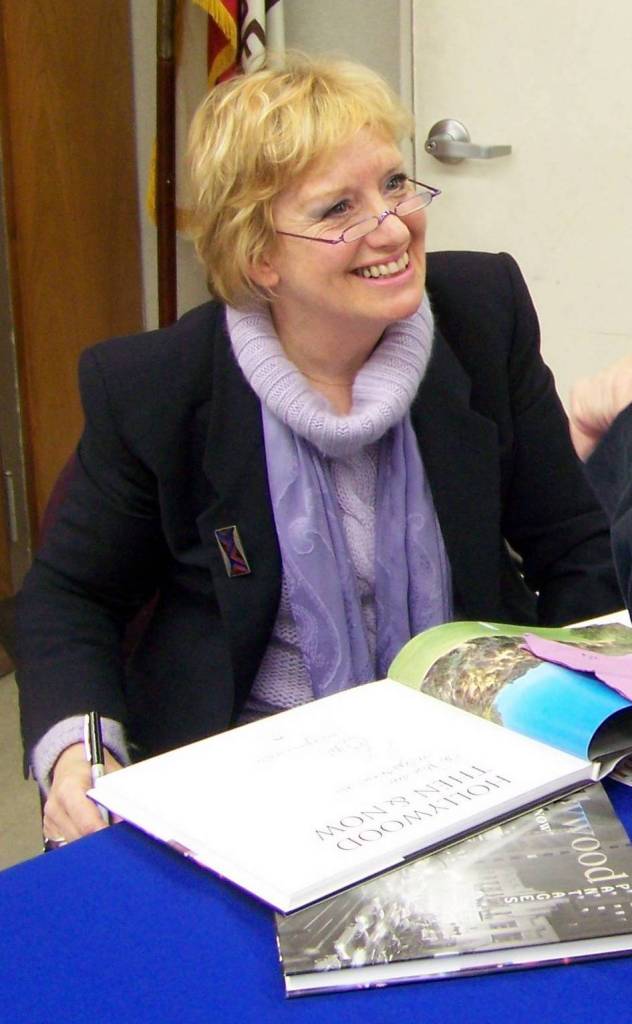
Rosemary’s Collecting Memories touched me. While clearing out closets and shelves in anticipation of a thorough spring cleaning, I’ve uncovered a trove of precious mementos – cards, notes and letters from family and friends, some going back to my birth. Programs from bar/bat mitzvas, funerals, and other events. Menus from private supper clubs, conference galas and corporate dinners at restaurants. Each find brought back wonderful memories of the people and places I’ve enjoyed over the years. That included a copy of the dedication that went into the L.A. Library’s copy of Rosemary’s book, “Hollywood Then and Now”, in memory of her beloved husband Rick. Her post reminded me that these keepsakes – all comprised of words – and the memories they invoke, are precious, something Maggie explained so eloquently in her post based on the “a reason, a season, or a lifetime” quote.

Jackie’s interviews with writers as well as all the fabulous guest posts she’d arranged added dimension to our blog, and her piece on naming characters had many solid tips I’ve come to rely on. And I’ll add a special shout-out for all the technical help she’s provided to us, especially a technical “muggle” like me.

There are many more posts from my co-WinRs that have and continue to inspire me. I can only hope I might have had the same effect on them, as well as our readers.

Miko Johnston, a founding member of The Writers in Residence, is the author of the historical fiction series, “A Petal in the Wind”, as well as a contributor to several anthologies including the about-t0-be-released “Whidbey Island: An Insider’s Guide”. Miko lives in Washington (the big one) with her rocket scientist husband. Contact her at mikojohnstonauthor@gmail.com

Let Me Entertain You!

by Jackie Houchin

Lots of medical stuff going on with me right now, so I thought I’d simply share a fun aspect of our Alaska cruise last fall. That aspect is called MUSH.  No, not yelling at sled-pulling dogs (although we DID do that), but a different kind of Mush.

In Skagway, Alaska, I bought a small toy Husky, a beanie-bag size and shape little guy, with soft gray/white fur, big blue eyes, and the name MUSH printed on the tag. I loved the little guy from the first glimpse and perched him on my pillow in the stateroom when we got back to the ship. Joel, our cabin steward aboard the Oceania Regatta ship, loved Mush too.

When we left for dinner in the evenings the steward would come in to straighten up and turn down our beds. When we returned later, we found the usual chocolate candy on our pillows, AND…..Mush, posed in a series of so cute antics. The first time, he was propped on a pillow with the TV remote, watching a football game on the screen.

Another time he was standing on an open book (that I’d been reading), as if he were reading too.

Once when we came back from an excursion ashore and after we’d had lunch at the buffet, we found him on our small room table with the curtains draw slightly, looking out at sea.

And then, every evening HE started getting chocolate candy too, an additional piece placed between his paws. We were absolutely delighted.

Of course “I” started posing Mush for Joel too when we went out for the day, hiding him where the pitcher of ice water was kept, or behind the desk alarm clock, or sometimes just lying on the bed, his head tucked in and front feet up, waiting for a belly rub.

We had such fun with Mush and our very good and so kind cabin steward.  Another sweet memory.  And now, Mush resides on my dresser at night, guarding my glasses, and sometimes on my pillow during the daytime.  (But he’s on a diet now – no chocolate.)

##

Maybe I could write a cute kid’s story starring Mush on an ocean cruise. He could meet friends, find a missing object, solve a mystery, or rescue someone in danger.  Now that’s an idea!! Mush and I might have to put our heads together and come up with a plan!

Q&A With Marilyn Levinson

by Maggie King

Marilyn Levinson is my guest today. A former Spanish teacher, Marilyn writes mysteries, romantic suspense, and novels for kids. Her books have received many accolades, and we expect more accolades in a year that’s shaping up to be a big one for Marilyn.

When I asked Marilyn about her upcoming releases and the “secret” of her success, this is what she shared. Enjoy!

2024 promises to be a busy year for you. Tell us what you’ll be publishing, and re-publishing.
Yes, 2024 is a very busy year for me, with eight books and a short story coming out. The new books: Rufus and the Witch’s Drudge, the second in my middle grade series, comes out in early April; my romantic suspense, Come Home to Death, comes out April 30th; and Booked On Murder, the eighth and last book in my Haunted Library series, will be released on August 6th.

I also have five books scheduled to be republished: my YA horror, The Devil’s Pawn, just came out. Coming soon are two books in my Golden Age of Mystery book club series, and two novels for kids: And Don’t Bring Jeremy and Getting Back To Normal.

My short story “Stabbed in the Heart” will appear in the anthology, First Comes Love, Then Comes Murder. (Note from Maggie: I’m lucky to share space with Marilyn in this anthology!)

Please share about how persistence has contributed to your success.
I wouldn’t be anywhere if I hadn’t persisted in writing more books and sending them out. Also, being involved in the writing community has kept me informed re which agents and editors are open to new authors and new series.

What part of writing is the most fun for you? The most challenging?
I love writing dialogue. I find some plotting situations, especially when writing mysteries, the most challenging.

How long have you been writing? What started you on your writing journey?
I suppose we won’t count the years in elementary school, though I still have my notebook of stories from then. I started writing when my sons were very young. I wrote short stories and poetry, then segued into middle grade and YA novels, and eventually into mysteries.

What characters in your books are most similar to you or to people you know?
I suppose my sleuths are most like me, though they are braver and more adventurous than I am. But truthfully, my characters come from my imagination and are not based on people I know.

What comes first for you, the plot or the characters, and why?
A simple story idea comes first. Then the characters and plot come to mind and work together. That said, my characters and their relationships with one another are of utmost importance to me.

How important is setting in your stories?
Setting is very important in my stories. For one thing, it impacts my characters’ personalities and their lives. Working in a small town is very different from working in a city office building. Setting also dictates activities because of the weather and the terrain. It also can play a role in the mystery aspect of the story.

If you could tell your younger writing self anything, what would it be?
Don’t worry. You’ll get there. 😊

Please share your process for getting your books re-published.
I told my agent, Dawn Dowdle, who has recently died, that I wanted to make my “Children’s Choice” middle grade novel Rufus and Magic Run Amok the first book in a short series. And so she got me a contract to republish Rufus and to write three more novels. She also arranged to have my YA horror republished. A new publisher asked to republish some of my older books, and a publisher I’ve known for some time asked to republish others.

How do you use social media as an author?
Since my readers are on Facebook, that’s where I’m in constant contact with them. I love Author Takeovers. I do guest blogs and virtual book tours when a new book comes out. I also post occasionally on Instagram and X. I love doing video interviews and chats. And I write a monthly newsletter.

What marketing strategy works best for you?
Hard to tell. The ones I mentioned above seem to work.


As Allison Brook, Marilyn writes the Haunted Library series. Death Overdue, the first in the series, was an Agatha nominee for Best Contemporary Novel in 2018. Other mysteries include the Golden Age of Mystery Book Club series, the Twin Lakes series, and Giving Up the Ghost.

Marilyn’s juvenile novel, Rufus and Magic Run Amok, was an International Reading Association-Children’s Book Council Children’s Choice and has recently come out in a new edition. And Don’t Bring Jeremy was a nominee for six state awards.

Marilyn lives on Long Island, where many of her books take place. She loves traveling, reading, doing crossword puzzles and Sudoku, chatting on FaceTime with her grandkids and playing with her kittens, Romeo and Juliet.

Marilyn’s books are available for purchase on Amazon via her Amazon Author page.

The Devil’s Pawn is available for purchase at Barnes & Noble and Fantastic Fiction.

Connect with Marilyn on her website (signup for her newsletter), Facebook, Goodreads, X, BookBub, Pinterest, and Instagram.

Happy Valentine’s Day to the talented Writers in Residence and to the readers we treasure.