FOR THE LOVE OF (OUR) WORDS

by Miko Johnston

Whenever I read books on my Kindle, I find sentences, paragraphs, and dialogue highlighted by readers, in some cases by a multitude of readers. Lines that speak a certain truth to them, that are beautiful to read, or capture an emotion that hovers near the surface of our consciousness. Lines that express what many of us feel or know to be true, but we can’t articulate because we can’t say it as well, or at all.

Every time I write something, whether it’s a post for this blog, a correspondence, or an entire novel, I always have a line or two that makes me proud. Something I feel not only encapsulates what I want to say, but does so in a way that goes above and beyond what I normally write. Genius may be too strong (not to mention immodest), but the words raise the bar from good to superb, in my opinion. They capture a small moment in life, a bit of character. They illustrate what I mean to express in a unique, visual, and impactful way. At least, in my eyes.

Alas, I rarely hear others who’ve read the words and phrases I most prize and commended them. Don’t they get it? Or am I wrong? It frustrates me sometimes.

I always want readers to enjoy my work, page by page, cover to cover, but I also want them to savor what I consider to be extra-tasty bits. I can point to at least one example, and often more, in each of my novels, but I’ve yet to see them mentioned in reviews, or highlighted, figuratively or literally, throughout the pages. Even when I’ve repeated some examples of these lines and dialogue from an earlier Petal In The Wind novel, using them as flashbacks in a later book. Even when I’ve used a few examples in my posts on this blog to illustrate a point.

Okay, sometimes my writers group members have praised a particular line, but we always have to say something complementary. It might be like wine tasting – after sampling them all, the one you like best may not be great, just better than the rest.

Am I alone in thinking this? Do you ever wonder if readers have the same reaction to the lines you prize most as you? If they remember the passages you believe particularly memorable, repeat the lines you consider most quotable? Does it matter to you?

Miko Johnston, a founding member of The Writers in Residence, is the author of the historical fiction series, “A Petal in the Wind”, as well as a contributor to several anthologies including the about-t0-be-released “Whidbey Island: An Insider’s Guide”. Miko lives in Washington (the big one) with her rocket scientist husband. Contact her at mikojohnstonauthor@gmail.com

ANOTHER TOOL IN THE WRITER’S TOOLBOX

by Miko Johnston

In the course of a story, a character learns that someone important to him has just been killed. His reaction? We can easily imagine shock, grief, sadness, disbelief. A look of confusion as he tries to absorb the news, his face twisted in pain, tears flowing freely from his eyes. We can even picture him so overwhelmed by what’s happened he collapses. But what if his reaction is no reaction? Complete silence, his face devoid of expression. A cop-out? Or a way to rouse our interest as we wonder what’s going through his mind?

I often say writers have many tools in their toolbox to use, and I’ve written several posts about them over the years. Today, I’m focusing on one valuable tool that often gets overlooked – negative space writing.

By this, I don’t mean being critical. The term negative space refers to various techniques. In art, it’s the empty space around or between the primary subject or the background. In writing, using a white space to indicate the passage of time within a book chapter or story is a prime example. We utilize negative space to break up a lengthy section of dialogue with bits of physical action by the speaker (instead of “he said”) or to relieve long stretches of exposition with some dialogue or internal thoughts.

Negative space might focus on something unexpected in a scene, leaving the reader to wonder whether it’s direction or misdirection. It can be contrasting two opposites, like a calm character in a chaotic setting, or the other way around, the surprising reaction piquing our curiosity. It can be using subtext in dialogue, which leaves the reader thinking about what’s really going on beneath the surface.

A common method is to leave gaps or omissions – small but unimportant details out of a story, which allows the reader to fill in the rest. This can be as simple as allowing the reader to assume that if a phone rings, the character will answer it with “Hello”, or they’ll get up from their chair, walk to the door and turn the knob to open it when someone knocks. Negative space can also mean describing a person to a degree, but not down to the thickness of her hair, its precise shade of brown, or how many clips she’s used to pin it up if it’s not essential to the story. This creates a synergy between reader and writer, allowing the reader to participate in the story. It also keeps the pace moving.

Description is, to an extent, a matter of taste. Some prefer a brief sketch, just enough to get a sense of it, and then let the story move forward. Others like more details so they can fully picture what’s being described, down to the smells and tactile sensations. Leaving some negative space means you’re as conscious about what you leave out as what you put in. You never want to omit anything important to the story or limit the sensory details that make scenes come alive. Here, negative space gives some breathing room so the reader doesn’t feel overwhelmed with everything everywhere, all at once.

Another technique implies, rather than describes, an action, emotion or a setting. A classic example of this is by writing about the absence of something rather than what’s present. In my first novel, I wanted the reader to not only see, but feel the destruction of my character’s village. In addition to describing the wreckage, I also included what was missing – any signs of life…

…No birds chattered, no horses whinnied, no chickens screeched, no men shouted for their wives, no women screamed for their children, no babies cried for their mothers….

The positive space describing the destruction evokes sensory images – the wreckage and plumes of smoke, the smell of burning wood, which we can see. The negative space evokes a different response, one we feel. One provides visuals, the other, emotions. It creates a more complete picture. It also gives the appropriate weight to this important scene, one that will affect my character for her entire life, over the course of five novels.

Here’s another example of positive space vs negative space writing. Imagine a protagonist sitting down for a drink at a café or bar, when a huge explosion happens nearby. Positive space writing would show the scene post-explosion; the wreckage, the body count, the survivors, both injured and stunned. It would include the character’s reaction, physically and mentally. We learn immediately if she was seriously hurt, bloodied, dazed, or temporarily deafened. We’re there watching as she bolts from the scene, or runs toward the explosion to help.

With negative space writing, the character might act uncharacteristically; perhaps she remains seated to finish her drink, with the reader wondering why. Or you might cut to another scene, either one created in her unconscious mind, or set elsewhere with other characters who learn of the explosion, leaving the reader to ponder what happened before returning back to explore the aftermath. This would build interest, as the reader not only has to figure out what caused the explosion, but what happened to the protagonist. Or, you might skip ahead with a white space and leave it to the reader to figure out how many deaths and injuries resulted in the explosion, how scared she felt, or how she got away – if we eventually figure out what we need to know about what happened in that scene.

To use negative space writing successfully, you must do it deliberately and with purpose. You never want to leave out anything important to the story, or neglect to make your characters recognizable, your scenes intriguing, and your plot believable. The omissions and subtext must be apparent, as well as their meaning. When done properly, it engages the reader, playing to their curiosity, encouraging their involvement with the plot and attachment to the characters. It’s what we as writers want to accomplish, which makes negative space a useful tool in the writer’s toolbox.

Have you incorporated negative space writing in your work? If so, how do you use it?

Miko Johnston, a founding member of The Writers in Residence, is the author of the historical fiction series, “A Petal in the Wind”, and currently minutes away from completing the fifth and final book of the saga (whew!) She’s a contributor to several anthologies including the recently released “Whidbey Island: An Insider’s Guide”. Miko lives in Washington (the big one) with her rocket scientist husband. Contact her at mikojohnstonauthor@gmail.com

Get Those Details Right!

By Maggie King

Recently Linda Johnston posted about where writers set their stories. I commented that the next day I planned to visit Charlottesville, Virginia for a research trip. I had finished the first draft of a short story set there, and needed to verify setting details.

I live in Richmond, but lived in Charlottesville for many years, and visit occasionally. It’s a cool place to spend a day. Lots of bookstores! So I have a fair picture of the place. But how accurate was my memory? And Charlottesville is a growing, dynamic city—what had recently changed and what hadn’t?

Here are the setting details in my first draft:
The story opens at the Jefferson Madison Regional Library in the downtown area of Charlottesville. As my main character stands on the steps under a columned portico, she turns and sees the Market Street Park, scene of 2017’s Unite the Right rally. I provide some information on that rally, formed to protest the proposed removal of the Robert E. Lee statue.

Once inside the library, the character takes a wide staircase to the lower level and locates a meeting room where a writing group is meeting.

After the meeting, she and a woman she just met leave and walk to Charlottesville’s Historic Downtown Mall. As they approach the Mud House, a trendy coffee shop, they decide it would be a good place to chat.

Mud House

Later they drive to a semi-country location, the scene of the crime they cooked up while drinking expensive lattes at the Mud House.

Based on my research, some rewriting is in order.

The character standing on the steps gazing at Market Street Park: she could only see a sliver of the park from where she stood. I could have her walk through the park and see the patch of dirt left behind when the Lee statue was removed in 2021. But neither the park nor the statue are important to the story, they only serve to add color to the setting. To use film parlance, this bit is destined for the “cutting room floor.”

The library interior: for all the times I visited this library, apparently I was never in a meeting room. They are located on the top floor, not the bottom, requiring the character to take the elevator (I didn’t check out stairway access). The rooms were in use, but I got a peek of the interiors through the glass doors. As the library is a real place in my story, being accurate with descriptions is important.

Jefferson Madison Regional Library

The Mud House. It’s a very attractive space with a nice, and pricey, selection of coffee and pastries. But it’s been completely redesigned and not conducive to private conversation. And the conversation my characters have needs to be private. But I can fictionalize a coffee spot, so no problem there.

Then there was the trip to the semi-country, where I once lived. The route, which must be accurate, was pretty much unchanged. I drove past the Earlysville Oak, estimated to be 250 to 300 years old.

Earlysville Oak

My old neighborhood was also unchanged—except for the owners of my previous home not keeping up the grounds. But I digress. I’ll make up the neighborhood based on this one. After all, it’s where the crime takes place, and I don’t want to rile my former neighbors!

I’m grateful I took this trip. It pays to verify aspects of the setting, especially if using real locations. I also took lots of photos, noted sights, sounds, and traffic patterns (lots of traffic!) and made time for those bookstores.

See Linda’s post, “LOCATION, LOCATION, LOCATION!”

An Interesting Year Already

by Linda O. Johnston

           Hey, it’s only the third week of January 2025, and a lot has happened that we writers in Los Angeles could use as subjects or backgrounds in our writing for the rest of the year.

What’s happened?

Well, those terrible fires that apparently made the news everywhere. Rosemary did a wonderful job of describing them last week. And I certainly identified with a lot she was saying. But with all that happened, I just found myself focusing on it when I started to do my post for this week. So here we are again.

 I was one of the fortunate people who had fires start not too far away but not come very close. The winds were strong, and the air quality became terrible. But I didn’t even see any of the fires anywhere nearby.

Writers often take things that happen around us and make them subjects of our writing. Will I do that?

Maybe, and maybe not. I’m currently working on a new mini-series for Harlequin Romantic Suspense, and although I do have the stories set in the Los Angeles area, I’m not sure about working the fires into them.

I hope that all of you reading this remain safe, from fires and every other disaster that might occur wherever you are.

And I hope you all have a wonderful 2025.

Acting Class 101

By Gayle Bartos-Pool

If we’re lucky, we learn stuff everywhere we go in life. I did just that when I moved to California when I was twenty-five. I wanted to write for television and the movies. Me and five million other people. Since I didn’t know anything about the “business” of Hollywood, I thought it would be a good idea to take an acting class to see what writers needed to know when creating a screenplay character.

I happened to get a job working for a talent agent, and he got me in an acting class. This one was taught by Bruce Glover. You might have seen him in the James Bond movie Diamonds Are Forever. He played the sinister/funny character that was trying to kill off Bond.

What Bruce taught was when you’re playing a character, large part, small part, or walk-on, have your character do something that makes him stand out. Have a menacing smile or a delivery of your lines that has everybody notice you. Many famous actors started as bit players and went on to fame and fortune when they did something that stood out on the screen. And that doesn’t mean just having a pretty face.

As a writer, I figured that when I wrote characters, large or small, I would give them something that stood out. It might be their clothes that telegraphed what economic bracket they fell into or a whacky giggle to show that maybe their elevator didn’t go up too many floors. Maybe it’s the words they use that show their high-toned upbringing or their lack of education.

While taking that class, I had to do an improvised scene with another actor. We were to be boyfriend and girlfriend who were having problems. As the other actor and I were chatting on stage pretending we were seeing eye-to-eye while all the time pointing out the major problems we were having with the other character, I had a piece of paper in my hand that I said was the love letter he had written to another woman. I kept folding it in half, long-ways, until it looked like a knife. Obviously, my character was signaling what I wanted to do to my soon-to-be-ex boyfriend. Actions speak louder than words sometimes.
I try to give most of the characters I write that little bit extra to define them, too.

That acting class wasn’t the only one I took. I got lessons from Rudy Solari and Guy Stockwell. Both men had long careers in Hollywood. What Rudy had actors do was write a biography for the character they were playing so they knew exactly who they were when they stepped on the stage. It didn’t have to write pages and pages, just a brief background of that character, stating where he came from, how he was raised, his education, and what he wanted out of that scene.

What this did for the actor was let him know what motivates his character because in a screenplay, the writer usually just provides the dialogue, maybe how the line should be spoken like a whisper or yelling, and a few physical actions like running away or punching someone. Of course, the director will provide even more of those directions.

But the writer of a novel or short story needs to know who this character is, what motivates him, and things like his age, hair color, and stature, because when you’re writing a story, you don’t want to get to page 275 and have your twenty-five-year-old character with black hair all of a sudden be a thirty-six-year-old blond.

I write a short biography for all my main characters, adding to it as I think about what their past might have included that will help the current story angle. And I keep a Character List for everybody appearing in the story so I know who is who, and who they know, and why they’re there. It sure helps when I get to a spot and need to know all the previous things I wrote about that character like their age, hair color, or their role in the story.

And something else about those two acting classes, they gave me the confidence to get up in front of an audience when I’m talking about the books I wrote. I already know my motivation: get people to read.

Choosing a Theme

by Linda O Johnston

Every writer writes what they know and what they love—at least, hopefully. Sometimes, it’s also a specific genre or genres.

Of course we can go all sorts of directions in our writing as well as in our lives.

But me? It’ll come as no surprise to those of you who know me or read my stuff that I love dogs. And they’re not only important in my life. They’re important in my writing. And they’re the general theme of my writing.

I have had sixty-two novels published so far, with the sixty-second, my fourth Shelter of Secrets story for Harlequin Romantic Suspense, available starting now. It’s CANINE PROTECTION. Yes, canine. And number sixty-three, the fifth in my Shelter of Secrets series, CANINE REFUGE, will be published next year. I can’t tell you offhand how many of my books have featured dogs, but the great majority of them have.

Why? Well, they always say to write what you know, and I know dogs, and yes, I love them. My first mystery series, the Kendra Ballantyne, Pet-Sitter Mysteries, featured a tricolor Cavalier King Charles Spaniel named Lexie—the same name as one of the Cavaliers I owned when I wrote those stories. And Kendra was a lawyer who lived in the Hollywood Hills with Lexie. Yes, I was a practicing lawyer then, living in the Hollywood Hills, writing what I knew, kind of.

And right now, my first ruby Cavalier, Roxie, is staring at me as I write this. Her tricolor sister Cari is sleeping somewhere else, but she very often snoozes under my computer desk as I write.

 Yes, I’m hooked on Cavaliers, but I don’t write much about them since I don’t want to overdo it with my readers. But other dogs, including service dogs, K-9s, and even pets—yes!

And including shelter dogs, like those in my Shelter of Secrets series which is ending next year. I’ve started writing the first book in a new series. And surprise, it also features dogs!

I’m always fascinated to learn why other writers write what they do—and if they also have ongoing themes in what they write.

So please comment here, you writers who are reading this. Do your stories contain any ongoing themes, and if so, what—and how did you decide to feature them?

.

.

Image by Ermir Kolonja from Pixabay

A TRIBUTE TO WORDS AND WRITING

By Miko Johnston

My late father co-founded a non-profit organization dedicated to Scandinavian philately. In addition to translating and publishing educational books on the subject, the group held monthly meetings as well as annual exhibitions where members could present their best work. Dad served as their president for many years; his name and phone number appeared on all contact sources.

He wasn’t home the day a young man called for more information about the organization. I offered to answer as much as I could. His first question: “Can you join if you’re under eighteen?” Yes, I told him, there is no age limit. “Can I bring another guy to the meetings?” Sure, I said, but something told me he had something, um, different in mind. I then said, “You do realize that philately is stamp collecting.”

“Oh.” He promptly hung up.

We spend a great deal of time writing about words on this blog. If you hunt through our archives, you’ll find many posts on the topic, which should come as no surprise. Words are the most important tool in a writer’s toolbox. We think about them, which one to use in any situation, whether a particular word or one of its cousins (aka synonyms) would be more precise, more distinctive. Can we convert that verb/adverb pairing into one verb? How many descriptives can we edit out without losing the image, the rhythm, or the voice of a character?

Words convey and put into context images, thoughts and ideas, especially when they’re carefully selected. We have non-verbal ways of communicating as well, but unless there’s some established pattern to it, such as sign language or Morse code, their subtlety makes them less effective for interpretation – is she slouching because she’s humiliated, or her back hurts?

Whether spoken or written, signed or signaled, we rely on words as the basis of communication. Misinterpretations may cause embarrassment, as my earlier story shows, but in the right hands they surprise in an entertaining way. Writers can inform the reader without the character’s knowledge, a technique I relied upon in my first novel, when my protagonist was a child. Or they can make the reader wait – ideally with keen anticipation – for information the character already knows.

We can use words to assure clarity of thought, or to deliberately deceive. Red herrings in mysteries fall into the latter category, as do ambiguous phrases meant to mislead the reader into thinking something the author intends to prove wrong later. I’ve done this so often in my writing it might be a hallmark of my style.

Words have the power to calm and reassure, to encourage and inspire, or to agitate and inflame. Think of all the influential speeches you’ve heard or read, or the memorable phrases culled from them. Whether by actors reading from a script, politicians addressing their constituents, or activists crusading for their cause, their words, carefully chosen with deliberation, hold the power to move people. To bolster their spirits, or shock them. Convince them they’re right, or maybe, just maybe, they’re not.

All have one thing in common: Someone, or some ones, wrote those words.

Not to equate a frothy page-turner with The Gettysburg Address, but I celebrate writers who celebrate the written word. I commiserate with writers who agonize over the best way to express their or their characters’, thoughts. I respect writers for what they try to accomplish whenever they put pen to paper or fingers on the keyboard.

That’s why we deserve a formal representation for what we do.

The practice of medicine has a symbol – a caduceus with two snakes coiled around it. The symbol of law is the scales of justice. No formal symbol of writing exists, although if you Google it you’ll find cartoons of a hand holding a pencil or pen.

What do you think would make an apt symbol for writers?

Miko Johnston, a founding member of The Writers in Residence, is the author of the historical fiction series, “A Petal in the Wind”, as well as a contributor to several anthologies including the recently released “Whidbey Island: An Insider’s Guide”. Miko lives in Washington (the big one) with her rocket scientist husband. Contact her at mikojohnstonauthor@gmail.com

The Case of The Runaway Bride

By Jill Amadio

Outraged at my character deciding to get herself murdered far too early in my mystery, I was also furious that she had the temerity to go out on her own and run off with my carefully organized plot. She wasn’t actually a bride, but she sure was a runaway. And a female.

How dare she!  I had barely sorted out a new setting and spent time researching a lonely location in the UK when this forward young woman opted out of my book. Not only had she escaped from my timeline, but she was also in the wrong place.

Her impulsive decision and demise threw two other characters, one the murderer, into complete confusion. I almost felt them turning to me and saying, “Now what?”

Keeping control of one’s fictional characters is usually a given. Like chess pieces, the author can move them here and there with impunity. We can, and often do, change people and places around but the decision has to be the writer’s.

Something similar happened to me once before. In my second mystery, I knew who the killer was, and I looked forward to her denouement. However, the more I wrote her, the more I came to like her. The upshot was I had to choose a different character as the murderer and thus change his gender and personality, to say nothing of his traits and habits.

However, my runaway person really put me over a barrel with her unexpected death. Should I write her out completely? Force her to stay alive a little longer? What did her early, unplanned demise mean to the rest of the storyline, the remaining characters, and my peace of mind?

It seemed that the best thing to do was to move the chapter in which she wrote herself gone forever to the end of my Word document so that I wouldn’t have to look at that chapter until l I decided where to fit it in, given the new circumstances.

Actually, I knew exactly where and when I wanted her to meet her end, but her decision to die on her own terms threw me into disarray. To say nothing of writer’s block.

I perused my synopsis, wondering if I should wedge her in where she wanted to be, but again, it was clear that her interference meant a lot more work. I would have to rearrange people and places, maybe add a new character and perhaps an extra victim, if any of her shenanigans were to make sense.

Another thought – must I re-think my POV? In order to get her back in line, would she be satisfied with being re-written in first? Her dramatic demise certainly was a plea for help. On the other hand, I had envisioned and written her with poor eyesight and she wore glasses. How did that affect the decision to off herself?  Was she too vain to wish to continue as one of my characters? I saw my authority begin to dissolve.

So, in a heroic effort to re-establish and re-claim my jurisdiction – after all, she was supposedly my creation – I finally decided I needed to be very firm with her. She could not just go around deciding how, when, and where to become the center of the action. What if others followed her lead?

Ah! Maybe that was her problem. She felt like a minor character rather than a major one. She wanted more attention. Still, offing herself hardly seemed the way to go about it since, once she was dead, she had no way to enjoy the fruits of her action. I’d not planned for her to play a prominent part. I guess she realized she was definitely not the important character she thought she deserved to be.

Again, I had a lightbulb moment. Therein lay the danger of a runaway character. They imagine they have a more significant role in the plot or a different personality than the author provides. Writers know that characters make a story. When your fictional book people populate your imagination and come alive their actions determine the story.

Readers want to be swept away into the life of a character. This silly woman ruined that purpose. I was sorely tempted to discard any reference to her and replace her with a male.

As I continued to figure out what to do, I began to question my understanding of human nature. Then I remembered that this runaway lady was not human but a creation—an AI. Perhaps my fellow Residence writers can suggest a solution. Am I being a Pollyanna?

Big Words, Bad Words

By Maggie King

Many years ago I read a mystery with so many words I didn’t know that I had to keep my dictionary close at hand. As I enjoy learning new words I liked the experience the popular author provided. But when I mentioned it to a couple of friends, they said, “Not me. I’d have put that book down, and fast. I want to read words I already know.”

I’ve always had a love of words. I fondly remember vocabulary lists in high school: perspicacious, truculent, vapid, loquacious, polemic, specious, logy. With all those big words swirling through my brain, you’d think my SAT scores would have been more impressive than they were.

When I presented my manuscript for Murder at the Book Group (my debut, published in 2014) to a long-ago critique group, the members advised me to ditch the big words. “What big words?” I asked, bewildered. They named a few but the one that stuck with me was “diatribe.” I didn’t consider diatribe a big word and it would surely be understood in context, as in “Arthur ignored his mother and carried on with his diatribe against Evan.”

The upshot was that I kept diatribe, but changed some of the other “big” words.

A word I recall from reading Nancy Drew was “elated,” as in “Nancy was elated by the news.” The context wasn’t clear, so I ran to the dictionary and learned that Nancy was ecstatically happy by the news. Elated is a wonderful word to teach a ten-year-old.

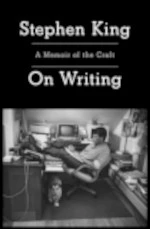
One of my favorite books on writing is On Writing: A Memoir of the Craft by Stephen King. In the book, King says, “Wherever your vocabulary is at today is fine. There’s no need to learn more words or different words. Whatever words you know right now, you use. This will help you develop your voice and sound unique.”

Is using big words in a story a good idea? In my opinion, the answer is yes—as long as the writer chooses words whose meaning and context is easily understood. A thesaurus is a great tool, but don’t use it to come up with words you think sound cool and sophisticated. Readers have a wide range of word knowledge but even those with an impressive vocabulary feel that showing it off is pretentious.

To sum it up: use your best judgment.

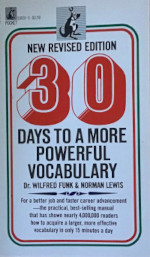
In the meantime, I’ll hang on to my precious dog-eared copy of 30 Days to a More Powerful Vocabulary and see how many of the words I learn end up in my writing. Ceraunophobia, anyone?

To swear or not to swear?


Do your characters swear? Do they swear too much? Not enough? Should they swear at all?

Personally, I don’t get exercised over swearing. Let’s face it, people swear—some a little, some a lot, some only when “necessary.” Swearing can add a touch of realism to our writing (after all, what does one say when tripping over a dead body?). We’ve all known colorful folks who liberally season their conversations with salty words. For one story, I created a character loosely based on a former co-worker who never felt the need to censor her speech. Not a word of it.

But my readers object to profanity and I must respect their wishes. There are ways to suggest swearing and author Naomi Hirahara is so skilled at this that you know the exact word she’s not using. Another author, F.M. Meredith, has this to say about the lack of salty language in her Rocky Bluff P.D. series: “Oh, the characters do cuss, I just don’t quote them.”

Here are ways I’ve suggested swearing in my stories: She shrieked a litany of curse words; She continued to scream and curse …; He included a few four-letter words of a sexist nature; Donna slurred a few non-PG13 adjectives to describe her feelings for her ex; Kat cursed a blue streak (I wouldn’t choose this one again, as it’s a cliché that sneaked past me and my editor).

On several occasions I’ve presented a seminar/webinar on dialogue and tackled the question of profanity. This is how I answered the question “To swear or not to swear?”:

• Know your reader and your genre. Cursing and four-letter words are more acceptable in a thriller than in a romance or a cozy mystery.
• Refrain from profanity in narrative, but an occasional expletive in dialogue is acceptable (depending, of course, on genre).
• Realize that profanity is more noticeable in a novel than it is in real-life conversation.

Again, use your best judgment. And ask your beta readers for feedback.

Your thoughts?

WORDPLAY

by Miko Johnston

Words fascinate me. I think about them constantly, their surface meaning and their subdural meaning. The subtle differences in synonyms when attempting to find the best word in a situation. The unusual pairing of words to create fresh and unique imagery. Formulating a sentence that will dazzle the reader, but not distract them.

We who write in English have an amazing array of words to use. According to a linguist I know, our language stems from our Anglo-Saxon heritage, with words deriving from both cultures.  It provides us with an abundance of synonyms.

I became interested in words early on, which is why I wanted to be a poet and have read much poetry. One of my all-time favorites is Edgar Allen Poe’s “The Bells”, a master course in the use of repetition and word sounds to create different moods. It’s where I learned about onomatopoeia – words that sound like their sound. Poe’s bells tinkled in merriment, rhymed and chimed in happiness, clanged in alarm, and tolled in sorrow.

Before I could read I would hear words and “picture” them by their sound. I would think I knew what they meant, but not always – some didn’t translate into their actual meaning.

Growing up in New York, I ate a lot of delicatessen meats like pastrami, corned beef and tongue. As a child, I assumed the last item to be a homonym of the organ found inside mouths. It took until my late teens to make the connection – the delicacy I’d enjoyed for years was actually…a tongue. Had I not already loved it I would have been grossed out!

I’ve since learned tongue is an autological word – it describes what it is, or expresses a property it also possesses.  Examples of autology include unhyphenated, word, and pentasyllabic  (a five-syllable word that means a five-syllable word).

Onomatopoeia words sound like they sound. Autological words mean what they mean. However I’m more curious by other categories of words, which have no name that I’m aware of, the first being words that sound like what they mean.

Take alluring. When it’s said out loud it rolls gently off the tongue.  You can almost hear the trilling of the R, the sensuousness of the word. I find tranquil to have a soothing sound. To me, idiot sounds ‘fast’ while moron sounds ‘slow’, which is why I ascribe each term to different, um, problematic drivers. I also think stress, beginning with its three hard consonants and ending in the shrillness of double S, sounds, well, stressful. And come to think of it, shrill sounds…shrill. I wonder – do these words sound like their meaning because we know their meaning, or would they sound that way to someone unfamiliar with the word? What would you call words that sound like what they mean?

Then there are words that sound nothing like their meaning. Who came up with pulchritude to describe pleasing beauty? Is gorgeous, with its hard opening G and harsh final syllable, much better? Does relax inspire calmness? One of my favorite and most pleasant sense memories is the smell of summer rain hitting a hot, dry pavement. There’s a word for it – petrichor. Does that sound pleasing? Not to me. Shouldn’t words like these have a name as well?

You can probably come up with other examples of words that sound, or don’t sound, like what they mean, and please do. You might know of a word that describes these types of words, or suggest one of your own. All I know for certain is that my fascination with words and language led me to become a writer.

Miko Johnston, a founding member of The Writers in Residence, is the author of the historical fiction series, “A Petal in the Wind”, as well as a contributor to several anthologies including the recently released “Whidbey Landmarks”. Miko lives in Washington (the big one) with her rocket scientist husband. Contact her at mikojohnstonauthor@gmail.com