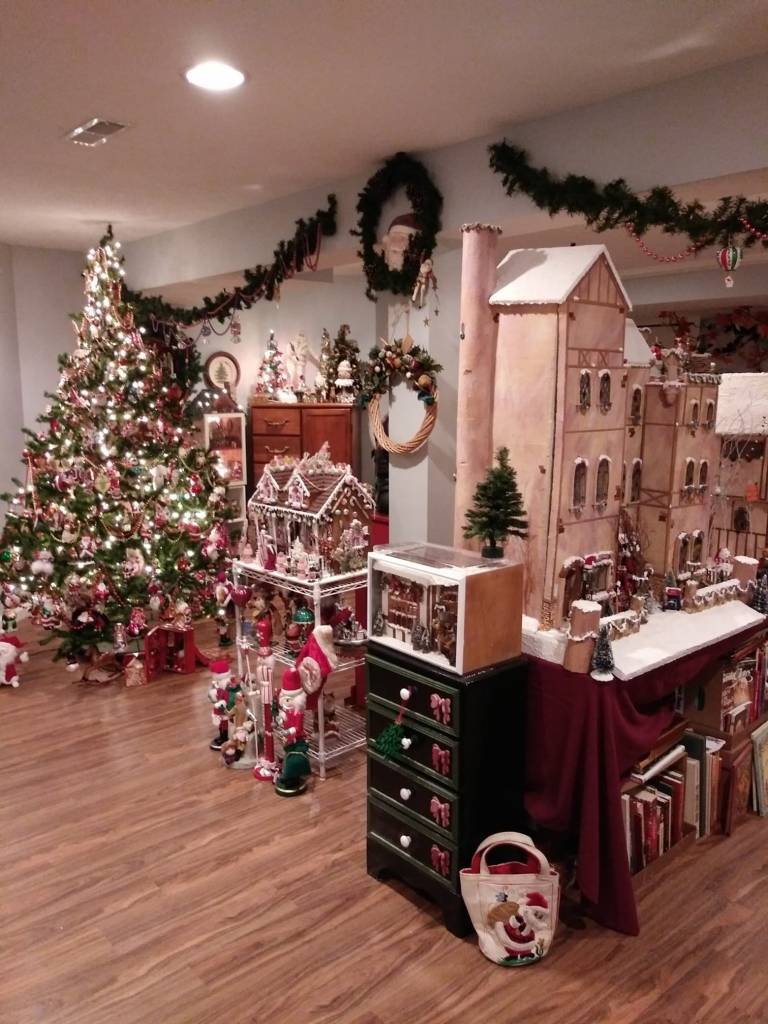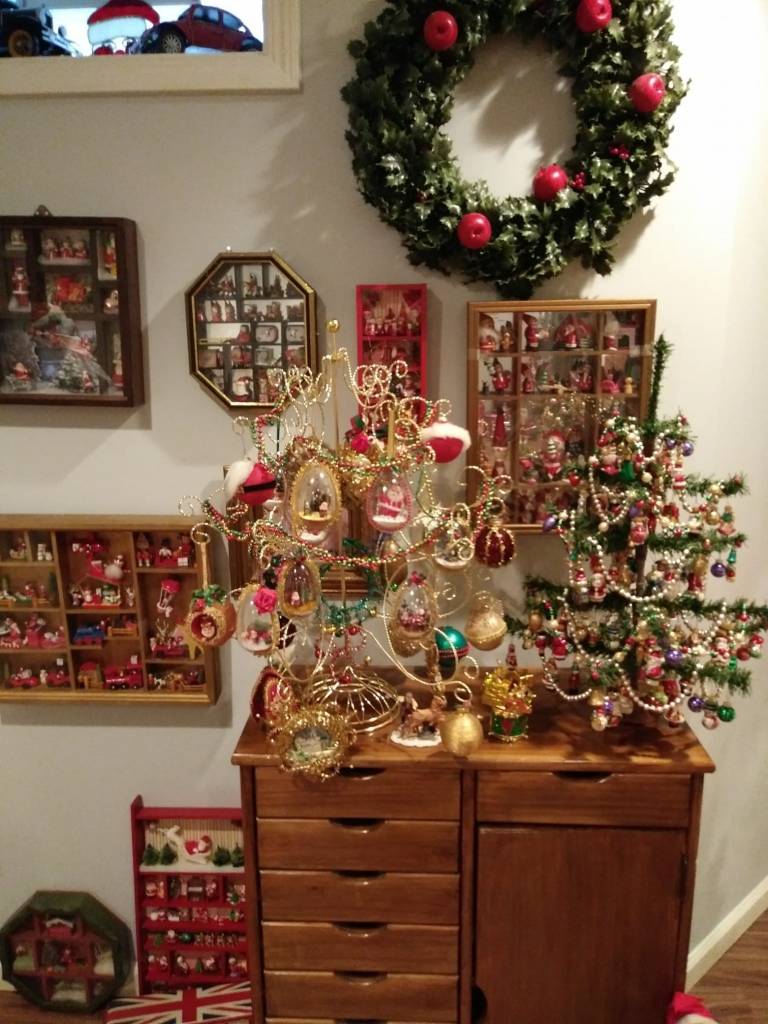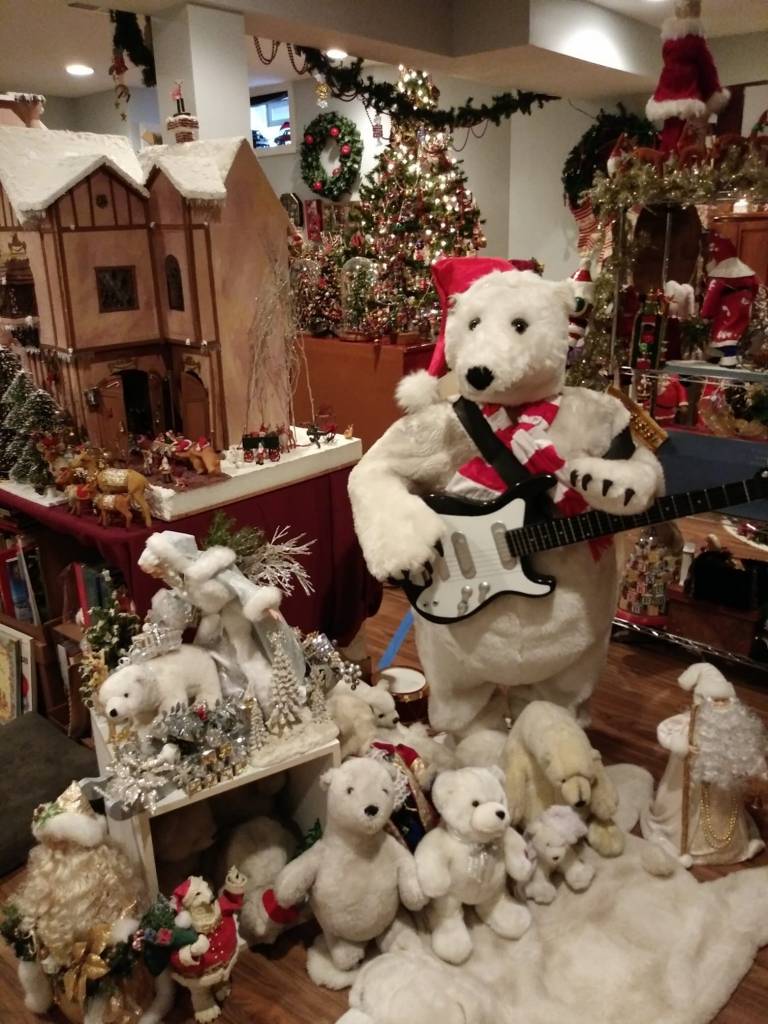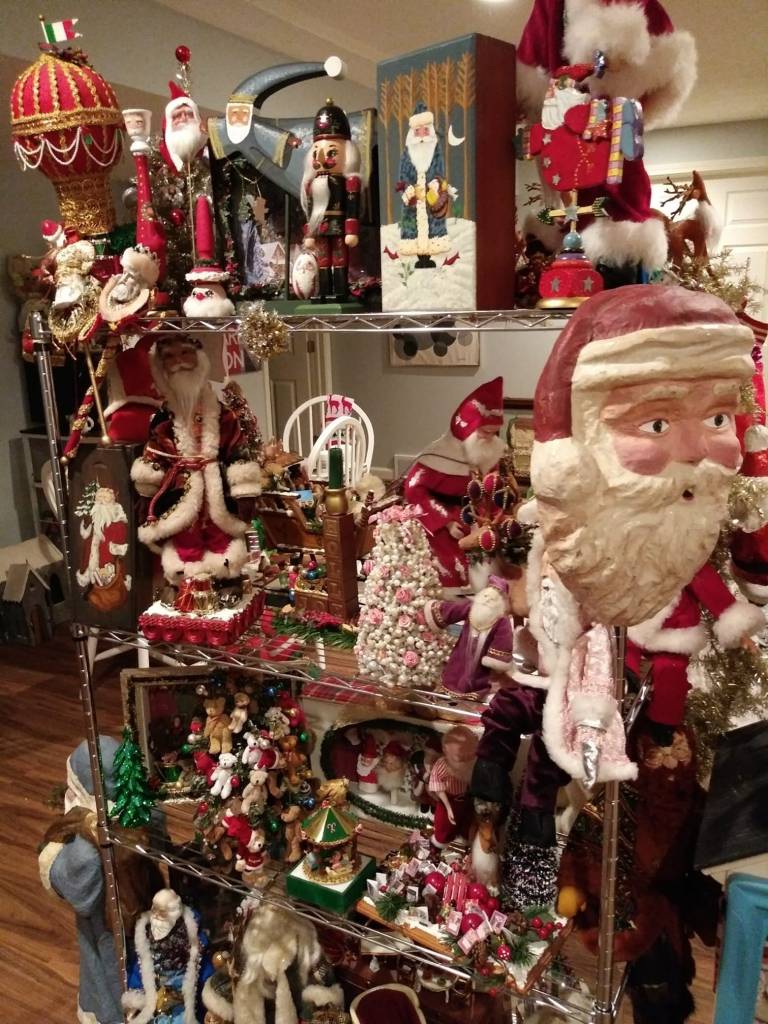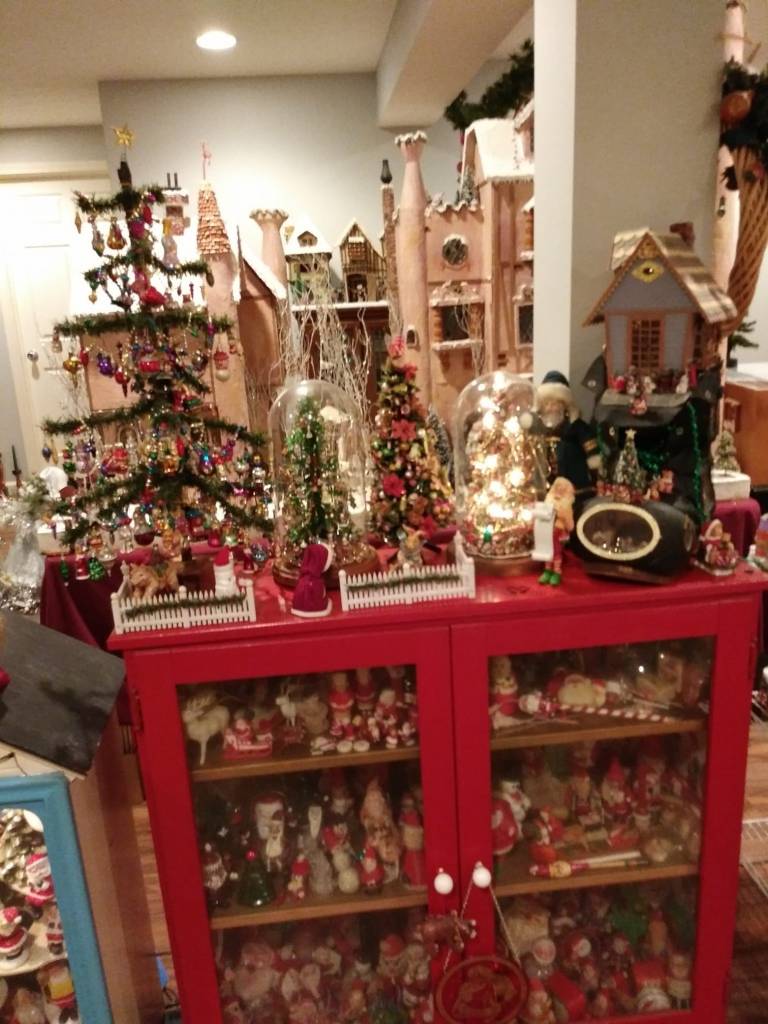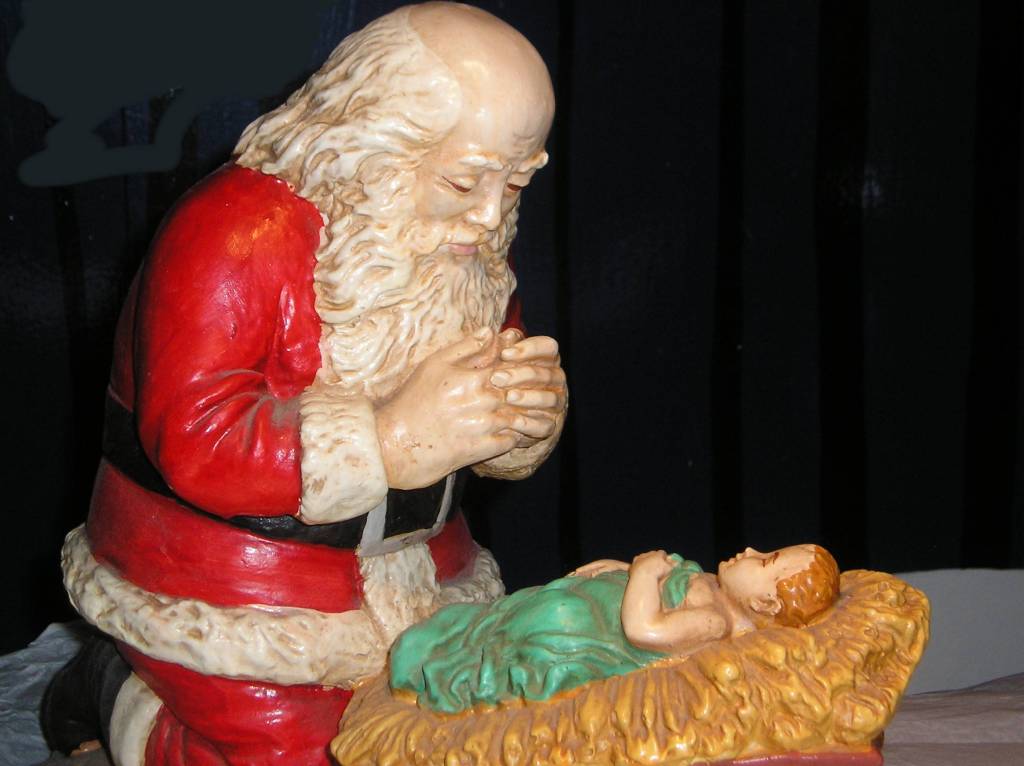
A WRITERS’ MERRY HOLIDAY….

                                    By ROSEMARY LORD

            Do you ever feel that you’ll never catch up before the year ends?

Meanwhile all around, folks are panicking at not having enough time to complete their yearly goals, year-end deadlines, working to bring in much-needed last-minute, additional income after a slow financial year and wrap up assorted 2025 ventures.

At the same time, people want to make the most of the Holiday Season: Hanukkah, Christmas and New Year’s Eve.

            Many are adding travel to their already over-packed timetables, to visit relatives, distant friends, escape to warmer climes as winter weather encroaches – or just a New Year getaway on the schedule.

Some of us are asking ourselves, is this all a bit overwhelming? Have I taken on too much? Have I added too many incidental items to my accomplishment wish-list?

As writers are we pushing ourselves to finish that book before the year end, when we really need to give ourselves more time to investigate the timelines, plotlines, deepen our characters? Are we rushing to complete that article before the January 1st deadline, just to get it out of the way?

I think that sometimes today, in our busy, rather overwhelming lives, we miss the point of the satisfaction of totally immersing ourselves in the creative pleasure that we’re privileged to do for a living. Just writing. Be it with pencil and pad, or the latest computer programs. Without the cacophony of social media expectations and the fear-of-missing-out, we would calmly (well – not always…) focus on the task at hand. We could focus on what we were writing, even when the deadlines loomed. We did not get distracted by today’s outer craziness. We researched, we wrote, we completed the assignment in a more centered way.

We were at the helm. None of the pressure from outside nudging us to keep posting things on social media or keeping up to date by reading everything on Facebook and Instagram, so we know what everyone and their cousin is doing or thinking. Being sure to read the ‘right’ blogs, attend the ‘right’ events, use the ‘right’ words, keep in touch with the ‘right’ people that may be able to boost our career or our ‘online presence,’ – or not.

What happened to the basic, simple goals we had carefully planned?

Our aim used to be to write an (almost perfect) article, book, novel, investigative report, children’s book. Something we would be fastidious in researching, writing and editing. Maybe running it by our beta-reader friends before sending it off.

But today we seem to have become distracted and overwhelmed by the outside influence of a thousand chattering voices telling us we’re not doing enough. That we should have this ‘online presence’ and become a social media darling so that everyone recognizes our faces and our logo. Everyone should have a distinctive logo, they say. Who is ‘they’?  

Yes, I appreciate that is today’s way to sell more of our books, our articles, get more advertising revenue. But I can’t help thinking that, if it’s the money you’re after and if your goal is to become a millionaire and get a million ‘clicks,’– there are a lot easier ways to do that than through the writing world.

When we started out, it was our writing that we wanted people to read, enjoy, appreciate, even applaud. Somewhere along the road that seems to have gotten lost.

Originally, we each felt we had something to say. A voice to be heard and enjoyed. But then some got caught up in the rush of outside influences, instead of listening to that calm, still voice inside our writers’ brain.

Some of us got too busy listening to everything and anything and lost our way, then found ourselves thinking, ‘Is this how I really want to spend my life?’

And this is a wonderful time, over these festive holidays, to calmly step back and remember what we came in for. Where is our time best spent? Rushing around following the crowd? Or finding our way back to our original writing goals?  

So, as we have our overfill of eggnog in the next couple of weeks, let’s take a deep breath and quietly plan for a wonderful year ahead of writing what WE want to write, in the way WE want to write it. Dust off our writing dreams – and tell Santa Claus what we really want for Christmas…

Happy Hanukkah, Merry Christmas and a wonderful New Year to all of you writers and readers out there.

2025 – A YEAR IN REVIEW

by Miko Johnston

The end of December. A good time to review what’s transpired throughout the year, including all the information and revelations that came from our WInRs in 2025.

WInRs may be women of a certain age, but we keep up with the times, as evidenced by several posts – including Jill’s – on AI. I expect this subject will be revisited as the technology progresses … or perhaps takes over?

When Gayle posted Characters: Real and Imagined, I could relate to her reflections on using famous people in our writing. As the author of a historical fiction series, I had to include actual people to balance the historical with the fiction. Her tips on incorporating the famous with the fictitious will help all writers.

Maggie’s Get Those Details Right! also struck a chord with me. I’d had to research locations in Prague during Covid, which meant canceling my planned in-person trip. I learned the limits of Google Maps firsthand when certain information I got from it turned out wrong. Fortunately, other ways to research locations exist (see this post).

Being an author means you never have to retire, a point made by Linda’s post, Retirement? Even if we stop writing for publication, we can continue to pen (or type) notes, keep a diary or journal, or log our family history for future generations.

Jackie’s piece on Mystery Books to TV Series inspired me in a reverse way. I selected a few series I’d enjoyed watching and bought the books, one of which I’m reading now.

Readers of this blog know I love to travel and often do, another reason I always enjoy the journey I take whenever I read one of Rosemary’s posts. London’s World of Words and Stories not only brought me back to a city I hadn’t been to in many years but reminded me how much travel has inspired and informed me about life outside my bubble, not only as a writer but as a human being.

Possibly the most controversial post this past year came from me. In A Contrarian View of Cozies I explained why I won’t read the sub-genre. Some of the responses softened my opinion. A little. Interestingly, when I wrote about cliches in mysteries in an earlier post, I never expected life to imitate art. After the recent jewel heist at the Louvre, a photo of policemen standing guard at the facility included a very dapper man, which raised questions as to who he was:

                                                                                                         Photo by Thibault Camus/AP

According to one pundit*: “Never gonna crack it with a detective who wears an actual fedora unironically. To solve it, we need an unshaven, overweight, washed-out detective who’s in the middle of a divorce. A functioning alcoholic who the rest of the department hates.” I couldn’t have said it better myself. Turns out he had nothing to do with the investigation, but it proved my point.

Our purpose at The Writers in Residence is to entertain, inform, and encourage our readers. If you follow this blog, or recently found it, have we achieved our goal? Did any posts help or influence you as a writer?

*Melissa Chen, a tech executive based in London, wrote this in an X post that has been viewed more than five million times.

Miko Johnston, a founding member of The Writers in Residence, is the author of the historical fiction series, “A Petal in the Wind”, as well as a contributor to several anthologies, including the recently released “Whidbey Island: An Insider’s Guide”. Miko lives in Washington (the big one) with her rocket scientist husband. Contact her at mikojohnstonauthor@gmail.com


Listen to Any Lyrics Lately?

by Jill Amadio

Listened to any lyrics lately? I seem to be spending far more time in my car than usual and, of course, I have my CDs at the ready.

I have to admit, shamefully, that I never truly considered songwriters to be real writers. Yet, they record their daily lives, romances, disappointments, failures, joys, and happiness with succinct and clever poetry and core messages that perfectly fit the moment.

My favorite is Leonard Cohen’s “Hallelujah” and then all of his other works. I enjoy singing along with him until he slides into recalling some of his private, sexy moments for all the world to share. I quickly fast-forward.

His writing is pretty explicit even when he writes about religion, and I am sure his childhood and into adulthood included prayer and participation in services.

Which brings me back to lyricists and their skill at fitting words that we often fling about so wildly, are perfect for the composer’s work. Only Frank Sinatra did it ‘his way’ and sometimes scrambled words together and stretched them out, to my mind. I have never attempted to write a lyric, although I was forced to dabble in some corny poetry in school. It never occurred to me that songwriters, both those who write the words and those who compose the music, were so gifted and creative. Interestedly, they manage to make simple sentences sound beautiful when sung. I urge my memoir writing class students to read their prose aloud and none have ever broken into song. Maybe that’s a good thing. But I am sure that lyricists practice their sons aloud as a way to judge their effect.

It amazes me how songwriters like ABBA and “The Mommas and Poppas” manage to squeeze a lifetime of hurt and happiness into a 3-minute song. It is understandable, of course, when they are singing about one specific moment, but even that requires a skill that many regular writers lack. I wonder if they trim and edit, as we fiction and non-fiction writers do?

I have never met a lyricist, although I have several poet friends, and I watch time and again movies about composers, although the films rarely ask, to my mind, the crucial questions, such as must the lyrics rhyme? Whence comes the inspiration?  Like many famous writers who are the subject of other writers’ biographies, the nitty-gritty of lyric writing and composing are often lost in the labyrinth of their concert performances.

I have read that lyricists and composers work together, but which comes first? Are the words arranged to fit the music, or vice versa? Does erasing carefully-conceived words annoy the lyricist as our editors annoy us? I remember reading that Ernest Hemingway had huge fights with his editor, Max Perkins at Scribner’s, who invariably won the battle and improved the books so magnificently into bestsellers.

I don’t recall any such fights between songwriters, but I am sure there were plenty. Perhaps they were short – like their songs, although I can’t imagine the writers of the lyrics criticizing the music unless they are composers themselves.

.

Perhaps we mystery writers should try to create a murder that can be described in just a few words, a one-page short story, although some songs have several stanzas. It seems that more contemporary songs are brief and to the point, except for country-western, which are often depressing and mostly seem to be about lost love.

Of course, once we’ve murdered the victim in our books and solved a sub-plot or two, finding the killer could take up an entire music album. Perhaps ancient people wrote songs although archaeologists only appear to discover crockery and texts. What would their songs sounds like?

These literary musings are a rather fun way to procrastinate although I am actually seated at my desk and using my laptop. And, I am writing!

Be Thankful!

by Jackie Houchin

Come, ye thankful people, come,
Raise the song of harvest home;
All is safely gathered in,
Ere the winter storms begin;
God our Maker doth provide
For our wants to be supplied;
Come to God’s own temple, come,
Raise the song of harvest home.

Henry Alford, 1844

This familiar old hymn reminds me of Pilgrims and Thanksgiving.  As it happens, my favorite holiday occurs on the last Thursday of November.  To me, Thanksgiving means distant family gathering together, good food, laughter, games, turkey and pumpkin pie, a chill in the air, and perhaps a family walk in the neighborhood to “digest” that second piece of pie.

As writers, we have much to be thankful for: ideas, good words, venues, promotions, agents and editors, readers, and (sometimes) reviews.

On this blog, we’ve talked about ideas and how we get them, good words and how much we enjoy writing them (even IF our readers seldom notice), and the various ways we promote our work. Recently, it’s been at author signings and book fairs.  ALL things to be thankful for.

As readers, we’re grateful for good books in the genres we love, authors who keep those books coming in the series we’re addicted to, blog posts that encourage and inspire, lyrics to songs we enjoy, and even those pithy/humorous ditties we see on Facebook.

Writing words and reading them. What a joy!

Writers can show their appreciation for readers by consistently producing well-written books, stories, and articles, meeting readers in person, and (yes!!) offering the occasional discount or freebie book!

Readers can show their gratitude to authors by sharing their fave books (or blog links) with friends, and by word-of-mouth or written reviews.  A two-line review is not THAT hard to write!

So readers, what are YOU grateful for this November?

(We at The Writers In Residence are delighted that you show up each week!)

I’m always thankful for words and eyes to see them, good words put together in marvelous ways, and most of all, for THE Word of God.

All the world is God’s own field,
Fruit unto His praise to yield;
Wheat and tares together sown,
Unto joy or sorrow grown;
First the blade, and then the ear,
Then the full corn shall appear:
Lord of harvest, grant that we
Wholesome grain and pure may be.

The Business of Busyness

Most of us might name December as the busiest time of year. For me, it’s November, and this year the month is especially chock full of activity. My November actually kicked off on October 20, the first day of Early Voting in Virginia. I worked at an EV site for four ten-hour days, helping voters navigate the democratic process. Last year, I worked at the polls on Election Day itself, an experience I described in this post.

The November Marathon, a Sisters in Crime initiative, helps writers build a daily or monthly writing habit over the course of thirty days. The marathon replaces NaNoWriMo, which SinC sponsored for many years. I serve on SinC’s Social Media Team as manager for the LinkedIN account and post daily in November about the marathon as well as about other events to promote the organization.

As for writing, I’m working on a short story that’s due in early January. That’s coming right up! I have three signing events this month: the Hanover Book Expo happened on November 8; the Local Author Book Fair, put on by the Chesterfield County Library, is scheduled for November 15; and on November 22, members of the Sisters in Crime Central Virginia chapter will meet at Book People, a local Richmond bookstore. I’m looking forward to discussing our recently-published anthology, Crime in the Old Dominion. I love being around readers and writers—we learn so much from each other.

In early November, I enjoyed a Jim Brickman concert and a tour of the Hollywood Cemetery. As a side note, President James Monroe is buried there. On October 23 (just nine days before my tour) his daughter, Eliza Monroe Hay, was reinterred with her family at Hollywood Cemetery after nearly two centuries in an unmarked grave in France.

This is all in addition to the normal busyness of my everyday life: the gym, grocery shopping, walks to admire the fall colors, get-togethers with friends and family, medical appointments. Thanksgiving looms, of course. And we all know how life has a way of “altering” our plans.

It’s all material for our writing.

In contrast, December is relatively quiet in my world. Key word is relatively. I get to enjoy the holiday season with a modicum of fuss and bustle. We’ll see if that holds true this year.

How about you? Is there a particular time of year that’s busiest for you?

A Guest Star

by Gayle Bartos-Pool

Years ago, we could actually watch a favorite TV show, whether it be a television series or a variety show and see some famous, older, celebrity appear as a guest star. I just watched an old Man from U.N.C.L.E. 2-hour movie from 1966, The Spy in the Green Hat, and saw a bunch of famous, older character actors who guest-starred in it. Names like Allen Jenkins, Joan Blondell, Elisha Cook Jr. and Slapsie Maxie Rosenbloom.

These actors were in classic old movies from the 30s and 40s. I had watched them decades later in the 60s and 70s and even now on the old movie channel because I like the quality of the story telling and the great acting these folks did. They were memorable.

I watched another one of those 2-hour U.N.C.L.E. movies, The Karate Killers, where Joan Crawford was one of the guest stars. Her film career had slowed since the 1950s and she was appearing in lots of TV shows, but she still had that talent that made her famous. She was in the opening segment of this Man from U.N.C.L.E movie and was killed off by the bad guy in the first fifteen minutes, but she turned in a marvelous performance. I wasn’t expecting her to do that good of a job, but that gal beat all expectations for an actor in a few minutes of a silly Man from U.N.C.L.E movie. This wasn’t exactly Gone with the Wind, but the lady delivered.

Using the talent of a famous, seasoned actor was good business back in the day when we actually had stars who did excellent work in movies that had a point. I’m not seeing much of that anymore. Call me cynical, but I haven’t been to a movie theater in over 30 years. I might watch a newer movie (maybe 10 or 15 years old) on TV, but since I’m usually disappointed in the results, I still prefer old movies.

But…and there is a “but,” in this post. I have used an older actor to “guest star” in one or two of my short stories. I don’t use their actual name but rather disguise the name slightly. And I might be the only one who gets the subterfuge, but I still do it. I used actor Glenn Ford in a story but changed his name to Dale Carr. (Another word for a “glen” is a “dale.” Another name for a “Ford” is “car.”) I always liked the actor and borrowed him for the short story “Arabian Knights” in the second Johnny Casino Casebook.

I’ve done this several other times in my stories. Sometimes I mention the fact in the Acknowledgement section of the book, but sometimes I don’t. My call.

But what about using a character from a famous book? I know there are legal issues to consider so I wouldn’t use a relatively new character from a famous book in a story unless I disguised their name. One could always say the character in your story was an incarnation of some famous character or maybe say: “he remined me of the private eye in that book, Mystery Whatever, but this guy was much taller…” Or maybe: “She was a modern version of Miss Marple, but this gal wore shorter skirts and high heels…”

But what if…?

What if you wanted to have Sherlock Holmes help solve a case? I mean the real Sherlock Holmes taken right from the pages of one of Arthur Connan Doyle’s books. And maybe the main character in your story never really understands who or what that character really was. Was he real or a figment of your main character’s imagination?

I’ve already come up with how a story could end if I did use such a character. In fact, my mind is racing to do this maybe a few times.

So…If you did pick a famous character to appear in one of your stories, who would it be?

A WORLD OF BOOKS…

by Rosemary Lord

Books. That’s what most of us aspire to write. And most of us writers read – a lot!

As Cicero said: “A room without books is like a body without a soul.”  I wholeheartedly agree!

Baudelaire wrote: “A book is a garden, an orchard, a storehouse, a party, a company by the way, a counselor, a multitude of counselors.”

And J.K. Rowling believes that “something magical happens when you read a book.”

While Honore de Balzac wrote, “Reading brings us unknown friends.” How true.

And I think that the books people have in their homes says a lot about themselves.

I remember visiting Rudyard Kipling’s house, Bateman, in Sussex, England. The 17th-century, wood-paneled house is filled with souvenirs from his travels to India and beyond, his dark, imposing library has floor-to-ceiling shelves crammed with encyclopedias, travel books, biographies and local-culture tomes from his exotic wanderings.

A much brighter house further west in England is Agatha Christie’s beloved Greenway House, situated in a rambling woodland garden on the River Dart in Devon, England. Like the rest of the sprawling house, Christie’s library is bright and sunny. The cream-colored shelves are filled with an array of crime-writer’s reference books of deadly poisons, murder weapons, infamous murderers, biographies as well as her travel pursuits. There are many books on archeology, Egypt, Syria and the Middle East. Christie accompanied her archeologist second- husband, Max Mallowen on his trips to the Middle East. She would catalogue the finds, methodically taking notes which would often later be used in her novels, such as ‘Death On The Nile.’  But in that sunny library, the most admired books are the shelves brimming with copies of all her own novels in their original or amended titles in English and a host of other languages.

Whilst most of us don’t have room in our homes for our very own designated ‘library,’ we do have bookshelves, or places to store or display books.

On the other end of the spectrum from Agatha Christie’s spacious, airy and very comfortable library, my own ‘library’ in my small Hollywood apartment is simply five bookcases in my living room crammed with my life readings.

The shelves are filled with books on the Golden Era of Hollywood and the history of Los Angeles. I have all of Agatha Christie’s novels, various mystery writers both past and present and a vast selection of ‘cozies.’ I have a lot of books written by fellow author friends. Of course, there are the mystery-writers’ required reading: ‘How to commit a murder’ books, forensics, poisons and other reference books.  On my bedroom shelves are my escapist novels by Rosamunde Pilcher, Victoria Hislop, Santa Montefiore and Paul Gallico.

Most of my writer friends have fascinating collections of murder/mystery/crime books, romance-novel or science-fiction ‘How-to’ publications, as well as assorted guides to publishers, literary agents, self-publishing and more. I have a friend who has wall-to-wall shelves filled with books about every musical ever produced, books of lyrics, sheet-music and musical biographies. Guess what his interest is?! Others have an array of nutrition, cook-books, photography or – like my late-husband – motor-racing or herpetology: the study of snakes.

The contents of people’s bookshelves reveal their focus in life: be it travel, biographies, photography, bird-watching, theatre or needlework.

I recall a brief visit to a young wanna-be Hollywood actress’s apartment. It was sleek, cool and very trendy, her wardrobe similarly up-to-the-minute. But there was not one book – or even a magazine – in the place. “Books?” she shrugged dismissively, “I’m not interested.”

 I still reel with shock at that image! (She only booked a couple of small non-speaking acting jobs then disappeared!)

Conversely, when my family and I stayed in an old house in Portugal, my room had bookshelves crammed with books on Mussolini, Stalin, Hitler, ‘Mass Murderers of the World,’ Nazis, World Wars, battles, ‘Mr. Nice: the international drug smuggler,’ Napoleon, Fidel Castro, ‘The Bin Ladens,’ ‘The Mind of a Murderer,’ and some Lee Childs’ Jack Reacher novels for light reading. All in Portuguese. There was a large, framed poster of a hand-drawn man’s face with several stab-marks, red slashes and undecipherable scrawled slogans. I quickly removed this and hid it behind an armchair. But the bed was very comfy and, surprisingly, I slept better there than I had in a long time.

One of the other bedrooms had a brighter selection of Hitler and Nazi books, mixed in with Winston Churchill and world political leaders. All in Portuguese. Another room had some travel books. How did that person fit in?

The general décor of this 1887-built house was grand but somber. The walls in the rather grim, marble-floored entrance lobby, and the walls of the sweeping staircase were filled with neat rows of gilt-framed, black-and-white etchings of various battles, warriors, death, solemn religious figures and crucifixions. So were the walls of the formal front parlor and the even-more formal dining room.  The walls in each of the bedrooms and the long corridor leading to one of the spacious, marble floored bathrooms were similarly adorned.  All the drawers throughout the house were locked. Even the Canaletto print over the fireplace was mournful and colorless. And so the selection of the books in this rambling old house was not surprising.

I remember my dad’s bookshelves were full of mysteries and police stories. His father had been a detective in the Bristol Constabulary. Dad had his Agatha Christie selection, of course. But his favorites were Arthur Conan Doyle, G.K. Chesterton, P.G. Wodehouse and George Simenon – which he read in English and the original French.

Mum, on the other hand, had favorite authors that included H.E. Bates, Laurie Lee, F. Tennyson Jesse (A Pin to See the Peep Show), Paul Gallico, John Steinbeck and W. Somerset Maugham, with whom she became regular ‘pen pals.’

I’m very blessed that I grew up in a book-loving family. For as long as I can remember, so many family conversations have turned to books old and new. Our mum wrote magazine articles, and all of my siblings have always been involved in the book or writing world in some way.

So, I guess they’re in my blood. Books, that is.

So, what books would we find on your bookshelves and what does it reveal about you?


………………………………………


FOR THE LOVE OF (OUR) WORDS

by Miko Johnston

Whenever I read books on my Kindle, I find sentences, paragraphs, and dialogue highlighted by readers, in some cases by a multitude of readers. Lines that speak a certain truth to them, that are beautiful to read, or capture an emotion that hovers near the surface of our consciousness. Lines that express what many of us feel or know to be true, but we can’t articulate because we can’t say it as well, or at all.

Every time I write something, whether it’s a post for this blog, a correspondence, or an entire novel, I always have a line or two that makes me proud. Something I feel not only encapsulates what I want to say, but does so in a way that goes above and beyond what I normally write. Genius may be too strong (not to mention immodest), but the words raise the bar from good to superb, in my opinion. They capture a small moment in life, a bit of character. They illustrate what I mean to express in a unique, visual, and impactful way. At least, in my eyes.

Alas, I rarely hear others who’ve read the words and phrases I most prize and commended them. Don’t they get it? Or am I wrong? It frustrates me sometimes.

I always want readers to enjoy my work, page by page, cover to cover, but I also want them to savor what I consider to be extra-tasty bits. I can point to at least one example, and often more, in each of my novels, but I’ve yet to see them mentioned in reviews, or highlighted, figuratively or literally, throughout the pages. Even when I’ve repeated some examples of these lines and dialogue from an earlier Petal In The Wind novel, using them as flashbacks in a later book. Even when I’ve used a few examples in my posts on this blog to illustrate a point.

Okay, sometimes my writers group members have praised a particular line, but we always have to say something complementary. It might be like wine tasting – after sampling them all, the one you like best may not be great, just better than the rest.

Am I alone in thinking this? Do you ever wonder if readers have the same reaction to the lines you prize most as you? If they remember the passages you believe particularly memorable, repeat the lines you consider most quotable? Does it matter to you?

Miko Johnston, a founding member of The Writers in Residence, is the author of the historical fiction series, “A Petal in the Wind”, as well as a contributor to several anthologies including the about-t0-be-released “Whidbey Island: An Insider’s Guide”. Miko lives in Washington (the big one) with her rocket scientist husband. Contact her at mikojohnstonauthor@gmail.com

Free Write Your Way Out of Writer’s Block

By Maggie King

Writer’s block. Many writers suffer from this condition. I used to scoff at the very idea of writer’s block, regarding it as another way for writers to procrastinate. But the creative slowdown I’ve experienced for several months has humbled me.

I’m not blocked for ideas, I have them by the dozen. The problem lies in creating a story, one people would actually want to read. My writing skills have gone on hiatus.

My solution: free writing. According to Matt Ellis in his post in Grammarly.com, “How Freewriting Can Boost Your Creativity,” freewriting is a technique in which the author writes their thoughts quickly and continuously, without worrying about form, style, or even grammar.

Mr. Ellis extols the benefits of this practice: “The benefits of free writing revolve around organization, brainstorming, and inspiration, as well as beating writer’s block and relieving certain anxieties. Just getting anything written, even if it is imperfect, can jump-start creativity.”

Author Natalie Goldberg also encourages free writing, or “first thoughts” in her parlance. In this excerpt from her classic Writing Down the Bones: Freeing the Writer Within she explains how to write first thoughts (#6 is a tough one!):

  1. Keep your hand moving. Don’t pause to read what you’ve just written.
    That’s stalling and trying to get control of what you’re saying.
  2. Don’t cross out. That is editing as you write. Even if you write something
    you didn’t mean to write, leave it.
  3. Don’t worry about spelling, punctuation, grammar. Don’t even care about
    staying in the margins and lines on the page.
  4. Lose control.
  5. Don’t think. Don’t get logical.
  6. Go for the jugular. If something comes up in your writing that is scary or
    naked, dive right into it. It probably has lots of energy.

Sometimes I write from a prompt (maybe not technically free writing, but who’s nitpicking?); at other times I simply write whatever comes forth. I set a timer on my smart watch for thirty minutes and go, without stopping. At first I went for ten minute sprints, but soon found that half an hour worked best. My thoughts and words flow. When the timer goes off, I pause, then go for another thirty minutes. At that point my hand needs a rest!

My free writing is turning into a memoir. Nothing organized or even chronological—whatever occurs to me ends up on the page. What occurs are often experiences from my past: family, people I’ve known, jobs held, schools attended, challenges faced. I’ve devoted pages and pages to my summers spent with relatives in a rural part of upstate New York.

It’s been an enlightening process, especially as I discover how my perspectives have changed over the years. Frankly, there are memories I’d like to keep buried, but I’ve found it liberating to get them down on paper (See #6 of Natalie Goldberg’s list above).

Since I started this process in July, I now look forward to writing each day. I can’t yet report much creative writing activity, but last week I was invited to submit a short story to an anthology. I have a great idea for a story (remember, I have no dearth of ideas) and now feel up to the challenge of actually writing it.

And now, please excuse me … it’s time to free write!

Handmade Software, Inc. Image Alchemy v1.14

Naming Characters

by Gayle Bartos-Pool

Sometimes the name of a character a writer uses just pops into their head. Other times they use the name of a friend or relative. There are also times when the writer changes the name they started with when they realize it doesn’t fit the character anymore. But how is that possible? The writer is just making up the name and the story.

Well, it’s like this…

When a writer is creating a story, they are creating a new world. It will be filled with things everyone will recognize or at least understand if the writer gives good descriptions. A space odyssey might be made-up, but there will be enough things explained so the reader can follow along. Hey, the people who wrote the Star Trek episodes imagined fantasy gadgets that were actually invented many years later by real scientists who used roughly the same concept and style for actual things we use today… “Scotty, beam me up!”

But character names can be tricky.

If one is writing a story that takes place a hundred years ago, names like Tiffany or Jaiden might not work. Watch an old movie and check out the names used. Or maybe read an old book. But something interesting is happening now in the first quarter of the 21st Century. Names from fifty to seventy-five years ago are making a comeback. This will probably mean that you can use any name for a contemporary story. But there still is the problem of fitting the name to the character.

In most cases you wouldn’t want the “heavy” in a cops and robber tale to have a cutesy name like Willy or Felix. They would more likely be the comic relief characters in another story. The same is true with the hero’s name. It would have to be something a bit stronger like Max or Duke. Remember, studio executives and a director changed Marion Morrison’s name to John Wayne to fit the type of characters he would be playing in the movies. And that’s a fact.

Female names have the same concerns. The female lead in a romantic story could be called April or Amber, not Bertha or Myrtle. Wilhemina could definitely be the name of the amateur sleuth in a cozy mystery. She could be a librarian or maybe an older sleuth like a Miss Marple.

Names can do as much to define a character as what he or she does within those pages. If you start off by introducing your main character with his or her name linked to a strong action, it will help the reader understand the part they are playing.  But that is only if you want the reader to know who they really are from the start.

If, for some reason, you wanted to gradually introduce your hero, you could peel away certain aspects of your lead character by letting him show the reader those special qualities a little at a time, but that method is usually meant for the villain who starts off as just one of the boys or maybe some influential person in the plot, but who knew he was actually the bad guy? The hero will finally see the real person under all that finery and expose him.

As for the hero, usually the reader knows who he is from the beginning, but the hero might have to discover that truth about himself by peeling away his own fears and finding his own strength when push comes to shove at the end of the book. The reader will be rooting for him, but he has to do the work.

But establishing the name for that character will still take some planning. Now that we have access to the Internet, you can type in the name that you have cleverly come up with. It fits the parameters of your story. It isn’t too quirky or too cumbersome. But “what if” there is some famous person with the same name out there? Just about every name I have come up with has two or twenty-two people with the same name on the Internet. I have a rule: If it isn’t some current name in the news and I like it, I’ll go with it.

I seldom use the actual name of a friend in my stories. If I only use their first name, I’ll do that, but I have added little changes to their names just for fun. The reason I do this is because I do want my characters to have a life of their own. After all, my friends have their own lives. But it’s fun to use their first name for a character who makes a “special guest appearance.”  I even used a version of my dad’s name in my spy novels. Dad dealt with spy planes and did some rather interesting things that are still classified, so calling my character “Ralph Barton” instead of “Ralph Bartos” worked. And dad got a kick out of it.

I probably do keep the names of my characters fairly simple. If they are all wildly intricate with too many syllables, the reader might get lost in the multi-syllabic confusion. And several odd names might confuse the reader as well. They might think Henrietta is Hildegard and not understand why the wrong one riding in the taxi with the killer.

So, I keep the names a little simpler and do something else. I don’t have three or four characters in the same story with a name that begins with the same letter. This makes it easier for the reader to follow, and it actually makes writing the story easier, too. I don’t want to confuse my characters while I’m writing.

And I do try to fit the name to the character. One of the fun names I picked was for my second private detective series. It came about this way. I always liked the old detective shows on television back in the 50s, 60s, 70s and 80s. And the private eyes from the old black and white movies I watched on the movie channel. I wanted this new character to be a tribute to those guys. Too bad they don’t have good detective shows on TV anymore. Our loss.

I started with Sam Spade. That was the name of the character Humphrey Bogart played in The Maltese Falcon based on the 1930’s novel written by Dashiell Hammett. A classic. I also liked the television series, “Richard Diamond,” starring David Janssen, that ran from 1956 to1960. I was a fan of “Hart to Hart,” starring Robert Wagner that ran from 1979-1984.

So, I liked all these cool detectives. I noticed that their names were like the different suits in a deck of playing cards – Spade, Diamond, Heart. I needed a Club, but that name wouldn’t work. Sounded like a caveman or something.

Then I thought: what’s another word for “club”?

There’s gaming club, gambling club, and a gambling casino!

How about just casino?

And Johnny Casino was born.

The name fit this character who took a chance, changed his name from Cassini to Casino after he worked on a gambling ship near Maimi and had to leave in a hurry. He then took another chance and moved to Los Angeles and after getting his life together, he became a private investigator.

But I worked on getting his name and his life right…Three books later, I guess the “chance” I took paid off.

And you know what?  There was one more chance in this story. Another character was working his way into my head. His name: Chance McCoy. He got a second chance in life himself. There are three books in his detective series.

You see, names do matter. If they fit the character you’re writing, they can lead you to many new places. Write On!