The Difficulties of the Back Cover Description

If I know an author well, I will simply pick up a copy of his or her book, confident that I’ll enjoy the read. I’ve seldom been disappointed this way.  But what if I don’t know the author? What will make me lay down my money and take the book home, or even download it at a cheaper price from Kindle? After all, this is the position I have to assume most readers will have toward me when they first discover my books.

The back cover description is the key.

It’s ridiculous, if you think about it, that an author must condense the plot, the character’s arcs, the entire novel into a paragraph or two that will entice the reader to want more. But something on that back cover has to convince me the book is worth my time. Here is the back cover from Elizabeth Peter’s first Amelia Peabody mystery. (It’s a bit of a cheat, as my mother recommended it to me.)

“Crocodile on the Sandbank”

Amelia Peabody, that indomitable product of the Victorian age, embarks on her debut Egyptian adventure armed with unshakable self-confidence, a journal to record her thoughts, and, of course, a sturdy umbrella. On her way to Cairo, Amelia rescues young Evelyn Barton-Forbes, who has been abandoned by her scoundrel lover. Together the two women sail up the Nile to an archaeological site run by the Emerson brothers – the irascible but dashing Radcliffe and the amiable Walter. Soon their little party is increased by one – one mummy, that is, and a singularly lively example of the species. Strange visitations, suspicious accidents, and a botched kidnapping convince Amelia that there is a plot afoot to harm Evelyn. Now Amelia finds herself up against an unknown enemy–and perilous forces that threaten to make her first Egyptian trip also her last…

The basic story is that a spinster goes to Egypt and runs into a lost young woman, two brothers, and a mummy, but notice the adverbs and adjectives:  irascible, suspicious, perilous, scoundrel. The verbs are strong as well: embarks, rescues, abandoned, threaten.

These word choices also work because the characters and situations are bigger than life, which I think comes through.

Radcliffe is described as “irascible but dashing”, which gives the reader a hint of fireworks and romance.

Out of this description, I’ll tell you what would have made me open the book.

“…a singularly lively example of the species.”

I LOVE dry, understated, and usually British humor. What a hysterical way to describe a mummy! That alone would convince me to open the book, because it’s my kind of writing style. I would also look inside to check out the writing style because there are only two authors who are good enough to make me suffer through present tense.

1. Condense the story into a few lines.
2. Choose strong adjectives, adverbs and verbs.
3. Make sure the description reflects the tone of the book.

 Sounds easy, right?

Take your latest tome and apply the rules. Can you improve your description?

Dialogue – The Workhorse of the Story By Gayle Bartos-Pool

Dialogue – The Workhorse of the Story
By Gayle Bartos-Pool
Dialogue is the workhorse of the novel, short story, and screenplay. Even Silent Movies had dialogue. Dialogue performs several functions. It provides: Character Development; Plot Advancement, and Action or Movement.
In other words: It brings the story to life.

Dialogue Enhances (Describes) the Character – How a character speaks and acts says a lot more about him or her than just the words. Dialogue tells the place of birth, type of education, her temperament, his soul. Speech patterns denote character just as costumes do for an actor whether it’s a stammer or a dialect.
“Honey, somethin’s happened to yer livin’ room. Did ya’ll get another dawg?”

Dialogue Advances the Plot – and Provides Pacing – Good dialogue always adds something to the plot, whether it builds tension, relieves tension, imparts needed information to the other characters (and the reader), animates the story, thus moving it along; or even slows down the pace when you need a breather.
“Why’d you get out of the fund?”
“Frankly, I was scared. They played too rough.”
“They?” That got my attention. “Who’s they? Does Racine have a partner?”

Dialogue provides real time action. You are in the room with the characters as they speak. You are eavesdropping or right in the middle of the conversation. Or the character might be speaking directly to you. And dueling dialogue between opposing characters brings the reader right into the action. But note: as the argument gets more heated, the length of the sentences gets shorter.
“I never loved my wife!”
“Did you kill her?”
“No!”
Dialogue gets you Up-Close and Personal – Provides Tone and Mood while it brings the reader into the story. – How the words are delivered sets the verbal stage on which the scene is set; a whisper denotes mood just like a rant.
I lowered my voice before asking her my next question. “Do you outrank him?”
“No, I sleep with him,” Trin whispered.
 Remember: A character blurting out information that advances the plot is far more interesting than a long narrative description. But note: Dialogue is the illusion of conversation.
In order to know how a character speaks or acts, or even the words he uses, you must get to know your characters…intimately.
First, make the characters seem real to you as well as to your readers. Let them speak to you and trust them. Most writers will tell you they actually “hear” their characters, and it is that particular “voice” that makes a character unique.

Archie Wright’s the name. Dishing dirt’s the game. My sandbox: Hollywood. The most glamorous and glitzy, vicious, and venomous playground in the world. If you come for a visit, bring your sunscreen and your shark repellant.
Make a character sound different from the other characters with him by adding: a dialect or a foreign accent or words to denote an education or lack thereof. Add rhythm to their speech to show how the person is thinking at the time: hesitation vs. rapid-fire.  Word choice might show a character’s education level, but keep it consistent; a drugged out biker probably won’t quote Shakespeare, but a  professor in prison might quote Hamlet.
Speech should:  Move the plot along by telling us something about the character; convey information about the plot; add to the mood; change the POV to get another character’s side; and add to the reality of the piece. Just make sure somebody (a character or the reader) learns something new during any conversation. But if something is conspicuously held back, make sure it is found in the next chapter or at least by the end of the story.
If there is no purpose to the dialogue, rewrite it or dump it.

“Larry and I didn’t have children. We had two ‘vipers’ instead, just to be different. And to tell you the truth, if they didn’t kill their father, they hired someone to do it. But their funds are limited now. They’ll have to do the deed themselves.”
Language & Body Language
Simple gestures describe the characters more fully than words alone. Instead of: “Go ahead. Date my ex-wife!” he shouted. Try: “Go ahead. Date my ex-wife,” he said while slamming his fist into the wall.

Body language or Stage Business Helps Dialogue.
            “I love you,” he said.
She blew smoke in his face. “How nice.”
Instead of a constant stream of he said/she said, use stage directions to show how someone is reacting while talking.
“I’m crazy about you, too,” she said, looking at her watch.
Internal monologue can shake things up.
I couldn’t believe they found Brad’s body. I thought I buried him deeper.
Things to Avoid:
Expository dialogue: “As you know, Fred…”
Pleasantries: “Hello. Nice weather we’re having.”
Long speeches – Unless you’re Shakespeare; less is always more in dialogue.
Adverbial action tags like: “I loathe you,” she said fiercely. –can be replaced with action: “I loathe you,” she said, grinding her cigarette into the back of his hand. “Have a nice day.   Instead of: he said gravely. Try: with his head bowed he said…  
Sometimes what the character doesn’tsay is important: “I knew you wouldn’t care if I left you,” he said. She bit her lip.
Keep you, the writer, out of the piece. Don’t let your thoughts get tangled with those of your characters.
Write a biography of your main characters, whether it’s a paragraph or a page, describe who they are, where they came from, their background. Where a character was “born,” went to school, and his neighborhood will dictate his speech pattern, whether it’s a Southern drawl, a French accent, or a gangsta rapper from the ‘hood.’
If you are having difficulty, start with a “stock character” straight from central casting. If you want a villain, pick a character from some old movie, like Edward G. Robinson, and than mold him into your own creation. You can always find a picture in a magazine that fits the type of person you want in a particular role. Cut the picture out and devise a background for him or her.
If you know your characters, you can find their individual voice, even if the character isn’t human. Dogs, cats and birds have found their way into great stories.
After you have written your scene, read it aloud or have someone else read it to you, or use one of the many software programs that reads your work back to you. It will make a huge difference. You will hear things you didn’t know you wrote (both good and bad) and you will pick up the redundancies and misused words. And you just might find out how good you are at writing dialogue.
Let your dialogue work for you. It has a lot to say.   

Tips from the 2015 California Crime Writers Conference, by Jackie Houchin

photo19
            AS A MEMBER of Sisters-in-Crime and Mystery Writers of America, I’ve attended all their combined conferences so far, and agree with everyone (even Anne Perry), this was the best one yet.  I love the camaraderie of fellow writers. I eagerly chat with them and sit in on their panel discussions. I commiserate with their anxieties and failures, celebrate their successes, and take note of the hard-earned tips they offer.
            The key note speakers – Southern belle, Charlaine Harris and British maven, Anne Perry – were the icing on the cake.
            I usually follow the “Craft” track because I’m a journalist with only an occasional dip into short stories. But the Industry, Forensics, and Marketing tracks were all well-attended, and for the first time this year CD recordings of each were made available for purchase.
            To order any of them, follow the links at http://vwtapes.com/sistersincrimewritersconference.aspx or contact Patrick Von Wiegnandt  at pvw@hawaii.rr.com.
NOTE: In order to be sure I did not misquote any of the authors from my scribbled notes, I listed their names on the panels, then used unattributed quotes. To hear just who said what (and more) check the CDs. 
photo1
“Addressing Fear and Other Plagues of the Writing Life” — Tyler Dilts, DJ Adamson, Terry Shames, Terri Nolan, moderator: Dennis Palumbo
            About anxieties for beginning new projects: “I let my alter self rant for about 3 minutes (maybe journal) then say ‘Shut up and get up.'” “Just get the words on the page. I do about 2,000 daily. When you have a draft the fear is gone.”
            About procrastination: “I do writing activities (email, etc.) other than writing on my book.” ” My kids say I’m circling the computer.” “I don’t call it procrastination, but preparation.”
photo2
“Thrills & Chills” —- Laurie Stevens, D.P. Lyle, Craig Faustus Buck, Paul D. Marks, moderator: Diana Gould
            About creating the elements of suspense: “I make characters sympathetic, then put them in jeopardy.” “Write thrillers only in 3rd person POV.” “Tell readers things the protagonist doesn’t know.” “Cliff hangers on most chapters.” ” Pace is critical.” “Short chapters.” “However, NEVER end the book with a cliff hanger.” “Don’t end chapters with ‘She had no idea what was coming’. It’s author intrusion.” ” I punch up violence in 2nd drafts.”
            About writing processes: “I do the 1st draft as a screenplay, an outline of sorts, I guess.” “I write the crime first, then write the psychological parts.” “When finished with the 1st draft, I do passes on what concerns me, like characters or pace.” “Anyone who doesn’t use Scrivener” is crazy!” http://bit.ly/1G5W0Q4
photo7
“Miss Marple’s Rules, Traditional Mysteries Today” —- Jill Amadio, Susan Shea, Gay Degani, Carole Sojka, moderator Susan Goldstein
            About labels and rules: “There’s more bloodshed in a Divorce Practice than in traditional mysteries.”  “Solving a puzzle. A whodunit.” “No graphic sex or violence, an amateur or private detective, justice rules in the end.” “Multiple suspects and a small town setting.” “Victims are usually odious people.” ” No killing animals, no harm to children.” Traditionals are more cerebral, more analytical of human behavior.”
            About changes in traditional mysteries:  “Technology, cell phones, the internet.” “The basics don’t change (structure, clues, a puzzle, suspects).” “Authors today like to break some rules along the way.” “Today’s world – travel, social settings – can work its way into mysteries.” “Less likely to stereotype (maids all the same, etc.).” “More humor.” “Some authors today like to have a niche, a “craft” of some kind in their mysteries (quilting, cooking, bookstores, tea shops).” “You can usually tell a niche-type cozy by its cover.”
            (A hot topic: Most in the audience said these types of popular mysteries were “cozies.” However publishers and book stores do not distinguish them from the more traditional (Miss Marple, Hercule Poirot) “whodunit” mysteries.  They refer to ALL traditional mysteries (niche or soft-boiled) as COZIES. Women in the audience, as well as the authors, thought this was a bad rap, because men are less likely to try soft-boiled traditional puzzle/sleuth mysteries if they think they are reading “cozies.”) 
            A question from a gentleman:  What is it about a woman liking to write mysteries?  “Women are more willing to listen to others.” “They are more apt to ask a lot of questions.” “Maybe they are more intuitive.”
photo9
“Short and Deadly” —- Bonnie Cardone, Andrew Jetarski, Gay Kinman, Donna May, moderator: Kate Thornton
            Why write short stories: “Immediate gratification.” “I was trying to make a living and had no time to write a novel.” “My first short story was the first chapter of my novel, slightly changed; the second one, the second chapter condensed. I wrote the third story on my own.” “Writing short stories was a way to put off writing my novel.”
            About the importance of Short Story anthologies:  “It’s how I began.” “I saw the announcement for submissions and thought ‘I know I can do that.'” “I wouldn’t be writing today without that opportunity. I like that when the theme is announced, everyone starts at the same time, no one has an advantage.”
            About short story markets:  “Anthologies, they get you started.” ” Kings River Life always needs themed stories.”  http://kingsriverlife.com/  “Duatrope.com has searchable databases for fiction and other genres.” https://duotrope.com/  “Woman’s World is another good place; very strict guidelines, but pay $500 for 500 words + a clue/question.” “Alfred Hitchcock & Ellery Queen magazines.” “Try joining the online group, Short Mystery Fiction Society, they even give Derringer Awards.”  
            About free or paid submissions”  “If you submit to non-paying markets, try to do it in places that give awards.” “I want them published before I put them into my own anthologies.” “You can put short stories on Amazon Kindle for 99c.” “Free to anthologies is good, it’s for a good cause.” “I introduce the characters in my novel in free short stories to see if people want to read about them” “Published (free) short stories can act as calling cards to other venues.”
            About regrets:  “I sold all the rights to an online market, then later when a film company wanted it, I couldn’t sell.” “I didn’t quite make the deadline on a story, then just let it go.” “I have a great story, but I can’t figure out the end!”
photo14
“Traveling Through Time, Historical Novels” —- Jessica Ferriday, Anne Cleeland, Ona Russell, Bonnie MacBird, moderator: Rosemary Lord
            About what started you writing historicals:  “Scrapbooks. Clippings of my husband’s grandfather who was a judge in the 1920s. When I researched him, I found a wonderful Jewish woman who worked in the courts, perfect as my protagonist.” “I have Sherlock Holmes and the Victorian Era in my blood.” “I love linguistics and languages. My stories are in 1890s London.” “I love Regency novels. You’re supposed to write what you read, so I write 1814 Jane Austin.”
            About the language and style of historical speech: “I was trained as an actor, I learned to mimic. I listen to a CD every morning before writing.” “I get British people to vet my writing for Americanisms.”
            About research facts: “I  realized everything moved a lot slower (communications, travel, etc.)” “Hats! No one wears hats today.” “They had more ways to entertain themselves with each other – singing, instruments, dancing, storytelling.)”
photo16
“Putting Your Blog to Work” —- Sybil Johnson, Patty Smiley, S.W. Lauden, moderator Mar Preston
            About expectations of a blog:  “I’m a member of a multiple author blog (MAB), so there’s no pressure to write a post every day or week.” “When I hung up my shingle as a writer, I created a place for other to find what I’m doing – opinion , author interviews, short stories to music videos.”
            About blogging to sell your books: “If I don’t, people won’t buy my books.” “I create a voice and style, but a blog won’t make you famous.” “I’ve gained readers.” “I announce my books on FaceBook and Twitter, but never talk about my books on the blog. I have conversations with people there.”
            About writing that blog post:  “We write from 1,500 – 6,000  words.” (WOW!) “I write 400-1,000 words.” “Begin your blog as if beginning a thriller.” “Offer content about YOU, your life, funny and entertaining stuff, not just about writing.” “Ask, ‘Would people care to read this?'” “Respond to comments.” “Make blogs visually attractive. Use photos and graphics. I imbed videos and book covers, use pull quotes. Use fewer words: people see a wall of text and don’t stay.” “Pay attention to ‘Keywords’ for your posts. Choose them carefully.”
            About all those blog hits from other countries:  “Creepy.” “How? Why?”  (An answer from an audience member cleared this up. The International Institute of English encourages their students to find blogs by using keywords. They print them out and use them to study English and English/American idioms; reading and rewriting them.)
            About getting started and keeping going:  “Join a MAB, or guest post on one.” “Write a dynamic essay.” “Keep a list of things that are happening to you, choose the interesting ones.”
Keynote speakers
photo3
            From Charlaine Harris: How long does it take to churn out a book?  As long as your editor says. Being a writer means completing the book. It’s a business. If you don’t sell, you’ll be cut. No, I don’t outline. Outlining makes me feel like painting by numbers. I write maybe 250 words about the book, then get to it.  My biggest challenge? Personal malice towards me!  Sweet me!
photo13
            From Anne Perry:  Do you ever wonder why crime writers are such nice people? If we really don’t like you, there are other things we can do with you. The great thing about being a writer is that you are allowed (expected) to be eccentric. You can write your mysteries about anything you like, as long as there are the elements of crime and somebody to solve it. (Photo: with Rosemary Lord)
photo18
Keynotes discuss Elmore Leonard’s 10 Rules of Writing, Moderator Craig Faustus Buck
Harris and Perry agreed with most of Leonard Elmore’s famous “Ten Rules of Writing,” with exceptions.  “It depends…” prefaced many of their answers, and then they often explained how they broke that rule! Or avoided breaking it by using other means. A perfect wind-down to the conference. 
photo6
Sisters In Crime Anthology “LAdies Night” authors & editors —- Naomi Hirahara, Kate Thornton, Jeri Westerson (editors), Julie G. Beers, Julie Brayton, Sarah M. Chen, Arthur Coburn, L.H. Dillman, Bengte Evenson, Cyndra Gernet, Andrew jetarski, Micheal Kelly, Susan Kosar-Beery, Jude McGee, Gigi Pandian, Wendall Thomas

Reading and Writing – The Basics by Kate Thornton

This week on Writers in Residence, author Kate Thornton shares her thought son the connection between reading and writing. You can find out more about Kate at her Amazon page.
Reading and Writing.

I have been doing both.

It has always been a firm belief of mine that you can’t write – or write well, anyway – if you don’t read. And I’m not talking about magazines – c’mon, people, we all read magazines, if only while waiting at the checkout counter (although 2 of my regular supermarkets now have TV for the attention-impaired, 5 second snippets of shows and commercials.) I do not discount this type of reading; I publish in magazines and do not bite the hand that at least pats me on the head. But magazines are very thin picture books, meant to give your mind a jumpstart or a tweak, not to give you hours of transportation to a completely other world.

The difference between books and magazines (or newspapers or blogs or the Huffington Post) is not exactly the same as the difference between People Magazine and actual people, but it is nonetheless great.

So when I say I have been reading, I mean books. It sort of goes without saying that I read magazines, online posts, news, cereal boxes, tee shirts, bumper stickers, the mail, and just about anything with printed words.

I have my favorite genre fiction – it runs from James Lee Burke, Dean Koontz, and Louise Penney on one side to Earl Derr Biggers, Arthur Upfield and Ngaio Marsh on another and Sue Ann Jaffarian, Jeff Sharrat and Taffy Cannon on yet another – it’s a multi-sided construct. But I love classic fiction as well. I learn from it, the easy way, while being entertained, enthralled, whisked away, and fed on rich things.

I have a dear friend who just discovered the joys of a Kindle and is reading Willa Cather. Now that’s reading. This same friend just finished Faulkner (the hard, difficult, rip your eyes out Faulkner of Light in August) in hardcover, so she’s no stranger to the type of reading that sometimes takes you to places you would never allow yourself to be taken otherwise. But she enjoys going to the good, kind places, too.

Which brings me to writing. If you don’t take the trips to places through reading, I don’t see where you can buy your ticket to take others to places through your writing. It is one of only two ways I know to learn how to write, and they are both connected. The other half of it is actually writing, the BIC (Butt In Chair) method.

This week I have been reading both fiction and non-fiction – and writing.

I have completed that same novel I started writing in late 2007. I confess I let it sit for several years due to plot holes, but I have since learned how to knit up the raveled sleeve of a couple of good ideas strung together with engaging characters, an endearing puppy dog and a couple of gruesome murders. What’s not to love? And working on it this time around was a pleasure, not a chore.

I also discovered – by reading through it and looking ahead to the satisfying conclusion that it is not the mystery I thought it would be, but is an animal I have not before tamed, namely Romantic Suspense.

So I have begun to read in that genre. And it’s fun. I am enjoying and learning and reading it all with a delight I before had reserved only for mystery, science fiction and certain favorite classics.

So my question is:

Which romantic suspense authors do you like? Recommend a few books to me as I reach the end of my own. 

R.I.P., Alameda Writers Group

R. I. P., AWG

The Alameda Writers Group, aka AWG, went dark this year after a long and productive run as one of the premier writers’ support groups in the Los Angeles area.

I was a member for many years, and only now that it’s gone do I fully appreciate the benefits I derived from AWG.
At the General Membership Meetings I heard speakers like acclaimed novelist Diana Wagman, as well as writers from TV series like “Rome” and “True Blood” and had a chance to tell them in person how much I enjoyed their work. Some speakers discussed their craft and others told encouraging stories about their long and winding roads to publication/production.
It was a priceless networking tool, and I owe many of my friendships—including those of ALL the Writers in Residence—to the AWG, either directly or indirectly.
The relationships I formed through AWG were instrumental in my producing a published novel, thanks to the critique groups I joined. In them, I experienced the “tough love” that only fellow writers can provide: honest but compassionate feedback on what worked in my writing, and what didn’t. I heeded their comments, went back to my novel-in-progress and reshaped it until it did (mostly) work.
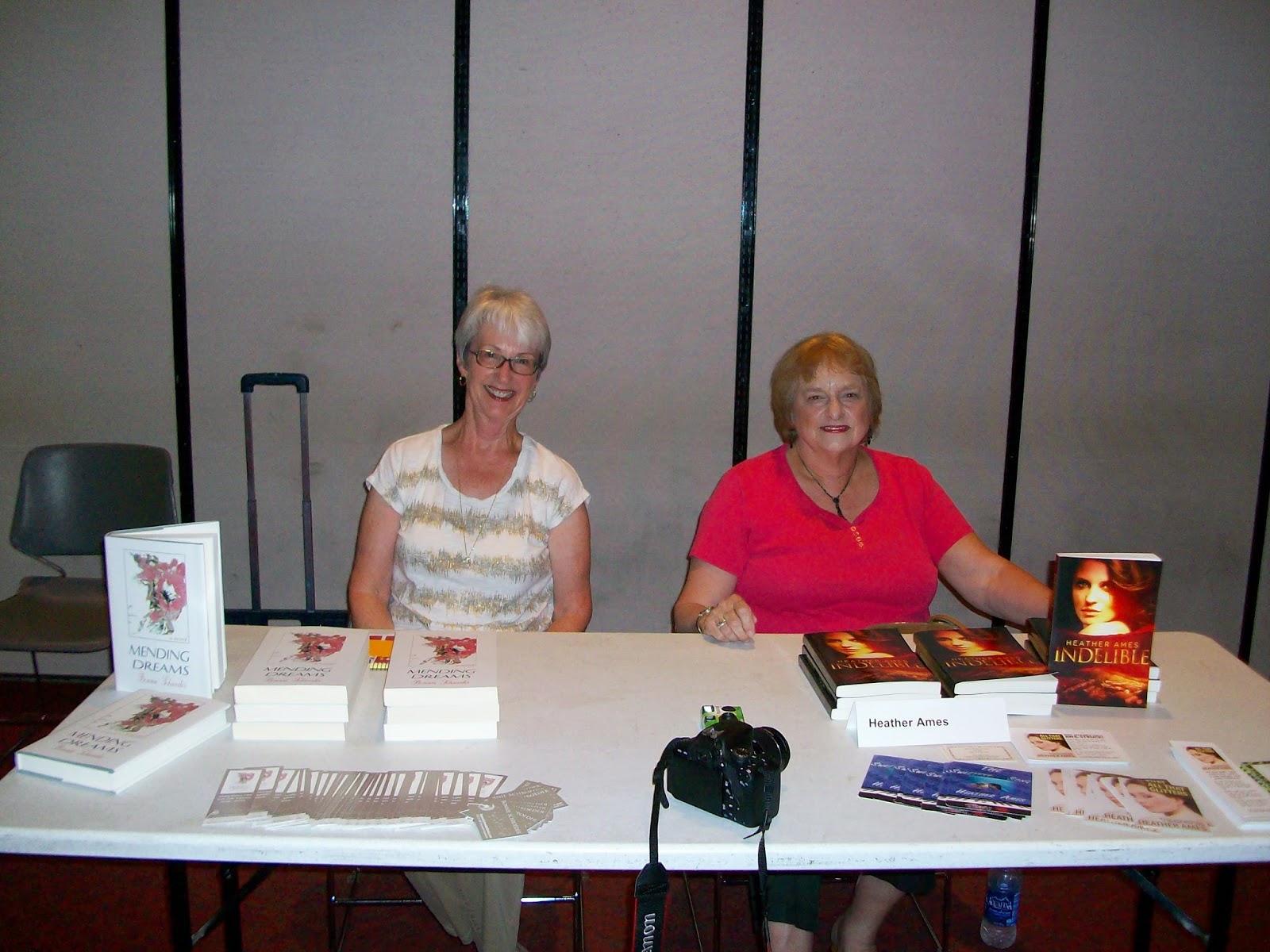
One of my peak AWG experiences, in fact, came when I joined fellow novelist Heather Ames (whom I met in those critique groups, one of which she moderated) to address the membership and describe our paths to publication.
Why am I going on and on about a now-defunct organization? Partly it’s guilt. AWG began to founder, and I did nothing to prevent it, so this post is a big mea culpa. When new leadership made some missteps, and many of the members felt the organization began to drift off-course, all I did was gripe about how AWG had lost touch with fiction writers. Some of my colleagues did try to intervene, but they were rebuffed, and I used that as an excuse for inaction.
Membership dwindled. New leaders came on board and tried to redirect and re-energize the group, but the damage had been done. Finally, the meeting venue closed down for renovation, and it became obvious that it was time to turn off the lights. All good things must come to an end and all that.

But I think it’s important to recognize the value of AWG, and I know that if I ever find another group like it, I will try to do more to keep it going. Good old hindsight.
When I joined AWG, I’d left a career in the business world and had a vague notion that I would devote myself full-time to writing. However, I wasn’t sure I had what it takes to be a “real” writer. Over time, I began to believe that I did have the makings of novelist, if I was willing to work at my craft and be open to feedback, and the result of all that was, among other things, Mending Dreams. I wrote my novel, and I found a publisher, and I honestly don’t know if that would have happened if I hadn’t joined AWG all those years ago.
And so, with apologies to Lerner & Loewe, “don’t let it be forgot, that once there was a spot. . .” where writers of all kinds were welcomed, acknowledged, encouraged, and given a chance to improve their craft.
For that, AWG, I thank you.

The Three R’s for Writers and Those Who Love Them by Miko Johnston

Miko Johnston is the author of Petals in the Wind.  
She first first contemplated a writing career as a poet at age six. That notion ended four years later when she found no ‘help wanted’ ads for poets in the Sunday NY Times classified section, but her desire to write persisted. After graduating from NY University, she headed west to pursue a career as a journalist before switching to fiction. Miko lives on Whidbey Island in Washington. You can find out more about her books and follow her for her latest releases at Amazon


FOR WRITERS AND THOSE WHO LOVE THEM
I plead guilty. Let me explain.
Writers may work alone, but we’re part of a community. In March I wrote a post about critique groups, which I consider a great way for writers to find the encouragement and support they need.  But there’s an even better way for us to help each other that is being virtually ignored. I call it THE THREE ‘R’s:

READ
REVIEW
RECOMMEND
READ: One of the best ways we can support our fellow writers is to purchase their books. Why not devote a bookshelf to their work. I put my colleagues’ books in a guestroom so visitors can be introduced to their writing and it’s worked brilliantly. If you worry about the cost or where you’ll put all those paperbacks, invest in an e-reader. A basic model is modestly priced and you’ll recoup the cost fairly quickly since electronic versions of books are often less expensive than print copies. You’ll also be able to buy books that are only available in electronic format. Then think of a clever way to get your friends to ‘sign’ your copy. If you’re in a writers group, suggest a book swap and trade a copy of your book for theirs. A signed copy of a book makes a great gift as well, so buy a few from the author for those last-minute occasions and offer to do the same for them.

REVIEW: “Readers always tell me they like my books, but why don’t they write a review?” Sound familiar? And it’s more baffling when the readers are other writers.
Reviews are the lifeblood of book sales and marketing. There is no better way for writers to support each other than by reading and reviewing each other’s work. We writers all know this, and yet…. How many reviews do you have from other writers, and have you posted reviews of their books?
Non-writers may not realize the importance of online reviews, perhaps more important than purchasing the book. Ask everyone you know who’s read your published work to leave a review on Amazon (also suggest Barnes & Noble, Goodreads and Smashwords). Then check to make sure the review is posted; Amazon removes comments for reasons other than ‘inappropriate’.
Do tell your reviewers to be truthful; while anything less than three stars counts negatively on Amazon, their algorithms are based on an average score, so a few low ones won’t hurt if you get enough good reviews. The key is to get enoughreviews. No one cares if you get five star evaluations if you only get a few; they’re meaningless because readers assume it’s your mom and BFFs writing them. You must be honest as well. If you feel you can’t praise someone’s book, and that happens, then at least tell that to the author – I wouldn’t want to post anything less than three stars for a writer I know. And keep in mind the generation gap when it comes to technology. I didn’t know whether to laugh or cry when I read this on Anne R. Allen’s blog –
One sweet woman in her seventies had been devastated to find out that giving a book “a gold star” wasn’t letting people know she liked the book. She thought one star was a good thing.
If Grandma is uncomfortable posting a review, have her express what she wants to say and let her ten-year-old grandkid post it for her.

RECOMMEND: We tend to recommend books we enjoy, but we don’t always include those by authors we personally know. Recommending is perfect for those who feel uncomfortable writing or posting reviews online, or who want to do more to help your writing career.
If they liked your book, ask your family and friends to recommend it to their family and friends, as well as their neighbors, fellow worshippers, volunteer groups, clubs, and co-workers (especially the ones who always ask them to buy the cards/wrapping paper/candy their kids have to sell for school!). If they have a blog or Facebook page, ask if they’d mention your book and include a link to your author home page. Suggest they buy additional copies, which you’ll graciously sign, for last-minute gifts. And advise them to recommend your book only to people who’d enjoy it – if cousin Flora’s idea of the great outdoors is a parking lot without lines, she probably won’t be interested in your camping memoir.
People outside our writing community who want to help need to be shown how.  And if we truly want to encourage and support each other, we all must make the effort to do it, in the most effective way. If we do, then ultimately we’ll all benefit. Isn’t that what a community is all about?
I confess to some failings – on how many counts do you plead ‘Guilty’?

I AM NOT A ROBOT…. by Rosemary Lord

Actress and author Rosemary Lord shares many characteristics in common with her character Lottie Topaz, including an indomitable spirit.  So, when she stepped off a plane from England the other night, her body was exhausted and jet-lagged, but her wit and determination were intact. She brings the Writers in Residence blog her thoughts on a topic that will cause many heads to nod in agreement as they read her latest post. Enjoy!


I AM NOT A ROBOT

Okay, so I have to copy that squirrelly lettering to prove I am a person and not a robot. I can do that. But the rest of all that trickery appearing on my computer leaves me cold. Well, more like frozen with panic.
            I am a writer. I like to write – and have done so since I was about 4 years old. I am most content with a large legal pad or exercise book, a selection of well sharpened pencils and a good eraser. From there I can happily write away the hours.
            So when our fearless WinR techie Jackie Vick sent our group a carefully written explanation of how to participate in the new blog, I almost had a case of the vapors.
            But I gritted my teeth and followed her instructions. And so, in those early days, for 1-2 hours every day I determinedly followed these instructions to the letter, attempting to send a literary contribution. But Google was one step ahead of me. “Not so fast,” it seemed to say. “Password not recognized” and other phrases that stopped me going further, kept popping up on my screen. I did as bid and changed my password so many times that many, many days later, umpteenth new password added, I ran out of ideas and used a rude word. Google was not shocked, and repeated “Password not recognized.”
            I considered chucking my computer through the window, but thought better of it and spoke with Jackie. My new un-techie system is to simply send my words to her and she does the rest.
            But why won’t my brain grasp this new knowledge? Why am I so resistant? Is it just me? Admittedly, my writing is usually of a world one hundred years past: quill pens and an abacus. Ah, that’s what I need – a quill pen and an abacus.  But I seem to have developed an allergy to this brazen new world of MAC versus PC, Twitters and Blogs, Excel Spreadsheets, Quick Books, Drop-Box and such.
            Now if one is writing a journalist piece with photographs, I can understand all that trickery. And I can actually do that stuff, too, from my journalism days. But it’s the submitting bits of text and the passwords and not really knowing how to get it there. And “what ever happened to that page I just spent 2 hours writing, that has now vanished from the screen?” that stumps me.
            Now I’m not a stupid person. In fact I have several GCEs and other clever things from my English Education at Tiffin’s Girls’ School (consistently in the top 3 best schools in England, my family remind me) to prove it – sort of. So I can’t be that stupid. But it’s all this new techie stuff that is my down-fall.
            “It’s simple,” my 18 year old Australian friend Maddi tells me as she taps away on my i-pad. “There: done,” she hands it back to me – and I am none the wiser. So I feel that I’ve become really stupid… “You’re thinking too hard,” Maddi tells me. “Don’t try to work it out – just do it.” Easy to say.
            But then, when I start writing about Hollywood one hundred years ago, or trotting out facts about my travels in various countries and my adventures through the years, I comfort myself with the recognition that I can do some things. Plenty of things. Just not the techie stuff. I really am not a robot – thank goodness…


The WinRs are Brainstorming

From Wikicommons, Bundesarchiv Bild 183-13800-0006,
Berlin, Frauen beim Selbststudium, Weiterbildung.jpg

Writers need to take time to regroup, restore, and refill their mental reservoirs! 


The members of Writers in Residence are off this week to do just that. We’ll be back again next week with a post from Miko Johnston!

Until then, keep your pencils sharp and your typing fingers limber.

Rewrites Are Like the Movie "Groundhog Day" by Jacqueline Vick

Every morning, Phil Connors wakes up in Punxsutawney, PA, and it’s Groundhog Day. He has to relive the same day over…and over…and over…until he finally gets it right. That’s the premise of the movie Groundhog Day.

When Phil first realizes that he has freedom from consequences, he does all the naughty things he’d never get away with if the day didn’t start over fresh at 6:00 AM the next morning, like pigging out on pastries…while smoking. This is the writer at the beginning of the project. Authors read the same thing over…and over…and over again, trying to get the right outcome so they can move on to the next project. When we’re fresh into the rewrites, we might come up with ideas that seem crazy, but we try them anyway.

Then Phil starts to seduce the women of Punxsutawney, sussing out their likes and dislikes day by day so he can bed them. When he finds a woman who is worthy of love, he discovers that he can’t manipulate her into a seduction. It fails every time, and it becomes an obsession until finally he despairs and tries to kill himself every conceivable way, only to wake up in one piece the next morning. In the writer’s next passes through the manuscript, we try to seduce the reader with just the right phrase, but as we work through to something worthwhile, all the manipulation becomes obvious. It reaches the point where we think the whole work is crap and we want to “kill it”and start over.

Phil finally accepts his position,  and he starts to do one thing every day to improve himself. He finds out where danger lurks, and he’s always in time to save the day. He takes piano lessons until he gradually becomes a great jazz pianist. He stops focusing on his wants and looks outside himself, and he becomes the great guy who wins the heroine’s heart.  Eventually, we writers stop working at being funny or pulling heartstrings or making a point, and we just let go and make it all about the reader’s experience, and that’s when things fall into place.

The journey isn’t always as fun as the movie Groundhog Day, but the results are worth the effort. Now if only we could figure out a way to skip the first steps… .