Always Ask Yourself – A 3 Part Series

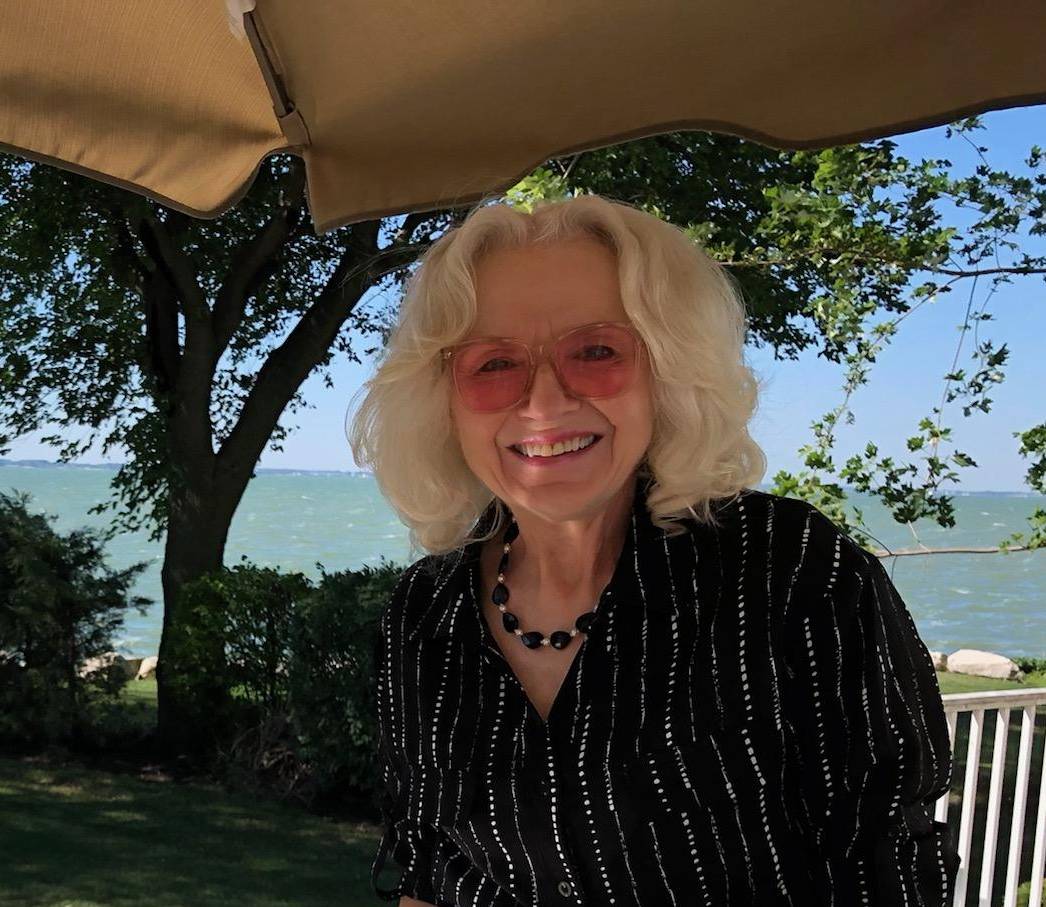
By Gayle Bartos-Pool

The writing class I teach might be based on Aristotle’s Sage Words from his classic work, The Poetics, but I do add my own thoughts. The main one is a simple reminder. I hand out a 5 x 5 inch card that reads:

Always Ask Yourself:

Does it Advance the story?

Does it Enhance the story?

Is it Redundant?

The first point is actually something new writers don’t see until it’s pointed out by their editor or their friends or writing group that gets a chance to read an early draft of the story. It might be the result of the writer trying to beef up the number of pages in the book so it looks like a novel and not a short story. Actually, several good short stories can be published in a collection if the writer has a bunch of those shorter works. Nothing wrong with that. I’ve published several myself.

But if the writer wants to turn out a novel, those sections that just take up space don’t help the story. In fact, they slow it down because the reader starts wondering what is the point of the book if it’s full of stuff that doesn’t add anything to the plot except pages.

Whether it’s a mystery, thriller, adventure or romance novel be sure to have each section add something important to the story. Every Murder: She Wrote episode has a part in the beginning where characters are introduced but there is always that one thing that happens or is said or is pointed out in those first ten minutes of the show that points to the killer. Good ol’ Jessica Fletcher doesn’t recognize it then because the murder hasn’t happened, but she sees the light in those last few minutes of the show when she puts all those earlier pieces together. But the clue was there.

So, when you’re writing those scenes in your book make sure the scene is relevant. Maybe it introduces a few characters, one of whom might be the killer in a mystery or the new man in the leading lady’s life. Each subsequent scene or chapter can add a few new details or roadblocks to solving the murder or finding the love of the gal’s life. But a gaggle of gals in a tearoom or a bunch of boys at a neighborhood bar talking about a new dress shop in town or a bargain at the local hardware store might not add anything to the underlying story.

If the ladies talk about a gal in town who seems to frequent a certain divorce lawyer’s office a little too often or the guys mention a neighbor who seems to have come into a little extra money right after a bank robbery, then there’s a reason for the scene. But I have read books where there are scenes that provided nothing to the book at all. Personally, I never make a point of trying to figure out the killer ahead of time in a mystery, but I do like to keep track of the characters so I can make sure the clues were given even if I didn’t figure out “whodunnit” by chapter five. I just like to make sure the plot makes sense and the clues were really there.

I recently read a book by a famous author who writes an equally famous series. Names won’t be mentioned just to be nice, but this particular book had so many characters I needed a scorecard to keep track of them. To top it off, three people had contact with the deceased. One pushed him down a hill and thought they killed him. One actually killed him. One moved the dead body thinking that would protect who he thought did the deed. None of these people knew about the others. I thought yet another person, a woman, had done the deed. She didn’t though she had good reason to bump off the bum. Several others had a motive and might as well have done it since nobody liked the dead guy in the first place. The killer basically got away with it, not that nobody discovered the actual facts, but the killer was mentally challenged and he needed hospital care not a jail cell…

Overall, I was disappointed that the plot was so bloody confusing with way too many suspects and some other stuff packed into the plot that really didn’t add to the story at all. Did they advance the story…No. And they lowered the likability of the main character as well.

In Aristotle’s Poetics he listed the “Five Basic Elements of a Story.” Those Elements are Plot, Character, Dialogue, Setting and the Meaning of the story. I’ve discussed this in previous blog posts. Aristotle wants you to make sure you have some good characters in your story. I added my own requirement to the “character” qualifications. I want there to be at least one character you’d want to invite into your own house. This “famous writer” didn’t have a single character I’d invite over for a beer…Not even the hero.

Others may see the book in an entirely different light and like it. I will still write my books with a bunch of characters that most people would invite into their homes. I want those characters to have values and standards, but with some of the things I see on television I’m afraid a lot of those standards have disappeared. I’ll still craft my heroes with the standards I grew up with. I’ll continue subtly passing them along to readers through my stories because I learned things by reading good books, watching good movies, and a bunch of the old television shows that had those same standards.

As my characters learn things through various encounters at the beginning and the middle of my books they can solve the crime or make it to the destination they are seeking and the readers can enjoy following that journey because I kept advancing the story chapter by chapter because that’s the goal of a writer: Get the reader to the end of the book…and look forward to reading the next one.

So, this is part one of a three part series. See you later for part two. Write On!

Merry Christmas

from Gayle Bartos-Pool

The holidays come fast. School gets back in session in September, then it’s Halloween and then Thanksgiving. We all see Christmas decorations pop up in stores along with the ghosts and goblins and before you know it…It’s Christmas.

Do I have a problem with that? No. I start decorating right after I take down the Halloween tree and stocking.

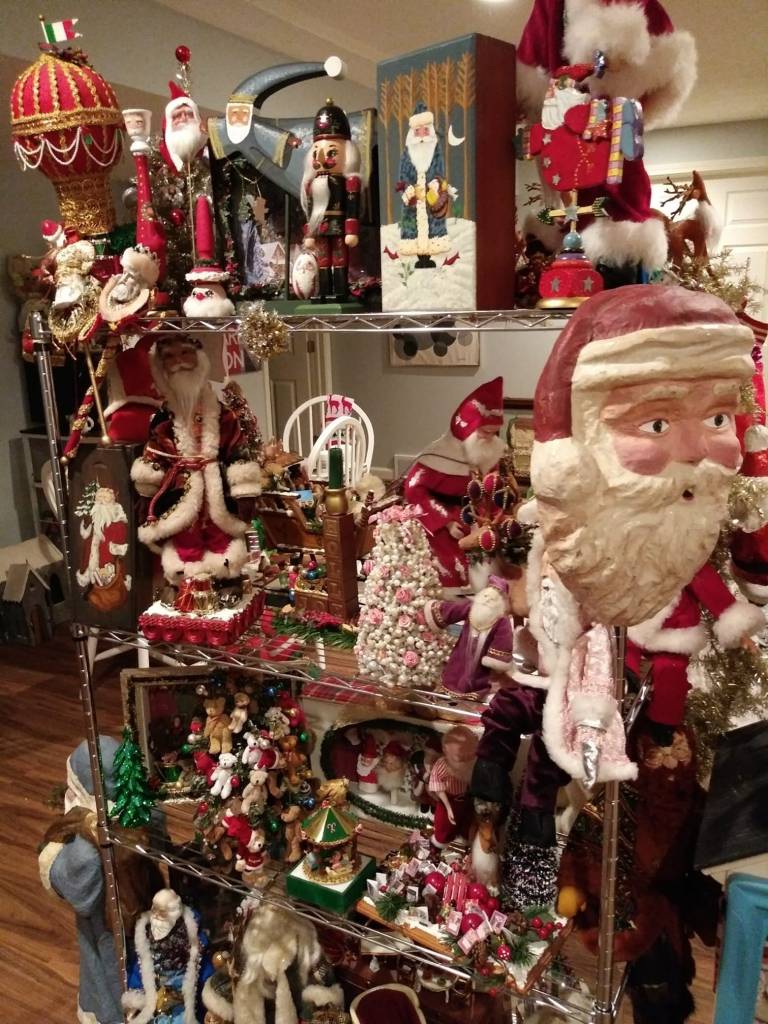
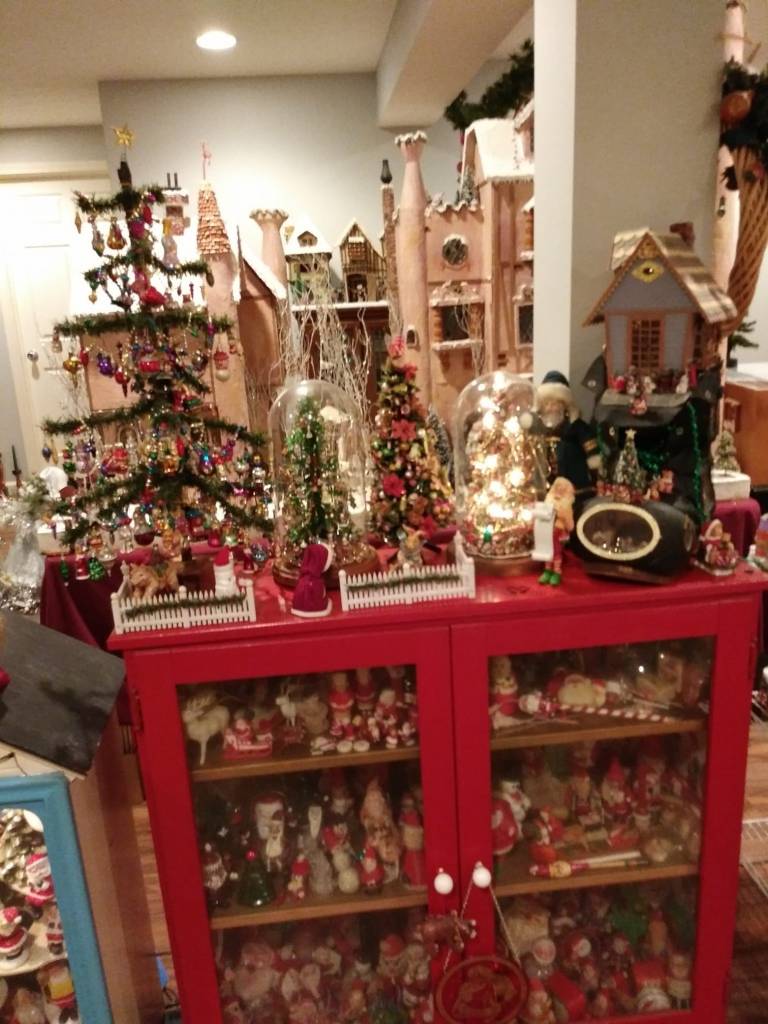
Since I’ve been collecting Christmas decorations, especially Santas, I have a lot to unpack. I’m glad this new house in Ohio has a finished basement so I can keep some of the things out all year.

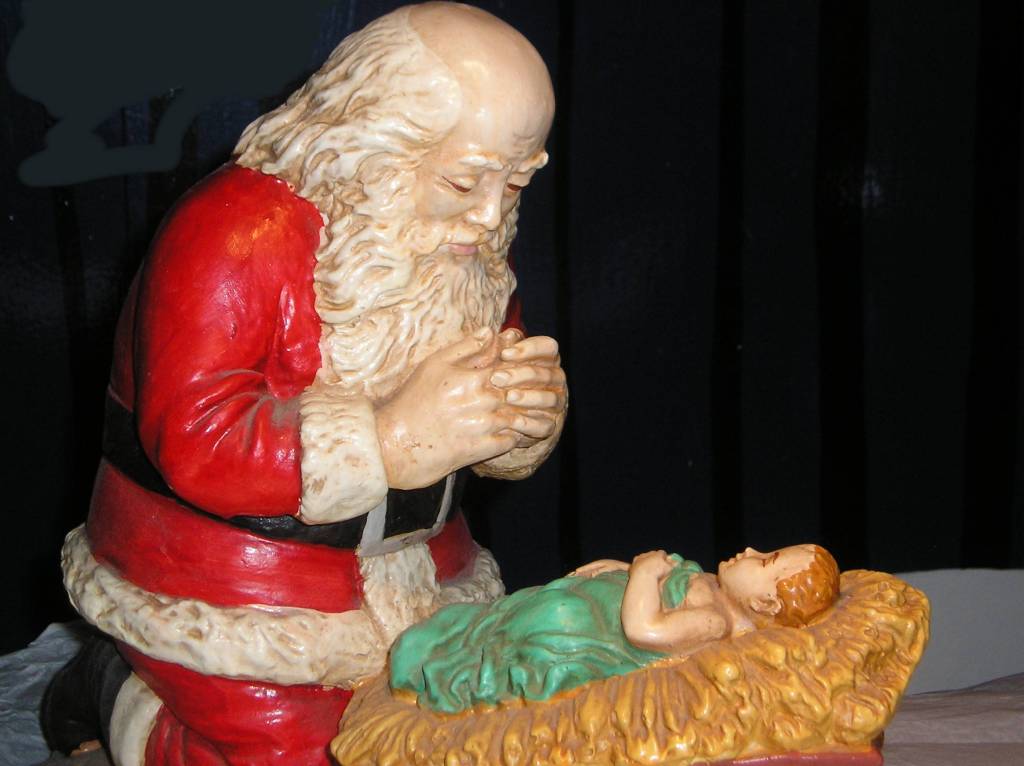
So, enjoy the season…family, friends, decorations and especially the Reason for the Season. You might celebrate this time of year in a hundred different ways, but we can all take time to wish everyone Peace on Earth, Good Will to All.

A Guest Star

by Gayle Bartos-Pool
Years ago, we could actually watch a favorite TV show, whether it be a television series or a variety show and see some famous, older, celebrity appear as a guest star. I just watched an old Man from U.N.C.L.E. 2-hour movie from 1966, The Spy in the Green Hat, and saw a bunch of famous, older character actors who guest-starred in it. Names like Allen Jenkins, Joan Blondell, Elisha Cook Jr. and Slapsie Maxie Rosenbloom.

These actors were in classic old movies from the 30s and 40s. I had watched them decades later in the 60s and 70s and even now on the old movie channel because I like the quality of the story telling and the great acting these folks did. They were memorable.

I watched another one of those 2-hour U.N.C.L.E. movies, The Karate Killers, where Joan Crawford was one of the guest stars. Her film career had slowed since the 1950s and she was appearing in lots of TV shows, but she still had that talent that made her famous. She was in the opening segment of this Man from U.N.C.L.E movie and was killed off by the bad guy in the first fifteen minutes, but she turned in a marvelous performance. I wasn’t expecting her to do that good of a job, but that gal beat all expectations for an actor in a few minutes of a silly Man from U.N.C.L.E movie. This wasn’t exactly Gone with the Wind, but the lady delivered.

Using the talent of a famous, seasoned actor was good business back in the day when we actually had stars who did excellent work in movies that had a point. I’m not seeing much of that anymore. Call me cynical, but I haven’t been to a movie theater in over 30 years. I might watch a newer movie (maybe 10 or 15 years old) on TV, but since I’m usually disappointed in the results, I still prefer old movies.

But…and there is a “but,” in this post. I have used an older actor to “guest star” in one or two of my short stories. I don’t use their actual name but rather disguise the name slightly. And I might be the only one who gets the subterfuge, but I still do it. I used actor Glenn Ford in a story but changed his name to Dale Carr. (Another word for a “glen” is a “dale.” Another name for a “Ford” is “car.”) I always liked the actor and borrowed him for the short story “Arabian Knights” in the second Johnny Casino Casebook.

I’ve done this several other times in my stories. Sometimes I mention the fact in the Acknowledgement section of the book, but sometimes I don’t. My call.

But what about using a character from a famous book? I know there are legal issues to consider so I wouldn’t use a relatively new character from a famous book in a story unless I disguised their name. One could always say the character in your story was an incarnation of some famous character or maybe say: “he remined me of the private eye in that book, Mystery Whatever, but this guy was much taller…” Or maybe: “She was a modern version of Miss Marple, but this gal wore shorter skirts and high heels…”

But what if…?

What if you wanted to have Sherlock Holmes help solve a case? I mean the real Sherlock Holmes taken right from the pages of one of Arthur Connan Doyle’s books. And maybe the main character in your story never really understands who or what that character really was. Was he real or a figment of your main character’s imagination?

I’ve already come up with how a story could end if I did use such a character. In fact, my mind is racing to do this maybe a few times.

So…If you did pick a famous character to appear in one of your stories, who would it be?

Naming Characters

by Gayle Bartos-Pool

Sometimes the name of a character a writer uses just pops into their head. Other times they use the name of a friend or relative. There are also times when the writer changes the name they started with when they realize it doesn’t fit the character anymore. But how is that possible? The writer is just making up the name and the story.

Well, it’s like this…

When a writer is creating a story, they are creating a new world. It will be filled with things everyone will recognize or at least understand if the writer gives good descriptions. A space odyssey might be made-up, but there will be enough things explained so the reader can follow along. Hey, the people who wrote the Star Trek episodes imagined fantasy gadgets that were actually invented many years later by real scientists who used roughly the same concept and style for actual things we use today… “Scotty, beam me up!”

But character names can be tricky.

If one is writing a story that takes place a hundred years ago, names like Tiffany or Jaiden might not work. Watch an old movie and check out the names used. Or maybe read an old book. But something interesting is happening now in the first quarter of the 21st Century. Names from fifty to seventy-five years ago are making a comeback. This will probably mean that you can use any name for a contemporary story. But there still is the problem of fitting the name to the character.

In most cases you wouldn’t want the “heavy” in a cops and robber tale to have a cutesy name like Willy or Felix. They would more likely be the comic relief characters in another story. The same is true with the hero’s name. It would have to be something a bit stronger like Max or Duke. Remember, studio executives and a director changed Marion Morrison’s name to John Wayne to fit the type of characters he would be playing in the movies. And that’s a fact.

Female names have the same concerns. The female lead in a romantic story could be called April or Amber, not Bertha or Myrtle. Wilhemina could definitely be the name of the amateur sleuth in a cozy mystery. She could be a librarian or maybe an older sleuth like a Miss Marple.

Names can do as much to define a character as what he or she does within those pages. If you start off by introducing your main character with his or her name linked to a strong action, it will help the reader understand the part they are playing.  But that is only if you want the reader to know who they really are from the start.

If, for some reason, you wanted to gradually introduce your hero, you could peel away certain aspects of your lead character by letting him show the reader those special qualities a little at a time, but that method is usually meant for the villain who starts off as just one of the boys or maybe some influential person in the plot, but who knew he was actually the bad guy? The hero will finally see the real person under all that finery and expose him.

As for the hero, usually the reader knows who he is from the beginning, but the hero might have to discover that truth about himself by peeling away his own fears and finding his own strength when push comes to shove at the end of the book. The reader will be rooting for him, but he has to do the work.

But establishing the name for that character will still take some planning. Now that we have access to the Internet, you can type in the name that you have cleverly come up with. It fits the parameters of your story. It isn’t too quirky or too cumbersome. But “what if” there is some famous person with the same name out there? Just about every name I have come up with has two or twenty-two people with the same name on the Internet. I have a rule: If it isn’t some current name in the news and I like it, I’ll go with it.

I seldom use the actual name of a friend in my stories. If I only use their first name, I’ll do that, but I have added little changes to their names just for fun. The reason I do this is because I do want my characters to have a life of their own. After all, my friends have their own lives. But it’s fun to use their first name for a character who makes a “special guest appearance.”  I even used a version of my dad’s name in my spy novels. Dad dealt with spy planes and did some rather interesting things that are still classified, so calling my character “Ralph Barton” instead of “Ralph Bartos” worked. And dad got a kick out of it.

I probably do keep the names of my characters fairly simple. If they are all wildly intricate with too many syllables, the reader might get lost in the multi-syllabic confusion. And several odd names might confuse the reader as well. They might think Henrietta is Hildegard and not understand why the wrong one riding in the taxi with the killer.

So, I keep the names a little simpler and do something else. I don’t have three or four characters in the same story with a name that begins with the same letter. This makes it easier for the reader to follow, and it actually makes writing the story easier, too. I don’t want to confuse my characters while I’m writing.

And I do try to fit the name to the character. One of the fun names I picked was for my second private detective series. It came about this way. I always liked the old detective shows on television back in the 50s, 60s, 70s and 80s. And the private eyes from the old black and white movies I watched on the movie channel. I wanted this new character to be a tribute to those guys. Too bad they don’t have good detective shows on TV anymore. Our loss.

I started with Sam Spade. That was the name of the character Humphrey Bogart played in The Maltese Falcon based on the 1930’s novel written by Dashiell Hammett. A classic. I also liked the television series, “Richard Diamond,” starring David Janssen, that ran from 1956 to1960. I was a fan of “Hart to Hart,” starring Robert Wagner that ran from 1979-1984.

So, I liked all these cool detectives. I noticed that their names were like the different suits in a deck of playing cards – Spade, Diamond, Heart. I needed a Club, but that name wouldn’t work. Sounded like a caveman or something.

Then I thought: what’s another word for “club”?

There’s gaming club, gambling club, and a gambling casino!

How about just casino?

And Johnny Casino was born.

The name fit this character who took a chance, changed his name from Cassini to Casino after he worked on a gambling ship near Maimi and had to leave in a hurry. He then took another chance and moved to Los Angeles and after getting his life together, he became a private investigator.

But I worked on getting his name and his life right…Three books later, I guess the “chance” I took paid off.

And you know what?  There was one more chance in this story. Another character was working his way into my head. His name: Chance McCoy. He got a second chance in life himself. There are three books in his detective series.

You see, names do matter. If they fit the character you’re writing, they can lead you to many new places. Write On!

Telling Your Story

by Gayle Bartos-Pool

Whether you’re self-published or have the backing of a big publisher, a writer still needs to get a short version of their own life story in shape for that occasional interview they might do for publication or even a live broadcast. If the person doing the interview knows his job, he will have handed the author a set of questions ahead of time, so the writer isn’t blindsided by a question. That’s professional. Sometimes the person doing the interview will ask if there are questions the writer wants asked because often the writer has a story to tell that the person doing the interview will have no idea exists. This will make the interview unique. That’s good for everybody, even the audience who will get to meet somebody with an interesting story. For the writer, that doesn’t mean only the story in the book he just wrote.

Recently I had the opportunity to do both a written interview and a live talk for a local show where I live in Ohio. The first interview was done by a fellow writer, Jill Amadio, who started out as a journalist for a British magazine before she wrote her first mystery featuring a gal who was a gossip columnist back in Britain who has to leave the country because she did too good of a job digging up dirt only to trip over a body or two here in the States. Obviously, Jill knows a lot about writing for a magazine. That book is Digging Too Deep. A great read.

https://promotingcrime.blogspot.com/2025/06/jill-amadio-in-conversation-with-gayle.html

She asked if she could interview me for a mystery magazine, Mystery People, published in the United Kingdom.  This was fun. Working with the questions she first provided and adding a few of my own in order to tell my story, we came up with a good interview.

As writers, we need to get out in front of people and tell them not only about the book we wrote, but also a little bit about ourselves to let our potential readers know where we came from and maybe how we got the idea for our novel.

I have been doing this for a while, but it was only recently that I wrote my autobiography to tell people who I am. I learned a lot about myself. That’s why I recommend that everyone write their own story whether you write novels or do something normal…Sorry, I digress.

Having gotten to know myself doing my autobiography sure helped when I did these two new interviews. Not that I didn’t know who I was, but I needed to get organized. First, I wrote out basically what I wanted to say about my life and writing career. Then I wrote out a script like doing a movie. I had taken acting classes back in California when I wanted to write for television and/or the movies because I thought knowing what the actor needed from the writer would be a good idea. It was.

I wrote a script. I cut out stuff and added stuff until I had a fairly clear idea where I came from and how I got to be who I am. Then I rehearsed it. Two or three times a day. Even when I got into bed at night, I went over the script. As I walked around the house, I timed it. The televised event would be no longer than an hour. I made sure I could do all the aspects I wanted to cover in those sixty minutes. Then I rehearsed it a few more times.

The 54 minute interview is on the Avon Lake Library website: https://www.avonlake.org/communications-technology/videos?action=show&video=MjkwNg==

It was a challenge, but writers have to try new things in order to get our name out there so people know who we are and what we do. And, frankly, this was fun.

The written version for the British interview covered the highlights. The televised version was longer with some hand gestures thrown in to make a point and even photographs to add to the story. Those acting lessons allowed me to do the event without standing there like the Scarecrow in The Wizard of Oz before Dorothy came around. You cannot imagine the confidence those acting lessons gave me.

So, you writers might want to work on several versions of your story in case you’re asked to do an interview. Short ones and longer ones. It gives you a head start. And something else, it might get you interested in writing your own autobiography. You do have a story to tell.

Continue reading “Telling Your Story”

Characters: Real and Imagined

by Gayle Bartos-Pool

Writers create characters. Often, we use people from our own lives, or at least snatches of their personality, as the basis of those people. A favorite relative or friend might form the background for one or two main characters or pop up as a bit player here and there in your story, but if we’re smart, we won’t use someone we don’t like as the villain. Lawsuits can be so messy.

But What if we use real people such as celebrities or legendary individuals who changed the world in one way or another? You know, someone from a movie, a history book or the nightly news.

Would that method work?

Oh, yeah… But with limitations.

For instance, in my spy novels I use many real people like presidents and military generals and famous politicians who helped win World War II and changed the world in other ways through several decades. But my main character is totally fictional. He’s a master spy in my books, but he “knew” a lot of those real folks, “spoke” to them, and his story intertwines with what really happened back then. It took me ten years to research things that went on from WWII though part of the Cold War, because that was when those three novels took place. I read a lot of history books and even watched movies made during those times and some later movies made about those eras. The visuals alone let me “see” what it was like back then.

I have my characters “talk” with real people like Ian Fleming, the guy who wrote the James Bond novels. He was really part of the British government and one of the reasons we got in the war when our country was reluctant. He and my spy hero knew each other…fictionally, at least. But it made for a fun encounter.

I used historical figures who were our allies as good guys in the books. The bad guys like Stalin or Hitler were bad then and that’s the way they were written. I’m not changing history. The other bad guys I created came from my fertile imagination.

Even some of my contemporary books have characters that might be based on a real celebrity. I might not use their actual name, but a clever reader might figure out who it is. But these are the good guys. I come up with the bad guys from whole cloth. I watch the news and know basically what a bad guy does. I prefer to add my own twists to the villain’s personality, so I know how my guy thinks. After all, I’m telling the story. I don’t know what a real killer is thinking.

Mixing fact with fiction gives me that extra layer of reality that makes the story seem…plausible. Why not? Even Science Fiction has reality in it, mostly because the writer is guessing what the future might look like.

But here’s something fun. Take a look at old Star Trek episodes from 1966-1969. Lots of the gadgets the Enterprise crew members used are things we use now like cell phones and tablets. They didn’t have those things when the show was running. And something else. Their time frame was supposed to be in the 22nd, 24th and 32nd Centuries. We’re only in the 21st Century now, and we have those things…

So, when you write, create the world you want and put in characters with those touches of reality gotten from people you actually know and then toss in some character traits you’d like to see in contemporary folks or those coming up after us. You never know, maybe your characters will be the guide and inspiration to a whole new world.  Write On!

AI Can Make Mistakes Too

by Gayle Bartos-Pool

Editing is a major endeavor for any writer. Even if you hire it done or your publisher actually provides one, you need to go over your work a few times to make sure the story you thought you were telling made it to the page.

Before I published my first novel, I hired a professional editor. Back then, most publishers were dropping their editors at an alarming rate because they thought the writer would do a good enough job and the cost of an editor on staff was too much for the publisher, so they were let go.

The editor I hired had worked at a large publishing firm. She’s the one who told me about all the layoffs. I paid a tidy sum and expected her work to be good, if not excellent. I got back my manuscript and happened to ask my sister-in-law who worked as an editor on a large newspaper in Orange County California if she would mind going over the pages. She said yes, did the job, and found numerous errors the overrated editor hadn’t found. I paid my sister-in-law $50 just to be nice. I had paid the “professional” $1800.00. This was back in 1996, even though it took eight years before I got that book into print.

I did my own editing after that. I know there were errors in my subsequent books, but like I say: Only God is perfect.

Recently, I happened to pick up one of my spy novels and decided to read it. I wanted to send a copy to someone whose book I had read and wanted to make sure the book wasn’t too full of errors. I did find a few mistakes during that quick read, but they might be overlooked if the reader didn’t pay too close attention to every comma.

I enjoyed reading my book after all these years and decided to read one of the other books in the spygame series, but this time I let my computer read it aloud to me. I was still watching the screen as it was reading my words, but that’s when I started seeing Spell Check underline a word or two…then it wanted me to add a comma here or delete another comma there or change a phrase or use a different word. I actually agreed with a few of those changes, but I was having a problem with the computer wanting me to add way more commas than we were told to do back in 9th grade English. I didn’t remember old Mrs. York telling us not to use a comma before a “but” in a sentence,,, but the new Spell Check didn’t want the comma.

There were some words that had an obvious typo, but I was surprised I hadn’t caught them myself, but then again, when we read our own work, we know what we were going to say and we “read” it even if it’s not there. That’s why in my newer books I do have the computer read my work back to me so I can hear what I wrote. Many times, I would find a typo that I hadn’t seen when I read through the first draft of the book in actual printed form. When I wrote my first few books which included the three spy novels, I didn’t have the luxury of that audio editor to help me.

So, flash forward several decades and all those computer tools have made the editing somewhat better. I still have errors in my books, but hopefully fewer.

But wait! Sometimes the computer program might be a stickler for “correct English” when you want your words to have more of a regional accent or colorful flair. I continued letting the new Spell Check go over those old words and I started finding things it wanted me to change like in the phrase “everything was socked in” referring to the weather, but AI came up with “shocked in.” Then there was my word “noose,” and it wanted “nose.” Or “chicken coop” was changed to “chicken cop.” “Sliver” to “silver.” “Antiaircraft flak” to “flake.”

“Houston, we have a problem…”

There were dozens more of these stupid mistakes the AI “genius” was making. They weren’t just possible words you might want to use which more or less meant the same thing. These were totally incorrect.

Fortunately, the AI Spell Checker wasn’t making these changes without my Okay like it does on my cell phone or Kindle Tablet, so I didn’t let it have free reign. And as I was making the changes I thought were correct, I still had the WORD program read back my words because hearing them still allowed me to make sure that’s what I wanted to say. I re-edited those three spy books and reissued them this year. Hopefully most of the mistakes were corrected…even with all the blasted commas.

So, be aware of the little goblins hiding in your computer. They might have less education than you do. In fact, I never saw an AI sitting in one of my English classes in high school or college. But I certainly discovered that these AI creatures aren’t writers, because a computer program has no imagination. If you don’t believe me, sit in front of your computer without touching the keypad and tell it to write a novel. Without the human element, human imagination or human touch, or without Internet access to hundreds, if not thousands, of books already written by humans, that conglomeration of motherboard, CPU, GPU, RAM, SSD and HDD can create nothing. Try unplugging your computer with its AI capability and see what it can do by itself. I don’t need to be plugged in or have my batteries replaced in order to tell a story. And my stories are the ones I created, not by a machine that cobbles together bits and pieces of other work and then mashes it all together in an incoherent jumble.

A computer helps, but the human heart, brain and talent will always be better.

  Write On!

The AI Concept Isn’t New…And It Isn’t Necessarily Good

Gayle at Bill's House Sept 2022 cropped

I’m a writer. I usually write fiction. I also read a lot of books. There are some classics that I read as a youth and have reread recently just to see if I got a different reaction in this new century. The same goes for old movies. Some were old when I first watched them, so now, fifty years later, they are most interesting to watch again just to see how they hold up. Most do quite well. What I found astonishing was the fact that some of the old books as well as a few of the classic movies could have been written today because their underlying themes were basically stories torn right out of today’s headlines.

What I find troubling is the fact that an awful lot of what’s reported on the nightly news sounds like some of these old movies and books. But what if the non-fiction news is really fiction written… by a machine?

Robo Man

Having a machine, as it were, spit out information or data or even a fairy tale using bits and pieces of things already out there in the “ethosphere” has been a concept used for centuries. Verbal stories were passed around by cave dwellers before people had a written language. You can bet one caveman’s story was retold from caveman to caveman in between the hunting and gathering they did back then.

Fast forward to the late Sixteenth-Early Seventeenth Centuries when Bill Shakespeare wrote his plays. There are those who say he took his ideas from other people. His name’s on the Playbill, so he did more with the idea than anybody else around at the time, so he gets credit for those memorable plays.

A century later, books were filling the shelves of private libraries and people who could read, read them. As more and more people learned to read, more books came out. The printing press helped enormously since those scribes in monasteries who were giving us copies of the Holy Bible could only do so much. God Bless them. But a basic education gives people even in the lower economic brackets a chance to learn things. Books worked.

Jump to the Twentieth Century and we get that invention that rocked the world, at least a world with electricity and an antenna to pick up television signals from a local broadcaster. People turned away from books and started watching stories come to life in their own living rooms on a twelve-inch screen. 

 Now you ask, where does this AI stuff come in today? You ever watch Murder She Wrote or Columbo or any of the many Hallmark Channel cutesy mystery/romance stuff? The plots vary only in which actor plays any particular role. Murder She Wrote always had an older, yet famous, actor or actress play the villain, or the person accused of the killing, and Jessica Fletcher would always solve the case after remembering one little clue we all saw about eight minutes into the show and which she remembers when she reveals the bad guy in the final few minutes of the program.

In Columbo, he was onto the villain, also a once popular TV or movie actor who was now doing guest bits on TV, from the beginning of the show. Most of the time it didn’t ring plausible, but people liked the show, so the plot remained basically the same for ten seasons.

The Hallmark movies are very formulaic, whether it’s the scene where the two who end up in love by the end of the movie throw snowballs at each other or the scene where the girl totally misunderstands the handsome guy’s motives and tells him to get lost only to learn the truth and they kiss in the last scene. They’re all the same. That doesn’t mean people don’t watch them. I do, but I also watch to see how many of those routines they use in each episode. If I did it as a “drinking game,” I’d be drunk about eighteen minutes into the show.

A lot of this redundancy is done by design. Back in the early-Eighties I got myself an agent, Ivan Green, and he tried to sell a few of my scripts to Aaron Spelling and Leonard Goldberg who were producing TV shows like The Love Boat, The Mod Squad, and Charlie’s Angels. My agent submitted a few of my scripts to Fantasy Island that the pair also produced. One of my scripts about an angel who goes to the island was liked by Goldberg, but just as he was ready to accept it, Spelling decided he was only going to use the small group of writers who had been writing for the series for a while. Spelling didn’t want anything new. The series went a few more years, then ended in 1984.

Lots of television series must use the same team of writers because their episodes are so much alike. And different television shows are quite similar to others on TV, just like some books published by major publishing companies are like many other books also on their shelves. It’s been said for decades in television, motion pictures and books, if people like it, keep writing the same thing until the public gets sick of it. Publishers and producers seldom take anything, book or script, that’s different because they don’t want to rock the boat until something sneaks in under the tent and all of a sudden there is a new game in town and everybody uses that new theme for a decade or two. Vampires and the living dead have both had a long run. The “end of the world theme” keeps popping up. I’ve seen enough buildings blown up and car chases that should have killed half a city’s population along with the obligatory diabolical corporation owner or evil space alien who wants to conquer the world to last me two lifetimes. Today, it’s a lot of teen fantasy stories or some things that used to be considered X-rated back in my youth that’s perfectly Okay to show on major networks.

But isn’t that what AI does? It uses ideas already out there. It cuts and pastes stuff that’s sort of acceptable just enough to seem like a slightly different animal and then pushes it as something new that everybody should enjoy. That’s why I haven’t been to a movie in about thirty years, and I hardly watch anything new on TV.

Okay, let the AI machines watch and read the stuff they write. I’d prefer something different written by a human who really understands life as a living, breathing being does. Some newer books and TV series from smaller studios have themes that aren’t all that bad. I think a human wrote them, but I wouldn’t put money on it. I would really like to know there was actually a person with a mind and a soul who penned those stories.

If AI can aid science, great, as long as there is a human somewhere in the picture who can check the results and make sure we aren’t going down one of those paths we see in the apocalyptic movies where the world ends because a machine pushes the wrong button.

So, humans, why don’t you write the books and the movies. Now I just have to find a way to prove a human really did write the stuff I’m reading and watching… And by the way…no machine, other than my fingers typing on my computer, wrote this blog. Honest.

Acting Class 101

By Gayle Bartos-Pool

If we’re lucky, we learn stuff everywhere we go in life. I did just that when I moved to California when I was twenty-five. I wanted to write for television and the movies. Me and five million other people. Since I didn’t know anything about the “business” of Hollywood, I thought it would be a good idea to take an acting class to see what writers needed to know when creating a screenplay character.

I happened to get a job working for a talent agent, and he got me in an acting class. This one was taught by Bruce Glover. You might have seen him in the James Bond movie Diamonds Are Forever. He played the sinister/funny character that was trying to kill off Bond.

What Bruce taught was when you’re playing a character, large part, small part, or walk-on, have your character do something that makes him stand out. Have a menacing smile or a delivery of your lines that has everybody notice you. Many famous actors started as bit players and went on to fame and fortune when they did something that stood out on the screen. And that doesn’t mean just having a pretty face.

As a writer, I figured that when I wrote characters, large or small, I would give them something that stood out. It might be their clothes that telegraphed what economic bracket they fell into or a whacky giggle to show that maybe their elevator didn’t go up too many floors. Maybe it’s the words they use that show their high-toned upbringing or their lack of education.

While taking that class, I had to do an improvised scene with another actor. We were to be boyfriend and girlfriend who were having problems. As the other actor and I were chatting on stage pretending we were seeing eye-to-eye while all the time pointing out the major problems we were having with the other character, I had a piece of paper in my hand that I said was the love letter he had written to another woman. I kept folding it in half, long-ways, until it looked like a knife. Obviously, my character was signaling what I wanted to do to my soon-to-be-ex boyfriend. Actions speak louder than words sometimes.
I try to give most of the characters I write that little bit extra to define them, too.

That acting class wasn’t the only one I took. I got lessons from Rudy Solari and Guy Stockwell. Both men had long careers in Hollywood. What Rudy had actors do was write a biography for the character they were playing so they knew exactly who they were when they stepped on the stage. It didn’t have to write pages and pages, just a brief background of that character, stating where he came from, how he was raised, his education, and what he wanted out of that scene.

What this did for the actor was let him know what motivates his character because in a screenplay, the writer usually just provides the dialogue, maybe how the line should be spoken like a whisper or yelling, and a few physical actions like running away or punching someone. Of course, the director will provide even more of those directions.

But the writer of a novel or short story needs to know who this character is, what motivates him, and things like his age, hair color, and stature, because when you’re writing a story, you don’t want to get to page 275 and have your twenty-five-year-old character with black hair all of a sudden be a thirty-six-year-old blond.

I write a short biography for all my main characters, adding to it as I think about what their past might have included that will help the current story angle. And I keep a Character List for everybody appearing in the story so I know who is who, and who they know, and why they’re there. It sure helps when I get to a spot and need to know all the previous things I wrote about that character like their age, hair color, or their role in the story.

And something else about those two acting classes, they gave me the confidence to get up in front of an audience when I’m talking about the books I wrote. I already know my motivation: get people to read.