
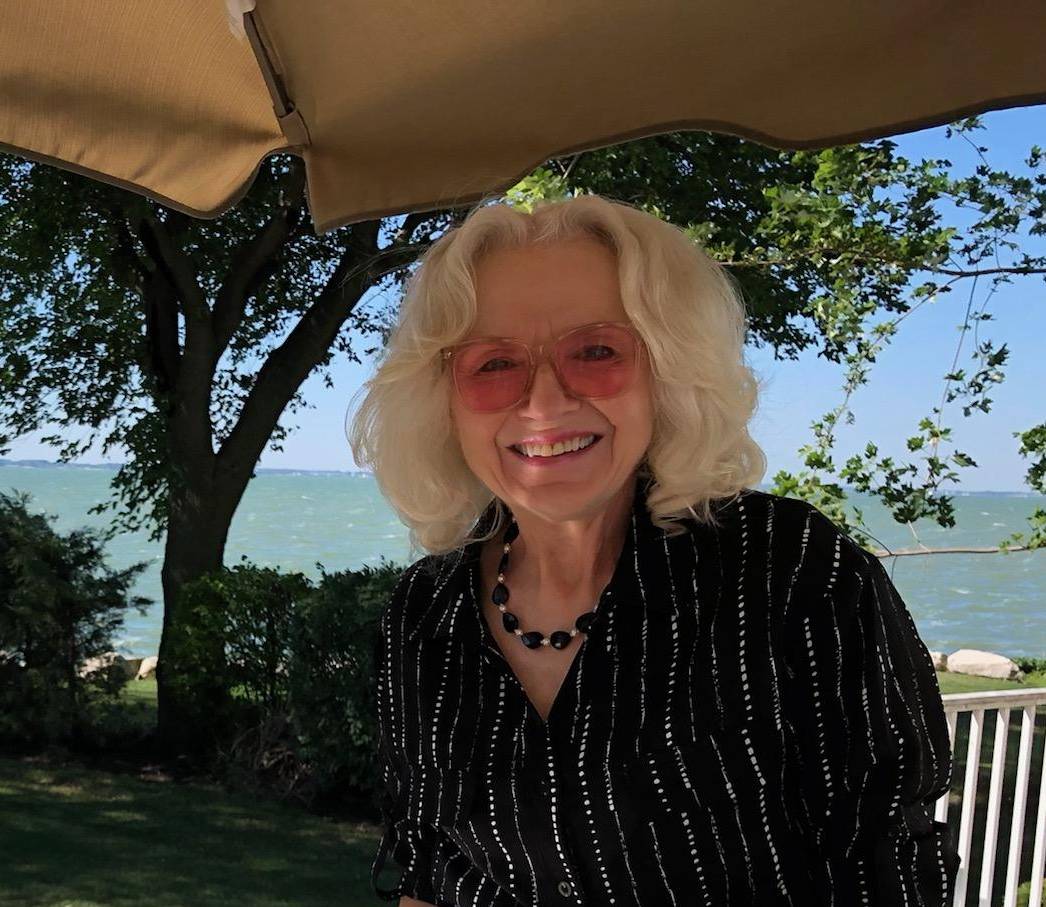
I’m a writer. I usually write fiction. I also read a lot of books. There are some classics that I read as a youth and have reread recently just to see if I got a different reaction in this new century. The same goes for old movies. Some were old when I first watched them, so now, fifty years later, they are most interesting to watch again just to see how they hold up. Most do quite well. What I found astonishing was the fact that some of the old books as well as a few of the classic movies could have been written today because their underlying themes were basically stories torn right out of today’s headlines.
What I find troubling is the fact that an awful lot of what’s reported on the nightly news sounds like some of these old movies and books. But what if the non-fiction news is really fiction written… by a machine?

Having a machine, as it were, spit out information or data or even a fairy tale using bits and pieces of things already out there in the “ethosphere” has been a concept used for centuries. Verbal stories were passed around by cave dwellers before people had a written language. You can bet one caveman’s story was retold from caveman to caveman in between the hunting and gathering they did back then.
Fast forward to the late Sixteenth-Early Seventeenth Centuries when Bill Shakespeare wrote his plays. There are those who say he took his ideas from other people. His name’s on the Playbill, so he did more with the idea than anybody else around at the time, so he gets credit for those memorable plays.
A century later, books were filling the shelves of private libraries and people who could read, read them. As more and more people learned to read, more books came out. The printing press helped enormously since those scribes in monasteries who were giving us copies of the Holy Bible could only do so much. God Bless them. But a basic education gives people even in the lower economic brackets a chance to learn things. Books worked.

Jump to the Twentieth Century and we get that invention that rocked the world, at least a world with electricity and an antenna to pick up television signals from a local broadcaster. People turned away from books and started watching stories come to life in their own living rooms on a twelve-inch screen.
Now you ask, where does this AI stuff come in today? You ever watch Murder She Wrote or Columbo or any of the many Hallmark Channel cutesy mystery/romance stuff? The plots vary only in which actor plays any particular role. Murder She Wrote always had an older, yet famous, actor or actress play the villain, or the person accused of the killing, and Jessica Fletcher would always solve the case after remembering one little clue we all saw about eight minutes into the show and which she remembers when she reveals the bad guy in the final few minutes of the program.
In Columbo, he was onto the villain, also a once popular TV or movie actor who was now doing guest bits on TV, from the beginning of the show. Most of the time it didn’t ring plausible, but people liked the show, so the plot remained basically the same for ten seasons.
The Hallmark movies are very formulaic, whether it’s the scene where the two who end up in love by the end of the movie throw snowballs at each other or the scene where the girl totally misunderstands the handsome guy’s motives and tells him to get lost only to learn the truth and they kiss in the last scene. They’re all the same. That doesn’t mean people don’t watch them. I do, but I also watch to see how many of those routines they use in each episode. If I did it as a “drinking game,” I’d be drunk about eighteen minutes into the show.
A lot of this redundancy is done by design. Back in the early-Eighties I got myself an agent, Ivan Green, and he tried to sell a few of my scripts to Aaron Spelling and Leonard Goldberg who were producing TV shows like The Love Boat, The Mod Squad, and Charlie’s Angels. My agent submitted a few of my scripts to Fantasy Island that the pair also produced. One of my scripts about an angel who goes to the island was liked by Goldberg, but just as he was ready to accept it, Spelling decided he was only going to use the small group of writers who had been writing for the series for a while. Spelling didn’t want anything new. The series went a few more years, then ended in 1984.
Lots of television series must use the same team of writers because their episodes are so much alike. And different television shows are quite similar to others on TV, just like some books published by major publishing companies are like many other books also on their shelves. It’s been said for decades in television, motion pictures and books, if people like it, keep writing the same thing until the public gets sick of it. Publishers and producers seldom take anything, book or script, that’s different because they don’t want to rock the boat until something sneaks in under the tent and all of a sudden there is a new game in town and everybody uses that new theme for a decade or two. Vampires and the living dead have both had a long run. The “end of the world theme” keeps popping up. I’ve seen enough buildings blown up and car chases that should have killed half a city’s population along with the obligatory diabolical corporation owner or evil space alien who wants to conquer the world to last me two lifetimes. Today, it’s a lot of teen fantasy stories or some things that used to be considered X-rated back in my youth that’s perfectly Okay to show on major networks.
But isn’t that what AI does? It uses ideas already out there. It cuts and pastes stuff that’s sort of acceptable just enough to seem like a slightly different animal and then pushes it as something new that everybody should enjoy. That’s why I haven’t been to a movie in about thirty years, and I hardly watch anything new on TV.
Okay, let the AI machines watch and read the stuff they write. I’d prefer something different written by a human who really understands life as a living, breathing being does. Some newer books and TV series from smaller studios have themes that aren’t all that bad. I think a human wrote them, but I wouldn’t put money on it. I would really like to know there was actually a person with a mind and a soul who penned those stories.
If AI can aid science, great, as long as there is a human somewhere in the picture who can check the results and make sure we aren’t going down one of those paths we see in the apocalyptic movies where the world ends because a machine pushes the wrong button.
So, humans, why don’t you write the books and the movies. Now I just have to find a way to prove a human really did write the stuff I’m reading and watching… And by the way…no machine, other than my fingers typing on my computer, wrote this blog. Honest.







 The Writers in Residence
You must be logged in to post a comment.