I GOTTA NEW GIG!

by ROSEMARY LORD

It’s about twenty years since I was hired to write my first non-fiction book, Los Angeles Then and Now. Hollywood Then and Now followed. It was for a small London publisher. Both books were a huge success and on the Best Sellers’ list. Great for the publishers; however, as I was a writer-for-hire and they had the copyright on all the Then and Now books, I don’t receive royalties. But it was a tremendous boost for my writing career and a good ‘calling card.’ I did a lot of publicity and promotion, so I learned a lot on the publishers’ dime.

It got my name out there.

Over the years, after the first flush of success, I did the occasional book signing and promotional appearance. I continued to lecture on the history of Hollywood and attend charity events, so it kept my name out there. These books really have ‘legs’! Like the Energizer Bunny, they go on and on. Every so often, the publishers would ask me to write updates and additions for the new editions.

But then, a couple of weeks ago, I received an email from Harper Collins, one of the ‘Big Five’ publishers in London. They had bought Pavilion Publishing and bought my Then and Now books.  “Would you be interested,” they wrote, “in writing a completely new updated version of Los Angeles Then and Now?”

Let me think… um…er….   “Yes!” I cooly responded: “I’ll move my schedule around.”

And so, my fiction writing and novels will be cast aside for a while as I focus on this enormous task. I won’t totally abandon them, but for a while, they will take a back seat.

The original contract was quite daunting: selecting 77 sites representing Los Angeles. Because it is such a sprawling city in search of an identity, I started downtown at its origins in Olvera Street, then drew a line going west to the beach at Malibu, illuminating sites along the way. That was (and is) my plot line. The money was not great, but the opportunity was.

Over the next year, I will be updating the existing 77 sites throughout Los Angeles, giving a fresh view of the history. I will be changing about 15 of them, removing sites that may not be of such great interest and adding those I consider more fascinating. I get to select new sites with greater appeal for today’s readers. As well as researching new, previously hidden facts to give each history a new look, I will be sourcing archive photos and new, updated photos of all the sites. I will also take a new approach to writing the main history of Los Angeles that comes at the front of the book.

There is so much history to write about, examining different aspects of what went before, and the myriad of characters and how they built up this amazing city from scrubland in the desert with no water and very few people. The main challenge is to condense it all, keeping the most salient points. The publishers have very strict word counts on every page.

It’s very easy for me to wax lyrical about each place’s history and the colorful individuals involved, and if I’m not careful, I can write on forever. The skill with this assignment is to give “Just the facts, ma’am,” but keep it interesting.

And I really do have to rearrange my life to focus on this job. I always seem to have several writing things on the go at once, with research books, clippings, and files everywhere – as well as the Woman’s Club work that still lingers. My workspace is always busy. But this task is large, so everything else must be put away for now.

I’m Yack Shaving again! (That’s when you get sidetracked and taken on a circuitous route, with multiple small tasks that need to be completed before you can accomplish your main, original goal.)

I have a couple of mesh-sided carts on wheels that hold hanging files that I use for specific projects. I’ve cleaned these out of copious miscellaneous papers, ready for the 77 separate new files for each of the Los Angeles sites, plus the main history and archive photographs.

I’m going through boxes of old research files, culling as needed, making room for new information. I can’t wait to get back into investigating at some of the old libraries and hidden private collections to discover newly unearthed tidbits of history that so often get overlooked. Research is where I can spend far too much distracted time.

Many of my handwritten notes have faded, and as I struggle to read the pencil-scribbled file tags, I realize I need to dig out my label maker – and borrow a five-year-old to show me how to use it!

Lately, I’m getting really good at organizing my files. I recall the late Professor Randy Pausch complaining that his wife thought he was way too compulsive, filing everything alphabetically and neatly. “Because,” he decided, “that was so much better than searching for something in a panic, saying, “I know it was blue, and I was eating something when I had it.”

And of course, I’ll be driving all over Los Angeles to check on old and new sites, taking copious photographs and notes along the way. So, I have to fit that into my schedule.

But now, I have a stack of new notepads and pencils, a pencil sharpener and erasers, my Thesaurus, and OED at the ready. A clean, empty desk awaits.

I’m ready for my next literary adventure.…

How do you prepare for your next big writing project?

Group Post #1 – How do you handle TECHNOLOGY?

Occasionally, we have an open spot on our blog schedule. One of our members suggested we all (or those able) could jump in for a group blog question.  Our first was suggested by Miko Johnston.

How do you incorporate ever-changing technology in your writing, especially in a series that covers years?

Jackie Houchin — In my short stories, I use the technologies needed in the story’s time and place. I used GPS settings to find a long-buried stash in one mystery set in modern New York. In that story, the dates were firmly set by newspaper clippings. In my missionary kids’ series set in modern but rural Africa, cell service is spotty (indeed, you can’t even be sure of electricity), so I use these technologies but don’t depend on them.  Actually, “no cell service” adds to the suspense of the moment when an emergency happens.

#

Gayle Bartos-Pool — If you write stories set in the Roaring Twenties, you might want to include a bunch of things to define that era, like telephone operators connecting you to whomever you are calling or a radio program providing music and some news. There were no televisions or cell phones back then. The automobile was new with the Ford Model T, and assembly lines were just gearing up. 

Every era has its newfangled gadgets, but do they have to do more than set the stage in the story? Sometimes, too much detail distracts from the narrative unless there is one particular thing that plays a key role in your story, like the old typewriter with the damaged key and the ransom note with that same twisted letter. That’s been done before in several old movies, but it worked. 

But if you are writing a contemporary tale, do you have to rely on the main character’s cell phone on every page? After a while, it gets old to have the characters pull out his or her phones rather than use their eyes and ears to see the problem at hand.

I do like gadgets, but I don’t depend on them totally in my books. My characters will use a computer, but they use their brains more.

#

Miko Johnston — Back in the 1990s, before I started my series of historical novels, I attempted to write a (then) present-day mystery thriller that centered around a secret high-tech device. The problem was that I knew nothing about the subject and figured what I’d made up would ring false with knowledgeable readers, so I put the manuscript aside. Twenty years later, I revisited the story and realized I knew enough about what had been developed back then to finish the story with authenticity. 

I do incorporate technology in my modern work as it’s such an integral part of life now. For example, my short story, Senior High, comically follows three older women who travel to Washington, one of the first states to decriminalize marijuana. Although they haven’t “partied” since the seventies, they decide to get high one more time but can’t figure out how until Siri comes to their aid.

.
 

EXERCISING YOUR VOCABULARY

by Miko Johnston

When I think back to the dark days of the Covid pandemic, I don’t focus on the panic or the shortages. I remember the isolation. Although I had the good fortune of my husband at home and kinship through technology, I found conversations very limited. I began contacting people in my life whom I rarely saw but stayed in touch with, usually with a Christmas card, but many of my friends from the past were mired in their own woes or didn’t respond. Worse, despite having ample time to finish my novel in progress the distress kept me from writing anything…for eighteen months.

I still recall an evening at least six months into the lockdown. My husband, exhausted from yard work, went to be early. His older son called that night. In the past, I’d speak to him briefly before passing the phone to his father, but neither of us wanted to wake him. As I spoke to my stepson I began to realize how much I craved company, even if only over the phone, so what would have normally been a five-minute call stretched into over an hour. I think he, too, longed to talk, and for the same reason.

Our conversation was stilted at first, but not because of any personal reason. He and I were merely out of practice. We’d pause to think of the right word or string more than a few words together in a sentence. It took about five minutes to verbally limber up before we could chat ‘normally.’

That served as a wake-up call. From that day on, I began playing word games. It kept me entertained and, more importantly, prodded me to keep my vocabulary alive and active. Anything that forced me to plumb my memory for words (and spelling). I know many writers use writing prompts, but I wasn’t yearning to write better as much as speak better. I needed something deeper than that.

I began with Spelling Bee, a New York Times creation that gives you a ring of six letters with a seventh letter in the middle. You form words, four letters or more, that must include the center letter. I even got my husband hooked on the game; we still play it almost daily and compare our lists. Later, I added Wordle to my daily routine. You get six chances to find the five-letter word of the day – if you’re not familiar with it, you can read the instructions on the NYT website.

In both cases, trying to figure out the words stimulated my brain. Sometimes, words would pop into my head, even if they didn’t fit the puzzle. That’s when I decided I needed more stimulation and started inventing my own puzzles.

Wordle inspired a new way to challenge myself. I’d pick the first two letters of potential words and list as many as I could. I’d start with my “prompt” letters and work my way through the alphabet with the goal of reaching at least fifty words. As with my conversation with my stepson and my daily dose of word games, the more I challenged myself, the more words I could recall, and the faster they came to me.

Here’s an example:

HOW MANY WORDS CAN YOU MAKE THAT BEGIN WITH THE LETTERS:

BR——-

RULES:

  • Words must be at least five letters
  • No adding prefixes like S; ED; ING; LY; NESS to a root word of four or less letters
  • Only one version of the same word is allowed (ex: float OR floated OR floating)
  • Homographs are allowed with variations in the spelling to reflect their different meanings

(ex: score [to make shallow cuts]; score [to earn a point] becomes scoreboard)

  • No abbreviations
  • No foreign words unless they’re in common English usage (ex: pasta; rondo; bidet; pashmina)
  • No proper nouns
  • No acronyms (ex: AWOL)
  • No hyphenated words or contractions

GOOD LUCK!

“She is going, you know, to…” 

by Jill Amadio

“He fell down, you know, on that.. blah, blah blah…”

Bombarded with the words “you know” in person, on Zoom, on TV, and on the radio, I have this hollow feeling that if I do not know what I am supposed to know when someone says the phrase, what am I missing? How do we “get the drift” of what the speaker means, if we are told we already know it? What is the significance of their words if taken literally? I already know what I am being told?

In other words, how am I to know what the person talking means when it is assumed I know precisely what they mean? By slipping in those two words, often twice in a short sentence and more frequently in long ones, I am left feeling like an idiot because, like many writers, I take words not only seriously but by their true intent.

I am tempted to tell the next person who uses it out of context that, No, I do not know, or I shall ask them why they think I know what they assume I know. I shall also ask them what their intention is in telling me something they think I already know. If I already know it, why waste their time in re-telling it?

What is this innocuous but irritating manner of speaking doing to our psyche? Will our personalities change, or our memories be challenged? Will what we already need be thrown out with the bathwater? A dilemma indeed.

I have yet to read “you-know” used in any newly-published books, thank goodness, but there’s always tomorrow for the opportunity to chance upon this ultimate word-mystery.

I have not yet thrown my buttered scone at the television set as I assume, you know, that the pundit cannot hear me, but, you know, what do I know? With all this high-tech stuff circling the globe, maybe I am wrong, you know. Could I, you know, be behind the times?

Perhaps “you-know” is used to give the speaker a moment to collect their thoughts, to come up with a different statement they intended, or to end a sentence with a lilt of the voice to indicate a question.

There are, of course, plenty of ways to ask  the you-know question, such as, “Do you know that…” or “You do know, of course, that he murdered her?” This dialogue sits so much more easily upon a writer’s shoulder, placing the you-know bit within its proper grammatical intention (I think).

Then there’s my gracious understanding of why people use it: to give themselves a break to think up their next statement, to find their place on the teleprompter, to allow them to sound “with-it.”

Intonation, when using “you-know,” is also important, I have observed. There is rarely a tonal upswing indicating it is a question.

If “you-know” is spoken to a young child, do we expect a cogent answer? Children tend to take what we say as dogma. We do not want to saddle kids with untruths.

Can we pronounce “you-know” as y’all know, or y’know? Perhaps this slide into dialect can remove some of its insidious, unnecessary sentiment. Or maybe to give it an inflection it does not deserve.  Should we replace “you-know” with a different phrase? I’ve heard people slip in a “my dear” and “indeed, but “you-know” rules the roost – at present.

I have come to regard “you-know” as a target and have to constrain myself from counting how many times it is spoken and in what context. Frankly, I cannot think of any unless “you-know” is posed in a readable sentence such as, “Do you know that…” or “You do know, of course, he is…”

When used in this context, it is obvious that an answer is required, whereas thrown in higglety-pigglety, the phrase has no meaning, but at least it does not put the listener on the spot. However, who knows? I sure don’t.

A Life of Their Own

by Gayle Bartos-Pool

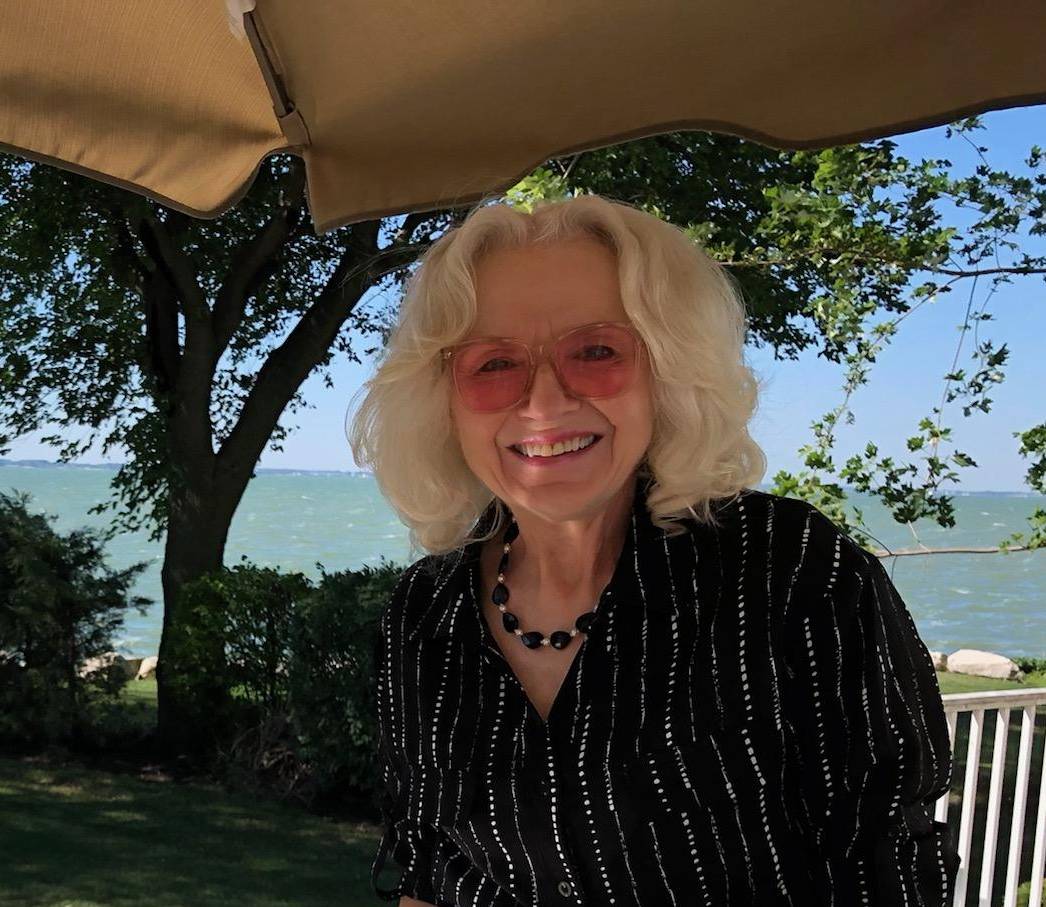
Gayle at Bill's House Sept 2022 cropped

Not every writer does this but let me just say this…my characters made me do it.

I have written a couple dozen books, mostly fiction, with a few books on how to write thrown in because I wanted to help other writers get their ideas on paper and into print. I write mostly detective novels because my wonderful husband, Richard, said something that changed my life when I couldn’t get my spy novels published early on in my writing journey. He said: “You used to be a private detective, so why don’t you write a detective novel?”

Words of wisdom from a smart man. So, I wrote that first detective novel, got it published and wrote a dozen or so more books as well as several short story collections featuring a detective or two.

past-imperfect-cover-12

But something happened while writing those books. When I was working on the second detective series featuring a guy named Johnny Casino, I did something my old acting teacher taught me. I didn’t want to be an actor, but I thought that class was a good way to learn how to write dialogue for the movies or television. What Rudy Solari taught us was to write a short biography of the character we were playing so we knew who that character was when we walked onto the stage.

aaef1-damningevidencecoversmall

I used that method to get an idea who the main characters were in the books I was writing. While I was writing about Johnny Casino, I let him “talk” and tell me who he was. What I learned was that he had been trained by the first detective I had written, Ginger Caulfield. Who knew?  I guess those two characters knew it.

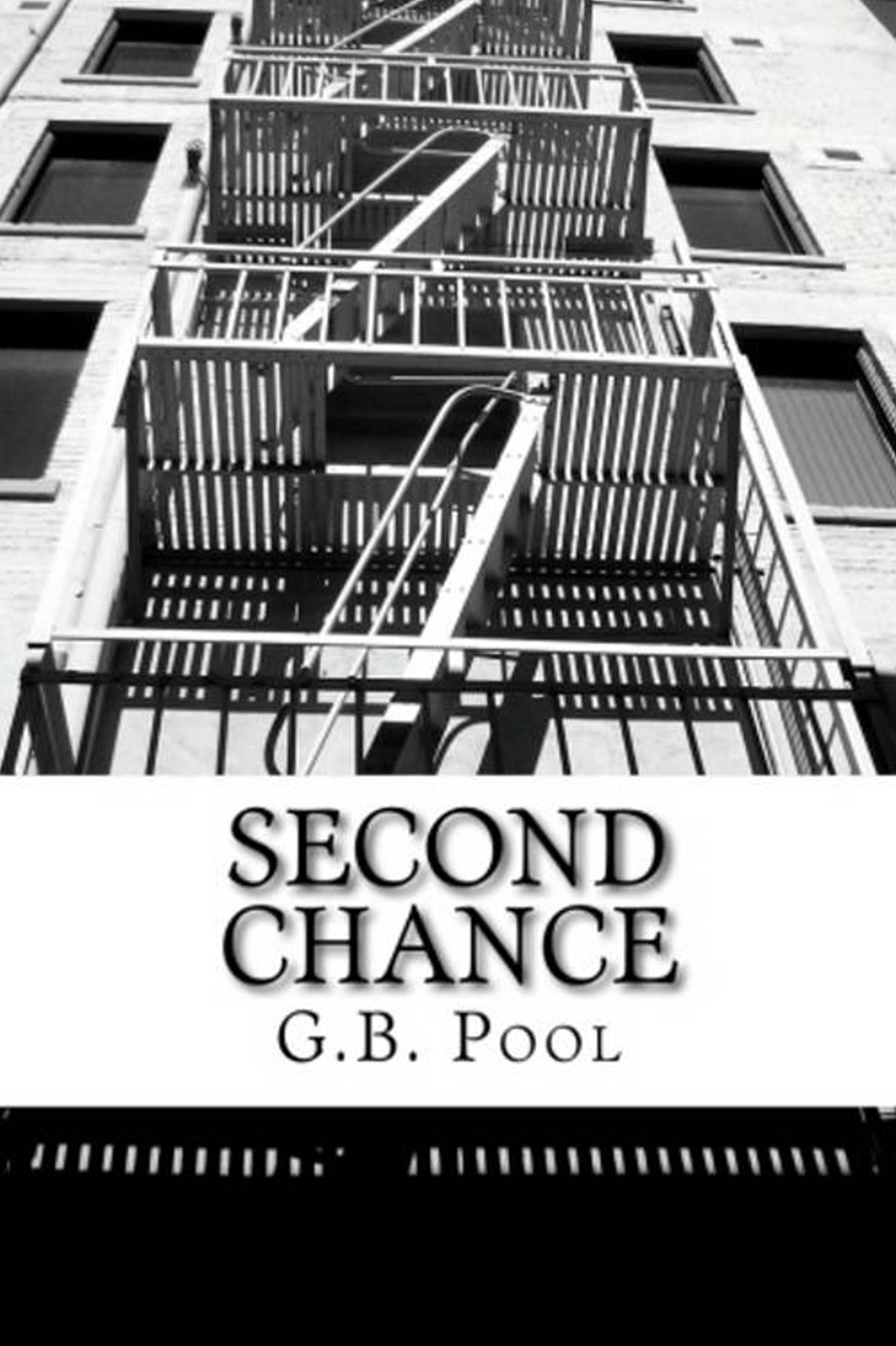
Second Chance Book Cover

When I started the third detective series about a cool guy named Chance McCoy, lo and behold, he knew Johnny and had been trained by Gin, too. But the coincidence didn’t end there. One of the characters in the three spy novels I penned is a friend of Gin Caulfield. And Gin’s uncle is the main character in those spy novels.

EB Gayle

So, after writing three different detective series, I have three detectives who all know each other. But it didn’t end there. These private eyes know this other guy from a stand alone novel I wrote years earlier. The character, Jason Kincaid, has recently retired from the police force at this point in time. There’s a reason he retired, but that’s another story.

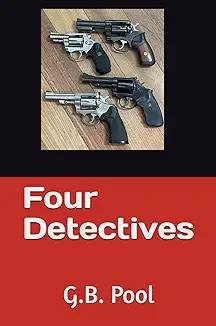
Now I have these four characters who all know each other. What do I do with them? Why not have them start a new detective agency and see what happens. So Four Detectives was written. It consists of four stories from each member’s past and four new stories after they start working together.

FourDetectivesCover1

But there is something else about these people. They have something in common that started in their respective pasts which is the real reason they know each other now and are working together. When they realize this, everything changes.

Hey, this wasn’t my idea. They told me their story and I just wrote it down…

I wonder how many other writers have this happen.