Saying Goodbye is Hard To Do.

By  Marilyn Meredith, guest blogger

In this case, it’s saying goodbye to two whole sets of characters who’ve been living in my head for many years. First it was the all the police officers and their families who live in the beach town of Rocky Bluff, as well as many of their citizens. This is the first series I wrote and the first published. Reversal of Fortune is number 17, and the last one. I am going to miss the Rocky Bluff P.D.  (I wrote this series using the author name F. M. Meredith.)
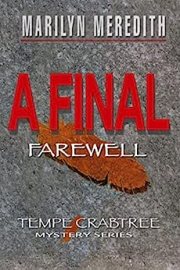
When I moved to Springville, I learned we lived near the Tule River Indian Reservation and I became friends with a Native woman who grew up on the rez. I love the little town where I now live and incorporated a lot of my surroundings in the Deputy Tempe Crabtree series. I’m certainly going to miss Tempe and her husband, Hutch, a pastor, and their good friend, Nick Two John. The latest book is #20,

The hardest part is that I know all these people so well—even knowing how they think, and how each one will act in any situation. In many ways, it’s like losing good friends.

I’ve been asked several questions about this decision. Was I tired of the characters and the settings? Absolutely not. I loved the folks who lived in Rocky Bluff, especially the men and women of the RBPD. The beach community of Rocky Bluff only existed in my imagination, but reflected much of the area where I once lived and other small towns along the coast.

Those who lived in Bear Creek and the surrounding area are near and dear to me since I live in the community that inspired it, with some minor changes. I’ve used much of what is here in many different books in the Deputy Tempe Crabtree series: the small river that sometimes floods as it did this year, the Inn as it was in earlier years, and the surrounding mountains. I’m staying where I am, but Tempe and Hutch are moving on.

Another question was had I run out of ideas? No, that wasn’t the problem. With the Rocky Bluff series policing is changing so fast, I didn’t think I was able to keep up with the changes. With the Tempe Crabtree series, I knew in my heart it was time—20 books was enough

So what will I do now? I have another cook book on the back burner—this one with camping recipes. I plan to update one I wrote when I was a Camp Fire Girl leader and we went on many camping trips.

I’m also planning to write either a young adult mystery series set during World War II in Los Angeles, or a memoir. Haven’t really decided yet. My childhood and early teen years were during that period. I have lots of memories during a time that was much different than now.

Like the characters in my books, my life has made some major changes and I am changing along with them.
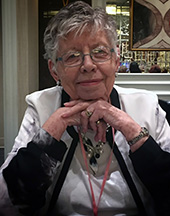
Marilyn Meredith aka F.M. Meredith

Visit me at http://fictionforyou.com/  

Blog: https://marilynmeredith.blogspot.com/

.

Marilyn’s article was posted by member, Jackie Houchin

Writing Scared

The last couple of years have been slow going for me on the writing front. But now I’m mentally back and raring to go—very much wanting to get back into the “writing swing of things.” And I believe—inline with my blog tendency—sharing my meandering thoughts with you might be helpful in case I’m not alone as I make my way along this winding writing path!

I’m also thinking now is a good time to be jumping back in full throttle(mixed metaphor I know—but I like it,) because my earlier series of books aren’t selling well. So, my plan is to jump out and do some “writing things” differently; ie., POV, physicality and attributes of characters, and my approach to revealing the killer. Mysteries are what I love and wouldn’t consider anything else, but there are different styles of telling the story. And my writing heros vary in their approach to getting the story out there. Agatha of course has done it all!
Here are some of the ideas and approaches floating around in my head:

  • Still third person POV, but from the two story tellers, not just one. (THANK you Gayle for the very good input you’ve given me in that area!!)
  • Two men working together, or
  • A man and a woman working together (with or without a love interest?)
  • In both cases, telling the story while living the story, not just as detectives or sleuths

My writing tenants of scenery and characters are still the number one defining forces, but I’ll be approaching differently? Especially when it comes to story member participation vs narration participation. Tricky divides I think—first person versus third person combined with their story participation. Hmmm…

Now that I’ve written it out here, I guess I’m changing my own personal third-person “voice.” Not a concept or idea I’ve thought about before exactly in those terms…hmmm again. Maybe this winding road has turned in a sharp right or left turn angle—or a complete U-Turn? (just took my CA written renewal test and signs are still jostling around in my brain.) Also, now that I’ve written this all out (not sure if this chattering will help anyone else reading pursue their writing goals)—but for me, I’ve thought and written myself into being excited about writing anew. Starting this wonderful and adventurous trip anew!

Which leads me to the underlining writing concept — no matter what literary thoughts you’re having…if you’re static in your writing thoughts and protocols then you’ve made it! BUT, If you want to go in a different direction, genre, POV, location, etc.—go for it! Scary, but part of the joy of writing.

All thoughts are welcome!

Happy writing Trails

Why I Read Short and Long

by Jackie Houchin

I read a lot of print books and listen to a great many audiobooks each year. I do not read anthologies or collections of short stories unless they contain several stories by authors that have a track record I enjoy.

Recently, I have been “reading” (I will use that word whether I use my eyes or ears) a good many short prequels to book series. If the book turns out to be so-so, I haven’t wasted much time. If I like it, I’ll consider the series. Also, more authors are writing their stories as novellas, which I enjoy too.  For me “shorter is better.”

Except!

Except when I read authors that I KNOW will come through with an outstanding story. Then I will read longer. Sometimes much longer.  I’m currently reading CITY SPIES by James Ponti. It has 378 print pages and I LOVE it. I eat it up. I can’t get enough, even when my eyes are stinging. I’m already looking for the next in the series. (Okay, yes, it’s geared to 10-12 year-olds, but I’m a kid at heart, and it really IS written well.)

In general, for LONG reading, I like fascinating, immersive, tightly-written books, with unique plots and hooks and plenty of jaw-dropping moments. And the characters better resonate with me.  I enjoy relevant back-story told well and within the plot.  In mysteries, I don’t want to easily figure out who is the villain or how he did the crime. I want to follow the author step by cleverly contrived step to the WOW ending, which, on second thought, makes perfect sense. I want a story that stays with me for a while.

Charles Todd is one of those authors. His Ian Rutledge historical mysteries are top notch. Here are my reviews of two of those books. You can see why I love them and will READ LONG.

A Pale Horse

A Deadly Loyalty

Historical Novels and Mysteries need to be believable and take me right to that setting and hold me there. If they do, I’ll READ LONG.  Here are three I reviewed that did that.

The Ghost Map by Steven Johnson

The Girl in The Painting by Tea Cooper

A Brilliant Night of Stars and Ice by Rebecca Connolly

In a LONG READ novel, I want to be carried along with astonishing characters, vivid settings, and heart-wrenching but hopeful story telling. Here are two I loved.

The Bronte Plot by Katherine Reay

Light on Bone by Kathryn Lasky

Here’s one dual-time plot that is outstanding and innovative and that I gladly READ VERY LONG.

When The Day Comes by Gabrielle Meyer

And I could name more.  I totally enjoy reading Charles Martin (long & intense), Connie Berry (intricate plots), Katie Gayle (addictive), A.J. Pearce (Historical), Spencer Quinn (Humor, a dog’s POV), and my all-time favorite Mary Stewart, which I read and listen to over and over.

All these books are well written and enjoyable. If these authors keep on writing, and others like them, I think there is hope for readers. (At least in my life time.)

NOTE: I hope you don’t mind the blatant self-promoting of my Words and Reviews blog!

..

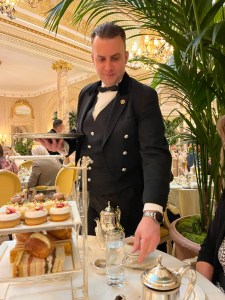
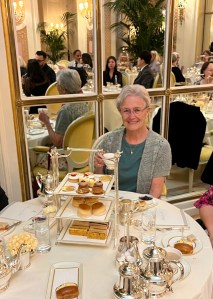
And a few fun shots of Jolly Ole England – Afternoon Tea at the Ritz with lovely piano music, 150 Picadilly, London.


Buckingham Palace and Big Ben


Short Stories: The Reader

by Maggie King

A while back, I had a conversation with a well-read young couple. Like me, they enjoyed mysteries, the classics, and literary fiction. When they asked what I was working on, I said I was finishing my third novel and planned to focus on short stories for a while.

“Really?” The man looked doubtful. “I know that writers like writing short stories, but do readers like reading them?”

“I’m guessing you don’t,” I said. “What is it you don’t like about them?”

“They’re too, well, short.”

The woman added, “Just when I’m getting into the characters, the story ends.”

Are their comments typical ones? I expect so.

When I asked my book group members if they read short stories, I got blank looks. One of them, a retired English teacher no less, said, “Well … we read them in school.”

My first short story was published a year before my first novel. Two people I know told me plainly that they would wait for my novel, as they had no interest in reading a short story.

I selected the following comments from reviews of anthologies published by the Sisters in Crime Central Virginia chapter:

Short stories cannot deliver a good mystery to me. There were a few short ones that were good, but on the whole, not a great book.”

I am not a huge short story person usually because I don’t feel like I get enough information. I only read this book because of a book club I belong to.”

My biggest problem is that they don’t end with a clean-cut solution. You pretty much get a ‘feel’ for what will happen and then have to use your imagination to finish the ending.”

And some good reviews:

Very much enjoyed! I’m a busy mom with not much time for fiction, so I loved that it was a collection of short stories. …. It was truly refreshing to be able to read a good short story and then move onto the next when I was ready! Interesting stories and well written.”

My first ever mystery story collection. A friend recommended it and I really enjoyed it! Glad I branched out to try something new.”

I asked award-winning short story writer Art Taylor to comment on the reviewer who wished that short stories ended with clean-cut solutions. This is his response:

Short stories don’t always tie everything up nicely at the end. They often end on an ambiguous note and the reader can draw her/his own conclusion. Sometimes readers complain, as they expect the endings that novels have.

I do try to strike some balance myself—key questions answered (no information left out) but emotional issues still up in the air a bit, if that makes sense. Maybe what happened is explained, but the fallout is still to come, and the reader can imagine some of that rolling on into the blankness of the page beyond the final word.”

Despite the criticisms, many short stories are being published in anthologies, collections, magazines (the magazines are mostly digital now). For some time, I’ve been hearing that the availability of short stories in digital format has made them attractive to readers. But based on the above in-person conversations and online comments, writers need to do more than digitize their stories–they need to make them appealing. How can we do that? How can we satisfy the reader who wants “more?”

Such a reader might like a story collection. Anthologies present stories by different authors, but the ones in collections are penned by one author.

In Shooting Hollywood: The Diana Poole Stories by Melodie Johnson Howe the mysteries are not only beautifully written, but Diana Poole, actress/amateur sleuth, appears in each one. So if you take a liking to Diana, you’ll find her in the next story. And the next. Perfect for the reader who wants continuity and character growth. Other authors feature different characters and settings in each story of their collections.

Authors with published collections include Ruth Rendell, Agatha Christie, Arthur Conan Doyle, Marcia Muller, Bill Pronzini, and our own Gayle Bartos-Pool with her outstanding Only in Hollywood. There are many more. Suggestions for non-mystery collections: Maile Meloy’s Both Ways is the Only Way I Want It, and Elizabeth Strout’s Olive Kitteridge.

An idea from M. Louisa Locke, who guest-posted for Writers in Residence in 2020: she wanted to keep readers interested while they waited for her novels, so she started publishing short stories based on her Victorian San Francisco Mystery series.

In addition to short stories serving as a marketing tool, they allowed her to develop the minor characters in the series.

Read M. Louisa Locke’s post.

As for satisfying readers who want the clean-cut solutions they find in novels–that’s a tough one. Writers certainly want to please readers, but short stories are not just short novels. In my own stories, the reader will usually know who committed the crime, but vigilante—not traditional—justice is often served. I can only think of one story where I had the villain led away in handcuffs. However, I agree that some authors end their stories on overly vague, even abrupt, notes.

Likely there will always be readers who prefer novels over short stories—and that’s okay. Perhaps the best thing we can do is keep writing, stay true to ourselves, keep improving our craft, and the readers will come.

A parting idea: writers and publishers could work together to come up with effective ways to promote their short stories, collections, and anthologies.

These are my thoughts. Yours?

Coming in September: Short Stories: The Writer.

Images courtesy of book.store.bg, abebooks.com, ElizabethStrout.com