IT WAS THE DEAD BODY IN THE LADIES’ ROOM…

by Rosemary Lord

She was enjoying such a lovely holiday exploring the English Devon Coast, the charming fishing village and the cream-teas that were to die for. But it was the dead body she found in the Ladies’ Room of the church hall that made her pause. It was most inconvenient…

How come my mind goes to those bizarre ideas – and gruesome murders – or at least a simple dead body… I mean, it’s not like I am a mass-murderer – or that I even killed just one person – not that I recall….

Maybe I should have continued that opening as a sweet and charming Cozy. I do write Cozies, too. I’m not always weird.

Perhaps, I should be writing some ladylike Regency, Jane Austen style romance, or a simple bodice-ripper. Or a sci-fi marvel. Or a very clever spy thriller or possibly a police procedural. Or perhaps not.

But my writer’s mind just goes there. My sister thought it was because our grandpa was a police detective. Could be…  So, it’s probably a good thing grandpa wasn’t an insurance salesman. I mean, even a door-to-door salesman would have more interesting tales to inspire a writer.  

But where would we be without our writing, without our amazing world of imagination to escape in to. I often think how lucky we writers are. When life gets really tough, when things around us are going haywire, (like today!) when we’ve had more than just a ‘bad-hair-day,’ when we think that Life has given up on us – we have our writing to retreat to.

Make a nice mug of coffee or tea, settle down in our comfy office chair, a blank page in front of us and away we go. Whether it’s with pencil and pad or the familiar clacking of the computer keys – we are transported to another world. Our Writer’s World.

Tough to explain to anyone who doesn’t write. But suddenly we’re galloping across the Sahara Desert or sneaking through the back streets of Charles Dickens’ London or stretching out lazily aboard a luxurious yacht.  How about enjoying a gourmet meal in a super-posh Paris restaurant, swimming in the Mediterranean – or walking across Regent’s Park, hearing the elephants at London Zoo in the background. Or climbing Mount Everest – if that’s where your mind goes…

You see how endless a writer’s imagination can be? And what a wonderful diversion from the tough times in the Life-of-Hard-Knocks, a distraction from everyday humdrum, or just a brief diversion from today’s offering.

Mark Twain said, “write what you know.” Which is sometimes very useful. But I find it much more fun to write about a world that I never inhabited. Besides, I absolutely love researching. I devour all the books, articles, newspaper clipping to do with whatever I am writing about. I especially love reading the 1910 or 1918 Sears & Roebuck Catalogues. Just like the adverts in old magazines, one can tell so much about life in those times when you see what they wore, household items they used and the hobbies they had. There are endless opportunities for stories in those pages. Even looking at the world around us today. The Farmers’ Almanac in Kentucky will have advertisements that spark an idea, or a fishing magazine in Finland, a local paper in New Zealand or the Scottish Highland Times – all sources of tidbits of ideas that, like Topsy, will grow. I find the Obituaries in these far-off places fascinating – apart from providing me with a cornucopia of character names to use.

What other profession gives one the opportunity to snoop, eavesdrop and blatantly plagiarize another’s life? The snooping is most fun!

And we get to add historical figures into our mix. Where else could one throw in a vision of the evil sinner Sisyphus, condemned to an eternity of pushing a boulder up a mountain, only to be thwarted once he got to the top, when the weight of the boulder forced it to start rolling downhill. So, he had to start again. And again. Or how about our use of oft-quoted characters from Shakespeare? You see – we get to use it all if we want.

So, after an extremely busy, stressful day at work, I retreat into my world of writing – this Blog being way overdue. And somewhere in my brain I am now thinking of taking that opening paragraph and running with it. Murder and mayhem in Devon anyone?

            Whatever odd twists and turns my writer’s brain takes, I always feel so relaxed and satisfied when I can print out a new page or three. So maybe it’s a good thing to have that weird streak? I just know how lucky we writers are to have that Writers’ Place to go to.

MAKING THINGS FIT….     

By Rosemary Lord

Whether it’s time or words – it’s an ongoing challenge for me.

Not having the luxury of a 30-hour day, I’m always trying to squeeze things in, so that, apart from ‘work’, I can have some sort of personal life, family time and of course writing time. As I struggle to transfer my workload at the Woman’s Club of Hollywood to a new dedicated crew, it’s taking a lot longer than I anticipated – and about 6 new people to do the work I’ve been doing on my own for so long!

But – I will make it all fit.

I designated Sunday as MY day, when I will not deal with any Woman’s Club work and only speak with family, friends, potter, catch up on housework and fit in some writing time, too. My ‘work phone’ is switched off. This is the only way I’ve been able to catch up on my personal life, finding serenity, make things fit – and even make time to paint my nails – a pale blue this week! I cherish my Sundays.

I envy some of my friends who retired early and travel all the time. I just can’t fit that in now!

 And then there’s making things fit in my writing. I have three major writing assignments at the moment.  A non-fiction, 144-page coffee-table history book, an historical novel and a memoir. So far, I’ve not had the time – or the mental focus – to sit for hour after hour, day after day, as I used to, to complete one of them. I tend to fit in the odd hour or two and peck away at one of my projects. Although my mind is always working overtime thinking about them.

First, in fiction, especially in mysteries, I have to get the right name for my characters.  I have to make the name fit.

I mean, you can’t really have an exotic, sultry siren called Mary or Jane, could you? Sophia or Camille, maybe. Or a tall, hunky, sun-bronzed hero called Arthur or Reginald, doesn’t really work, does it? The names have to fit the character, the story, the era, the background, in order to be believable.

Although one of my pet peeves as a reader is to have the characters all having a similar sounding name, especially in the same scene: Fin, Tim, Dick, Nick, Rick – or Jim, Jon, Jan, Jen, Janey, Jed and so on. I make a point of making sure the names differ in sound and length. You’re not going to get confused when characters names are specific for the storyline and sound different. Such as a Jim, Stephen, Montgomery, Drew and Samuel. Or Roberta, Annie, Pamela, Sue, Gwendoline and Florence. Different lengths and starting with different consonants. Easier for the reader (and me, the writer) to keep track of.

I always feel challenged with the word-counts we’re given. Tough to fit all I want to say within their limits. Should my work be a short-story, a novella, a novel – or a War and Peace tome? My storyline has to fit into the right category.

Then I (hopefully) unobtrusively, fit in the clues and red herrings. Remembering the villain needs to be seen, fleetingly, very early on in the story. Almost hidden, with no big flashing neon signs. So that at the end, when all is uncovered, I haven’t cheated my readers by suddenly announcing: “By the way, the Butler, whom you’ve never seen before, did it.” As a reader I like to think I know ‘Who Dunnit,’ but I’m not sure and I keep trying to work it out. Then the satisfaction at the end of saying “of course!” and retracing the steps to figure it all out for myself. So, I have to make sure that it all fits in.

And I have to fit in the adversity, the challenges, the processes my characters go through, without the reader aware of what I’m doing.  Static stories are boring. My characters need to lose something – or fear losing it. They must process crisis – large & small – then recover and carry on obliviously enjoying life, until another surprise stops them in their tracks from an unexpected source. Unseen forces. Another deadly trap.

It was Raymond Chandler who said, “there’s no trap so deadly as the trap you set yourself.”

Whatever that means. But then it was Mark Twain who said: “write what you know.”  So, between the two, I should have a story somewhere!

And somehow, I will fit in the time to make it all happen.

Writing anything is a challenge, but writing mysteries is a unique adventure, unraveling the human mind. It’s like designing a large jigsaw puzzle, making all the pieces fit.

So, I’ve become very proficient at making things – time and words – fit. How about you?

Seven Story Plots

By Jackie Houchin

I recently talked to a young man involved in theatre at his university. He longs to write a play or musical and has all kinds of ideas about special effects, music, and costumes. He has even imagined a few characters. But he has no story. No plot, only a few imaginative scenes.

I told him there are just a few basic plots in the world from which all books and plays originate.  I told him there were five, but on researching them, I found it is seven. (Christopher Booker’s 2004 book The Seven Basic Plots: Why We Tell Stories.)

Here they are.

  1. Overcoming The Monster.

Christopher Booker suggests Dracula by Bram Stoker, The Lion, the Witch, and the Wardrobe by C.S. Lewis (the White Witch), or The Help by Kathryn Stockett.  In the “monster” story, you need a chilling threat (human or not) and a brutal contest that will probably require a significant sacrifice.

  1. Voyage and Return.

The Odyssey in Greek myth and The Hobbit by J.R.R. Tolkien are examples. Your protagonist will need a dangerous journey or impossible quest with an uncertain outcome. He needs opportunities to turn back but to show heroism, he will continue and return with new strength.

  1. Rags to Riches.

Cinderella, Jane Eyre by Charlotte Bronte, and Memoirs of a Geisha by Arthur Golden are all examples. Your protagonist should grow in character, strength, and understanding, helping them to be empowered. This sometimes involves romance.

  1. The Quest.

The protagonist sets out to find someone or some object, like buried treasure. At each step the stakes need to be raised, making it harder and harder to achieve. The hero emerges stronger or more mature.  J.R.R. Tolkien’s The Lord of the Rings and J.K. Rowling’s Harry Potter and the Deathly Hollows are examples.

  1. The Comedy

The idea of Comedy is to create many misunderstandings for the protagonist to get involved in. The plot continues to muddle events, feelings, and perceptions until the end when all will be “miraculously transformed.” The action moves from dark to light. The Inimitable Jeeves by P.G. Wodehouse and Bridget Jones’ Diary by Helen Fielding are examples.

  1. The Tragedy

Tragedy is the opposite of Comedy and goes from light to dark. The protagonist has a deep flaw or makes a horrible mistake, causing his undoing and failure. Think of all the “if onlys” that could have happened. Give him ways “out,” which he won’t take, then close off any exit options. Classic examples are Othello, King Lear, and Macbeth by Shakespeare, The Great Gatsby by F. Scott Fitzgerald, and Anna Karenina by Leo Tolstoy.

  1. The Rebirth

Rebirth is like a tragedy but with a hopeful outcome. The protagonist’s journey has a redemptive arc and sometimes includes romance. The “happy ending” should depend on that arc. Fairy tales are good examples, as are The Secret Garden by Frances Hodgson Burnett, Emma by Jane Austen, and The Kite Runner by Khaled Hosseini.

Of course, you can combine multiple plots and add subplots, too. These seven plots are a guide to building your story.  You can elaborate as your fancy suits you.

Now, give it a go!

LET GO AND LIVE….

by Rosemary Lord   


I went to the zoo. London Zoo. With my brother Ted. We took a picnic.

It was a lovely sunny day in May, shortly after my birthday, as we sat by the fountain enjoying our sandwiches. Just like we had done as small children – just yesterday!

Oh, the pleasure of revisiting such childhood memories.

Since then, the London Zoo has improved greatly, totally remodeled with expansive, imaginative new areas for the animals with the Global Wildlife Conservation programs. We saw the wonderful abandoned 1950s Indian railway station that is now The Land of Lions, complete with abandoned luggage, old handcarts and peeling, vintage Bollywood movie posters, to make these endangered Asiatic Lions feel they are still in Gujurat, India. The Sumatran tigers have their own roaming wilderness, as do the wild African rhinos. All endangered species, now thriving in this spacious conservation program. Even the butterflies have their own newly designed habitat. Each sanctuary was as fascinating as the last. It was an educational joyride.

Yes, I was in England visiting my family for the gathering of the Lord clan. After London, my siblings and I went back to the small fishing village in Greece that we’ve been returning to for several years. Not telling you where or it will get overrun with tourists! This is where we enjoyed leisurely dinners in the harbor, overlooking the small fishing boats. Souvlaki (chicken skewers) and moussaka still favorites – at around $14 a head including lots of wine and other dishes! We spoke of books and writers. We always come back to books and writers. Richard Osman’s Thursday Murder Club was much discussed as a well-thought-out Agatha Christie-style mystery. Also on the reading menu were Mick Herron’s Slow Horses, Victoria Hislop’s latest, The Figurine, and Sinclair McKay’s intriguing book about The Secret Life of Bletchley Park. I love those World War II books. And am fascinated to learn more about the young women at Bletchley Park, who, having signed the Official Secrets Act, never spoke of their heroic work.  

We wondered whether today’s kids will be as voracious readers as we were and still are…

We spent a couple of days in the delightful waterside town of Nafplio, an hour south of Athens. More delicious Greek food and friendly Greek hospitality.

Back in England, our wonderful, long-suffering brother-in-law, Peter, drove us to Broadstairs, in Kent – next to Ramsgate. What fun! It’s a lovely, old-fashioned ‘seaside’ town. It was one of Charles Dickens haunts. Bleak House stands on the top of the cliffs overlooking the expansive beaches. It’s a leisurely mix of old and new. The Edwardian and Victorian architecture, the Kent and Sussex painted wooden beach huts and wooden fishing and boat structures at the waters edge, unspoiled, next to charming new buildings. Beachside shops selling souvenirs, buckets and spades and saucy postcards. Fish and chips for lunch, of course. Perfect!

This was my much-needed escape from Hollywood and all the dramas of the Woman’s Club. To my jaded eyes, it seemed so much easier to be a writer in London now. Lots of cozy cafes in which to write the next best-seller and to swap literary tales with aspiring and established writers. They are everywhere in London.  Cafes and writers, that is. And there are endless magazines to read, too. Several have selections of short stories.  Where did the American writers’ magazines go?

And this time away gave me the chance to take a look at what I had been doing with my time and where I was going.

I read a piece by DJ Adams on ‘Letting Go of Expectations…’

She’s right.  As writers and artists – how perfect do we want to be? And who decides what is perfect? “To fully embrace your creative artists or muse,” she writes, “You must learn to let go. Let go of who you think you are, releasing your idea of what your creative gift is and what you expect to achieve. This is so contrary to everything we’ve been taught in order to be successful. So instead of holding on to who you think you are (noir novelist, oil paint artist, songwriter) stand back and observe your abilities. Just like our personalities are ever changing, so our muse has many faces. Our creative consciousness absorbs. Let yourself go. Experiment without considering the outcome. Stephen King said ‘Good writing is often about letting go of fear and affectation…’ Let go – to grow!”

Sounds good to me.

“It’s not where you start – it’s where you finish…” wrote Dorothy Fields, lyricist for the Broadway musical Seesaw, “It’s not how you go, it’s how you land.”

And Ralph Waldo Emerson put it another way: “Life is a journey, not a destination.”

And so, as I flew back to my Hollywood home, I thought a lot about those words.

I think many of us are still working with the adjustments forced on us by the Covid nightmare. And all of those challenges that crept up on us. Life is different now. Reading and writing habits have changed, too.

Now, I decided –  I wanna be FREE! I wanna be ME! I have so many untold books and stories in me, I feel I’m bursting at the seams. I gotta lotta writing to do!!

So, I’m ready for new horizons. I’m ready to let go. Not sure where or when. Not even sure who I am anymore. Just one big leap of faith into an amazing creative future.

Who do you think you are today? What do you expect of yourself? Or do you like where you are now? Eh?

Character Flaws

by Gayle Bartos-Pool

gayle-at-bills-house-sept-2022

Through the centuries man has written novels and other stories using that plan old Aristotle, born in 384BC, came up with and documented in The Poetics. He said there are 5 Basic Elements used in writing a story: Plot, Character, Dialogue, Setting, and the Meaning of the story. He was so right. As for the people who populate said story, many authors utilize the “Character Flaw” idea to give their main character some quirk that might trip them up while pursuing their goal.

Whether it’s a private detective with a drug problem (Sherlock Holmes), a gal who drinks too much (the woman in The Days of Wine and Roses), or even the kid who can’t tell the truth (The Boy Who Cried Wolf.), when the reader learns the character has this flaw and also learns what the goal is in the story and what the roadblocks are in trying to achieve that goal, there will be anxiety on the part of the reader to see if the hero can overcome his or her problem and succeed.

This method has been used for centuries and works, but there have been other ways to toss a curve to the hero just to see how he or she handles it. A blind main character (in the movie: Wait Until Dark) or a blind detective (the movie and book called exactly that: The Blind Detective) or a hero in a wheelchair (the TV show: Ironside) worked just fine in catching the bad guys.

Rob a Bank

A physical handicap can actually make the hero stronger. I’ve known real people who had severe health problems turn into some of the strongest people I have ever seen in my life. But a drug addict or an alcoholic isn’t exactly wearing a badge of courage. I’ve also known people who had those issues as a part of their character and who had no intention of getting rid of them. I probably wouldn’t turn to them in a crisis. In a story they might be the main character with what is known as a “fatal flaw” who solves the problem or reaches the final goal as he dies on the last page. That’s been done, but it’s a bit of a downer.

But there can be other ways to give the main character something to deal with besides thrusting negative points on him. In fact, some TV characters don’t really have major flaws, but some of their friends do. The main character in the series Magnum, P.I., and Jessica Fletcher in the TV show Murder, She Wrote were basically good people, but some of their acquaintances had problems. Usually those problems were thrust upon them by someone else, otherwise known as the villain, and the hero has to solve the case before the jail cell closes on their friend.

So, are we supposed to make our main characters flawed? I’ve read some best-selling books where the hero had flaws that were rather unpleasant and I only read one of their books. I didn’t find that trait a selling point. I often say that I want my main characters to be people I would invite to my house. They don’t have to be sickeningly sweet or holier-than-thou, but I would like to respect them.

But these heroes might have a friend with a major flaw and part of the story is to get the friend on the right track so they don’t die or end up in prison. You can even have the hero mention that he almost went down that same path until somebody straightened him out. My Johnny Casino character used drugs when he was a kid while he was growing up in the Mob. They were importing and selling those drugs until a local priest challenged him to a boxing match and whooped his little butt. Johnny never touched a drug again. This revelation in one of the stories let Johnny use himself as an example to help somebody else shake their dependency.

people-4

I’ve wrestled with the notion that the main character should have something wrong with him since that theme is prevalent in many books and movies, but I prefer my main character to have either overcome some minor flaw or never really had one in the first place. Most people I know aren’t one step away from the slammer or psycho ward, so I’m not stuffing my character in that camp. He can have doubts and reservations, but in the end his upbringing and persona got him where he is, so I’m not going to let him fall into a pit. And anyway, that’s what heroes are…heroes.

People with problems don’t usually go to people with their own troubles. They go to the guy or gal who made it through the gauntlet and survived. We learn from characters like that, so my heroes fight to keep on an even keel and get us all to shore.

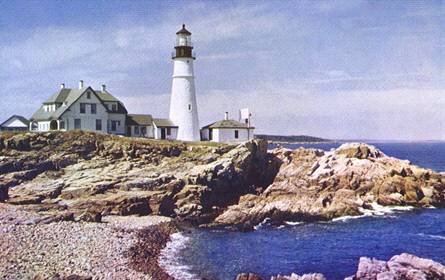
Coast Lighthouse

STARTING OVER….

by Rosemary Lord

1.08RoseSignCrop

Happy New Year!

It’s time to come out from hiding under that duvet!

This winter is turning out to be tough on so many, with the freezing temperatures and endless rain across much of America and Europe. But I’m in California, where it’s still often sunny during winter, even when it feels to us as if it’s freezing.  My siblings in England ridicule me with our 66-degree “heatwave.” Hey! We’ve had several days of rain – and the ensuing power-cuts and floods. Los Angeles comes to a halt at the first sign of rain…. Enough already! I’m done with winter!


But I digress: Each January is a fresh start. Time to dust off our goals, our dreams, our great plans for life.  

As a teenager I had so many dreams and goals – and many of them I have accomplished. The fourteen-year-old me never questioned that I could not go from a quiet little town in England, far removed from the acting and showbiz worlds, to living in Hollywood, (where I knew no one and was totally ignorant of how things worked), to working as an actress and a writer in Hollywood movies. My dreams, my positive beliefs and my naivete fueled my journey.  I’m not saying it wasn’t very tough at times, frustrating and sometimes heartbreaking. It took a lot longer than I thought. But I was driven by my dreams and never gave up.  


Then a new chapter of my life opened up. My dreams and my goals changed.

Writing was my new focus. I wrote articles about Old Hollywood and Movie Stars from Hollywood’s Golden Era. I wrote about Hollywood history. But I never thought I would be smart enough or talented enough to be a novelist. I was and am still in awe of so many of the great novelists. How could I ever come close to that?


It was shortly after my first non-fiction book Los Angeles Then and Now was published and I was having lunch with fellow British-born writer Jacqueline Winspear. We’d both been honored by the Southern California Book Sellers Association. Jacqui had launched her first amazing Maisie Dobbs novel and I was chosen for my Los Angeles Then and Now. As we chatted about our current and future writing plans, she convinced me that I, too, could write a novel. Even a mystery novel. She explained how Maisie Dobbs came about and the basic method she used. Wow! She opened up a whole new world for me.

A new pathway. She showed me how to look at writing in a totally different way. I will be forever grateful. I subsequently joined Mystery Writers of America and then Sisters-in-Crime. I found a new family of writers.


But even along this writers’ journey, there comes a time when we have to step off into the unknown to get new results, to shake things up.


“This year will be different,” we often promise ourselves on New Year’s Day. But in order for it to be different, we have to do things differently. Maybe it’s a time to take a fresh approach, take another path. I’ve been toying with the idea for a children’s book – taking a break from intense historical research. Another writer friend is inspired to try her hand at poetry this year, after several successful noir thrillers. Perhaps a crack at a movie script?


New Year’s is a great time to plan a do-over. Change writing habits. Shift the energies around. The year ahead is filled with new opportunities, new hopes and wonderful blank pages for us writers to fill.


Perhaps go back to the simple way of doing things – without all the current programs available to us. I sometimes wonder whether our world of social media, immediate access to ‘google’ or ‘duckduckgo’ information is a blessing or a curse.


In days of yore, writers would be found in dusty libraries, surrounded by research books, furiously taking notes. That’s what the Agatha Christies of her day would have done. Jane Austen too. Mary Roberts Rhinehart didn’t use Instagram to tout her The Circular Staircase success. Edgar Alan Poe didn’t have a Facebook page. Charlotte Bronte didn’t Tweet. Raymond Chandler did okay without all that. Hmmm.


But today we have a choice to avail ourselves of those services. And we have Sisters-in-Crime, The Authors Guild and Mystery Writers of America to turn to. We have options.

Writers are storytellers. We’re the ‘wandering minstrels ‘of our time. Minstrels would wander from village to village, singing about the news around the countryside. Today we fictionize the local village stories and don’t have to travel from village to village to share them. We have a flourishing publishing world, movies, television, internet, podcasts and multi-media resources to spread the word. Or we can choose to keep it simple with a yellow pad, pencil and our imagination.


I love the excitement of the New Year options. A chance to start over.

What about you?

Writers Collaborating: How does it work?

By Jill Amadio

Co-authors, such as the several collaborators who write with bestselling James Patterson, are freely acknowledged by the thriller writer, and he gives them public credit for their work. Is there also an increasing trend for mystery writers to team up? One successful couple, Greg Wands and Elizabeth ‘Liz’ Keenan, are finding their books more and more popular, and sell in twelve languages. Here they explain how their writing process works:

What are your writing backgrounds? Were you published before collaborating?

Greg: Liz and I both wrote short fiction separately for many years, and I tried my hand at screenwriting. While we were early readers and supporters of each other’s work, it wasn’t until our debut, The Woman Inside, in 2019 that either of us became published authors, and it was a real thrill to be able to do it together!

How did you decide to collaborate and why crime?

Greg: We’d been discussing the idea of collaborating on a project together in the abstract for many years when we both suffered separate tragedies: my father passing away from cancer and Liz having a long-term relationship unravel in heartbreaking fashion. While supporting each other through the grief and trauma, we cooked up the seed of the idea that became our debut novel. A crime story seemed like the proper genre, as we were interested in exploring the more clandestine aspects of the human condition and the capacity people have for secrecy and deception.

What system do you use to organize and collaborate?

Greg: We write in Google Docs, which allows both of us to work on the manuscript simultaneously. As a duo, this helps when we’re in the revision or copy edit phases and often need to tackle separate plot points in a complementary fashion.

Which strengths and weaknesses do you each bring to the writing?

Greg: Liz is wonderful at scene setting, character development, and creating a visceral experience for the reader through the use of a specific image, textural description, or the like. And she’s marvelous with a turn of phrase! I enjoy writing dialogue, and would like to think I’m good at creating atmosphere. I think we’re also both skilled at being able to nudge the other in the right direction when one of us starts to lose the thread of the plot or makes a narrative decision that feels untrue to a character.

How have you changed or adjusted your system as you wrote more books?

Greg: We fell into our routine fairly organically, by volleying chapters back and forth with only a loose framework in place. This seemed to give the work an improvisatory energy that kept each of us–and by extension, the reader–on their toes. Thankfully, we’ve been able to keep our formula reasonably intact, which works well for us. With a couple of the books, the publisher has requested a more comprehensive breakdown, but we still find ways to surprise and confound one another on the page, to our mutual delight.

Which obstacles/pitfalls/challenges did you face in the writing of the books? Arguments? Agreements?

Greg: It can be a bit of a challenge having two separate brains tackling one story, mostly from a logistical point of view: keeping timelines straight, having slightly different ideas behind character motivations, and trying to foresee where your writing partner might take the plot of the book. But the uncertainty can also be thrilling, and lend to the feeling of discovery and surprise that makes for an engaging writing experience.

Do you think having two writers can shorten the length it takes to write a book?

Greg: Because we write in a back-and-forth style, with one author penning a chapter and then kicking it over to the other, it takes about the same amount of time to finish a draft as it would a solo writer. The advantage we have is that our method allows for extra time in between chapters to clean up the text and to find places where we may have slipped into some inconsistency or other in the plotting of the story.

Your separate backgrounds appear tailor-made for a collaboration. Have your experiences in publishing and screenwriting helped you write, publish, and market your books?

Liz: Our respective backgrounds have given us several useful tools. Our experiences in the film and publishing industries have informed our understanding of effective storytelling, audience, and the publishing process. For marketing, our past experience has helped us to succinctly pitch our books and connect with influencers and other writers in and out of our genre, as well as our understanding of how much authors have to be entrepreneurial when it comes to marketing their books.

Who does the research?

Liz: Since we typically split up the characters in writing our novels, we research our designated parts and their history, professions, passions, etc. For the broader story elements like forensic and legal procedures, we also split research and share our findings, which often spur new story elements in our plotting. We pick themes and story elements we are interested in learning more about, knowing we’ll spend six months to a year immersing ourselves in these topics.

What is your publishing history?

Liz: Our first novel, The Woman Inside came out in January (2019), and the following year, In Case of Emergency was published (2020), and The Rule of Three was released in 2022. We have a fourth novel publishing in 2024. Our books are all published by Dutton, an imprint of Penguin Random House

Either of you writing other books, fiction or non-fiction,  that are non-collaborative?

 Liz: Yes! We are both working on novels separately in between our collaborative projects. They are in various degrees of completion; Greg is further along than I am!

Which of your books did you have the most enjoyment writing?

Liz: Each of our novels has brought immense joy in the writing process in different ways. If I had to pick one, I think The Woman Inside was the most exhilarating to write since it was the first, the most personally motivated, and we were doing something completely new.

 Most effective marketing strategy?

Liz: This is a hard one since effective marketing is so elusive. However, the approach with the most ‘legs’ is personal recommendations from fellow thriller writers and bookstagrammers of our books when they are released. The trust of readers that these well-read influencers and writers have fostered is priceless and effective in spreading the word about our work, and we are eternally grateful to the people who support us in that way. We aim to do the same with all of the incredible books that are published each month!

Advice for budding collaborators?

 Liz: Like any healthy relationship, creative collaborators should focus on the foundation of the partnership as much (if not more) than the creative output. Communication, trust, and encouragement are vital to keeping momentum when things get creatively challenging. Making the work an extension of the friendship is the core of our collaboration; we write for the amusement and shock of the other, which keeps us motivated. Laughter is essential, too.

###

..

This interview by Jill Amadio was posted by Jackie Houchin.