
by JILL AMADIO
 What is it like to sell 10 million copies of your books? I found it mind-boggling until I recently watched the Jackie Collins documentary. She sold 500 million copies of her 32 novels. But, hold on, Barbara Cartland wrote 723 romances and sold over a billion of them.
I recently interviewed Jane Green, who wrote a chick lit book “for fun” and went on to pen 20 more romance novels. She’s the author who sold the 10 million copies, and every title was a New York Times bestseller. I guess the numbing numbers are all relative when you consider that many other writers’ sales are up in the stratosphere, too.
The way the book business is these days sudden fame and fortune can appear out of nowhere, even after you’ve given up hope. J.K. Rowling wrote and self-published two books, one a Harry Potter, that went nowhere until a publisher picked it up from a bin in a secondhand bookstore as something to read on the train, as the story goes.
Fifty Shades by EL James, was also self-published as an eBook on an obscure Australian online blog site, The Writer’s Coffee Shop, until the novel was scooped up by traditional publisher Random House. The erotic novel subsequently sold 15.2 million copies. It is now a trilogy. Back in 2016 the original online publishers, two ladies, were fighting over royalties of the books in a Texas courthouse. It appears to be a tangled web as the plaintiff was a school teacher who claimed she was “done wrong” as Eliza would say, regarding her share of royalties. Which begs the question: why should the Coffee Shop blog owners receive royalties rather than a one-time fee? My research failed to answer such questions, especially one on how Texas and the Coffee Shop, based in a Sydney suburb, became embroiled in a lawsuit in the U.S. It sure sounds like a jolly interesting plot for a murder mystery.
Do I find it daunting to read about such sales? Do you? Should these figures encourage us to keep writing? Happily, I feel neither jealousy nor resentment. The more people are reading, the more they will buy books, although one is tempted to throw a few sex scenes into the mix.
Since moving to Connecticut and just an hour from New York City that throbs with best-selling authors, I feel inspired to keep going and in fact, I am resurrecting the Tosca mysteries between marketing the memoir I just published. It will be great to get back to creating a chilling murder after writing about aviation art.
There are book clubs galore here along the Eastern seaboard with Very Earnest Members, although I am still searching for one that discusses crime novels. Sisters In Crime Conneticut is a start. I know there are some book clubs online but after two years locked up I am relishing attending meetings in person.
As for book sales, I think of the tortoise and the hare and I plod along, blessed by the fact that I am able to write as freely as I wish without worrying about numbers or having a publisher breathing down my neck. A local writer said his Big Five publisher made him change his POV twice, and another writer confessed she was forced to rewrite her ending to suit the Highly Important Editor. Thomas Wolfe is famous for arguing incessantly with his editor, Maxwell Perkins, about cutting his classic Look Homeward, Angel down to a reasonable word count from the 333,000 words Wolfe is said to have written, but it worked and the result was magnificent. It continues to sell today. As it should.
Your thoughts on the big bucks?
.

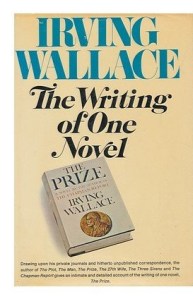 Turned out I had grabbed a paperback I’d bought second-hand years ago and never got around to reading, Irving Wallace’s “The Writing of One Novel.’ It relates the all-absorbing 16 years he spent researching, traveling for settings, and finally writing his bestseller, “The Prize.” In meticulous detail Wallace describes his exhausting, frustrating, and determined journey into the background of the Nobel Prize. He interviewed dozens of judges, winners, losers, and journalists who covered the event. He kept daily journals and diaries of his efforts to get behind the politics, drama, and the decisions, all of which resulted in “The Prize” being almost non-fiction. Wallace discovered facts, regarded as explosive and titillating at the time, about all those involved over the years. Most of the characters were a combination of the real person and the author’s creativity but they were so obvious that the country of origin of the Nobel Prize, Sweden, refused to publish or distribute the book.
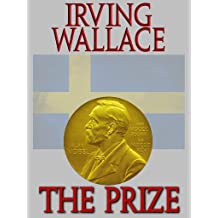 That aside, the tattered paperback I was reading, yellowed with age – it was published in 1951 – was the most honest and revealing of any author’s how-I-wrote-it book I have come across. It is more than a fascinating peek into Wallace’s writing process and method of research. He lays bare the heart, mind, and soul of a writer’s inner workings. Would reading this book turn off a new writer? It’s a daunting task that Wallace set for himself because he wanted to know everything, and as he dove deeper and deeper into the history of the Nobel Prize he uncovered real data that he could not resist including in his novel. Luckily today we are armchair researchers, although I find that visiting locales can’t be beat for sniffing the atmosphere.
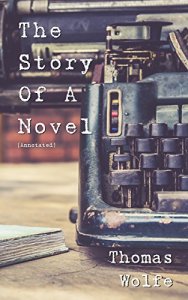 Interestingly, Wallace’s “The Writing of One Novel” mentioned another author who wrote a tell-all of his writing process. I immediately downloaded Thomas Wolfe’s “The Story of a Novel.”
 “Look Homeward, Angel.” Wolfe dredged up so many childhood and young adult personal experiences that the novel is considered practically autobiographical. His first draft was over one million words! Happily, Scribner’s genius editor, Max Perkins, sorted it all out and gave us Thomas Wolfe in all his glory. Perkins probably also heavily edited “The Story of a Novel” because Wolf admits at one point that all he did when writing it was jot down a few random notes.
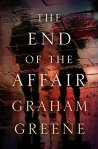 Both memoirs put me in mind of Graham Greene’s despondent “The End of the Affair,” another heart-breaker that makes one wonder how much of the author’s life it reveals. Faulkner called the book “true and moving.”

 The Writers in Residence
You must be logged in to post a comment.