
by Rosemary Lord
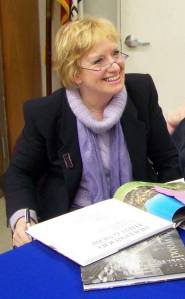
Books. That’s what most of us aspire to write. And most of us writers read – a lot!
As Cicero said: “A room without books is like a body without a soul.” I wholeheartedly agree!
Baudelaire wrote: “A book is a garden, an orchard, a storehouse, a party, a company by the way, a counselor, a multitude of counselors.”
And J.K. Rowling believes that “something magical happens when you read a book.”
While Honore de Balzac wrote, “Reading brings us unknown friends.” How true.
And I think that the books people have in their homes says a lot about themselves.
 I remember visiting Rudyard Kipling’s house, Bateman, in Sussex, England. The 17th-century, wood-paneled house is filled with souvenirs from his travels to India and beyond, his dark, imposing library has floor-to-ceiling shelves crammed with encyclopedias, travel books, biographies and local-culture tomes from his exotic wanderings.

A much brighter house further west in England is Agatha Christie’s beloved Greenway House, situated in a rambling woodland garden on the River Dart in Devon, England. Like the rest of the sprawling house, Christie’s library is bright and sunny. The cream-colored shelves are filled with an array of crime-writer’s reference books of deadly poisons, murder weapons, infamous murderers, biographies as well as her travel pursuits. There are many books on archeology, Egypt, Syria and the Middle East. Christie accompanied her archeologist second- husband, Max Mallowen on his trips to the Middle East. She would catalogue the finds, methodically taking notes which would often later be used in her novels, such as ‘Death On The Nile.’ But in that sunny library, the most admired books are the shelves brimming with copies of all her own novels in their original or amended titles in English and a host of other languages.
Whilst most of us don’t have room in our homes for our very own designated ‘library,’ we do have bookshelves, or places to store or display books.
On the other end of the spectrum from Agatha Christie’s spacious, airy and very comfortable library, my own ‘library’ in my small Hollywood apartment is simply five bookcases in my living room crammed with my life readings.
The shelves are filled with books on the Golden Era of Hollywood and the history of Los Angeles. I have all of Agatha Christie’s novels, various mystery writers both past and present and a vast selection of ‘cozies.’ I have a lot of books written by fellow author friends. Of course, there are the mystery-writers’ required reading: ‘How to commit a murder’ books, forensics, poisons and other reference books. On my bedroom shelves are my escapist novels by Rosamunde Pilcher, Victoria Hislop, Santa Montefiore and Paul Gallico.
Most of my writer friends have fascinating collections of murder/mystery/crime books, romance-novel or science-fiction ‘How-to’ publications, as well as assorted guides to publishers, literary agents, self-publishing and more. I have a friend who has wall-to-wall shelves filled with books about every musical ever produced, books of lyrics, sheet-music and musical biographies. Guess what his interest is?! Others have an array of nutrition, cook-books, photography or – like my late-husband – motor-racing or herpetology: the study of snakes.
The contents of people’s bookshelves reveal their focus in life: be it travel, biographies, photography, bird-watching, theatre or needlework.
I recall a brief visit to a young wanna-be Hollywood actress’s apartment. It was sleek, cool and very trendy, her wardrobe similarly up-to-the-minute. But there was not one book – or even a magazine – in the place. “Books?” she shrugged dismissively, “I’m not interested.”
I still reel with shock at that image! (She only booked a couple of small non-speaking acting jobs then disappeared!)
Conversely, when my family and I stayed in an old house in Portugal, my room had bookshelves crammed with books on Mussolini, Stalin, Hitler, ‘Mass Murderers of the World,’ Nazis, World Wars, battles, ‘Mr. Nice: the international drug smuggler,’ Napoleon, Fidel Castro, ‘The Bin Ladens,’ ‘The Mind of a Murderer,’ and some Lee Childs’ Jack Reacher novels for light reading. All in Portuguese. There was a large, framed poster of a hand-drawn man’s face with several stab-marks, red slashes and undecipherable scrawled slogans. I quickly removed this and hid it behind an armchair. But the bed was very comfy and, surprisingly, I slept better there than I had in a long time.
One of the other bedrooms had a brighter selection of Hitler and Nazi books, mixed in with Winston Churchill and world political leaders. All in Portuguese. Another room had some travel books. How did that person fit in?
The general décor of this 1887-built house was grand but somber. The walls in the rather grim, marble-floored entrance lobby, and the walls of the sweeping staircase were filled with neat rows of gilt-framed, black-and-white etchings of various battles, warriors, death, solemn religious figures and crucifixions. So were the walls of the formal front parlor and the even-more formal dining room. The walls in each of the bedrooms and the long corridor leading to one of the spacious, marble floored bathrooms were similarly adorned. All the drawers throughout the house were locked. Even the Canaletto print over the fireplace was mournful and colorless. And so the selection of the books in this rambling old house was not surprising.

I remember my dad’s bookshelves were full of mysteries and police stories. His father had been a detective in the Bristol Constabulary. Dad had his Agatha Christie selection, of course. But his favorites were Arthur Conan Doyle, G.K. Chesterton, P.G. Wodehouse and George Simenon – which he read in English and the original French.
Mum, on the other hand, had favorite authors that included H.E. Bates, Laurie Lee, F. Tennyson Jesse (A Pin to See the Peep Show), Paul Gallico, John Steinbeck and W. Somerset Maugham, with whom she became regular ‘pen pals.’
I’m very blessed that I grew up in a book-loving family. For as long as I can remember, so many family conversations have turned to books old and new. Our mum wrote magazine articles, and all of my siblings have always been involved in the book or writing world in some way.
So, I guess they’re in my blood. Books, that is.
So, what books would we find on your bookshelves and what does it reveal about you?
………………………………………


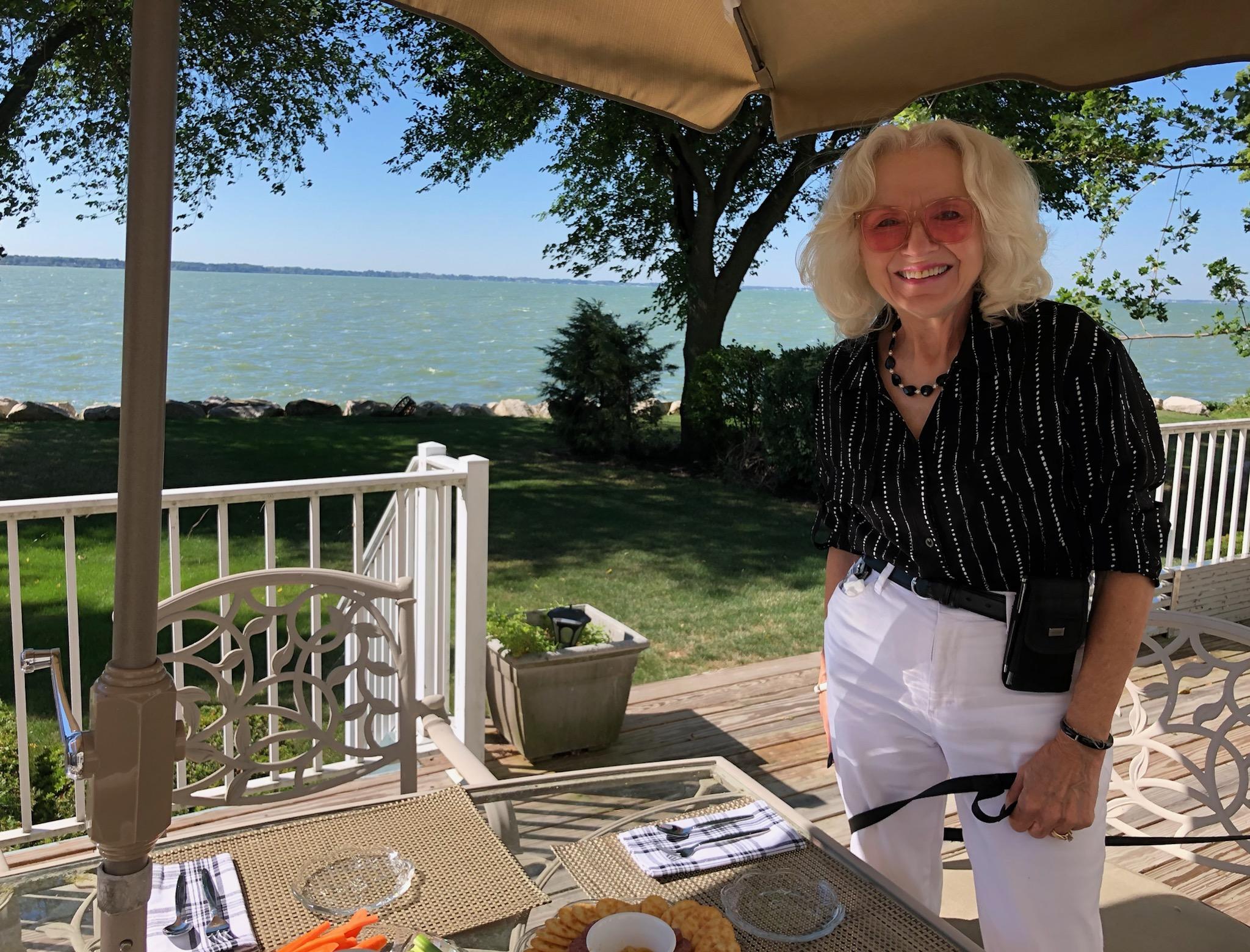





 Thank you, Jackie! I’m a native of California, I was born and raised in the Pasadena area. My husband and I still live here, although we have talked about living elsewhere that is less expensive. I have two adult sons and two adorable granddaughters. We live in a condominium with two precious pups, Minnie, a mellow Maltese, and Mandy, a very precocious Terrier mix. They keep us on our toes and give us hours of unconditional love and fun!
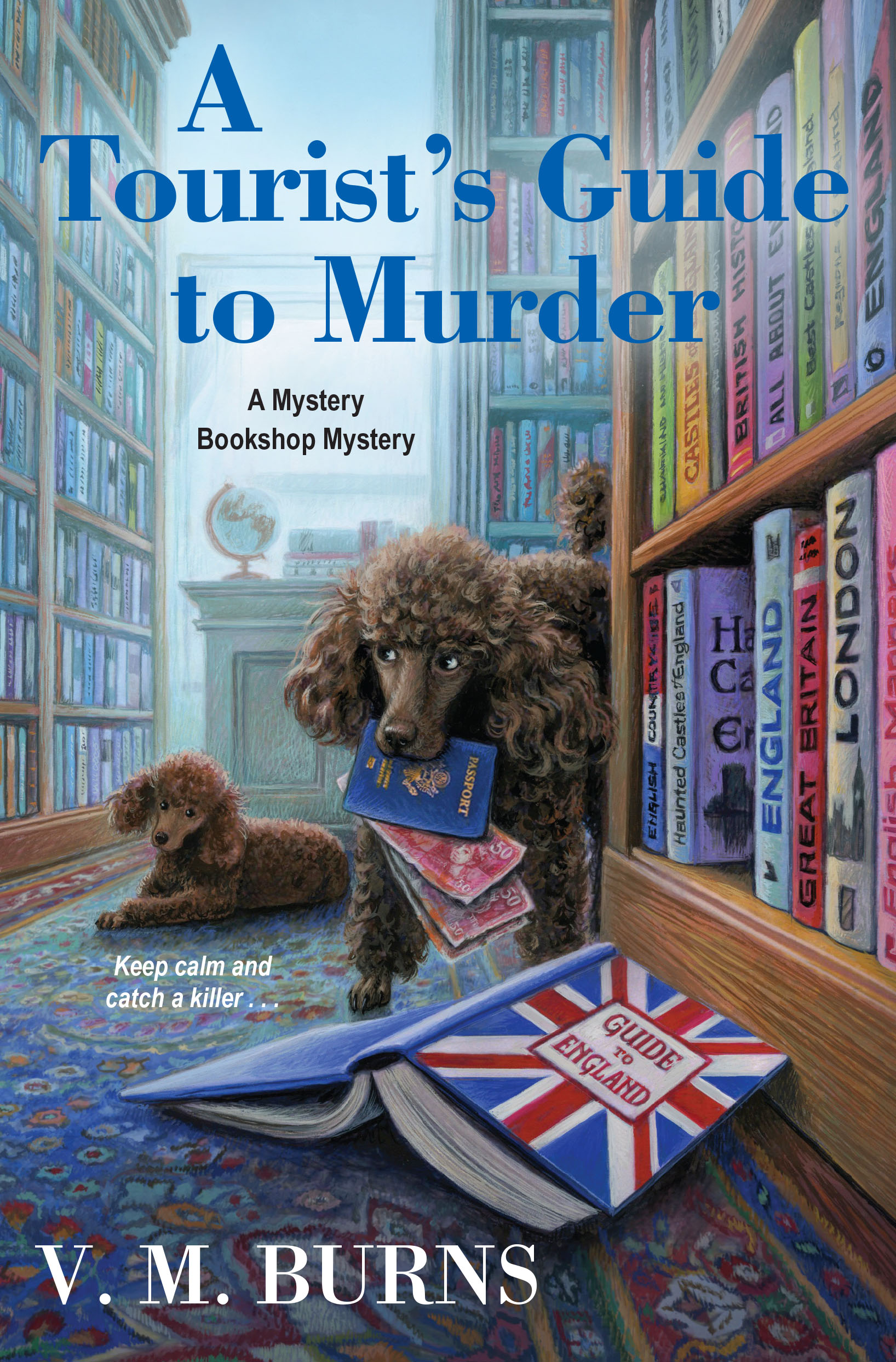
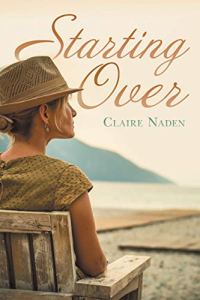 Cache Under the Stacks was published in August 2018, and Starting Over was published December 2019. Both books I “pantsed,” but now I am trying to outline and it is not as easy for me. I’m working on a sequel to Cache Under the Stacks and a sequel to Starting Over, a woman’s fiction that has evolved into a bit of a mystery.
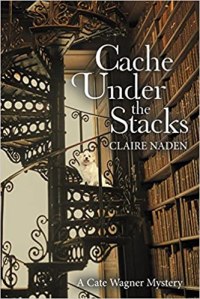 BOOK REVIEW: Cynthia (pen-name Claire Naden) published Cache Under the Stacks, A Cate Wagner Mystery, two years ago, and I have just found and read it. It’s a story about a divorced, empty-nester bookstore owner, living alone in a nice neighborhood with her sweet pup, Minnie.
 My writing has matured over those thirty years, as has my heroine. Granted, when introduced in my first book, she was “almost eight”, so her voice and thoughts had to reflect her age. However, the book was meant for adults, therefore it had to present the story at a more mature level. Much of the storyline and the tension springs from a child who’s unable to fully understand her situation and an adult audience who clearly can.
 Mike McNeff introduced his hero Robin Marlette in GOTU (pronounced Got-U, it’s short for Guardians of the Universe). His action/adventure series features a covert ops team that has to balance work with home life. Mike’s currently writing the fourth book in the series. When I asked him how his characters have evolved over time, he decided to let Robin speak for himself:
 What began for Heather Ames as a stand-alone novel turned into a deftly blended mystery, suspense and romance series featuring Detective Brian Swift and socialite/club owner Kaylen Roberts (due in part to encouragement from some members of this blog). Ames says, “My characters have evolved from two people who didn’t even trust each other enough to share confidences into two people who have been trying to work through various challenges. They weren’t sure they could work things out by the end of Book one, but they both wanted to try.”
 Pat Kelley Brunjes traveled a similar route with her characters as I, opening her series with a story loosely based on her family history. In her first novel, The Last Confession, her protagonist serves as a stand-in for Brunjes. “Maggie was me seeking to find the truth about my grandmother’s relationship to the Catholic Church.” Although based on her research, she fictionalized the story, which allowed her to take Maggie in a non-biographical – and more dangerous – direction. In the sequel she’s writing, her heroine gets entangled in a cold-case murder and human trafficking. “In the second novel, Maggie has evolved into her own person dealing with what fate has thrown her, and how her personal beliefs guide her decision to help others.” Having given herself the freedom to step away from semi-autobiography, Brunjes will have much flexibility in plotting future entries in the series.
 Avis Rector faces a unique challenge in writing her historical fiction series, based on the early life of her family on Whidbey Island. In her first book, Pauline, the heroine and her husband settle on the island during the Depression. “So much of the first Pauline was based on my memories of the stories I heard as a child from my father who loved to tell stories—usually real happenings, but many embellished.” However, in her sequel, the story moves into the 1940’s, a time Rector lived through. She’s having to reinterpret her childhood memories through an adult’s perspective. “Actually, I’m having a hard time writing how the adults felt about the time. Pauline has changed.”

 I’d asked a wise librarian in Burbank if there was something beyond Nancy Drew, but kind of like her, that I could read. She looked at this budding, though still gangling young teen, and recommended Mary Stewart’s first book, Madam, Will You Talk? (1955)
 This Rough Magic (1964), my opiate. ***
 Mariner’s Compass (1999) is Earlene Fowler‘s sixth Benny Harper mystery, set along California’s central coast. Each of her books is named for a quilting pattern although Benny is not a quilter herself. She is a rancher and married to a cop, but she helps maintain a historical museum in town that features old quilts.
 Old Bones (1987) *** by Aaron Elkins is another favorite on my list. His protagonist Gideon Oliver is a forensic anthropologist, but his moniker in the series is “bone doctor.” It is absolutely amazing what you (he) can discover from a set of fresh or ancient bones. Who they were, yes, but more importantly in the book, how, where, when, and why a person becomes bones.
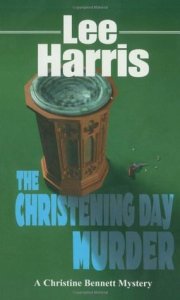 A freaky location again is the reason for my listing The Christening Day Murder (1993) by Lee Harris as a memorable favorite. (All Lee Harris’ Christine Bennett – a former nun – mysteries have a special “day” as their title.) I can’t even remember the mystery, but I remember where a good portion of it takes place.
 And lastly, the wonderfully warm and well-written family saga by the gifted Rosamunde Pilcher… The Shell Seekers (1987) **** (all 582 pages ) This is not a mystery, but a lovely women’s novel featuring Penelope Keeling, a 64 year old woman whose days are limited, and whose family does not understand her. A woman whose past is calling her, but whose present threatens to fence her in.
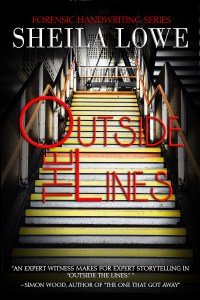
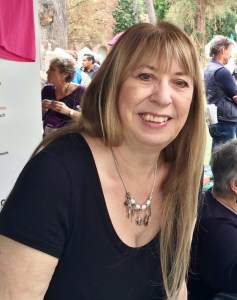 OUTSIDE THE LINES is sixth in the popular mystery series. Sheila Lowe has also written a stand-alone thriller in which her Handwriting Specialist appears in a minor role (What She Saw). Like her fictional character Claudia Rose, Lowe is a real-life forensic handwriting expert who testifies in court cases. She has begun work on the 7th book in the series, UNHOLY WRIT.
 Jackie Houchin is a Christian writer, book reviewer, and retired photojournalist. She writes articles and reviews on a variety of topics, and occasionally edits manuscripts. She also dabbles in short fiction. She enjoys creating Bible craft projects for kids; growing fruits, flowers, and veggies; and traveling to other countries. She also loves cats and kittens and mysteries.”
 The Writers in Residence
You must be logged in to post a comment.