
by Jill Amadio
Invited to give as class on How to Write Your Memoir at the Westport, CT senior center, I agreed, somewhat reluctantly. It would be six 1-hour sessions and limited to 10 people. I almost wrote ‘students’ which, I suppose, they are, but somehow the idea of a group of elderlies didn’t seem to fit.
Having written what I now regard as a rather staggering number of biographies and autobiographies when I pulled all 18 of them from my bookshelves to show the class and let them know I felt confident to consider myself qualified to a certain extent, I realized that no matter how young or old such students would be, I had over the years accumulated the knowledge and experience to write and be published. Thus I would share my insights as an instructor. Of course, six hours is a laughably insufficient time to teach someone how to write their life story but I decided that covering the basics could start them on their journey.
All but six of my books were ghostwritten. The remainder were authored by me or co-authored – often a surprise as my contracts specifically identified me as the ghostwriter and thus hidden and forbidden to reveal who actually wrote the story. I am usually mentioned at the end of the ‘author’s’ Acknowledgements page, with a simple ‘Thank you to Jill Amadio.’ I am still waiting for a client to add – ‘for writing my book for me.’
One traditional publisher insister I be listed as co-author, much to the chagrin of the client’s boyfriend, and a UK publisher graced another book with my name as co-author without asking my permission. Quibble? Ha! It was a delightful surprise which earned me author talks at area locations including to a large group of auto racing drivers and vintage car collectors.
However, this first teaching gig to seniors gave me a few pre-class jitters. Would I have to speak very loudly if they were hard of hearing? Would they be able to read the handouts, meaning I’d probably have to print them in 18-point font? Would they find me boring and self-serving by passing around my hoard of books to establish my credentials?
I need not have worried. The first class was a group of extremely enthusiastic six women and two gentlemen who sat at our conference table with pens and pads ready to jot down my golden advice. I’d created a syllabus, and explained the subject matter each of the six sessions would cover. I also told everyone that they could interrupt me at any time with questions. I thought that if they held their questions until afterwards they might forget them.
All went well and I was bombarded with queries about all aspects of writing, not just memoirs. By the way, I had decided to lump the telling of life stories under the term ‘memoir’ because these days it appears to include biographies and autobiographies, and to my mind has a more important ring to it. Time was when ‘memoir’ meant a telling of a slice of one’s life, a particular incident, but these days many media outlets, for example, have called Prince Harry’s whiny-fest book, ‘Spare,’ by that description (whiny-fest is my own opinion)
My only admonition to the class was that they should not give in to temptation and use their book as a bludgeon against relatives, friends, employers, or others who have, perhaps, wronged the writer at one time or another. I hope they will remember this advice from Omar Khayyam’s poem, “The moving finger writes, and having writ, moves on. Nor all your piety nor wit shall lure it back to cancel half a line, nor all your tears wash out a word of it.”
As I prepare for my second class, next week, I will explain that bringing in several elements of mystery writing can lift a life story by adding tension and suspense, to name a few. Settings and characters can be enhanced with the addition of the writer’s detailed emotions, feelings, and personal point of view. I had told the class about the rhythm of writing and the very next day there was Tammy Walker’s excellent post on our site!
While researching my subject I came across a marvelous list of more than a hundred descriptive verbs. Using them is a great way to bring a scene alive – as we do in our mystery and thriller writing.
Interestingly, as a final note, there was a general consensus from the class when I announced there would be no prompts to be written. Many writing classes include a prompt at each class, whereby students are given a subject, a phrase, or a sentence, and must write a page around it. To my mind, this is a waste of time that can be better employed writing your book. Everyone agreed with me! However, I do encourage journaling as one way to loosen up that creative s spirit.
Do any of my fellow Writers in Residence have any relevant tips?
##
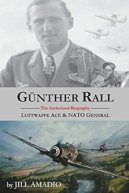


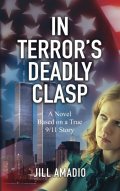
A few of Jill Amadio’s ghostwritten biographies.


 The Writers in Residence
You must be logged in to post a comment.