
by Gayle Bartos-Pool
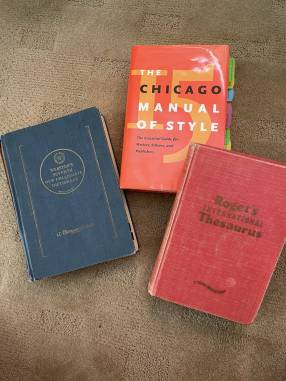
This is a Follow-Up to Jill Amadio’s post about words used by younger folk that might need a new dictionary to understand them because they aren’t in my old Webster’s Seventh New Collegiate 1965 edition. We hear slang on TV shows geared to a younger audience and from young folk in our daily life, some of which needs to be defined by the user because the listener has no clue what they mean. But what will books in the not so distant future be like? Here’s a sobering take on this subject.
I was in a writers’ group years before we formed the Writers-in-Residence blog that consisted of aspiring novelists of all ages. The majority of us were older, but the young folks wanted to be writers and this was a good way to have their work critiqued and maybe improved. Each month one person in the group would submit 30-60 pages and the others would read them and make notes and suggestions about that sample. The pages were usually part of a novel-in-progress. None of the younger people had published work, though most of us older folk did have one or two books in print or wrote for a newspaper. We still wanted our work read and have the group toss around ideas to make the WIP (Work in Progress) better.
That was basically wishful thinking on most of our parts. First, the younger folks didn’t understand sarcasm and how it was used in writing. In other words, they couldn’t understand a good joke about life in general. They also didn’t understand references to anything more than a few years older than they were. A sense of humor was foreign to them, as were the names of famous movies or actors or World History or… Anyway, much of the color and character in our work went over their “collective” heads.
As for their work, I remember reading the first few pages of one person’s novel. The lousy spelling and total lack of punctuation made the pages unreadable. I felt like a Fifth Grade teacher grading a kid’s paper who would definitely be getting an “F.” I had to tell the person why I didn’t finish reading his work. He wasn’t happy and didn’t stay in the group much longer. But every one of those younger people wrote the same way: badly.
I have heard that schools aren’t teaching little things like grammar or spelling or punctuation or math or science that you might find in a school book back in the last half of the last century. I’m not talking about the 1800s. I’m talking about 1950-1999. But remember: Gravity still exists. 2 plus 2 still equals 4… so far. A dictionary from that earlier era should still be relevant. We can add words, but not change their spelling or eliminate their original meaning. Or can we…?
If a word can mean anything you want it to mean or its spelling can be whatever you key into your handheld device with your thumbs or if World War Two was won by space aliens and not the Allied Forces, “Houston, we have a problem.”

But if this Brave New World is what the future holds, the only hope we have is that the people who use these new words can’t spell them, much less understand how to use a pen and write them, so there won’t be any new books out there to read containing these odd words with nebulous meanings. But folks in the future will still have Shakespeare and Agatha Christie and a few books by some of us who still write in a readable language… but that of course does depend on a hope that kids are taught to read in school and right now that doesn’t look too promising. And of course some people are removing great books from schools and libraries or are rewriting them to suit a new generation’s feelings, so that is problematic. Ray Bradbury wrote about a dark future like this in Fahrenheit 451. Orwell saw this coming in his book, 1984. I actually made references to the books 1984 and Brave New World in this post, if you caught the sarcasm. (Look up the meaning of the word if it’s unfamiliar. Use a Webster’s…) So folks, keep copies of these great books in your home library and other books that you have in your collection so future generations can see what people wrote about a century earlier, though you might have to read the book to these younger folk if they weren’t taught in school…
Do I think this is a problem? What part of “Yes” don’t you understand? (Oh, by the way, that’s sarcasm…)

This is Ray Bradbury and me.


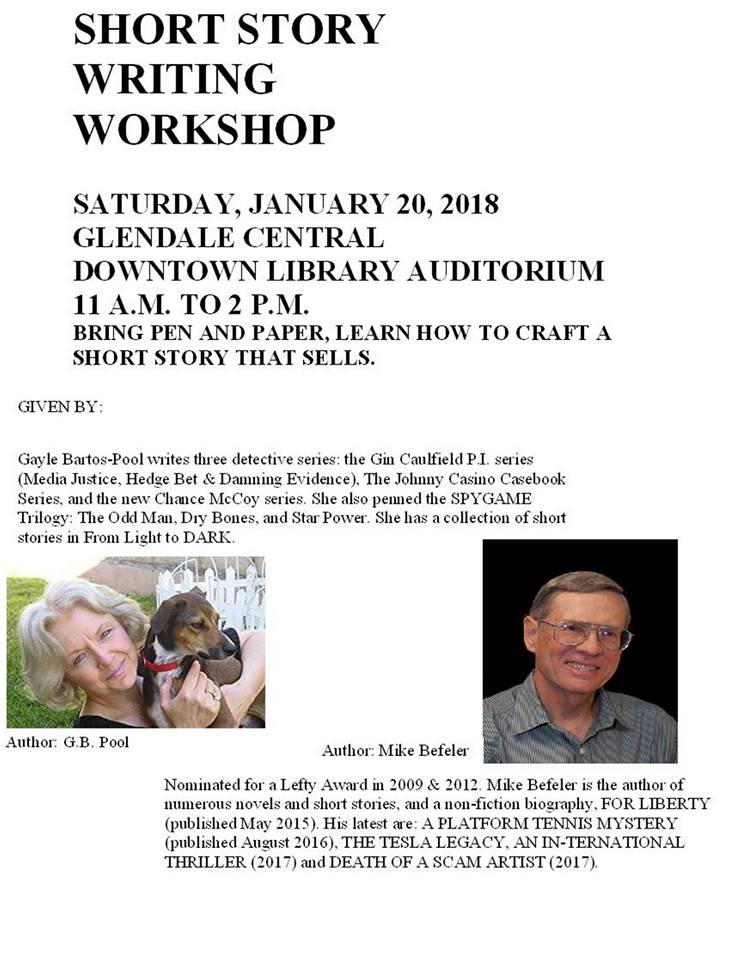

 by G.B. Pool
 Or how about A Christmas Carol? Kids might like the Ghost of Christmas Past and Present and maybe even the Ghost of Christmas Yet to Come, but it will take a while before they understand what the story means on a more adult level.

 Years ago I worked at Walden Books in the Glendale Galleria. At the beginning of the holiday season the mall had a Santa who sang songs when he wasn’t talking to kids. I moved the Santa to Las Vegas in the book The Santa Claus Singer and made him a lounge singer who gets laid off and who ends up playing Santa at the mall and sings to the customers. He meets a young girl who is need of an operation. He is just the right blood type and he volunteers for the gig. At the same time, he gets a job singing in one of the hot night spots on Christmas Eve. A once in a lifetime opportunity. Only thing is, he promised to visit the young girl that same night. And then his car breaks down…
 The newest book is called The Santa Claus Machine. I got the idea from a Christmas card. In order to modernize his image, Santa builds a series of Santa robots that are sent to stores around the world. They are programmed to tell Santa’s stories and record children’s wishes. An unscrupulous sales manager at the largest department store chain in America, along with their computer engineer, kidnap the real Santa and hide him in an ice cave. They reprogram all the Santa Claus Machines to encourage children to ask for more and more toys. When Santa learns about the change, he becomes disheartened and thinks he might have to cancel Christmas.
 And I have been working on a new story for next year. The idea came when I bought a Christmas ornament, a small dragon. I found a tiny wreath on the sidewalk while walking one of the dogs and slipped it over the dragon’s head. Then I set him on the roof of the Santa castle and said, “Every Castle Needs a Dragon.” That’s the name of the book. I bet you don’t know that dragons are the protectors of something very precious in the world. If they have the wrong champion, they can go astray and do great damage, but if they are taught well, they do nothing but good. Now someone wants to capture this one particular dragon… You will get to read the rest of the story next Christmas.
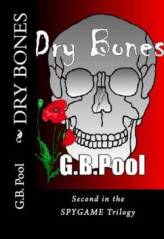
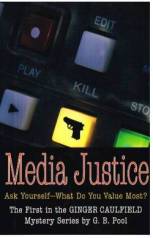
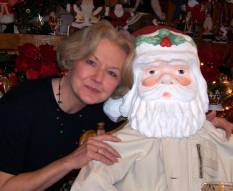 A former private detective and once a reporter for a small weekly newspaper, Gayle Bartos-Pool (G.B. Pool) writes the Johnny Casino Casebook Series and the Gin Caulfield P.I. Mysteries. She also wrote the SPYGAME Trilogy: The Odd Man, Dry Bones, and Star Power; Caverns, Eddie Buick’s Last Case, The Santa Claus Singer, Bearnard’s Christmas and The Santa Claus Machine. She teaches writing classes: “The Anatomy of a Short Story” (which is also in workbook form), “How to Write Convincing Dialogue” and “How to Write a Killer Opening.” Website:
 A former private detective and once a reporter for a small weekly newspaper, Gayle Bartos-Pool (G.B. Pool) writes the Johnny Casino Casebook Series and the Gin Caulfield P.I. Mysteries. She also wrote the SPYGAME Trilogy, Caverns, Eddie Buick’s Last Case, The Santa Claus Singer, Bearnard’s Christmas and The Santa Claus Machine. She teaches writing classes: “Anatomy of a Short Story” (which is also in book form), “How to Write Convincing Dialogue” and “How to Write a Killer Opening.” Website:
 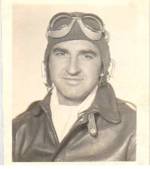 My father was in the Air Force. We traveled a lot. I lived on Okinawa and in France as well as in Memphis (near Elvis) and here in California. There were a few other military bases along the way and many of these places turn up in my SPYGAME Trilogy. I used some of my father’s experiences as a pilot during World War II and afterwards, as well as my imagination, to concoct an intriguing set of stories. The first one, The Odd Man, deals mostly with WWII and the Bay of Pigs. I went to a boarding school in France and that place finds a home in book two, Dry Bones. Book three, Star Power, wraps up the trilogy by bringing back characters from books one and two for a climax ending up in Southern California with some Hollywood stars tossed in for fun, though some are positively deadly.

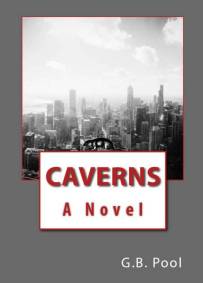 Here’s another story. When I was on assignment in Chicago as a P.I., I lived in an apartment near Lake Michigan. It was February. A brutal winter. I had to take the subway and a bus to the job at night. I worked from 5 p.m. until 2 in the morning. I survived Chicago. Years later I heard a story from a co-worker in California about a police officer in New York City who ran across something rummaging around in garbage cans down an alley. He shot it. It was a rat. It weighed in at 105 pounds. I moved the rat and his friends to snowy Chicago and I have them eating away the garbage on which a large area of The Windy City was built after the Great Fire. This was near the lake. Huge caverns have been carved out under the condos around the lake. Disaster looms. That book is Caverns.
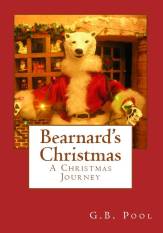 started making my own and making vignettes. I had an idea for a Christmas castle that I designed. I still have the sketch. I decided to write a story to go along with the idea of this castle. Then I decided to build the castle and make the figures that went with the story. Then I published the book. The first one was Bearnard’s Christmas.

 A former private detective and reporter for a small weekly newspaper, G.B.Pool writes the Johnny Casino Casebook Series and the Gin Caulfield P.I. Mysteries. She teaches writing classes: “Anatomy of a Short Story,” “How To Write Convincing Dialogue” and “Writing a Killer Opening Line.”
 This takes me to Anna Katharine Green and Mary Roberts Rinehart. These two ladies lived a hundred years ago. Anna Katharine Green wrote her Amelia Butterworth character in 1897, well before Agatha Christie wrote The Murder at the Vicarage (1930) featuring Miss Marple. Christie acknowledges Green as her inspiration. Green also wrote about a young female amateur sleuth, Violet Strange, years before the first Nancy Drew stories hit the bookstore shelves.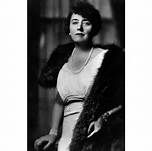
 he is considered the source for the term: “The butler did it.” She didn’t use that exact phrase, but the butler was the culprit. She even has a series of stories centered around World War I. She was a trained nurse and married a doctor; so much of what she writes has facts behind it. She even served as a war correspondent during World War I in Belgium and toured the front lines, so the visuals are based on things she saw firsthand. Not all her stories are mysteries, but they are all good, solid stories, some even slightly romantic, but nothing even remotely lurid. How refreshing.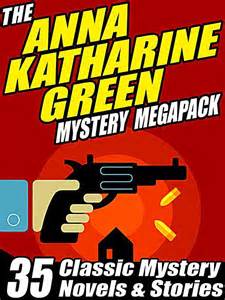

 The Writers in Residence
You must be logged in to post a comment.