Why Writers Should Join Book Clubs

What inspired you to become a writer? If you’re anything like me, your love of writing has its roots in a love of reading. Some of my most treasured childhood memories are of weekend mornings curled up on the sofa with my mom while she read to me. We started with the L.A. Times comic section: Brenda Starr, Little Lulu, Nancy and Sluggo. Before long, we moved into books.

I yearned for the day I could read on my own, and once I learned to make sense of all those letters on the page, I never lost my love of reading. From Black Beauty and Jane Eyre, to Hemingway and Fitzgerald and . . . well, you get the idea.

Over the years, my taste in fiction narrowed, and I realized I was limiting myself to a couple of categories: women’s fiction, because that’s mainly what I write, and mysteries/thrillers because they’re so darn interesting and fun to read. Nothing wrong with that, of course, but a writer-reader really should diversify.

Writers need to read, not just the kind of writing they do or want to do, but all kinds of writing. Reading the work of other writers broadens your horizons and makes you think. It expands your perceptions. It feeds the muse and keeps her interested in you.

But how to choose what to read from the endless choices of good books out there? Publishers Weekly tempts me every week, and friends are always recommending their own favorites and often foisting them on me.

And that’s where the book club comes in. When I had a chance to join a local reading group, I jumped in and have not regretted it for a moment.

The “Brown Bag Book Club” (so named because it meets mid-day) is sponsored by Flintridge Bookstore & Coffeehouse, a delightful independent bookstore in La Canada, California. We’ve read current bestsellers and lesser-known novels, and without exception they’ve been wonderful reads. Most have been books I would never have chosen on my own but am ever so glad the book club selected them. I’ve entered worlds I never imagined and discovered the work of some amazing novelists. The experience has only strengthened my commitment to my craft and left me in awe of the writing; it’s made me want to write even more, and to do it better.

It sure doesn’t hurt that Sandy Willardson, one of our book club moderators, is a fantastic cook who brings a delectable dessert to each meeting. We’ve sampled a pumpkin mousse, gingerbread, a chocolate truffle tart topped with strawberry soufflé. . . yikes, this is making me hungry. Not all book clubs are blessed with this little extra, but it sure helps break the ice!

An important side benefit of belonging to a book club: when we meet to discuss the month’s selection, and I hear the other members’ reactions, it gives me priceless insight into what they found compelling in the book, and what turned them off. It makes me think about my own values, and what I consider a successful novel. Does my writing measure up to my own standards? Probably not as much as it could, but the book club discussions are a significant wake-up call.

We live in a hectic world, and it’s usually hard to find time to work on our own projects, to write our stories and novels and to study our craft. It’s easy to forget that big old world of fiction out there, and belonging to a book club is a wonderful way of reminding oneself that writers need to be readers.

INSIDE AN INDEPENDENT BOOKSTORE

With mega-bookstores struggling for market share these days, independent bookstores have an even tougher time – and we’ve recently lost some of our favorites. Despite competition from chain stores, discounters, and e-tailers, however, some indies have managed to hang on and even thrive.

We asked two staff members at the Flintridge Bookstore and Coffeehouse for some inside information on what it takes to run a successful independent bookstore. Catherine Linka is the store’s Children’s Book Buyer. Sandy Willardson is in charge of Marketing, Advertising, and Author-related events.

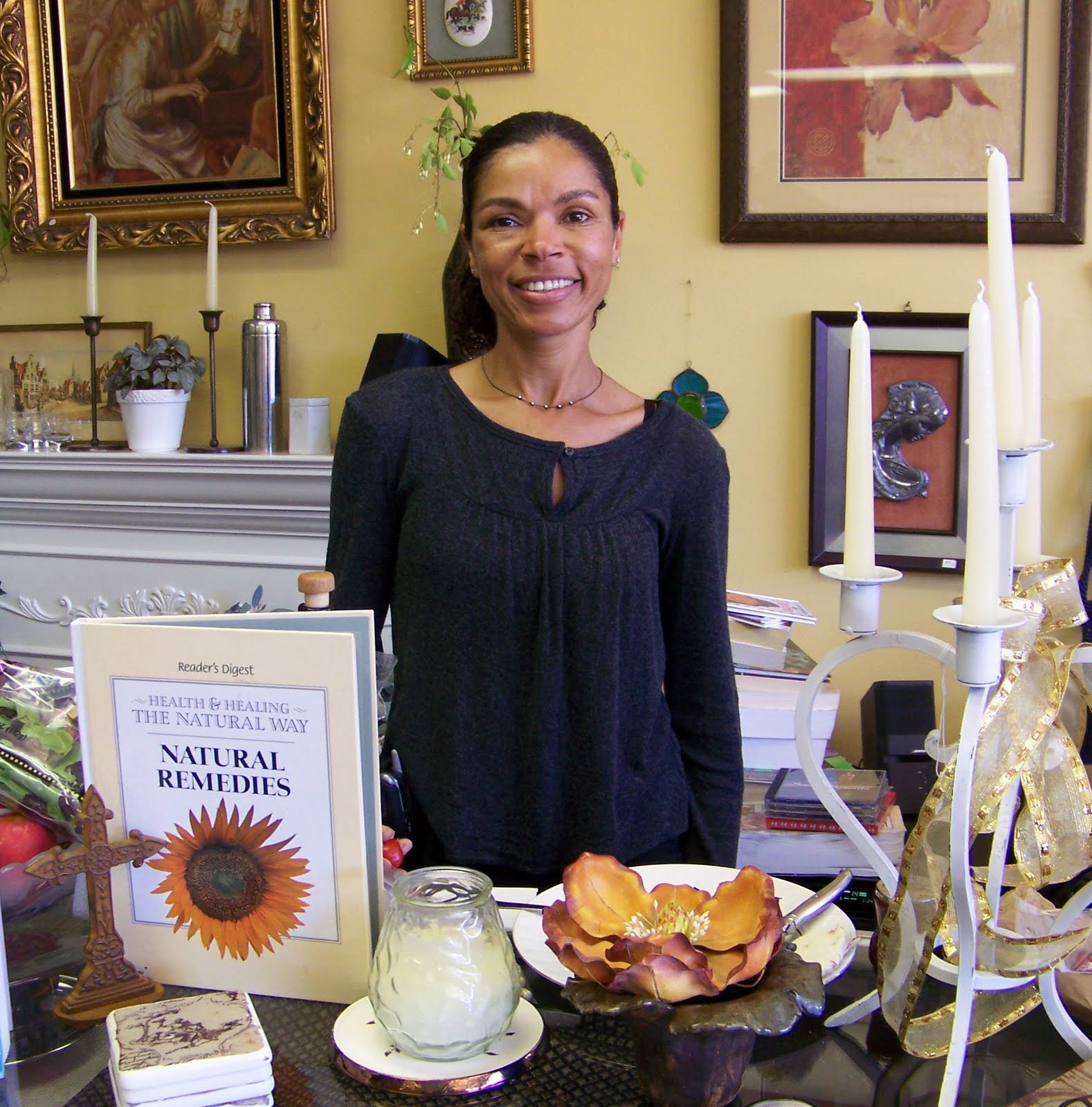
Catherine Linka is pictured below, left; Sandy Willardson is pictured below, right

What are the rewards and challenges of running an independent bookstore?

Sandy: The rewards: The direction you want to follow isn’t dictated by a corporation. You can become much more ‘intimate’ with your customers – you can anticipate books they might like, events they might enjoy. And, you can take on a much larger role in the community/schools.

The challenges? Getting information out that you exist, without access to the kinds of promotional materials the chain stores have (posters, signage, etc.) You have smaller budgets to work with. You also want to make sure that your books are relevant to the community you serve.

Catherine: The best part of my job is when a parent comes in and says, “My child loved the book you helped us pick out.” Connecting readers with books is a joy.

How do you compete with the behemoths like Amazon and Barnes & Noble? What do you offer readers that the mega-stores can’t?

Sandy: Our strength is in our service …. we call it “hand selling” …. we come out from behind the counter and help you find the book that suits your needs. If we don’t have the book in stock, we make every effort to get it for the customer within one or two days.

Catherine: Independents can’t compete on price. We don’t get the same deals from publishers that the big boys do. I’m not even sure the big boys can compete on price. Borders is a mess right now.

What independents offer is a personal relationship. A living human being will help you navigate, throw out ideas for a gift, connect you to an author you would otherwise never know about. Great independents become part of the community.

This month I took a new author to meet fifth and sixth graders at Crestview Elementary, put on a Mother Daughter Book Party where the partygoers met seven authors, brought a picture book writer to an evening storytime at Paradise Canyon School, brought together book club members to hear about favorite book picks from the sales rep for Norton, led 25 elementary school children in our Junior Advisory Board and 25 teens in our Teen Advisory Board, sold Roald Dahl books at the Willy Wonka fundraiser at La Canada Preparatory, and oversaw the judging of over 200 entries in our Imagination Contest.

Independents also have a point of view. We get to choose books that interest us, not just the books that a central office got a good deal on or ones it thinks will be a blockbuster. We’ll try a couple copies of something new.

What impact on your business do you foresee from e-books?

Sandy: We don’t think that e-books will have a huge impact. The impact will be minimal because (1) people don’t want to stare at a little screen, or for that matter a computer, for long periods of time; and (2) it’s hard to snuggle up by a fire or climb in bed with an e-book. They are just not warm and cozy!

Catherine: E-books are an interesting question. We heard a lot of different opinions about them at the ABA Winter Institute last month. There’s no doubt that e-books will capture a segment of the market, but most likely the segment that consists of people who read 12+ books a year. But even these readers show “hybrid usage” –they read some things on a reader, but others in what they refer to as p-books (printed books).

One thing that publishers acknowledge is that bookstores offer browsing and preview in a way that e-books don’t. People do judge books by their covers and people do respond to the physical qualities of a book. The most interesting research is the stuff that says that we respond differently at a neurological level to reading on a screen–we don’t go as deeply into the dream/trance; instead we skim the way we do as we read text on a computer.

How do you decide what books to carry? Do certain categories sell best? What other criteria do you use? Do local writers ever get special consideration?

Sandy: Catherine has done a fabulous job working with the schools to ensure that we carry the core books that are needed for the La Cañada Unified School District – not an easy task. We have a good give-back program and have already given the LCUSD over $5000.

Naturally, you carry all of the best sellers, you carry books that have been requested by different book groups, you carry all of the classics, you also try to carry books that pertain to your community – not just the histories of your community but also their interests: travel, art, architecture, history, and of course my favorite – cookbooks, etc. Catherine has also put together an incredible children’s and young adult section. The children’s section probably is the biggest earner in the store.

We really enjoy helping local authors …. we’ll carry their books (if they’re good!), host their signings and encourage people to read them.

Catherine: Deciding what books to carry is part science, part art. I look at daily sales reports to see what has and has not sold. Every category is reviewed semiannually to see if it is worth having. It’s always a balancing act, because you need to have a variety of books for all different kinds of readers…not just the top ten best-sellers. Fiction that ranges from romance to mystery to thriller to fine literature is key. New non-fiction, especially memoir or books about human behavior and quirks, do very well. Cookbooks sell all year round.

Local writers get special consideration in that we often plan events to help promote their books if we feel the title will do well in our town. We’re so lucky in having so many amazing writers in L.A.

Are you able to generate revenue beyond book sales – i.e., does the publisher/author typically provide an incentive to carry their books?

Sandy: Publishers will do what is called “co-op” where they will give you a credit if you showcase some of their books – they would like you to high-light them on your website/newsletter, have displays and have their titles “face out” so that they’re more recognizable.

Lots of bookstores make additional money selling what are called “side-lines” – toys, stationery, jewelry, journals, etc. We’re working on that … it takes time to develop the market.

Catherine: Publishers sometimes provide incentives in the form of discounts or co-op money. Bookstores struggle to be profitable, because it is a labor-intensive business and because having all that inventory is expensive. Selling gift items can really benefit the bottom line. No matter how big an independent is, I promise you the store is looking at alternative sources of income, whether it’s operating a coffeebar or offering classes or selling art on consignment.

How did you get in the book business?

Sandy: I’ve been doing events/marketing for the last 20 years. I was in an in-between spot when this opportunity presented itself to help market the store/books/events. It was a natural for me, and I’ve enjoyed the challenge of taking an unknown quantity and helping build it into a successful business. For me, I find the mix of interesting authors, fabulous books and planning events a terrific spot to be in!

Catherine: I had a background in marketing, but I’d just finished an MFA in Writing for Children. I was driving down the street and saw the “Help Wanted” sign. I’d never worked in a bookstore, but I must have shown Peter and Lenora [the store’s owners] I knew how to sell, because they hired me to set up the children’s area.

And last, is there anything you wish we’d asked that we didn’t, anything else you’d like readers to know about you and/or Flintridge Books?

Sandy: The big thing on the horizon is the new store, which will have 1000 more square feet and an Espresso Book Machine – that’s big! …. it will print a book of 300 pages in about 4 minutes and put a cover on it! It will be great for print on demand. The future is looking good! [Note: the new store will be constructed right down the block, on the southeast corner of Foothill Blvd. and Angeles Crest Highway]

Catherine: I just want to add that independents are the best friend of a debut author. Independents can choose what they want to carry. We love to discover a new author and give them a chance. Indies have their own bestseller list that differs from the NYTimes and we get an email update weekly. A debut author can get attention from indies when the big boys are obsessed with what’s going to sell 150,000 copies+.

Flintridge Bookstore & Coffeehouse is located at 964 Foothill Blvd. in La Cañada Flintridge, CA 91011. Phone: (818) 790-0717

Visit their web site for more information and event schedules.

Brainstorming Plot

WinR MK Johnston talks about brainstorming plots.

Two-thirds of Writers in Residence met last Wednesday to try something new – a brainstorming session to help one of us clarify plot points in a new novel. The one was me. I’d been struggling with the outline for the sequel to my first novel, A Petal In The Wind. I knew where to start and end the book, but I had too many ideas and not enough clarity to get me there.

Since it was the first time we tried to brainstorm, we free-formed the meeting. I’d been to brainstorming groups that had limited effectiveness, but the Wednesday session was extremely helpful to me. When I returned home, I thought about how it progressed, what worked and what didn’t, and why this was more successful than past efforts. I’ll share my thoughts with you.
I don’t believe brainstorming is the most effective way to stretch a germ of an idea into a full blown story. It can work, but when you ask people to take aim at a problem, it’s much easier to hit a specific target than scatter shots at the sky and hope something falls to earth. If a writer has the basic story fleshed out but is having trouble with some aspect of it – weak ending, sagging middle, critical scene – the chances of success are more likely than if the writer is vague about the premise or the problem.

If you’re in a critique group and would like to hold a brainstorming session, begin by having the writer clarify what she hopes to achieve. If she doesn’t understand where and why her story needs help, no one else will.

Open the discussion with a free exchange of ideas. Anything goes. Sometimes you have to get past the obvious, trite and just plain bad to get the creative juices running. The writer should listen and take notes; but shouldn’t interrupt the flow if she hears something she doesn’t like unless that thread is picked up by the others. Then she can simply say, “I don’t want to take my story in that direction”. That will alert the others to drop the idea and move on.

Allow around 20 but no more than 30 minutes for this part to avoid straying too far off-topic. The writer should have enough to work with by now, so take a brief break and let her digest what’s been said. She must settle on which ideas worked best for her vision of the story.

Once she’s decided, focus the brainstorming along that narrow path. Let her direct the conversation so she can get what she needs. If anyone has ideas outside the box, no matter how brilliant, hold them until the end or email them to her later.

If the writer can’t determine a direction by now, the session wasn’t successful. It could be that she wasn’t clear about what she wanted or needed, either in her own mind or in expressing it to the group. You might be able to salvage the session by having her explain why she rejected all of the suggestions, or if there were any ideas that might hold promise with further exploration.

Ultimately the key to successful brainstorming lies in the writer. She has to have some idea of a direction. Otherwise the best suggestions won’t help. It’s one thing to ask someone to dig up a potato from your garden. It’s another to plant a seed and expect others to grow it for you.

Interview with Journalist, Editor, and Author David Vizard

Dave Vizard is the former editor of True North Magazine. Vizard has been a journalist for more than 35 years, winning more than 100 professional awards as a newspaper editor, columnist, editorial writer and reporter. He is now a free-lance editor and magazine writer. He is also working on two murder mysteries involving the health-care industry.

Welcome, Dave!

Could you give us some background on what an editor does and if there are differences in editing for newspapers versus magazines?

For both newspapers and magazines, editors work with reporters or writers to craft articles for publication. The story can be assigned by the editor or result from a suggestion by the writer. Often times, the idea for the story is brainstormed by the reporter and the editor together. But that’s pretty much where the similarities between newspaper and magazine writing end. Traditonal American newspaper writing, even when considering larger, more expansive examples of feature writing, is usually much tighter and more heavily structured than magazine writing. Magazine editors and writers typically have much more flexibility when it come to deciding the best way to tell a story. They also can do more in terms of weaving color, descriptive detail and background into the story. I had a lot more fun editing a magazine than I did editing for newspapers.

As a magazine editor, what did you look for in writers?

Three things: Creativity. Creativity. And more creativity. I always encouraged writers to come up with new and interesting ways to engage readers. I wanted reading my magazine to be a thoroughly enjoyable and satisfying experience, not a challenge to get through it. I wanted reading it to be thought-provoking, friendly, funny, and, most of all, interesting.

We first met at Love is Murder a few years ago. (Has it been that long?) You had decided to take the plunge into mystery writing. What lead you to write fiction?

Several things, really. First off, I grew up reading great fiction, but never had the chance to practice it as a journalist (making shit up for newspaper articles is generally frowned upon). As I got older, I developed an affinity for mysteries, so I started reading everything I could get my hands on. Some of it was not very good, and, as I walked away from bad books, I started telling myself that I could write better than what I’d just put down. Soon, it became a personal challenge: Craft a good novel and make the story work and flow from beginning to end. I soon found out that it was not nearly as easy as I had envisioned. Then it became even more of a challenge.

Did the writing conference help you in your transition, and if so, how?

The LIM conferences, and other writing workshops I have attended, have been great for two reasons. Learning and encouragement. If you attend as many conference sessions as you can fit into the day’s schedule, you can’t help but learn from experienced, dedicated writers. The ideas and tips and trial-and-error stories about writing are terrific. Novices are encouraged at every turn. In some ways, conferences are kind of like pep rallies. You walk away ready to tackle the world. You also find that writers are willing to share everything, including their bar bills.

I read an early draft of your book, and it’s got the key elements of a fantastic read—deliciously sinister plot, flawed hero, a touch of romance, and a wonderful sense of humor. Is it too early to share what your first book is about?

No. Maybe talking about it will be the spark I need to finish it. My story is about an aging, drunken newspaper reporter being kicked to the curb by 20-somethings in the office. But his experience and instincts help him discover and solve the health-care mystery surrounding a plot to kill three prominent educators in a mid-sized Midwest city. In the end, he saves a life, pulls his career and reputation out of the gutter, and gets the girl while thumbing his nose at the 20-somethings. I had a blast writing the first two drafts of the story, but the final re-write – trying to make it just right – has been painstaking, with lots of stops and starts. Did I tell too much? Gosh, I hope not.

Why start a second novel before your first one is finished?

I knew you were going to ask that. Good question, and the best way I can answer it is this way. The idea for it just came to me and I had to start writing it while it was percolating. That’s also thrown me off track a bit with finishing the first novel, but I did not want to suppress the new story idea.. I think it’s going to be really good, maybe better than my first attempt. We’ll see.

I noticed that you put together a writing critique group. What did you look for from members and how did you reach out to them?

What did I look for in members? I wanted people who could sit up straight in their chairs without drooling while they snored through the readings and critique sessions. Just kidding.

An author friend of mine, Dennis Collins (who is also an LIM alum and has published two novels), kept bringing up the idea of starting a writers group. The more we talked about it, the more interest we found among others in our rural, small-town area of Michigan. Finally, I suggested that we see if the folks running the local district library would host our group. They embraced us enthusiastically. I wrote news releases about Dennis and I forming the group. The releases were published by local newspapers and aired on local radio. About 15 people showed up for our first meeting, and the group continues to grow.

We recently wrote 1,000-word pieces of fiction from a prompt similar to the ones used in Writers Digest. The stories turned out to be much better than we’d ever envisioned. Now, we’re talking about creating a blog or Web site to publish the best of our offerings online. We’re also talking about traveling together across the Bluewater Bridge to a writers conference in Canada. We bring in authors to talk about writing and getting published. Plenty of other ideas in the works. I had no idea forming a writers group would turn out this well, but it’s been a lot of fun.

Do you have any final thoughts you would like to share with your fellow scribes?

The same thing I used to tell my journalism students. If you want to become a better writer, then practice your craft as often as you possibly can. Read and write something every day that you breathe. And don’t give up. If you’ve got a story to tell, find a way write it, re-write it, and then re-write it again.

Edits, Rewrites, And Selling Your Soul

Author G.B. Pool has plenty of experience editing her work, and with one novel and a list of anthologies under her belt, her methods must work!

Every “How to Write” book has a chapter on “Editing and Rewriting.” Whatever you write can always be improved by a careful edit, and thoughtful look-over, and a final rewrite to tweak those areas that don’t sound right. You could spend the rest of your life rewriting if you aren’t careful. Hopefully you have a friend who tells you to stop before you rewrite the life out of your work.

Over-writing is a problem we can all have when we are looking for the perfect word or phrase. Maybe you should try looking for the best word, and not worry about perfection. Perfection is stuffy. Walk away from your work, literally, go into another room, and think about what you want to say in that section. The words that come into your head, off the cuff, will be truer than the ones you agonized over. Spontaneity is always fresher. Write it down and then leave it alone.

As for basic editing like grammar, spelling, and punctuation, have someone else do it for you. Just like parents who never see flaws in their children, even the two-headed ones or the ones who wind up in jail, you will miss errors in your own work.

Join a writers’ group, ask a teacher, or pay a professional to go over your work. Even if your Aunt Mabel is a professional editor, too often a friend or relative will be too kind. (They will overlook the two-headed kid, too.) An agent or publisher won’t be kind. They will toss your error-laden manuscript in the trash and remember you the next time as the person who can’t submit a professional piece of work.

Make sure that writers’ group you join isn’t afraid to point out mistakes, holes, or continuity problems. A good teacher will know how to get out the red pencil and correct grammatical errors. And a professional editor has seen it all before and will know how to spot obvious errors. It’s worth the money.

So you rewrite, edit, polish and submit. And an agent likes your work. Hoorah! Your characters are memorable. The plot is appealing. The agent handles that genre. They know a few publishers in that genre. Everything is wonderful…but…

It’s the “but” that will have you asking yourself, “How much of my story will I change to get it published?” If the change doesn’t amount to much, I’d rewrite it in a heartbeat.

But what if your agent loves everything except one of the key points in the story around which everything revolves. Should you tell her she should really read the entire book to see how it fits together, or do you try to adjust the part she doesn’t like to suit her?

A screenwriter will tell you once you submit your script, a thousand hands will rework it, reshape it, and in the end you won’t recognize anything but the title…if they keep the title. Screenplays aren’t novels.

How much of your book are you willing to change for someone else? Granted the agent has the contacts, the clout, the name recognition that could get you published. But what will you be giving up? Your name goes on the cover. You are the one who will be explaining why the plot missed the mark…for eternity. You have to make that decision.

My advice: First, find a way to explain to the agent/publisher exactly why you can’t change that major plot point. Thank them for pointing out the fact you didn’t write that part clear enough and say that you will tweak that section. If that doesn’t work, ask yourself: What do I value most?

And remember: Your agent might be wrong.

An Interview with Author Gary Phillips

Gary Phillips writes tales of mystery and criminal behavior in various mediums. A regular contributor to Mystery Scene magazine, he authors the private eye Ivan Monk series and turned out a slew of Ivan Monk short stories like Monkology.

Born and raised in what was then called South Central Los Angeles, he’s been a community organizer, union rep, and headed a nonprofit to better race relations begun after the ’92 riots. Besides his many mystery novels and shorts, he’s written a coming-of-age graphic novel called South Central Rhapsody as well as a graphic novel about a gangster called High Rollers, and has a prose novel about African Americans and World War II called Freedom’s Fight.

You can find out more about Gary at his web site.


Welcome Gary!
Your most recent work is a change from your usual hard-boiled mysteries and edgy crime comics. Can you tell us a bit about “Freedom’s Fight” and what brought about this particular novel?

Freedom’s Fight came about as my way to tell a slice of the bigger story about black soldiers and civilians in World War II. I think I’m accurate in stating there are less than a handful of novels about black soldiers during this period – though certainly there are several informative nonfiction books such as The Invisible Soldier by Mary Penick Molley, Lasting Valor by Vern Baker (it’s his story) and Ken Olsen, and Brothers in Arms about the 761st tank battalion by Kareem Abdul-Jabbar and Anthony Walton.
But if you watched the other Brothers in Arms or now the Pacific mini-series, you wouldn’t have any idea that there were all-black units who fought in those theaters of conflict, but there were. My late dad Dikes was in combat at Guadalcanal, his brother, Norman, was at D-Day plus One and my mother, Leonelle, had a brother named Oscar Hutton, Jr.  who was shot down and killed over Germany as a Tuskegee fighter pilot.
Because of Jim Crow policies, black troops weren’t sent into combat until end of ’43, beginning of ’44. So part of my book looks at the war on the home front through the eyes of a young woman reporter for a weekly African American newspaper, the Pittsburgh Courier. The other part follows the travails of several soldiers overseas. I do want folks to know Freedom’s Fight isn’t preachy, but, hopefully, entertaining historical fiction with hard-boiled elements (a murder mystery subplot), dimensional characters and action on the battlefield.
Ivan Monk, your most well-known series character, is part PI, part avenging angel, and part family man. What type of readers make up your target audience?
Who knows? I mean, I don’t write my stories with an idea of who the target audience is per se other than I hope they enjoy the work. Isn’t the typical mystery reader a middle-aged woman? Isn’t that the case with most fiction as well? I have observed though due to my comics work I get a sprinkling of younger readers who’ve taken an interest in my prose work having first read me in sequential form.
It’s interesting though as this question is something the writer has to wrestle with in today’s publishing environment. That is, it used to be the publisher worked with you to outreach to and develop your readership through building up your audience over time. Now as we know, and this seems to be a direct result of the internet, the publisher wants you to come prepackaged with an audience. We’ve seen writers who’ve self-published in a way, via an e-book, work the social media and what have you to publicize the book, and then make a traditional hardcopy deal because they can quantify the numbers – they’ve demonstrated they have a readership they’ve built from the ground up.
I’m not knocking this state of affairs, as this genie is out of the bottle. The fact remains more and more, the pressure is on for the writer to not only be able to ply their craft and turn out a compelling yarn, but it’s on them (or a hip, totally wired pr person you hire) to be able to create a and maintain a base of readers. Just having a website is a rudimentary these days. What good is it if no body comes to the thing? Not we have to tweet, facebook and who knows what all else as these forms plateau and people simply get inundated with too much sensory bombardment.
Martha Chainey, ex-show girl and courier for the mob, is another series character you write. Recalling your own experience, would you advise writers starting a second series to look for similarities that would appeal to current fans or offer something completely different?
I’m the last guy to be advising any other writer on their career. But hey, you’re asking so I think writers have to challenge themselves. Coming up with Martha was daunting for me as it was the first time I’d written a female lead. She was different too in that she’s more of an outlaw type and not exactly on the straight-and-narrow as Monk is. Naturally the writer wants the best of both worlds – the fans you have stick with you and you get news ones with a new character. To some extent that seemed to happen with Ms. Chainey, but I can assure you it wasn’t a calculated move on my part. In this case the gauntlet was thrown down by my editor at the time at Kensington to come up with a female character and so I did.
Aside from your series characters, you have several standalone books, including “The Jook” and “The Perpetrators”. Is it more difficult to sell a standalone book than a series? And why write these stories as standalones instead of incorporating them into your existing series?

The beauty and freedom of writing a stand alone is you can do anything you want. Blow up the world, go ahead. Have mutant alligators crawl out of the sewers…sweet. Your main character loses their mind midway in the book and runs around in his birthday suit shouting ‘I am the Master of the Universe,’ no problemo. Too, in this publishing environment as we’ve discussed, it seems it’s easier to sell a standalone. If you have a series, and that series hasn’t broken the house record in sales, then publishers are dang reluctant to take a chance on another book with those same characters. Whereas a one off is often seen as new and fresh and may get an editor excited at a house and want to champion your book.

Is it the job of the writer to leave the reader with a message? If so, what do you hope your readers take away from your books?

Well, no, I think my job as a fiction writer is to entertain the reader. Having said that, there are certain realities that ground your stories and characters like the arena where the aforementioned Freedom’s Fight is set. Still, you don’t want your characters standing on soap boxes yet conversely if they are representations of real people, and going to resonate with readers, then people have opinions. More to the point, characters don’t have to go around telling you what’s on their mind but we can get a sense of who they are by what they do in a given situation or where we locate them. You can have a character at a teabaggers rally and another at a tree hugger event, and of course we’d draw certain conclusions about them – then you can switch up those allusions the further we follow those characters. My job is to give my characters dimensionality and drive. Drama is conflict…a character wants something and invariably there are obstacles in the way as other characters want the same thing or something else.

“The Underbelly” is due to release in June, 2010. This book features yet a new character, Magrady, a semi-homeless Vietnam veteran. Could you tell us about the story? And will Magrady become a series character?
A couple of years ago, Underbelly originally was written as an online serial for http://www.fourstory.org – a site I still write for, doing fiction (my webcomic Bicycle Cop Dave ) and nonfiction pieces. Fellow mystery writer Nathan Walpow is the site’s EiC. Back then he’d asked me if I’d be interested in doing something on the site – which began centered around housing and transportation issues — given my background includes community organizing and my wife is an urban planner. The idea of a sometimes homeless Vietnam vet, a man who has had his ups and downs, was a way to use the recent gentrification of downtown L.A. as a backdrop to a mystery he seeks to solve.
The story is set in motion as Magrady, who suffers from flashbacks and trying to maintain his sobriety, searches for a wheelchair bound friend who disappears from Skid Row. This after a bottom feeder called Savoirfaire, who was regulated by Magrady on behalf of this friend, is found with his head bashed in while the cop on the case has a history with the main character as they’d served uneasily together in ‘Nam. Oh, and Magrady’s grown son may be involved in something shady back east, then there’s a mummified head… but that’s enough teasing, read the novella when it’s out from PM Press .
The Underbelly is published as part of the house’s Outspoken Authors series. I’ve done some rewrites and edits to the story from when it was first done in series form, and the book will include an interview/conversation between me and the lovely and talented writer Denise Hamilton. As to Magrady returning, yes, I have some notions circulating in my head about that – only after I get the next Ivan Monk book done. Monk returned as it were last year in a short story in Phoenix Noir (“Blazin’ on Broadway”), and I need to get him back in long form.
Do you have any final words for our readers?
On bookshelves now is Orange County Noir. This is a collection of 14 original gritty and darkly funny tales I edited and I contributed a story to set behind the Orange Curtain. Edgar winner Susan Straight, Nero Wolf award winner Dick Lochte and other very talented writers have contributed to the anthology – each story set in a different city in Orange County. The collection received a starred review in Publisher Weekly and we’re doing several signings and panels about the book all over the Southland. So come check us out.

Thank you, Gary, for taking the time to be with us.

Feedback on Left Coast Crime

This year, Left Coast Crime was held in Los Angeles, and three of our WinRs attended

Here’s what they had to say about the good, the bad, and the nefarious!

Photo: Left to Right is Rosemary Lord, GB Pool, and Jackie Houchin.

***

Rosemary Lord

I loved riding up and down on the historic Angel’s Flight funicular at Michael Connelly’s luncheon!

But I also thoroughly enjoyed meeting such an assortment of other writers from all over the world. Wherever they had come from (England, Canada, New York and further afield) we all had a common bond: a love of writing and mysteries – in varying degrees of immersion. From the ex-soldier, retired cop from Yorkshire (Colin Campbell) who was working during the Yorkshire Ripper’s reign of terror – to the elegant New Jersey writer, Sheila York, who seems to channel Raymond Chandler via Lauren Bacall for her 1940s sleuth Lauren Atwill. And, of course, our forensic champ Doug Lyle was there guiding us through fascinating ways for our villains to kill people and almost get away with it. My head is still buzzing with all the new writers I discovered and the voices of characters yet to be written.

I can’t wait for the next conference.

 
***
 
GB Pool
 
Left Coast Crime left me breathless, speechless, and tired. Getting downtown in early morning traffic in Los Angeles had me white-knuckled, but the hotel staff was very accommodating and I liked the venue. (Note: The Omni Hotel downtown LA)
What I liked most was seeing people I actually know, many of them friends, and meeting some really great mystery fans. They were so much fun to talk to – all of them. And then I got to be on a panel (The Art of the Short Story). I will never forget that.
I picked a variety of panels to watch, tending more toward the darker ones since my own work is less cozy and more the traditional gumshoe variety. I had heard many of these authors before, but there were still some fun stories, and a few surprises.

There was always something to do. I loved riding Angels Flight, the shortest railroad in the world, for its first run since 2001. Author Michael Connelly helped facilitate that experience.
The biggest disappointment was listening to Lee Child expounding on some half-baked idea that we all came from sea creatures living in salt water. Since no one was laughing, I guess it wasn’t a joke, and the guy believed what he was saying.
One rule people should have in polite society: No Religion/No Politics. A half dozen people on various panels talked about Dick Cheney. He was mentioned more than any other single person. Go figure.
I went to the bar and had a martini and thought about what I would like to say to Dick Cheney if I ever met him.

***
 
Jackie Houchin
 
Cozies, humor, geezer lit: are these (dare I say, “frothy?”) mystery sub-genres going out of style? According to the panels I attended at the recent Left Coast Crime convention, the answer is a resounding “No!”

LCC even awarded the prestigious “Lefty” to Rita Lakin (70+) for her “Geezer Lit” mystery series with a sassy (and funny) 75-year old protagonist. Go Grandma!

Look at some of the panel titles offered: “Bring Your Blankie, Let’s Get Cozy!” “Die Laughing,” “Cozy Up,” “Geezer Lit,” “Thrilling Cozies,” “LOL,” and “Liars.”

Sure there were “hard boiled” panels, noirs, and true crime (and of course talks and interviews by stellar crime-fiction authors), but I was there for a light-hearted good time.

Earline Fowler (Benni Harper series) is one of my favorites. She’s been writing good, clean, heartwarming, (and yes, suspenseful) mysteries for 17 years. She writes a book every 18 months, and says “You can push back a little” if you don’t like your publisher’s demands. (Oh, ho!)

Another of my favorites, Parnell Hall (Puzzle Lady series), got laughs simply by walking into a room. (No wonder they chose him for Guest of Honor at Malice Domestic!) And then there was Mike Befeler (Retirement series) whose “Geezer Lit” hat soon became recognizable everywhere in the hotel.

Annette Mahon (Quilting Bee series) writes about a group of elderly ladies who meet at church to stitch and solve mysteries. Cynthia Riggs published her first book at age 70. Her protagonist was 92. She hopes to keep her going to 99 and beyond!

Older, funny, “delicate but dangerous” protagonists are alive and well. Long may they live!

***

PS: From the silent and live auctions, over $7,000 was raised for the Los Angeles Public Library Adult Literacy Program, and over $7,500 for the Crime Lab Project. Way to go Left Coast Crime!!

Short Story "Special Delivery" Part 4

Continued from Wednesday….

Grady weighed his options. If he paid Tom Simms a visit, he might just spook Patty Simms back underground. At this point, Grady was ninety-nine percent sure that Patty Simms was alive. If he had to guess who died in the car fire, his first pick would be a homeless person.

Once he decided against the direct approach, the only option left to him was to watch the Simms house. It would be difficult to go unnoticed in a neighborhood that generated half of the Wilton emergency phone calls – most of them paranoid, false alarms. Grady just knew he had to make a move before that check came in. Once Tom Simms got his hands on the money, he would be gone.

He slipped on his leather jacket, the only dark jacket he owned, and decided to walk. It was only six blocks. Without a car, he wouldn’t stand out so much. At least he hoped not.

#

Roxanne flipped an evergreen branch away from her ear.

“Watch it,” Vanessa hissed.

“Quiet, both of you.” Deanna parted the bush and peered through the opening.

The women were crouched behind the neighbor’s bushes and peering into the Simms’ house. The light that shone through the kitchen window was suddenly joined by an upstairs light. The entire side yard was suddenly in the spotlight.

Deanna pushed her daughters back, warning, “Stay out of the light.”

Roxanne landed on her butt, holding the camera safely in the air.

A woman giggled from the upstairs room.

“Gross,” Vanessa said.

“I thought you were all for Tom moving ahead with his life,” Roxanne said.

“Privately. I don’t want to hear it.”

The naked torso of Tom Simms stepped in front of the window. From behind, a woman’s arms reached around his middle and began to play with his nipples.

Vanessa held her hands over her eyes. “Tell me when it’s over.”

“I can’t see her face,” Deanna said. She crawled around the bushes and into the Simms’ side yard. Roxanne and Vanessa followed.

Tom turned and embraced the woman, blocking their view of her.

Roxanne searched for something to stand on. She spotted a metal trash can and carried the empty canister over.

“Stand still,” she ordered Vanessa. Using her sister’s shoulder for leverage, Roxanne hoisted herself on top of the can.

Her sudden movement triggered a motion-sensitive security light. The three women were now backlit by the blinding light coming from the neighbor’s side porch. A dog barked.

“Crap!” Deanna crawled on hands and knees to the far edge of the yard. When Roxanne made to step down from the trash can, Deanna motioned her to stay put.

“Stay there,” she hissed. “You won’t be able to see a thing from here.”

Tom Simms chose this moment to turn toward the window to pull down the shade. His partner was exposed, and Roxanne snapped the picture.

She forgot about the flash. One bright burst dazzled Tom Simms, and he opened the window and leaned out.

“What the hell?”

Roxanne didn’t hear him. She was already on the sidewalk, running full speed, trailed closely by Vanessa.

“Where’d Mother go?” Roxanne asked, after she caught her breath.

Vanessa shrugged.

“We have to go back.”

“Back where?” said a male voice.

Both women screamed.

#

Deanna Wilder, afraid to move across the illuminated yard, opted to press herself farther back into the bushes. She squinted in an attempt to see, but the security light still blinded her.

She felt something against the back of her head and reached back to swat away another branch. Her hand grasped something hard and cold.

“I don’t think you want to jostle that.”

“Crap,” she said. “Can you at least help me up?”

A strong hand grasped her elbow and pulled her to her feet. Spots danced in front of her eyes, but she could make out the shape of Tom Simms.

He sighed, sounding disappointed. “Lead the way.”

He jabbed her with the butt of the revolver, so she did as instructed.

#

“It’s this button.” Vanessa reached over Roxanne’s shoulder and pressed. The word erase flashed across the screen.

“You’ll have to trust me,” Roxanne told Grady. “We had a picture.”

“You’re sure it was Patty Simms?”

Vanessa and Roxanne exchanged looks.

“We’re sure it’s not a blonde.”

Roxanne craned her neck to see down the street. Her rush to freedom had brought her three houses down from the Simms’ place.

“My mother was right behind us…I thought.”

Grady scratched his neck. A hostage. Not his specialty.

“You girls stay here. I’ll –“ He struggled to think of some brilliant plan of action. “Do something,” he finished.

“That sounds promising,” Vanessa said, but not as if she meant it.

Grady took the camera from Roxanne, hunched his shoulders and headed toward the Simms house. He was impressed that the women had come to the same conclusion as he and just as fast. He was not impressed by their actions tonight – invasion of privacy, throwing a potential hostage to the criminal, and possibly spooking his suspect. At least he now had a good reason to visit Tom Simms. That thought cheered him.

He passed the row of hedges separating the Simms’ residence from their security conscious neighbors. The bushes were broken on the Simms’ side, and an empty trash can lay on its side in the yard. The only lights on in the house came from somewhere downstairs, toward the back of the house.

A harried-looking young man answered the door. He was fully dressed, and did not strike Grady as being in an amorous mood.

“I’m looking for a missing woman,” he said. Grady figured the direct approach was his only option.

“Pardon me?”

Grady reached into his pocket and pulled out his identification. “I have a report of a missing woman. She disappeared in your yard.”

Tom’s face took on a look that said, Oh. That woman. “I heard what I thought were prowlers, but they were gone by the time I got outside.”

He started to close the door. Grady shoved his foot inside.

“I’d like to take a look around, if that’s alright with you.”

Tom started to protest, but Grady interrupted.

“She’s been known to break into people’s homes. Very unstable.”

Tom’s face paled. He licked his lips and looked over his shoulder.

“Maybe you could ask your wife if she’s seen anyone creeping around.”

“My wife?” Tom’s voice cracked. Grady liked that.

When Tom Simms made a break for the back door, it was an unwelcome move but not a surprise. Grady’s primary concern was Deanna Wilder’s safety, so he let him go.

“Anybody home?” he called out.

As he passed the hall closet, the door bulged out with a thump. He remained behind the door as he turned the knob, and Deanna Wilder, bound and gagged, tumbled out. A brown-haired woman in a negligee landed on top of her. Grady helped her to her feet.

“Detective Sean Grady.” He smiled and grabbed the young woman’s hand, admiring her wedding band. “I’m glad to see you’re no worse for wear. That car fire was a doozey.”

#

“So, who died in the fire?”

Grady allowed Vanessa to refill his beer and nodded his thanks. “That would be some unfortunate street kid.” He stopped, his glass midway to his lips. “They didn’t even bother to get her name before they killed her.”

Deanna tapped her empty glass on the table, waiting for Vanessa to tend to her. “I’m parched. Being gagged will do that for you.”

“That was three days ago, Mother,” Roxanne said. “Give it a rest.” Her voice betrayed her. It was distinctly missing signs of irritation. She slid her glass across the table to Vanessa.

“Can I get a drink, too?” Vanessa snapped. Grady held a ten dollar bill in the air, and a waitress hustled over with another pitcher of beer and cleared away the empty pizza pan.

“We’re all agreed that they did it for the money?” Deanna said.

“Duh,” Vanessa said. “For one million dollars I’d set you on fire.”

“With the signed receipt that Regina collected, we’ve got them on insurance fraud.” Grady ran his thumb around the top of his glass. “You know, I never would have figured out the meaning behind the scented paper.”

“You mean the perfume?” Roxanne asked. “Didn’t you smell it that night in Abigail’s house? It reeked.”

“I thought that was –“Grady stopped short, as if suddenly aware he was in mixed company. “Never mind.”

Ida and Mabel entered the pizza parlor, and Deanna waived them over.

“Is everyone here?” Ida asked.

Deanna pulled out her silver briefcase and flipped the latches. As she tossed a deck of cards to Grady, she asked, “You are going to show me how to cheat, aren’t you?”

The End

Short Story "Special Delivery" Part 3

Continued from Monday…

“Tom Simms has a girlfriend.” Deanna made this pronouncement while slapping a wad of mashed potatoes onto Vanessa’s plate.

“I saw her,” Roxanne said. “At least I assume I did. Is her name Daliah?”

“How would I know? I only heard from Regina -”

“Can’t anyone keep their privacy in this town?” Vanessa said, stabbing at her pork roast.

Roxanne blushed. “I’m not judging him. I only said I saw him with a blonde woman today.”

“It seems soon,” Deanna said. “His wife’s only been gone a short time. Still, he is a young man.”

“You think Abigail was referring to Tom?”

Vanessa looked confused. “Abigail’s dead.”

“The day she died, Mother heard her make an odd comment.” Roxanne searched Deanna’s face. “You think the comment had something to do with her death.”

“It’s pretty far fetched,” Deanna said. “However, Tom’s been getting perfumed letters at the post office.”

“How in God’s name would you know that?” Vanessa demanded.

“Maybe it’s the same woman,” Roxanne said. “I don’t remember seeing her in Wilton before. One thing that is odd… I saw the couple leave Pepe’s Restaurant, so I went in and asked the hostess about them. They came in together.”

“You spied on them?” Vanessa threw down her fork. “I’d expect that from her,” she said, jabbing a finger in at Deanna.

Roxanne ignored the comment and instead asked Vanessa, “Do you remember a certain smell at Abigail’s house that night? Sweet?”

“I’m going to be sick.” Vanessa pushed her plate away.

“I mean like bad perfume.”

This caught Deanna’s attention. “Abigail Watts never wore perfume. She was allergic.”

“When I walked in, the restaurant had that same smell up by the hostess station. Tom and the Daliah had just passed through. I found out the scent is called Halo. They carry it at Bently’s, where they kept it in stock…for the late Patty Simms.”

“That’s a coincidence.” It was clear from her tone that Deanna did not approve of coincidences.

“Especially when the scent is so…” Roxanne struggled to find the right word, “Unique. Marla, the sales clerk, told me that Tom Simms bought a bottle last week.”

“That’s creepy,” Vanessa said. “If I was his girlfriend, I’d demand my own perfume.”

“The smell connects Tom, or at least his girlfriend, to the murder scene. And Tom was in line that day.” Deanna’s voice trailed off as she considered the possibility.

“But that’s ridiculous,” said Roxanne. “People don’t get murdered because they disapprove of the length of your mourning period.”

Vanessa grabbed the coffee urn off the countertop. “Don’t you think you should share your theory with Detective Grady?”

Roxanne stammered. “It’s hardly a theory.”

Deanna smiled. “I’m sure Detective Grady has his own theories to keep him occupied.”

#

Grady was stumped. He had an unpleasant, generally disliked dead woman who was celebrating an expected income. There were no recent deposits in her bank account, no recently deceased relative who might have left her money, and little possibility of a sudden career change. If Grady considered Abigail Watts’ character, blackmail seemed likely.

Since she had yet to receive a payment, Grady assumed the target must be recent. Unfortunately, a search of her personal papers left him without any clues. Of course, if the blackmail victim had killed her, he or she would hardly have left the evidence behind. Who in Wilton had undergone a recent change in fortunes? Was there any place he hadn’t looked? Some secret place that Abigail might use to hide information?

On a hunch, Grady grabbed his jacket and headed for the post office.

#

Regina Potter held the envelope up to the light and gasped. That is a lot of zeros, she thought. The envelope, addressed to Tom Simms, bore the return address of Travelot Insurance Carrier. Regina had an inkling the envelope contained the insurance payout for his wife’s death. Good thing she had peeked. Only a personal delivery would do for a check in this amount.

The envelope was marked return receipt requested, signature required, and she could collect that signature and see the look of pleasure on the young man’s face for herself. How fortuitous of Tom to insure his wife so well, she thought, especially considering they were newlyweds. One hardly thought about the possibility of bad things so early in life. Unless, of course, you were a pragmatist, like Tom Simms.

#

When asked, Leonard Miles confirmed that employees received a free box as part of their benefits package. He didn’t recall Abigail ever putting hers to use. Fortunately, Leonard was wrong.

Grady dumped the former box contents onto his desktop and studied them. There was a blank sheet of pink paper, scented. His eyes watered from the smell. He slipped this piece of evidence back into the envelope and slid it into a drawer.

On an unscented, white sheet of paper, an eight hundred number was scratched in pencil alongside the name Barnaby. He dialed an outside line.

“Travelot Insurance,” said the perky voice that answered.

“I’d like to speak to Barnaby.”

“Which one?”

“You’re kidding, right?” Grady rubbed his temple. “What kind of insurance do you sell at Travelot?”

The receptionist recited the company line. “We service the personal needs of average Americans. We offer life, health, disability –“

“Which department do the Barnaby’s work in?”

“Which –“

“One.” He completed the sentence for her. “Just transfer me to anyone named Barnaby.”

On the second ring, a young man answered the phone. “Barnaby Miller.”

“This is Detective Grady from the Wilton police force.”

“Where?”

“Wilton. As in Wilton, Illinois?”

“Never heard of it. I handle the East Coast.”

Grady had a glimmer of hope. “Is there a Barnaby who handles the Midwest?”

“Barnaby Taylor. I’ll transfer you.”

Barnaby Taylor was a busy man. Grady went directly into his voice mail. He left a message and made sure to add that his enquiry was regarding murder with the hope that this would expedite the return call. By two o’clock, the insurance man had not touched base. Grady left another message, this time including his home phone number, and went in search of a late lunch.

#

Regina Potter peered through the screen door of Twenty-five Minnow Lane. A woman’s soft laughter drifted through the house from a back room. Regina struggled to hold onto her confidence and push away the voice in her head that berated her.

Interloper. Intruder. You’re a chip off the ol’ Abigail block, aren’t you?

A handsome face, vaguely familiar, appeared in response to her knock. Over his shoulder, Regina saw a dark haired woman wrapped in a towel dart up the stairs. She pulled her eyes back at the sharp tone of his voice.

“Yes?”

The grand pronouncement she had practiced on her walk up the driveway abandoned her.

“I’ve come from the post office.” She stuck out the hand holding the check.

Tom Simms opened the screen door and leaned against the frame. He took the envelope, raising a brow after reading the return address.

“Harvey’s already been by,” he said, referring to the mail carrier.

Regina blushed. “This came after the mail had been sorted and it seemed kind of important. It needs a signature.” She stumbled along, unable to stop herself. “I assumed, with the death of your wife and all…a tragedy. You have my heartfelt sympathy.”

Regina relaxed when Tom offered her a boyish smile.

“I hope my sister didn’t shock you. She’s visiting.” He glanced back at the stairway and rolled his eyes. “I told her she should get a robe. It’s not decent, even if I am her brother.”

Regina, emboldened by this confidence, smiled and told Tom not to worry. All girls grow out of it. “How old is she?”

Tom replied, “Teenager,” and the two shared an understanding chuckle. Then he grew serious.

“Thanks. For what you said about my wife. I still miss her.”

Regina jumped at the chance to offer consolation and left him with a few words of advice about mending hearts and life marching on. When she walked away from the Simms house, it was with a light step and Tom Simm’s signature.

#

The phone rang just as Grady peeled the lid from the top of a microwave dinner. He tossed the hot plastic between his fingers and dumped it in the sink, managing to answer on the fourth ring.

The caller was Barnaby Taylor.

“I was concerned by your message, naturally. Didn’t get it until five minutes ago. So are you saying a client of mine was murdered?”

“Not unless Abigail Watts was a client.”

“Doesn’t sound familiar.” Grady heard typing. “No. Good thing, too. Our policies don’t pay out on murder, as you’d imagine.”

“Mr. Taylor,” Grady asked, “do you have any clients in Wilton?”

Barnaby Traylor paused a moment. “Hard to say. What’s the zip code?”

Grady supplied it and Barnaby typed it into the system.

“I got one hit,” Barnaby said. “And you’re lucky I got it. That policy was purchased seven months ago, but not in Wilton. We’ve only just updated our system search to include a change of address. Tom and Patty Simms.” Barnaby grunted. “Seems there’s been a payout recently.”

Grady waited while Barnaby compiled his information.

“That’s too bad. Looks like the wife died in a car accident a couple of months after they were married. I hate that.”

Barnaby sounded devastated.

“Can you tell me when that check paid out?”

“The check was cut two weeks ago. Then it would have been routed for signature and mailed. We send payouts return receipt requested, and we need a signature as well. Haven’t gotten anything back, so the check is probably in the mail.” Barnaby laughed at his own joke.

Grady thanked him for the information.

“Hold on,” Barnaby said. “What does this have to do with murder?”

“Can you tell me how much the check was for?”

Barnaby paused. “One million dollars.”

Bingo, thought Grady.

#

This time, Roxanne accompanied Deanna into the post office. She worried that Regina might not be forthcoming in her presence, but Roxanne wanted to make sure she got the facts directly from the woman. She needn’t have worried.

Regina was bursting to set the record straight.

“I’m so glad you’re here,” she said to Deanna, with a nod to Roxanne.

“I feel I’ve done a bad thing.” Regina administered her own version of corporal punishment, slapping her left hand with her right. “Shame on me, maligning that young man’s character.”

She explained about her duty to deliver the check from the insurance company in person.

“And then I met his sister, a sweet young thing. She must have been the one writing the letters. So you see? It was all so innocent. I feel terrible for making a fuss.”

“Was she a blonde?” Roxanne asked.

“Brunette.” Regina frowned. “Why?”

“Did you get her name?”

Regina stammered. “I didn’t think to ask. Does it matter?”

“What did she look like?”

Regina blushed. “I didn’t get a good look. You see, she was running up the stairs in a towel and –“

This time Deanna spoke up. “She was running around in front of her brother in a towel?”

“She’s only a teenager and…” Regina frowned. “I believe he gave her a talking to.”

Roxanne asked, “Did you smell anything peculiar?”

Regina gasped. “You mean like drugs?”

“No. Like bad perfume.”

Regina narrowed her eyes and clutched the top of her blouse closed. It was clear she thought Roxanne was making fun of her. For the second time in her short career, Regina put up the closed sign and took an unscheduled break.

#

Grady held the line for the Dane County Coroner. It took three transfers, but he finally hooked up with a doctor who remembered the accident. Dr. Kohler had been on duty the night that Patty Simms died.

“It’s pretty straight forward, Detective Grady.” Dr. Kohler explained how the body had been burned beyond recognition after the engine caught fire and the gas tank exploded. “It was labeled a freak accident by the fire department. She lost control of the car. Although, come to think of it, they were never sure why. Route Fourteen is a straight shot at that point, and the night was clear. It’s possible a stray deer wandered into her path but there were no skid marks.”

“Who identified the body? And how?”

Dr. Kohler shuffled through his report.

“The husband was forced to do it, poor sod. Identification came from the wedding ring she was wearing.”

“What happened to the ring?”

Dr. Kohler seemed surprised by the question. “It was an accidental death. I suppose it was returned to him with…well, there really wasn’t anything else to return.”

Grady thanked the man and settled down to a luke-warm meal.

#

“What are we going to do?”

When Deanna spoke, she had a glazed look in her eyes that worried Roxanne.

“Mother, define “do”?”

“About the woman who is obviously not Tom Simms’ sister!” Deanna practically screamed.

Vanessa stuffed a handful of chips into her mouth. “Who cares? So he has a date. Lucky him.”

Roxanne kept her focus on her mother. “I agree that something doesn’t smell right.”

Vanessa rolled her eyes.

“Sorry. It slipped. Anyway, I’m saying that, whatever is going on, it doesn’t mean murder.”

Deanna waived her hands in the air. “Do the math. First, Abigail says someone’s looking better than they have a right to.”

“Tom Simms.” Vanessa snapped open a can of cola and took a long slug. “Because he’s happy?”

“Or was she talking about someone else?” Deanna looked so pleased with herself that Roxanne shivered.

“Who else could she have meant?” Roxanne asked.

Deanna looked back and forth between her daughters, coaxing them to say the right answer. Finally, she shook her fist in the air. “Did I raise a couple of morons?”

Vanessa reached for the chips again. “Obviously, because I have no idea what you’re going on about.”

“I know where you’re headed with this,” Roxanne said. “You think the girlfriend is really Patty Simms. Tom’s wife looks better than she has a right to, because she’s supposed to be dead.”

“Bingo.”

Vanessa’s jaw dropped.

“I don’t even remember what his wife looked like,” Roxanne said, pointedly. “You would need an old picture of her –“

“I can get that from the news story about her death,” Deanna said. “Or even from their wedding photos. The news office should have something. Then we can compare that photograph to a new picture of this alleged Daliah person.”

Vanessa blustered and then demanded that Deanna take this information to Detective Grady.

“Not without proof.”

“And how do you get proof?” Roxanne asked, edging toward the door.

Deanna pulled out a digital camera.

“Do you even know how to use that thing?” Vanessa asked.

“No,” Deanna answered, as she turned to leer at Roxanne. “But she does.”

To be Continued…