Putting Your Book into Audio Format with Narrator Becky Parker Geist and Author Karina Fabian

UPDATE: 


Have you ever wondered what it takes to make an audio book? We are lucky to have two talented women on Writers in Residence today who are going to share their behind-the-scene experiences as they walk us through the steps to bringing characters to life–audio style! 

We bring you Karina Fabian and Becky Parker Geist! (Don’t forget to check out the links at the bottom of the interview!)

Becky Parker Geist owns Pro Audio Voices, serving clients internationally with exceptional voiceover for audiobooks, advertising & animation. She loves creating audiobooks with sound effects! Married with 3 adult daughters, Becky lives in San Francisco and New York, working Off Broadway regularly.

After receiving her M.F.A. in Acting in 1981, Becky began narrating Talking Books for the Blind through the Library of Congress, narrating over 70 titles in two years, and quickly became one of their most popular narrators. As a professional stage actress, she has toured internationally (England and U.S.) and on the east and west U.S. coasts. She performs a wide range of voiceover work, but has a particular love for creating audiobooks with sound effects – the more theatrical the better! Becky brings her broad range of theatre skills – acting, directing, producing, marketing – to bear in all her voiceover and production work.

Winner of the Global eBook Award for Best Horror (Neeta Lyffe, Zombie Exterminator), Karina Fabian’s writing takes quirky tales that keep her–and her fans–amused. Zombie exterminators to snarky dragons, things get a little silly in her brain. When she’s not pretending to be an insane psychic or a politically correct corpsicle for a story, she writes product reviews for TopTenReviews.com and takes care of her husband, four kids and two dogs. Mrs. Fabian teaches writing and book marketing seminars online. 

Now, the book.

Zombie problem? Call Neeta Lyffe, Zombie Exterminator–but not this weekend.

On vacation at an exterminator’s convention, she’s looking to relax, have fun, and enjoy a little romance. Too bad the zombies have a different idea. When they rise from their watery graves to take over the City by the Bay, it looks like it’ll be a working vacation after all.
Enjoy the thrill of re-kill with Neeta Lyffe, Zombie Exterminator.


First, we wanted to hear from Karina about the process of creating the book.

Zombies. Did you anticipate the popularity of the genre? Or were you interested in writing about the undead for another reason?

I wrote my first zombie story, “Wokking Dead” starring Neeta and Ted, because Kim (the publisher of Damnation Books) had asked. It was really an excuse for puns and slapstick, but people loved Neeta and the funny twists, so I made a novel with her. Now I’m on my third novel.

I really don’t care about the trend one way or another. I watched Walking Dead for a couple of seasons but got too frustrated at the stupid living people. I’ve watched movies and read books where zombies just need love or acceptance. I parody that in the Neeta Lyffe books. I prefer the undead shambling and just smart enough to work in my jokes.


Your lead characters, from Sister Grace to Neeta Lyffe, are strong women of action inhabiting extraordinary environments. Has your imagination always been this active, or did you begin to create new worlds as you grew as a writer?

I tend to start with characters or situations, and the worlds grow as they move, interact, affect, and are affected by it. But yeah, my imagination has always been overactive. It’s why I write. Otherwise, my brain would be too crowded with characters telling me their stories.

I also write strong men (and dragons), and weak men and women – and some who are stronger than they think. I like Tess, the little bartender at the Crude Lady, who has a small but important role in I Left My Brains in San Francisco. She has always wanted to be strong and brave, but never felt like she was. Yet in the end, she’ll offer herself as bait to draw away a zombie from her friends. (She survives by holing up in the walk-in freezer. And no, she did not consider that the zombie could have opened the door. Fortunately, it didn’t think about it, either.)

Next, let’s summarize the process from each professional’s point of view.

Karina:

1. My publisher, Kim, tells me she wants to have the next Neeta Lyffe book produced by Becky. I do a happy dance and post on social media.

2. Becky contacts me with questions about character voices, pronunciations of odd words, and any special sound effects.

3. Becky starts doing the voiceover, emailing me with any issues. I forward any caught typos to Kim in hopes we can fix them. (In fact, next book, I’ve suggested just going to go straight to producing I think, so Becky can find more typos for us; she’s very good at it. J )

4. Becky posts the chapters. The first time, I think Kim proofed them. This time, I did. It was a surreal experience for me. If I catch anything that seems odd (like a mispronounced word or a difference of inflection that changes the meaning of the word or phrase), I email her and she tweaks that part.

5. In the meantime, we’ve been working together on ways we can promote the book. Thanks so much for interviewing us.

Becky:

1. I either get contacted by the publisher or the independently published author that they’d like an audiobook produced.

2. If I haven’t worked with them before, I will send one or more sample reads (auditions) from myself and/or other narrators on my team. When I’ve worked with the client before or they know my work well, we might bypass this step as we did in this case.

3. I start reading in advance of recording, figure out what questions I need to ask, pronunciations, etc. In a case like this where we’re adding sound effects, I start a sound effects ‘map’ so I know what sounds I’ll need and get a sense of the soundscape so there is balance overall in the audiobook.

4. I record and edit my recording chapter by chapter. I’m editing out re-takes, re-recording anything that seems unclear or where I could improve the way the words are stressed – stuff like that.

5. In this particular case, I ended up creating a song for the book. THAT was fun. Since the whole Crappy Crude song can’t be heard during the audiobook itself, we’re going to make it available as a download on my site – with a freebie code in the About the Author section of the audiobook.

6. Then I master the edited audio file – that’s stuff like making sure the volume is within the accepted range, sort of the technical quality control and polish piece.

7. I send the finished audio files to the client for any feedback or corrections or tweaks.

8. I make any requested adjustments and send them back for proofing.

9. I upload the files to ACX and submit. The client then does her submit to ACX. It takes about 2-3 weeks to get through their QC queue and then the audiobook is launched!

10. Throughout all this, but especially when it launches, my marketing efforts kick in to help boost sales.

Karina, when you first decided on this venture, were you worried that no one would ever be able to bring your characters to life as you imagined them? 

Not worried at all. I did hear the characters in my head, but I also know that others will hear them differently, so I didn’t have an especially strong attachment to a particular voice. In fact, it’s been very interesting to hear Becky’s interpretation. Her inflections are not mine. It added a new dimension to the story, and it made some scenes take on different levels. I especially love Neeta’s voice when talking to Ted.

I will admit (and Becky knows) that Roscoe is nothing at all like I imagined. It was jarring for me at first, but after a chapter or two (because he has short appearances in this one), my ear got used to it. Now I hear his “Oh, gawd!” like Becky says it.

Becky, do you need to really love the material to take a job, or are you game for anything?

I’m pretty game for anything. But what I am not really interested in is poor writing or unedited writing. There’s a saying: Good authors have talent; great authors have editors. Yeah, that was probably written by an editor, but I think it is safe to say that every manuscript that is going to be published really should have an editor. Too many don’t. But I’ve narrated a wide range of genres. My favorite, though, is audiobooks that call for sound effects. That is SUPER fun – creating and sourcing sound effects and mixing those in. Good times. These are a couple reasons I so love doing Karina’s books: she’s an excellent writer, her books are edited, and we’ve juiced them up with sound effects and music.

Becky, when you are preparing to record a book, do you pre-read the entire book, or just get a feel for it and then read it cold?

I usually read ahead a few chapters so I’m not reading cold. The thing about reading cold is that I am more likely to have to re-do a section, so that’s more time-consuming than going in prepared. For example, the attitude of a character sometimes does not become clear until the next character responds or the scene is further along. I always want to make sure the emotions and attitudes are where they should be, because that’s like the blood flowing through the veins of the story.

Karina, was this a collaborative process from start to finish, or was the finished product a surprise?

A little of both. Becky emailed me about particular characters and phrases (and caught some typos!), and I made a couple of suggestions (like adding “Unchained Melody” to a section.) But other things I did not expect, and more than once, I buckled over laughing. Then Becky gave me the best surprise of all.

In I Left My Brains in San Francisco, a song plays an important part of the plot. I won’t explain because – spoilers! – but I had to make up lyrics. I am not a poet. I am not a songwriter. I did some lame rhyming and vague meter, had one character say it had kind of a reggae beat because I thought that would be the funniest contrast to the words, and left it at that.

Becky put them to music.

Wow! What a difference someone with talent can make to a bunch of flat (albeit funny) words.

Becky, how do you make the voices of the various characters in a book distinct, and do you ever try accents?

Distinct voices is actually a very important aspect of narration to me. So many narrators don’t differentiate enough for me as a listener and I get annoyed when I think one person is talking then find out it was someone else and I have to go back and listen again to understand what is going on. I use several techniques in changing my voice. I can focus it more into my nose for a more nasal sound, drop it into my chest for those big heavy guys, add raspiness or breathiness, raise or lower the register. Sometimes I’ll talk more out of one side of my mouth or the other, or open the back of my throat more. Even just changing my face into a squint or scrunch can change the voice. It’s really fun. But one of the challenges is remembering, in a book with lots of characters, who sounds like what and how I made that voice. Consistency. The toughest is when a minor character suddenly turns up again. At times I have to go back to listen to what I did before.

Becky, what makes the perfect author client and what makes your worst nightmare?

Perfect author client: works collaboratively and enjoys the process; is clear on who the characters are and provides me with pronunciations of made up names and words (since researching those is impossible); understands the importance of editing; is engaged in social media; loves writing and publishing and keeps doing it. Like Karina. J

Worst nightmare: gives me an unedited manuscript with lots of errors and expects me to figure it out; has no marketing presence or activity; is not available if I have questions.

Generally, my worst nightmares don’t happen because I’m looking for those perfect clients.

What is the demand for audio books and who do you see at the target audience? Do you see them most often rented from libraries or Amazon etc. or purchased? And are they most popular as downloads or physical copies?

Karina: That’s probably a question better answered by my publisher and Becky. Personally, I’d see the target audience as people going on long drives looking for something to keep them amused and alert. This book is funny, fast-moving, and doesn’t need a lot of deep thinking or concentration to enjoy. I’d love to see these in truck stops.

Becky: The audiobook market is growing annually by double digits. Increasingly they are bought as downloads (about 70%), especially now that newer cars let you plug your phone into them. But there is still a fairly strong market for CDs as well. Audible.com (a division of Amazon – no surprise there) is by far dominating the audiobook market. There is an increasing number of audios showing up as available through libraries as downloads – through OverDrive. And I think Karina’s idea of CDs in truck stops is fantastic! Yes! As for the target audience for audiobooks overall, it is definitely adults listening to fiction.

Do you have any advice for writers on the hunt for a voiceover artist to read their book?

Karina: I didn’t look for a voiceover artist. My publisher did. However, I would say find someone who will work with you and get some samples of the work.

Becky: Get auditions that are at least 5 minutes long. And listen to other audiobooks narrated by the narrator. Listen to the whole thing. Because many narrators can deliver an audition piece that sounds like you could listen for hours, but after an hour you may be tired of listening. A narrator needs to stay fresh and keep the listener engaged throughout. S/he needs to understand the flow of storytelling. Also, I strongly suggest using a narrator who is a trained, professional actor. That makes a huge difference. I’ve had clients come to me who had contracted with a narrator through ACX after the audition and then couldn’t get the person to make any changes when given direction. It’s a good idea to request a different reading of part of an audition before hiring just to see if the narrator knows how to take direction and implement it.

Thanks for interviewing us!

You can find more about Becky at the following links:  Website, Blog

Check out Karina’s latest books and find out more about the author at the following links:

Find I Left My Brains in San Francisco at:

Amazon:  (paper)  (Kindle)
And read more about it at http://zombiedeathextreme.com
Audio Link will be sent once live….or undead, as the case may be.

Video Links

The Right Writing Space by Bonnie Schroeder


Bonnie Schroeder started telling stories in the Fifth Grade and never stopped. After escaping from the business world, she began writing full-time and has authored novels, short stories and screenplays, as well as non-fiction articles and a newsletter for an American Red Cross chapter.


THE RIGHT WRITING SPACE

Do you believe in magic? Do you have a special space where your creativity blossoms?
When I first started writing fiction, at age ten, I had a vision in mind: me, in a cozy office lit by Tiffany lamps, tapping away on a typewriter (remember, I said I was ten) and producing page after page of flawless prose, destined for publication and awards. Nowhere in my vision did reality intrude.
A few years later, my mom gave me that typewriter: a big black Remington. I thought I was really on my way to becoming A Writer then. Since no office was available, I put the Remington on a metal stand in a corner of my bedroom, taught myself touch typewriting from a book, and churned out story after story about misunderstood adolescents searching for . . . well, I’m not sure what they were seeking except my recycled versions of popular television shows.
Fast forward a few decades. The Remington gave way to a Smith Corona electric. More paper was sacrificed in my quest for publication. Still my writing didn’t catch fire—with me or anyone else. I plodded, and it showed.
In young adulthood, I bought myself a big old oak roll-top desk. Maybe that would help, I thought.
It didn’t. I still have the desk; it’s a lovely piece of furniture, and I sit at it to pay bills, make phone calls, and write shopping lists. But I don’t write stories there. The desk gives me claustrophobia, with its high sweeping sides and cubbyholes that block the light.
Besides, my computer won’t fit on that desk.
Yep, the Smith Corona is long-gone, replaced first by a Dell desktop and eventually by a sleek little laptop. I bought a cheap metal table at Office Depot and it barely holds the laptop, a tiny printer, and all the electric cords and connectors. There’s not much room for paper or anything else.
And I find it really, really hard to sit at that computer table and write fiction. Ideas refuse to come.
It’s not like I need perfect conditions in order to “create.” I wrote the first draft of Mending Dreams on a 14-passenger commuter van (on the days I wasn’t driving it.) And for a while I wrote at a local bookstore. That actually worked pretty well; the soft white noise around me drowned out the omnipresent Critic who lurked behind me at home.
Then the bookstore remodeled. They expanded and added a “café” to replace their tiny little coffee bar. The clientele expanded, too, and with it the white noise turned harsh and distracting.
Finally, I re-thought my work space. Years ago, I shared a fairly large house with a roommate. The house had three bedrooms plus an office: a wood-paneled room with a built-in desk and tons of cupboards and shelves. My roommate generously forfeited the office to me, and she put her metal office-surplus desk in the third bedroom. Ironically, in the luxury of that genuine office space, I had trouble writing. The wood paneling seemed to swallow light. I found myself gravitating to my roommate’s metal desk when she wasn’t around, because there I felt able to breathe.
Maybe I needed the space and the light because what I was doing—making up stories and creating characters, only to plunge them into emotional pain and despair before they could emerge changed for the better—was such a dark art that it had to be practiced in as much daylight as possible.
I finally found my magic spot in my current home: my dining table, a clunky slab of pine on skinny legs, from Ikea no less. But you know what? It works for me. I can see the street in front of my house, but not enough to distract me. I have room for my stacks of folders, my drafts and notes and thesaurus, and they’re all within arm’s reach. I have a couple of little good-luck tchotchkes there too, and the chair is uncomfortable enough to force stretch breaks now and then. The laptop comes and goes, depending on which phase of writing I’m in.
The downside is that, yes, it’s the dining table, and it actually gets used for dining a few times a year. Mostly we hang out at the breakfast bar in the kitchen, but on birthdays and holidays, I have to move all my paraphernalia somewhere else. But that only takes a few minutes, and the trade-off is worth it.
Light and space and breathing room. For me that’s the answer. But what about the rest of you? Do you have a special place that makes you feel safe and creative? Was it what you expected it to be at the beginning of this crazy journey? Please don’t tell me I’m the only one re-purposing my furniture!


Eats, Shoots and Leaves with Rosemary Lord

Rosemary Lord  wrote her first book when she was ten years old – for her little brother. She also illustrated it herself. It was later rejected by Random House! She has been writing ever since.

The author of Best Sellers Hollywood Then and Now and Los Angeles Then and Now,  English born Rosemary Lord has lived in Hollywood for over 25 years. An actress, a former journalist (interviewing Cary Grant, James Stewart, Tony Hopkins, John Huston amongst others) and a Senior Publicist at Columbia Pictures, she lectures on Hollywood history. Rosemary is currently writing the second in a series of murder mysteries set in the 1920s Jazz Age Hollywood featuring Lottie Topaz, an extra in silent movies.

EATS, SHOOTS AND LEAVES…                         

Eats, shoots and leaves” – sounds like a newspaper headline. But it was in fact the title of a witty book about sloppy punctuation. Written by Lynne Truss, it became a runaway success in the UK.  The headline at that time was, instead, “Grammar book tops the Bestseller List.” Who’d have thunk it? Truss, an ex-editor, bemoaned the fate of proper punctuation, claiming that it had become an endangered species due to the low standards on the internet, email communication and “txt msgs.”

The phrase, “Eats shoots and leaves” is from a joke about pandas – who eat (bamboo) shoots and leaves – and not, by the simple addition of an errant comma, a comment about a violent criminal act. (Although pandas can give a very nasty bite. No comma needed.)
Or there’s the Australian take on bad punctuation, taught at schools there, as a way of making the students remember the grammatical rules: “Lets eat Grandpa,” has sent many Aussia kids into helpless giggles with such a picture. But it’s not a cannibalistic suggestion, merely the absence of a comma in a sentence that should read:  “Let’s eat, Grandpa.” 
I also love Michael Caine’s interpretation of a line in a script that read,  “What’s that in the road ahead?” By adding a simple dash, Caine had his fellow actors and film crew in fits of laughter when he announced: “What’s that in the road – a head?”
So, no wonder Eats, Shoots and Leaves became so popular. It’s a witty reminder of the lessons we learned at school – but that seem to have vanished in today’s hurried world.
Lately, I find I question myself as I’m writing, because much of what I read today has a different use of grammar from that with which I was raised. And I write the way I was taught. Not that I’m such a grammarian – and I probably could not recite the rules I was taught as a child.  But I know that words and phrases with wrong grammar and punctuation just don’t soundright. Unless you are specifically writing dialogue with a dialect. Then the very miss-spoken words and incorrect grammar are what convey the character of that person. But, again, it’s the sound I listen for. It’s my instinct. Apart from intentional colloquial miss-spoken words, poor grammar and punctuation hurts. I love words and the ability to create something with them. So I don’t like it when people muck it up!
My mother was a writer – of newspaper articles and magazine and radio short stories. Amongst other homilies, she would repeat, “different from – not different than.” “Yes Mum,” I would obediently reply, not understanding what on earth she was talking about. But it stuck in my brain somewhere.
I was always impressed with my husband Rick’s easy recitation of prepositions: “About, above, across, after, below, beneath…” and so on. He was taught that by the nuns in kindergarten – along with all the mathematical tables that he could recite by rote! Unlike I, who dreamed my way through school, Rick appeared to have learned a lot from his excellent education at St. Ambrose, then Loyola High School, followed by years at UCLA. He said his  English teacher explained, “A dove is a bird –” clarifying the past tense of the verb ‘to dive’ is ‘dived” and not “dove” as is often used lately and has become accepted. Every time I hear that, I dutifully mutter, “a dove is a bird…”
As a child, I had no interest in learning about grammar and punctuation. How boring, I thought, as I immersed myself in another book. I could not get enough of reading and writing my ‘little stories.’ Foolishly, I could not see where grammar and punctuation came into it. I was going to live in Hollywood, meet all those Golden Era Movie stars, write and work in HollywoodMovies…. What was I thinking? Now I devour any learning opportunities and wish I had paid more attention. I find books like Eats, Shoots and Leaves, to learn more.
And so I write words as I hear them in my head – and follow my gut instinct, if something feels wrong.
For instance, I was taught never to start a sentence with ‘and’ – and that you never have a comma before the word ‘and.’ However today, ‘the American comma’ as us Colonials call it, (also known as the Serial Comma or even the Oxford Comma!) is rampant and therefore acceptable. Still feels odd to me. But I am willing to entertain these new-fangled ways of writing. I just don’t have to like them. I do, however, like to capitalize words for emphasis: I’m sure there’s a rule about this that I break all the time. And (there – I started a sentence with an ‘and’ – bad girl!) I confess I am addicted to ellipses and dashes….
But I think that if I stick to writing novels and articles about times long gone by, no one will notice – and I can do it my way…

From Screen To Page – Part 1 – by Miko Johnston

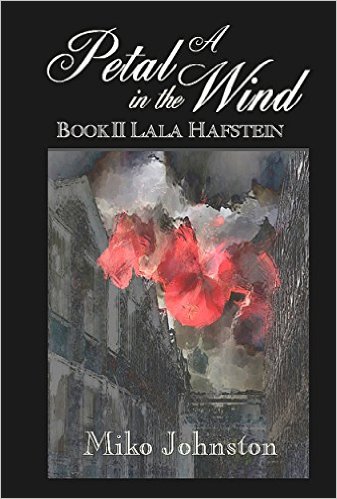
Miko Johnston is the author of Petals in the Wind.  
She first first contemplated a writing career as a poet at age six. That notion ended four years later when she found no ‘help wanted’ ads for poets in the Sunday NY Times classified section, but her desire to write persisted. After graduating from NY University, she headed west to pursue a career as a journalist before switching to fiction. Miko lives on Whidbey Island in Washington. You can find out more about her books and follow her for her latest releases at Amazon.


FROM SCREEN TO PAGE

One of my NYU media professors once told me, “You write well.” I felt proud, assuming he meant I was a good writer. I was mistaken. What he meant was I could write sentences that were comprehensible and precise enough to get an A on an assignment, but not for a story worth reading. It took awhile for me to learn the difference.

If you’re unsure of how to tell a story, I can recommend an unusual source for guidance – a screenplay instructional.


Now I know what you’re thinking…screenplays are fast and cheap, like pulp fiction, too often empty-headed, driven by plot rather than character…and you’re right. But it’s a great way to learn how to tell a story succinctly. Although I no longer write screenplays, I’ve learned a great deal about storytelling techniques from the genre. There are basic rules in writing for film that will benefit all writers of fiction, which I’ll share with you in my next three posts.

Before you begin to write your story, see if you can answer these questions:

1.       Who is your protagonist?

2.      What does he want?

3.      Who, or what, is trying to stop him?

4.      What will happen if he fails?

Knowing the answers is critical for most fiction genres. The website ‘Screenwriting 101’ has set up a formula for this:

Story = (Character + Want) x Obstacles

The answer to question one, two and three fills in Character, Want, and Obstacles.

You could say Character is a ‘noun’, but add Want to Character and it becomes an ‘action verb’. Obstacles create tension and suspense. Each element must be in balance to work properly. 

For example, the character may have lived a colorful life, or experienced a unique, even dramatic situation. But without tension, the suspense of what will happen, these stories often fall flat. Knowing what the character wants and what obstacles stand in his way are the building blocks to creating suspense. The trick is in the building, because coming up with a tension-inducing scenario is not enough. 

Consider this plot: 

Your protagonist is a busy single mom and in the middle of a Tuesday afternoon, a major earthquake hits. Plenty of potential drama there, right? Except if the shaking starts when she’s pulling into the driveway after a Costco run with a gallon of trail mix, a pallet of water, and a year’s supply of toilet paper in the trunk, it deflates a lot of the potential for tension. 

But put your character at her job fifty miles from home, where she lives with her two preteen kids and her disabled mother, and that raises the stakes because we’re dreading what will happen if she can’t get home ASAP.  Then put impediments in your protagonist’s path – the quake destroyed the roads so she can’t drive home.  She’ll have at least a two-day walk. Fires, looters, and aftershocks threaten her way. When real danger looms with every step, readers white-knuckle every paragraph, wondering what might happen. 

But telling us isn’t effective; you must get under her skin and make us feel her fear. The mom may die trying to get home, but if she doesn’t try, her family may not survive. Here, the mom is the Protagonist, she Wants to get home, the impediments caused by the quake is what’s Stopping her, and if she Fails it would mean the devastation of her family, and/or her.

That’s why the key to creating a story that will grab people’s attention is the fourth question – what are the stakes? In film, the answer is always the same: Death. If the hero doesn’t succeed, he will die. If you don’t believe it’s true, think of every successful movie ever made. 

Death – either actual or metaphorical – is what must be risked and overcome, except in tragedies where the hero actually does perish. If you still have doubts, see if you can name a book with a female protagonist written before the 20th century that doesn’t end with her marrying or dying. Death can be losing the basketball game, not destroying the Death Star before it obliterates the planet Alderaan, never getting back to Kansas and Auntie Em; in short, failing to achieve whatever task has been set out for the character.

Here’s my formula:

Engrossing story = [(Engaging Character + Want) x Obstacles] x Stakes


The more invested we are in the character, the more we want him to triumph. Therefore the greater the obstacles, and the higher the stakes, the more conflict you create. If character is the heart of a story, conflict is the lifeblood that drives both character and plot. In short, figure out what the hero wants and deny or delay it.

This is particularly useful in writing flash fiction, short stories, and novellas. Like a screenplay, short form fiction must maintain a word limit and therefore every word has to move the story forward, reveal character, or both. Here again, the combination of challenging obstacles and high stakes, coupled with a character we’ve come to like, creates a powerful arc.

A perfect lead-in to my next blog post, which will discuss story arcs.

A Pet Psychic, A Gentleman, and an Exorcist Walk Into A Bar

Jacqueline Vick is the author of over twenty published short stories, novelettes and mystery novels. Her April 2010 article for Fido Friendly Magazine, “Calling Canine Clairvoyants”, led to the first Frankie Chandler Pet Psychic mystery, Barking Mad About Murder. To find out more, visit her website.  

A Pet Psychic, A Gentleman, and an Exorcist Walk Into A Bar

It sounds like a joke, but it’s not. These are the characters who inhabit my head, along with a crime reporter, a mother and two daughters with a knack for stumbling into nefarious situations; and a few more who haven’t made it to print.

One of the difficulties with so many different characters is finding a common thread that runs through the various books that can be used to solidify an author brand. What is an author brand?

When you hear Joanna Fluke, you think mysteries and baking. And vise versa.

Is there a common thread among my characters? Well, Evan Miller is troubled, while Deanna Winder IS trouble. Frankie Chandler, Pet Psychic, considers the supernatural an intrusion in her life, while Father Gerald McAllister, exorcist, relies on it. And most of them would be left off the guest list of a dinner thrown by Edward Harlow, author of the Aunt Civility etiquette books.

An author, when coming up with a brand, also needs to consider his or her target market. I’ve never mastered that one. Most mystery readers are women, so I should try to determine who would like my books by age group and other demographics. Let see an example of how well that works.

I took a screenwriting class in Chicago. I wrote a scene that took place in a small town post office, and  a confused, elderly lady at the front of the line was driving the impatient protagonist mad. The person who laughed the loudest was a young, black man. I would have picked the suburban-looking white women as my target audience, but her slight smile seemed reluctant. So much for stereotyping your audience.

Another trick to finding your brand is to brainstorm words that come to mind when describing your books or characters. Unintentionally funny due to the circumstances and  people they are surrounded by. In other words, you and me. That doesn’t narrow it down very much.

Could this be the next
Agatha Christie?

You can always compare your books to others out there, but that’s too intimidating. When I put fingers to keyboard, I always hope to be the next Agatha Christie or Rex Stout, but the results fall far short. As for comparisons to current authors, each one seems so unique to me that I wouldn’t dream of holding my novel up next to theirs. I would feel like the gal on late-night television offering knock-offs for those who don’t care for the real thing.

JA Konrath has said that if you want to sell books, write more books. That I can do. I’ve slowly built up 4 novels, a traditionally published novella, and 4 short stories. Oh, yeah. And a children’s book.  If my timetable holds out, I’ll have Civility Rules, my Harlow Brothers mystery, and the third pet psychic mystery out before the end of the year, and the Father McAllister mystery out at the beginning of 2016.

So what should I do about my brand? I’d solicit feedback from other people on what words they thought best represented my books and characters, but if anyone used the word sassy to describe Frankie Chandler or Roxanne Wilder, I’d throw myself out the window. (It doesn’t matter that I live in a one-story. It’s the intent that counts.)

Another New Year’s Day by M.M. Gornell

Madeline (M.M.) Gornell is the author of six award-winning mystery novels. Her current literary focus is Route 66 as it traverses California’s Mojave Desert. Madeline is a lifetime lover of mysteries, and besides reading and writing, is also a potter. She lives with her husband and assorted canines in the High Desert. For more information, visit her website or Amazon Author Page.

Another New Year’s Day

Had a birthday not too long ago—my marker for beginning a year, not January 1st. A day for assessment and commitment (more often than not, re-commitment!). And Writing, these years, is the first item on the dreaded list. And even with all the time that’s accumulated behind me, instead of stretching endlessly ahead of me, it’s a constant yearly amazement why I haven’t figured certain things out a long time ago. A New Year for me, means a lot of “should have known” head-scratching.
This year, number one, was my dissatisfaction with where I am writing-wise, and promotions wise. On the Writing-front, “No more excuses,” I’m telling myself on B-day, I have to physically write more.
Should be spending more time writing. Deciding that was easy. So far, writing one book a year is not enough. But trying to figure out when, how, where—all those little niggling details are the hard part. So, after my New Year’s Day introspection, I was whining to a friend about how I’m flitting around not writing, who in response looked at me like I was crazy, then said, “You’re always writing. What are you talking about?”
She pointed out things like: I’m constantly picking-up unusual people and place names, also asking details about places and people no one else would bother with, and saying things like, “What a place for a murder?” or “I wonder why that happened?” or “What else was going on then?” or “Where you around when?” etc. She also most candidly offered, I spend a lot of time “listening” in a particular way. I stopped there—too much personal insight. I didn’t want to know in detail what particular meant. She also offered, “I bet you wake up thinking about writing, and go to sleep thinking about writing.” Guilty as charged.
So why am I publicly sharing all this B-day stuff? When I first sat down to write this post, I was thinking maybe it would be a help to anyone else struggling with the question of not enough dedicated computer or pen-to-paper time. I.e., 1000 words a day, or 3 pages a day, or, or… Plenty of thresholds out there to claim as your own. But now as I’m wrapping up this B-day meandering, I realize it’s because I wanted to share an important insight I finallyinternalized. Knowing about my writing, knowing about me even, isn’t an exclusively inside-to-outside progression kind of thing.
The looking glass needs to talk back. And I don’t mean writing critique groups—something more encompassing I can’t fully articulate yet. But hoping you get the point. Writing is a great adventure—made even better with a few road signs. Feeling pretty lucky I have some people in my life who’ll tell me the truth. But I don’t think we can always count on that, so here’s a nugget to be taken away. Occasionally step back, then look in.
And for my “writing more” resolution. Decided I’m just fine. Ha! However, I did make some promotions resolutions; but they can keep until the next time I’m up.

Poetry in E-motion 
by Jackie Houchin

Jackie is a retired photo-journalist, a book reviewer and blogger. She loves to travel, to read (of course), and has a favorite, very intelligent cat named Story (what else?). She is involved in her church ministries for children and the elderly and admits to being a “sinner saved by God’s grace.”
Several years ago I took a creative writing class at Glendale Community College, hoping to develop my skills in fiction writing. I was disappointed to discover in the first ten minutes of class that the instructor, Bart Edelman was a poet and that poetry would be the main thrust of the class. 
Great.
I confess I’m not a fan of poetry, perhaps because I don’t know how to write it or read it.  Rhyming verse, as in hymns, ballads and old Rock ‘n Roll songs, is fun, understandable, and easy, but all that “free verse stuff” (often without punctuation and capitalization) seems like words scattered on the page without thought or purpose.
I considered dropping the class, but in the end, I decided to endure. Maybe I would learn something.
Mr. Edelman soon had us learning about the types of poems – Italian, Elizabethan and Shakespearean sonnets, haiku, tercets, ballads and such. We reviewed meter, construction, and how to “cheat” by contracting words.
In each session our homework assignment was to write a poem to the exact standard we’d learned, submitting all our notes and scribblings to show our process. I picked up a couple books on rhyming words and grudgingly got to work.
Surprisingly I began to enjoy the task. I’ve always been a lover of words, and to see them coming together from the hidden recesses of my mind to form beauty and sense amazed me. I saw character, setting, description, even dialogue. Huh! And I found that as I wrote the poem, hidden emotions – hurt, anger, sorrow – came out on the paper. I read it and had to acknowledge the truth I’d written. Whoa!
Edelman made me rewrite that first poem titled “Change of Face” four times, but in the end I got an “A-” on it.  
Sonnets with their strict meter and line placements appealed to me.  And again, as I wrote and rewrote lines and thoughts, the beauty of the words amazed me. Humor and entendre also surfaced. Wow!
I wrote a sonnet about my work as a photographer of civic light opera productions, titled “Drama, Focused and Exposed.” Can you guess the three Andrew Lloyd Webber musicals?
In gauzy fog beneath the ancient stage,
The masquerading maestro longed to own
Christine, his light and life.  But now in rage
He damns his love.  She’s gone and he’s alone.
A requiem, a funeral most grim.
But Argentina’s eyes must cry no more.
A comet flaring fast then growing dim,
A queen, a saint, belov’d, adored… a whore.
The chosen son – among his brothers loathed –
In rainbow hues paraded, dreamed, advised.
From Potiphar and prison cell, unclothed;
He rose like worshipped sun, adorned and prized.
These images through lens; my claim to fame!
With help, of course, from the Sir-What’s-His-Name.
I wrote a Terza Rima Tercet titled “Rude Awakenings” which came from some deep emotions of disappointment, danger, and disillusionment.
A candy bar, a car; his tools to stalk
A sweet young girl. She smiles and reaches…“No!”
They cry, “With strangers you must never talk!”
A tender boy, experimenting, slow.
(He loves me true. He’ll marry me. He will!)
A plunge; I cry!  He smiles and leaves. I know.
An angry boy, a son not mine, but still
I welcome him and offer help and love.
Rejection. Threats! Then me, he tries to kill.
Apologies, in recognition of
his infidelities, to her he brings,
And candy too, and gems…but not his love.
The final day, collecting all his things.
“We’re downsizing,” they’d said. “Now take a walk.”
“Oh… here’s a watch for your retiring.”
When we came to Haiku – those weird 5 – 7 – 5 syllable lines – I wrote about a 65 year old memory of my father’s death titled, “Daddy’s Demise.” I actually remember reaching on tiptoes into the casket and touching his cold hard hand.
Fatherless daughter
On tiptoes views him, reaches—
touches death’s cold hand.
Tears of grief squeezing
From a child’s eyes; bitter juice
pressed from unripe fruit.
Clods of earth; humans
Long returned to dust, welcome
box and body home.
Autumn’s crimson leaves
Drip like blood, blanketing earth—
Quilts warming the dead.
Like evening tides
eroding sand castles; life
fades from memory.
Okay, I know that was sad!  I also wrote a 35 line ballad based on the colorful life of someone I knew – but I won’t include that here.  I had SUCH fun with that one!
The poem – an Italian sonnet – I am most proud of, which was also included in the college literature book that year, tells of my personal emotions about my boys growing up and leaving. It’s titled “Empty Nest.”
Flown far from home my offspring; eagles now,
Were embryos and hatchlings; homely, plain,
Then fledglings yearning for the sky.  “Unchain
Us Mom,” they begged, then fled my homey bough.
First came the empty chairs at meals, (Oh, how
I missed their narratives of pain and gain!)
Then girls arrived, and cars and wives to claim
My boys.  Now men, with rows their own to plow.
But all’s not lost.  There’s peace and calm once more,
And rooms reclaimed and far less work to do.
There’s time for hobbies, gardens and decor.
And wives become new daughters. Furthermore,
There’re children, grand and great, and one more due.
Returned; the progeny of those I bore.
I got A’s on all these poems, often with an “excellent!” following. I thought I’d aced the class with a solid “A,” then Edelman pulled me aside. He couldn’t give me an A in class, he said, unless I wrote a free-form poem.
Ugh!  Just when I had begun enjoying the form and beauty of constructed verse, I had to let it go, throw words willy-nilly on the page and hope they passed the test.
For inspiration our instructor showed a film in class about a young Jewish boy hidden in a Swiss school during Hitler’s reign of terror. Goose-stepping soldiers eventually found him and…. well, the atrocities I saw burned in me and eventually came out on paper in my poem titled, “Reparations.”
Perhaps it’s not the free verse poem Edelman expected, but I noticed he cringed and squeezed his legs together as he read it. Raw emotion, unrestricted by order and form can be strangely cathartic.
Shall I include it here?  I might get some backlash. Oh well, here goes.
Kill them slowly…
Murderous bastards,
all of them arrogant
in their Aryan race and place.
Kill them slowly…
Blue-eyed scum
coldly wrenching gold teeth
from bloody gums, greedily.
Kill them slowly…
Golden haired giants
gleefully blackening bodies
and bones of boys and girls.
Torture them, burn them,
peel skin from their backs!
Torment them, rape them,
rip babies from their bellies!
Pluck out their eyes
and teeth and hair and nails.
Castrate them! Punish them!
Please…
Oh, God! 
Forgive them slowly…
In their quest for purity,
they exterminated the brilliant and the wise.
In their depravity, they left the world
bereft of light and art and grace.
In looking for the “solution”
they sacrificed the sanctified;
the chosen ones…
Abraham’s race.
Emotion, controlled in strict style or released just as it comes out, enriches writing in all genres. I still don’t write poetry as a rule, but the thing I learned is that beautiful (or terrible) images and emotions revealed in words is the substance of  good writing.
I got that “A” in the class. I even got the job of taking Edelman’s author photo for the back cover of his book of poetry. (I made him look pretty good.)

Looking for Meaning by Gayle Bartos-Pool


A former private detective and reporter for a small weekly newspaper, G.B.Pool writes the Johnny Casino Casebook Series and the Gin Caulfield P.I. Mysteries. She teaches writing classes: “Anatomy of a Short Story,” “How To Write Convincing Dialogue” and “Writing a Killer Opening Line.” For more information about Gayle, visit her website!


For the past several months I have written blogs on the 5 Elements of a Story as outlined by Aristotle in The Poetics. Mine weren’t deep, philosophical discussions. They were just good, solid writing tips and techniques. So far we have covered Plot, Character, Setting, and Dialogue. Each of these is an integral aspect of a good story.

Without Plot, you have your annual Christmas letter. Without Character, you have a travel guide. Without Setting, you have an essay. And without Dialogue, you don’t have much reality to your story.

The final element is Meaning. Or: “What is the point to your story?” If you don’t have a point, why write the story? You might think the plot is the meaning, but the plot is simply what characters do in a specific time and place, enhanced by what each character has to say about it.

The Meaning is a higher concept. It’s the theme. There aren’t all that many concepts out there: Man against Man. Man against Nature. Man against Machine, Man against Himself, Man against God. Even if you have a dog as your hero, it would be Dog against Man, Dog against Dog, or Dog against Nature or Machine. (God loves dogs so there wouldn’t be any conflict between them. Sorry, I digress.)

Any good western has a guy in a white hat battling a guy in a black hat. Even in good, old-fashioned detective tales you have man against man (hero against killer) or maybe it’s hero against femme fatale.

The new movie, Everest, has men battling that mountain. My latest book, Caverns, coming out in October, pits man against nature until the heroes realize the rats in the caves underneath the city of Chicago aren’t their biggest problem.

The silent movie, Modern Times, has man battling the machine age. Or how about 2001: A Space Odyssey when the human is trying to outsmart the computer. (Obviously in real modern times and the real future, now, every gadget used in a CSI TV show works, nobody’s cell phone ever loses a signal or runs out of battery power. But that would be a different story. Sorry… Again I digress.)

Then there is Man against Himself. This is often a psychological tale where the man is trying to find himself or save himself. The Days of Wine and Roses and The Lost Weekend pit an alcoholic against the bottle in his fist. Whether it’s alcohol, drugs, or maybe a nymphomaniac female and her cravings, they are each fighting a battle against their addiction. And since they are the only one in the room, it’s the character against himself or herself. Society really doesn’t have a place in that scenario.

There are tales of man (and I use the term facetiously in this case) against God as in The Screwtape Letters. The devil is definitely having his issues with God.

And as in some instances, the man or woman doesn’t have to win. The Tale of Two Cities ends with Sydney Carton walking to the gallows. The plot might lead him to Madame Guillotine, but it’s his self-sacrifice that takes him on his final journey and the ultimate meaning of the story.

It is up to the writer to find those obstacles against which his or her characters can struggle. The writer creates a character with traits that either defy and overcome the odds or succumbs to them, because in the final analysis all stories are really about man vs. himself. 

Can the hero triumph over his limitations? Will the hero find himself, his courage, and his soul in that struggle?

What is your story trying to say?  What are you trying to say?

Publishing in Ezines by Kate Thornton


Kate Thornton is a retired US Army officer who enjoys writing both mysteries and science fiction. With over 100 short stories in print, she teaches a short story class and is currently working on a series of romantic suspense novels. She divides her time between Southern California and Tucson, Arizona. You can find out more about Kate at her Amazon page.


From BLUE MURDER, David Firks’ ground-breaking classy online mystery magazine from the late 1990s to FLASHING IN THE GUTTERS, Tribe’s incredible venue for edgy and raw – beyond noir – flash fiction, ezines have come and gone. These two fine ezines have unfortunately gone. But let’s get back to them in a few minutes.

WHAT ARE EZINES? 


Ezines are online magazines. They range in visual quality from beautifully-designed and finely-illustrated to very plain to so ornate it’s hard to figure out where the writing is. Fiction of all genres, non-fiction, self-help even specialty hobby ezines abound on the net – just Google your favorite phrase and you’re bound to come up with an ezine in your field of interest.

WHAT DO THEY OFFER?


The most obvious advantage is immediacy. Ezines often have a submissions turn-around time measured in minutes or hours rather than months. No SASE required, just electrons. Usually you can submit via email and you can send either in the body of the email – just cut & paste your whole story in – or as an attachment if the ezine permits. Always read the submission guidelines to see what they want.

Archiving is a wonderful thing – most ezines will archive your work online as a matter of routine, allowing you (and your fans) to access your work in past issues. Most ezines will also take down – after the initial publication time –  any work you do not wish to have archived.

They also offer one of the widest readerships possible for your stuff – billions of readers from all over the world can access your writing. This is not to say they necessarily will, only that they can. Many have hit counters or readership statistics available, so you can get an idea of how popular a particular ezine is.


The most popular sites, like SLATE (which no longer publishes fiction) are operated just like a print magazine in many respects. Others are the online presence of actual print magazines, like THE NEW YORKER, and may even share editorial staff, guidelines and publication of submissions with their sister print magazine.

There is a certain amount of prestige accorded many ezines. Literary fiction ezines in particular serve a discriminating community, while many of the genre ezines are also routinely read by prize committees. The Pushcart Prize, Derringer and other prizes have been awarded to fiction published in ezines.

WHAT ABOUT MONEY?


Well, some pay quite well and some do not pay at all. Always check the guidelines for payment.

Some pay in cents-per-word, others in flat rate, still others in merchandise or print copies of sister magazines. Payment can be by check or through electronic funds transfer. I keep a PayPal account just for this.

WHAT ABOUT COPYRIGHT? WHAT RIGHTS HAVE I SOLD?


As in print magazines, the ezine usually copyrights your story for the duration of its run (the current issue) at which time the copyright reverts to you, the writer. As with other magazines, you need to read the contract or guidelines.ALWAYS KNOW WHAT YOU HAVE SOLD! (Back in the late 1990s, I sold all rights to several stories. At the time this sounded good as they paid me $100 per short story. But a few years ago a film company wanted to negotiate the rights to one of my stories and guess what – I didn’t own it!)

Generally, the rights you have sold are First Electronic Rights and sometimes First World Rights which include First Print rights. This means you have reprint rights still in your bag to sell at a later time, either to a print magazine or to another ezine. Usually, with an ezine, you have sold your rights for a specific duration, and then allow archiving.

WHAT ABOUT PEOPLE STEALING YOUR STUFF?


Let me be very clear – publishing your work online in an ezine does not negate your copyright nor does it put your work in the public domain. That said, I just don’t encounter it very often, and I do a regular net search looking for my materials.

WHERE CAN I FIND EZINES?


Here are a couple of guides. But Google is your friend when it comes to searching! And use your forums and online writing groups – many of them have market listings.

RALAN’S is one of the best market guides.

NewPages Guide to Online LiteraryMagazines is a good reference for literary fiction

LIFE EXPECTANCY


Well, ezines come and go pretty quickly. BLUE MURDER ceased production when the editor, David Firks, suffered a severe illness. FLASHING IN THE GUTTERS was taken down by the editor, Tribe. Others come and go as interest sparks or wanes or as editors shift gears or change directions.

Here’s a current non-paying venue that is particularly friendly to mystery submissions and a joy to read: KINGS RIVER LIFE, Lorie Lewis Ham’s delightful ezine. They publish new issues on Saturdays and always have a short story contest.

I miss the long-gone classic venues, but new ones spring up daily. So best of luck out there – I love the internet and the world it brings me.