Book Choices and Choice Books

by Linda O. Johnston

A couple of weeks ago, Hannah Dennison wrote a post here about “So Many Books! So Little Time!” I certainly agree with that concept. I’m always writing, of course, and I’m also always reading. Like many writers, and readers, I collect a lot of books.

How do I decide which to buy? Well, I’ve been pondering that, and the results don’t surprise me. And I suspect that’s true with a lot of others who love to read.

First, I write romantic suspense stories these days for Harlequin Romantic Suspense, as well as mysteries for Crooked Lane. Guess what. Among the books I read the most are Harlequin Romantic Suspense books, and mysteries. For one thing, I am writing books for the vast and long-lasting Colton stories for HRS. I have one being published in December that’s the eleventh in the year-long Coltons of New York mini-series. It should come as no surprise, therefore, that I’ve been reading the earlier ones in that series this year. And I’ve done the same thing with the other Colton series I’ve written for in previous years.

I also have my own HRS miniseries about a Shelter of Secrets, where a very special animal shelter also shelters people in trouble. I do read other HRS books, especially those that also contain dogs. And yes, I read other Harlequin books, too, many of which contain dogs.

And that’s something else. I’m a dog nut, so I’ll also pick up a lot of books that are stories including dogs, even if they’re not romantic suspense or mysteries.

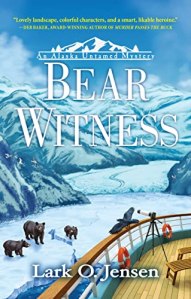
My mystery series for Crooked Lane is the Alaska Untamed series, under my first pseudonym, Lark O. Jensen. It has wildlife, and dogs, in it. I like to read many kinds of mysteries, and those that take place in Alaska also intrigue me, especially if they have dogs. And other stories in Alaska also get my attention. Plus other mysteries…primarily with dogs.

Anyway, you get the idea. I’ve got some particular interests and love to read stories containing those subjects. Do I also read other books, including best sellers? Sure, especially if they’re recommended by friends. But I have to figure out my time first.

How about you? How do you select the kinds of stories you read?

IT’S ABOUT TIME….  

BY ROSEMARY LORD

1.08RoseSignCrop (1)

We’ve recently put the clocks forward, so we’ve lost another hour. Why did that seem so important? I mean, what could we have done with that extra hour?

They say that TIME is the most precious commodity we have… And how we’ve used it in the past, determines much about our todays and our tomorrows.

I seem to have been racing time a lot recently.  Have you noticed how often time just seems to disappear?  As writers we often get engrossed with research – that’s the fun bit, losing yourself in another world, following one link that leads to another intriguing story, then another. Then we glance at the clock. Another day is almost gone. “Where did the time go…” we ask ourselves time and again. It’s so easy just to fritter time away.

“Take time to stop and smell the roses,” goes the old saying. Make time your friend, they say. How? I ask myself, as I attempt to do ten things at once. It’s a knack!

Clock flying

Think of all those ‘time’ related phrases: from ‘once upon a time,’ ‘a whale of a good time,’ ‘living on borrowed time…’  or ‘My, how time flies when you’re having fun!’ ’Time and Tide wait for no man- or woman.’ You get the idea.

One of the most famous book openings is, ‘It was the best of times. It was the worst of times,” in Charles Dickens’ A Tale of Two Cities.  Fashion icon Coco Chanel said of time, “Don’t spend time beating on a wall, hoping to transform it into a door.” Or businessman Harvey Mackay’s sage observation, “Time is free, but it’s priceless. You can’t own it, but you can use it. You can’t keep it, but you can spend it. Once you’ve lost it, you can never get it back.”

I remember, just prior to Covid, I was so busy and overwhelmed with day-job work that I would wish for ‘time to stop’…. just for 24-hours, so I could catch up. But then the Covid lockdown stopped Life for a lot longer than 24-hours. Careful what you wish for!

And when the dreaded alarm-clock shrills us awake, how often do we mumble, “Just five more minutes….”  before we throw off the duvet and embrace a new day.

You can’t stop time. It just keeps going. It’s up to us how we use and value our time.  How many of us would give anything for “Just five more minutes… with lost loved ones?”

How much time do we allow ourselves to read all those waiting books.  How much time is allotted to research, preparation and how much time do we actually sit at our desk or table and write? Publishers work to a very tight schedule or timeline and so give us writers deadlines. Do these deadlines help the writer – or stifle the creativity?

Deadline2

I like a deadline, so I know how much time I have got. Otherwise, my industrious imagination runs wild, meandering endlessly in unruly streams of thoughts this way and that, without the satisfying clicks on the keyboard signifying The End.

And how does time affect what we’re creating?

Do we write about the Now? Or do we travel back and forth in time? Do we use time to show the origins of the story generations before, then switch to today’s update on that history? Several recent books have chapters alternating between yesterday and today.

Time Travel can transport the reader forward into science fiction. Space-age tales with characters speaking in indiscernible utterings, (translated into today’s speech) and visual images of beings unlike anything we know in our world. Writers can let their imaginations soar.

As a writer and a reader, I often prefer going back in time, perhaps, to life a hundred or so years ago. Recreating a world that seems simpler, more real. Where characters discover and react to things we take for granted today. An opportunity for richly drawn characters with colorful colloquialisms.

I’ve read a lot of books set during my parents’ and grandparents’ era of WWI and WWII and learned a greater understanding of what they went through and what they gave up.  A time when ordinary people became heroes, took on enormous challenges, without seeking attention or glory. They just got on with it. The ordinary folk I knew and read about had overcome some amazing challenges.

Victoria Hislop writes superbly researched novels set during the Spanish Civil War in The Return. Sunrise is set in WWII in Greece and The Island, is about Spinalonga, Greece’s former leper colony.  Fascinating journeys back in time, that make us appreciate our freedom and life today.

Big Ben

I’ve been reading about Bletchley Park, in WWII, where ordinary girls were called in to do long hours of top-secret work with the Enigma machines, racing against time to figure out Hitler’s secret enemy codes. The girls were not academic, but chosen because could work out puzzles, crosswords, anagrams. More ordinary, unsung heroes from a time gone by.

I’m working on a ‘timeless’ novel. A mystery. Where I don’t want to specify a time, an era.  Not a hundred years ago, yet not now. I’m figuring how to write the story so that it’s timeless; no cell phones, but also no public phone-boxes, no horse-and-buggy, but no Amtrack. Timeless buses and trains – not steam engines, nor high-speed rail travel, nor Concorde, super-jets, no Southwest Air nor Pan American. Non-specific fashions. It’s a challenge, as it needs to have the right pace, conflict, intrigue, yet nothing that puts the story in a specific time.

The thing is – it’s up to us as to how we use our time. No-one else.  We have choices. That’s a scary, yet empowering thought. Charles Darwin said: “A person who dares to waste one hour of time, of life, has not discovered the value of life.”

………THE END…….file3171299616544

So Many Books! So Little Time!

I don’t know about you, but I have too many books on my TBR stack but instead of reading them, I just keep adding more. I can’t help it. Often I buy books because I’ve read a tantalizing review or it’s a recommendation from a bookseller or I just want to support a fellow writer. One reader confessed to having over 4,000 books waiting to be read on her Kindle. I found that unnerving. Have we always been so cavalier?

When I was growing up, my reading source was always the library. I would pick my four books which, in those days, was the maximum you could check out at one time. This was a cherished Saturday morning trip with my Dad who was a great reader (and, years later, suffered from Alzheimer’s which broke my heart). We would spend at least an hour or two drifting among the bookshelves carefully making our selections. For me, it started with an eye-catching cover, a flick to the back to read the blurb and then a glance in the middle. It was serious stuff. When I got home and started to read one of my selections and hated it, I would still persevere and finish it. I don’t do that now.

Just speaking for myself – and apologies to those who may disagree – but having access to books at the click of a button, or arriving by Amazon Prime within twenty-four hours, has taken away some of my joyful anticipation. There was a sort of reverence to starting a new book when we all had more time and less distractions. Now, there is no commitment – at least, not from me. If a book doesn’t grab me in the first fifty pages, it’s out. Not exactly disposable, but close.

I don’t know about everyone else but I am increasingly overwhelmed by the choice and sheer number of books out there. How do we choose?

I posed that question on my Facebook page showing three different book covers of my first mystery with the original 2008 American cover, the 2012 British cover, and the 2023 French cover. Each cover appealed to a different reader but a few said if they hated a cover, they wouldn’t even bother to read it. Back cover blurbs don’t always present a true picture of the content either. Case in point – the blurb written by M.C. Beaton appears on every one of my books even though it was originally earmarked for the first.

So how do we sort the proverbial wheat from the chaff?

Enter the infamous P.69 test. This is not a new concept. It’s been around for years and was a test created by Marshall McLuhan, (The Gutenberg Galaxy, written in 1962), who suggested that book browsers turn to page 69 and read it. If that page drew them in, then read that book. The idea being that by that point in the story, the inciting incident has happened, the characters are settling in and the plot is trundling along with plenty of conflict and consequences.

Without pointing out the obvious flaws to this idea i.e. a large print edition would have a different P.69, I decided to put it to the test with three different novels.

Rebecca by Daphne du Maurier

The narrator has just arrived at Manderley and on P.69 we realize she is narrating in flashback, imagining how her life with Maxim could have been,  “growing old together” and fantasizing about their “boys. ” She reminisces on meeting the formidable Mrs. Danvers who will show the newly married pair their suite in the East Wing … not the master wing which – as those who know the story – was Rebecca’s suite of rooms that were never touched following her death.

There is a menacing foreshadowing about P. 69. I don’t know about you, but I must know what happened!

Anne Frank’s Diary by Anne Frank

I was fortunate to visit the Anne Frank museum in Amsterdam a few years ago. It’s almost incomprehensible in today’s world to be able to imagine the fear and horror of those dreadful times.

P.69 falls in the middle of a diary entry for Wednesday 10th March 1943 when Anne writes of her terror of hearing the night-time anti-aircraft gunfire, of listening to the rats in the attic and of not being able to light a candle. Anne speaks of a character who lived there “before we went into hiding.” Her courage shines through the page which makes the ultimate outcome more devastating. Anne’s diary is utterly compelling because she takes us into her present and it’s impossible not to stay on her journey.

Tigerlily’s Orchids by Ruth Rendell

Full disclosure! I have not read ANY Ruth Rendell books and selected this one when I went to the library to put P.69 to the test. And it worked! On P.69 the protagonist – Stuart – is fascinated by a beautiful Asian woman who has an overbearing father. Stuart has followed them to a greeting card shop. When Stuart buys cigarettes and turns away just for a moment, she has gone. “To lose her now was the most appalling thing he could think of. He rushed out of the shop, staring wildly about …” The girl doesn’t know she is being watched which is chilling. The page finishes with “He couldn’t let her go. He must follow her.”

I took that book out and it’s on the top of my TBR stack!

So here are my questions: do you choose a book because you like the cover or the blurb? The first line? Do you read the first three pages before buying? Have you tried the P.69 test and what did you think?

Oh … and there is another test called the P.99 test, but that’s for another time.

Hannah

P.S. For more examples of the P.69 test, visit Marshal Zeringue’s fabulous blog: The Page 69 Test

Lessons From A Child Poet

by Miko Johnston

If you’ve read my biography, you know my earliest ambition was to become a poet. I began writing poems at age six, and continued until I discovered it wasn’t a mainstream career – I found no “help wanted” ads for poets in the New York Times classified section. Being a practical sort, I changed my goal, but I’ve been writing ever since.

I still remember the first poem I wrote. I actually sat down and evaluated it line by line, and found that I had good instincts about the process. I recalled how I’d spent time playing with the wording, the rhyming and the rhythm, which created imagery through words. I also found parallels with my current approach to writing.

Let me show you what I mean. The poem goes:

I went to the moon

One sunny afternoon

Where I saw a sight

That gave me a fright

A man from Mars

With green and purple scars

The poem rhymes because I felt at the time poems should rhyme. It has a rhythm as well, for the same reason.

The first two lines had come to me immediately. I liked the way they sounded, with a sing-song bounciness reminiscent of a good nursery rhyme. The sound of words, how they flow together and the rhythm they create when read, remains an important aspect of writing to me and something I always strive to attain. The lines also comprise the first third of the poem. They introduce the setting, the character, and launch the story, as a first act should.

I don’t specify how I got to the moon, whether I rocketed, incorporated some other form of transport, or jumped, but I don’t think it matters. Rather than fill in every detail, it leaves that to the reader’s imagination, which is still characteristic of my style

The next two lines bring in an element of tension through emotion, as well as the possibility of conflict arising from it. Fear can be very potent in motivating a character. These lines also comprise the middle of the poem, but the sudden change from the playful couplet that opens the poem grabs our attention. No sagging middle here, another goal in my writing.

The last two lines are, to me, the most interesting. Finding another “non-resident” on the moon is more curious than scary, which brings the poem back to the mood set in the opening. A good ending should always reference the beginning. I contemplated the Martian’s coloring for a long while. At least some of the scars had to be green, since that was all we knew about Martians in those days. I toyed with using red or blue for the second color – the rhythm would have matched better. Somehow it had to be purple, an uncommon color in the fifties, which made it exotic. And I decided I liked the hiccup effect it gave the rhythm, like going over a speed bump or pot hole. It jars you, which also fits the theme. It also leaves it to the reader to decide whether the Martian’s appearance was scary or humorous.

Is it a great poem? No, but come on, I was only six. If this were a story, it would be incomplete. I could have added more, but it does convey an image and an emotional response. I say it’s complete as is.

I don’t write much poetry anymore, except for an occasional musing on a subject or a haiku in a humorous vein. I like fitting an idea to a very specific and brief formula. I’ll share my favorite haiku with you:

FOR THE RECORD

                                                Born in thirty-three

                                                Celebrated forty-five

                                                In seventy-eight

The math works out, but finding the right title was critical, as much for this poem as for a novel

As I consider my very first attempt at writing with the benefit of more than a half century of hindsight, I can see the roots of my development as a writer of prose.

For those of you who write, do you remember the first piece you wrote? How would you trace your development as a writer from that piece to today?

Miko Johnston, a founding member of The Writers in Residence, is the author of the historical fiction series, “A Petal in the Wind”, as well as a contributor to several anthologies including the recently released “Whidbey Landmarks”. Miko lives in Washington (the big one) with her rocket scientist husband. Contact her at mikojohnstonauthor@gmail.com

Lewk and Other Odd, Ugly New Words

by Jill Amadio

Would you write this in your next mystery: “He awoke woke as usual, wondering if he might be roofied, kettled or lewked today. Then, as he threw back the bedcovers, he remembered it was his turn to rizz.”

How many readers and writers can figure out the meaning of these phrases? I wonder also how these new words translate into French, Italian, or the Baltic languages. Did you know that lollipop is a slang word for money in Britain, Australia, and New Zealand although the word lolly has been in use as referring to money in the UK for a long time.

Fortunately, I have yet to read a modern mystery that includes any of the above, although a recent read did include the work “hacked” to mean a fairly decent way to dispose of a body rather than hacking into someone’s computer (although it is sometimes tempting to want to snatch up a machete and aim it at my screen).

Gaslighting is common these days but to me the word “deceve” has a far more evil connotation due to its hard “e.” How about being roofied? No, not a new roof on one’s house but a slang word for the drug Rohypnol which, in itself sounds rather boring compared to its new version. I must confess I am rather partial to the word “dox” as it sounds medieval but I don’t write historicals so I would have to use it for its modern meaning, which is cyber-bullying, maliciously publicizing private, personal information about someone, and usually posting it online via social media.

Dox is similar to pox so maybe that is the connection. Medieval slang, or descriptive words, were and are scattered throughout historical novels and plays, especially by Shakespeare who wrote in The Tempest: “a pox o’ your throat, you bawling, blasphemous, incharitable dog!” Yeah! That told ‘em. The bard also used the word “cotton” to refer to a lower-ranking peasant. One wonders if peasants were considered lewk back then because of their wearing of cotton garments that distinguished them instead of costly fabrics.

Acronyms are showing up, too, and turning into daily use as words in their own right. For examples, “lewk.” The letters were all at one time written in upper case and stand for Loitering Electronic Warfare Killer. Now, the first and last words, loitering and killer are understandable and fitting for mystery writers. However, the four uppercase letters together refer to, perhaps, a war machine waiting for the signal to attack, such as an army tank.  In lower case, the letters form a word meaning a person’s individual fashion style by which he/she/them/their is instantly recognizable. I’d venture a guess that Sherlock Holmes and his deerstalker hat was the first of his generation to be lewk.

Here are a few of my own suggestions for slang in a murder mystery:

Tompt = a double-bladed dental tool for extracting teeth

Willabot = bird seed for large sparrows

Seso = blood-stained blue underwear

Atikul = a cell phone smashed in four places, a vital clue

Culik = a pearl-handled pistol

Daawtul = a female murder victim

Obviously, not a single one of the above, however specific, makes any sense but does lewk or dox? 

Are we free to invent new words with the hope that readers can easily gauge the writer’s intent?  That would be like writing a mystery within a mystery, and require a glossary like a list of characters at the front of a book as a few of the Golden Era mystery writers, like Agatha Christie, sometimes added.

What’s your opinion of the new additions to our language? Should they taught in writing workshops?

##

Jill Amadio is a mystery writer, novelist, journalist, and ghostwriter.  Her standalone thriller, “In Terror’s Deadly Clasp,” is based on a true 9/11 story. Her award-winning mystery series features an amateur sleuth from Cornwall, UK, Amadio’s former residence before relocating to California and Connecticut. 

Can Writers Be Replaced by AI?

By Guest blogger/author Naomi Hirahara

Artificial intelligence, especially ChatGPT, is on people’s minds these days. ChatGPT is developed through OpenAI, a company Elon Musk co-founded with a controlling and growing investment by Microsoft, which is beta-testing artificial intelligence in its search engine, bing. Instead of doing a simple Google search in which you type in a word, phrase, or even question, resulting in a list of search links, chat bots can provide full narratives. They are interactive, too, and can simulate a conversation with the user, albeit with mixed results. (See https://www.kpcc.org/2023-02-27/how-microsofts-experiment-in-artificial-intelligence-tech-backfired)

These developments have Google on the run and the whole high-tech community both excited and nervous about what disruptions may take place. Certain authors savvy about this world have also expressed the whole range of emotions—fear, anticipation, and indifference. Artificial intelligence is already used in narrating audiobooks for outlets like Apple Books in lieu of “real people.” (For an interesting conversation about AI audiobook narration, listen to the last story on this page: https://www.kpcc.org/show/airtalk/2023-01-23/lunar-year-massacre-in-monterey-park-leaves-ten-dead)

I’ve been listening to and reading such conversations as both a novelist and co-chair of the Imagine Little Tokyo short story contest. Regarding the latter, some journals and magazines mostly in the science-fiction realm have been recently dogged with a flood of short story submissions created on AI. (See https://www.theverge.com/2023/2/25/23613752/ai-generated-short-stories-literary-magazines-clarkesworld-science-fiction) Could someone input our guidelines on ChatGPT with locations in Little Tokyo and come up with a semblance of a good story? I can’t imagine how teachers in the future will evaluate the veracity of student essays with the spread of AI.

Joanna Penn of the Creative Penn podcast has been discussing AI for years, pointing out how writers already utilize artificial intelligence, which predicts language based on patterns, in checking our spelling and improving our prose through software programs like Grammarly and ProWritingAid. She’s also now utilizing AI exploring various creative storytelling options.

As an author who writes very specific historical and ethnic stories, I haven’t been that concerned that I can be possibly replaced by a robot. But for fun, I did go to ChatGPT and asked the bot questions about the incarceration of Japanese Americans during World War II. The answers it gave me were both encouraging and unnerving. Encouraging in that the answers were correct and factual. Unnerving because the prose was clear and well-written. Then I asked ChatGPT specifically about the topic of my recent historical mystery, CLARK AND DIVISION, which is set largely in 1944 Chicago, where many Japanese Americans released from the ten detention camps sought refuge for some months and years. For this question, ChatGPT picked up none of the historical nuance and came up with a completely wrong answer. (See screenshot.)

As I discussed recently at a Sisters in Crime Los Angeles meeting, when writing historical mysteries—or perhaps any kind of fiction—look for the gaps of knowledge. Let’s surprise our readers, take them to places and situations that they have never been. If a robot can easily replicate our tropes, characters, or plot points, maybe we should seek to create fresher tales that only living, breathing person can tell. Let’s go to those archives and open those dusty books that haven’t been digitized or engage in vulnerable, emotional conversations with people who share stories that they have never told. In this way, I see artificial intelligence as a good challenge more than a competitor. I seek to stump the robot instead of destroying it.

For a headier analysis of ChatGPT, go to science fiction writer Ted Chiang’s article in the New Yorker, in which he likens the new technology to a bad photocopy of source material: http://Ted Chiang’s Article

(Naomi Hirahara is the Edgar- and Mary Higgins Clark Award-winning author of the Mas Arai mystery series and the historical novel, Clark and Division. Evergreen, the sequel to Clark and Division, will be released this August. For more information, go to her website, http://www.naomihirahara.com.)

.

(Naomi Hirahara’s article is posted by Jackie Houchin)

(Blog) Housekeeping & Inspiration

(Jackie Houchin is standing in temporarily for another member.)

Before we go on to some inspiring quotes from a dozen great mystery writers, here’s a little housekeeping to help you get the most from our blog.

1. Have you ever been unable to see or post comments on The Writers In Residence blog?  Here’s a trick to try.

When you first open the page, “click on” the title of the post. NOT the site title, but the new posting title. In this case, it would be “Housekeeping & Inspiration.”  The page should adjust, and then you will be able to see the Comments section.  Try it!  PS: You will also be able to see the extended bio of the current posting’s author.

2. If you are curious about the rest of us bloggers, you can go to the top of the site and click on “About.”  This will give you the complete list of bios by author.

3. From the sidebar, you can also search past postings by typing in an author’s name in the “Search” box and clicking. Recent articles by that author will appear. You can also type in a topic. If we have covered that, you will see them as well.

4. If you came upon our blog via social media and like what you see, you can enter your email address in the next box and click on “Subscribe.”  Then you will receive an email every Wednesday with a link to the new post. We’d love for you to join us!

5. Further down the side bar,  you will see “Recent Posts,” and under that, you can search by month and year in the “Archives”.  We go back to 2009!

6. If you have any other questions, you can use the “Contact” feature at the top of the page, but (blush, blush) I’m not sure at this point, whom that will go to! Eek! If all else fails, and you are SERIOUS, you can email me. Photojaq@aol.com.

And now for the INSPIRING QUOTES! *

“The mystery story is two stories in one: the story of what happened and the story of what appeared to happen.”  Mary Roberts Reinhart

“There is nothing more deceptive than an obvious fact.” The Adventures of Sherlock Holmes by Arthur Conan Doyle

Another dead body. Every year it is the same. Every year, another dead body…”  Lion in the Valley by Elizabeth Peters

“All things are poisons, for there is nothing without poisonous qualities. It is only the dose which makes the thing poison.” Paracelsus

“The best crime novels are all based on people keeping secrets.” Alafair Burke

“Revenge is sweet and not fattening.” Alfred Hitchcock

“Conversations are always dangerous, if you have something to hide.” A Caribbean Mystery by Agatha Christie

“People are straightforward enough, on the whole, till one starts to look for crooked motives, and then, oh boy, how crooked can they be!” The Ivy Tree by Mary Stewart

“Truth will come to sight; murder cannot be hid long.” The Merchant of Venice by William Shakespeare

“There simply must be a corpse in a detective novel, and the deader the corpse the better.” S. S. Van Dine

“The great advantage about telling the truth is that nobody ever believes it.” Dorothy L. Sayers

“Very few of us are what we seem” The Man in the Mist by Agatha Christie.

*This collection of quotes is from The Bookish Sleuth, Mystery Reader’s Calendar by mystery writer, Sara Rosett

A Blog Challenge – Write the Chapter Titles in Your Autobiography

by Jackie Houchin

On my Personal Blog: “Words and Reviews” I took part in what WordPress called BLOGanuary. It was a gimic at the first of the year to get bloggers to  write every day. They sent questions to answer, and tags so you could connect with the community. It worked I guess. I went from 79 to 91 to 141 followers in one month! (Yeah, I know that’s no big deal, but my blog is less than a year old, and I don’t promote it much.)

Anywho, the question of post #30 was: What would you title the chapters of your autobiography?

At first I thought this challenge was just TOO hard.

I didn’t WANT to write an autobiography or even a memoir.  (Although a friend in THIS writer’s group blog has encouraged us to do just that. “Everyone has a story!” Gayle Bartos-Pool urges. And yes, she wrote her own life’s story, wonderfully illustrated, titled – A SCRAPBOOK LIFE.)

OK, I told myself, I’ll write down just TEN chapter headings and be done.

THIS is what I came up with….

Chapter — Title

  1. A Baby Sister!
  2. Hanging By a Head
  3. The Bobby Pin
  4. The Long Trek
  5. Trailor Park Life
  6.  Daddy’s Demise
  7.  Rude Awakening
  8. An Auto Repair Shop
  9. The Lone Ranger
  10. Joe Boysen
  11. The Gunsmith
  12. Church Camp Decision
  13. Nancy’s House
  14. Locker Combinations
  15. The 3-Mile Walk
  16. Pimples and Fat
  17. Denny Murphy
  18. The Evil Out There
  19. Double Dating
  20. A Twelth-Grade Diamond
  21. Dr Dentist
  22. Hollywood Firsts
  23. No Valentine’s Day
  24. Miramar Reality
  25. Cats and Cooking Disasters
  26. Baby Mine
  27. Hot Rods First
  28. Adoption Debacle
  29. Terror and Escapes
  30. Wrong Way Turns
  31. Dancing With Devils
  32. Comedy and Tragedy
  33. Horsing Around
  34. Deadly Diagnosis
  35. The Southern Retreat
  36. Faith
  37. Africa and Beyond
  38. Letters to Kids
  39. Pandemic Teaching
  40. See, Hear, Speak No Evil
  41. Cruising
  42. Grands and Greats
  43. Facing the Future

Gosh, maybe I SHOULD write my autobiography!

IF YOU WERE ME, with which chapter would YOU begin writing?  From 1 to 43, or here and there?  Tell me your answer in the Comments.

AND… let me challenge you to give this a try too.  Write out at least 10 chapter headings if YOU were to write YOUR autobiography.  Seriously. Try it! It may inspire you!

Can TV Make You a Better Writer?

by Maggie King

As a mystery writer, I enjoy TV shows with strong characters and storylines that show the ups and downs of being human in a less-than-perfect world. They don’t have to be crime shows, but they’re mostly what I watch. Regardless of the genre, the best shows feature conflict as a common denominator. Watching them is a great way for writers to study dialogue and body language.

Ever heard that oft-repeated writing advice to give your main character something to want and make sure she/he has a devil of a time getting it? TV writers are experts at giving their characters motivations and the accompanying challenges.

No doubt about it, TV is a great source of writing advice and inspiration. Consider the following shows:

Breaking Bad
It’s big, it’s bold, it’s … well, bad. Walter White is a mild-mannered, dispirited high school Chemistry teacher. When he’s diagnosed with stage 4 lung cancer, he knows his meager income won’t secure his family’s financial future after his death. He partners with one of his students in manufacturing and distributing crystal meth.

At some point, Walter White’s cancer goes into remission. It doesn’t take long for him to become a power player in the dangerous criminal underworld. For the first time, he feels alive–his new career as a drug kingpin is much more exciting than teaching adolescents in Albuquerque.

Any writer can find Breaking Bad a model for character development and a riveting, twisty plot. Vince Gilligan, creator of the show, knows how to weave secrets and deception into the story, and Walter White’s double life requires him to constantly deceive those closest to him. His growth, moral decay, and transformation result in tragic consequences for his family and associates. The DEA’s hunt for Walter leads them to a very interesting discovery. A huge cast of supporting characters will also inspire writers.

Warning: Breaking Bad is uber-violent. I usually shy away from its level of violence, but the story and writing are just too good.

Darby and Joan
Now we take a 180-degree turn. Darby and Joan is a lighthearted Australian mystery series, set in the stunning Queensland outback. A retired detective (Darby) teams up with a British nurse (Joan) to solve the mystery of her husband’s recent death. As they travel through Queensland, they encounter, and solve, other mysteries ranging from murder to arson to kidnapping.

Darby and Joan are well-drawn characters in a growing relationship that feels real. The humor is natural and not manufactured. They experience minor, temporary conflicts. At the end of season 1, romance looms for the two. Will they succumb? I’m eagerly awaiting season 2.

I try to emulate Darby and Joan’s tone and interaction for my characters. Most stories have a romantic component and my Hazel Rose Book Group mysteries are no exception.

Death in Paradise
This cozy-ish police procedural is set on the fictional island of Saint Marie (actually Guadeloupe). The Caribbean scenery is breathtaking, certainly a character in the series.

Death in Paradise is known to be formulaic. Once the lead detective comes up with the killer (one of those lightbulb moments), he assembles the suspects and, a la Agatha Christie, goes through the events and finally names the killer.

But being formulaic isn’t all bad. The predictable narrative style and structure of each episode makes it easy for writers, especially beginning ones, to study. Besides, the stories themselves may be creative and original.

If nothing else, Death in Paradise is lighthearted entertainment with pretty scenery.

Miss Marple
The beloved Miss Jane Marple is a perennial favorite of mystery fans. Created over ninety years ago by Agatha Christie, the elderly spinster lives a quiet life in the village of St. Mary Mead—quiet until a villager is murdered and that happens with alarming frequency. Miss Marple never fails to identify the killer(s), using her powers of observation and knowledge of human nature. Sometimes she disguises her shrewdness with a dithery manner. She can always see a parallel between the latest crime and a villager, or village incident.

There are countless adaptations of the stories and a number of actors have played Miss Marple. Joan Hickson is my favorite as she best matches my picture of how the character looks, acts, and speaks.

Agatha Christie has influenced many crime writers over the years, especially with plot development. I expect she’ll do so indefinitely. I think the Columbo character played by Peter Falk often channeled Miss Marple, with his bumbling ways that concealed a sharp mind.

Touched By an Angel
Touched By an Angel was a popular American series that ran for nine seasons. It’s not a crime show, but it featured stories of troubled people who had reached turning points in their lives. As they grappled with personal demons, conflict, and tough choices, along came an angel in human form to guide them and impart God’s wisdom.

This show inspired me on many levels. At the beginning of my debut mystery, Murder at the Book Group, the main character, Hazel Rose, is standing at a crossroads. She’s at loose ends in her life and is hard pressed to make even the smallest of decisions. Solving the victim’s murder gives her the opportunity to grow and get out of her rut.


There are many shows I can recommend for writers: Brokenwood, City Homicide, Janet King, Inspector Morse, Midsomer Murders, Orange is the New Black, Scott and Bailey, Sommerdahl, Vera, Wallander, West Wing, and Winds of War/War and Remembrance are just a few.

Writers, tell us your favorite sources for writing advice. Is TV one of them? Please share your favorite shows.

POV – Who’s Telling Your Story?

by Gayle Bartos-Pool

Does it matter what Point of View you use in telling your story? Yes and no. What matters is how you want your readers to experience the story. There are three main POVs and a few variations.

Third Person Omniscient lets the writer act as the puppet master controlling every character’s words and actions and thoughts. Not that the writer doesn’t do that anyway, but in this POV each character says his lines and then the writer will chime in and tell the reader what the character is really thinking in case the words were lies or evasions and the character has hidden motives or desires, both good and bad. The reader gets to climb inside all the characters’ heads and see the story through everyone’s eyes. The writer can also keep a few things from the reader in order to build suspense and to keep those pages turning. The writer can also have one character let his inner thoughts say that he is the bad guy, but nobody will know that except him and the reader until the end of the book and the truth is revealed to everybody else. That works, too. All the writer has to do is keep those plates spinning as each character reveals more and more about themselves. This style keeps the tension and excitement high right up until the last page.

There is another version of Third Person POV called Third Person Close. That’s when the writer gets inside just one or two main characters and tells the story from their perspective. Other characters appear, but the details about them come from their speech and actions, not allowing the reader to climb inside their head and walk around with them like you can do with those few Third Person Close characters. This method also lets the main character(s) discover things by watching and listening to the other people in the story and figuring out their true intentions and sharing that with the reader. That would be when the main character has a private thought like: Ah. Check out his eyes. He’s looking at everything except me. There’s a liar if I ever saw one. The reader gets to share that little tidbit, but nobody else on the page knows it.

Another Point Of View is Second Person POV. The writer tells the story with “you” being the driving force. An example would be thus: You walk into the crowded joint and you spot the guy standing at the bar. You wonder where you saw him before and then it hits you. You’re looking at the guy who tried killing you a year ago. Are you going to give him a second chance or end it right here?

That POV is far more challenging than its alternatives and not often used in novel-length stories. It can work in a short story because the reader doesn’t have to follow that unusual method for too long of a time.

And then there is First Person POV where a single character takes you on the journey. The reader gets to know how that person thinks and reacts and grows throughout the story because the character is basically talking directly to the reader. As for the main character, he or she has to watch and listen to the other characters and figure out what they are up to and impart that finding to the reader in their thoughts and actions. But in this way the reader also gets to interpret the other characters’ movements and see if they can figure out what is really happening along with the main character.

First Person POV provides a very personal connection to the story for the reader since they are with the main character every minute of the journey, so make sure the main character is somebody the reader will like. More than once I have put down a book because I really didn’t like that particular character. I have a rule: If I wouldn’t invite the main character into my house, I won’t stick with the book that has that particular character telling the story.

I have even seen this particular POV done with more than one character doing the honors. Each character gets their own set of chapters in which to tell the story from their point of view. One writer I know, Bruce Cook (writing as Brant Randall in Blood Harvest), had an animal have his say in his own chapters along with the various humans. The reader goes from section to section watching seven different characters take the reader on the journey. The reader gets to see what the characters first think is happening and then when they go a second round, we get to see what to make of it all and find out what really happened. It worked.

There was another book (though I have forgotten the name) that had the main character do his chapters throughout the book in First Person POV and other chapters were in Third Person so we could see what others were thinking and doing when the main character wasn’t around. That worked, too.

So there are lots of options out there. It just matters how you want to tell your story and how your characters want to express their feelings. Be sure to consult them because they are an integral part of that story you are trying to tell. I kid you not. Good characters have a mind of their own and sometimes they take the writer into uncharted territory that turns out to be just what your story needed. Write On!