

Category: writing

Merry Christmas
Whether your holiday is quiet, a riot or something in between, enjoy the season of candy canes and cookies and presents. Give more than you get especially if the gift you give is love and understanding to your relatives and friends. Sometimes that’s all anybody ever needs. Merry Christmas and Happy New Year.

Share this:

Copy Work: What is it? Why do it?
by Jackie Houchin
If you are an avid reader, you know that the best writers pull you into their worlds. Their words become images in your imagination as soon as you read them. The writing itself becomes invisible. (Or at least it should.)
That is a problem when reading to learn how the author did it. Instead of paying attention to the sentence structure, you are immersed in the story.
That is where copy work comes in.
What is Copy Work?
It is the practice of exactly copying another writer’s words, omitting no punctuation mark or capitalization, usually done with a pen.

Who even does this?
Jack London trained himself to be a better writer by copying out (in longhand) passages from Rudyard Kipling’s work.
Other writers have used Ernest Hemingway’s writings or copied out “The Great Gatsby” by F. Scott Fitzgerald. (A short novel)
Morgan O’Hara copied the U. S. Constitution by hand, word by word.
Greg Digneo, on SmartBlogger, tells the story of salesman Dan Kennedy, who copied a two-foot stack of sales letters by hand. Twice! He wanted to become the best in this field. Today, you would have to pay him $100,000 to write a sales letter for you. And he would get a commission on every sale you make.
What is the goal of copy work for writers?
The goal is to understand how authors write and express their ideas. What makes their writing work and flow? How do they structure their paragraphs and sentences? How do they create compelling characters?
Copy work helps you identify bad writing habits, like passive voice, stale metaphors, repeated words, etc. It will help you with good punctuation and grammar, spelling and vocabulary, pacing, scene description, and using dialog tags. It will help you write more precisely, with fresher, more original words.
Seriously!
Artists copy the Masters to improve their skills. If you want to be a better writer, copy great writers.
How do you make the most of your copy work?
- Choose a writer you love, the book(s) you could not put down.
- Set aside time to do your copy work daily (20-30 minutes for handwriting, 10-15 for typing). Use a timer.
- Select a moderate-sized chunk of text. (Not War & Peace, but also not a Haiku)
- When you finish copying one story, pick another one to work on. Keep going for at least 90 days. (The magic of copy work happens through repetition.)
- Don’t stick to a single author. The goal is to learn writing techniques, not imitate one author.
- Mix genres: nonfiction to fiction, fantasy, science fiction, mystery, poetry, film scripts. (They all teach different writing methods, scene structures, dialogue, setup, etc.)
- Practice daily, if you can
- At the end of each session, review the passage you copied and add notes. Reflect on what you liked and what you learned.
- Follow copy work by moving into your regular writing. You are all primed to go.
By doing copy work every day, you will be writing every day. It will train your brain to see writing as a no-stress, no-pressure practice. It will make it easier to turn to your own writing. If you are having writer’s block or just can’t come up with a new idea for a project, story, or book, you can still do your copy work to keep that daily writing habit going. You know, seat of your pants in a chair…. etc.
What do you NOT do with your copy work?
You will not publish your copied text or try to pass it off as your own. Copy work is for your eyes only. It’s a writing exercise. It is not plagiarism.
Need some suggestions? Try copying out these.
- Cat Person by Kristen Roupenian
- A Death by Stephen King
- The Veldt by Ray Bradbury
- Hills Like White Elephants by Ernest Hemingway
Have YOU ever tried COPY WORK? Did it help you? How? If not, will you give it a try? If you can’t comment below, drop me an email at Photojaq@aol.com.
CONFESSION: Years ago, I read that I could become a great writer if I could copy a book I admired in its entirety. Yes, the WHOLE book. I thought that sounded too good to be true. But, as I admired Rosamunde Pilcher and loved THE SHELL SEEKERS, I thought I’d try that book. (The paperback edition is 656 pages!) I think I got to page 35. I wasn’t becoming a great writer. I was getting bored, and my hand was cramping. I quit.
But now, after this research (short sessions, consistency, review and take notes), I’m willing to try again. I may not become great, but I think I’ll improve my writing skills. I have another book in mind to copy.
Perhaps in my next rotation post, I’ll tell you what I learned from the experience.
##
- And thanks to the following for their insights on this “cool” topic.
- RADEK, founder of Writing Analytics
- ELIOT CHAN – Eliotchan.com, April 14, 2020
- MATTHEW ENCINA – thefutur.com, July 13, 2020
- JULIA HESS – craftyourcontent.com, May 17, 2018
- LORRAINE THOMPSON – marketcopywriterblog.com, March 14, 2012
- ANN KROEKER – Annkroeker.com, June 27, 2017
Share this:

The Week I Rose Before Dawn to Write
My title is a bit misleading. In the days leading up to Election Day, I did rise in the wee hours and did write. I’m not a morning person, but for years I’ve known writers who worked on their stories before sunrise. There are certainly advantages: it’s quiet, the rest of the (sensible) world sleeps, word counts soar. But it was the election that prompted this deviation from my normal schedule.
In a moment of patriotism, I had volunteered to work at the polls as an Officer of Election (OOE) on Election Day, 5am-7pm and beyond. Yikes! I needed to “train” my system to endure such a radical change to my schedule, and that meant early to bed, early to rise. As long as I was at it, I would write.
Starting on Tuesday, October 29, I rose at 6 am for two days, 5am for two days, and 4 am for three days. I enjoyed coffee, my cat’s companionship, and worked on a short story. I read book on writing, touted as a how-to book on craft (we can always learn about craft); in reality, it was a commentary on writing, delivered in a lofty tone. It required a focus that kept me awake. I did not check my email or anything else on my computer (I wrote in longhand).
Bedtime ranged from 9-10pm, and I had no trouble falling asleep—until the night before the big day when I didn’t get to sleep until 12:30pm. That meant I had three hours and ten minutes of shuteye. Would I be able to make it through the day? As Frank Sinatra crooned, “I’m in the autumn of the year” (in more ways than one).
I did make it through, and enjoyed myself. I worked with a nice group of volunteers and the day was incident-free. The voters were pleasant and cheerful, a diverse group representing a range of ages and cultures. Interesting dress and hair styles as well. A writer’s paradise! I mainly helped them scan their ballots and handed out “I Voted” stickers. Many children accompanied their parents and enjoyed the “Future Voter” stickers. I also worked the floor, directing voters to booths, the ballot scanner, and occasionally the restrooms. Voting is at the heart of democracy and I appreciated taking a part in the process.
Would I do it again? Not likely, but it may be too soon to decide. Early voting holds more appeal, as the volunteers work in shifts, a much kinder arrangement. And it would still offer a way to pay tribute to my mother, who worked at the polls for decades.
My feelings about rising early to write: I liked seeing the sun rise and the light growing brighter and brighter. But I found it quite lonely, especially on the 4am days. The quiet was very, well, quiet. I can see the appeal, but it’s not for me.
Happy writing, whenever and wherever you string those words together. And thank you for voting!

Share this:

Choosing a Genre
by Linda O. Johnston
Or does the genre choose us?
I’ve written here before about choosing a theme in the fiction we’re writing, but now I’m going to discuss selecting a genre.
Me? I’ve written in many genres, starting with mystery short stories way back when, then moving into time travel romances, mysteries, paranormal romances and romantic suspense. And often writing in more than one of those genres at the same time.
How did I choose the genre each time?
Well, it was partly what popped into my head and hung on there. And that was most often because whatever genre I decided to write in was also one I was currently reading a lot in.
Therefore, in that respect, the genre I’m reading most at the moment does often choose me, insisting that I write my own story or several in that genre.
 So… mysteries? For me, always. Well, almost always. Though I’m still reading mysteries, my own mystery writing has slowed down. Not that I don’t include mysteries in what I’m writing, though, since my current focus is romantic suspense.
Yes, you might have noticed that a common tie between many of those genres I’ve written in is romance. I love love stories! Even when I’ve written a strictly mystery story, my protagonist almost always has a romantic relationship.
For example, in my first published mystery series, the Kendra Ballantyne Pet-Sitter mysteries, Kendra is a lawyer on hiatus because of some nasty things that happened in her life, so she’s making a living now as a pet-sitter. Her wonderful Cavalier King Charles Spaniel Lexie is often with her. One way or another, she keeps tripping over murdered bodies. And, of course, sexy PI Jeff Hubbard comes into her life to help her solve all those mysteries.
Oh, yes, that other sort of genre—well, theme—that is almost always include in my stories, especially these days, is animals, mostly dogs, whether or not it’s a romance or mystery or something else. And Kendra’s stories were in some ways about me since I was a practicing lawyer at the time and one of my Cavaliers then was Lexie. But I’ve said all that here before.
Now? Well, I always have dogs around me, and so do the protagonists in my current Harlequin Romantic Suspense stories. The last in my current series, the Shelter of Secrets, is finishing up next year, and I’m already working on the first in the next series.
And you? What’s your favorite genre to read? And if you’re writing, what genre(s) are you writing in?
Share this:

I GOTTA NEW GIG!
by ROSEMARY LORD
 It’s about twenty years since I was hired to write my first non-fiction book, Los Angeles Then and Now. Hollywood Then and Now followed. It was for a small London publisher. Both books were a huge success and on the Best Sellers’ list. Great for the publishers; however, as I was a writer-for-hire and they had the copyright on all the Then and Now books, I don’t receive royalties. But it was a tremendous boost for my writing career and a good ‘calling card.’ I did a lot of publicity and promotion, so I learned a lot on the publishers’ dime.
It got my name out there.
Over the years, after the first flush of success, I did the occasional book signing and promotional appearance. I continued to lecture on the history of Hollywood and attend charity events, so it kept my name out there. These books really have ‘legs’! Like the Energizer Bunny, they go on and on. Every so often, the publishers would ask me to write updates and additions for the new editions.
But then, a couple of weeks ago, I received an email from Harper Collins, one of the ‘Big Five’ publishers in London. They had bought Pavilion Publishing and bought my Then and Now books. “Would you be interested,” they wrote, “in writing a completely new updated version of Los Angeles Then and Now?”
Let me think… um…er…. “Yes!” I cooly responded: “I’ll move my schedule around.”
And so, my fiction writing and novels will be cast aside for a while as I focus on this enormous task. I won’t totally abandon them, but for a while, they will take a back seat.
The original contract was quite daunting: selecting 77 sites representing Los Angeles. Because it is such a sprawling city in search of an identity, I started downtown at its origins in Olvera Street, then drew a line going west to the beach at Malibu, illuminating sites along the way. That was (and is) my plot line. The money was not great, but the opportunity was.
Over the next year, I will be updating the existing 77 sites throughout Los Angeles, giving a fresh view of the history. I will be changing about 15 of them, removing sites that may not be of such great interest and adding those I consider more fascinating. I get to select new sites with greater appeal for today’s readers. As well as researching new, previously hidden facts to give each history a new look, I will be sourcing archive photos and new, updated photos of all the sites. I will also take a new approach to writing the main history of Los Angeles that comes at the front of the book.
There is so much history to write about, examining different aspects of what went before, and the myriad of characters and how they built up this amazing city from scrubland in the desert with no water and very few people. The main challenge is to condense it all, keeping the most salient points. The publishers have very strict word counts on every page.
It’s very easy for me to wax lyrical about each place’s history and the colorful individuals involved, and if I’m not careful, I can write on forever. The skill with this assignment is to give “Just the facts, ma’am,” but keep it interesting.
And I really do have to rearrange my life to focus on this job. I always seem to have several writing things on the go at once, with research books, clippings, and files everywhere – as well as the Woman’s Club work that still lingers. My workspace is always busy. But this task is large, so everything else must be put away for now.
I’m Yack Shaving again! (That’s when you get sidetracked and taken on a circuitous route, with multiple small tasks that need to be completed before you can accomplish your main, original goal.)
I have a couple of mesh-sided carts on wheels that hold hanging files that I use for specific projects. I’ve cleaned these out of copious miscellaneous papers, ready for the 77 separate new files for each of the Los Angeles sites, plus the main history and archive photographs.
I’m going through boxes of old research files, culling as needed, making room for new information. I can’t wait to get back into investigating at some of the old libraries and hidden private collections to discover newly unearthed tidbits of history that so often get overlooked. Research is where I can spend far too much distracted time.
Many of my handwritten notes have faded, and as I struggle to read the pencil-scribbled file tags, I realize I need to dig out my label maker – and borrow a five-year-old to show me how to use it!
Lately, I’m getting really good at organizing my files. I recall the late Professor Randy Pausch complaining that his wife thought he was way too compulsive, filing everything alphabetically and neatly. “Because,” he decided, “that was so much better than searching for something in a panic, saying, “I know it was blue, and I was eating something when I had it.”
And of course, I’ll be driving all over Los Angeles to check on old and new sites, taking copious photographs and notes along the way. So, I have to fit that into my schedule.
But now, I have a stack of new notepads and pencils, a pencil sharpener and erasers, my Thesaurus, and OED at the ready. A clean, empty desk awaits.
I’m ready for my next literary adventure.…
How do you prepare for your next big writing project?
Share this:

A Life of Their Own
by Gayle Bartos-Pool
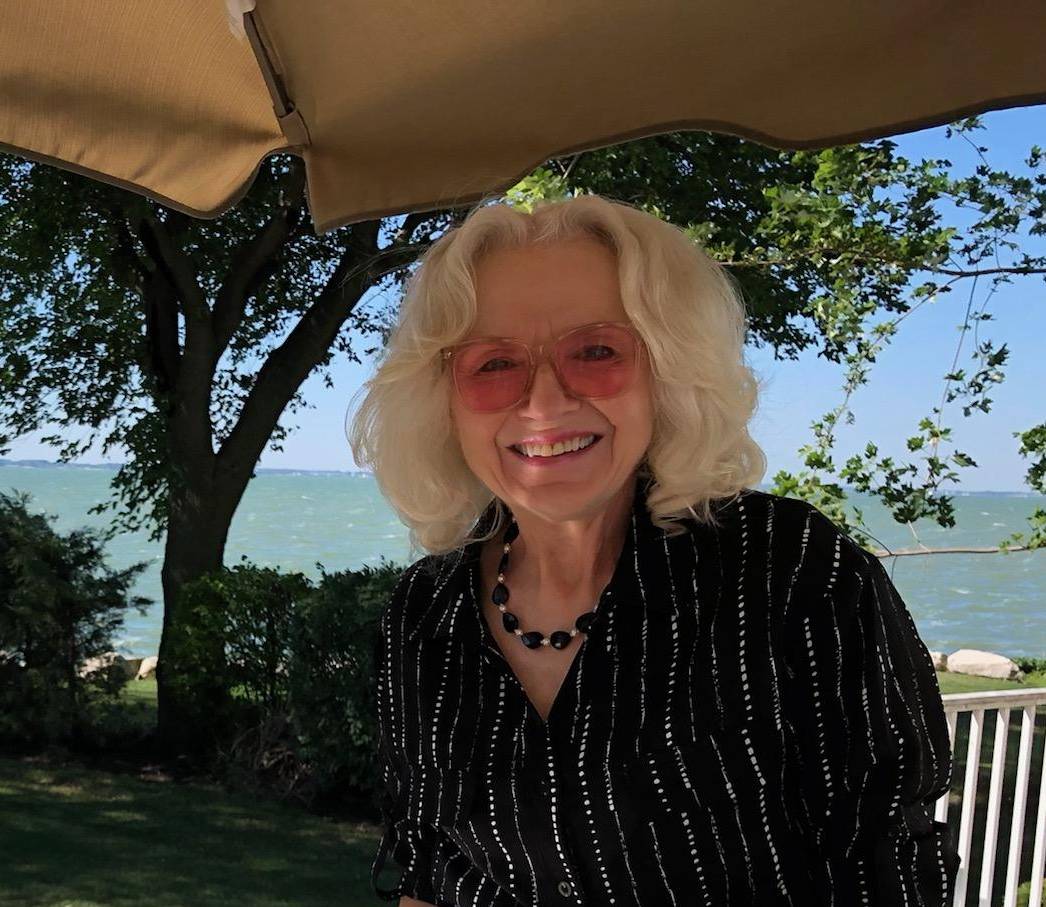
Not every writer does this but let me just say this…my characters made me do it.
I have written a couple dozen books, mostly fiction, with a few books on how to write thrown in because I wanted to help other writers get their ideas on paper and into print. I write mostly detective novels because my wonderful husband, Richard, said something that changed my life when I couldn’t get my spy novels published early on in my writing journey. He said: “You used to be a private detective, so why don’t you write a detective novel?”
Words of wisdom from a smart man. So, I wrote that first detective novel, got it published and wrote a dozen or so more books as well as several short story collections featuring a detective or two.

But something happened while writing those books. When I was working on the second detective series featuring a guy named Johnny Casino, I did something my old acting teacher taught me. I didn’t want to be an actor, but I thought that class was a good way to learn how to write dialogue for the movies or television. What Rudy Solari taught us was to write a short biography of the character we were playing so we knew who that character was when we walked onto the stage.

I used that method to get an idea who the main characters were in the books I was writing. While I was writing about Johnny Casino, I let him “talk” and tell me who he was. What I learned was that he had been trained by the first detective I had written, Ginger Caulfield. Who knew? I guess those two characters knew it.
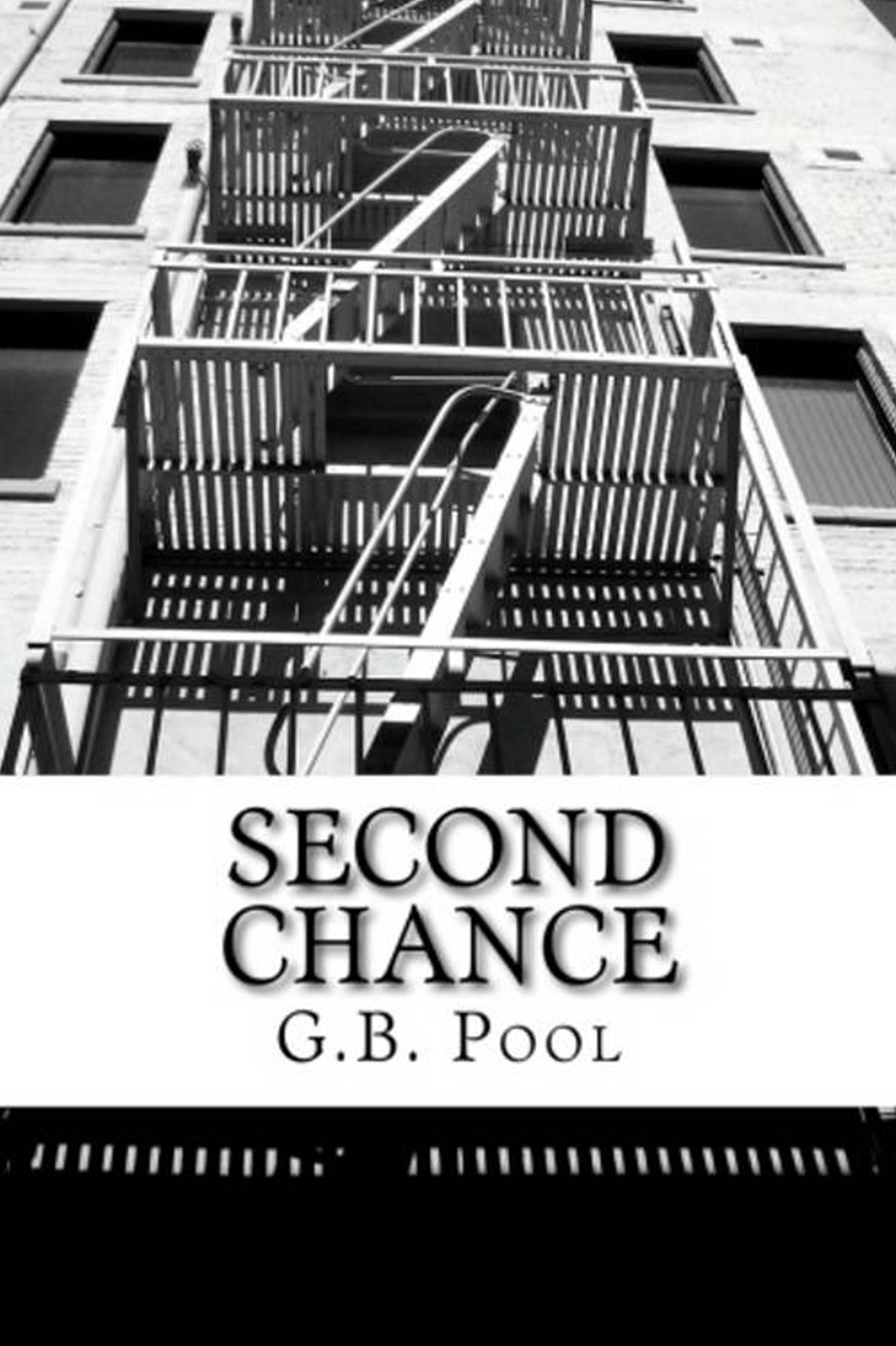
When I started the third detective series about a cool guy named Chance McCoy, lo and behold, he knew Johnny and had been trained by Gin, too. But the coincidence didn’t end there. One of the characters in the three spy novels I penned is a friend of Gin Caulfield. And Gin’s uncle is the main character in those spy novels.
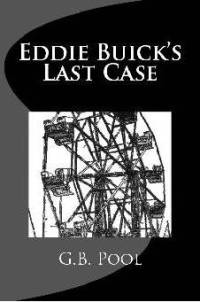
So, after writing three different detective series, I have three detectives who all know each other. But it didn’t end there. These private eyes know this other guy from a stand alone novel I wrote years earlier. The character, Jason Kincaid, has recently retired from the police force at this point in time. There’s a reason he retired, but that’s another story.
Now I have these four characters who all know each other. What do I do with them? Why not have them start a new detective agency and see what happens. So Four Detectives was written. It consists of four stories from each member’s past and four new stories after they start working together.
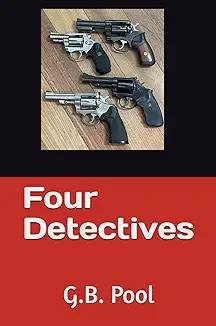
But there is something else about these people. They have something in common that started in their respective pasts which is the real reason they know each other now and are working together. When they realize this, everything changes.
Hey, this wasn’t my idea. They told me their story and I just wrote it down…
I wonder how many other writers have this happen.
Share this:

Research Can Be Dangerous: A Cautionary Tale
By Maggie King
The Confederate statues on Monument Avenue in Richmond, Virginia came tumbling down. For this author, that meant a scene rewrite and a research trip. I didn’t expect the trip to end in the ER.
In my recently released story, Laughing Can Kill You, Hazel Rose investigates the murder of an obnoxious writer given to laughing at others’ expense. In one scene, Hazel and her cousin Lucy attend the victim’s memorial service, hoping to ferret out who killed the man. The service is held in one of the stately homes on Richmond’s Monument Avenue.
Here’s my thumbnail description of the area:
Statues memorializing notable players in the Confederacy punctuated Richmond’s Monument Avenue. The statue paying homage to African-American tennis star Arthur Ashe lent an incongruous note to the lineup of Civil War monuments. Various groups clamored for the removal of the monuments that they considered reminders of slavery and racism; other groups believed removing them was tantamount to erasing history. A grassy mall divided the wide avenue, lined with trees and architecturally-significant houses.
If you’ve kept up with events of recent years, you know that the statues (except for the Arthur Ashe one) were taken down in 2020 and 2021, amid a flurry of protests, acts of vandalism, and government orders. But Laughing Can Kill You is set in 2018, when the statues were still in place. So I was okay? Right?
Maybe not. Would my readers be aware it was 2018? While it was clear to me, it may not be to them. Plus, the statues were still a hot-button topic, regardless of one’s position. I’m not looking to get readers riled, I simply want to give them an enjoyable story.
Monument Avenue was not important to the plot, but I could hardly feature it in a scene without mentioning the famous statues that give it its name. Talk about the proverbial elephant in the room. Street, rather. So I needed a different, but similar, location. It didn’t take long to come up with a Plan B: Richmond’s Northside, just ten minutes from Monument Avenue.
Here’s the description that replaced the Monument Avenue one:
The Hermitage Road Historic District on Richmond’s Northside started life as a streetcar suburb in the late 19th century. Developing the area north of the city to solve the housing problems caused by a rapidly growing city population became possible with the invention of the electric streetcar. The trolley line ran down the middle of Hermitage Road. At some point, a wide, grassy median replaced the line.
As I drove along the historic stretch lined with trees and architecturally significant houses …
It was a beautiful Saturday in May of 2021 when I drove to the Northside to scope out the area for sights, sounds, traffic patterns, etc. to add authentic detail to my story. I had a house in mind, a Colonial Revival I’d visited on a long-ago walking tour of the area. It was similar to the Monument Avenue house and I could use the same interior details.
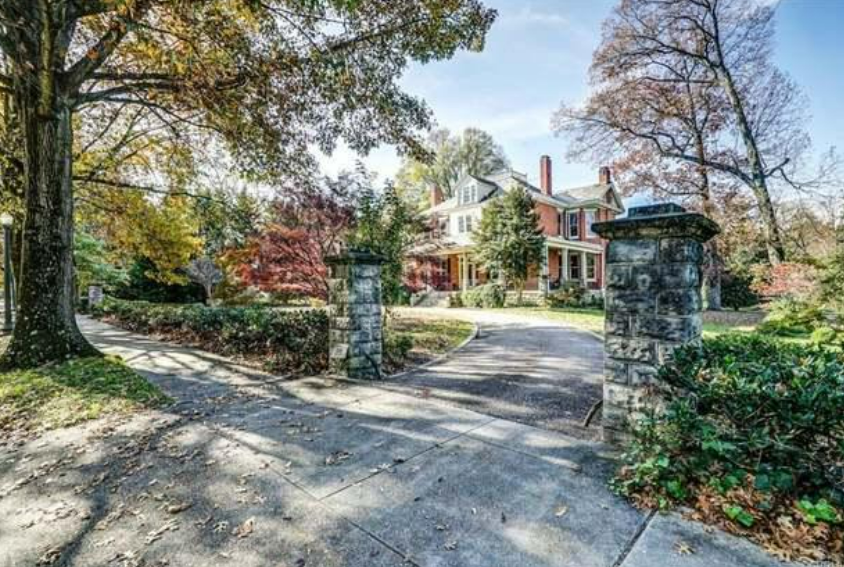
I walked down Hermitage Road and what did I see in front of the house? A “For Sale” sign!
I started to cross the street, thinking I’d get a better picture of the place from a distance. I hesitate to take pictures of people’s houses, feeling I’m invading their privacy. If challenged, I could say I knew a prospective buyer. Or I could offer a copy of Laughing Can Kill You when it came out. That should certainly appease them.
I looked around at the other houses, at the trees, flowers, taking in the scene, framing photo shots.
No photos were taken. With all my looking around, I didn’t look where I was walking. In an instant, I fell off the curb, landing splat on my shoulder.
When I picked myself up, my arm felt fairly useless. Thinking, hoping, that I’d only suffered a bruise, I decided to go home and ice my arm. But some persistent voice buzzing in my ear said “Go to the ER.” My guardian angel? Where had she been a moment before? Why hadn’t she grabbed me by the hair and pulled me back from that nasty asphalt? Oh well, God and angels work in mysterious ways.
At St. Mary’s Hospital (incidentally, it’s on Monument Avenue), I learned that I had a fractured shoulder. I went home with a spiffy sling that accessorized my wardrobe for six weeks. Luckily, it was my right shoulder and I’m left-handed.
Back to my rudely interrupted research trip. As the Colonial Revival was on the market, there were plenty of pictures of it online. The owners were asking a cool million. I bet you know what I’m going to say next—-that I purchased the place! Um, no, but I did find lots of beautiful interior and exterior pictures.
Shortly before this unfortunate incident, I’d written a scene where Hazel trips over a crack in a sidewalk and uses balance skills she didn’t know she had, avoiding a spill. Hazel is like me in some ways (except I don’t investigate murders) but apparently I’ve given her better balance and coordination skills.
My original plan was to end the research trip with a latte at Crossroads, a fun and funky coffeehouse on Richmond’s Southside. Hazel and Lucy got to enjoy that treat after the memorial service (although I named the place The Beanery in the story). They needed to compare notes on what was becoming an intriguing investigation.
By the end of a summer spent in PT, my shoulder was declared healed.
Laughing Can Kill You was published just after Thanksgiving of 2021.
There you have it: my cautionary tale on the perils of research.
Originally published in Kings River Life Magazine, January 5, 2022
Share this:

Seven Story Plots
By Jackie Houchin
 I recently talked to a young man involved in theatre at his university. He longs to write a play or musical and has all kinds of ideas about special effects, music, and costumes. He has even imagined a few characters. But he has no story. No plot, only a few imaginative scenes.
I told him there are just a few basic plots in the world from which all books and plays originate. I told him there were five, but on researching them, I found it is seven. (Christopher Booker’s 2004 book The Seven Basic Plots: Why We Tell Stories.)
Here they are.
- Overcoming The Monster.
Christopher Booker suggests Dracula by Bram Stoker, The Lion, the Witch, and the Wardrobe by C.S. Lewis (the White Witch), or The Help by Kathryn Stockett. In the “monster” story, you need a chilling threat (human or not) and a brutal contest that will probably require a significant sacrifice.
- Voyage and Return.
The Odyssey in Greek myth and The Hobbit by J.R.R. Tolkien are examples. Your protagonist will need a dangerous journey or impossible quest with an uncertain outcome. He needs opportunities to turn back but to show heroism, he will continue and return with new strength.
- Rags to Riches.
Cinderella, Jane Eyre by Charlotte Bronte, and Memoirs of a Geisha by Arthur Golden are all examples. Your protagonist should grow in character, strength, and understanding, helping them to be empowered. This sometimes involves romance.
- The Quest.
The protagonist sets out to find someone or some object, like buried treasure. At each step the stakes need to be raised, making it harder and harder to achieve. The hero emerges stronger or more mature. J.R.R. Tolkien’s The Lord of the Rings and J.K. Rowling’s Harry Potter and the Deathly Hollows are examples.
- The Comedy
The idea of Comedy is to create many misunderstandings for the protagonist to get involved in. The plot continues to muddle events, feelings, and perceptions until the end when all will be “miraculously transformed.” The action moves from dark to light. The Inimitable Jeeves by P.G. Wodehouse and Bridget Jones’ Diary by Helen Fielding are examples.
- The Tragedy
Tragedy is the opposite of Comedy and goes from light to dark. The protagonist has a deep flaw or makes a horrible mistake, causing his undoing and failure. Think of all the “if onlys” that could have happened. Give him ways “out,” which he won’t take, then close off any exit options. Classic examples are Othello, King Lear, and Macbeth by Shakespeare, The Great Gatsby by F. Scott Fitzgerald, and Anna Karenina by Leo Tolstoy.
- The Rebirth
Rebirth is like a tragedy but with a hopeful outcome. The protagonist’s journey has a redemptive arc and sometimes includes romance. The “happy ending” should depend on that arc. Fairy tales are good examples, as are The Secret Garden by Frances Hodgson Burnett, Emma by Jane Austen, and The Kite Runner by Khaled Hosseini.
Of course, you can combine multiple plots and add subplots, too. These seven plots are a guide to building your story. You can elaborate as your fancy suits you.
Now, give it a go!
Share this:

September is Library Card Sign-up Month!
By Maggie King

Head over to your local library TODAY and get your card. Faithful readers and contributors to this blog no doubt already have cards—but perhaps a friend, family member, or neighbor could use a reminder of all that libraries have to offer. The obvious perk is access to books; but they’ll find movies, multimedia content, educational programming, children’s activities, and more at their local library. With a few exceptions, library materials and services are free of charge (okay, your taxes partially fund libraries—but what a good use of those tax dollars).
My love affair with libraries started when my mother took me to our local library in North Plainfield, NJ. I’m not sure how old I was, but it’s safe to say I was YOUNG. My own library card made me feel very grown up indeed. A few things that stand out in my memory: the skull stickers the library attached to the spines of the mystery books; Anne Emery’s teen romance stories, in addition to the inevitable Nancy Drew series.
I was always a voracious reader, often spending all day in my room reading books from the library. But once I went to college, any time spent in the library was focused on research and course work. I was no longer reading for pleasure. In my twenties, working long hours plus a hectic social life left little room for reading. When I did visit libraries, I often forgot to return the books, amassing hefty fines.
In my thirties, libraries came back into my life in a big way. I took a job in downtown Los Angeles, not far from the fabulous Los Angeles Central Library. One day a co-worker asked if I wanted to walk over to the library during our lunch hour. I’d never worked with someone who spent her lunch hour like that! I went with her and borrowed a copy of Jane Eyre.

The beautiful Los Angeles Public Library (Central)
That day got me started on a path of reading, often re-reading, the classics. Jane Austen, the Brontë sisters, George Eliot, Theodore Dreiser, and Willa Cather are just a few authors of the many classics I devoured. During this period, I also discovered adult mysteries (that led to writing mysteries, but that’s a topic for another post). I became a library hound, and could often be found roaming through the stacks in one branch or another of the LAPL system. I also frequented branches of the Los Angeles County Library, the Glendale Public Library, and the Palmdale Library. Inter-library loans were another revelation.
After the Northridge earthquake in 1994, commuting to work, always a challenge in Los Angeles, became hellacious. I coped by renting books on tape from, you guessed it, the library! Others had the same idea, and soon the shelves were empty. But I managed to listen to the library’s entire collection of Sherlock Holmes short stories.
In 1996, I moved to Charlottesville, Virginia and continued my patronage of libraries. Six years later I moved to Richmond, Virginia, where I currently live, and have cards with four library systems: Chesterfield County Public Library, Richmond Public Library, Henrico County Public Library, and the Library of Virginia.

Bon Air branch of Chesterfield County Public Library
Eventually I discovered the library’s collections of movies, TV shows, Ebooks, audiobooks, etc. During a recent visit to the Bon Air branch of the CCPL , the staff shared with me the best places in Richmond for bagels! Just goes to show that you can learn anything at the library.
When I became a published author, I found even more reasons to love libraries. I’ve participated in numerous author events, panels, and signings at libraries. Libraries catalog my books. I launched my second mystery, Murder at the Moonshine Inn, at a local library. In two weeks, I will speak to a book group at another library. My Sisters in Crime chapter meets at area libraries.

Author signing at Powhatan (VA) Library. Left to right: Carolyn Greene, Josh Pachter, Heather Weidner, Kris Kisska, me
I could go on and on about my love of libraries. Get that card and you’ll love libraries too. I understand that some libraries are offering free goodies to new patrons this month.
In closing, enjoy this quote from Ray Bradbury: “Libraries are absolutely at the center of my life. Since I couldn’t afford to go to college, I attended the library three or four days a week from the age of eighteen on, and graduated from the library when I was twenty-eight.”
More on Library Sign-Up Month at the American Library Association.
Tell us about your favorite library.

 The Writers in Residence
You must be logged in to post a comment.