AI Can Make Mistakes Too

by Gayle Bartos-Pool

Editing is a major endeavor for any writer. Even if you hire it done or your publisher actually provides one, you need to go over your work a few times to make sure the story you thought you were telling made it to the page.

Before I published my first novel, I hired a professional editor. Back then, most publishers were dropping their editors at an alarming rate because they thought the writer would do a good enough job and the cost of an editor on staff was too much for the publisher, so they were let go.

The editor I hired had worked at a large publishing firm. She’s the one who told me about all the layoffs. I paid a tidy sum and expected her work to be good, if not excellent. I got back my manuscript and happened to ask my sister-in-law who worked as an editor on a large newspaper in Orange County California if she would mind going over the pages. She said yes, did the job, and found numerous errors the overrated editor hadn’t found. I paid my sister-in-law $50 just to be nice. I had paid the “professional” $1800.00. This was back in 1996, even though it took eight years before I got that book into print.

I did my own editing after that. I know there were errors in my subsequent books, but like I say: Only God is perfect.

Recently, I happened to pick up one of my spy novels and decided to read it. I wanted to send a copy to someone whose book I had read and wanted to make sure the book wasn’t too full of errors. I did find a few mistakes during that quick read, but they might be overlooked if the reader didn’t pay too close attention to every comma.

I enjoyed reading my book after all these years and decided to read one of the other books in the spygame series, but this time I let my computer read it aloud to me. I was still watching the screen as it was reading my words, but that’s when I started seeing Spell Check underline a word or two…then it wanted me to add a comma here or delete another comma there or change a phrase or use a different word. I actually agreed with a few of those changes, but I was having a problem with the computer wanting me to add way more commas than we were told to do back in 9th grade English. I didn’t remember old Mrs. York telling us not to use a comma before a “but” in a sentence,,, but the new Spell Check didn’t want the comma.

There were some words that had an obvious typo, but I was surprised I hadn’t caught them myself, but then again, when we read our own work, we know what we were going to say and we “read” it even if it’s not there. That’s why in my newer books I do have the computer read my work back to me so I can hear what I wrote. Many times, I would find a typo that I hadn’t seen when I read through the first draft of the book in actual printed form. When I wrote my first few books which included the three spy novels, I didn’t have the luxury of that audio editor to help me.

So, flash forward several decades and all those computer tools have made the editing somewhat better. I still have errors in my books, but hopefully fewer.

But wait! Sometimes the computer program might be a stickler for “correct English” when you want your words to have more of a regional accent or colorful flair. I continued letting the new Spell Check go over those old words and I started finding things it wanted me to change like in the phrase “everything was socked in” referring to the weather, but AI came up with “shocked in.” Then there was my word “noose,” and it wanted “nose.” Or “chicken coop” was changed to “chicken cop.” “Sliver” to “silver.” “Antiaircraft flak” to “flake.”

“Houston, we have a problem…”
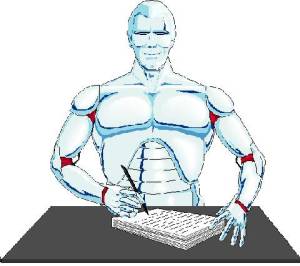
There were dozens more of these stupid mistakes the AI “genius” was making. They weren’t just possible words you might want to use which more or less meant the same thing. These were totally incorrect.

Fortunately, the AI Spell Checker wasn’t making these changes without my Okay like it does on my cell phone or Kindle Tablet, so I didn’t let it have free reign. And as I was making the changes I thought were correct, I still had the WORD program read back my words because hearing them still allowed me to make sure that’s what I wanted to say. I re-edited those three spy books and reissued them this year. Hopefully most of the mistakes were corrected…even with all the blasted commas.

So, be aware of the little goblins hiding in your computer. They might have less education than you do. In fact, I never saw an AI sitting in one of my English classes in high school or college. But I certainly discovered that these AI creatures aren’t writers, because a computer program has no imagination. If you don’t believe me, sit in front of your computer without touching the keypad and tell it to write a novel. Without the human element, human imagination or human touch, or without Internet access to hundreds, if not thousands, of books already written by humans, that conglomeration of motherboard, CPU, GPU, RAM, SSD and HDD can create nothing. Try unplugging your computer with its AI capability and see what it can do by itself. I don’t need to be plugged in or have my batteries replaced in order to tell a story. And my stories are the ones I created, not by a machine that cobbles together bits and pieces of other work and then mashes it all together in an incoherent jumble.

A computer helps, but the human heart, brain and talent will always be better.

  Write On!
Getting Word Out There 

by Linda O. Johnston

Promotion. Writers need to do it, especially when they have a book coming out.

As I do. The fifth in my Shelter of Secrets series for Harlequin Romantic Suspense, CANINE REFUGE, will be an April release. It’ll be the last in that series, which I’ve enjoyed writing. And I want to make sure the world knows about it.

And so I’m mentioning it here. And on my weekly blog for Killer Hobbies. Plus, I’m speaking today at the Union Oil Company Alumni Association lunch, and guess what I’ll be mentioning along with a lot more. In addition, I subscribe to a promotional organization called Writerspace, which also maintains my website. I do more promotions there, including sending out a newsletter—which I haven’t done for a while.

            So, what do other writers do? Most published writers understand the importance of getting the word out when they have a new book coming out, whether it’s from a traditional publisher, as mine are, or if they self-publish, which is becoming much more popular these days.

            My first career was in advertising and public relations many years ago, but things have changed. A lot of promo then could be in publications like newspapers and magazines, but there was no internet then. Now, it’s much easier to get word out all over the country, all over the world, by finding sources online and utilizing them.

            But is it okay to bombard prospective readers with info about new books? Well, why not? It’s good to let them know about them, whether it’s via social media or otherwise. The more they know, the more likely they are to buy and read a new book. And they certainly don’t have to buy it if it’s not their kind of thing—if they prefer mysteries or regular romance to romantic suspense, for example.

            So all you other writers out there, how do you promote your new releases? Do you promote them? And readers, whether writers or not, how do you prefer to learn about new releases?

MAKING THINGS FIT….     

By Rosemary Lord

Whether it’s time or words – it’s an ongoing challenge for me.

Not having the luxury of a 30-hour day, I’m always trying to squeeze things in, so that, apart from ‘work’, I can have some sort of personal life, family time and of course writing time. As I struggle to transfer my workload at the Woman’s Club of Hollywood to a new dedicated crew, it’s taking a lot longer than I anticipated – and about 6 new people to do the work I’ve been doing on my own for so long!

But – I will make it all fit.

I designated Sunday as MY day, when I will not deal with any Woman’s Club work and only speak with family, friends, potter, catch up on housework and fit in some writing time, too. My ‘work phone’ is switched off. This is the only way I’ve been able to catch up on my personal life, finding serenity, make things fit – and even make time to paint my nails – a pale blue this week! I cherish my Sundays.

I envy some of my friends who retired early and travel all the time. I just can’t fit that in now!

 And then there’s making things fit in my writing. I have three major writing assignments at the moment.  A non-fiction, 144-page coffee-table history book, an historical novel and a memoir. So far, I’ve not had the time – or the mental focus – to sit for hour after hour, day after day, as I used to, to complete one of them. I tend to fit in the odd hour or two and peck away at one of my projects. Although my mind is always working overtime thinking about them.

First, in fiction, especially in mysteries, I have to get the right name for my characters.  I have to make the name fit.

I mean, you can’t really have an exotic, sultry siren called Mary or Jane, could you? Sophia or Camille, maybe. Or a tall, hunky, sun-bronzed hero called Arthur or Reginald, doesn’t really work, does it? The names have to fit the character, the story, the era, the background, in order to be believable.

Although one of my pet peeves as a reader is to have the characters all having a similar sounding name, especially in the same scene: Fin, Tim, Dick, Nick, Rick – or Jim, Jon, Jan, Jen, Janey, Jed and so on. I make a point of making sure the names differ in sound and length. You’re not going to get confused when characters names are specific for the storyline and sound different. Such as a Jim, Stephen, Montgomery, Drew and Samuel. Or Roberta, Annie, Pamela, Sue, Gwendoline and Florence. Different lengths and starting with different consonants. Easier for the reader (and me, the writer) to keep track of.

I always feel challenged with the word-counts we’re given. Tough to fit all I want to say within their limits. Should my work be a short-story, a novella, a novel – or a War and Peace tome? My storyline has to fit into the right category.

Then I (hopefully) unobtrusively, fit in the clues and red herrings. Remembering the villain needs to be seen, fleetingly, very early on in the story. Almost hidden, with no big flashing neon signs. So that at the end, when all is uncovered, I haven’t cheated my readers by suddenly announcing: “By the way, the Butler, whom you’ve never seen before, did it.” As a reader I like to think I know ‘Who Dunnit,’ but I’m not sure and I keep trying to work it out. Then the satisfaction at the end of saying “of course!” and retracing the steps to figure it all out for myself. So, I have to make sure that it all fits in.

And I have to fit in the adversity, the challenges, the processes my characters go through, without the reader aware of what I’m doing.  Static stories are boring. My characters need to lose something – or fear losing it. They must process crisis – large & small – then recover and carry on obliviously enjoying life, until another surprise stops them in their tracks from an unexpected source. Unseen forces. Another deadly trap.

It was Raymond Chandler who said, “there’s no trap so deadly as the trap you set yourself.”

Whatever that means. But then it was Mark Twain who said: “write what you know.”  So, between the two, I should have a story somewhere!

And somehow, I will fit in the time to make it all happen.

Writing anything is a challenge, but writing mysteries is a unique adventure, unraveling the human mind. It’s like designing a large jigsaw puzzle, making all the pieces fit.

So, I’ve become very proficient at making things – time and words – fit. How about you?

How Do Writers Choose the Titles for Their Books & Stories?

This week the Writers In Residence members answered a “group question.” 

How do you choose the titles for your books or stories?

1.  Rosemary Lord:   For me, titles flow as part of whatever I am writing at the time. Sometimes, the title comes first, maybe snatched from a song title or a poem. But the titles have to fit the setting, period, and essence. The title has to match the “inside” and be intriguing or evocative because it is the first thing that catches the reader’s attention. 

Once, I thought a writer friend’s book titles were heavy and pretentious, a bit “off-putting.” I felt bad for her as I thought her big publisher chose them. I was going to make a “diplomatic” suggestion.  Then she said SHE had come up with all her titles!  Oops!

.

2. Maggie King:  There are so many ways to choose a title. It’s not my strong suit, so I often collaborate with others. For Murder at the Book Group, my agent helped. When I re-released MABG as Death Turns the Page, my songwriter husband helped. I don’t recall how the title for Laughing Can Kill You came about, but I think “I” thought of it.  For Murder at the Moonshine Inn, I brainstormed with a friend and her son. The son suggested the title based on his many visits to redneck bars (much to his mom’s surprise).

I had an easier time coming up with the titles for my short stories on my own. Maybe being “short” made the titles more apparent.

.

3.  Madeline Gornell:  I’m not being flippant, but they seem to come to me out of the blue. Maybe from dreams?  Or TV?   I say, don’t worry about it, they just come.”  Hmmm.

.

4.  Miko Johnston:  For me, a good title hints at the theme and tone of the piece before it’s read and summarizes it afterward. Some titles came easily, like calling my short story, featuring a nameless protagonist who creates “art” By Anonymous. Others took a while to find the right title – years in the case of my series A Petal in the Wind – a perfect metaphor for my character.

.

5.  Linda O. Johnston:  I generally consider titles for any new series and the book I’ll next be working on as I’m starting to plot them.  I jot them down, often on the computer, and modify them as new ideas come to me. And, of course, I anticipate that my editors will most likely modify them again once I submit them, although I do get to approve any new ones.

.

6.  G. B. Pool:  This is a fun question. When I’m pondering a new book or short story, the title almost always comes right as I’m coming up with the plot. I couldn’t tell you which came first. This is when I’m actually writing the story, not just tossing around ideas.

I have had a title before I had a plot. I mention this fact in the book of short stories I’m working on right now, called  Bits and Pieces. This book is the result of several folders I keep of story ideas I’ve written down, newspaper articles I have saved, or ones a friend like Jackie Houchin has sent me over many years. These “bits and pieces” of ideas just might prompt a story. These are all fragments of an idea, and most have no title listed.

I have changed the title of a story once or twice, but that comes about only if I totally redirect the plot into something entirely different and the title just doesn’t work anymore.

One title I came across in a folder that I haven’t used yet is: “Just Shoot the Archbishop and Pass the Brandy.” All I have is the title. No story. A story may never come of it, but I mention it in this upcoming short story collection just to show how writers work. But I do think the title has to fit the story, the two coming as Siamese twins seems to work.  

.

7.  Jackie Houchin:   It’s never been published, but a “woman’s fiction” book I wrote had the title of Sister Secrets. It’s about three women who have the same mother but different fathers. They each have a long-standing “secret” that has returned to haunt them. As the story unfolds, each sister’s strengths and talents help unravel and resolve the secret that is keeping another sister captive.

In my children’s short stories set in Africa I tried to make the titles be “teasers” for stories that middle-grade kids would enjoy.   Dead Mice,   The Eyes in the Well,  and  Deek’s Wild Ride were a few.

All my titles come to mind in the process of writing the story. They just fit.

###

READERS:  If you enjoy these “Group Questions” and have one YOU would like to ask us, please mention it in a comment below or forward it to me at Photojaq@aol.com 

Remember, if you comment, first click above on the TITLE of this post. (How do writers….)

.