Telling Your Story

by Gayle Bartos-Pool

Whether you’re self-published or have the backing of a big publisher, a writer still needs to get a short version of their own life story in shape for that occasional interview they might do for publication or even a live broadcast. If the person doing the interview knows his job, he will have handed the author a set of questions ahead of time, so the writer isn’t blindsided by a question. That’s professional. Sometimes the person doing the interview will ask if there are questions the writer wants asked because often the writer has a story to tell that the person doing the interview will have no idea exists. This will make the interview unique. That’s good for everybody, even the audience who will get to meet somebody with an interesting story. For the writer, that doesn’t mean only the story in the book he just wrote.

Recently I had the opportunity to do both a written interview and a live talk for a local show where I live in Ohio. The first interview was done by a fellow writer, Jill Amadio, who started out as a journalist for a British magazine before she wrote her first mystery featuring a gal who was a gossip columnist back in Britain who has to leave the country because she did too good of a job digging up dirt only to trip over a body or two here in the States. Obviously, Jill knows a lot about writing for a magazine. That book is Digging Too Deep. A great read.

https://promotingcrime.blogspot.com/2025/06/jill-amadio-in-conversation-with-gayle.html

She asked if she could interview me for a mystery magazine, Mystery People, published in the United Kingdom.  This was fun. Working with the questions she first provided and adding a few of my own in order to tell my story, we came up with a good interview.

As writers, we need to get out in front of people and tell them not only about the book we wrote, but also a little bit about ourselves to let our potential readers know where we came from and maybe how we got the idea for our novel.

I have been doing this for a while, but it was only recently that I wrote my autobiography to tell people who I am. I learned a lot about myself. That’s why I recommend that everyone write their own story whether you write novels or do something normal…Sorry, I digress.

Having gotten to know myself doing my autobiography sure helped when I did these two new interviews. Not that I didn’t know who I was, but I needed to get organized. First, I wrote out basically what I wanted to say about my life and writing career. Then I wrote out a script like doing a movie. I had taken acting classes back in California when I wanted to write for television and/or the movies because I thought knowing what the actor needed from the writer would be a good idea. It was.

I wrote a script. I cut out stuff and added stuff until I had a fairly clear idea where I came from and how I got to be who I am. Then I rehearsed it. Two or three times a day. Even when I got into bed at night, I went over the script. As I walked around the house, I timed it. The televised event would be no longer than an hour. I made sure I could do all the aspects I wanted to cover in those sixty minutes. Then I rehearsed it a few more times.

The 54 minute interview is on the Avon Lake Library website: https://www.avonlake.org/communications-technology/videos?action=show&video=MjkwNg==

It was a challenge, but writers have to try new things in order to get our name out there so people know who we are and what we do. And, frankly, this was fun.

The written version for the British interview covered the highlights. The televised version was longer with some hand gestures thrown in to make a point and even photographs to add to the story. Those acting lessons allowed me to do the event without standing there like the Scarecrow in The Wizard of Oz before Dorothy came around. You cannot imagine the confidence those acting lessons gave me.

So, you writers might want to work on several versions of your story in case you’re asked to do an interview. Short ones and longer ones. It gives you a head start. And something else, it might get you interested in writing your own autobiography. You do have a story to tell.

Continue reading “Telling Your Story”

How to produce a Zoom/YouTube Series and make it work…correctly, part 2

by Will Zeilinger and Janet Elizabeth Lynn

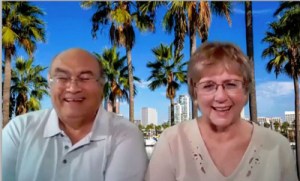
We are a husband and wife team who write together as well as individually. When the Pandemic hit, we were as shocked and confused as everyone else. Not only by the world’s sad state of affairs, but we missed our friends.  It took a few months to realize that the Pandemic was going to take some time to resolve. So, we decided to launch a YouTube channel, “Chatting with Authors.” We produce casual interview programs via Zoom and air them on YouTube.

          This is the second of a two-part series that discusses the ins and outs of making it work and some pitfalls to avoid.

Once you have all of your technical details worked out and, most important, are comfortable using them, next comes the talent (people you want to interview).

INITIAL CONTACT- First, we sent an initial letter to inform authors of the program, what it was going to involve and asked if they were interested in being on the program. Surprisingly, we had little response to the idea. We set up three Zoom recordings of those who were interested. After editing them and scheduling them on YouTube, we were able to refer the authors to the three programs. That’s when the flood gates opened!  

FOLLOW UP- We scheduled two to three Zoom recording sessions per day. We found that any more, and we were getting too “punchy” toward the end. The best was two or three. Once the talent was scheduled for recording, we asked them to send a headshot, website address, short bio, and five questions they would like us to ask them on the show.  Once we received their information, we scheduled a phone interview a week before their Zoom session. This is where we discussed the procedure and went through the bio and questions (we usually had to edit the bios and questions to fit in the 30-minute recording session).

DURING ZOOM RECORDING- We discovered gremlins in the internet that can cause all sorts of problems, especially when interviewing people in different countries or the east coast (we are in California). So it is best to schedule an hour even though our show is 30 minutes. Once you get them online, check audio and visual. Remedy any problems, like echoes, before you begin recording.

Be sure to keep the talent on after the recording is finished to discuss any problems that may have occurred during the session, i.e., visual static, audio blank spots, lights falling (it happens!!), and decide if you need to redo the interview at another time. This happened only twice out of 64 shows.

AFTER THE SESSION- Immediately after the recording session, summarize the interview for your PR for the show. We have a specific logo we use and superimposed their headshot on it. When we schedule our airings on the various platforms, we use that summary and logo.

 A week before we air their program, we send them a notification of day and time, a copy of the logo, address, and summary we are using. 

IMPORTANT!  Always ask them to confirm that they received the information. Always!

DRESS-be sure what you wear will not disappear into the background. And council your talent to be careful if they are using a green screen or a background. We had a few people who were armless and faceless or bodiless until they changed their clothing.

THE STUDIO- We record from a corner of our office, early in the morning every Thursday.  So, each Wednesday evening, we set up the studio and take it down every Thursday afternoon. It may seem like a pain, but it does get easier as you do it.

Things to watch out for:

—If you are recording on your premises (home, garage, outside), be sure you know when the gardeners, carpenter, cement workers, trash pickup, etc., are coming anywhere in the neighborhood. It can get embarrassingly loud! 

—Be sure your lights are soundly taped down or strapped. One of our lights managed to stay put during the first two interviews of the day but came crashing down on the third one. We acknowledged it but kept the interview going. 

—During the phone interview prior to recording, you will get a feel for the nervous state of the talent. If they have never done this before, they can get pretty frazzled. So encourage them as you record their interview.  

With much planning and practice before your first recording, you will have a blast doing interviews with friends, meeting new people, and, most of all, making connections. We have written five books and recorded 64 shows together, and yes…we are still married!


Janet Elizabeth Lynn
Author of mysteries, checkout my website www.janetlynnauthor.com
Check out our latest Skylar Drake Mystery.
 

(For questions and/or information on how  YOU and your writing can be hosted on “Chatting With Authors” please contact them at: lynnslp@earthlink.net )


This blog was posted for Will Zeilinger and Janet Elizabeth Lynn by Jackie Houchin