HOW I FOUND MYSELF WORKING AS A WRITER IN RESIDENCE OF A HIGH-SECURITY MALE PRISON

by Hannah Dennison

I’m excited to introduce our special guest today Sunday Times bestselling thriller author Jane Corry. As you’ll soon learn, Jane’s writer-in-residence experience is quite simply extraordinary.

Jane – welcome! 
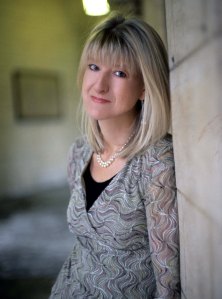
My novelist career took off when I went from being a features writer on a well-known women’s magazine to prison.

I’m not joking. But I should add that I was a writer in residence at a prison rather than being a prisoner myself.

My story started the month I got divorced from my first husband after 27 years of marriage. Two weeks later, my weekly magazine column ended due to a staff shake-up. Although I had maintenance, I found myself in need of extra income in order to bring up my three children.

After moving house, my new neighbor suggested that I look in the papers for work. I hadn’t applied for a job for 27 years—I’d been a freelancer since my children were born. But there it was—an advert saying, ‘Wanted! A writer in residence of a high-security male prison.’

Frankly, I didn’t think I had a chance. After all, I didn’t have any experience of prison, either from the outside or in.  Indeed, the only crime I’d ever committed was to park on a double yellow line.

But the money they offered was exactly what I needed to pay my mortgage – to a penny.

My sister and friends didn’t think I should apply. In fact, they thought I was crazy even to consider it.  I was, as they pointed out, in a bad place emotionally. How was it going to help me to work in a prison? I like to think it helped both me and my students, but I’ll come onto that in a moment.

I was very surprised to get an interview and not at all surprised to fluff it up. The governor asked what I would do if a prison officer came into the room where I was running a writing class and told everyone to get out. I said that I would get them to stop in the middle of the sentence so it would make it easier for them to come back to it – it’s a good writing technique. He looked at me, his eyebrows raised. ‘And by that stage,’ he pointed out drily, ‘half the prison would have escaped.’

He had a point. From that moment, I relaxed because I knew I’d blown it. So you can imagine his surprise when he rang that evening and offered me the job.

On my first day, I was given the keys to the prison. To be precise, I was handed a key belt and told that I had to lock any doors that I unlocked and went through, otherwise I’d be out on my heels. I also had to make sure that I signed in every night and handed the key back.

My role was to be a sort of literary Pied Piper. I wasn’t part of the education department, where people had to come to my lessons. I had to woo them in through notices which I put up round the prison.  I printed them out with titles such as ‘Come and join my workshop to write a letter, novel, short story, life story.’

Life stories were particularly popular. I learnt more about crime than I care to talk about. I will say, however, that I was reduced to tears of shock and horror by one man’s story. He then apologized for upsetting me and I told him he should be apologizing to the people he had held up and threatened with death.

I entered his life story for the Koestler Awards, given to men and women for art and writing in prison and he won a silver. His behaviour immediately changed for the better and the guards said that it was due to his new-found story telling skills. He told me that if he hadn’t expressed his remorse on paper, he might have banged his head against the wall.

On the whole, I was treated very well in the prison, although there were times when I was scared. I was followed around at one point by a man who – when I looked up his crime – had tried to kill his girlfriend. I didn’t look up any crimes after that apart from the former accountant who had been a rapist. I don’t want to go into that. He seemed such a nice man.

One night, the governor asked if I would spend the night in the prison for a charity drive. I would have turned down the invitation but the money was going to help pay for my next year at the prison. So I felt obliged. It was terrifying being locked in. There was a bowl under the bed for my business. I spent all night typing. The gov had allowed me to bring my typewriter in. In the middle of the night, an officer knocked on my door and asked what I was doing. I told him I had permission to write and reluctantly he went away.

On other occasions, I brought in writer friends to talk, including Colin Dexter. The men asked him how he got his inspiration. He told them that it was a large bottle of malt whiskey. This didn’t go down well with the officers, but the men thought he was wonderful.

When I started my prison job, I was told that the men either spent their leisure  time in the gym or in the chapel. That stayed in my mind. Then as I walked past the gym, with sounds of machinery pounding, a title fell into my head. The Book Of Uncommon Prayer. So I asked both the men and the staff to write down sayings that helped them through life. I’d written something similar for the women’s magazine earlier. It seemed to go down well and also improve relations between some staff and men.

My two year contract was extended to 3 years. They then asked me to stay for a fourth but I thought that I might never leave. By then I’d got married again so I said goodbye but I volunteered to be a judge for the Koestler Awards and have done so now for the past ten years. Every summer, I go up to Wormwood Scrubs and leaf through entries. The winners’ work is displayed at the Southbank in London every autumn.

I gave up romantic fiction and began writing gritty suspense novels about families who’d been affected by crime, either as aggressors or victims. I changed agents and my new one sold me to Penguin. I’ve since had eight top ten Sunday Times best-sellers.

People sometimes ask if I miss my old life. Actually, it haunts me.  You can take the girl out of the prison. But you can’t take the prison out of the girl.
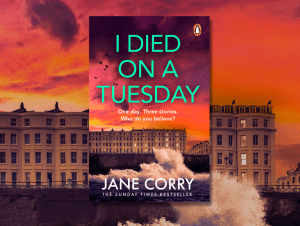
You can buy my new novel ‘I DIED ON A TUESDAY’ in supermarkets, shops and   https://bit.ly/3SE8UVi. Thank you. You can also find out more about my books at www.janecorryauthor.com,   

The book on Amazon

Is Handwriting Dead Or Just Dormant?

“The pen is like the needle of a record player held in one’s hand,” Donald Jackson, calligrapher, and scribe to the Late Elizabeth II, once observed. “As it moves across the paper, it releases the music of our innermost selves.”

Wow. I just love that. Sadly if Mr Jackson saw my handwriting he would accurately surmise that I am permanently scattered.  

Mahatma Gandhi declared that a poor hand is “the sign of an imperfect education.” But mine leans more towards P.G. Wodehouse who said his, “resembled the movements of a fly that had fallen into an inkpot, and subsequently taken a little brisk exercise.”

Computer keyboards ruined everything for me.

I had the most perfect handwriting. As a Brit we were not trained to write “cursive” which I think is an American form of script. Here is an excerpt from my Home Economics book circa 1969 – please note the hilarious and dated content.

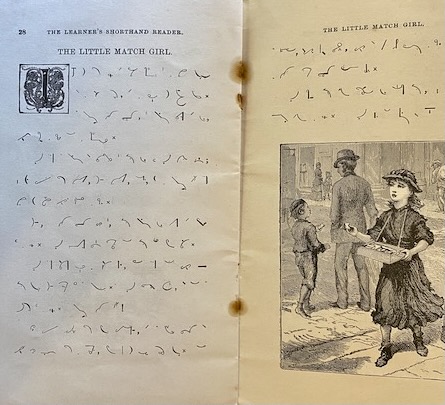
In 1977 I trained as a “shorthand typist” before Dictaphones were invented. In the UK the shorthand was Pitman shorthand;  – in the USA it was “Gregg,” although there are many other forms like Teeline or Fastnotes. I could boast 125 wpm (words-per-minute). I loved it. Here is an example of Pitman shorthand taken from “The Lerner’s Shorthand Reader” circa 1892 and priced at 6d.

Isn’t it pretty? If you’d like me to transcribe, I will …

I could “touch type” i.e. there were no letters on the keyboard so I would type the copy without looking at my hands (for those youngsters out there who have never heard the expression). There was also something immensely satisfying about coming to the end of the line and pushing the lever of the carriage return to be rewarded with a cheerful ting!

With the advent of computers, my typing has speeded up dramatically (I just did a free test) and it’s 75 wpm.  There is no way my handwriting now could keep up with my brain. Unfortunately, I can hardly hold a pen let alone write with one.

But let’s not forget the reality of handwriting of centuries past. It’s tempting to think that 19th century penmanship was beautiful and legible. This was not the case. Paper, ink, and postage was expensive. People wrote as small as they could. Anne Brontë’s famous final letter had the lines criss-crossing each other. So even if 21st century handwriting has deteriorated, in the big scheme of things, that’s nothing new. Sadly, a recent survey found that in the past five years, 12% of Britons have written nothing at all – not even a note. With the demise of the check book here in the UK, signatures are barely needed either. Some people don’t even have a PEN!!! I was at the post office recently using my USA credit card which demanded a signature to find that I was the only person in the store who carried a pen!

“When you type on a screen, the words seem as fleeting as rays of light. When you write, there’s a real physicality to it that adds another dimension to how you experience your own writing. It fosters a deeper engagement with the material you write, makes the writing voice inside your head clearer and louder.” Quote from Omwow blog, https://omwow.com/longhand-writing/

I love that expression “words seem as fleeting as rays of light.”

Handwriting is deliberate and intentional and requires focused attention. It encourages us to be fully present in the moment. Neat and well-formed handwriting can also indicate a level of discipline and organization. It’s also lovely to receive a handwritten note. It feels personal because it is personal. Someone has taken the time to write and not just zip off an email.

In the meantime, I’m just grateful that my appalling handwriting doesn’t get me into the following kind of trouble:

In 1636 an employee of the East India Company in London wrote to a colleague in India asking that he ‘send me by the next ship 2 or 3 apes.’ Unfortunately – his letter ‘r’ in the word OR caused some confusion. As a result, he received 80 monkeys, together with a note saying that the remaining 123 would be with him shortly.

What about your handwriting? Please share and shame mine.

Making Your Words Count

I went to a gathering of local writers from Devon and Cornwall last week. Although I have been living back in the UK for five years, I have been a bit of a recluse. A lot had to do with Covid and the self-enforced isolation that seemed not only to curb my freedom, but my confidence too. It’s only now that I am slowly putting out feelers and making new writer friends.

Anyway, about twenty of us met in a lovely restaurant in Exeter and I found I was sitting next to a writer who epitomizes the word “prolific.” I won’t list the number of books of all genres (from Sci-Fi to Romance and non-fiction to ghost writing), that she churns out annually but what stopped me in my tracks (actually, I almost choked on my Halloumi fries) was her goal to write HALF A MILLION WORDS a year. And she casually said she usually comes close.

My first thought was that she had to be a robot. My second, maybe she uses ChatGPT, or maybe she’s a “first line writer.” I use that phrase because my former husband wrote for a TV show and was once accused of being a “first line writer” which upset him greatly. For those unfamiliar with the term, it’s an insult literally saying, “writing the first thing that comes to mind.” I did ask my new writer friend (who was also very nice which made it hard to dislike her) her process. Was she a Pantzer? Did rewriting, editing, and proofreading count towards the magic 500,000 words but nope, I was assured her words were all brand new.

So what’s wrong with me? If I’m lucky, on a good day, I could write nine hundred new words. I’ll probably go back and rewrite them a few times. My books under contract ask for 70,000 to 75,000 words (relatively small if you are used to 80,000 and above). Once, I wrote two books in one year so that topped at 140,000. I never used to be obsessed with my word count until that lunch.

To make myself feel better, I did a bit of research. In my defence, I still have a full-time job, a sick mother, two demanding dogs and – fanfare of trumpets – I’ve just become a grandmother for the first time … so I’m a little busy.

Even so – here are a few famous authors and their daily word counts.

  • Tom Wolfe: 135 words. As you can imagine, each book takes a very long time to write.
  • Ernest Hemingway: 500.
  • Graham Greene: 500. He said that when he has written his 500 words, he stops – even if it’s in the middle of a scene.
  • Ian McEwan: 600.
  • W. Somerset Maugham: 1,000. Maugham said there was no set formula on writing. “There are three rules for writing a novel,” he said. “Unfortunately, no one knows what they are.”
  • Peter James: 1,000. Once you start writing a book, make time to write every single day. Find a comfortable number of words for you to write each day and stick to that number. I am comfortable with 1000 words.
  • Margaret Attwood: 1,000-2,000.
  • Mark Twain: 1,400 to 1,800. Twain believed that location was important to his word count. I write very well on transatlantic flights, so I think he has a point.
  • Lee Child: 1,800. He says it takes him about six months from the first blank screen until the end.
  • Stephen King: 2,000. As a side note, if you haven’t read his book On Writing: A Memoir of the Craft, or you haven’t read it for a while, it’s worth revisiting. Stephen says that following this would add up to about 180,000 words in three months … well on track for the annual 500,000 goal but what about rewriting? Speaking of Ernest Hemingway, he famously said that “All writing is rewriting.”
  • Nicholas Sparks: 2,000. He says his is a daily goal which takes him about five or six hours to write.
  • Anne Rice: 3,000.
  • Arthur Conan Doyle: 3,000.
  • Michael Crichton: 10,000. Okay, this one got my attention. He’s up there with my new writer friend.

POSTSCRIPT: Okay … yesterday I was part of an event at the Torquay Museum called Crime at the Coast – sitting next to me was another prolific author who writes four, 70,000-word cozies a year, screenplays for her TV job and a standalone. I didn’t have the courage to ask her if she topped half a million words a year but one thing is certain, I’m just desperately slow.

So … what about you? Do you write to a daily word count?

Returning to the Partial Manuscript!

Having spent a computer and internet free vacation, I returned with the determination to get organized once and for all. Naturally, this included culling and filing away a gazillion documents on my OneDrive in that thing they call the Cloud. I still don’t trust it and much prefer the old-fashioned file-drawer with hard copies neatly put into hanging folders with colored coded labels – but I just don’t have the space. I live in a tiny little cottage.

Somewhere deep on my hard drive in a generic pale blue folder labeled BOTTOM DRAWER – was a partial manuscript. It was something I had written in 2017 for NaNoWriMo. For those unfamiliar with NaNoWriMo, it stands for National Novel Writing Month. The flagship program is an annual, international creative writing event in which participants attempt to write a 50,000-word manuscript during the month of November. I’ve done it a few times but given up after the first ten days because of the pressure. However, it appeared that in 2017, I had persevered!

To my shock, I had written 52,000 words. I do not remember writing any of it. Not a word. Is it possible to have written it in a dissociative fugue? I have re-read the partial three times and it’s not too bad at all.

Aptly titled The Diversion, I wrote it during the most miserable year of my life – my husband had left me for a much younger woman (argh! I know! What a cliché!), I’d had to sell our beloved house in Oregon alone and move into temporary accommodation and, after twenty-five years in the USA, had decided to move back ‘home’ with my two dogs – horribly traumatic for them. The icing on the cake was that I was turning sixty. It was a wretched time.

As it turned out, the change was a blessing in so many ways that I am grateful it happened. But, at the time – to quote the late Queen Elizabeth – it was my own annus horribilis.

I’ve changed so much since I wrote that story so I’m approaching it with fresh eyes. Thankfully there are plenty of resources online for this sort of thing and these tips have helped but I’m open to any suggestions from my fellow scribes.  

Here are a few tips I’ve discovered online so far:

Janice Hardy’s Three Step Plan for “Returning to a Partially Finished Manuscript” suggests: 1. Read the entire manuscript again. 2. Review and Update the Outline Past Where You Stopped Writing (Pansters can skip this) 3. Revise three chapters prior to where you stopped writing.  Hardy also suggests creating an “editorial map.” I always do a chapter-by-chapter summary noting the date, time, setting, bullet points about what must/is happening in that chapter, and then copying and pasting the first paragraph of the chapter and the last paragraph of the chapter. It was a tip given by a Kerry Madden a wonderful author and writing instructor at UCLA Extension. I do that exercise with all my manuscripts.

In Liz Hudson’s Writing Voices essay A Confession: Returning to a half-finished manuscript is tough, she suggests writing off-manuscript short stories and scenes, flashing out characters backstories and personalities that will never make the book. I love this idea.

But now I keep faffing about and every time I get to P.199 where I stopped writing on November 30, 2017 (I have written and published six books since then), I come to a stop. It’s like I am teetering on the edge of the blank page and I just can’t seem to take the plunge and trust the creative process.

Recently on this blog, I mentioned I wanted to rediscover the joy of writing. When I re-read this partial manuscript, the joy was right there on the page because I’d written it without any thought of what I would do with it.  Now I want to finish the book I can already feel the heaviness of expectation. Will my agent like it? Can I get it published? Does it matter anyway?

I’d love your thoughts!  

The Resurgence of Audiobooks

by Hannah Dennison

The saying ‘ask a busy person’ never held truer for me than these past few weeks. I was on a deadline – the kind where you cannot be late because the publisher works to a tight schedule – I visit my mum almost daily in a nursing home, I have a demanding job to pay the bills, and I have energetic dogs to walk – but despite all that, I happily agreed to feed my daughter’s cats adding another 1 ½ hours of commitments to my day. It’s only a 25-mile round trip but those are country miles along narrow twisty roads and if you get stuck behind a tractor …

Miraculously, it all turned out to be a wonderful gift. The weather has been fabulous (ask Jackie – she knows!) so each morning I would take my coffee and breakfast and sit in Sarah’s beautiful garden with Taz and Tilly and listen to the birds and remember to breathe – to literally ‘stop and smell the roses.’

I also rediscovered audiobooks.

When I’m in serious writing mode – I can’t read any fiction. I just don’t have the bandwidth. Not only that, when I do pick up a book, I find it hard to switch off my writer or editing hat, unintentionally critiquing instead of just going on the journey. There are exceptions of course.  I just finished Lucy Worsley’s excellent biography Agatha Christie: A Very Elusive Woman and I can’t say enough good things about it. But I digress.

I’d checked out a CD of ‘Outlander’ by Diana Gabaldon  from my local library initially for my mother who – at 93 – is a great audio fan. I’d always loved Diana’s time travel series. I’d heard her talk many times, especially at The Poisoned Pen in Scottsdale, AZ where she is their local author.

On a whim, I thought I’d listen to Outlander en route to kitty duty. Usually, I listen to podcasts but I’d forgotten all about audiobooks despite having devoured them on my daily freeway commute when I worked in Los Angeles another lifetime ago.  I’d even got stopped by Highway Patrol once for speeding. When I explained that I’d been listening to ‘Shutter Island’ by Dennis Lehane and just hadn’t been paying attention, they still gave me a ticket – clearly not amused.

An article in Wordsrated (January 2023) stated that globally, audiobook revenue for 2022 is projected to be worth over $5.38 billion. Over the last five years, audiobook revenue in the USA has increased by 113.3% making it the fastest-growing book format in the USA. Nielsen reported that in 2022, 27 million audiobooks were sold in the UK alone, an increase of more than 50 percent since 2018 – and the median just keeps on growing. Revenue from audiobooks is expected to grow 26.4% every year from 2022 to 2030 and reach $35.05 billion in 2030. It’s mindboggling stuff so if you haven’t explored this option for your work, now is the time!

Happily, my books are available on audio but full disclosure, I don’t think I can bear to listen to them. I’d hear all the discrepancies or things that in hindsight, I may have written differently. It would be too cringeworthy.

The narrator is critical.  Davina Porter has narrated the entire series of Outlander. Deemed a Golden Voice narrator with AudioFile, it’s easy to see why. AudioFile’s founder, Robin Whitten said ‘Golden Voice narrators have superb performance skills, are keenly attuned to their authors, and are practiced in many genres and styles.’

Voice acting is a unique skill that includes accurate articulation, the ability to control emotions, instinctive pausing, being aware of when to use an accent (Davina Porter’s Scottish accent in Outlander is flawless) but most of all, the narrator must be able to differentiate each character to enable listeners to audibly ‘see’ that character and bring it to life. 

I know some folks record their own books – and I say good for you! An author friend of mine uses his car as a sound booth – seriously. He stuffs the interior with pillows and duvets and does everything on his phone. It works for him but I wouldn’t have the patience to fiddle with all the editing software.

Audio books are not for everyone. In ‘The Author’ – the UK’s quarterly publication from the Society of Authors, Laura Hackette, Deputy Literary Editor at The Sunday Times, says she ‘doesn’t have the attention span for the format’ and either she drifts off or gets distracted by other things or gets ‘frustrated by the slow-paced narration.’ She even tried listening on 1.5x speed but it just sounded weird.

My cat feeding duty is over now and, to my surprise, I turned the manuscript in three days early – the first time in years. Perhaps it was just taking that enforced time out that made a difference. Who knows? But what I do know is that I have another 8 volumes of Outlander to listen to. I think I’ll just spend more time in my car – even if it is just parked outside my house.

So Many Books! So Little Time!

I don’t know about you, but I have too many books on my TBR stack but instead of reading them, I just keep adding more. I can’t help it. Often I buy books because I’ve read a tantalizing review or it’s a recommendation from a bookseller or I just want to support a fellow writer. One reader confessed to having over 4,000 books waiting to be read on her Kindle. I found that unnerving. Have we always been so cavalier?

When I was growing up, my reading source was always the library. I would pick my four books which, in those days, was the maximum you could check out at one time. This was a cherished Saturday morning trip with my Dad who was a great reader (and, years later, suffered from Alzheimer’s which broke my heart). We would spend at least an hour or two drifting among the bookshelves carefully making our selections. For me, it started with an eye-catching cover, a flick to the back to read the blurb and then a glance in the middle. It was serious stuff. When I got home and started to read one of my selections and hated it, I would still persevere and finish it. I don’t do that now.

Just speaking for myself – and apologies to those who may disagree – but having access to books at the click of a button, or arriving by Amazon Prime within twenty-four hours, has taken away some of my joyful anticipation. There was a sort of reverence to starting a new book when we all had more time and less distractions. Now, there is no commitment – at least, not from me. If a book doesn’t grab me in the first fifty pages, it’s out. Not exactly disposable, but close.

I don’t know about everyone else but I am increasingly overwhelmed by the choice and sheer number of books out there. How do we choose?

I posed that question on my Facebook page showing three different book covers of my first mystery with the original 2008 American cover, the 2012 British cover, and the 2023 French cover. Each cover appealed to a different reader but a few said if they hated a cover, they wouldn’t even bother to read it. Back cover blurbs don’t always present a true picture of the content either. Case in point – the blurb written by M.C. Beaton appears on every one of my books even though it was originally earmarked for the first.

So how do we sort the proverbial wheat from the chaff?

Enter the infamous P.69 test. This is not a new concept. It’s been around for years and was a test created by Marshall McLuhan, (The Gutenberg Galaxy, written in 1962), who suggested that book browsers turn to page 69 and read it. If that page drew them in, then read that book. The idea being that by that point in the story, the inciting incident has happened, the characters are settling in and the plot is trundling along with plenty of conflict and consequences.

Without pointing out the obvious flaws to this idea i.e. a large print edition would have a different P.69, I decided to put it to the test with three different novels.

Rebecca by Daphne du Maurier

The narrator has just arrived at Manderley and on P.69 we realize she is narrating in flashback, imagining how her life with Maxim could have been,  “growing old together” and fantasizing about their “boys. ” She reminisces on meeting the formidable Mrs. Danvers who will show the newly married pair their suite in the East Wing … not the master wing which – as those who know the story – was Rebecca’s suite of rooms that were never touched following her death.

There is a menacing foreshadowing about P. 69. I don’t know about you, but I must know what happened!

Anne Frank’s Diary by Anne Frank

I was fortunate to visit the Anne Frank museum in Amsterdam a few years ago. It’s almost incomprehensible in today’s world to be able to imagine the fear and horror of those dreadful times.

P.69 falls in the middle of a diary entry for Wednesday 10th March 1943 when Anne writes of her terror of hearing the night-time anti-aircraft gunfire, of listening to the rats in the attic and of not being able to light a candle. Anne speaks of a character who lived there “before we went into hiding.” Her courage shines through the page which makes the ultimate outcome more devastating. Anne’s diary is utterly compelling because she takes us into her present and it’s impossible not to stay on her journey.

Tigerlily’s Orchids by Ruth Rendell

Full disclosure! I have not read ANY Ruth Rendell books and selected this one when I went to the library to put P.69 to the test. And it worked! On P.69 the protagonist – Stuart – is fascinated by a beautiful Asian woman who has an overbearing father. Stuart has followed them to a greeting card shop. When Stuart buys cigarettes and turns away just for a moment, she has gone. “To lose her now was the most appalling thing he could think of. He rushed out of the shop, staring wildly about …” The girl doesn’t know she is being watched which is chilling. The page finishes with “He couldn’t let her go. He must follow her.”

I took that book out and it’s on the top of my TBR stack!

So here are my questions: do you choose a book because you like the cover or the blurb? The first line? Do you read the first three pages before buying? Have you tried the P.69 test and what did you think?

Oh … and there is another test called the P.99 test, but that’s for another time.

Hannah

P.S. For more examples of the P.69 test, visit Marshal Zeringue’s fabulous blog: The Page 69 Test

My New Year Resolution: The Elusive “Big Book.”

As January comes around again and, for the fourth year running, I’ve made the same resolution to finish writing my “big book.”

My agent always talks about “when you write the big book Hannah” – but it’s a struggle to get to it. I juggle a full-time job on the West Coast (working remotely from the UK), an elderly mother (not juggling her physically I must add), plus exercise two high-spirited Hungarian Vizslas at least a couple of hours a day.

Trying a different genre is always a challenge. For those who don’t know me (yet), I write three mystery series – cozies. I love writing puzzles and of course, the joy of writing a “traditional” mystery is that justice is always served, good conquers evil and if you can make people smile along the way, that’s even better.

Readers expect to solve the mystery. They get caught up in the whodunnit and the page-turning climax but with a different genre and a different kind of reader, it’s a new experience for me.

Rather than rely on my friends to read the current draft of my “big book” (who would be kind), I hired a respected book/script doctor, Lisa Cron.

Well, to say I was utterly crushed is putting it mildly. “I’m sorry but it just doesn’t resonate. I don’t feel anything.” What? How can it not resonate? The story was solid and, although I say it myself, it was quite clever, especially with the final twist. But Lisa was not interested in the nuts and bolts of story. Of course, character development, setting, dialogue etc. are critical since they’re the foundation and cornerstones of the ‘story house,’ but it’s the essence, the soul of the story that is the key to drawing a reader in.

It’s not enough to tell your reader that your character is happy, sad, or angry. That’s too general. As Lisa says, “these descriptions are the what – we need to dig to the why.” If you pluck a scene out of any novel, are you able to immediately tell what your protagonist is going through emotionally?

Just like us, whatever we are worried about or mentally going through, is always at the back of our minds. My mother has been deemed end-of-life at least three times this past year and her health dominates my every waking moment. We don’t live in a vacuum so nor should our characters. And just like us, how would your character’s state of mind impact everything he/she says and does?

Another thing to ponder – who really remembers the twists, turns and intricacies of a good plot be it a thriller or a love story? Yes, we’re caught up in the story especially if it’s a good one, but don’t we just remember how a scene makes us feel? I think back to my childhood and The Lion, The Witch and The Wardrobe (C.S. Lewis) – I wasn’t that bothered about the lion and the White Witch, I just wanted to find a wardrobe and wade through some fur coats to meet the Faun under the lamppost.

When I began to develop feelings for the opposite sex, I devoured sweeping romantic sagas like Penmarric and The Rich Are Different (Susan Howatch) and The Forsyte Saga (John Galsworthy). I don’t remember the plot in the Thorn Birds (Colleen McCullough) but I do remember that scene on the beach where the priest and Meggie consummate their illicit love. Toe tingling stuff.

In a “Survey of Lifetime Reading Habits” conducted by the Book-of-the-Month Club in 1991, researchers found that To Kill a Mockingbird (Harper Lee) ranked second only to the Bible as “making a difference in people’s lives.” Oprah Winfrey called To Kill a Mockingbird “our national novel,” and former first lady Laura Bush said, “it changed how people think.” But maybe it changed how people felt as they lived vicariously through Scout, Jem, and Atticus Finch? The story resonated with readers and, as Lisa believes, “the only way to change how someone thinks about something is to first change how they felt.”

As for my “big book” I’m busily rewriting it. I’m digging into the why of my protagonist and it feels so different to the what. I’ve learned that it takes a lot of courage to excavate emotions of my own that I would prefer to keep buried but I’m doing it anyway.

What books still resonate with you years later and why? Don’t think too hard. I’ve already added a dozen or so books to my original list of favorites! I’d also love to hear tips and suggestions on how you make your writing resonate with readers.