Story Telling—Yet More Thoughts on Setting by M.M. Gornell

A few weeks back, a wonderful letter from Bill Thornton to his sister Kate Thornton, was posted here at Writers in Residence  talking about setting, characters, and much more. His letter was eloquent and on the mark (I think!). In the same time period I wrote out some thoughts on setting for the Public Safety Writers (PSWA) newsletter. And most recently, Gayle Bartos-Poole added some very smart how-to thoughts in Location, Location, Location.And since I (clearly in good company!) also think setting is so important, I thought I might take the topic to my personal level.

When trying to figure out what to do writing-wise, I rely upon what I like to read—what pulls me into a novel and what keeps me reading. Character and Setting are always my first thoughts,with all the elements Bill and Gayle talked about coming into play. Of course, story is also important. However, I might have in my hands the most intriguing story every written, but if I don’t like the protagonist, or at a minimum, care about what happens to him or her, I won’t read the book. And equally important, if I’m not mentally or emotionally “taken away”,once again, the book won’t get read. So for me, it is so true. Setting done well is a key ingredient—actually, an essential ingredient—for an enjoyable reading experience.
Adding to those thoughts for my own personal writing, there’s the additional aspect that setting has also been my story inspiration. Whether walking through a lush green evergreen forest in the Pacific Northwest, or mesmerized by the sight of long abandoned structures, silhouetted against lower Sierra foothills by a brilliant sunset, or mentally captivated by a rundown mini-mart, neglected and lonely in the Mojave desert, or standing in awe, taking in the expansive view from a Michigan Avenue high-rise apartment of Lake Shore Drive and the lake beyond. Add to the list a few more setting inspiration points like abandoned A-frames, Quonset huts, mining caves, defunct swimming pools—the list goes on; all with tales to tell, stories fanciful or real—all inspiration.
Which brings me back around to what I like to read. The authors I consistently read with anticipation and joy are the ones that have memorable characters that take me to a place—setting—I don’t want to leave. A place where I’m sorry I have to leave at book’s end. Developing “setting” as best we (I) can, I think is well worth the time and effort. Challenging, I think. But aiming for a strong sense of place, I also think, is a key ingredient to the “art and craft” of storytelling. Bill and Gayle talked so eloquently about setting I hesitate to add my little list. Nonetheless, here it is:

  •          Fully developed, setting adds the underlying layer for a story—the glue so to speak that holds everything together. (Maybe not the best metaphor, but similar to the background in a photo.) It establishes a protagonist and reader firmly on the time-space-continuum, and in a particular place in the universe.
  •          Where a protagonist “is,” determines in a multitude of ways, what and how characters face and deal with the dilemmas thrown their way. And what physical items and constraints are available, not only in daily life, but at hand to maybe save a life? Or solve a crime?
  •          The comparison between a protagonist’s current setting versus ones from the past can add an emotional level—e.g., guilt from deeds in a past setting, hope for the future from where they are now, even being part of their understanding of the present.
  •          Enables the reader to experience through words and a character’s eyes, the tastes, smells, sounds, sights, and feel of your protagonist’s world. Emotional and visual pictures readers can’t forget. (I have several such pictures from books I’ve read that I will never forget.)
  •          Setting is a key way to show personalities—how they deal with their environment. If a character can see, feel, love or hate a desert, a lake, a city, or???—that response to the landscape can be a key for a reader to love or hate a character.

A picture I took out my kitchen window, that along with rereading The Moonstone by Wilkie Collins inspired my latest book.

"Episodic Kid Lit"

by Jackie Houchin
Or, how I got started writing serialized children’s fiction.
I guess it began with verbal bedtime stories. When my three granddaughters were quite young I would tell them impromptu stories about anything in their lives – toys, pets, games, etc.  I tried to make them exciting and vivid, and always managed to finish the story before it was time for prayers and sleep. Next visit I would begin where I left off.
When the first granddaughter was about six and already an eager reader, I decided I wanted her to love mystery stories as much as I did. But how would I do that? There were Nancy Drew chapter books available, and I collected them for later, but I wanted to start her right away.
Then she broke her arm, and I got an idea.
I created a little girl who had a family and lived on a street much like hers, a little girl who also broke her arm, but under some mysterious circumstances.  Then I introduced the two girls with a letter, like this:

Hi Shannon –

My name is Molly Duncan.  I know your Grandma.  We see each other at the park sometimes. 
Last time she told me how you broke your arm when you were riding a scooter.  And, you know what?  I broke my arm too. Not just now, but way last summer, in July. Your Grandma said I should write to you and tell you about it.
Do you know what I was doing?  I was riding my bike when it happened.  But, I’ll tell you about that later, and what happened because of it.
But first I want to tell you about myself.  (I was going to send you a picture of me, but I lost it.) 
I’m 7 years old and I’m in the second grade.
I havered hair, which is very curly. It is kind of long, and I usually wear it in two French braids that my Mom fixes for me. But sometimes, some of the hairs get loose and frizz out from the braids. 
My eyes are green, “just like Granny Smith apples” my mom likes to say.  I wish they were blue like Benji’s. Mom says his eyes are “like the sky”.  Oh, I forgot to tell you.  Benji is my little brother. When he grows up he will probably be called Benjamin or Ben, but right now we call him Benji. He’s four years old.
I also have freckles. Do you know what freckles are? They are tiny, light-brown spots that most people have on their faces, and sometimes their arms, if they have red hair. I only have them on my nose!  They remind me of sesame seeds on hamburger buns!  When I think of that, it makes me giggle.
And last of all, I wear glasses, thick ones that keep sliding down my nose all the time. I hate wearing them, but Mom says the doctor promised if I wear them all the time now, I won’t have to wear them after “poo-ber-tee” (or something like that).
Well, anyway, about my broken arm. I want to tell you how it happened and what happened after that.  There is a mystery and a surprise about it... etc., etc.
And that’s how an eight year letter-friendship began.  (I don’t call them Pen Pals, because Shannon didn’t write back.)  For a great long while, Shannon thought Molly was a real girl that I knew!  But when she asked about it one day, I told her the truth and she was able to enjoy the installments like chapters in a book.
As Shannon and Molly got older, the stories got longer. I introduced other characters, friends at school, neighbors, older people (shop-keepers, a grandmotherly babysitter, teachers, a friendly policeman). The town took on a character too and I soon drew a poster-sized cartoonish map of the streets, shops, school, parks, church, hospitals and police station to walk through in my mind.
 I wrote about age-related situations; new-girl jealousies, pre-teen angst, and a few quite serious events; a brother in a car accident, a search for a runaway girl, a mother’s stay in a mental home. But they always had a mystery twist to be discovered over a series of letters. God, the Bible, and prayer played a big part in solving the mysteries and in learning important lessons. 
Think Jan Karon’s Mitford Series, but for kids.  (http://www.mitfordbooks.com/ )
Before long, the other granddaughters said they wished they had letter friends too.  Soon Kerry was getting letters from pet-loving Annie Black, and Jana heard from Kim Ling, a girl with four brothers. The letter-friends were all from the same neighborhood, knew each other, and occasionally crossed paths.
What fun to keep three story lines going! (I was also illustrating these episodic stories with cartoon-like characters.)
The big step came when Shannon said she couldn’t wait so long between letters. “Can’t you put them all into a book, Grandma,” she asked.  So I did, and “Molly Duncan and the Case of the Missing Kitten” was born.  Soon after that came “Princess Ebony and the Silver Wolf.” (Ebony was an ancestor of Annie Black. Think how The Princess Bride was told.)  Later “Kim Ling, Cub Reporter” was imagined.  I illustrated (very simply) each book, and included a map of the area in the front pages. 
So…. What – besides entertaining little relatives and friends – can be done with serialized children’s stories?
1.  Writers could choose a favorite age group, invent a winsome character in a compelling situation, write about her/him/them, and begin publishing the episodes as 99c short stories to promote a Children’s Book series you write, or to be given away free to those who sign up for your newsletter, or visit your blog. You could even print up a few and hand them out at panel or signing events.
2.  Episodic stories – as long as they are written like short stories with a beginning, a middle, and a satisfying ending, even if the main mystery is not solved until later – can be gathered together into a novel or novella and published. Hugh Howey did this very successfully with his Sci-Fi Woolseries.  
3. Serialized stories don’t have to be just for kids. Try a few episodes in your adult genre, or perhaps with a TV series in mind (the writers of LOST did it well on the fly… until the end that is, when it all fell apart!).
4. Or, write them just for fun to sharpen your writing skills or get over a major writer’s block. 

Location, Location, Location by Gayle Bartos-Pool


In many novels and even short stories, location acts almost like a character. A great setting sets the stage for greater challenges whether it be physical places (Mt. Rushmore/North by Northwest), climatic as in climate (hurricanes/Key Largo or Herman Wouk’s Don’t Stop the Carnival), or the local natives (from Tarzan’s Africa to the characters on Hollywood Blvd.)
For a short story, pick an easily understood setting because it needs less description; a dilapidated factory vs. a giant industrial firm making computer components for the military weapons used in…. If you get too technical, you will lose your audience and use up your word limit.
Get most of your facts right about places you only visit on the Internet; some readers are finicky about accurate descriptions of locales. If in doubt, fictionalize your locale. All the research you do will change your perception of that area even though you won’t use every bit of information that you discover. But your understanding of a region will color the entire story whether it is the incessant rain, blistering heat or rugged rocks.

Description of settings can educate the reader, but don’t get too detailed. Too much description stops the action. Some settings act as a general background. A short description such as: the local pub, conjures up a picture in the reader’s mind so you don’t have to go into elaborate detail. Some word pictures set the era and mood like the longer descriptions used by Anne Perry in her description of Queen Victoria’s England. The type of book and the mood you want to achieve should dictate the length of your descriptions.
Setting denotes the background of the character living there. A person living in a penthouse and running a huge corporation has a different outlook on life than does a guy living in a garage apartment working in a filling station. Whether you are describing a residence or a business, a character from one economic background will view the same setting through his or her own eyes. Where one person sees an efficient, profitable corporation, another will see it as a greedy, industrial monolith.
Setting also tells us how much time has passed (After two days a thick layer of dust covered every surface.)
If your story gets bogged down with too much description and it starts sounding like that travel log, describe those locations through dialogue. It will set the scene and add information from a particular character’s POV, so you not only see the surroundings, but you know how that character feels about it. Different characters can view settings differently depending on his or her personal perspective. (A woman in love can smell the flowers in the park, while her friend who just lost her job can see the wad of gum on the sidewalk.)
Use descriptions (sight, sound, smell) of locations to evoke an emotion, reaction, or establish mood. (A scummy swimming pool tells the reader the motel is seedy.) Setting can also take reader into another world (Tony Hillerman’s Indian reservation, Dick Francis’s racetrack.)
Remember “Chekov’s Gun” story. Don’t put something in a scene if it’s not going to be used. “One must not put a loaded rifle on the stage if no one is thinking of firing it.” (Anton Chekov 1889.) This tactic was used constantly in Murder, She Wrote.The camera always zoomed in on the “clue” about eight minutes into the show. During the last seven minutes Jessica Fletcher would recall that “clue” and solve the case. You always knew that clue would make a reappearance before the final credits rolled. The “clue” was part of the setting.

Treat your locations like a character. They have a lot to say.

The Effective Writer

Here is a piece written by BILL THORNTON. He sent this me in a letter – as a letter, actually – and I got his permission to post it here for you. He calls it “The Effective Writer” but I want to call it “The Character Plays the Part.”  Kate Thornton, author

The Effective Writer


In order to create a believable scene, one must take the reader to that specific place. The reader must sense the scene, its particular environment, its smells, flavors, sounds and colors, its season and atmosphere. Similarly, the reader must feel the raw emotions of the characters, the urgency of the moment, and the emotional or political climate of the particular scene. He must, in a very real sense, live in the scene if not as a player, at least as a present observing bystander.

Descriptions of the scene must be rich and vibrant, colorful and dramatic. The characters may even be a bit more than real in their ability to express their particular part in the story line. Given the need for realism, muted, subdued even melancholy effects are critical to tapping into the reader’s emotions. These are real sensations that real people feel and sense, and it’s that sensitivity and realism that make a scene believable.

A writer may express deeply committed love, raging anger, explosive happiness, or crushing emotional pain, any number of real human emotions complete with their character’s physical reactions and responses.

Anything less is not honest writing, and conveys less than the actual scene.

While the writer may have personally known these feelings and sensations, it’s his ability to convey accurately those very awareness’s to the believing reader that makes the scene work.

“Dry wiregrass rustled in the early afternoon breeze, buzzing cicadas and the rich scent of cinnamon and fresh peaches drifted over the well worn path to the creek just at the tree line.” Well, what color is the wiregrass? Describe “rustled”. Was it a light breeze, or a near wind? Were the cicadas bussing loudly, or were they a distant background effect? What kind of peaches were they? Was it a dirt path? Did it run through heady scent of lush green freshly mown lawn, or were they long creeping tentacles of aged and unkempt crabgrass? Was the creek silent and melancholy, rich with the pain of the widowed fly fisherman, or brightly babbling and filled with the memories of laughing children? Was that just a tree line, or was it a stand of rustling, quaking aspens, their brilliant trunks contrasting with deep, thick underbrush or heavy clumps of wayward field grasses?

Be in the scene to make it believable.

The writer need not actually be experiencing the emotions he conveys, though experience is the “real” of realism. It’s often said that the successful writer writes about things he knows. One cannot take the reader to rural Southern Georgia in the 1920’s unless he has been there and walked those well worn paths to the creeks, smelled that peach pie cooling on the window sill on a heavy, humid southern afternoon in the dog days of summer. He may not have actually been at the scene in those literal times, but that’s the stuff of research, and interviews, and imagination combined. Atmosphere is the stuff of creating realism. Raw emotion, drama and contrast are the stuff of the writer’s skills and talent.

When a scene is created that conveys these senses, does it leave the reader feeling angry, hurt, elated, melancholy, inspired? These are the meat of the writer’s fare. Listen to his footsteps echo, fading down a long, wet alley amongst towering brick walls rich with the sounds of unnamed apartment dwellers in the bowels of a rotting city, rife with tenements, screaming windows into the lives of those imprisoned in the confines of their own desperation. The stench of leaking sewer lines, greasy Chinese food, and diesel hangs heavy in the late afternoon stillness of a filthy, cracked and weathered doorway, its once bright and vibrant red now grease and dirt colored, thick with years of neglect and apathy.

Does the writer take you into his world to bring you into the scene and make you part of it, or are you just reading words on a printed page? The flatness of the print on the flat page is often the stuff of boredom. Living words and emotions are the stuff of writing.

Did I give you my anger, or the anger of the character? How different are they? It’s the character that plays the part. An angry scene does not reflect an angry writer. Nor does a happy holiday scene, filled with laughter, reflect a happy writer.

The Value of Critique Groups

THE VALUE OF CRITIQUE GROUPS 
by Miko Johnston
Did you know that Writers in Residence began as a critique group? Gayle, Bonnie, Rosemary, the Jackies and I met monthly to discuss one member’s set of pages. Although we all benefited from the peer review, we grew to enjoy each other’s company and finally accepted that work interfered too much with play. From then on we became a social group, meeting monthly for lunch and conversation. We relegate critiquing to a by request as needed basis (to which we always say yes).
As much as I enjoy getting together with my WinR friends, which now includes Kate and Madeline, I must credit their critiques for my success as a published author. Aside from their helpful comments to me, evaluating their work sharpened my ability to judge my own. Critique groups have been invaluable in my personal life as well. Last year I moved from California to Washington, where I knew no one. After spending over a week alone in my house, I researched local writing groups and found one in my new hometown. The members welcomed me and since then we’ve become good friends.  I also belong to two other groups dedicated to critique – one strictly online, one in-person.
Membership in a writers group can provide support, encouragement and networking opportunities for the independent writer. You’re probably aware of the national organizations that champion a popular genre like romance or mystery. However, if you want to join a critique group, here are some things to consider:
There are two basic types – public and private. Public groups tend to be large organizations like the Ventura County Writers Club, Whidbey Island Writers Association, and the recently defunct Alameda Writers Group.  They hold monthly general meetings featuring a guest speaker and offer various special interest groups – SIGs – geared to a specific genre of writing. You pay an annual membership fee, which entitles you to participate in their SIGs. The group I found in Washington, Just Write, is a unique public group anyone can attend. We gather once a week at a coffeehouse with our notepads or computers and just write for two hours. Afterward, we head to a nearby pub to socialize.
Members of public groups who want more autonomy or have different aspirations often form private groups like WinR. Membership is by invitation only and usually requires a probation period, where the newbie participates in a set number of critiquing sessions before presenting his or her own work.  Some private groups meet in person, where members read their work aloud. Others exchange pages online and email their comments to the author.
Which type of group is better? That depends on what you need. I always recommend public groups for beginners – if you’re interested in writing but haven’t done much, if you’re unsure of what genre suits you, if you’re unsure if you truly want to write. Public group SIGs host a variety of skill levels. You can experiment with different genres to find one you like. You’ll learn a lot very quickly, for you’ll get to read some awful stuff. Since membership tends to fluctuate you’ll interact with many more writers and get a broad diversity of opinions in these groups. Best of all, if you find other members with whom you’re simpatico, you can start your own group.
If you’re well on your way to publishing or have published already, then consider a private group. Working with people you know builds trust and you minimize overexposure of your pre-published manuscripts. There is some debate as to whether it’s better to limit a group to a specific genre. I think that makes sense if you’re working outside mainstream fiction, particularly controversial or quirky sub-genres that traditionalists might not ‘get’. Otherwise seek or form a mixed genre group comprised of writers with a comparable skill level.
Writing is such a solitary endeavor we often get lost in our own head. It helps to connect with like-minded people who can spot the glitches in our work that we sense but can’t quite see.  So does sharing a common goal, whether it’s completing that first novel or getting it published.
Do you, or did you ever, belong to a writers critique group? Share your experiences with us.

Finding a Writer’s World by Rosemary Lord

      
Someone recently asked me: “My friend just moved to L.A. and wants to be a science-fiction writer. Where would she meet other science fiction writers?”  Hmmm.
It made me think: we write alone. Writing is such an isolated profession – it can be a lonely world. So how did I end up with such a terrific, diverse group of writer friends? I also have an endless source of answers to my literary questions – and heartfelt encouragement and feedback when I get ‘The Writer Blues.’
I had been a journalist for many years, specializing in Old Hollywood. So my world was the Old Time Movie Stars, their publicists and the movie studios. What did I know about fiction writing?  The heady world of mystery writers, from P.D. James, Agatha Christie, to Michael Connolly and Lee Childs, was something for the privileged, really grown-up writers. How could I ever be part of that circle? Where would I start?
Then I came across a slim volume titled, Making a Literary Life by Carolyn See. I learned it’s not just about the writing, but being part of the writer’s world. Beyond the basic tenet of  writing a certain number of words each day, See suggests seeking out and supporting other writers. If you want to be a novelist, then support other novelists.  Write a charming note to at least one author a week.( Just acknowledge their work. Don’t ask for their help.) Attend at least one writer’s book signing or event each week. This way you meet published writers and can ask them questions. This is how I met all sorts of writers, readers and people in the publishing world. I learned a lot and made new friends and acquaintances in the writing spheres.
I learned about the best writing classes for my needs. I took novel and mystery writing courses at UCLA, where I made more friends. There I learned about different writer’s groups and joined Mystery Writers of America and Sisters-in-Crime-LA. These all have local chapters. If it’s Science Fiction or Romance novels, there’s a group you can find with the same interests. Once I looked beyond my typewriter (this was pre-computers) I found I was now part of a writer’s domain. Heady indeed!
Writers are amazing. They have curious minds. You need that in writing fiction, to create realms different from your own. They are supportive and encouraging to new writers.  We hang out together, drink lots of coffee (or something stronger), complain about our problem areas of our latest writing projects, ask questions or offer advice. I attend lectures, writers’ lunches, conferences, book-signings and launch parties. I have made friends in all areas of the literary and publishing world, and continue to learn from them.
I am now writing mysteries set in the Hollywoodof the 1920s: The Lottie Topaz Hollywood Mysteries. But I can write anywhere, thanks to computers.  And thanks to Skype and Face Book, writers no longer have to feel alone or isolated – unless that’s what they want.   So there is a way in from the outside. I came in from the cold…and into a writer’s world. 

Lunch, Rules, and Personal Preference


Once a month the Writers in Residence authors have lunch at a restaurant in the Pasadena/Arcadia area[i], and since this group of fellow authors now includes me, I try to make the trek into the BIG city whenever I can. The last time I attended, and as always, I not only ate a lot of great food, but also participated in several thoughtful and energizing conversations with some very supportive, smart, and nice authors. This post was inspired by that lunch, and a conversation about writing rules, writing booboos, and things that stop a reader from enjoying a book.
Madeline (M.M.) Gornell
Disclaimer alert! (smile) It is my firm belief every writer is different, but I also think it’s good to listen to a lot of “stuff,” then pick and chose what fits.
So here are some thoughts that started percolating over onion rings… (mixed metaphor?)
Though I’ve heard over and over the word “rules” used when talking about writing, I think more are fads or current conventions. One of those is, Prefaces. Well, I love writing prefaces. The “love” part may sound a little over the top, but for me, a preface really can set the stage for the reader, giving a hint at what is driving an author to write a particular story, and most importantly—pull the reader in. I’m also fond of tying things up in prologue type sections at the end. Prefaces and Prologues, whether in or not right now, can be useful. For me, they’re integral to my writing and thinking.
Another “thing” I really like are semi-colons and colons. Though, I think complex and compound ideas are not that much in favor. Admittedly, I often have to look up which punctuation mark I should be using; but expressing a complex idea, or a list of thoughts (or things) well, is an ability I greatly admire and strive for. Many self-indulgent semi-colons have been struck out of my drafts by my wonderful editors.
Here’s a difficult one—I don’t like describing characters in detail, prefer giving the reader only a vague idea, and letting them draw the picture from their own background of friends, family and acquaintances—think those character-pictures are consequently the most memorable for the reader. (At least until the movie is made!) For example, “Leiv liked the doctor, and was glad he came back into town. In looks, Shiné’s doctor was the epitome of an archetypical country doctor, with savvy old-time wisdom and experience, combined with current day technical expertise.” I think it’s hard to do, but I think I’m getting better at “inferring,” rather than describing because one of my editors who is a stickler for making sure the reader can “see” the character (and early on), didn’t much ding-me this last go-around.
This one I think, is probably a “rule,”—Don’t use footnotes in fiction—haven’t broken this one in my books (though, oh so tempted!), have done in other writings, e.g. this blog.
Don’t use long words. Ha! If I don’t have to go to the dictionary at least once—I feel like something was missing. For sure, that probably comes from reading and admiring P.D. James, who has sent me to the dictionary more than once. Here’s an example from me, concatenation (a word I like and maybe use too often)—a dearly beloved editor, and a book club member, both thought I might do well to find a better word—i.e. a word most readers are familiar with. They’re probably right, but I just keep channeling P.D.—smile. (Did you get the e.g. and i.e. usage rule I slipped in?)
Then there’s “tie up loose ends”… hmm that one is tricky. Satisfy readers—but not a fairy tale type ending. Once again, I loveleaving loose ends—because life is like that, and a book for me is peeking into of your character’s world and experiencing with them a little slice of their lives.
Finally, following up on my earlier disclaimer—someone told me, and I can’t remember who it was, or their exact words, but I do still remember the idea—Take it all in, know the rules, so that when you break them, you know why. So true, I think. An addendum to that thought is, if you tell a good story where the reader is pulled in and doesn’t want to leave—all is forgiven—whether knowledgeably breaking the rules, or just plain screwing-up.


[i]In Southern California LA area.

My Book Reviewing Agony!

Hello. My name is Jackie Houchin and I’m a book review addict.
Yes, I know. There are lots of blog posts and articles on Book Reviewing: How to Do It, How Not to Do It, How to Get Someone Else to Do It (for your book). Here’s my take.
But first a word on “blurbs.” They fall into this “reviewing” category too. You think they are easier to write because, well, hey, they’re only a sentence or two long, or occasionally an ecstatic 5-word blast that lands on the front cover with your name right there beneath the author’s! Granted, much smaller, but nevertheless, there.
But blurbs are not easier. As with book reviews, I read the entire book (not just the first and last chapters with a breeze-flip through the middle) and then I actually write a complete review from which I can extract that blurb. Upside is, I now have a review that I can peddle or post somewhere. 


There are many blogs that would love to have your reviews for free and to give your name a boost. Also, you will be BFF with authors if you spread your love for their books around. (Result: A definite “feel good” if not lucrative, opportunity.)

Back to book reviewing. How about remuneration? Authors don’t like to pay you – and they probably shouldn’t because it might look like bribery or worse – but they do offer you a free book, ARC, or digital file.
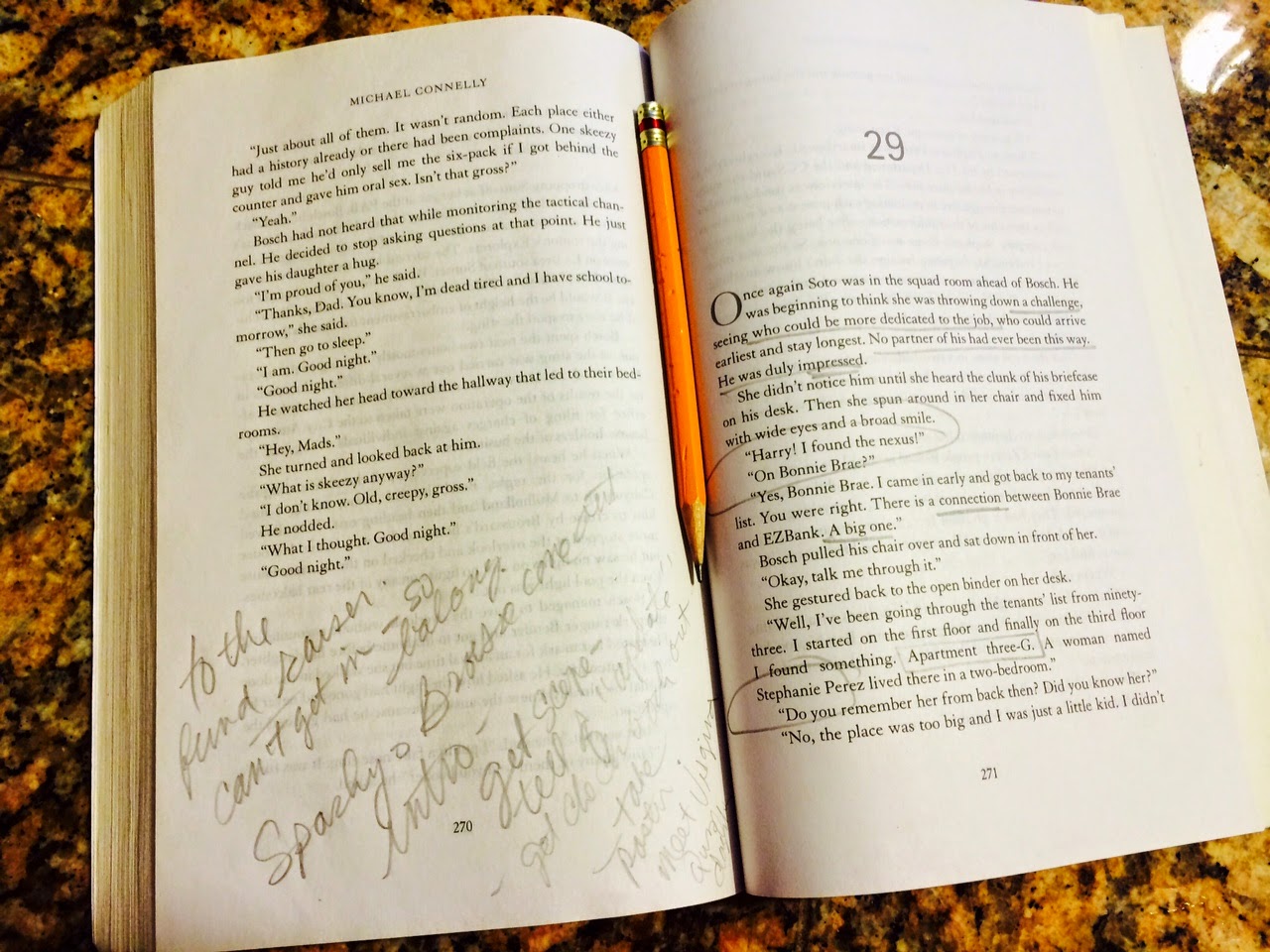
Personally, I like hard copies because they are easier on my eyes, and I like to underline and write notes on the pages. I sometimes use the blank space after the chapter ends to write a brief synopsis.
With a digital file I have to print out the pages, using MY paper, MY ink, and MY electricity, which is costly even if I print gray scale (which is also hard on eyes), and use the backside of previously printed paper.
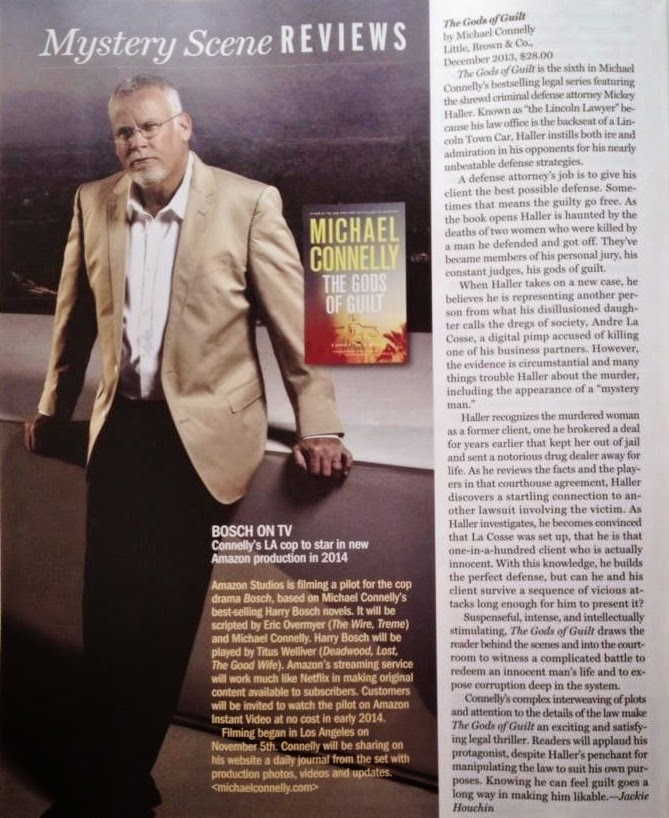
So, how DO you get paid for reviews?One way is to write for a magazine or online newsletter. I have written for Mystery Scene Magazine ($15 per review) and The Strand Magazine ($10), plus a few for Crimespree Magazine when I first started, which pays zero but you get clips.
If you are a prolific reader/writer and the paying magazines like your stuff, you can earn a fairly decent check every quarter…to cover your Starbucks habit. Okay, $60 or $75 doesn’t seem like much, but what have you invested? A couple days of (hopefully) enjoyable reading and some time at your computer. Plus the free book.
By the way, you should never sell ARCs on Amazon, etc. It’s nice to get that extra cash, but it’s not fair to the author, especially if you list them BEFORE the book is launched. No-no-no!
Naively, I used to take on four or five books to review in one issue! Now I’m lucky to manage two, and in most issues only one. True, Mystery Scene Magazine gives me books by well-known authors to review – Michael Connelly, Louise Penny, Susan Wittig Albert – but that adds to my stress level.  But why, you may ask.

Well, for me, book reviewing is a perilous journey, fraught (like that word?) with doubts, delusions, and ulcers. For one thing, I am a self-doubting, paranoid perfectionist. For another, I have a very professional magazine editor. She examines my reviews for clarity, accuracy, and word counts (as she should), then lets me know – gently but firmly – where they need work. Eek!
So, consider my cycle of “Book Reviewing Agony” before accepting YOUR first book for review.

  • Request – “I know you like books by — do you want to review this one?” says my editor. Or sometimes, “Choose a book(s) you’d like from this list.” (I feel magnanimous and agree/choose.)
  • Arrival – I’m excited to get a first look at the ARC. I check page numbers, and divide the amount into the days she gave me to leisurely read the book, allowing 3 days for writing the review.
  • Reading – I love this part best, getting into a good story. I use a pencil as a book mark so I can make notes on the rough newsprint.
  • Winding down – My anxiety mounts as I anticipate finishing and having to actually WRITE a review. Often I slow down my reading here, although the climax is approaching.
  • The PC screen – I’m frozen (yes me, not the screen). That first sentence is murder! I write and rewrite it 50 times, then leave it and skip to the end (author style evaluation) which is easier. Finally disgusted I save the file and go to bed.
  • Reading my review – After a horrible night’s sleep I reluctantly read what I’ve written. OH NO! It’s horrible! I rewrite, massage, delete, cut & paste, edit out, add in. Oh, why did I ever agree to review books? After a day of misery I punch “SEND.”
  • JOY! – I’m done! Relief! Freedom! The euphoria of having completed it makes me dance around the house.
  • Editor email – Down the roller coaster of despondency I plunge. I have to look at this thing again? I pull out the ARC (which fortunately I haven’t tossed in my elation over the previous bullet point). I go over my notes and mini-synopses. I struggle to wrangle those words into submission and try to cut 75 words. At last it’s done (again) and I am exhausted. Weakly I hit “SEND” and make a solemn self-promise. “I will never accept another book to review.”
  • The 60-day wait – The magazine finally arrives. I grab it and flip immediately to the “Reviews” section, and look for my name. I read the review. I WROTE THAT? Seriously? Wow? It’s amazingly good! (Okay, she’s tweaked a couple words, but that’s okay because she made me look great!) I display the magazine prominently on the coffee table with a Post-a-note marking “my” page.
  • Another 60 day wait – The check arrives. I smile smugly, feeling cocky at having earned a couple “Star” bucks. Hey, this reviewing isn’t so bad. I could probably do another one….  
And so, I fall off the wagon again.
Q: Do book authors have a similar cycle of agony?


Character Matters: Your Main Characters Attract Readers, Make Them Memorable

Author G.B. Pool gives us the scoop on writing memorable characters. Visit Gayle’s Author Page on Amazon!

Character Matters: Your Main Characters Attract Readers, Make Them Memorable

Aristotle wrote in The Poetics that stories are made up of 5 Elements in balance: Plot, Character, Setting, Dialogue, and the Meaning of the Piece. He thought plot was the most important element, but I wanted to talk about character in this blog.

As in most crime fiction, there is always a bad guy or gal. Some writers want to give the villain a good point like he loves dogs or his mother. I seldom bother. I paint him bad with no redeeming features unless there are extenuating circumstances and my bad guy isn’t so bad after all. In fact once or twice the bad guy has a soul. But usually in a story like that, he or she is actually the star of the piece.

But when I write a main character, I want him or her to be someone I would invite into my home. After all, I spend a lot of time with these characters while I am reading not only my own books but books by other writers. If I find them repulsive, mean, heartless, I really resent the time spent getting to know them. On more than one occasion the character has been written by a famous author and I frankly think the character stinks. That will also be the last time I read one of their books.

Aristotle mentioned that characters should have some redeeming quality. I do reserve those good qualities for the hero and other important characters. The bad guy can be bad to the bone as far as I am concerned.

Another thing Aristotle mentioned was that all the characters should be appropriate to their station in life. I am sure when he wrote The Poeticsthere was far more of a class system operating. Even in Downton Abbey, the folks living above stairs have a different attitude than the ones living below stairs. Not that this is right or wrong, it was just what society at that time and place was like. I’ll root for the rebel, but I would still be cognizant of the time period in which the story was being told.

There was a movie, The Admirable Crichton, where a shipwreck strands a bunch of aristocrats and their butler on a desert island. The resourceful butler saves everyone with his ingenuity. When the bunch is rescued, he reverts back to the butler and life went on.

But if the writer is true to the inherent abilities of his characters, the story will work. A housewife who miraculously knows everything about solving crime has been watching too much CSI. And a cop will tell you many of the procedures on those police shows are laughingly wrong.

Dick Francis will have his main character who is expert in some interesting thing like wine making or photography, use his skills to solve a crime. That I can believe. If he turns into a latter-day MacGyver and can make a nuclear weapon out of a box of matches and a can of hairspray, sorry, NO SALE.

Just keep your character consistent. If he hates height, make something payoff in the end that uses that fear of heights like Jimmy Stewart’s character in Vertigo. I keep a character chart that lists when each was born, when certain things happened in his life, and even things that happened during that time in history just to know what people were exposed to.
  I started doing this while I was taking an acting class. What a great way to learn about a tight story structure, dialogue, and character. My teacher, Rudy Solari, had us write a mini-biography of our own character so we would know where the character came from and what motivated him or her before he or she set foot on the stage. We could glean some things from the script and make up the rest, but you sure know who you were when the scene started.
This works for writing characters, too. When I was writing my Johnny Casino Casebook series I wrote out a bio for Johnny. Boy did I learn a lot about him. There were even some things that came out in the second book that even Johnny didn’t know. It made him more interesting.

Know your character. Character matters.

Writing Stuff – A Tough Project

Author Kate Thornton shares her thoughts about the process of bringing new life to old projects. Visit her Author’s Page on Amazon!

WRITING STUFF – A TOUGH PROJECT


I finished a Christmas story last week and sent if off to a magazine that has a tracking application online. Of course, I check it daily. Five days in slush and still not read – I may have to volunteer as a slush reader to get it going.


I always write seasonal stories out of season – that way there is really no looming deadline and magazines really like to get their seasonal stuff lined up ahead of time. Writing short stories is not easy – they must be tight, have impact, be satisfying and, well, short.

But the really tough writing project I am working on is a novel I wrote in 1998. Back then, I thought I was a novelist and knocked out 3 or 4 long works – adventure/mysteries – that I thought were really good. Hah! Shows what little I knew! They needed a lot of work. So I shelved them (one was actually agented and had some interest from St. Martin’s Press, only back then I didn’t know enough about revisions to do the necessary rewrites.) The event that triggered this effort was lunch a while back with an old friend, a dear friend, who asked about that particular book and remembered it fondly. Bless my beta readers!

So I am re-reading it first (I have a copy printed on my old laser printer) then doing a page-by-page rewrite into my computer. I used to have this work on an ancient five-inch floppy disc, but who knows what happened to that and what I could use to extract the info anyway. Also, I think it was in one of the very first iterations of Word Perfect. Yes, I am old!

I once heard you must write a million words before you learn how to put them into the right order. I am sure this old effort was part of my first million, and therefore should just be counted as practice, not the real deal. But I want to salvage the basic story, change the main character to one I have been developing, and update the technology (both in the storyline and what I use to write with.)

Maybe it will be a successful project. If so, I have at least three more “Trunk Novels” that could get the same treatment, if they’re worth it.

So, how about you? Do you save your old stuff and use it – or parts of it – later? I like the idea of doing this, but it sure is a lot of work. An author of my acquaintance recommends just ditching it all and writing something new. There is certainly a lot to be said for that approach. But there is also something about an old friend, a character you have created, coming home to the present and being with you again.


So, for now, I want to revisit this person and see if they can get used to the world as it is now. And I think maybe it will help me to accept the world of today as well.