Author: Jacqueline Vick
From Screen To Page – Part 1 – by Miko Johnston
FROM SCREEN TO PAGE
One of my NYU media professors once told me, “You write well.” I felt proud, assuming he meant I was a good writer. I was mistaken. What he meant was I could write sentences that were comprehensible and precise enough to get an A on an assignment, but not for a story worth reading. It took awhile for me to learn the difference.
If you’re unsure of how to tell a story, I can recommend an unusual source for guidance – a screenplay instructional.
Now I know what you’re thinking…screenplays are fast and cheap, like pulp fiction, too often empty-headed, driven by plot rather than character…and you’re right. But it’s a great way to learn how to tell a story succinctly. Although I no longer write screenplays, I’ve learned a great deal about storytelling techniques from the genre. There are basic rules in writing for film that will benefit all writers of fiction, which I’ll share with you in my next three posts.
Before you begin to write your story, see if you can answer these questions:
1. Who is your protagonist?
2. What does he want?
3. Who, or what, is trying to stop him?
4. What will happen if he fails?
Knowing the answers is critical for most fiction genres. The website ‘Screenwriting 101’ has set up a formula for this:
Story = (Character + Want) x Obstacles
The answer to question one, two and three fills in Character, Want, and Obstacles.
You could say Character is a ‘noun’, but add Want to Character and it becomes an ‘action verb’. Obstacles create tension and suspense. Each element must be in balance to work properly.
For example, the character may have lived a colorful life, or experienced a unique, even dramatic situation. But without tension, the suspense of what will happen, these stories often fall flat. Knowing what the character wants and what obstacles stand in his way are the building blocks to creating suspense. The trick is in the building, because coming up with a tension-inducing scenario is not enough.
Consider this plot:
Your protagonist is a busy single mom and in the middle of a Tuesday afternoon, a major earthquake hits. Plenty of potential drama there, right? Except if the shaking starts when she’s pulling into the driveway after a Costco run with a gallon of trail mix, a pallet of water, and a year’s supply of toilet paper in the trunk, it deflates a lot of the potential for tension.
But put your character at her job fifty miles from home, where she lives with her two preteen kids and her disabled mother, and that raises the stakes because we’re dreading what will happen if she can’t get home ASAP. Then put impediments in your protagonist’s path – the quake destroyed the roads so she can’t drive home. She’ll have at least a two-day walk. Fires, looters, and aftershocks threaten her way. When real danger looms with every step, readers white-knuckle every paragraph, wondering what might happen.
But telling us isn’t effective; you must get under her skin and make us feel her fear. The mom may die trying to get home, but if she doesn’t try, her family may not survive. Here, the mom is the Protagonist, she Wants to get home, the impediments caused by the quake is what’s Stopping her, and if she Fails it would mean the devastation of her family, and/or her.
That’s why the key to creating a story that will grab people’s attention is the fourth question – what are the stakes? In film, the answer is always the same: Death. If the hero doesn’t succeed, he will die. If you don’t believe it’s true, think of every successful movie ever made.
Death – either actual or metaphorical – is what must be risked and overcome, except in tragedies where the hero actually does perish. If you still have doubts, see if you can name a book with a female protagonist written before the 20th century that doesn’t end with her marrying or dying. Death can be losing the basketball game, not destroying the Death Star before it obliterates the planet Alderaan, never getting back to Kansas and Auntie Em; in short, failing to achieve whatever task has been set out for the character.
Here’s my formula:
Engrossing story = [(Engaging Character + Want) x Obstacles] x Stakes
The more invested we are in the character, the more we want him to triumph. Therefore the greater the obstacles, and the higher the stakes, the more conflict you create. If character is the heart of a story, conflict is the lifeblood that drives both character and plot. In short, figure out what the hero wants and deny or delay it.
This is particularly useful in writing flash fiction, short stories, and novellas. Like a screenplay, short form fiction must maintain a word limit and therefore every word has to move the story forward, reveal character, or both. Here again, the combination of challenging obstacles and high stakes, coupled with a character we’ve come to like, creates a powerful arc.
A perfect lead-in to my next blog post, which will discuss story arcs.
A Pet Psychic, A Gentleman, and an Exorcist Walk Into A Bar
One of the difficulties with so many different characters is finding a common thread that runs through the various books that can be used to solidify an author brand. What is an author brand?
When you hear Joanna Fluke, you think mysteries and baking. And vise versa.
Is there a common thread among my characters? Well, Evan Miller is troubled, while Deanna Winder IS trouble. Frankie Chandler, Pet Psychic, considers the supernatural an intrusion in her life, while Father Gerald McAllister, exorcist, relies on it. And most of them would be left off the guest list of a dinner thrown by Edward Harlow, author of the Aunt Civility etiquette books.
An author, when coming up with a brand, also needs to consider his or her target market. I’ve never mastered that one. Most mystery readers are women, so I should try to determine who would like my books by age group and other demographics. Let see an example of how well that works.
I took a screenwriting class in Chicago. I wrote a scene that took place in a small town post office, and a confused, elderly lady at the front of the line was driving the impatient protagonist mad. The person who laughed the loudest was a young, black man. I would have picked the suburban-looking white women as my target audience, but her slight smile seemed reluctant. So much for stereotyping your audience.
Another trick to finding your brand is to brainstorm words that come to mind when describing your books or characters. Unintentionally funny due to the circumstances and people they are surrounded by. In other words, you and me. That doesn’t narrow it down very much.
![]() |
| Could this be the next Agatha Christie? |
You can always compare your books to others out there, but that’s too intimidating. When I put fingers to keyboard, I always hope to be the next Agatha Christie or Rex Stout, but the results fall far short. As for comparisons to current authors, each one seems so unique to me that I wouldn’t dream of holding my novel up next to theirs. I would feel like the gal on late-night television offering knock-offs for those who don’t care for the real thing.
JA Konrath has said that if you want to sell books, write more books. That I can do. I’ve slowly built up 4 novels, a traditionally published novella, and 4 short stories. Oh, yeah. And a children’s book. If my timetable holds out, I’ll have Civility Rules, my Harlow Brothers mystery, and the third pet psychic mystery out before the end of the year, and the Father McAllister mystery out at the beginning of 2016.
So what should I do about my brand? I’d solicit feedback from other people on what words they thought best represented my books and characters, but if anyone used the word sassy to describe Frankie Chandler or Roxanne Wilder, I’d throw myself out the window. (It doesn’t matter that I live in a one-story. It’s the intent that counts.)
Another New Year’s Day by M.M. Gornell
Another New Year’s Day
Poetry in E-motion
by Jackie Houchin
Looking for Meaning by Gayle Bartos-Pool
For the past several months I have written blogs on the 5 Elements of a Story as outlined by Aristotle in The Poetics. Mine weren’t deep, philosophical discussions. They were just good, solid writing tips and techniques. So far we have covered Plot, Character, Setting, and Dialogue. Each of these is an integral aspect of a good story.
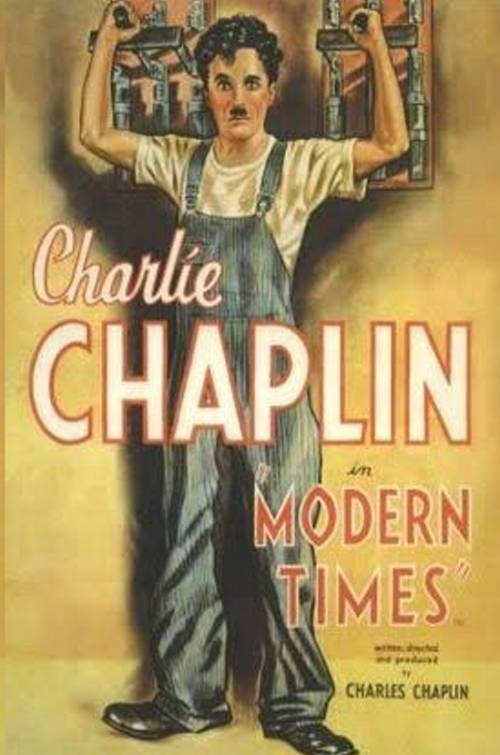
The silent movie, Modern Times, has man battling the machine age. Or how about 2001: A Space Odyssey when the human is trying to outsmart the computer. (Obviously in real modern times and the real future, now, every gadget used in a CSI TV show works, nobody’s cell phone ever loses a signal or runs out of battery power. But that would be a different story. Sorry… Again I digress.)
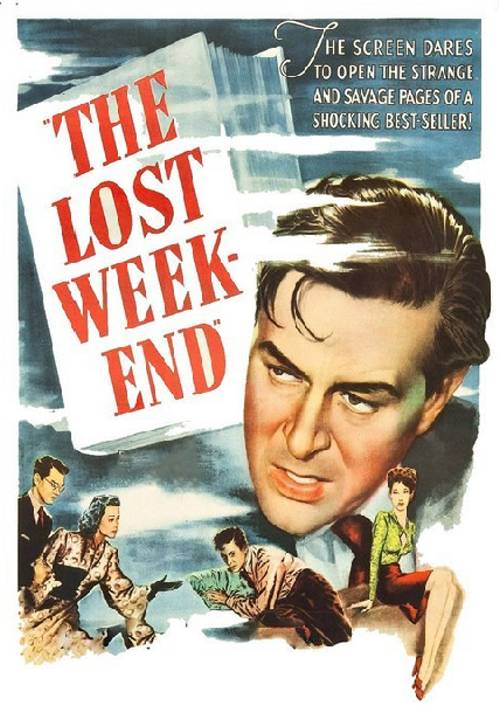
Then there is Man against Himself. This is often a psychological tale where the man is trying to find himself or save himself. The Days of Wine and Roses and The Lost Weekend pit an alcoholic against the bottle in his fist. Whether it’s alcohol, drugs, or maybe a nymphomaniac female and her cravings, they are each fighting a battle against their addiction. And since they are the only one in the room, it’s the character against himself or herself. Society really doesn’t have a place in that scenario.Publishing in Ezines by Kate Thornton
Kate Thornton is a retired US Army officer who enjoys writing both mysteries and science fiction. With over 100 short stories in print, she teaches a short story class and is currently working on a series of romantic suspense novels. She divides her time between Southern California and Tucson, Arizona. You can find out more about Kate at her Amazon page.
WHAT ARE EZINES?

Ezines are online magazines. They range in visual quality from beautifully-designed and finely-illustrated to very plain to so ornate it’s hard to figure out where the writing is. Fiction of all genres, non-fiction, self-help even specialty hobby ezines abound on the net – just Google your favorite phrase and you’re bound to come up with an ezine in your field of interest.
WHAT DO THEY OFFER?
The most obvious advantage is immediacy. Ezines often have a submissions turn-around time measured in minutes or hours rather than months. No SASE required, just electrons. Usually you can submit via email and you can send either in the body of the email – just cut & paste your whole story in – or as an attachment if the ezine permits. Always read the submission guidelines to see what they want.
Archiving is a wonderful thing – most ezines will archive your work online as a matter of routine, allowing you (and your fans) to access your work in past issues. Most ezines will also take down – after the initial publication time – any work you do not wish to have archived.
They also offer one of the widest readerships possible for your stuff – billions of readers from all over the world can access your writing. This is not to say they necessarily will, only that they can. Many have hit counters or readership statistics available, so you can get an idea of how popular a particular ezine is.
The most popular sites, like SLATE (which no longer publishes fiction) are operated just like a print magazine in many respects. Others are the online presence of actual print magazines, like THE NEW YORKER, and may even share editorial staff, guidelines and publication of submissions with their sister print magazine.
There is a certain amount of prestige accorded many ezines. Literary fiction ezines in particular serve a discriminating community, while many of the genre ezines are also routinely read by prize committees. The Pushcart Prize, Derringer and other prizes have been awarded to fiction published in ezines.
WHAT ABOUT MONEY?
Well, some pay quite well and some do not pay at all. Always check the guidelines for payment.
Some pay in cents-per-word, others in flat rate, still others in merchandise or print copies of sister magazines. Payment can be by check or through electronic funds transfer. I keep a PayPal account just for this.
WHAT ABOUT COPYRIGHT? WHAT RIGHTS HAVE I SOLD?
As in print magazines, the ezine usually copyrights your story for the duration of its run (the current issue) at which time the copyright reverts to you, the writer. As with other magazines, you need to read the contract or guidelines.ALWAYS KNOW WHAT YOU HAVE SOLD! (Back in the late 1990s, I sold all rights to several stories. At the time this sounded good as they paid me $100 per short story. But a few years ago a film company wanted to negotiate the rights to one of my stories and guess what – I didn’t own it!)
Generally, the rights you have sold are First Electronic Rights and sometimes First World Rights which include First Print rights. This means you have reprint rights still in your bag to sell at a later time, either to a print magazine or to another ezine. Usually, with an ezine, you have sold your rights for a specific duration, and then allow archiving.
WHAT ABOUT PEOPLE STEALING YOUR STUFF?
Let me be very clear – publishing your work online in an ezine does not negate your copyright nor does it put your work in the public domain. That said, I just don’t encounter it very often, and I do a regular net search looking for my materials.
WHERE CAN I FIND EZINES?
Here are a couple of guides. But Google is your friend when it comes to searching! And use your forums and online writing groups – many of them have market listings.
RALAN’S is one of the best market guides. NewPages Guide to Online LiteraryMagazines is a good reference for literary fiction
LIFE EXPECTANCY
The Long and the Short of it….by Rosemary Lord
It starts off with brief descriptions of what the girl in the title saw on her daily train journeys back and forth to work. She makes up her own stories about the people she observes daily. We’ve all been there. I did that, fresh out of school, following similar train routes when I worked in London years ago. Train journeys are an excellent opportunity for writers imagination to run wild.
But it was the quick, short approach that caught my attention. Short descriptions, simple words written in the first person. No luxuriating in similes. Nothing sentimental. ‘Just the facts, Ma’am.’ It’s hip and sharp. And it works. This book was #1 on the L.A. Times Bestseller List.
But my problem is that I write about the past. A slower, gentler past. I get steeped in creating a mood of a by-gone era. Admittedly, I sometimes get carried away with my sometimes verbose descriptions and my writer friends on this blog will reign me back in. But a short, staccato, present tense would not work for what I want to say in my 1920s-set novels. Although I am getting better.
I used the ‘keep it simple and short’ theme consistently when I was writing the updated version of Los Angeles Then and Now last year. Although I find it much easier to keep things simple when writing non-fiction. I did that as a journalist for years. Editors give you very little space in which to tell the entire story.
So, when I returned to working on my Lottie Topaz novels (Yeah!) that are set in the world of silent movies and Prohibition in Hollywood, it was with a renewed enthusiasm and fresh approach. While my novels and character’s voice are not really the place for that 2015 staccato tone, I have divested my writing of some of its frippery. And some of the descriptions that I just loved – well, they had to go.( Although my fellow blogger GB Pool uses an excellent, Chandleresque staccato tone in her Johnny Casino books. But that’s a subject for a whole other blog…. )
Building a Better Villian by Miko Johnston
BUILDING A BETTER VILLAIN
The Human Mind (Yes this has something to do with writing!)
![]() |
| Madeline (M.M.) Gornell |
Finally, here’s the conclusion and connections to these thoughts(which started as musings on my way home back to the high-desert from a lovely lunch in Arcadia with some wonderful author friends—you know who you are): Not only is every author unique in our approach to writing, but also contradictory in our thoughts, actions, personalities, and life philosophies—and these contradictions, whether we want them to or not, in many ways define our writing style, the characters we develop, and the tales we tell.
A good thing, I think.


You must be logged in to post a comment.