We are a group of published writers who come here weekly to entertain, inform, and encourage you in your writing and your reading journey. Grab a cup of coffee, get comfortable, and join us.
Most writers have those short stories hanging around. Sometimes they have been published through magazines, Amazon, or as blog posts. Don’t let them go to waste! (If you have the rights to them.)
This year, I’m putting together all of my short stories – those with a winter theme – and coming out with a collection to introduce my various characters. The advantages?
Readers who might not invest in an entire novel could be willing to discover new characters through short stories.
Every time a writer comes out with a new book, he or she increases the odds of being found online.
It’s a good reminder that books that revolve around a season or an event sell better: holidays, weddings, seasons etc.
I went to Book Boxed Set to buy my template for the cover. Thank you for coming up with this template!! My collection will be called “Murder Takes a Chill” or “The Chill of Murder”.
In fact, take the survey to let me know which title you like better or to suggest your own. No personal information will be collected.
So, pull out those short stories and novellas, find a theme, and get them online already!
Jacqueline Vick is the author of over twenty published short stories, novelettes and mystery novels. Her April 2010 article for Fido Friendly Magazine, “Calling Canine Clairvoyants”, led to the first Frankie Chandler Pet Psychic mystery, Barking Mad About Murder. To find out more, visit her website at http://www.jacquelinevick.com.
Jacqueline Vick is the author of over twenty short stories, novelettes and mystery novels. Her April 2010 article for Fido Friendly Magazine, “Calling Canine Clairvoyants”, led to the first Frankie Chandler Pet Psychic mystery, Barking Mad At Murder, followed by A Bird’s Eye View of Murder. Her first Harlow Brothers’ mystery, Civility Rules, is out in ebook format and paperback. To find out more, visit her website at http://www.jacquelinevick.com.
+ + +
I love flinch-free fiction. Think Agatha Christie. Rex Stout. P.G. Wodehouse. I want to enjoy the book I’m currently reading, not suffer from nightmares for weeks after I close the pages. I’m not interested in a sex manual, and I also don’t need to learn any new dirty words. I don’t want the characters to sound like the squeaking mice from an animated cartoon, but I don’t need to be subjected to a diatribe on __________ (insert cause here .) What’s a girl to do?
Fortunately, after reading my Rex Stout and Agatha Christie collection again for the umpteenth time, I ventured–cautiously–into some new writers. New to me. I was pleasantly surprised, and I’d like to share some of them with you in case you’re looking for a good read.
Dave Rosenfeld brings us the Andy Carpenter mysteries. His character is a defense attorney who inherited a pile of wealth, so he spends most of his free time with the Tara Foundation, a dog rescue. The rescue is the launching point for the mystery, such as when a dog is stolen from the foundation only to turn up next to a corpse in Who Let the Dog Out? And yes, I do plan to purchase The Twelve Dogs of Christmas for my holiday reading list.
I picked up Ashley Weaver’s Death Wears a Mask based solely on the cover, so I guess good covers do matter. I found a fun world that revolved around Amory Ames and her playboy husband, Milo. The back cover described it as Agatha Christie updated, and I thought it came close. This is the second book in the series, so I’ll have to go back and start with number one.
I discovered Julia Buckley on a blog. Don’t ask me which one, because I can’t remember. I thought her book sounded intriguing. A writer takes on an apprenticeship with her idol, and the first day there, a dead body turns up on the beach below the house. She reminds me of a slightly restrained Dorothy Cannell (The Thin Woman.)
Robert L. Hecker’s Yankee Peddler is more of a farcical social commentary than a mystery, but it’s so funny I had to include it. Ambassador Elizabeth Sullivan Wexford Adams sets out to sell the Litanians on “The American Way.” Hard to do when these isolated islanders have never heard of the USA.
That’s probably enough to get you started, especially since, if you enjoy the books as I did, you’ll want to read the entire series.
Kate Thornton is a retired US Army officer who enjoys writing both mysteries and science fiction. With over 100 short stories in print, she teaches a short story class and is currently working on a series of romantic suspense novels. She divides her time between Southern California and Tucson, Arizona.
# # #
I may be one of the luckiest writers around, not just because I have five current readers, but also because they are all smart, talented, capable, and also voracious readers on their own.
What is a Beta Reader? What do they do?
A beta reader is a nice person who will read your manuscript and give you feedback. That’s pretty much the basic definition, but there are as many nuances to beta readers and what they do as there are metaphors and similes in amateur works of fiction.
Give them guidance about what you are looking for and don’t take their criticisms personally. Mine are specialists, and here are the areas in which they excel:
“A” – let’s not use their real names – is a punctuation and grammar specialist. She reads through my completed (or nearly so) manuscript and picks out punctuation and grammar booboos. And what looks worse than misspelled words, incorrect punctuation or awkward grammar?
“B” reads for continuity. She knows I have a 3-book series, and she reads to make sure all the stuff that happens is in the right order and that there are no glaring booboos like the main character is a blond named Alice in one scene and a brunette named Alicia in another. She also monitors the progress of the romances, character development and story pacing.
“C” reads for the story alone. Is it fun? Does it move right along? Does it make sense? Are the characters engaging? Are there boring parts?
“D” and “E” both read for polish – they are my final readers who, once I have corrected anything the others have suggested – make sure that what I have is what I really want to have: a reasonably well-written manuscript that is a fun read, makes sense, and keeps the reader engaged.
My beta readers all volunteer their time and expertise to make my books and short stories better – they are those additional pairs of eyes, additional world viewpoints, and those well-read and highly opinionated people who can save my work from sloppiness and author-blindness. I revere them.
How do you get beta readers? Ask. And be one.
One of my readers is a well-known crossword puzzle writer and is extremely picky about words. She is a style, grammar, and punctuation fanatic who is brutal in her critiques. I love her dearly. I was honored when she agreed to read for me. She is now a fan and is currently looking ahead to a manuscript I have not yet finished, giving me helpful hints as to where some of the story threads should go.
I asked another reader, someone who does not write but is an avid reader of my particular genres, to take a look and she not only agreed, but now asks if there are other works with which she can help.
A third is a friend who just wanted something to read, but came back with a lovingly detailed line edit.
Many times, your critique group partners or your writers’ group can provide you with feedback which will help you move forward. While I have not always found this to be a safe bet, it can be a good starting place. Keep in mind that your beta readers are there to help you, not disparage your efforts. If a reader is nasty or unhelpful, disregard their comments and don’t ask them again.
Volunteer to help your fellow writers. Let them know if you are reading for technical structure, punctuation, grammar or spelling and word usage. Or maybe you want to read for continuity and story progression. Or maybe you just want to read and see if there’s anything you can do to help. The key word here is help.
And lastly, don’t worry if your work isn’t finished or is need of a lot of help. Good beta readers can set you on the right path and help you find the inspiration to continue and improve. They can tell you where you are going off track or where you really need to read up (good grammar texts abound!)
P.S. Don’t forget to thank them, both in real time and in your finished work. Thank you, Maggie-beth, Mar, Kay, Dina, Tracy, John, Sunny, and all my past readers, too. You help us all to be better writers.
She first first contemplated a writing career as a poet at age six. That notion ended four years later when she found no ‘help wanted’ ads for poets in the Sunday NY Times classified section, but her desire to write persisted. After graduating from NY University, she headed west to pursue a career as a journalist before switching to fiction. Miko lives on Whidbey Island in Washington. You can find out more about her books and follow her for her latest releases at Amazon.
# # #
Why do so many writers avoid or neglect promoting their work? Take me, for example. Deep down I believe I’m a capable writer, the author of books that are well written and enjoyable to read, literary enough to satisfy the mind, exciting enough to keep turning pages. But will I tell this to anyone? No.
I just did, you say? Not really. When you write something, you can detach from the words. Not so when you say them to someone face to face. With conviction, so they know you’re telling the truth and not exaggerating.
And it’s not just me. I’ve spoken about this to other writers, particularly women, and nearly all agree they have the same difficulty as me being direct when we talk about our work. We can state facts, like having a best seller on Amazon or having won an award. We can describe what the book is about. But if a prospective buyer asked us flat out if our book is good, I’m not sure any of us would answer, “Yes. Absolutely”.
I suspect one reason is what I call the Good Girl Syndrome. I was raised in an era when females were taught to be modest, not only in appearance, but in manner. A proper lady never bragged, no matter how exceptional or accomplished. I think it’s why I find it difficult to talk about the quality of my novels to prospective readers, despite my enthusiasm.
I’m not alone. I belong to a writers group that has banded together to sell our books at local Farmers’ markets. We help each other and sell whatever is on the stand. I only feel comfortable presenting my own books to customers when they ask if any of them are mine, or if we carry historical fiction. A handful of writers plug their own work, often blatantly, and they sell far more than I do. Most of us hang back and let the customers decide what they want to buy, or we talk up each other’s books. Maybe that sounds more sincere.
I’m thrilled when I hear people who’ve read my novels tell me how much they’ve enjoyed them, how they’re looking forward to the next sequel. More than one has urged me to “hurry up and write more”. I’m most flattered when someone far from my target audience compliments my work. Yet somehow I can’t turn that around and use it to encourage others to buy my work. This has led to a theory: In fiction, the good guys win. In life, the good girls lose. But it hasn’t led to a solution.
It’s sound advice. However, if I followed it, my protagonist would be an insurance customer service rep, which is not as exciting as a pet psychic.
A better saying might be “Write what you want to know.” There will be a learning curve, but that’s half the fun. Take my Pet Psychic mysteries.
I’m not a pet psychic, nor did I have any experience with them before I researched my book. I didn’t even knew they existed. What I did have was a neurotic rescue mutt.
One day, while walking with a neighbor, she raved about how her friend’s dog had been transformed after a visit with a pet psychic. Why didn’t I bring Buster to one and see if it helped?
My first response? What a waste of money.
Later, as the more intriguing aspects of taking Buster to a psychic began to settle in, I thought I could make up some of my expenses if I could interest a magazine in running an article. I sent out queries and scheduled two appointments for my dog.
The first psychic, nationally recognized, was a disappointment. In fact, I based Frankie Chandler’s fake pet psychic business on her and a pet psychic I saw at a fair.
The second psychic, who preferred the title animal communicator, came to my home. Buster lay at his feet and periodically woofed. He definitely seemed more connected to my dog. Ever since, Benjamin Scuglia has been my go-to guy for background on Frankie Chandler’s psychic activities.
While my pup wasn’t cured of his anxiety issues, I did come up with an article for Fido Friendly Magazine called Calling All Canine Clairvoyants. Another neighbor suggested my next mystery feature a pet psychic as the detective, and since I now knew a pet psychic to help with my research and I also knew several animal trainers and behaviorists from working with Buster… .
Would I have attempted a pet psychic mystery if I hadn’t had a neurotic dog who needed help? Never. And yet, the Frankie Chandler books are my most popular mysteries to date.
The third Pet Psychic mystery is almost ready to go. It takes place on a cruise to Alaska, and the idea came while I was on a–wait for it–cruise to Alaska. Talk about enjoying the research!
I’m also working on a mystery with a priest protagonist. He’s a former exorcist who has been reassigned to an all-girl high school. Talk about wrestling with demons! (I can say that with confidence because I once was a teenage girl!) While I’m not yet an expert on exorcists, I have listened to hours of talks given to priest groups and others, and it’s fascinating stuff.
What’s going on in your life that you could mine for book material? What would you like to know that would make fun reading? Jump right in. If nothing else, you’ll beat everyone else at trivia games.
Jacqueline Vick is the author of over twenty published short stories, novelettes and mystery novels. Her April 2010 article for Fido Friendly Magazine, “Calling Canine Clairvoyants”, led to the first Frankie Chandler Pet Psychic mystery, Barking Mad About Murder. To find out more, visit her website .
Her latest book, Civility Rules, is available on Kindle, Nook, and in other ebook formats. Paperback is coming soon!
Kate Thornton is a retired US Army officer who enjoys writing both mysteries and science fiction. With over 100 short stories in print, she teaches a short story class and is currently working on a series of romantic suspense novels. She divides her time between Southern California and Tucson, Arizona.
# # # # #
I write Mystery and Science fiction.
I used to say, I write short stories. And while I do indeed still write short stories, I also write novels.
We tend to identify ourselves by the most comfortable label, or by the one we’d like to fit, as well as by the one that seems to fit the best, based on what we have actually written. Or maybe just by what we wish we could write: “Yes, I write archaeological papers with a bit of whimsy,” or “Yes, I write about the cosmological implications of French cooking.”
So I have identified myself for decades as a mystery and/or science fiction writer. But even as my short story career – long and semi-illustrious as it was – began to wind down, I started writing real full length novels, whole stories over 65,000 words, some of them in the 85,000 word range..
I found that I liked it. It’s a whole other world. Worlds within worlds. Multiple characters, multiple settings, a story arc that can encompass several plot threads. It’s wonderful, and the discipline I learned as a short story writer helps me to keep it concise and not wander all over the page.
But there was a danger I had never thought about, a hidden pitfall to the novel-writing game that never occurred to me. The characters, so spare and driven in a short story, are under no obligation in a novel to do as the author says.
The characters, fully fleshed, do as they please. Whether you outline meticulously or are a seat-of-the-pantser, the characters have a way of driving the story, sometimes into a ditch or over a cliff. They become real enough to take on their own lives and are no longer a simple Mary Sue reflection of the writer, but become individuals who possess a weird amount of self-determination.
You might want them to murder or solve murders when they are busy developing relationships with other characters. You might plan for them to journey into space, when what they decide to do is stay home and build a fire in the fireplace. You might outline a tidy little puzzle, and they may turn it into a messy romance.
Yes, you are the all-powerful Author and can line your ducks back up into their neat little rows, but sometimes listening to your characters can help you take the story in a completely different direction, a better place, a more interesting and life-like place.
So before you proudly say, “I write such-and-such!” take a look at where your story is going. You might find that your characters have taken your sweet little cozy into noir territory, or burned up the spaceways with hot inter-species encounters.
I used to say I write Mystery and Science Fiction, but now I have to add Women’s Fiction and Romance to that description.
So what do you write? And has it changed from what you thought you would write?
PS – It’s all good as long as you keep on writing!
Jacqueline Vick is the author of over twenty published short stories, novelettes and mystery novels. Her April 2010 article for Fido Friendly Magazine, “Calling Canine Clairvoyants”, led to the first Frankie Chandler Pet Psychic mystery, Barking Mad About Murder. To find out more, visit her website at http://www.jacquelinevick.com.
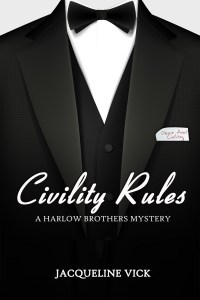
What’s the proper etiquette for murder? When Edward Harlow, the official representative
of Aunt Civility and her etiquette books, discovers a dead body at Inglenook Resort, that’s the question he must struggle with, and it ain’t easy.
Edward is really a short-tempered man who thinks most human beings aren’t worthy of a polite hello. In his usual environment–lecturing like-minded people–the proper responses come without effort. But when he’s surrounded by liars, curiosity seekers, and an unrepentant murderer? Not so much.
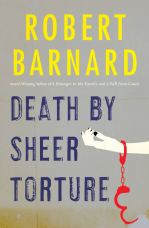
My favoritee mysteries throw an average person into a mix of lunatics. It’s that duck-out-of-water aspect that makes for big laughs. Take Death by Sheer Torture by Robert Barnard. A perfectly respectable police detective must return to his family home (which he’s avoided for almost 20 years) where he’s surrounded by the suspects–his family members. These include a slob cousin who married the daughter of Italian mafia and their brood of Squealies (the children), a cheerful aunt who collects and admires Nazi memorabilia, and his very real memories of the corpse, his own father, who died in embarrassing circumstances. What more could you want?
To read more about Edward’s adventure, Civility Rules is available on Kindle and at other ebook stores. Even better, anyone who comments on this post will be put into a drawing for a free ebook copy of Civility Rules to be drawn this weekend and announced on Monday.
Have you ever found yourself surrounded by nuts? We’d love to hear about it!
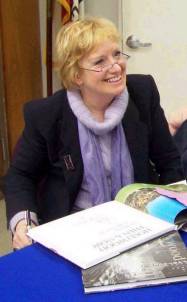
Rosemary wrote her first book when she was ten years old – for her little brother. She also illustrated it herself. It was later rejected by Random House!
She has been writing ever since.
The author of Best Sellers Hollywood Then and Now and Los Angeles Then and Now, English born Rosemary Lord has lived in Hollywood for over 25 years. An actress, a former journalist (interviewing Cary Grant, James Stewart, Tony Hopkins, John Huston amongst others) and a Senior Publicist at Columbia Pictures, she lectures on Hollywood history. Rosemary is currently writing the second in a series of murder mysteries set in the 1920s Jazz Age Hollywood featuring Lottie Topaz, an extra in silent movies.
A Literary Journey
I didn’t intend it this way. It just happened. I was visiting my family in England on what, I reflected later, turned into a very literary journey. ……
Firstly, as I travelled the tube (subway), trains and buses, I was surprised to see so many passengers reading. Actual books. Hard backs and paperbacks – and some kindles. Ian McEwan, John Grisham, John Le Carre, Lee Childs, Linda Green were some authors I noticed. On a lighter side were Santa Montefiore, JoJo Moyes, Dawn French and Fiona Gibson. An interesting, different selection from what we see in L.A.
A stop British Library on Euston Road, where purses or bags go in a locker. No pens/pencils allowed either – in case you have an urge to doodle on the Gutenberg Bible.
Catching up with my friend Marie Rowe, we wandered around Seven Dials, near Covent Garden. Agatha Christie wrote, The Mystery of Seven Dials. Then to Foyle’s Bookshop, famous for Literary Luncheons. Moved down the road from its’ 100 year old, rickety, wood-lined shop, it now gleams white and chrome and boasts 4 miles of book shelves. Across the road is the site of Marks and Co, the antiquarian bookshop star of the movie 84 Charing Cross Road. It closed in 1970 and is now a MacDonald’s.
A Limehouse victim?
My brother Ted and I took the Docklands Light Railway to Limehouse in London’s East End. The setting for many historic mysteries, Limehouse – on the northern banks of the Thames – is the former site of China Town and opium dens. Remember the jazzy Limehouse Blues? Thomas Burke wrote Limehouse Nights, Dickens set books here and Peter Ackroyd wrote Dan Leno and the Limehouse Golem.
The Docklands were reclaimed and developed in the 1980 s with smart high-rises and apartments. Vintage narrow-boats moor next to fancy yachts.
Walking back along the Thames, the river bank is littered with flotsam and jetsam – where many literary bodies are washed up. The Prospect of Whitby in Wapping was a smugglers’ haunt. Samuel Pepys and Charles Dickens imbibed here. On the sands behind, the gibbet where pirates were hung, remains. Further along, at London Bridge, are Nancy’s Steps, where Dickens had Bill Sykes chase poor Nancy in Oliver Twist.
Another day took us to Oxford, setting for Colin Dexter’s novels about Inspector Morse – and the historic Bodleian Library.
Next, a family outing to Rudyard Kipling’s House, Batemans, in Sussex. He was 36 and world-famous when he found this 33 acre estate. Now a National Trust property, we saw the room where he wrote the Just So Stories, Kim, Puck of Pook’s Hill and more. His large writing table overlooks a serene garden. His Nobel Prize on the mantle-shelf, the faded sofa is where Kipling lay in writing mode. Inspired, he would jump up and hand-write pages. His secretary would later type out his words on the small portable typewriter that sits on a side desk.
He wrote The Jungle Book when he lived in Virginia with his American-born wife, Caroline. Kipling was born in India, his great inspiration.
England was freezing, so my siblings and I flew to sunnier climes in the Peloponnese, Greece. Perfect, sunny weather. We visited the village where Nicolas Katzenzakis wrote the book based on local character, Zorba, who found celluloid fame with an iconic dance on the beach.
We visited the house of the late English writer and war hero, Patrick Leigh Furmor. ‘Paddy’ wrote successful books about The Mani, this area of southern Greece. The film Ill Met By Moonlight, starring Dirk Bogard, was about his wartime heroics. His overgrown, red-tiled villa on a pebbly beach off the beaten track, is presently being prepared to open as a museum.
I could go on. It was a wonderful trip and over too soon. But I returned to Hollywood with a case full of books and a replenished Kindle. Travel is supposed to broaden the mind. For me, it feeds my soul.
She first first contemplated a writing career as a poet at age six. That notion ended four years later when she found no ‘help wanted’ ads for poets in the Sunday NY Times classified section, but her desire to write persisted. After graduating from NY University, she headed west to pursue a career as a journalist before switching to fiction. Miko lives on Whidbey Island in Washington. You can find out more about her books and follow her for her latest releases at Amazon.
Fun with Writing
Have you ever read a book that got you scratching your head and wondering, how did this mess ever get published? Perhaps the story started out great, then took a turn for the worse. Maybe at some point it read like a different author took over. Or the book was laughably awful from Once upon a time, but since you’ve always liked the author you stuck with it through the equally bad they lived happily ever after. This has happened to me too often, so I want my revenge!
Thanks to the inspiration of these bad novels, here’s a few writing exercises you can do on your own or with your writer’s group that will not only help sharpen your writing skills, but may provide a few giggles and even a groan or two.
I. BOOK DOCTOR
First, find a truly awful book. Unfortunately, it’s not that hard, but if you’re stumped, pick a genre and Google: worst (publisher) ever, or just: worst (genre) book ever and see what comes up. (Hint: I tried this using a well-known publishing company; their name is synonymous with Romance, though ironically, a synonym for ‘clown’.)
Then find a few paragraphs, a page or a short scene in the book that stands out as excruciating. Look beyond mistakes like spelling or grammar, you want prose you need a steak knife to cut through, or a decoder to comprehend. Now here’s the hard part. Read it a few times to determine exactly why it’s so awful – awkward phrasing, clunky dialog, too much or too little description – and try not to laugh. That might be the hardest part.
Then rewrite the passage in a way you think improves the work. You’re not looking to change the story, but to make it comprehensible and entertaining, introduce what’s missing – tension, clarity, recognizably human behavior.
You can do this exercise on your own, but it’s especially fun to do with other writers. Then once everyone finishes laughing over the original version, they can compare notes and see how each one reinterpreted the dreadful pages.
II. WORST LINE EVER
Take a page (pun intended) from the many ‘bad fiction’ contests: redirect your masterful literary skill and write the worst line of fiction ever. Mind you, this is not about bad grammar or a weak concept. This is about truly pathetic prose. Skip piecemeal and terse; instead, head directly for convoluted and illogical, but in a funny way. Challenge your writer friends to join you and then compare. If you need inspiration, review the first paragraph of BOOK DOCTOR above.
III. “RASHOMAN”
The classic Japanese movie tells a story from the point of view of several characters. If you are part of a writers group and would like a fun exercise, try this:
Select a well-known historical incident, or find a story reported in the news, one that involves multiple individuals, such as a crime. Establish the story in the omniscient point of view – just the facts, so to speak. Then assign a character to each writer, who then tells the story from that person’s perspective. If any of the characters intersect, then the writers documenting their stories can work together to create those scenes. If you’re feeling extra-creative, make up your own story. Afterward, read all the individual accounts and see how well they link together, and how much they may differ.
IV. CREATE AN INDIVIDUAL CHAPTER BOOK
Remember the old game of telephone, when you whispered a story to someone and then they whispered it to the next person, and so on? By the end of the line, the story usually bore little resemblance to how it began.
I once belonged to a writers group that decided to produce a novel this way. They came up with a basic premise, really an idea to launch the story. Then one member wrote the opening chapter and passed it along to another writer, who created chapter two. By the end of the book, the story had emerged in an unusual way. The writers found the challenge of following and continuing the threads already written to be intriguing, but very challenging. They chose a science fiction genre, which allowed a degree of latitude in creating each successive chapter.
Although their book followed a linear storyline, it might be easier to create an episodic novel, similar to TV shows like “Route 66” or “Highway to Heaven”. If you try this, I would recommend selecting one genre and sticking to it. If dragons or flying saucers appear in the middle of your contemporary political thriller, it may get chosen for the next BOOK DOCTOR.
* * *
Tell us of your experiences with these or similar writing projects.


 Jacqueline Vick is the author of over twenty short stories, novelettes and mystery novels. Her April 2010 article for Fido Friendly Magazine, “Calling Canine Clairvoyants”, led to the first Frankie Chandler Pet Psychic mystery, Barking Mad At Murder, followed by A Bird’s Eye View of Murder. Her first Harlow Brothers’ mystery, Civility Rules, is out in ebook format and paperback. To find out more, visit her website at
  Dave Rosenfeld brings us the Andy Carpenter mysteries. His character is a defense attorney who inherited a pile of wealth, so he spends most of his free time with the Tara Foundation, a dog rescue. The rescue is the launching point for the mystery, such as when a dog is stolen from the foundation only to turn up next to a corpse in Who Let the Dog Out? And yes, I do plan to purchase The Twelve Dogs of Christmas for my holiday reading list.
 picked up Ashley Weaver’s Death Wears a Mask based solely on the cover, so I guess good covers do matter. I found a fun world that revolved around Amory Ames and her playboy husband, Milo. The back cover described it as Agatha Christie updated, and I thought it came close. This is the second book in the series, so I’ll have to go back and start with number one.
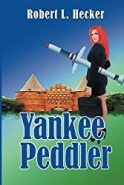 L. Hecker’s Yankee Peddler is more of a farcical social commentary than a mystery, but it’s so funny I had to include it. Ambassador Elizabeth Sullivan Wexford Adams sets out to sell the Litanians on “The American Way.” Hard to do when these isolated islanders have never heard of the USA.


 Later, as the more intriguing aspects of taking Buster to a psychic began to settle in, I thought I could make up some of my expenses if I could interest a magazine in running an article. I sent out queries and scheduled two appointments for my dog.

 Kate Thornton is a retired US Army officer who enjoys writing both mysteries and science fiction. With over 100 short stories in print, she teaches a short story class and is currently working on a series of romantic suspense novels. She divides her time between Southern California and Tucson, Arizona.
 Jacqueline Vick is the author of over twenty published short stories, novelettes and mystery novels. Her April 2010 article for Fido Friendly Magazine, “Calling Canine Clairvoyants”, led to the first Frankie Chandler Pet Psychic mystery, Barking Mad About Murder. To find out more, visit her website at
  ial representative
 e mysteries throw an average person into a mix of lunatics. It’s that duck-out-of-water aspect that makes for big laughs. Take Death by Sheer Torture by Robert Barnard. A perfectly respectable police detective must return to his family home (which he’s avoided for almost 20 years) where he’s surrounded by the suspects–his family members. These include a slob cousin who married the daughter of Italian mafia and their brood of Squealies (the children), a cheerful aunt who collects and admires Nazi memorabilia, and his very real memories of the corpse, his own father, who died in embarrassing circumstances. What more could you want?
 Rosemary wrote her first book when she was ten years old – for her little brother. She also illustrated it herself. It was later rejected by Random House!

 Miko Johnston is the author of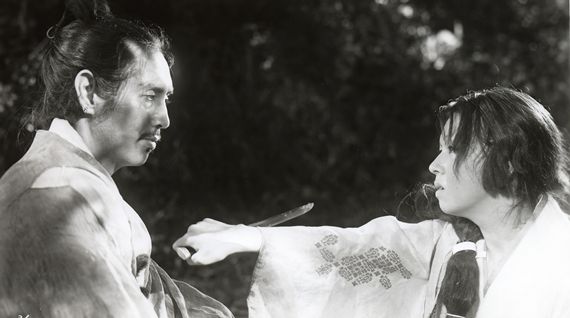

 We’re moving our blog to WordPress! Until it’s up and running, visit Writers in Residence
 The Writers in Residence
You must be logged in to post a comment.