A DILEMMA OF BOOKS… 

by Rosemary Lord

There I was, puffing and panting in the 90-degree sun, lugging box after box of books out to the car….

But I’m getting ahead of myself.

I have always felt that one can tell a dedicated writer by the books with which they surround themselves. Although I know that nowadays, if you’re technically and digitally proficient, you can do and find everything on your computer or even on your phone.

But it’s not the same. Not for real writers! You need to READ books to be able to WRITE books. Real, actual books, that is – with carefully designed crisp paper pages, glued and sewn together – or however they do the spines now. Enticingly designed covers, beautifully matched colors, and perfect fonts. There’s a lot of work that goes into every book.

Many of those who dedicate themselves to the magical world of writing have fascinating, eclectic book collections.

I recently culled 432 books from my overwhelming assortment. And I still have many left!

How did it ever come to this?

In my defense, as a book lover, I began with just a few small (only 6”x4”) volumes I brought with me when I moved here from England: ‘Poetical Works of Tennyson,’ some Edgar Allan Poe tales, Poems of Elizabeth Barrett Browning, and a worn 1915 printing of Gene Stratton Porter’s Girl of the Limberlost, that I knew would not take up much space.

Over the years of attending so many writers’ conferences all over North America, I kept those heavy bags filled with the new books publishers gave us.

To support my fellow writers, I loyally bought the latest book by the authors I knew.

I’m a sucker for an appealing jacket cover, too – especially when Amazon made special offers so affordable, as a way to discover new writers.

I still buy books for my writing research. I have a great collection of books on Old Hollywood. And then there was my late husband, Rick’s, assortment of books on motor racing, motorbikes, animals, snakes (don’t ask!), music, finances, and the Stock Market.

And so my library grew.

But my small apartment didn’t.

I had seven tall bookcases crammed, with more books stacked on the floor in front of them.

Time for a serious cull.

I kept books that fellow writers had inscribed to me. I boxed up Rick’s books. I found several duplicate copies of paperback mysteries and ‘cozies.’  Out they go.

Of course, I kept my rare and special Hollywood books. But I was strong in my intent.

No, it’s not: ‘make room for more books,’ I tell myself!

But then, knee deep in book piles, I realized they had to go somewhere.  Most of the charity shops where I donate clothes or household items are not taking any more books.

Hmmm. Where?…

Then I remembered The Last Bookstore. Years ago, my brother and I had schlepped half a dozen bags of books there to donate. It is downtown Los Angeles, at 453 Spring Street in an old bank building with marble columns and vaults filled with vintage books.  Owner Josh Spenser has created an intriguing world of not just shelves and stacks of books, but enthralling shapes – a tunnel of books, higgledy-piggledy towers of hardbacks and paperbacks, with comfy armchairs and leather couches to sit and gaze and get inspired by the fantastical displays of books, vinyl records, gargoyles, and dolls.
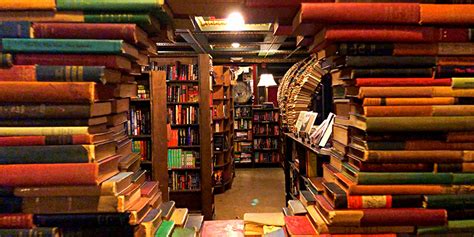
The Last Bookstore has a free community service called Re-Book It: to ensure that books don’t end up in landfills. They will pick up your unwanted books and find new homes for them, dispersing books to schools, charities, hospitals, and retirement homes. Currently, they’re focusing on getting books into the hands of children and families who lost homes in the L.A. fires.

“Hooray!” I had found such a great solution. Then came the fun task of packing the books in boxes and bags, counting and labeling them. Of course, lots of lifting is involved, squatting and bending, too. Quite tough on the knees and the back! But I reminded myself that I was getting a free workout! And lots of empty apartment space.

The 432 books packed into 24 boxes and bags were amassed by the front door, ready for collection. Then, I learned that Re-Book It was short-staffed and could not complete the pick-up that day.

“Why don’t you bring it to our store on Lankersham?”

“Okay,” I foolishly agreed, anxious to complete this project.

It was about 8 boxes in that I began to regret my fervor of “I can do this!”  The books were VERY heavy to carry across the patio, to the front lobby, and then outside to my car. What was I thinking?  And it was the hottest day of the year – of course. Over 90 degrees.

I had to stop every so often, sit down with a large glass of water, and cool off in front of a fan.

But once my car was overstuffed with boxes and bags of books, I made it safely to the Valley location of The Last Bookstore on Lankersham Boulevard, just past Universal Studios.

Just as the Downtown store was a magical, mystical store – so is this one. Odd, beautiful old doors, parts of wonderful, vintage walls surrounded by an eclectic mix of books and, well, just fascinating ‘things’ to look at, curios to examine. And, of course, books: from best sellers to first editions. A book-lover’s treasure hunt. Had I not been so exhausted carrying all those books earlier, I could have easily spent an hour or three browsing there.

I was very happy that my books were going to such a lovely new home. And I returned to my apartment happy I had made more space, promising myself not to fill it back up with more books. I wonder how long that promise will last!

So, this is where we came in. My exhausting but therapeutic adventures in book culling ….

Have you ever tried culling your book collections?

…………………….

HOW TO GROW A STORY

by Miko Johnston

I wish I could take credit for the title of this post, but the idea came from one of my favorite books on writing, How To Grow A Novel by Sol Stein. So instead, I’ll focus on what I’ve learned from the parallels between gardening and writing.

Know your regional growing zone

Trying to create a desert garden in the Pacific Northwest makes no sense. If you aim to sell what you write, be sure you have, or can create, an audience for it, otherwise write for your own pleasure.

Plant your seeds at the right time

In gardening, as in writing, timing can be everything. When I began working on my Petal in the Wind series in the early 2000s, I found little information about WWI’s eastern front (in English). That changed when the 100th anniversary of that war approached. We’re a year away from significant anniversaries: our nation’s 250th, the 25th of 9/11, and (looking at you, Mad) the 100th of Route 66, any of which should stimulate interest in books inspired by these events.

Know when to use seeds and when to use starts

With my local climate, anything slow-growing, like bushes, tomatoes or delicate herbs, takes too long to grow from seed, so I buy them as starts. Ideas also can be seeds, which require a lot of development, or “starts”, inspired by an existing story. If you like the thrill of seeing a workable idea break through the soil of your imagination, then go with seeds. Otherwise, get a head start with a pre-sprouted concept.

Plant them in the right place

Some plants need protection from the late afternoon sun while others thrive in hot, sunny conditions. Planting the latter in a place that provides some shade for the former benefits both. In writing, that’s called rhythm, which keeps the scenes flowing at a good pace, with moments of intensity/drama relieved by moments of relief/humor.

Nurture your seedlings, then toughen them up

In early March I plant some vegetable seeds indoors and set them on a south-facing windowsill to sprout. By the end of April, I’ll gradually acclimate them outside once the threat of frost has passed. If they don’t die, they go into the garden. I figure if they struggle a bit to survive, they’ll taste better. Do the same with characters; create them and then challenge them. It gives them, well, character.

Sacrifice the weak for the strongest

Thinning out your seedlings allows the remaining plants ample room to thrive, and lessens the competition for water and nourishment. Overloading your story with too many characters or too much (or a too convoluted) plot will starve out the best parts of your manuscript.

Know when to harvest

Whether flowers, fruits or vegetables, some need to be picked at their peak of ripeness, some slightly earlier and left to ripen on your kitchen counter. Leave a plant too long and it bolts or rots. Then all you can hope for is to collect seeds for next year.

A story must be tended and nurtured until it’s “ripe” for picking. Sometimes that means tackling a second draft while it’s fresh in your mind, other times it’s better to let a finished manuscript sit on the shelf awhile. Just don’t let it linger too long, but if you do, take a seed from it and start again.

Like planting a garden, a great pleasure of writing is growing your seedling into a full-fledged idea, nurturing it and watching it take form until it’s complete. The food we grow feeds our bodies, while the stories we grow feeds minds. But stories have one advantage over garden products.

My writers group used to sell our books at the local farmer’s market. We’d always remind shoppers that unlike the berries, tomatoes and lettuces they’d purchased, our products wouldn’t rot if left in a hot car awhile (insert laughter here).

***

Miko Johnston, a founding member of The Writers in Residence, is the author of the historical fiction series, “A Petal in the Wind”. Her fifth and final book in the series is about to be published. She’s also a contributor to several anthologies, including the bestselling “Whidbey Island: An Insider’s Guide”. Miko lives in Washington (the big one) with her rocket scientist husband. Contact her at mikojohnstonauthor@gmail.com

GROUP QUESTION #3 – Settings & Research, Where & How Much?

By WinR members & guests

  1. Where & when do you set your stories? 
  2.  How much research do you do on that time & place?

MIKO JOHNSTON: I’ve done extensive research for my historical fiction series, set primarily in and around Prague during the first half of the 20th Century, to give it authenticity. That includes using real places, people, events – even moon cycles accurate to the day – alongside my fictional characters. Some information has been unobtainable (at least in English), so when I can’t make it accurate, I aim for plausible. 

*

G. B. POOL (Gayle):  The setting I use in my novels or short stories depends on what the story is. So many of my private detective stories are set in Los Angeles because that city is known for its “high crimes and misdemeanors,” as we saw in these old black and white detective movies from the 40s and the great TV detective series from the 60s and 70s. I watched them all. I like having my contemporary private detectives walk that same turf. My spy novels are set in various countries during WWII, the Cold War, and into the later part of the last century. That might sound like a long time ago, but I lived through part of that time, so I know the later era.

As for how I write about those other times before I came on the scene, I watch a lot of old B&W movies and see what places looked like back when they filmed them and how they dressed. It’s a great way to “see” history when you didn’t live through it.

*

JACKIE HOUCHIN:  My dozen stories for 4th to 6th grade kids are set in present-day Malawi, Africa. However, many of the people in the surrounding areas still live in very primitive circumstances.  My goal in these stories was to show upper elementary kids in America how a missionary family (with 6 children) would live among and interact with less than modern circumstances, and still have fun. (And get into trouble!)

Most of the research I did was hands-on.  I visited Malawi five times, spending a couple of weeks each. I went into villages, watched kids doing chores, caring for babies and animals, and playing primitive games.  I ate the food and learned a few words. I cringed at the sight of humongous insects and scary witch doctors. I lived with a missionary family each time, seeing how they “made do.” I had lots of fun, asked questions, and took copious notes!  I also never caught malaria, meningitis, typhoid, or HIV. Whew!

*

DIANE ASCROFT (Guest): My Century Cottage Cozy Mysteries are set in Fenwater, a fictional small town in Canada, during the 1980s. The place is far from where I now live in Northern Ireland, but I grew up in Toronto, Canada, and often visited the real town of Fergus that Fenwater is inspired by. I loved the place and thought it would be a great setting for my stories.

For my series, I wanted to create a place that beckons readers to step in and stay a while, so a fictional version of Fergus was perfect. Setting my books in Canada during the 1980s is also a nostalgic journey back to my homeland. It was forty years ago when I was a young woman, so it’s a pleasure to spend time writing about the place.

*

JILL AMADIO:  I set my contemporary mystery series on Balboa Island, Newport Beach, CA. My amateur sleuth is a British gossip columnist banished for a year at the request of the royal family, tired of her perceptive comments. She is from the fishing village of St. Ives, Cornwall, my own hometown, which allows me to recall its pub built in 1310, my school, the beaches, my father’s pharmacy, my mother’s dance academy, and the pantomimes she produced every Christmas.

My research to jog my memory is a delight as I have several travel books on the British Isles, reminding me, too, of London, where I was a newspaper reporter. I also keep up with the news in Cornwall.

*

ROSEMARY LORD:  I have been writing mostly about Hollywood in the 1920s and 1930s.  I’ve always been fascinated with this era, and learned a lot more when researching my non-fiction books, Hollywood Then and Now and Los Angeles Then and Now.

I do a lot of research, which I find fascinating, and sometimes get far too carried away with that!  I love to show how either simple or how difficult life was one hundred years ago,  compared with today’s world.

I must confess that writing mysteries set today, when crimes may be solved using cell phones and today’s technology rather than old-fashioned “gum-shoe” sleuthing, leaves me cold!

*

MAGGIE KING:  My stories are set in Virginia in the present day. Most take place in Richmond, the state capital. It’s a city rich in history and culture, and it boasts two major universities. Many of the residents, myself included, moved here from other parts of the country and the world.

Charlottesville and Fredericksburg are also Virginia cities featured in my work. A few months ago, I posted here about a research trip I took to Charlottesville. It’s important to get the details right!

To date, I’ve been content to set my stories in contemporary times. But contemporary times are distressing, so I’m tempted to try my hand at something historical that will involve significant research.

*

LINDA JOHNSTON:  These days, I set all my stories in the present, although I used to also write time travel romances. But these days. my romances, romantic suspense, and mystery stories are set today, since I now enjoy the present more than the past. 

I’m currently writing mostly romantic suspense stories, in my own successive miniseries for Harlequin Romantic Suspense. They’re all set primarily in fictional towns, so my characters can get into different kinds of trouble with the law and get out of it without my stepping on real law enforcement toes. My recent mysteries, though, were set in real areas in Alaska, for fun. And of course, I’d visited Alaska.

*

Thank you, ladies! 

Superfluous Phrases – What Do They Mean & Why Do We Use Them?

By Jill Amadio

Often writers allow a well-known and well-worn phrase to trip off the tongue- or rather, onto the keyboard – to mark a particular moment in a story, just as we do in real life. In fact, to catch a moment in time, as in, “At this moment in time.”

What does that mean? Obviously, the first three words refer to a specific time frame, to the exact fraction of a second that is being noted. Exactly. It is a method for stating, or pointing out, that a moment is to be marked. All well and good.

 So why do we also need to add the words, ‘in time?’  Surely we are already talking, or writing, to pinpoint something that requires noting as to time. We want to make it stand out, with our ‘at this moment’ that alerts the reader to note the moment. Why, then, employ the redundant ‘in time’ to add to the statement? When else would it be happening if not ‘at…this…time?’

 If the ‘something’ happened earlier or later, the writer will be sure to note it, probably with a detailed following sentence or paragraph to explain the time lapse or hint at a future action.

Another hackneyed phrase that rather galls me is ‘Right now.’ This second phrase, in itself, poses another question – what do we mean by ‘right?’  The ‘now’ word is fully understood, but whence came ‘right’ in this sense? We often use ‘right’ as a confirmation in place of ‘correct,‘ to signify to the other person their words ring true, but it is rather inelegant. 

Here are other common phrases I don’t catch in my stories until perhaps my second or third draft:

Open any book, skim a few pages, and you are fated to come across ‘faded jeans,’ ‘a pale face,’ ‘the rugged terrain,’ or ‘winding road.’ These are all beautifully simple descriptions (a couple from Hemingway’s For Whom the Bell Tolls) that tell the reader in easy terms what we want them to know without going into unnecessarily exotic language.  Just writing a well-known phrase in the correct context can provide the reader with an instant understanding of what is meant.

One of my favorites is ‘standing pat.’ It makes no sense whatsoever on its face. Yet, it has a sense of mystery because ‘standing’ and ‘pat’ appear to have no relevance to each other, yet they belong together. And, incidentally, could provide us with the basis of a plot.

One can assume the phrase to be a description of someone named Pat. Was she standing up when the phrase was created? Was the word ‘with’ missing so that phrase may originally have been ‘standing with Pat?’ It does suggest a sense of loyalty, of being at the side of Pat. Yet, the word ‘pat’ has many meanings, as well as a person’s name, although I doubt it means ‘to pat’ as in patting a pet.

So many other phrases we use are hackneyed but perfect for the moment in time (sorry). Trying to find a substitute to avoid sounding boring can take up too much time, and even sound unnatural.

A foreign character’s use of phrases in their own language often introduces an interesting change of pace as long as there is a way to translate it, if necessary. This can easily be undertaken in conversation, while other remarks may not need any translation at all. In fact, we don’t realize that many words have become part of our own English language. Someone told me that English is based on German, while someone else swore it was based on Latin.

All that writers need to remember, I would say, is how rich and versatile English is, and how fortunate we are to be able to dive in and select whatever we choose.

 I recently bought an ebook from Amazon for my Kindle Fire, selecting a mystery at random. Not until the second chapter did I notice it was set in Norway and authored by a Norwegian.  Bravo!

**

.

This article was posted for Jill by Jackie Houchin