Giving Back

by Gayle Bartos-Pool
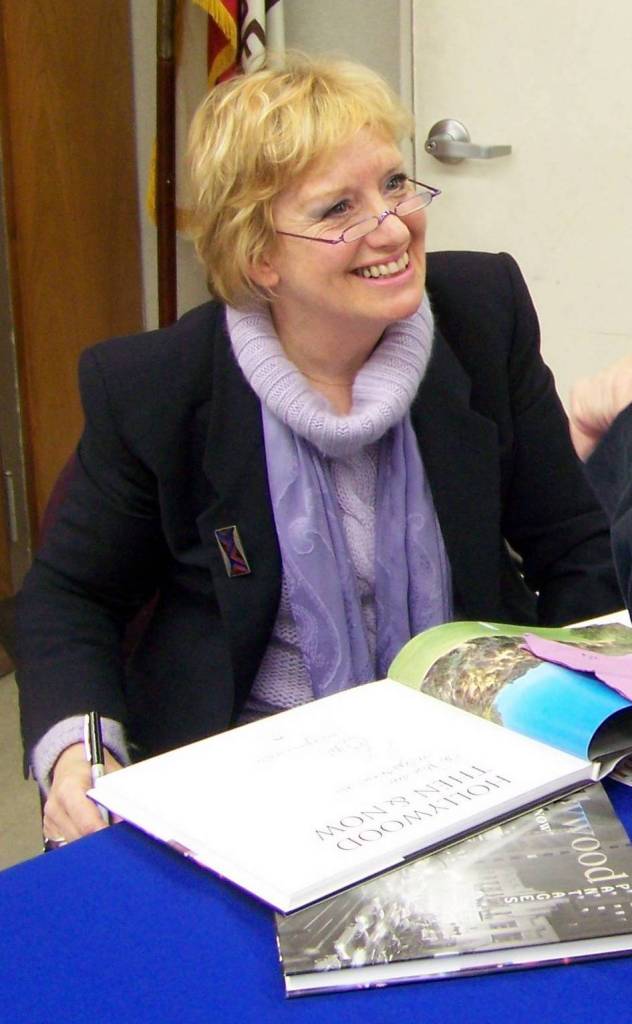
Gayle at Bill's House Sept 2022 cropped

I’ve learned a lot from other writers. This blog has allowed me to gain knowledge about what we need to do to get those words on paper or into our computers. We might have a few different technical methods for getting that story actually written down, but many times I’ve noticed that we use similar ways to come up with the narrative.

Many writers actually let their characters “talk” to them so they can craft a unique person in their story. I’ve done it so often that I rely on that connection with those characters when I’m writing.

When I first had the idea for my Johnny Casino books, I sat down and basically let Johnny give me a two-page monologue about who he was. That “chat” ended up being the opening pages of my first book about Mr. Casino.

I learned about creating a biography for a character when I took acting classes from a terrific actor named Rudy Solari. He told us when we were doing a scene from a play to write out a short bio about the character we were playing. The script might have the words and the actions of our character, but Rudy wanted us to know more about the person we were playing like their education, where they grew up, and how they viewed the world so we would know who our character really was when we first stepped onto the stage and delivered our lines.

I use that method when I write my characters in my short stories and novels. When I start crafting the story, I jot down the name, age, general attitude and some special characteristic of that person so I can keep track of him or her throughout the story. I don’t want a 25 year-old blonde named Mary to turn into a 45 year-old red head named Mildred later on in the book because I forgot who she was supposed to be.
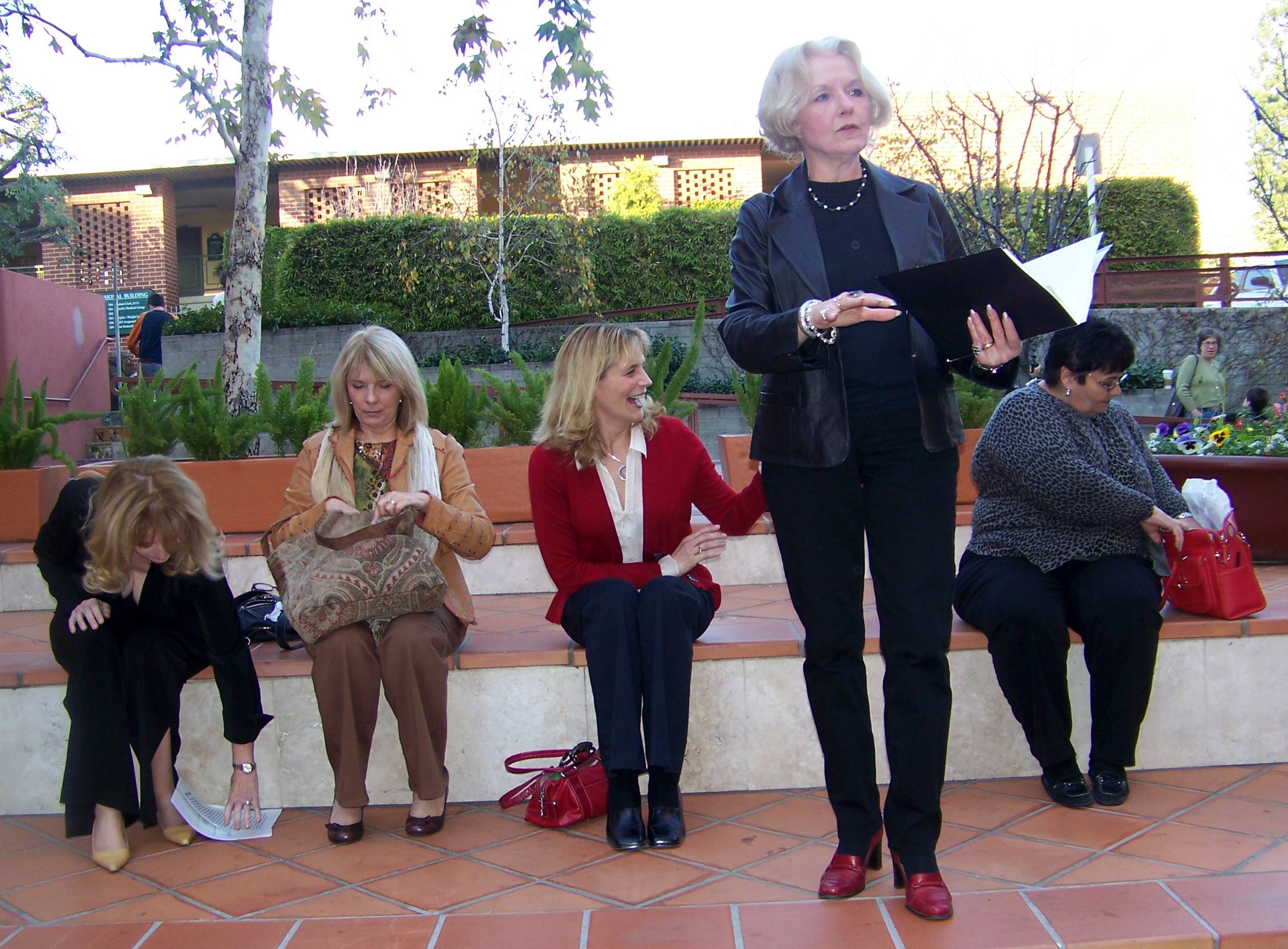
1.19VroGayl+sleuths

That lesson from acting class has stayed with me for over fifty years. It works. I learned a few other things from actors, other writers, and by just honing my craft. But for many years I thought I should share this stuff I was learning with other writers, so when I became Speakers Bureau Director for Sisters-in-Crime/Los Angeles, I thought I would put on a few classes to let other writers know how I got words on paper.
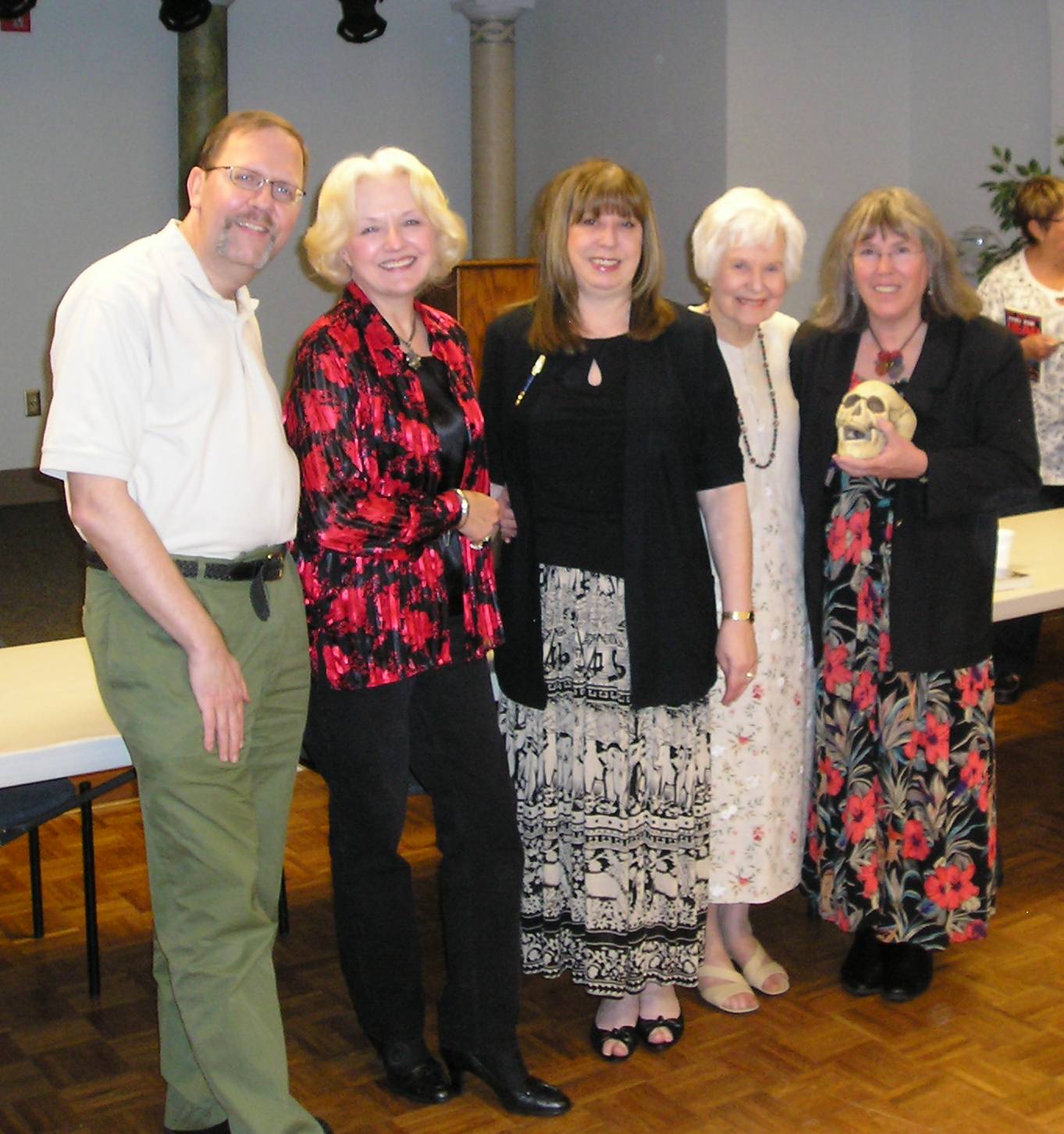
Simi2

This “giving back” to fellow writers became something I have done for years. Not everybody can give money to groups and causes they endorse, but we can give of ourselves. I’ve done this by speaking at women’s clubs, libraries, and to other writer groups. And the times I’ve been on a writers’ panel has always been fun, because I learn new things, too.

Something else I try to do is to encourage people, not just somebody wanting to write that first novel, but to regular people who have lives that are frankly extremely interesting. I tell them to try writing their own autobiography so they can share their life experiences with their family and friends and maybe a whole bunch of other people who learn that this person they just met has a book out there about their incredibly interesting life. That just might prompt the next guy or gal to jot down a few of their own memories for a book of their own. But somebody else learns from that memoir – the writer. They learn things about themselves. Nothing wrong with that.
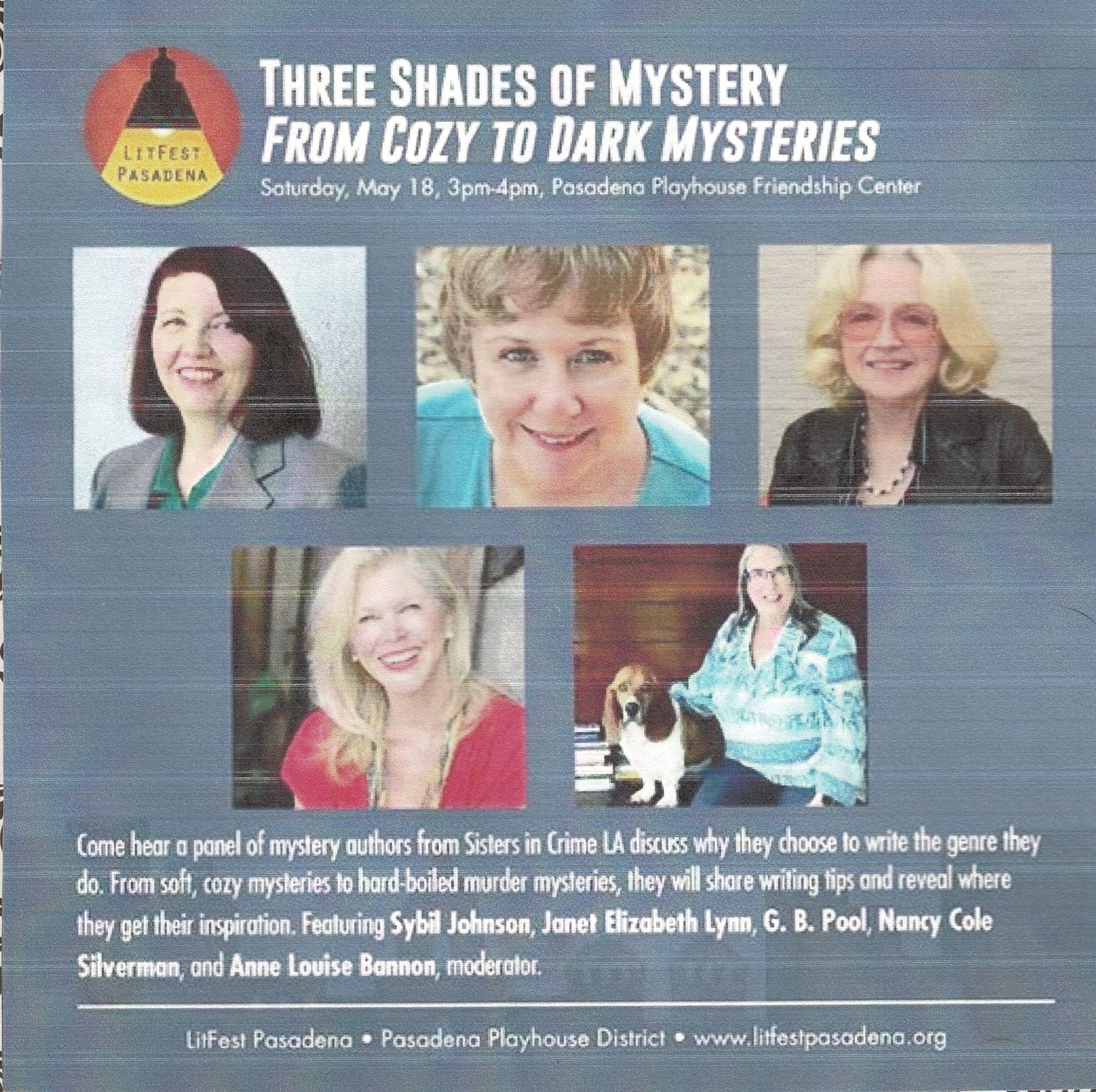
Pasadena LitFest Panel

I want to encourage people to write and to read. Both are becoming a lost art. Look at the handwriting of kids and even young adults nowadays. It looks like a first grader. Ask a teenager what was the last book they read. You’ll be lucky if they ever read a book outside the classroom.

By encouraging people to write, we might get a few more words on paper, a few more ideas in print, and a few more interesting stories to keep people company when the Internet is down. People might actually see there really is a world out there and they are an interesting part of it and they have a few stories to tell as well.

Read On, Write On, and Teach Others!

Here are a few of us Writers-in-Residence at one of the writers conventions.

Rosemary, me and Jackie
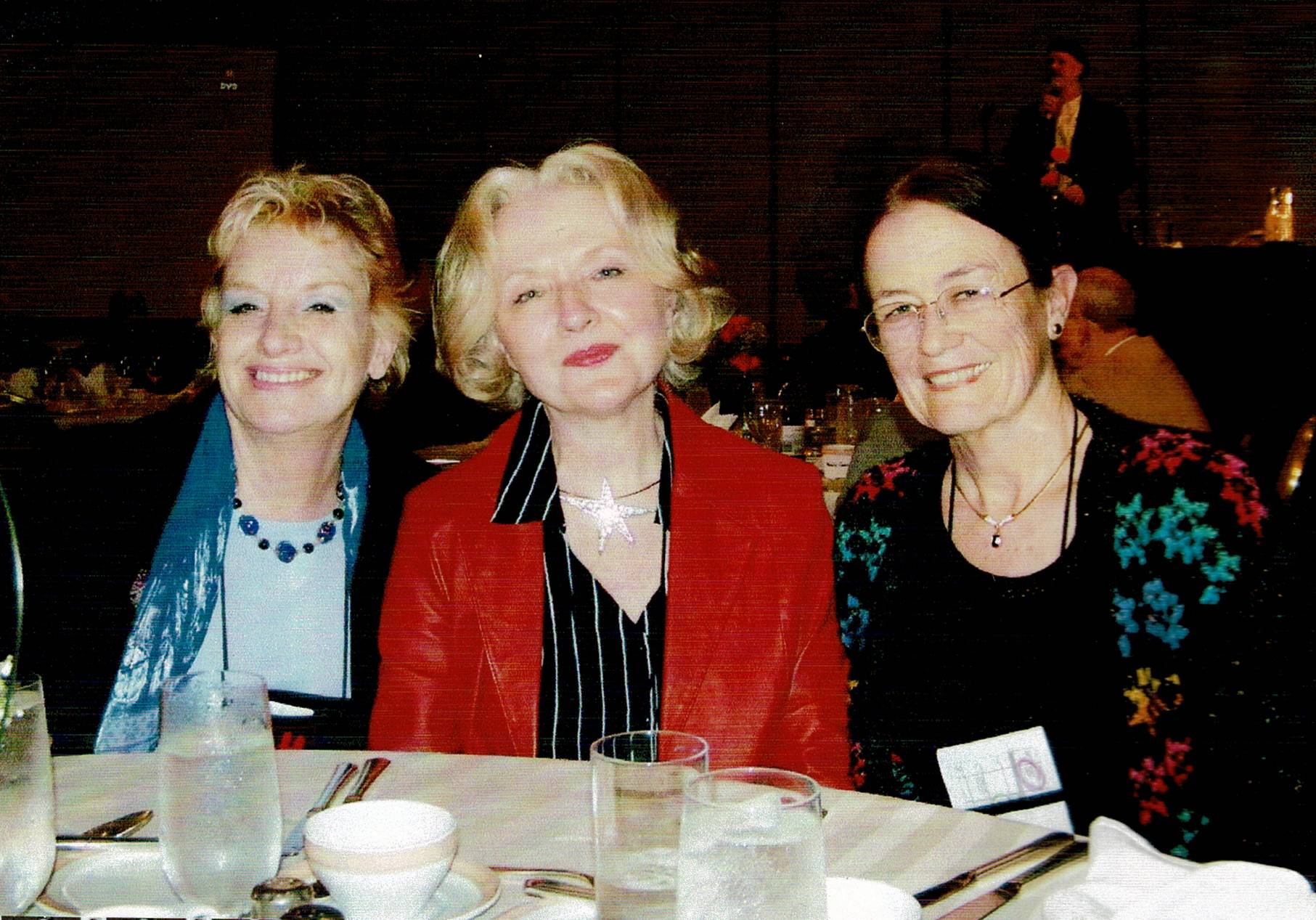
Left Coast Crime trio

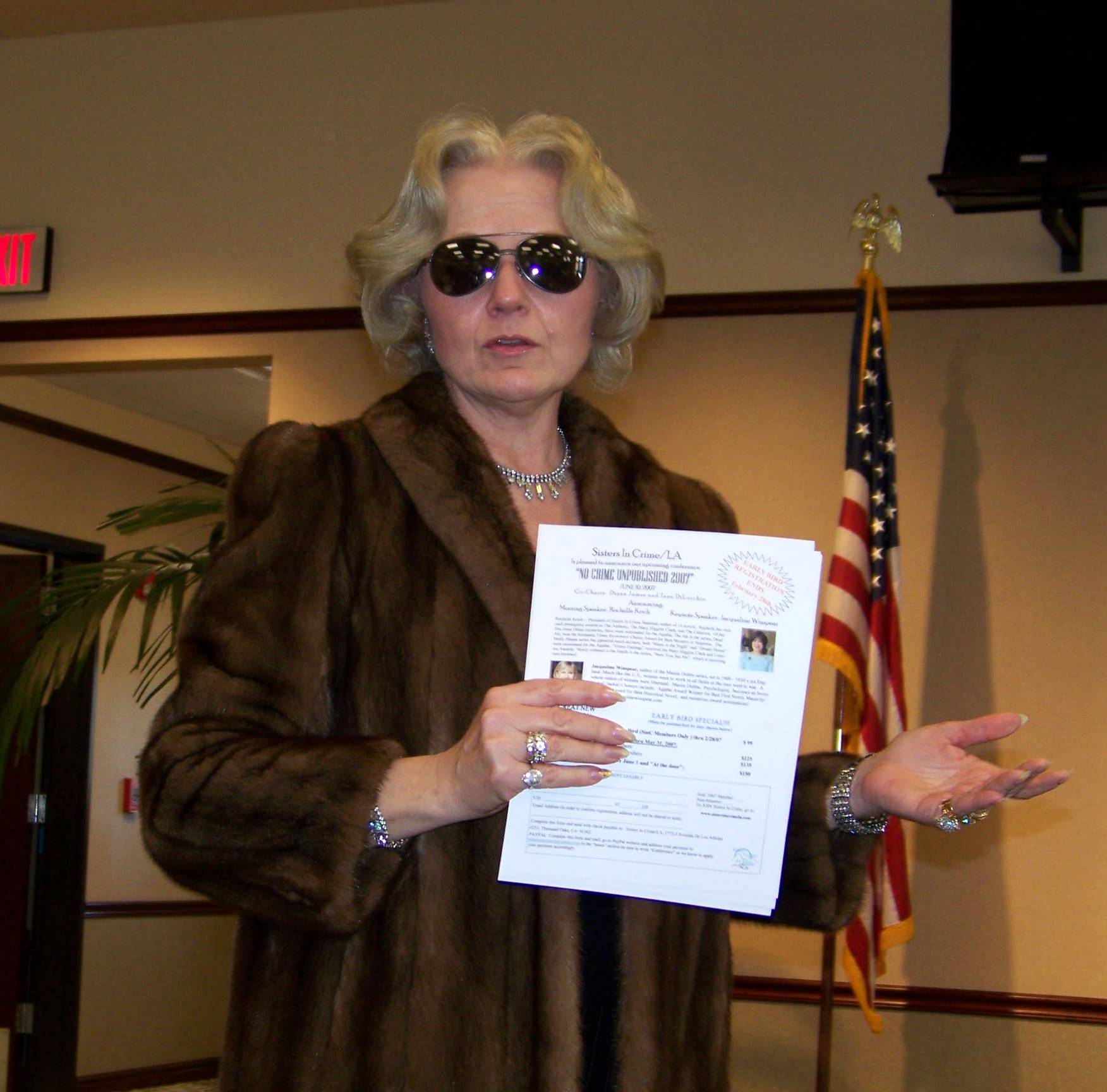
Or how about one of the panels I put on at the Burbank Library. It was a Total Hollywood moment…And yeah, I had fun doing those events.
HollyGylB1236

Why write?

by Linda O Johnston

As I’ve said before, writers write. But why? 

I’m sure we each have our own reasons for wanting to write and to get our work out there in various ways for others to read. 

Sometimes it’s because we have things to say that we want the world to know about, right, you writers out there? That’s one reason I write. Anything good about dogs is best for me. 

But why else do I write? 

Well, it’s who I am. I started writing as a child. I even had a story about a couple of kids who got together to travel to see the world. My mother saved what I wrote, and I think I have a copy—although I’d have to hunt around to find it. 

And after? For one thing, I loved my English classes, learning spelling and grammar and how to write. I still have an affection for grammar, although it’s changed over the years. Who would have thought that? 

In high school, I got into advanced English. And then, when I went to undergraduate school at Penn State, I majored in journalism with an advertising option. That helped since I also did some writing and editing for my dad, who had an advertising and public relations agency, and I eventually became his employee. Before I became full-time there, I wrote articles for a small newspaper, making use of my undergraduate degree in journalism. But while I worked for my dad, I met the guy who became my husband and he got me interested in law school. And yes, although that involved a lot of reading and studying of law cases, there was writing involved there too. 

When I eventually started practicing law, I did write some legal briefs, then became a transactional attorney. And I’ve always said that contracts are just another form of fiction! 

As I practiced law and before, I also started writing actual fiction, and started getting it published–including winning the Robert L. Fish Memorial Award for the best first short story of the year for my first published story—and so it continued. 

Why? Because I loved it. Still do. I like trying different forms of fiction, though now I’m concentrating on romantic suspense and mystery. 

How about you? How and why did you start writing? Did you always like it? Do you like it now? 

Write on! 

LET GO AND LIVE….

by Rosemary Lord   


I went to the zoo. London Zoo. With my brother Ted. We took a picnic.

It was a lovely sunny day in May, shortly after my birthday, as we sat by the fountain enjoying our sandwiches. Just like we had done as small children – just yesterday!

Oh, the pleasure of revisiting such childhood memories.

Since then, the London Zoo has improved greatly, totally remodeled with expansive, imaginative new areas for the animals with the Global Wildlife Conservation programs. We saw the wonderful abandoned 1950s Indian railway station that is now The Land of Lions, complete with abandoned luggage, old handcarts and peeling, vintage Bollywood movie posters, to make these endangered Asiatic Lions feel they are still in Gujurat, India. The Sumatran tigers have their own roaming wilderness, as do the wild African rhinos. All endangered species, now thriving in this spacious conservation program. Even the butterflies have their own newly designed habitat. Each sanctuary was as fascinating as the last. It was an educational joyride.

Yes, I was in England visiting my family for the gathering of the Lord clan. After London, my siblings and I went back to the small fishing village in Greece that we’ve been returning to for several years. Not telling you where or it will get overrun with tourists! This is where we enjoyed leisurely dinners in the harbor, overlooking the small fishing boats. Souvlaki (chicken skewers) and moussaka still favorites – at around $14 a head including lots of wine and other dishes! We spoke of books and writers. We always come back to books and writers. Richard Osman’s Thursday Murder Club was much discussed as a well-thought-out Agatha Christie-style mystery. Also on the reading menu were Mick Herron’s Slow Horses, Victoria Hislop’s latest, The Figurine, and Sinclair McKay’s intriguing book about The Secret Life of Bletchley Park. I love those World War II books. And am fascinated to learn more about the young women at Bletchley Park, who, having signed the Official Secrets Act, never spoke of their heroic work.  

We wondered whether today’s kids will be as voracious readers as we were and still are…

We spent a couple of days in the delightful waterside town of Nafplio, an hour south of Athens. More delicious Greek food and friendly Greek hospitality.

Back in England, our wonderful, long-suffering brother-in-law, Peter, drove us to Broadstairs, in Kent – next to Ramsgate. What fun! It’s a lovely, old-fashioned ‘seaside’ town. It was one of Charles Dickens haunts. Bleak House stands on the top of the cliffs overlooking the expansive beaches. It’s a leisurely mix of old and new. The Edwardian and Victorian architecture, the Kent and Sussex painted wooden beach huts and wooden fishing and boat structures at the waters edge, unspoiled, next to charming new buildings. Beachside shops selling souvenirs, buckets and spades and saucy postcards. Fish and chips for lunch, of course. Perfect!

This was my much-needed escape from Hollywood and all the dramas of the Woman’s Club. To my jaded eyes, it seemed so much easier to be a writer in London now. Lots of cozy cafes in which to write the next best-seller and to swap literary tales with aspiring and established writers. They are everywhere in London.  Cafes and writers, that is. And there are endless magazines to read, too. Several have selections of short stories.  Where did the American writers’ magazines go?

And this time away gave me the chance to take a look at what I had been doing with my time and where I was going.

I read a piece by DJ Adams on ‘Letting Go of Expectations…’

She’s right.  As writers and artists – how perfect do we want to be? And who decides what is perfect? “To fully embrace your creative artists or muse,” she writes, “You must learn to let go. Let go of who you think you are, releasing your idea of what your creative gift is and what you expect to achieve. This is so contrary to everything we’ve been taught in order to be successful. So instead of holding on to who you think you are (noir novelist, oil paint artist, songwriter) stand back and observe your abilities. Just like our personalities are ever changing, so our muse has many faces. Our creative consciousness absorbs. Let yourself go. Experiment without considering the outcome. Stephen King said ‘Good writing is often about letting go of fear and affectation…’ Let go – to grow!”

Sounds good to me.

“It’s not where you start – it’s where you finish…” wrote Dorothy Fields, lyricist for the Broadway musical Seesaw, “It’s not how you go, it’s how you land.”

And Ralph Waldo Emerson put it another way: “Life is a journey, not a destination.”

And so, as I flew back to my Hollywood home, I thought a lot about those words.

I think many of us are still working with the adjustments forced on us by the Covid nightmare. And all of those challenges that crept up on us. Life is different now. Reading and writing habits have changed, too.

Now, I decided –  I wanna be FREE! I wanna be ME! I have so many untold books and stories in me, I feel I’m bursting at the seams. I gotta lotta writing to do!!

So, I’m ready for new horizons. I’m ready to let go. Not sure where or when. Not even sure who I am anymore. Just one big leap of faith into an amazing creative future.

Who do you think you are today? What do you expect of yourself? Or do you like where you are now? Eh?

HOW I FOUND MYSELF WORKING AS A WRITER IN RESIDENCE OF A HIGH-SECURITY MALE PRISON

by Hannah Dennison

I’m excited to introduce our special guest today Sunday Times bestselling thriller author Jane Corry. As you’ll soon learn, Jane’s writer-in-residence experience is quite simply extraordinary.

Jane – welcome! 

My novelist career took off when I went from being a features writer on a well-known women’s magazine to prison.
I’m not joking. But I should add that I was a writer in residence at a prison rather than being a prisoner myself.

My story started the month I got divorced from my first husband after 27 years of marriage. Two weeks later, my weekly magazine column ended due to a staff shake-up. Although I had maintenance, I found myself in need of extra income in order to bring up my three children.

After moving house, my new neighbor suggested that I look in the papers for work. I hadn’t applied for a job for 27 years—I’d been a freelancer since my children were born. But there it was—an advert saying, ‘Wanted! A writer in residence of a high-security male prison.’

Frankly, I didn’t think I had a chance. After all, I didn’t have any experience of prison, either from the outside or in.  Indeed, the only crime I’d ever committed was to park on a double yellow line.

But the money they offered was exactly what I needed to pay my mortgage – to a penny.

My sister and friends didn’t think I should apply. In fact, they thought I was crazy even to consider it.  I was, as they pointed out, in a bad place emotionally. How was it going to help me to work in a prison? I like to think it helped both me and my students, but I’ll come onto that in a moment.

I was very surprised to get an interview and not at all surprised to fluff it up. The governor asked what I would do if a prison officer came into the room where I was running a writing class and told everyone to get out. I said that I would get them to stop in the middle of the sentence so it would make it easier for them to come back to it – it’s a good writing technique. He looked at me, his eyebrows raised. ‘And by that stage,’ he pointed out drily, ‘half the prison would have escaped.’

He had a point. From that moment, I relaxed because I knew I’d blown it. So you can imagine his surprise when he rang that evening and offered me the job.

On my first day, I was given the keys to the prison. To be precise, I was handed a key belt and told that I had to lock any doors that I unlocked and went through, otherwise I’d be out on my heels. I also had to make sure that I signed in every night and handed the key back.

My role was to be a sort of literary Pied Piper. I wasn’t part of the education department, where people had to come to my lessons. I had to woo them in through notices which I put up round the prison.  I printed them out with titles such as ‘Come and join my workshop to write a letter, novel, short story, life story.’

Life stories were particularly popular. I learnt more about crime than I care to talk about. I will say, however, that I was reduced to tears of shock and horror by one man’s story. He then apologized for upsetting me and I told him he should be apologizing to the people he had held up and threatened with death.

I entered his life story for the Koestler Awards, given to men and women for art and writing in prison and he won a silver. His behaviour immediately changed for the better and the guards said that it was due to his new-found story telling skills. He told me that if he hadn’t expressed his remorse on paper, he might have banged his head against the wall.

On the whole, I was treated very well in the prison, although there were times when I was scared. I was followed around at one point by a man who – when I looked up his crime – had tried to kill his girlfriend. I didn’t look up any crimes after that apart from the former accountant who had been a rapist. I don’t want to go into that. He seemed such a nice man.

One night, the governor asked if I would spend the night in the prison for a charity drive. I would have turned down the invitation but the money was going to help pay for my next year at the prison. So I felt obliged. It was terrifying being locked in. There was a bowl under the bed for my business. I spent all night typing. The gov had allowed me to bring my typewriter in. In the middle of the night, an officer knocked on my door and asked what I was doing. I told him I had permission to write and reluctantly he went away.

On other occasions, I brought in writer friends to talk, including Colin Dexter. The men asked him how he got his inspiration. He told them that it was a large bottle of malt whiskey. This didn’t go down well with the officers, but the men thought he was wonderful.

When I started my prison job, I was told that the men either spent their leisure  time in the gym or in the chapel. That stayed in my mind. Then as I walked past the gym, with sounds of machinery pounding, a title fell into my head. The Book Of Uncommon Prayer. So I asked both the men and the staff to write down sayings that helped them through life. I’d written something similar for the women’s magazine earlier. It seemed to go down well and also improve relations between some staff and men.

My two year contract was extended to 3 years. They then asked me to stay for a fourth but I thought that I might never leave. By then I’d got married again so I said goodbye but I volunteered to be a judge for the Koestler Awards and have done so now for the past ten years. Every summer, I go up to Wormwood Scrubs and leaf through entries. The winners’ work is displayed at the Southbank in London every autumn.

I gave up romantic fiction and began writing gritty suspense novels about families who’d been affected by crime, either as aggressors or victims. I changed agents and my new one sold me to Penguin. I’ve since had eight top ten Sunday Times best-sellers.

People sometimes ask if I miss my old life. Actually, it haunts me.  You can take the girl out of the prison. But you can’t take the prison out of the girl.

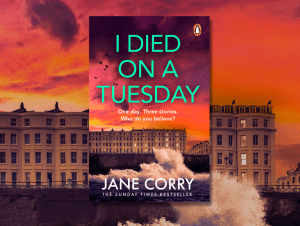
You can buy my new novel ‘I DIED ON A TUESDAY’ in supermarkets, shops and   https://bit.ly/3SE8UVi. Thank you. You can also find out more about my books at www.janecorryauthor.com,   

The book on Amazon