
by ROSEMARY LORD
 It’s about twenty years since I was hired to write my first non-fiction book, Los Angeles Then and Now. Hollywood Then and Now followed. It was for a small London publisher. Both books were a huge success and on the Best Sellers’ list. Great for the publishers; however, as I was a writer-for-hire and they had the copyright on all the Then and Now books, I don’t receive royalties. But it was a tremendous boost for my writing career and a good ‘calling card.’ I did a lot of publicity and promotion, so I learned a lot on the publishers’ dime.
It got my name out there.
Over the years, after the first flush of success, I did the occasional book signing and promotional appearance. I continued to lecture on the history of Hollywood and attend charity events, so it kept my name out there. These books really have ‘legs’! Like the Energizer Bunny, they go on and on. Every so often, the publishers would ask me to write updates and additions for the new editions.
But then, a couple of weeks ago, I received an email from Harper Collins, one of the ‘Big Five’ publishers in London. They had bought Pavilion Publishing and bought my Then and Now books. “Would you be interested,” they wrote, “in writing a completely new updated version of Los Angeles Then and Now?”
Let me think… um…er…. “Yes!” I cooly responded: “I’ll move my schedule around.”
And so, my fiction writing and novels will be cast aside for a while as I focus on this enormous task. I won’t totally abandon them, but for a while, they will take a back seat.
The original contract was quite daunting: selecting 77 sites representing Los Angeles. Because it is such a sprawling city in search of an identity, I started downtown at its origins in Olvera Street, then drew a line going west to the beach at Malibu, illuminating sites along the way. That was (and is) my plot line. The money was not great, but the opportunity was.
Over the next year, I will be updating the existing 77 sites throughout Los Angeles, giving a fresh view of the history. I will be changing about 15 of them, removing sites that may not be of such great interest and adding those I consider more fascinating. I get to select new sites with greater appeal for today’s readers. As well as researching new, previously hidden facts to give each history a new look, I will be sourcing archive photos and new, updated photos of all the sites. I will also take a new approach to writing the main history of Los Angeles that comes at the front of the book.
There is so much history to write about, examining different aspects of what went before, and the myriad of characters and how they built up this amazing city from scrubland in the desert with no water and very few people. The main challenge is to condense it all, keeping the most salient points. The publishers have very strict word counts on every page.
It’s very easy for me to wax lyrical about each place’s history and the colorful individuals involved, and if I’m not careful, I can write on forever. The skill with this assignment is to give “Just the facts, ma’am,” but keep it interesting.
And I really do have to rearrange my life to focus on this job. I always seem to have several writing things on the go at once, with research books, clippings, and files everywhere – as well as the Woman’s Club work that still lingers. My workspace is always busy. But this task is large, so everything else must be put away for now.
I’m Yack Shaving again! (That’s when you get sidetracked and taken on a circuitous route, with multiple small tasks that need to be completed before you can accomplish your main, original goal.)
I have a couple of mesh-sided carts on wheels that hold hanging files that I use for specific projects. I’ve cleaned these out of copious miscellaneous papers, ready for the 77 separate new files for each of the Los Angeles sites, plus the main history and archive photographs.
I’m going through boxes of old research files, culling as needed, making room for new information. I can’t wait to get back into investigating at some of the old libraries and hidden private collections to discover newly unearthed tidbits of history that so often get overlooked. Research is where I can spend far too much distracted time.
Many of my handwritten notes have faded, and as I struggle to read the pencil-scribbled file tags, I realize I need to dig out my label maker – and borrow a five-year-old to show me how to use it!
Lately, I’m getting really good at organizing my files. I recall the late Professor Randy Pausch complaining that his wife thought he was way too compulsive, filing everything alphabetically and neatly. “Because,” he decided, “that was so much better than searching for something in a panic, saying, “I know it was blue, and I was eating something when I had it.”
And of course, I’ll be driving all over Los Angeles to check on old and new sites, taking copious photographs and notes along the way. So, I have to fit that into my schedule.
But now, I have a stack of new notepads and pencils, a pencil sharpener and erasers, my Thesaurus, and OED at the ready. A clean, empty desk awaits.
I’m ready for my next literary adventure.…
How do you prepare for your next big writing project?

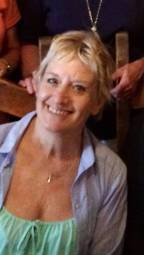 Rosemary wrote her first book when she was ten years old – for her little brother. She also illustrated it herself. It was later rejected by Random House!
 So did Red-eared Sliders. So-called, because they have a narrow red stripe around their ears. The ‘slider’ bit comes from their ability to slide off rocks and such into the water quickly. Then there’s the common Snapping Turtle. I learned to grab them more towards the back of the shell, because they have longer necks and would, of course, snap at me. Hence the name. They can be vicious little what-nots, craning their necks, trying to reach my fingers and glaring at me as if to say, “Leave me alone, I was on my way to the pond up by the crossroads.” Mind you, the Alligator Snapping Turtles can be huge, like some prehistoric creation. Their faces look a bit like E.T. on a bad day. My mother-in-law’s doctor had a collection of these in his garden. Some were as big as 75 lbs. Then, of course, there is the Yellow-Bellied Slider: with a yellow under-belly and sometimes yellow stripes on its’ top shell. Not to be confused with the Eastern River Cooters, who have yellow stripes, too. Here endeth the turtle lesson. See. I used to know my turtles!
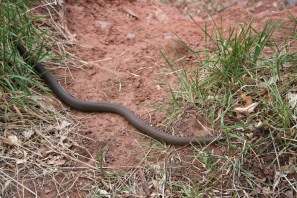 teacher. He loved all living creatures and had the most amazing knowledge, experience and affinity with them. Turtles and snakes were his favorite. We would go snake hunting, too. That’s when I usually stayed in the car. But sometimes I would have to handle the smaller ones. Or, if he found a large, wriggling snake and didn’t have a big sack to put it in, he would hold it gently out of the car-window with one hand, (careful not to injure the delicate vertebrae) while he drove – very slowly – back to the farm. He often promised (or threatened?) to take me to Death Valley in the summer, in search of the striped Rosy Boa!
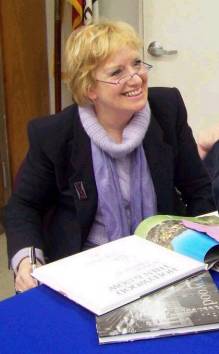 Rosemary wrote her first book when she was ten years old – for her little brother. She also illustrated it herself. It was later rejected by Random House!
 Then someone told me about “Org. Charts”… Online Organizational Charts that are supposed to make your life easier. Some of the versions can be very expensive, I was told. I was excited. Perhaps this is the magical cure I had been seeking?

 The Writers in Residence
You must be logged in to post a comment.