Learning the Basics "Chapter One" at a Time Part 1

Learning the Basics “Chapter One” at a Time is a tutorial brought to you by Miriam Johnston

Part 1

Sure, you can write. You’ve created a logical plot and interesting characters. You’ve even been praised for some of your passages. However, your work lacks the professional polish of a best seller or critically acclaimed novel.

Welcome to LEARNING THE BASICS “CHAPTER ONE” AT A TIME, a self-help tutorial designed for writers who want to take their work to the next level.

Most writers aim to improve their skills by taking classes, attending writers’ conferences, reading books and subscribing to journals. All tend to emphasize the same points – and we’ll cover many of them in this tutorial. What’s unique is that we’ll focus on our own first chapters as a way to identify common mistakes and correct them with a two-fold approach:

• tips and advice gathered from the best instructors, editors, and writers
• DIY exercises to help identify weaknesses and correct problems

We’ll review basic methods for beginning a story – what they are, how they’re done, and what they should accomplish – and evaluate them in relation to our novels. In addition, we will discuss modifiers, telling instead of showing, and dialogue, using our first chapters to illustrate the strongest and the weakest elements of writing. Each tutorial will offer writing exercises to help slim down and tone up your chapters. Once you get your first chapter in shape it can serve as a guidepost for the rest of your novel.
Let’s begin by reviewing some fundamentals every agent wants you to know:

PART 1 – PRESENTATION

Nothing screams amateur more than a manuscript that is sloppy and substandard.

Can’t read that? Neither can an agent.

Submitting work in an unreadable font guarantees a rejection. How many deals collapse for something so petty and preventable?

It’s one thing to economize by using recycled paper or printing two-sided copies for an informal writer’s group or for your own use. However, it’s never acceptable to submit pages to an agent or other professional that don’t follow acceptable standards such as margins, font type and size, spacing, chapter headings, spelling, and grammar. It shows disregard for the work, as well as for whomever you’ve asked to read it, whether it’s a fellow writer, proofreader, or prospective agent. Get in the habit of using professional formatting whenever you write. That attitude should begin on page one and never waver.

FORMATTING AND TEXTUAL ERRORS IN MANUSCRIPTS

1. Using a non-traditional font or font size
2. Cheating margins or line spacing
3. Starting a new chapter on the same page as the previous chapter
4. Submitting streaky photocopies or poorly printed copies of your work
5. Flawed, stained, or mutilated pages
6. Typos

HOW TO FIX THE PROBLEM

1. Pick a classic, easy to read font such as Times New Roman or Courier in 12 point.

2. Double space your copy and allow for one inch margins all around. Never break that rule, even if the last word in the chapter falls on a new page. Try editing out a word or two instead.

3. Always begin a new chapter on a fresh page and halfway down (some blank page gives the illusion of a faster read).

4. Use a good printer, preferably laser, although a high quality inkjet may be acceptable. If you’re not using a fresh cartridge and there’s any grey in the text, switch it out and reprint as many pages as necessary. Use only white paper.
5. If you encounter any of these problems on a page – redo it. You don’t want your manuscript rejected because of a smudge or crease on page 7, but it happens.

6. Proofread your manuscript at least twice before sending it out. If possible, get fresh eyes to proof it as well.

Before you send out pages or a manuscript to an agent, always verify whether a hard copy or electronic copy is preferred. Then give them what they want.

I’m always shocked by writers who think they can flaunt the rules. Perhaps the most arrogant are those who say they don’t concern themselves with proper spelling, punctuation, and grammar. Writing, like any vocation, has its tools. Can you imagine a doctor, teacher, or auto mechanic boasting about their lack of the most basic of skills?

We all begin with the 26 letters of the alphabet, which are used to form words, then phrases. Then, with the help of grammar and punctuation, we create sentences, paragraphs, pages, scenes, chapters, and novels. Our tools should also include a dictionary, thesaurus or synonym finder, and various books on style and grammar.

Anyone can write, but to write well, you must spell your words correctly, so we can recognize them. You must understand what those words mean, so they’re used in the proper context. You must learn the correct use of punctuation and grammar, so we can understand what you’re writing. Finally, if you choose to break the rules, have a valid purpose for doing so – spell a word phonetically to highlight the speaker’s accent, or incorporate poor grammar into a character’s dialogue to show his lack of education, for example.

The next installment, OPENINGS, will cover that important first paragraph of your novel.

Photo: Gary Phillips, Marilyn Meredith, and Marci Baun at California Crime Writers Conference

An Interview with Alice Zogg

We hare pleased to welcome Alice Zogg, author of the R.A. Huber mystery series. Born and raised in Switzerland, Alice moved to New York City where she met her husband, Wilfried. Shortly after the birth of their first daughter, they relocated to Southern California in 1967 where they continue to enjoy life. I have a special spot in my writing heart for Alice, because she’s the first person I met when I wandered into my first Sisters in Crime meeting, and her warm and open demeaner definitely influenced my decision to join!

Welcome, Alice.

For starters, I’m really interested in your sleuth. Regula “R.A.” Huber is in her early sixties, which might put her outside the age range that publishers are looking for. Did you find you had trouble generating interest in a silver-haired sleuth?

R.A. Huber is not your average sixty-something woman. She is equally comfortable in a competitive game of racquet ball against younger men, on the dance floor, racing down a mountain on skis, dressed in a long gown at a black-tie function, or simply enjoying a game of chess. What makes her unique, though, is how she chooses to spend her golden years. Unlike most of her contemporaries who pursue hobbies or join clubs after retirement, Huber opens a private investigating business.

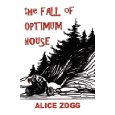
In your fifth book,” The Fall of Optimum House”, you introduced a sidekick. What made you give R.A. someone to work with?

After having read my third book, a retired editor who is my mentor suggested that Huber might benefit from a sidekick. At the time I was deep into writing my fourth, The Lonesome Autocrat, which is set in Switzerland. It would have been unrealistic to add a sidekick to that particular story – – at least not one that Huber could keep in future books. So it was not until the next mystery novel, The Fall of Optimum House, that I created Huber’s young assistant, Andi.
Did you worry that Andi might steal the story away from R.A. when you sent her undercover to Optimum House?
Not really, I had too much fun with the fiery redhead from New Orleans, Antoinette LeJeune, better known as Andi. Also, my previous novels are written in the first person from R. A. Huber’s point of view. With the addition of Andi in The Fall of Optimum House and the books that follow, I write in the third person. This, of course, gives me a broader range; I can now go into the heads of all characters, including the murderer.
With six completed novels, you must have a routine by now. Do you outline your books? And which do you come up with first, the murder or the antagonist?
I don’t do much outlining on paper; it’s mostly going on in my head. I think about the plot for weeks before I actually write my first page. During that time I do research about location, possible ways of committing the murder, et cetera. As for which I come up with first, the murder or the antagonist, they sort of go hand in hand. I have to think up a motive, of course. With the exception of serial or gang killings – – which are not my thing as a writer – – there are only three main motives for murder: greed, passion, and self-preservation.
Optimum house is set in Big Bear. You’ve also set stories in Mexico, Albuquerque, NM, and Switzerland. Do you think it’s important for an author to vary the location of each book?
Personally, I enjoy doing a bit of travel writing; it keeps me entertained and hopefully the reader too. I always physically go to the locations set for my books, which means that I have to find a way to convince my husband that these are the perfect vacationing spots.
You’re latest novel is Final Stop Albuquerque. Tell us a little bit about this story.
Elena Campione seemed to have vanished into thin air. She had apparently left her South Pasadena residence without telling a soul. The police traced her to Albuquerque, New Mexico, where she was last seen boarding the shuttle bus to the Balloon Fiesta Park on the last day of the annual balloon festival. Bruno Campione hires R.A. Huber to find his missing wife. The investigation takes Huber to several towns in Arizona and New Mexico, while Andi pries into matters closer to home. When Elena’s body washes up at Lake Havasu, it is no longer a missing person case but a homicide. The women’s probing into the murder puts them both in harm’s way. Huber ends up in the hospital in critical condition, and Andi barely escapes with her own life.
You’re native tongue was German, but now you’re first language is English. Are any of your books translated in to German or other languages, or do you have plans to do this?
Actually, my native tongue was Swiss, which is a dialect and not a written language. In order to read and write, children in Switzerland are taught German in first grade.

To answer your questions, no, my books are only published in English.
We’d love to know what you have planned next.
I am currently working on my next tale. Huber sends Andi under cover into a treatment facility for juvenile delinquents. The place is near Solvang, California. And that is all I’m going to reveal for now.
Thank you so much for being with us! You can find Alice’s lates book here. You can also visit her website to learn more about Alice and her books.

Is a Web Con Worth It?

Is a Web Con Worth It? An opinion by Jacqueline Vick

Writing conferences are a great opportunity for both published and unpublished authors to mingle with others for camaraderie and support; meet agents, editors, and others who can help shape their careers; and soak up information offered by various panels.
I remember my first writer’s conference – Love is Murder in Chicago, IL. I was floored by the warmth and sense of community offered by both attendees and big wigs, such as Charlaine Harris and Ken Bruen.
Now that money is tight for most people, online conferences are popping up all over the internet. But can a writer get the same benefits over the internet?
I recently “attended” both The Muse Online Writers Conference (2010 registration opens up soon!) and The PP Web Con offered by Poisoned Pen Press and the Poisoned Pen Bookstore, and here is what I found.

It’s hard to beat the costs of an online conference.

PP charged $25.00 which was then donated to a library chosen at random. Muse was free. You can’t attend a physical conference for $25.00.

Socializing takes place online, too.

Each of these conferences had chat rooms or “coffee shops”. At the PP Web Con, you did have to schedule time to visit, assumedly to keep the site from crashing.

Plenty of Panels to choose from

Both conferences offered dozens of live presentations, panels, and chats. The difference is, some of these panels were recorded and made available at any time during and after the conference to enable attendees to listen at their leisure. Some classes and panels were offered in text, some were offered as audio files, and some were full-blown video feed. My preference was the video, and my favorite was offered through Skype. I was able to type in questions and the author answered them. It was as close to being there without getting in the car and driving to the author’s home.

What about pitching?

Muse offered a lot of opportunities to meet with publishers and to pitch. Most of these companies were looking for Romance, and if that’s your genre, you couldn’t ask for a better chance to pitch your book. At PP, there was a drawing, and winning participants were able to pitch.

Will I need special hardware?

As far as hardware and programs, the PP WebCon listed the various free programs you might need, such as Skype, and a high-speed hookup will work best for conferences with live video and audio feed. You definitely need working speakers, and if you want to participate in some of the live panels, you will need a microphone as well.

I don’t believe that online conferences will replace physical conferences, since it’s difficult to get the same sense of community online, but they were both well worth attending, and I hope to see more offerings in the future.

***

Jackie Houcin

But what about book purchases and book signings? I know I would miss that feature in an online conference. What about raffles and drawings and goodie-bags? And no candid photos of myself with Lisa Scottoline, Michael Connelly or Dan Brown? Ha-ha!
And, the food! Now, I know banquet food isn’t always that great, but sometimes the fresh fruit platters, French rolls with real butter, and of course the desserts are hard to beat. (Yes, I know, we can always raid our own refrigerators if our stomachs start growling or we need something to chew on or to wake us up. But there’s something “pampered” about having your meals provided.)
On the other hand … online conferences do allow you to attend wearing your pajamas.
***
I should have mentioned that the PP Webcon did have a goodie bag filled with downloadable short stories, novel excerpts, and even entire novels. PP also gave attendees a $20.00 gift certificate toward their bookstore.
As for food, since you’re in your pajamas anyway, you can eat at the computer and no one will think you’re a piggy. (Except your significant other!)

An Interview with Pam Ripling

We are pleased to present an interview with Pam Ripling, winner of the Golden Wings Award and author of romantic women’s fiction, young adult fiction, and paranormal-romantic-mysteries.  Welcome Pam!

Pam, you write for the romance, mystery, and the young adult markets. Is it difficult to change hats, and do you ever work on more than one genre at a time?


I do, and I find it difficult to change gears—probably why it took me a few years to finish my second middle grade reader when I was churning out romance novels much more quickly. The two genres are so different, and it takes more effort for me to get into the mindset of youth books. I worry more about authenticity of voice and culture with the middle readers. I feel I have much more flexibility with the adult stuff.

Do you take a different approach to the mystery when it’s for the middle-grade market?

Well, yes. What would seem mysterious to a twelve-year-old might fly right by an adult, and vice versa. Kids have a different focus; they can be much more “in the moment” than adults, thereby catching some types of details we would never notice. Interest level, obviously, varies widely as well. I see the whole interest/ability/availability of titles shifting downward. Teens reading what was formerly reserved only for adults, young teens reading teen lit and children and adolescents diving into more mature themes every day.

Your most recent novel,”Point Surrender”, and your upcoming release, “Cape Seduction”, each take place around lighthouses. Where did your fascination with lighthouses begin, and what additional element do you think these unique locations add to the story?

I thought you’d never ask!! I can’t really say when or where it started. The first lighthouse I visited was Old Point Loma in northern San Diego. I went there by myself, stopped off after a business trip to S.D. I was amazed by the feelings that came forth when I stepped inside. From then on, it became a quest to visit, photograph, study as many lighthouses as I could. I even joined the U.S. Lighthouse Society.

As far as story, goes, to me, lighthouses provide an unparalleled setting for mystique and romance. Lonely, isolated, romantic, mysterious, protectors, beacons, historical, challenged… these are some of the words I gather from others when I ask what comes to mind when they think of lighthouses.

Can you give us the inside scoop on “Cape Seduction”? Who are the characters and what’s the story about?

Here’s the blurb: “In 1949, up-and-coming starlet Darla Foster goes missing after the release of Cape Seduction, a tragic romance filmed in a California lighthouse. Now, sixty years later, the long abandoned lighthouse is causing trouble for its present-day owners. Has the sexy, eccentric actress returned to avenge her stolen life?”

What’s fun and unique about this novel is that it takes place in both 1948/49 and 2009/10. The chapters alternate between the two time periods, with two complete sets of characters that are both caught up in the aura of the lighthouse. Of course, the stories converge at the end, the mystery is solved, and the HEA shines in the sunset.

You also write under the nome de plume Anne Carter. Why did you decide to use different names for the various books?
Anne Carter is my middle and maiden names. Since I write for children as well as adults, I thought it might be prudent to separate the works so that young readers wouldn’t go looking for more work by Pam Ripling and come across an age-inappropriate story!
Congratulations are in order! Your short story “Just Like Jay” will be in the upcoming Sisters in Crime/LA anthology “Murder in La-La Land”. Was this a one-time venture into short stories, or do you plan to write more?
Definitely not a one-timer. I started my writing career in short fiction and even poetry. My first publishing credit came from THEMA Literary Journal, a short story I wrote after the passing of my father. I love the short format, so was excited to attempt and then submit my short to SinC/LA. I couldn’t be more thrilled for my work to have been accepted. And yes, I’ll continue to write shorts. They pose a great challenge after the freedom of 90K word novels.
I saw on your web site that you are considering self-publishing a book. Why choose a non-traditional route for this particular book?
First of all, I’ve always thought it might be a lark to self-pub. The working title of this book is THE UNMASKING OF PAULIE BINGHAM and it deals with a long-term relationship between a gay man and a straight woman. Takes place in 1980’s rock ‘n roll, London, Los Angeles, etc. Definitely out of the box, it’s quirky, romantic, and sometimes, tragic. Nothing like anything I’ve ever written, and I’d have to do a lot of research to see who might be interested in publishing it if I choose not to do it myself.
Can you tell us what’s up next for both Pam Ripling and Anne Carter?
CAPE SEDUCTION (Echelon Press) by Anne Carter will release for Kindle and other e-readers later this month and in trade paperback in Spring of 2010. Look for OLD ENOUGH by Pam Ripling, the next of the Midland School stories, to follow. Once I complete Paulie Bingham’s story, I will get to work on the third and final paranormal lighthouse mystery, working title MACKENZIE’S REACH.
Keep up with me at http://www.beaconstreetbooks.com/ , where I blog and keep my calendar updated with personal appearances.

Thank you, Pam, for a great interview! You can order Point Surrender here.

Building a Platform – Day 11 & 12 and Final Thoughts

Day #11

Don’t Drop the Ball Now. If you have gotten this far, take time to update your website, keep people informed on your My Space page, or Twitter your latest event. Let your targeted audience (chefs, lawyers, senior citizen groups) know what you are doing. Visit all those Internet communities you have joined and let them know what you are up to. Leave a comment on a fellow writer’s blog when they have a new book out. Review somebody’s book on Amazon.com. (Wouldn’t you like somebody to do that to your book?)

As you learn new skills, like doing a TV interview, let people know about it on your website. Polish old skills. (You can always improve.) You should have learned a hundred great writing techniques and mistakes to avoid in that writing group you joined. (We can all learn from other’s mistakes.)

Update your short, one-paragraph biography often, so when someone is doing publicity on you (or you are sending out your own Press Release) you have the latest news on yourself at hand. Something you did in college probably won’t interest anybody five or ten years later, but guest blogging on someone else’s blog is Big News. The fact you wrote poems in high school isn’t very interesting. The fact you interviewed a fellow writer on your blog is exciting. Read other people’s biographies on their websites. You’ll spot the pro from the novice by what the pro leaves out.

Day #12

Go for the Gold. Once you have a book in print, try creating a video book trailer for your website. Hey! If you have done all the previous points, you can do the book trailer. It’s the toughest “new thing” out there, but other writers are doing them.

Tough love segment: Agents and publishers are looking for any excuse to say “no” to you and your manuscript. If you have most of these twelve bullet points under your belt, they are going to find it hard to turn you down. You show initiative and you follow through. That means they won’t have worry about expending time and money on a newcomer. (Let them spend their time and money when your efforts pay off and you have a Best Seller.) Do your homework now and maybe your publisher will spring for the book trailer later.

A Final Thought

You aren’t alone out there. There are plenty of people who are at the same level in their career as you, some a little further along, some even more of a newcomer than you. Writers today are learning that they need to learn these same silly skills to get themselves noticed. Why not you?

These bullet points are meant to give you a heads up in this business and to urge you learn them, try them, and to get your name plastered all over the Internet along with your terrific face. You have a vested interest in getting a book published and selling those books. You are also the best salesman of your work. Nobody knows you like you.

Use all these “platforms” to climb up to the top of the heap and shout your name from the rooftops. Each one will make you a better writer and more interesting to an agent or publisher.

Reviews of Pamela Samuels-Young’s Books

MURDER ON THE DOWN LOW
By Pamela Samuels Young
Goldman House, 2008, $14.95

Pamela Samuels Young knows the law and she knows the mystery-suspense genre. Now, in her third legal thriller, featuring attorney Vernetta Henderson, Young wrestles with a controversial social issue. But it’s not at the expense of her intricate plotting, memorable characters and intense action that readers have come to expect.

A series of apparently unconnected murders of affluent African-American men in Los Angeles has citizens as well as the police department on edge. From her preliminary investigation, LAPD Detective J. C. Sparks suspects a deeper motive than racial prejudice, but someone in the department has told her to back off.

At a funeral across town Vernetta Henderson, best friend Special Moore, sister attorney Nichelle Ayers, and J.C. mourn the death of a close friend, the victim of a different sort of crime. Maya died of AIDS, contracted from her secretly gay husband who got the HIV virus from one of his homosexual lovers… and failed to inform her.

The friends are outraged at how this “on the down low” creep killed Maya and got away with it. Determined to make him pay, they meet together with Maya’s mother to plan their revenge. But Special, who was cousin to Maya, has more in mind than a wrongful death suit. After publicly exposing the man’s lifestyle and accusing him of murder, she secretly – and viciously – begins to harass him. But later, when she is arrested and charged, it’s for much more than harassment.

As Vernetta and Nichelle research for the civil suit and Special’s criminal defense, they find a shocking link to the citywide murders. Suddenly J.C.’s investigation is hot again, and time is running out for Special.

With shades of James Patterson’s Women’s Murder Club, the four women use their skills to find justice in a world of deceit, addiction, prejudice and fear, where there are many motives and opportunities for murder.

Whether in the courtroom, the police station, a church or a private bedroom, Young writes with a confidence that comes from first-hand experience and extensive research. And her passion for injustice and the issues that effect women is seen strongly in MURDER IN THE DOWN LOW.

Firm Pursuit
By Pamela Samuels-Young
Kimani Press
January, 2007
$14.95

Reviewed by Jackie Houchin

Los Angeles attorney, Vernetta Henderson is on the partner track. She’s a lone black woman in an all male firm; but her case record is good and the managing partner is her mentor, so she’s confident she’ll make it.

That is, until a highly visible case she’s working on goes bad. Her client is a powerful company who is being sued by the employee they dismissed for sexual harassment. Traditionally they have refused to accept settlements, so Vernetta rejects an extremely low offer, believing she could easily win in court. But when new evidence surfaces, the company suddenly wants her to settle…at any cost. She is unable to negotiate a settlement with the new opposing counsel, and is dismissed from the case.

Her chances at partnership fade even more when a self-important junior associate circulates slanderous rumors about her. And when she most needs support from her husband, he has problems of his own with a sexy young secretary who’s making threats.

Despite stress in her career and personal life, Vernetta is more troubled about several discrepancies in her former client’s case. At the insistence of her best friend – but against her better judgment – she reluctantly begins to investigate. What she discovers puts lives in danger, including her own. Can she “argue” her way out of this one, or will she become just another statistic?

Pamela Samuels-Young has written a fast paced, legal thriller with a fascinating plot and a strong female protagonist. She’s packed her book with tense, dramatic scenes and flashy, memorable characters. She is just as comfortable writing legal dialogue (without sounding pompous) as she is writing sexy “sister talk.” And she handles touchy African-American workplace issues with style.

Building a Platform – Day 9 & 10

Day #9

Your Inner Ham. This one might be scary, but if you really want to cut the mustard as a writer, you have to be able to stand up in front of strangers and read your work out loud. If you haven’t passed out from the mere thought of that, you might think, “Oh, how hard can that be?” Practice it. Have some friends watch you and honestly critique you. Try reading stories to a children’s group. If they start laughing or falling asleep, maybe you should improve your technique. If you mumble in a monotone with your head down, it’s time to take a Toastmasters course.

Reading to an audience is more than saying the words. You must be able to project to the back of the room. You should use varied tones and moods. Your face should suggest the different characters you are portraying. In other words, you should give a performance.

Many books are sold at public readings because the author made his or her book sound like a movie. It can be done, with practice. Read your own work out loud as you are polishing that final draft. Pick the most exciting parts and perfect your act.

As a bonus, while reading your work out loud, you will detect mistakes that you had overlooked while just reading the words off the computer screen. To kill two birds with one stone: record yourself as you read. You will hear your literary errors and you can judge your own presentation.

Remember: It is a performance. Lights. Camera. Action.

Day #10

Mr. DeMille, I’m ready for my close-up. If you have anything published, even self-published, do TV interviews to get face time and experience. Local TV stations in many areas do segments on local authors. Public access stations do round-tables with authors. Call them up, tell them what you have done. Suggest doing a panel of several of your writer friends for their station. It never hurts to ask.

Interview with Marilyn Meredith


Marilyn Meredith is the author of the Deputy Tempe Crabtree mystery series as well as the Rocky Bluff P.D. series. In addition, she writes Christian Horror, edits, teaches and freelances. Welcome Marilyn!

 
There was an article about you on the Austin Writing Examiner website, about how you just keep getting better. When did you start your writing career, and what lead you to decide to be an author?

That comment about getting better made me laugh. I certainly hope I’m getting better and I always feel like my latest book is the best.

I’ve always written but didn’t start really pursuing a writing career until I was in my forties. Oh I was writing, but hadn’t started the submitting, getting rejected, resubmitting process until nearly all my kids were grown.

Being a reader is what really made me want to be a published writer.

Your current release, Dispel the Myth, is your eighth Deputy Tempe Crabtree mystery. This time, she enters the realm of supernatural through the Legend of the Hairy Man. Can you tell us a bit about this legend and how you came to hear of it?

Every Deputy Tempe Crabtree mystery contains some supernatural elements and/or Indian legend. In the book prior to this one, Kindred Spirits, I did a lot of my research with a Tolowa woman in Crescent City. In that area stories about Big Foot encounters are many. While doing some online reserach about Big Foot I came across a website about the Hairy Man with legends and a photo of the pictograph that is in a rock shelter on the Indian reservation near my home. Of course I had to learn more.

I contacted the Anthropology Professor at Porterville College to ask questions and he invited me on a class field trip to the rock shelter. Of course I went–and I knew Tempe would have to go there too.

You also author the Rocky Bluff P.D. series, featuring Officer Stacy Wilbur. What are some of the differences between Deputy Crabtree and Officer Wilbur?

Tempe is Native American, fairly tall, dark haired, a deputy sheriff, has a grown son and is married to a preacher.

Stacey Wilbur is white, small, fair, a police officer and now a Vice Officer, isn’t married though she’s in a relationship with a detective, and has a little boy.

What’s the same with both women is they both were widowed after short marriages and they are strong and independent–though I think Tempe is the stronger of the two and she is also older.
Besides mysteries, you write books for the Christian horror market. What are some of the stereotypes about writing for the Christian market that you’d like to dispel?

I wrote three Christian horror–they are all three very scary–but there is a Christian message in all of them. I was never very successful with them because I guess the mainstream publishers were right, they were too Christian for their readers and the Christian publishers aid they were too scary for their readers. I found small publishers who liked the books despite the scary and Christian combination.

You keep an impressive appearance schedule, not to mention you blog, publish a newsletter, freelance write, edit a newsletter, do public speaking and teach. Your energy level puts me to shame. How do you fit in your writing?

It isn’t easy sometimes to fit in my writing. Like today, I should be editing my latest Rocky Bluff P.D. book and when that’s done I need to start another Deputy Tempe Crabtree mystery. And believe it or not, I do have a life. I do combine things though, I’m having a book signing at our next family reunion.

As one of the first authors to jump into ebook publishing, can you tell us if what the differences are from traditional print publishing?

When ebook publishing first began there were no e-readers like there are today, so it was slow going. The Rocket e-Reader was the first reader to come out, but it was bought by Sony who just recently came out with their own. Many of my books are available for all the versions of e-readers now available.

When the print-on-demand technology came about, nearly all the e-publishers started doing trade paperbacks of their e-books which is what Mundania Press does, the publisher of my Tempe Crabtree books.

The Rocky Bluff P.D. books are also trade paperback, and Oak Tree Press makes them available as e-books for the Kindle.

E-publishers are far more flexible than other publishers in that they are much more willing to publish a new writer, one that is older, and books that cross several genres. All they are looking for is a good book. There guidelines are always posted on their websites and it is really important that these guidelines are followed. They get lots of submissions and not following guidelines will probably mean a rejection.

Your web site list several writing classes that you offer to groups, libraries and schools. One class is Creating Fiction from your own Genealogy. Could you tell us what this is about?

My very first published books, Trail to Glory and Two Ways West were based on my own family’s genealogy. My sister did the genealogy and when I read it I had so many questions I decided to do some research and write a fiction book from what I learned. What fun! It meant researching the time and places where the family traveled, what might have made them move on, and everything else necessary to write a historical novel.

Once I was done with both sides of the family, I had to figure out what I was going to write next. Since I loved to read mysteries, I decided that’s what I should write.

Putting on your teacher’s hat, what is the one most valuable piece of advice you’d like to offer our readers?

If you are brand new to writing, learn all you can. Read the kind of books you want to write. Then sit in front of your computer and start writing. Write every day if possible. When you’re done get someone to edit your work. When the manuscript is as good as you can get it, start sending it out. Then, start the next book. Don’t let rejections stop you. See if there’s something you can learn from the rejection, rewrite it necessary, and keep sending the book out.

Finally, what’s next for you?

I’m cleaning up the next Rocky Bluff P.D. book which should come out sometime after the first of the year. Mundania has my next Tempe which is due next fall.

Marilyn can be reached at her website. You can also purchase a copy of Dispel the Mist by clicking on the bookcover to the left.

Building a Platform – Days 7 & 8

Day #7

Paddle Your Own Boat. Submit articles to on-line writers’ magazines or write for your local weekly newspaper. You can submit book reviews or articles on local writers like yourself, or maybe cover community news or write special interest articles. Write newsletter articles for the groups to which you belong. You will be writing and people will be seeing your name in print.

As a freelance reporter, you can get out there and talk to people, the very people who just might show up at your first book launch. You will be somebody who is doing something in your community rather than sitting back and waiting for things to float your way. Paddle your own boat and you will get to your goal a lot faster.

Day #8

Planning Ahead. Okay, you have honed a few skills, maybe you have even sold a short story or two. You are contemplating the time when that brilliant publisher realizes that you have a publishable book and snaps you up. You will finally have something in print with your name on it. Hooray.

Question: What will you do then?

Answer: Find people who want to read it.

Problem: You didn’t think about this part earlier.

Solution: Let’s think about it now.

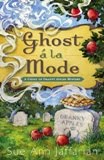
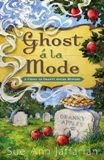
Selling one book at a time at a local bookstore might be a little slow. How about finding a group of people who might be interested in your particular subject matter? Sue Ann Jaffarian’s protagonist, Odellia Grey in Booby Trap, is a pleasantly plump paralegal. Sue Ann speaks at paralegal conventions. And lawyer conventions. She parlayed her real life job skills into a series of novels and then doubled down to promote herself and her books at conferences featuring the vary same people. That’s a good marketing technique.

Say you wrote about a “super chef/sleuth.” You might try asking a cooking utensil convention to let you come and speak. Or a food convention. Or a cruise line that caters to caterers. Find groups of people with whom you have a connection. If your protagonist is over forty (or maybe even in their sixties), try senior citizen groups. If your plot centers around the aerospace industry, ask NASA if you can speak at their next get-together.

So, planning ahead sounds like a good idea, doesn’t it? You might even rearrange your plot to put some big business entity in it (in a good light) just so you can be invited to their next convention.

Market your book and yourself. Examine your skills, talents, interests, previous or current job and see how they can be used to promote that book of yours. Remember: you want to sell books, but mostly, you want to sell yourself.

An Interview with Web Designer Rick Taylor

We are pleased to have with us Web Designer Rick Taylor. If you would like to take a peek at a sample of Rick’s work, you can check out our own Jackie Houchin’s web site. And, in full disclosure, Rick is currently putting together a web site for me. If you’re worried that you aren’t very good at conveying images, I am the most visually impaired (creatively) person I know, and Rick hasn’t offed me yet! So without further ado, I give you the infinitely patient Rick Taylor!

What are some of the purposes of a web site and the advantages to having one?

First I’d like to thank you for this opportunity to be interviewed for the Writer’s in Residence web site, Jackie, and I want all of the readers to know I’ll be happy to answer any question we do not cover here today.

All right, some of the purposes of a web site include personal pages such as family photo sharing and e-mail, to e-commerce business applications where folks can buy your product and have it shipped to them. One of the most popular uses of a web site these days is to host a blog site, such as Writer’s in Residence.

There are many advantages to having a web site, whether it is a free blog or a paid solution. Free sites such as Facebook, Twitter, and Photo Bucket are perfect for friends to share updates about their lives, post photos, and keep in touch. These sites are also a good means of promoting professional web sites as well.

As for having a custom web site for your business, it is downright essential nowadays. More and more, even if you do business in person, your clients will look you up online for detailed information about your services. It is important to have a professional web site in order to build brand recognition and confidence.

Are there any new trends in websites that you can tell us about?

In the 15 years that I have been watching web site trends, the enduring and most important one has been to make web sites more useful—to make them do more for the end user. In 1994 when the Internet was first opened to the public, most sites were nothing more than a vanity page or business card. Now you can purchase anything and everything online, seeing it in various styles and colors before making your choice.

As a web designer, you have to be part techno geek, part creative genius, and part therapist. What information and suggestions should a client already have in mind before they contact you for web site design?

Most importantly they should have in mind what they want users to be able to do on their web site. Is it to simply share information, exchange ideas, or to enable visitors to make a purchase? Decide this first and I can help with the rest.

Any time creative professionals deal with people’s imaginings versus reality, they risk having a gap between the two. What should potential clients realistically expect from a web designer?

As far as the design goes, it is best for a client to provide a few links of web sites with a design that appeals to them. Rather than copy these sites, the designer will be inspired to create something new which will have a similar “feel” to existing sites. A great web designer can make people’s imaginings become reality, but usually at a cost, so budget has to be considered when planning a web site.

What is the biggest challenge that you run into when working with clients?

Oh, that would definitely be with providing content. This is not much of a problem with writers, but it can be for those with a new business idea. “Content is king,” I tell my clients. Without good text content on the home page, for instance, the major search engines like Google may never index their web site. A good domain name and lots of relevant text makes a world of difference.

Branding is becoming a big deal, especially with authors. This is when the author creates an image or identity through their website, blog, appearances etc. Do you address this at all through your services?

Great question. I often buy books based on the author’s name only, and this is a result of good branding. With the author’s website used as the starting point, and branching out to all blogs, interviews, appearances, etc, the brand name becomes consistent instead of fragmented. The author’s web site must not be “yet another” site she/he is found on, but instead it must be the foundation from which all other site postings are based. I definitely believe in this and guide the author all the way toward strong brand recognition.

How long does it take to design a web site from first consultation until the site goes live?

Of course this depends on so many variables, but what I like to do is give the client a basic presence immediately and then build upon that. The design process may take a few weeks, but in the meantime there is some home page content and a means of contacting the web site owner. Alternatively, I can bring the web site live all at once, it just depends on the customer’s preference.

What are the costs involved?

Again, this will depend on a few variables, though I daresay that a web presence is affordable for just about anyone as long as their expectations are realistic. Just as an example, a 5-page web site with a contact form would be $299.

Can a client make changes, additions, and updates? What’s involved?

Yes, if I know upfront that the client would like to make their own changes later I can build the site in such a way that it has an “administrator” mode which allows them to add or edit content. This mode is very easy for anyone to use, so it takes a bit more work for me to create. A very inexpensive web site would be edited in “HTML”—the language of the web—so it would have no such client mode. It all depends on the customer’s wishes and budget.

Does the webmaster “promote” the site in any way, such as advertise it on Google?

A good designer will build a web site so that it is “search engine optimized.” This means that search engines such as Google will automatically index such sites because of the way they are constructed by the designer. Additionally, I do let Google know when a site is live and ready for indexing.

Is there something that you would like to tell our audience? 

I would be happy to talk to anyone reading this article, and you may reach me for a live chat by visiting my website http://uberhost.net/ and clicking on the “Live Support” button. You can also visit my contact page at http://uberhost.net/contact.php for toll-free number, fax, email, and more.

Thanks again for this interview!

Rick Taylor

http://uberhost.net/