Brainstorming Plot

WinR MK Johnston talks about brainstorming plots.

Two-thirds of Writers in Residence met last Wednesday to try something new – a brainstorming session to help one of us clarify plot points in a new novel. The one was me. I’d been struggling with the outline for the sequel to my first novel, A Petal In The Wind. I knew where to start and end the book, but I had too many ideas and not enough clarity to get me there.

Since it was the first time we tried to brainstorm, we free-formed the meeting. I’d been to brainstorming groups that had limited effectiveness, but the Wednesday session was extremely helpful to me. When I returned home, I thought about how it progressed, what worked and what didn’t, and why this was more successful than past efforts. I’ll share my thoughts with you.

I don’t believe brainstorming is the most effective way to stretch a germ of an idea into a full blown story. It can work, but when you ask people to take aim at a problem, it’s much easier to hit a specific target than scatter shots at the sky and hope something falls to earth. If a writer has the basic story fleshed out but is having trouble with some aspect of it – weak ending, sagging middle, critical scene – the chances of success are more likely than if the writer is vague about the premise or the problem.

If you’re in a critique group and would like to hold a brainstorming session, begin by having the writer clarify what she hopes to achieve. If she doesn’t understand where and why her story needs help, no one else will.

Open the discussion with a free exchange of ideas. Anything goes. Sometimes you have to get past the obvious, trite and just plain bad to get the creative juices running. The writer should listen and take notes; but shouldn’t interrupt the flow if she hears something she doesn’t like unless that thread is picked up by the others. Then she can simply say, “I don’t want to take my story in that direction”. That will alert the others to drop the idea and move on.

Allow around 20 but no more than 30 minutes for this part to avoid straying too far off-topic. The writer should have enough to work with by now, so take a brief break and let her digest what’s been said. She must settle on which ideas worked best for her vision of the story.

Once she’s decided, focus the brainstorming along that narrow path. Let her direct the conversation so she can get what she needs. If anyone has ideas outside the box, no matter how brilliant, hold them until the end or email them to her later.

If the writer can’t determine a direction by now, the session wasn’t successful. It could be that she wasn’t clear about what she wanted or needed, either in her own mind or in expressing it to the group. You might be able to salvage the session by having her explain why she rejected all of the suggestions, or if there were any ideas that might hold promise with further exploration.

Ultimately the key to successful brainstorming lies in the writer. She has to have some idea of a direction. Otherwise the best suggestions won’t help. It’s one thing to ask someone to dig up a potato from your garden. It’s another to plant a seed and expect others to grow it for you.

Edits, Rewrites, And Selling Your Soul

Author G.B. Pool has plenty of experience editing her work, and with one novel and a list of anthologies under her belt, her methods must work!

Every “How to Write” book has a chapter on “Editing and Rewriting.” Whatever you write can always be improved by a careful edit, and thoughtful look-over, and a final rewrite to tweak those areas that don’t sound right. You could spend the rest of your life rewriting if you aren’t careful. Hopefully you have a friend who tells you to stop before you rewrite the life out of your work.

Over-writing is a problem we can all have when we are looking for the perfect word or phrase. Maybe you should try looking for the best word, and not worry about perfection. Perfection is stuffy. Walk away from your work, literally, go into another room, and think about what you want to say in that section. The words that come into your head, off the cuff, will be truer than the ones you agonized over. Spontaneity is always fresher. Write it down and then leave it alone.

As for basic editing like grammar, spelling, and punctuation, have someone else do it for you. Just like parents who never see flaws in their children, even the two-headed ones or the ones who wind up in jail, you will miss errors in your own work.

Join a writers’ group, ask a teacher, or pay a professional to go over your work. Even if your Aunt Mabel is a professional editor, too often a friend or relative will be too kind. (They will overlook the two-headed kid, too.) An agent or publisher won’t be kind. They will toss your error-laden manuscript in the trash and remember you the next time as the person who can’t submit a professional piece of work.

Make sure that writers’ group you join isn’t afraid to point out mistakes, holes, or continuity problems. A good teacher will know how to get out the red pencil and correct grammatical errors. And a professional editor has seen it all before and will know how to spot obvious errors. It’s worth the money.

So you rewrite, edit, polish and submit. And an agent likes your work. Hoorah! Your characters are memorable. The plot is appealing. The agent handles that genre. They know a few publishers in that genre. Everything is wonderful…but…

It’s the “but” that will have you asking yourself, “How much of my story will I change to get it published?” If the change doesn’t amount to much, I’d rewrite it in a heartbeat.

But what if your agent loves everything except one of the key points in the story around which everything revolves. Should you tell her she should really read the entire book to see how it fits together, or do you try to adjust the part she doesn’t like to suit her?

A screenwriter will tell you once you submit your script, a thousand hands will rework it, reshape it, and in the end you won’t recognize anything but the title…if they keep the title. Screenplays aren’t novels.

How much of your book are you willing to change for someone else? Granted the agent has the contacts, the clout, the name recognition that could get you published. But what will you be giving up? Your name goes on the cover. You are the one who will be explaining why the plot missed the mark…for eternity. You have to make that decision.

My advice: First, find a way to explain to the agent/publisher exactly why you can’t change that major plot point. Thank them for pointing out the fact you didn’t write that part clear enough and say that you will tweak that section. If that doesn’t work, ask yourself: What do I value most?

And remember: Your agent might be wrong.

An Interview with Author Gary Phillips

Gary Phillips writes tales of mystery and criminal behavior in various mediums. A regular contributor to Mystery Scene magazine, he authors the private eye Ivan Monk series and turned out a slew of Ivan Monk short stories like Monkology.

Born and raised in what was then called South Central Los Angeles, he’s been a community organizer, union rep, and headed a nonprofit to better race relations begun after the ’92 riots. Besides his many mystery novels and shorts, he’s written a coming-of-age graphic novel called South Central Rhapsody as well as a graphic novel about a gangster called High Rollers, and has a prose novel about African Americans and World War II called Freedom’s Fight.

You can find out more about Gary at his web site.


Welcome Gary!
Your most recent work is a change from your usual hard-boiled mysteries and edgy crime comics. Can you tell us a bit about “Freedom’s Fight” and what brought about this particular novel?

Freedom’s Fight came about as my way to tell a slice of the bigger story about black soldiers and civilians in World War II. I think I’m accurate in stating there are less than a handful of novels about black soldiers during this period – though certainly there are several informative nonfiction books such as The Invisible Soldier by Mary Penick Molley, Lasting Valor by Vern Baker (it’s his story) and Ken Olsen, and Brothers in Arms about the 761st tank battalion by Kareem Abdul-Jabbar and Anthony Walton.
But if you watched the other Brothers in Arms or now the Pacific mini-series, you wouldn’t have any idea that there were all-black units who fought in those theaters of conflict, but there were. My late dad Dikes was in combat at Guadalcanal, his brother, Norman, was at D-Day plus One and my mother, Leonelle, had a brother named Oscar Hutton, Jr.  who was shot down and killed over Germany as a Tuskegee fighter pilot.
Because of Jim Crow policies, black troops weren’t sent into combat until end of ’43, beginning of ’44. So part of my book looks at the war on the home front through the eyes of a young woman reporter for a weekly African American newspaper, the Pittsburgh Courier. The other part follows the travails of several soldiers overseas. I do want folks to know Freedom’s Fight isn’t preachy, but, hopefully, entertaining historical fiction with hard-boiled elements (a murder mystery subplot), dimensional characters and action on the battlefield.
Ivan Monk, your most well-known series character, is part PI, part avenging angel, and part family man. What type of readers make up your target audience?
Who knows? I mean, I don’t write my stories with an idea of who the target audience is per se other than I hope they enjoy the work. Isn’t the typical mystery reader a middle-aged woman? Isn’t that the case with most fiction as well? I have observed though due to my comics work I get a sprinkling of younger readers who’ve taken an interest in my prose work having first read me in sequential form.
It’s interesting though as this question is something the writer has to wrestle with in today’s publishing environment. That is, it used to be the publisher worked with you to outreach to and develop your readership through building up your audience over time. Now as we know, and this seems to be a direct result of the internet, the publisher wants you to come prepackaged with an audience. We’ve seen writers who’ve self-published in a way, via an e-book, work the social media and what have you to publicize the book, and then make a traditional hardcopy deal because they can quantify the numbers – they’ve demonstrated they have a readership they’ve built from the ground up.
I’m not knocking this state of affairs, as this genie is out of the bottle. The fact remains more and more, the pressure is on for the writer to not only be able to ply their craft and turn out a compelling yarn, but it’s on them (or a hip, totally wired pr person you hire) to be able to create a and maintain a base of readers. Just having a website is a rudimentary these days. What good is it if no body comes to the thing? Not we have to tweet, facebook and who knows what all else as these forms plateau and people simply get inundated with too much sensory bombardment.
Martha Chainey, ex-show girl and courier for the mob, is another series character you write. Recalling your own experience, would you advise writers starting a second series to look for similarities that would appeal to current fans or offer something completely different?
I’m the last guy to be advising any other writer on their career. But hey, you’re asking so I think writers have to challenge themselves. Coming up with Martha was daunting for me as it was the first time I’d written a female lead. She was different too in that she’s more of an outlaw type and not exactly on the straight-and-narrow as Monk is. Naturally the writer wants the best of both worlds – the fans you have stick with you and you get news ones with a new character. To some extent that seemed to happen with Ms. Chainey, but I can assure you it wasn’t a calculated move on my part. In this case the gauntlet was thrown down by my editor at the time at Kensington to come up with a female character and so I did.
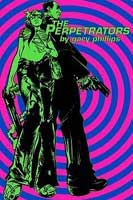
Aside from your series characters, you have several standalone books, including “The Jook” and “The Perpetrators”. Is it more difficult to sell a standalone book than a series? And why write these stories as standalones instead of incorporating them into your existing series?

The beauty and freedom of writing a stand alone is you can do anything you want. Blow up the world, go ahead. Have mutant alligators crawl out of the sewers…sweet. Your main character loses their mind midway in the book and runs around in his birthday suit shouting ‘I am the Master of the Universe,’ no problemo. Too, in this publishing environment as we’ve discussed, it seems it’s easier to sell a standalone. If you have a series, and that series hasn’t broken the house record in sales, then publishers are dang reluctant to take a chance on another book with those same characters. Whereas a one off is often seen as new and fresh and may get an editor excited at a house and want to champion your book.

Is it the job of the writer to leave the reader with a message? If so, what do you hope your readers take away from your books?

Well, no, I think my job as a fiction writer is to entertain the reader. Having said that, there are certain realities that ground your stories and characters like the arena where the aforementioned Freedom’s Fight is set. Still, you don’t want your characters standing on soap boxes yet conversely if they are representations of real people, and going to resonate with readers, then people have opinions. More to the point, characters don’t have to go around telling you what’s on their mind but we can get a sense of who they are by what they do in a given situation or where we locate them. You can have a character at a teabaggers rally and another at a tree hugger event, and of course we’d draw certain conclusions about them – then you can switch up those allusions the further we follow those characters. My job is to give my characters dimensionality and drive. Drama is conflict…a character wants something and invariably there are obstacles in the way as other characters want the same thing or something else.

“The Underbelly” is due to release in June, 2010. This book features yet a new character, Magrady, a semi-homeless Vietnam veteran. Could you tell us about the story? And will Magrady become a series character?
A couple of years ago, Underbelly originally was written as an online serial for http://www.fourstory.org – a site I still write for, doing fiction (my webcomic Bicycle Cop Dave ) and nonfiction pieces. Fellow mystery writer Nathan Walpow is the site’s EiC. Back then he’d asked me if I’d be interested in doing something on the site – which began centered around housing and transportation issues — given my background includes community organizing and my wife is an urban planner. The idea of a sometimes homeless Vietnam vet, a man who has had his ups and downs, was a way to use the recent gentrification of downtown L.A. as a backdrop to a mystery he seeks to solve.
The story is set in motion as Magrady, who suffers from flashbacks and trying to maintain his sobriety, searches for a wheelchair bound friend who disappears from Skid Row. This after a bottom feeder called Savoirfaire, who was regulated by Magrady on behalf of this friend, is found with his head bashed in while the cop on the case has a history with the main character as they’d served uneasily together in ‘Nam. Oh, and Magrady’s grown son may be involved in something shady back east, then there’s a mummified head… but that’s enough teasing, read the novella when it’s out from PM Press .
The Underbelly is published as part of the house’s Outspoken Authors series. I’ve done some rewrites and edits to the story from when it was first done in series form, and the book will include an interview/conversation between me and the lovely and talented writer Denise Hamilton. As to Magrady returning, yes, I have some notions circulating in my head about that – only after I get the next Ivan Monk book done. Monk returned as it were last year in a short story in Phoenix Noir (“Blazin’ on Broadway”), and I need to get him back in long form.
Do you have any final words for our readers?
On bookshelves now is Orange County Noir. This is a collection of 14 original gritty and darkly funny tales I edited and I contributed a story to set behind the Orange Curtain. Edgar winner Susan Straight, Nero Wolf award winner Dick Lochte and other very talented writers have contributed to the anthology – each story set in a different city in Orange County. The collection received a starred review in Publisher Weekly and we’re doing several signings and panels about the book all over the Southland. So come check us out.

Thank you, Gary, for taking the time to be with us.

Interview with Western author Will Davis

Will Davis is an award-winning author of Westerns. Living in the west for over fifty years, Will became interested in the region and its history. The books he writes are based on real historical events, which he researches to assure that they describe what they were like in the 1800’s. Parts are drawn from his experiences with wilderness horse pack trips, cattle drives, and rodeos. He also draws upon his studies of the Indians of Texas, New Mexico, and Arizona, and often includes them in his tales of the West.

His first novel, Bell Country Bushwhackers, was published in 2007; his latest, Six Points of Death, in 2008, both by Outskirts Press. His third novel, The Ring, is due out this fall. Welcome, Will!

Writing westerns involves more than putting a cowboy hat and boots on your protagonist. Can you describe what elements make a novel a Western? What is unique to that genre?

The genre is unique because the early West was unique. There were no states, there were no laws and most of the southwest weather and terrain was not kind to its invaders. The men of the early west had to have physical and mental fortitude. They were constantly defending themselves and their families from outlaws, Indians, unprincipled business men and scoundrels in general.

The Westerner, (Cowboy, Cowgirl), had to have strong survival skills. Their horsemanship was often a matter of life or death. If they were going to survive, they had to be proficient with firearms and had to know when to use them and when to refrain.

They followed an unwritten “code of the west” and those that failed to followed it often found themselves hanging from the end of a rope.

What is the special appeal that Westerns hold for their readers? How do you bring out those qualities in your books?

The technology revolution is fast causing the demise of the Westerner of the past. Novels of the early west help the upcoming generation understand and appreciate those that settled the West. There is a special appeal to the reader when they learn about the courage and the daily challenges of the early Westerner. Many of the man and women of the west would provide outstanding role models when it comes to “do what you believe in, and believe in what you do”

Your novels require a lot of research to get the details right. Can you tell us more about your research process? Any tips on how to successfully blend fact with fiction?

Research is by far the most difficult part of writing historical fiction. The stories must be believable and the locations and characters must closely represent the men and women of the times.

I visit the locations I write about. I spend time at their libraries and talking to families that have lived there for generations. I photograph the terrain and any of the original buildings still standing. I spend much of my time reading about the area and those that lived there. I decided to focus on the Apache tribe and I read any books I can find that describes their beliefs, rituals, wars, and social activities. I am careful that I blend the fact and fiction in such a way that I have famous (real) characters in my books in a place they could have been at the time. I also slightly change the names of some of the characters to make sure I am not reflecting badly on their descendents.

You are also an avid and talented photographer. Writers, like photographers, need to create three-dimensional images with a two-dimensional medium. Has your skill with the camera helped make your writing more visual?

My photography background helps me to get visuals of the areas I write about. I am able to select the best perspective that will help me describe the movements of my characters through the region.

There are many ways to publish today. Which method did you choose for your books, and what factors led you to make that choice?

I talked with many published authors and they all agreed the most difficult task of writing was getting their works published. In many cases, it took years. I am not known for my patience and I decided I didn’t want to wait years to see my work in print.

I looked into several self-publishers and decided on using Outskirts Press of Parker Colorado. I have been very happy with them and plan to have my third novel published by them. Once I have three books out, I plan to look into getting an agent to go to a more universal approach to publishing.

What are some of the pluses and minuses to self publishing? What should writers consider when they’re contemplating the self publishing route?

As in most things, there are pluses and minuses to self-publishing. First the pluses; it’s quick, you can have a book on the market in sixty to ninety days, you work directly with the publisher, no agents or promoters, you can customize your book size, print and cover and finally, you can maintain the rights to the work and move it to any publisher you like at any time you like.

Now the minuses; there are up-front cost, there are no agents to promote your work, and there is a requirement on the authors part to get their work in front of the public. The authors must do their own marketing to get the work in the chain bookstores. It is a challenge these days to convince the larger bookstores to carry your work.

The author of your books is Will Davis, which is not your real name. Why did you decide to publish under a pen name?

When I searched the book selves, I noticed that many of the authors had very western sounding names, i.e. Luke Short, Jack Slade, etc. I decided my German name was not a convincing western author’s name. My full name is David William Bushmire. I took my first two names, reversed them and came up with Will Davis. So far it has served me well.

Any last words?

My advice to any would-be authors of historical fiction is:

1. Know your subject

2. Write from experience when possible

3. Do research to make your story believable

4. Pay for a professional editor

5. Read other’s work on similar subjects

Visit Will at his website or purchase his books from Barnes and Noble online, Amazon, or online at the independent Page One Bookstore.

Interview with J. Michael Orenduff

J. Michael Orenduff’s website claims that the award-winning author “grew up in a house so close to the Rio Grande he could Frisbee a tortilla into Mexico from his back yard, a practice frowned upon by his mother.” That must be how he makes Albuquerque, New Mexico come alive in his Pot Thief series. Orenduff also writes for the stage, and his play, The Christmas Visitor, has garnered several awards–including first prize in the Jewel Box Playwriting Contest–and was selected as one of the “Top 100” by Writer’s Digest in 2008.  Welcome Michael!

According to the Archeological Resources Protection Act, your protagonist, Hubert “Hubie” Schuze, is a pot thief. Did the ARPA really put treasure hunters out of business?

Almost. The only place it is now legal to dig for artifacts is on private land, but getting permission to do so is difficult. Most known sites are on public land. You can fish, graze cattle, cut firewood, and mine for gold on public land, but if you happen to kick up an arrowhead while hiking, you better leave it where it falls.

Hubie resides in New Mexico and studied anthropology. J. Michael Orenduff lived in New Mexico and studied anthropology. What else do you and Hubie have in common?

Almost nothing. He’s short, single, and has a full head of hair. I’m tall, bald, and happily married with two children and a grandson. Hubie hates travel and martinis. I love both.

You’ve lived in so many interesting places—Texas, Maine, Bulgaria, Chile, Bermuda. What made you place your mysteries in New Mexico?

I wanted the protagonist to have some moral ambiguity, so I made him a treasure hunter, and New Mexico is the perfect place for that.

In The Pot Thief books, Albuquerque comes to life. You convey a deep sense of the scenery and people in the details, all the way down to the food. Since you no longer live in New Mexico, how do you corroborate the details?

I spent much of my childhood in New Mexico, and the memories are as fresh as the desert air. Maybe that’s why they call them the “formative years.” New Mexico is in my blood. I have many family members and friends all over New Mexico, and I visit there every chance I get.

Your books involve scientific theories and manage to make them entertaining! The Pot Thief Who Studied Pythagoras delves into math, and The Pot Thief who Studied Ptolemy reflects on astronomy. Why this added layer? And were you worried the titles might intimidate readers?

I think the “Pot Thief” part of the title actually added a few sales to young people who thought it referred to a different kind of pot! Seriously, I believe a good book should entertain and enlighten. I spent most of my life as a teacher, so I enjoy the challenge of trying to make theories understandable and interesting. I try to work them into the story in such as way that they don’t sound like textbooks or lectures. I also get help from experts in the various disciplines. The next one in the series is The Pot Thief Who Studied Einstein, so that should be a real challenge.

As someone who’s read both books, I can attest to the fact that the science fits the mystery and is offered in an enlightening manner. I wish my high school science teacher had made class as understandable and enjoyable! 

When you write your mysteries, which do you focus on first—the crime, the scientific theory, or the antagonist?

I tried focusing on the antagonist, but in each of the first three books, a strange thing happened. I decided about halfway into the story to change who did it! Of course that required considerable re-writing, but I enjoy the process, and it makes for better ‘aha’ moments because the final story is more ingenious than the one I thought up before starting to write. I guess I have to be immersed in the book before the creative juices flow.

I understand that you recently sold out of books at the launch of The Pot Thief who studied Ptolemy. What have you done to build up a following of readers?

The successful launch of The Pot Thief Who Studied Ptolemy was due in large part to a great article in the Albuquerque Journal just days before the launch, to the hard work of the bookstore owner who publicized the event, and to the fact that it was held on the evening of the annual Holiday Stroll in Old Town where people come out to shop and watch the lighting of the Christmas tree. There were a lot of Pot Thief books under Christmas trees in Albuquerque.
I think the two main keys to building a following of readers is to be in touch with as many of them as possible and to have a new book out at least every year.

Your wife is noted art historian Lai Chew Orenduff. Have you ever thought about teaming up with her to write an art mystery?

Absolutely. She is too busy with her day job at this point, but when she retires, we definitely want to write such a book

That’s something I look forward to. Until then, what’s next on your agenda?

As mentioned above, The Pot Thief Who Studied Einstein will be out later this year. It’s complete, so I’m working on the next one and trying to find a theater company to produce one of my plays. The play, The Christmas Visitor, has won four awards from various playwriting contests and was going to be produced by a theater in Norfolk, Virginia, but they went broke last month, another victim of the economy. We give government money to banks who pay their executives billions in bonuses, but there was no stimulus money for the arts. I’ll step down from my soap box now. Thanks for the interview.

Thank you, Michael.

You can find out much more about Michael and The Pot Thief series by visiting his web site and blog and in this recent interview with author Marilyn Meredith on her blog, Marilyn’s Musings. His books can be found in many bookstores–both in store and online–and you can check your local independant bookstore as well. Michael and his wife Lai will present “A Good Cover is Worth a Thousand Words”at this June’s Public Safety Writer’s Conference in Las Vegas.

Finally, you can find a review of the first Pot Thief book (with the second soon to follow) at Jackie Houchin’s News and Reviews .

Writing Nonfiction for a Nonprofit

We all know, or should know, the difference between nonfiction and fiction. The former is just-the-facts and the latter allows plenty of latitude to tinker with the truth. And the most obvious difference between for-profit writing and nonprofit writing is. . . the profit.

Of course, many nonprofits do pay their writers a salary. In my case, however, I volunteer at the Glendale-Crescenta Valley (California) Chapter of the American Red Cross (www.arcglendale.org), and I do it free of charge – which doesn’t mean there isn’t ample payback for my time and trouble.

Volunteer writing, aside from getting one published with a byline and providing opportunities to meet some really cool people, is a terrific training ground. Here are some things I’ve learned in my three years of producing an e-newsletter for the Red Cross.

 
  • Get used to no-frills working conditions. Forget the private office and state-of-the-art equipment. Forget instant IT support when your computer seizes up; in most cases you are the IT support. On the plus side, your hours are usually flexible and so is your work location; I’ve typed up more than one newsletter from my home office during a lull in my other activities, wearing my comfy sweats, and with a dog snoozing at my feet.

  • Develop your initiative skills. Nobody’s going to spoon-feed you information. This is a good lesson for any writer. Use the internet, one of the best friends a writer ever had. Before I interview someone for the newsletter, I put their name in the search engine to see what I find and help me prepare my questions. Keep your ears and eyes and mind open for story opportunities. Ask questions. Persist.

  • Producing a newsletter for a nonprofit is not hard journalism, but neither should it be a “puff piece” pretending everything is fine when it isn’t. For example, when interviewing a disaster volunteer for a profile, I don’t ask things like “What do you really hate about working for the Red Cross?” I do ask them, “What challenges do you face, and how do you deal with them?”

  • Stay humble. Your time is not as important as that of a Disaster Action Team Captain who just got back from the site of a residential fire, helping a family cope with the loss of everything near and dear to them. Respect others’ time and sensibilities. Cultivate a thick skin.

  • Stay objective. Temper the urge to tout the terrific work the nonprofit is doing with hyperbole and lavish praise. This is where you stick to the facts, which do the job more convincingly. One of my personal challenges is always to do justice to the people I write about – usually “average citizens” like the rest of us who give up their leisure time to teach CPR classes or fly off to the scene of a hurricane, usually at great personal inconvenience and cost. But at the same time I don’t want to come off like a simple-minded hero worshipper. Usually just telling their story, in their words, does the job.

  • Stay factual – and, as with any kind of journalism, do your fact-checking. Confirm spelling of names, phone numbers, web site addresses.

Being a volunteer nonfiction writer for a nonprofit organization won’t make you rich. It could make you famous – stranger things have happened. One thing’s for sure: you’ll meet some great people who are doing good work for the betterment of their organization/community/country/etc.

It can renew your faith in humanity and your hope for our future.

Publicity Responsibilities versus Author Payment

An interesting article appeared in the January 2010 issue of The Writer. Author M.J. Rose suggested that book authors should be compensated for publicity duties. Since the marketing effort is no longer born by the publisher, revenues should be more equitably split.

Read what the WinRs have to say and then let us know what you think!

****

Jacqueline Vick self-published her children’s book, Logical Larry. She has several mystery manuscripts making the rounds.

I hadn’t really considered this issue before, assuming that advances were destined to be spent on marketing, but Ms. Rose’s comments made me wonder if I’d been going with an outdated assumption.

Her two suggestions in the article were to allow authors to subtract marketing expenses from their book advance so they could collect royalties sooner and to give athors a highter royalty rate.

I’m a big fan of “buy in”, and if authors saw a benefit to spending those hard earned dollars on marketing (other than possible increased sales) then more authors might be effective at selling more books–a benefit to publishers.

Why not a tiered royalty system to give writers something to work for? This system has been used to incentify sales people for decades.

Would this system keep publishers from purchasing as many manuscripts? I don’t see why. There would be more opportunities to earn revenue.

That being said, publishers are in control unless an author self-publishes. If the current business plan says that authors have to cover publicity costs out of their own pocket, then those serious about a writing career will do it.  I think that’s what defines a successful person–she jumps in and does the stuff that most people complain about and avoid.

Another interesting note from the WD article (paraphrased): If you run into a musician and they’ve hired a studio and musicians and put together their own CD, you don’t automatically thinks it’s sub-par, that if it was good, he’d have signed with a label. Why is it that we assume self-published books are “unworthy?

Some of my favorite books and CD’s have been put together by the artist. I’m smart enough to flip through a book to see if I like the writing style before I buy it, and I’ve bought plenty of traditionally published books that I’ve hated. I’d rather run into a grammar error in a fabulous story than have a perfectly edited book that’s a stinker. I also don’t sneer at hand-crafted goods that aren’t mass produced and sold at department stores. I actually hold them in higher esteem.

***

Jackie Houchin is a photojournalist and a book and theater critic. She has written several manuscripts, so she can give us the perspective of one who isn’t actively seeking publication but may do it in the future.

If I ever did anything with the kids’ stories (or the women’s novel) I wrote, I would DEFINITELY self publish, no if’s, and’s, or but’s, about it. That way, I would not have to deal with sharing any of my advance with the publisher over marketing strategies and profits. (Of course, I wouldn’t be getting any advance – ha-ha). Instead, I’d be able to decide just how much effort I wanted to put into the project. I definitely wouldn’t be doing it “for the money”.

Since being in the SinC and MWA organizations, I’ve heard countless authors bemoan the facts of publication:

—that it is very hard to get an agent or publisher even interested in your work…

—that it takes years to publication even after one agrees to look at your work…

—that you don’t get any money to speak of…

—that you are supposed to market yourself or at least come to them with a huge “platform” so they don’t have to do much but reap the benefits…

—that you may not get a contract for another book…

—that you may be dropped if you don’t sell as much as they like…

—that your publisher may go out of business.

It makes me wonder why anyone would want try to break into the fiction industry right now.

All this sounds depressing, I know, but that’s the reason I would go FIRST to a self publishing and/or POD method.

Of course another factor for me might also be that I’ve always worked for myself (in photography and reviewing) and could pretty well set my own parameters. 
As for your original questions, I don’t think authors have much say in what publishers do at this point. They may feel a larger advance is warranted or that they should be able to deduct marketing expenses from their advances – but that is really up to the publishers. I do feel that marketing should be a tax-deductible item…but, isn’t it already for the serious writer?

***
Bonnie Schroeder has finished her first novel manuscript and is shopping it to agents.

First off, from everything I’ve read and heard, nobody earns a living off their books – except for a lucky handful of writers. My biggest gripe is the lack of attention given to new authors, but the reading public has to share the blame. Few people seem willing to invest their time and money in an unknown author not sanctioned by Oprah. Publishers make their money off superstars like King and Evanovich, and it appears from the sidelines like these writers don’t even need much marketing beyond an announcement of their next new blockbuster. It doesn’t seem fair (the “F word” in business) that these writers get free publicity that they don’t even need.

So, if I did get past all the gatekeepers and obstacles and finally sold a book and then if had to pay for my own marketing and publicity, my first question would be, what the heck is the publisher even doing for me besides (maybe) strong-arming the local Barnes & Noble into stocking a few copies of my book? I’m still looking for an answer.

However, since I guess I understand the realities of the marketplace, and since I’ve chosen to play this little game, I’d swallow my resentment and do whatever I could afford to do, to show the world what a great book I’ve written. It would then make sense that if I do a good job and work up enough interest to generate sales, that after a certain threshold (and I have NO IDEA what that would be), I’d get reimbursed for my expenses and that the publicity for the second/ third, etc. book would be covered by the publisher.

***

GB Pool is the author of several short stories which have appeared in Anthologies and penned the novel Media Justice.

The End of the Buggy Whip

Fair? Who said life was fair? Or for that matter, the publishing business.

Publishing came to America around 1800. Many famous publishing houses started back then. By the end of the 19th Century there were hundreds of publishers and a smattering of writers. The vast majority of Americans worked on farms or in factories with no time to write. Today there are five major publishers still in existence, most owned by foreign enterprises, with a smattering of small publishers picking up the slack. Farms have mechanized, factories have moved to China, but now there are thousands and thousands of writers.

What used to be a hard back book business changed into a paperback and trade paperback enterprise. It’s cheaper to make those paperbacks. Then came discount stores and Amazon. Now there is Kindle and the other downloadable reading devices that don’t require paper at all. And don’t forget the self-published author. Even the few name publishing companies provide POD (print-on-demand) books.

As the changes in the publishing business hit, the revenues shifted. No longer are people buying those expensive hard cover books. The trade paperback sometimes comes out six months after the hard cover version. And the downloadable book will soon follow.

As the revenue shifted, so did the perks. Editors disappeared. Book tours and publishing house publicity vanished. (They got rid of the buggy whip, too. Want to go back to the horse and buggy?)

Publishers aren’t making the money they used to, even with the outrageous cost of those hard cover books. Most of the old publishing companies don’t exist. If you are lucky enough to get one to publish your book, show them you will go all out to help sell that book of yours. Your effort will not only help to sell more books, but your publisher will see you as a go-getter and they might be more eager to take on your second book.

With the tremendous number of would-be writers clamoring for their books to get noticed and eventually be published, it will be the writer with the skill and nerve to face those audiences and sell their book themselves who will succeed.

Welcome to the new normal.

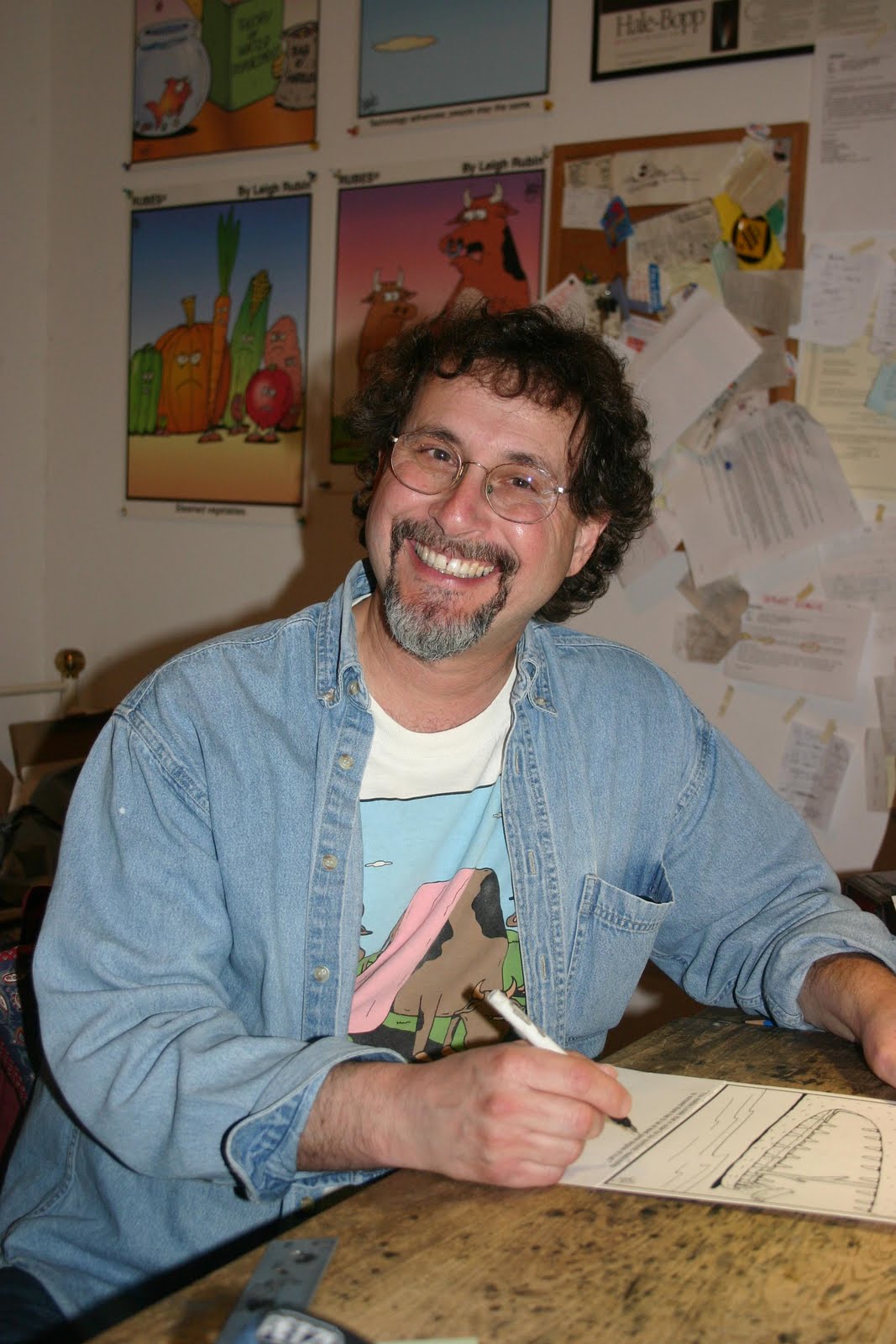
Interview with Leigh Rubin

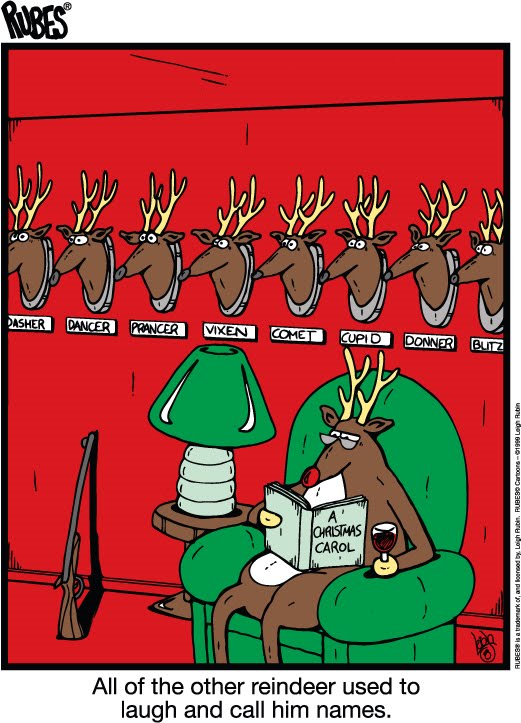
Anyone who’s opened the Los Angeles Times to check out the “funnies” has seen Rubes. We wanted to know about the creative process that joins images and words to make these clever, often hilarious, cartoons. Creator Leigh Rubin generously offered to spend some time with WinRs.

How did you wind up writing cartoons?

I’ve always loved to draw and had wanted to be an artist from a very young age. The first cartoon I ever drew was in kindergarten. I also enjoy a good joke and it’s especially fun making them up so if you put the two skills together you have a cartoonist. Seems like the perfect profession for someone with absolutely no other marketable skills.

As a cartoonist, you both write and illustrate. Do you come up with your commentary first or doodle until an idea strikes you?

There really is no one way. Sometimes I doodle for a bit until an idea hits me just right or I may think of a phrase or hear a comment that someone says. There’s no real magic formula. If there was I’d bottle it and make a fortune selling it to other cartoonists.

Do you consider yourself an illustrator or a writer first?

Sometimes the writing is the main challenge. I really strive to make the captions just right. They have to fit the cartoon without giving too much away and leave something to the reader’s imagination. That’s the important part to me. I want the reader to contribute something to the cartoon. That’s what makes it art. Of course, having a funny picture along with the right words can be a bit tricky but that is the fun and challenging part.
What kind of hours does a cartoonist work? Do you ever get cartoonist’s block?

You call this work? Ha! …But seriously, my boss is a real jerk. He’s not going to see this interview is he? He makes me draw at least one cartoon per day but quite often he’ll make me draw two a day because I’m often out and about the country doing my goofy cartoon presentations and speaking engagements. I am going to be hitting the road even more often this year as I have a nifty new 25th anniversary cartoon collection coming out in March so I am sure my evil boss will be working me extra hard to make sure all my cartoons are drawn before I leave town…Cartoonist’s block?…Listen, I had a colonoscopy when I turned fifty and I guarantee you, after that there wasn’t any blockage whatsoever.

You were originally self-syndicated. What does this mean?

Self-syndication means that in addition to writing and drawing you also have the opportunity to call on editors, make the sales, send out promo material, do the billing, chase down the people who don’t pay you, etc. , etc., etc. It is not for the faint of heart and I did it for the first four years of Rubes. Being self-syndicated gives you a terrific appreciation of what syndication sales reps have to do on a daily basis, only most syndicates represent many features, so the reps have many features they must know inside and out…and there’s a lot to know.

How did you become widely syndicated in newspapers? Did markets approach you after you had built up a following or did you try to get people to take a chance on you?

My first paper was the Antelope Valley Press in Palmdale, California. I had met the entertainment editor when he wrote a feature story about a book signing event I was doing. We became friends and he, as well as a couple of the other editors at the paper wanted to know if I’d like to draw a daily cartoon for them. That was my first “big” break. After I drew about one hundred cartoons I started contacting all the major, as well as some of the smaller syndicates, but they all turned me down. Looking at their reject letters now makes me laugh. I’m a firm believer in persistence. I don’t easily accept “no” for an answer, so I started calling on newspapers myself….Big papers, little papers, weeklies, college papers, it didn’t really matter. Within a year or so I had built up a client list of around 160 papers…all while I was working a full time job. I only wish I still had that kind of energy! I did have a couple of papers approach me but as my dad used to say, “Don’t wait for your ship to come in, row out and meet it.” He was right. If I hadn’t made hundreds of phone calls and sent out an equal amount of letters I’d still be standing on the dock.
You give cartoon workshops and presentations all over the country. Do you find there are a burgeoning number of cartoonists out there?

Yes, it’s amazing how many closet cartoonists are out there are of all ages. From little kids, to teens to adults and that includes senior citizens. People really do love cartoons and cartooning and not just for financial reasons. They enjoy the fun of just being creative for the sake of being creative, which is absolutely wonderful.

Are the markets shrinking for cartoonists as they are for writers?
The newspaper market has definitely shrunk. There used to be many two or more newspapers towns but those days are gone. Still, newspapers will be around for a long time and with the internet it’s wide open. The trick will be to see how to get paid for your writing and cartooning on the internet. Some people have figured that out and I am certain that there will be new avenues that no one has even thought of yet to make a living writing and cartooning so I do remain optimistic.

If someone wanted to get into cartooning, what advice would you give them?
Stay in school, study hard, become a doctor or a lawyer because I don’t need the competition!

What’s up next for you?

I’ll be hitting the road in a week or so bringing the Rubes cartoony show to San Antonio. In between private speaking engagements I have lots of public events lined up. With the new book, The Wild and Twisted World of Rubes coming out this March it will be extra fun. It’s wonderful sharing laughs and connecting with a live audience. Nothing beats being a sit down comedian.

Thank you so much! You can pre-order The Wild and Twisted World of Rubes at Amazon, and you can learn more about Leigh at his website.

An Interview with Heather Ames

Heather Ames has two published e-books to her credit, along with numerous short fiction pieces and non-fiction articles. She has also produced, written, directed and edited two documentaries that aired on cable access on the East Coast. Along with her writing, she works with clients as a writing coach as well as keeping her day job in healthcare. A native of England, Heather lived in France, Spain and Italy before emigrating to the U.S. She recently settled in Portland, Oregon, where she’s working on her thriller series. Set in Miami,  Indelible and its sequels, Swift Justice and Maine Issues, feature a Miami-Dade homicide detective and a feisty, atypical socialite.  Welcome Heather!

There are many ways to e-publish today. Which method did you choose for your books, and what factors led you to choose them?

After researching the e-publishers, I picked one who was open to submissions and was actively looking for new writers with out-of-the-box romances. Unfortunately, although the editor liked my writing, she didn’t like the plot line or the characters in the book I submitted.

The second publisher on my list, Romance At Heart Publications, was a new publisher. I figured I stood a better chance with them, since their inventory had to be low. I submitted to them in late spring and waited, then waited some more. I even tried emailing them during the summer to find out if they were still considering The Sweetest Song. Suddenly, the week of Thanksgiving, I received a “Congrats, we want to publish your book” right out of the blue, accompanied by a contract and an explanation that they had been through some editorial changes since my manuscript reached them.

My fellow writer and friend, Vikk Simmons, kindly gave me an intro to AweStruck. She told me they were accepting manuscripts after being closed to submissions for a while, and gave me permission to use her name in my query letter. She’d had two young adult novels published by AweStruck and really liked both the editor and publisher. By the time I got everything pulled together for All That Glitters, I really squeezed under the wire by sending my partial right before midnight on the day the submission period closed again. Thankfully, Vikk didn’t have to find out she had recommended a dud, because I received another “Congrats” and a contract in a much shorter timeframe than with RAHPubs.

What are some of the pluses and minuses to e-publishing? What should writers consider when they’re contemplating the e-publishing route?

For me, there have been a lot of pluses: I got answers from all 3 publishers within months, versus manuscripts hanging out more than a year on average with the print pubs. I received a lot of very positive feedback, my editors were terrific (knowledgeable, supportive and very perceptive) and everything was accomplished online. The pub dates for my novels were also a lot earlier than they would have been with any print pub, so I had two publishing credits to my name within a relatively short period of time.

The biggest minus is the pay. Yes, I get a bigger slice of the pie with the e-publishers, but because their distribution isn’t via book stores, I have to do a whole lot of marketing. I also have to get potential buyers over the “Can’t I just get it in book form?” by explaining that they can either read the novels on their computer screens or download and print them. It’s surprising how many people balk at printing up the necessary amount of pages, when they’re spending a lot less on the actual download than they would if they bought a physical book at a bookstore.

Nowadays, of course, there are also the readers, such as the Kindle and the Sony. They are changing a lot of minds when avid readers figure out that they can have access to a large number of books at any time without having to drag around an extra suitcase when they travel or agonize over which books to recycle when their available space fills up at home.

Your e-novels tend toward the romance genre, with a bit of suspense and mystery in the mix. Your current book, Indelible, is a thriller with elements of romance and murder/mystery. Any tips on how to successfully balance multiple elements within a novel?

It’s more of a juggling act than a balance. I try not to overwhelm the plot with the romance or the romance by the plot. I tried submitting to Harlequin Intrigue and Harlequin American while agented, but despite being asked to send a couple of entire manuscripts after the partials had been submitted, they were rejected because my themes were too graphic or scary for romance readers, or the editors felt the plot overwhelmed the romance. I learned a lot from those submissions, including the fact that what I write won’t easily fit into genre fiction.

Based on the feedback I received, I completely reworked Indelible’s original plot line and I’m much happier with the result. I stopped trying to fit myself into a genre box and instead ended up with a novel that allowed me to explore the complexities of human relationships, including what happens when two people come together during a crisis and discover there’s more between them than self-preservation.

There’s no easy formula to my writing. Sometimes I get elements of a relationship, other times part of the plot. I try to place myself in my characters’ shoes and react as they would instead of how I would. Somewhere in the middle of the first draft, they tend to take over and tell me what they’re going to do, anyway. They just take me along for the ride, and hopefully, take my readers, too.

You’ve done a huge amount of research on the Miami scene, as well as on police procedures and firearms. Can you tell us a bit about your research process?

My first order of business in research is to make sure I familiarize myself thoroughly with the backdrop. Fortunately for me, I have friends all over the U.S., and they don’t mind accompanying me on scouting trips for locations, including everything from scenery to restaurants and in the case of Indelible, the local marinas.

For my next series, friends in Seattle took me to underground teen clubs, where I met with a manager and got his take on the runaways who frequent his establishments. I’ve also dragged Vikk Simmons down alleyways in Chicago and toured the Blue Ridge Parkway and the affluent areas around Asheville with another friend for settings I used in The Sweetest Song. Working in a county hospital system and an emergency room have given me frequent opportunities to weave less-than-desirable characters into my novels, but they have also allowed me to gain insight that I might never have obtained from any other source.

As far as the firearms are concerned, my son took me to a shooting range and I got to use a Glock, my detective’s weapon of choice. I actually learned how to reload it faster than my son could, and I was able to authentically channel my female protagonist’s feelings when she had to handle the gun in a crisis. GB Pool was also more than generous with her critiquing of the action sequences in Indelible. I’m always on a learning curve with firearms, as well as police procedures.

I watch a lot of TV shows, such as Forensic Files, Snapped and The First 48. I got my hands on a used copy of What Cops Know by Connie Fletcher (Pocket Books,) which tells stories from the streets in the words of the police officers themselves. I was fortunate enough, during the time I worked in the ER, to have frequent contact with the detectives working homicide cases. They gave us the backgrounds behind the killings and even updated us when the cases were solved. I saw some really gruesome sights, but I also learned what happened when bodies that were burned beyond recognition or were too decomposed needed to be identified. So often, it was the little things that made the difference, even in the years before forensics changed the entire playing field.

I bought the entire Writers Digest Books series to study procedures, firearms, etc. Now, of course, they are all out of date. It’s difficult to keep current these days. Everything changes so rapidly. I try not to go into too much detail, because I’m a lay person. I’ll leave the police procedurals to those in the know. I prefer to deal more with the emotional aspects of the cases I send my protagonists out to solve. I also tend to make them solve the cases with less fire-power and more brain-power.

You’ve also done work as a writing coach. What are some of the big issues that come up when trying to critique another writer’s work? What advice do you give a novice writer?

When I work with a fellow writer, I always make sure I’m not substituting my voice for theirs when I critique. The editing part is the easiest, although I have gone three rounds with people over sometimes the smallest details. It’s funny how they don’t object to having entire paragraphs reworked or even deleted, but they’ll quibble over a sentence or the placement of a certain small paragraph. It just shows how close we get to our work and how difficult it is to remove ourselves to a position of objectivity.

The first thing I do with clients is to work out a deadline for project completion. It can be dynamic, but it has to be there. As soon as that date is set, the project gets off the ground. The same applies to any novice writer–set a goal–whether it’s for completing a chapter, a section of a novel or the entire manuscript. For non-fiction writers, getting the first draft finished, the interview/s set up or even done, with the notes, etc. transcribed.

Having an outline is like having a game plan for the majority of people. I work with an outline on non-fiction projects as well as documentaries, but the only time I used an outline for a novel, by the time I finished the outline, I was done with the novel. I never wrote it past the first three chapters, because all the excitement of the project was over for me. We all have to figure out how we work best.

Novice writers need to take writing classes, attend seminars, workshops, and any other opportunities they can find to interact with other writers. They need to learn how to plot, how to structure, how to get inside their characters’ skins if they’re writing fiction, and how to cut their non-fiction pieces by a third or even a half. They need to know how to write a query letter, how to polish a partial, and how to pitch if and when they get the opportunity to sell themselves to an agent or an editor.

Lastly, they need to understand that they are not the next best thing that has ever happened to the publishing community, unless they are some sort of phenomena, in which case there will be no stopping them, and they won’t need my advice. And they also should understand that although writing is a solitary profession, it doesn’t need to be a lonely one. There’s a big community of fellow writers out there, and the majority of those writers are nurturing, supportive and completely understanding when it comes to burned dinners, forgotten hours in front of the computer screen, loss of sleep and dehydration.

The Sweetest Song, Heather’s first published e-book, is available through Romance at Heart Publications  and All That Glitters can be found at Awe-Struck Publishing . Visit Heather on her web site .

Review of Seven Deadly Samovers

SEVEN DEADLY SAMOVARS

By Morgan St. James & Phyllice Bradner
Books In Motion, 2009, Audio, 7/CDs, $28.99
Read by Andrea Bates
Review by Jackie Houchin

The second book in the Silver Sisters Crime Caper series moves the action from Beverly Hills to Juneau, Alaska, where Goldie, the more practical of the twins, runs an antique shop for tourists. The trouble begins when a delayed shipment of Russian tea urns finally arrives. Goldie quickly realizes the rare Samovars she unpacks are not the cheapies she ordered. But hey, that’s business.

She keeps one for herself, another goes to her mother-in-law, two to her best friend, one for an elderly priest’s retirement gift, one to her sister Godiva’s boyfriend, Chef Caesar Romano, and the last one to a snobbish woman from a cruise ship. Goldie is pleased by the quick sales and only mildly curious when a customer calls to report something intriguing about the urns.

But the samovars soon grab all of Goldie’s and Godiva’s attention as one customer is murdered and others are attacked and their samovars are taken. The town drunk – a disabled, unemployed elderly fisherman – is arrested for the murder. The sisters know the old coot is innocent and that the murder is somehow connected with the stolen samovars, but the police are not buying it.

It’s left to the sisters to catch the criminals before the last two customers are harmed. But when another innocent person dies they are terrified for Caesar’s sake and race to Los Angeles to use their combined wits and cunning to corner and captured the culprits.

The secret of the samovars is finally revealed…as is a shocking detail about Chef Romano that he would rather have kept classified.

Devilishly clever plots, outlandish names for adorable, well-developed characters, and hilarious alliterative narration are all part of what makes the Silver Sisters mysteries a hoot to read. And in this particular audio edition, the reader’s sense of drama and comic voice characterization add to the enjoyment. (Actually, Ms Bates sounds just like Morgan!)