

For me this year “On the writing road” has been a character exploring and development kind of journey. (How) our characters can be the readers eyes when it comes to exploring and—
- Visualizing my tales location/scenery, (where)
- Getting to know the story inhabitant’s personalities—particularly the protagonist and villain, (who)
- Sensually feeling the environment—(how) their five senses are encountering everything around them so the reader can feel the heat, see the colored sky, (what)
- And, most importantly, engaging a reader to like, and want to know more about our protagonist and main characters—i.e. want to read the darn book.
Part of my interest in these character rest stops is a past tendency to lean on narrative explanation to develop many aspects of my tale. Now working on my characters doing more of the work!
Today, I’m pondering further down the “What” path, as in what’s next in terms of actual plot development. Not writing the next scene or plot development because I think it’s a good idea—but “what” my protagonist thinks would be a good idea.
Here’s an example of what I’m trying to say. The current Rhodes novel I’m working on, of course, takes place in Shiné. And at several locations. And in the beginning, early one morning Leiv needs to visit four spots to get the basic setting, background events, and murder situation in the reader’s mind. I’ve spent several months changing my mind, back and forth, flitting around on who, and in what order the first scenes should go. Duh! I asked Leiv “What” did his senses tell him was the next scene, based on his mental processes.
This approach may be already quite obvious to other writers—let Leiv tell the story. But I like writing in third person, so there hasn’t been the “I” POV in my tales from the start of my writing journey. So my excuse is, that starting as an outside narrator blinded me as to my protagonist actually leading plot scene exposition.
So, continuing as the third person story teller in my latest, I moved from an outside scene, to an inside scene, to outside again. However Leiv’s mind plot evolution started outside, where he remembered an inside bookstore scene, then another inside office scene, then another inside junkyard scene…
I’m exaggerating the distinction I’m making to make the point—my recent writing-improvement path is still characters—and on all levels and perspectives. There are elements in my tales that my protagonist doesn’t know about, and for those, scenes, the reader is stuck with me, the narrator.
Indeed, my characters have captured me…but I’m not sending out an SOS yet. (smile)
Bottom line for the writing nugget in this post, I think–is no matter your POV(but especially in third person), it is for your characters to bring your reader in (because we like or are interested in them), where we can then see the world through their eyes, and then they can lead us forward through story happenings based on what they see, feel, and need to know. Seems pretty obvious now that I’ve laid it out in writing…

 Recently, I was given a nudge down my “how to improve” writing road journey, while thinking about my most recent book club selection discussion. I’m sure I’ve previously mentioned how much I like—and have learned from my local monthly book club. Indeed, without the diversity of selections members put on our list, there are so many books and authors I would have regretfully never read. So first off, let me say again, I love book club!
 not Real! Mystery fiction writers ask readers to accept people, places, events, etc.—all that often aren’t real—though sometimes based on real events and situated in real places.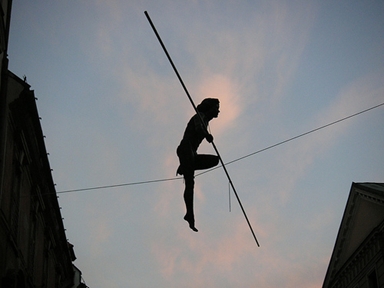

 Scenery and characters—for me, writing’s “Holy Grail!”
 So thinking and looking back, I’ve unconsciously been using—first a characters words (through dialogue/interactive and solo), second, what they are thinking (in narrative exposition parts), and then what they actually do (storytelling and action bits). Sometimes, their words, thoughts, and deeds are contradictory, which can also define their character.

 This was a different kind of rest stop on the winding road of writing for me. But, on that winding road, my writing goal for this year is–to do more of it, and along the way learn as much as I can! Pixie-dust magic is not on the agenda. Indeed, I’m not sure this indefinable (but very real to me as a reader) element is something one can actually learn? Regardless, it would sure be nice to have. Hats off to Ngaio et al.!


 that setting/scenery is the initiating spark for many a tale. Often being the impetus for the plot—or at the very least, the enabling/hindering plot action backdrop. I’ve spent a lot of time these last few years pondering over how to enhance my writing in those areas.
 To mention a few, Agatha Christie (Poirot and Marple,) Neil Richards and Matthew Costello’s Cherringham audio series, Midsomer Murders(my all time favorite,) Justified, The Good Wife, Marilyn Meredith’s

 As they often are, my posts tend toward being egocentric—having to do with something I’m dealing with. My thinking is, if I’m going through/learning/puzzling over something, maybe my thoughts will help other writers going through the same thing? So here’s the latest from my little corner of the writing world.
 commenters have said here; and most importantly, I’ve tried to incorporate their insights into my thinking. If that sounds like a plug, it is. My advice to myself and others, has always been, listen, listen, listen.You may not use it all, or disagree…but if you don’t listen, you’ll never know if you missed a great tidbit.
 enhancements. Refinements that raise your writing to a higher level. And that kind of editing, for me, takes longer than fixing misplaced commas et al. (not that I don’t do an awful lot of that)… Here’s a recent example. I had several lead characters doing the activities in one day that you or I would need at least three days to do. I noticed that in this latest edit because of Gayle Bartos-Pool’s excellent post on laying out your time line.
 writers to read our blog (another blatant plug), but if not us, find that group, that person, that editor—that can not only give “editing” advice, but also address good writing concerns. Having a story go from your head—to paper, is not enough. I definitely want a reader to understand and enjoy my little stories. And hopefully, want to come back for more. My egocentric opinion I know, but I really think a genuine area for thought.


 Knowing what I know about my myself and where I am writing-wise——answering Paul’s question, I did arrive at being a Movie/TV Show Producer and/or Director (admittedly based only on outsider-knowledge of the professions). I do love movies and TV, and in my mind, producers and directors do all the great things in putting together a compelling story, like picking the setting, lighting, color pallet, sequence of scenes, casting…
 I should backtrack a bit, and point out my prevailing approach and perspective on writing comes from reading. And especially from the golden age. Updated by P.D. James, of course! So, adding radio and movie profession perspectives, though it may be obvious to some, was not such a straight line for me.
 My second Little thing–is weighing egoism, good sense, advice taking, and the shortness of life. Items/thoughts which are a continuing balancing act for me–especially during the editing process.
 Definitely interested in hearing your thoughts on Paul’s question(which I’m still thinking about), and what “perspectives” you might be using for your writing reviews. And here’s hoping, my ziggy/zaggy comments will help you make your next work

 op of one of my stacks of beloved books—ready for the right moment! And with my trusty Kindle at my side, as it often is, loaded with yet to be read or heard kindle and audio book offerings, I’ve been in couch-potato heaven. I did think about writing—but not about doing improvement tasks, or dusting “write your name in it” dust laden furniture, or any of the other neglected household items, or heaven forbid—donning a mask and going out into 2020’s real world. The “thinking” about writing part prompted this post…
 BBC Radio 4 Broadcast of Charles Paris, played by Bill Nighby, then there was Rumpole, played by Julian Rhind-Tutt, and now I’m finishing up Father Paolo Baldi played by David Threlfall. (I’m mentioning the actors names because I think they have great voices in case you want to give any of them a try) My current listening, Paolo Baldi, has taken me to his Ireland, including traveling around a bit, and I love his mystery focused adventures, and the Ireland he sees.

 My post today is more of an exclamation point to recent excellent posts by fellow authors here, and elsewhere. Ideas were suggested/promoted by other authors that started me thinking—as they hoped they would do—kudos all. Also,
  and expectedly, with our stay-at-home circumstances, I’ve been reading a lot, sometimes at the expense of writing(smile.) Consequently, given several of these mentioned recent posts, and my plethora of recently read books, I’ve been thinking anew about point of view.
 In taking the perspective of what I like to read—not genre, but style–indeed, in our book club, we read lots of books, most by famous authors, and selected based on the preferences of our members, whose tastes are luckily quiet eclectic, which is why I like book club so much. Many, many, books I’ve enjoyed reading, especially since I know I wouldn’t have read if it wasn’t the selection of the month. So, I’ve had many chances to evaluate and critique many styles of writing. And since most are quite famous and big time, my critiques are worthless analysis
 The Writers in Residence
You must be logged in to post a comment.