Missing Author Found!

Missing Mystery Authors … whatever happened to your favorites? Do you ever ask yourself that question? I sure do. That’s what prompted the “Missing Author” series that I launched several years ago on my blog. It always drew traffic and prompted readers to ask about their own favorites who, for whatever reason, hadn’t published in a while.

While finding information for some authors wasn’t difficult, it was for others. Fortunately, many weren’t technically “missing.” They maintained websites and were active on social media, so I could contact them. Often life circumstances put her or his writing on hold—illness, care giving, changing job responsibilities are a few examples—but some made a comeback with a new series or picked up an old one. Earlene Fowler made things easy: she wrote on her website that she retired from writing when social media started taking over and she didn’t care to participate.

Others stopped writing altogether when publishers dropped their series or their agents retired. Sadly, some passed on.

Others have seemingly vanished. Does that spark story ideas for anyone?

How did the Missing Authors series start? I was a big fan of Rochelle Krich and have read just about everything she ever wrote. In 2003, she came to Richmond, Virginia and I took off work to hear her speak at the local Jewish Community Center. She last published in 2005. I’ve not been able to learn a reason for her retreat from the writing community. I don’t hunt down these authors, I don’t pry, and don’t publish anything without their permission. I had to let Rochelle go.

The same held true for many other authors. But I made some great connections. I found and became email pals with Corinne Holt Sawyer, Connie Archer (I’m interviewing her for my June newsletter), and Judith Van Gieson (sadly, she passed away few years ago). Author and blogger Charlotte Rains Dixon, who was also searching for Gabrielle Kraft, told me about a memorable writing class Ms. Kraft presented years ago in Portland, Oregon. Charlotte details the class here. To date, neither of us has located Ms. Kraft.

Readers of my blog participated with either information on the authors, or with requests about the whereabouts of their own favorites. They introduced me to some great new-to-me authors.

You can visit my blog and read the posts. I’ll list the links below. I started the series featuring one missing author per post. When requests started flooding my inbox, I included several authors per post. But I haven’t pursued this project in recent years (you may have noticed my use of the past tense), so you won’t find current information on the authors–but if you have any, please share.

This brings me to what prompted today’s post about the missing authors: I found one! A couple of weeks ago, author John J. Lamb, who I posted about in 2014, contacted me out of the blue.

John J. Lamb was a homicide detective and hostage negotiator in Southern California before retiring to Virginia’s Shenandoah Valley where he and his wife became teddy bear collectors. John also penned a series of mysteries featuring a homicide detective who retires to Virginia and collects teddy bears.

I met John several times, at book signings, when he led a writers’ workshop, and when he spoke to our local Sisters in Crime chapter. He gave me good advice about realistically depicting an amateur detective interacting with the police. He was kind, funny, irreverent, and loved sharing stories of his law enforcement career.

Then poof—he became one of those vanishing authors. He took down his website, and the email address on the card he had given me bounced.

On April 7, to my surprise and delight, I found the following message from John in my inbox (by the way, I have his permission to publish this exchange):

Good Morning, Maggie,

It’s been a long time and I hope you are well. I was taking a digital stroll down memory lane and came upon an old website posting where you wondered why I’d vanished. The abbreviated answer is:
a) Berkeley didn’t want any more Teddy books and my agent was unable to sell a standalone thriller.

b) Heart attack, from which I fully recovered.
c) Needing health insurance, I returned to work as a civilian evidence custodian at a large Shenandoah Valley PD.
d) My wife is battling Parkinson’s Disease, which takes up a great deal of my time.

I think that covers it. Anyway, I’m glad so see that you are still writing.

Take Care,
John Lamb

Excerpt from the resulting message thread:
I’m writing my memoirs of my life as a cop. I finished the first volume (Entitled: Service With a Sneer) of what I anticipate will be four books. My original intent was to make this anecdotal history available to my grandchildren, but only after they’re adults because this is definitely not cozy mystery territory. But my test readers have convinced me to try once more to get published. So, I’ve been querying agents and have actually received a couple of nice personal rejections.

Another excerpt from the thread:
Service With a Sneer covers my time as a USAF cop and deputy sheriff in the desert near Palm Springs. I’m at work on Beach Blanket Bedlam, which covers my first two years as a patrol cop in Oceanside. Next comes Bring Out Your Dead, recounting my history as a homicide detective. The final volume will be Three Stripes, Yer Out, which alludes to my terminal rank of sergeant. Not that I wanted to promote to a higher rank. I was always worried about surgical scars from the frontal lobotomy required for collar brass.

John’s books, including his standalones, are available on Amazon and at libraries.

The Missing Authors series has been fun and, as you can see, often rewarding. If there’s an author you’ve been missing, let me know in the comments. I could be persuaded to resurrect the series.

Here are the links to the series:

Missing Rochelle Krich

Discovering a Lost Author: John J. Lamb

Whatever Happened to Gabrielle Kraft?

Whatever Happened to (Name an Author)?

In Memory of My Favorite Mystery Authors (And Maybe Yours)

Those Missing Authors: An Update

Missing Author Found!

Missing Authors: Update 2

“Missing Authors: Update 3”

“Missing Authors: Update 4”

“Missing Authors: Update 5”

“Missing Authors: Update 6”

“Missing Authors: Update 7”

Q&A With Marilyn Levinson

by Maggie King

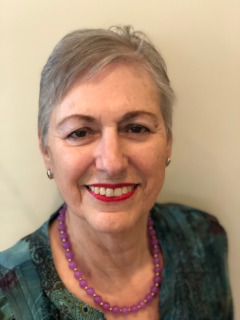
Marilyn Levinson is my guest today. A former Spanish teacher, Marilyn writes mysteries, romantic suspense, and novels for kids. Her books have received many accolades, and we expect more accolades in a year that’s shaping up to be a big one for Marilyn.

When I asked Marilyn about her upcoming releases and the “secret” of her success, this is what she shared. Enjoy!

2024 promises to be a busy year for you. Tell us what you’ll be publishing, and re-publishing.
Yes, 2024 is a very busy year for me, with eight books and a short story coming out. The new books: Rufus and the Witch’s Drudge, the second in my middle grade series, comes out in early April; my romantic suspense, Come Home to Death, comes out April 30th; and Booked On Murder, the eighth and last book in my Haunted Library series, will be released on August 6th.

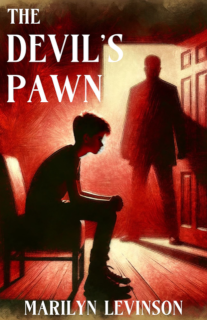
I also have five books scheduled to be republished: my YA horror, The Devil’s Pawn, just came out. Coming soon are two books in my Golden Age of Mystery book club series, and two novels for kids: And Don’t Bring Jeremy and Getting Back To Normal.

My short story “Stabbed in the Heart” will appear in the anthology, First Comes Love, Then Comes Murder. (Note from Maggie: I’m lucky to share space with Marilyn in this anthology!)

Please share about how persistence has contributed to your success.
I wouldn’t be anywhere if I hadn’t persisted in writing more books and sending them out. Also, being involved in the writing community has kept me informed re which agents and editors are open to new authors and new series.

What part of writing is the most fun for you? The most challenging?
I love writing dialogue. I find some plotting situations, especially when writing mysteries, the most challenging.

How long have you been writing? What started you on your writing journey?
I suppose we won’t count the years in elementary school, though I still have my notebook of stories from then. I started writing when my sons were very young. I wrote short stories and poetry, then segued into middle grade and YA novels, and eventually into mysteries.

What characters in your books are most similar to you or to people you know?
I suppose my sleuths are most like me, though they are braver and more adventurous than I am. But truthfully, my characters come from my imagination and are not based on people I know.

What comes first for you, the plot or the characters, and why?
A simple story idea comes first. Then the characters and plot come to mind and work together. That said, my characters and their relationships with one another are of utmost importance to me.

How important is setting in your stories?
Setting is very important in my stories. For one thing, it impacts my characters’ personalities and their lives. Working in a small town is very different from working in a city office building. Setting also dictates activities because of the weather and the terrain. It also can play a role in the mystery aspect of the story.

If you could tell your younger writing self anything, what would it be?
Don’t worry. You’ll get there. 😊

Please share your process for getting your books re-published.
I told my agent, Dawn Dowdle, who has recently died, that I wanted to make my “Children’s Choice” middle grade novel Rufus and Magic Run Amok the first book in a short series. And so she got me a contract to republish Rufus and to write three more novels. She also arranged to have my YA horror republished. A new publisher asked to republish some of my older books, and a publisher I’ve known for some time asked to republish others.

How do you use social media as an author?
Since my readers are on Facebook, that’s where I’m in constant contact with them. I love Author Takeovers. I do guest blogs and virtual book tours when a new book comes out. I also post occasionally on Instagram and X. I love doing video interviews and chats. And I write a monthly newsletter.

What marketing strategy works best for you?
Hard to tell. The ones I mentioned above seem to work.


As Allison Brook, Marilyn writes the Haunted Library series. Death Overdue, the first in the series, was an Agatha nominee for Best Contemporary Novel in 2018. Other mysteries include the Golden Age of Mystery Book Club series, the Twin Lakes series, and Giving Up the Ghost.

Marilyn’s juvenile novel, Rufus and Magic Run Amok, was an International Reading Association-Children’s Book Council Children’s Choice and has recently come out in a new edition. And Don’t Bring Jeremy was a nominee for six state awards.

Marilyn lives on Long Island, where many of her books take place. She loves traveling, reading, doing crossword puzzles and Sudoku, chatting on FaceTime with her grandkids and playing with her kittens, Romeo and Juliet.

Marilyn’s books are available for purchase on Amazon via her Amazon Author page.

The Devil’s Pawn is available for purchase at Barnes & Noble and Fantastic Fiction.

Connect with Marilyn on her website (signup for her newsletter), Facebook, Goodreads, X, BookBub, Pinterest, and Instagram.

Happy Valentine’s Day to the talented Writers in Residence and to the readers we treasure.

Podcasts for Writers and Readers

I’ve never been a news hound, but felt a need to keep abreast of what was going on, locally and globally. For the most part, I watched the news while walking nowhere (treadmill). But a couple of months ago, I said “enough” and went on a news fast. I’ve been on many such fasts through the years, but this one’s lasting longer—all because I discovered podcasts!

Even though I’ve been a guest on a few podcasts, I rarely listened to them. They can run quite long, up to an hour and more. But many are much shorter, and I now listen to the long ones in segments.

A few of my favorites:

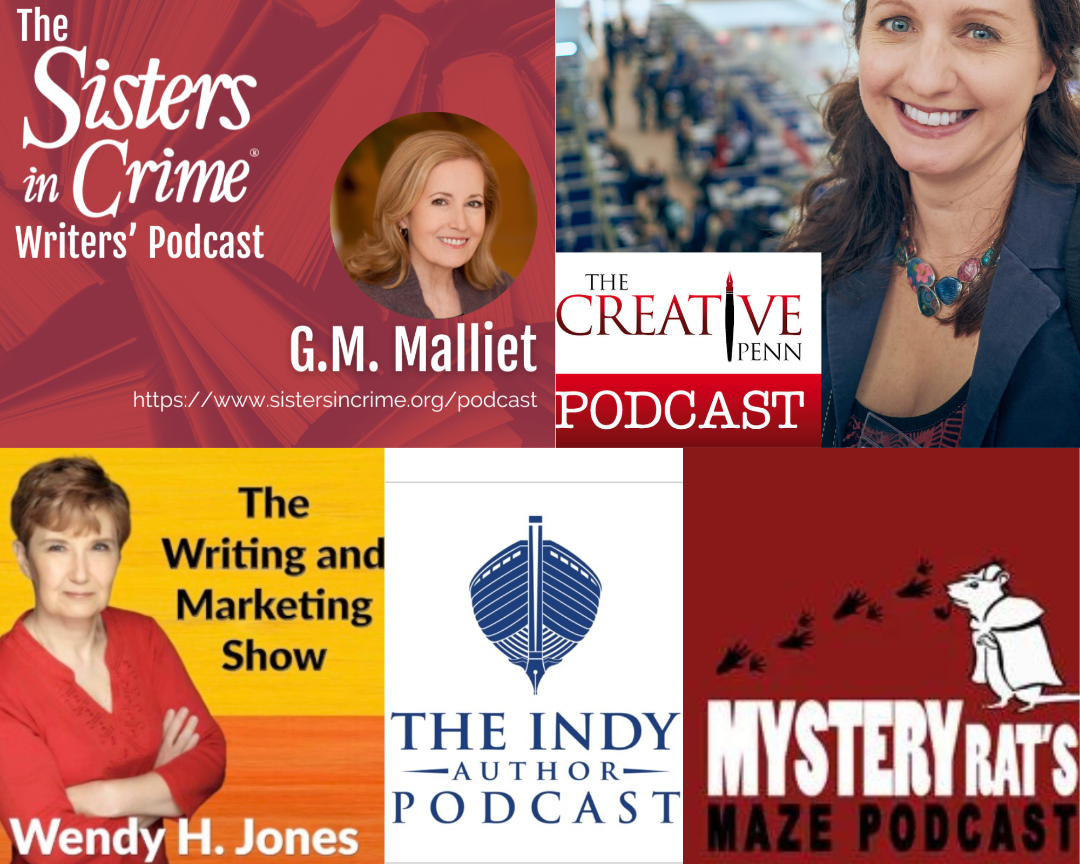
Sisters in Crime. Many of you belong to SinC and Executive Director Julie Hennrikus produces weekly interviews featuring author members discussing  their writing journeys. She kicks off each podcast with the question: “When did you first know you wanted to be a writer?”

Readers get to know more about their favorite authors and discover new ones. View the list of episodes here.

The following three podcasts are educational and offer information, tips, and advice on many writing-related topics, including craft, publishing, marketing, promotion, and social media. The podcast hosts interview writers, editors, and industry experts. Some hosts present the material themselves. Many of the podcasts are accompanied by transcripts.

The Writing and Marketing Show with Wendy H. Jones. Wendy is a Scottish crime writer. In 2022, she visited my Sisters in Crime chapter with a virtual presentation, “Storytelling in Marketing.”

I get that kid-in-a-candy-store feeling when I scroll through Wendy’s long list of podcasts. In “Using AI In Your Writing and Author Business” she presents both sides of the AI controversy. I have my own thoughts and preconceived notions about AI, but I like to make informed decisions, so appreciated her sharing.

Wendy’s podcasts on TikTok are interesting, but I’m NOT embracing that platform. While it’s no longer limited to the young (at least not for writers using BookTok), I don’t see myself producing videos on a regular basis. Still I appreciated Wendy providing information that allowed me to make another informed decision.

Wendy’s many episodes on craft include “Mastering the Art of Crime Story Writing,” “Writing Romantic Suspense,” “Writing for Children,” and “Using Your Own Life Story in Fiction”. View the list of episodes here.

Indy Author Podcast is the brainchild of Matty Dalrymple. As the “Indy” name suggests, this podcast focuses on self-published authors, but the traditionally published can certainly benefit from Matty’s many current and archived episodes.

I had read about auto-narrated audiobooks created by Google Play Books and wondered if I could produce two of my novels as audiobooks without spending thousands. I listened to Matty describe her process in turning out an audiobook for a non-fiction book she had written. It sounds quite challenging—and may be fine for non-fiction, but the monotone doesn’t suit fiction with its variety of voices and accents. Just imagining how my dialogue in the redneck bar scene in Murder at the Moonshine Inn would sound makes me shudder.

Again, a podcast gave me the information I needed to make another—you guessed it—informed decision. View the list of episodes here.

The Creative Penn is produced by Joanna Penn. She spends time at the beginning of each podcast with updates on the publishing industry as well as on her personal news. I’m currently listening to guest Douglas Smith, a Canadian author of speculative fiction who has much knowledge of publishing rights as well as how to sell our work to foreign markets. Where has Mr. Smith been all my writing life! View the list of episodes here.

Mysteryrat’s Maze Podcast, brought to listeners by Kings River Life Magazine, caters to readers. Each episode features a local actor (Fresno, CA) reading a short story or first chapter of a novel. View the list of episodes here.

Recently I learned of these two podcasts, but haven’t listened yet:

Alliance of Independent Authors
View the list of episodes here.

Novel Marketing Podcast
View the list of episodes here.

So I’ve been able to acquire much useful information, and “meet” interesting writers and experts, all while keeping in shape. Multi-tasking at its best, and so much more enjoyable and inspiring than the news. If you think I should know what’s going on in the world, let me assure you that I do. News is in the very air we breathe.

There are lots of podcasts available, on a variety of subjects. Just do a search and you’ll find more than enough choices. Here’s a good resource.

Do you listen to podcasts? Any favorites to recommend?

Leave a comment

  1. Miko Johnston's avatar
  2. Jackie Houchin's avatar
  3. Jackie Houchin's avatar
  4. rosemarylordwriter's avatar
  5. lindaojohnston's avatar

Short Stories: The Writer

by Maggie King

In my July post, I discussed short stories from the point of view of readers. You can read it here. But what about the writers? Why do they write short stories? Why do some not write them?

If you exclusively write short stories, or want to, there are several good reasons why you’re making a good choice:

  • There’s a tremendous satisfaction in completing a story in days, a few weeks at the most.
  • Short stories can be sold over and over, as long as the market accepts reprints. Reprints don’t pay as much as an original story (I can attest to that!)—still, it’s another publishing credit, and the work’s already done. I understand that reprints often pay well if included in an annual best-of anthology.
  • Writing short stories trains you to write with tightness and economy of words. This is great preparation for other kinds of writing, fiction and nonfiction alike.
  • For short stories, you don’t need an agent.
  • That muddy (aka sagging) middle of a story, so challenging to novelists, may still  challenge short story writers–but the middles are, well, short.

But be aware of the pitfalls. John Floyd, author of over a thousand short stories, has this to say: “Now, what’s the downside of writing only short stories? I can think of only one: as a short-story writer you will probably not become famous or make a zillion bucks from your writing. But here’s another newsflash: neither will most novelists.”

Another pitfall short story writers may encounter is the Rodney Dangerfield syndrome: “I don’t get no respect.” There are any number of short story writers who are respected for their work: the aforementioned John Floyd, Barb Goffman, Art Taylor, Eve Fisher, and Michael Bracken are just a few. But short story writing in general is frequently discounted. Anything from “So when’s she going to write a novel?” to “I don’t read short stories” are comments authors often hear. I know a gifted writer of short stories who won’t create a website until she publishes a novel.

Art Taylor, winner of many awards for his short stories, says, “I’ve had people hear me say I’m a short story writer and then tell me straight out that oh, they don’t read those. (I try not to be insulted.)”

My former agent scowled when I mentioned  writing short stories. “Write the real stuff,” he advised.

If you primarily write novels, writing short stories can offer a different experience:

  • After struggling with your novel, writing short can give you a feeling of accomplishment.
  • It helps you to hone your writing skills.
  • Writing short is a challenge like any good writing (you need to develop a compelling plot and characters); but as you’re dealing with a minimum of scenes and characters, the process is simpler.
  • It gives you fresh material to promote while you’re working on your novel, keeping your readers engaged.
  • In a short piece, you can resurrect scenes and characters that were edited out of your novel.
  • You can further develop a minor character from your novel in a short piece.
  • You can experiment with new genres.
  • And you will have respect!

I’m a big fan of writing short stories. To date, I’ve published seven and have several others in various stages of completion. This fall I’m writing two for anthology submissions.

You may be a pro at writing short stories, or you may be getting started (or at least thinking about it), but we can always learn about craft. Read and study the works of the greats, like Agatha Christie, Arthur Conan Doyle, Edgar Allan Poe, Ruth Rendell, and many others. Note that these are crime writers, but the basic principles apply to all genres.

On a final note, consider this advice from the late, great Ray Bradbury: “The best hygiene for beginning writers or intermediate writers is to write a hell of a lot of short stories. If you can write one short story a week—it doesn’t matter what the quality is to start, but at least you’re practicing, and at the end of the year you have 52 short stories, and I defy you to write 52 bad ones. Can’t be done. At the end of 30 weeks or 40 weeks or at the end of the year, all of a sudden a story will come that’s just wonderful.”

For more information on writing short stories, check these resources:

What is a Mystery Short Story? And How Do You Write One? by John Floyd

Kurt Vonnegut’s 8 Tips on How to Write a Great Story. Some fascinating and surprising insights here 

Short Mystery Fiction Society(SMFS). Join and maybe you’ll win a Derringer!

Our own Gayle Bartos-Pool wrote an excellent guide, THE ANATOMY OF A SHORT STORY WORKBOOK

Do you write short stories? If so, tell us about your experience.

Short Stories: The Reader

by Maggie King

A while back, I had a conversation with a well-read young couple. Like me, they enjoyed mysteries, the classics, and literary fiction. When they asked what I was working on, I said I was finishing my third novel and planned to focus on short stories for a while.

“Really?” The man looked doubtful. “I know that writers like writing short stories, but do readers like reading them?”

“I’m guessing you don’t,” I said. “What is it you don’t like about them?”

“They’re too, well, short.”

The woman added, “Just when I’m getting into the characters, the story ends.”

Are their comments typical ones? I expect so.

When I asked my book group members if they read short stories, I got blank looks. One of them, a retired English teacher no less, said, “Well … we read them in school.”

My first short story was published a year before my first novel. Two people I know told me plainly that they would wait for my novel, as they had no interest in reading a short story.

I selected the following comments from reviews of anthologies published by the Sisters in Crime Central Virginia chapter:

Short stories cannot deliver a good mystery to me. There were a few short ones that were good, but on the whole, not a great book.”

I am not a huge short story person usually because I don’t feel like I get enough information. I only read this book because of a book club I belong to.”

My biggest problem is that they don’t end with a clean-cut solution. You pretty much get a ‘feel’ for what will happen and then have to use your imagination to finish the ending.”

And some good reviews:

Very much enjoyed! I’m a busy mom with not much time for fiction, so I loved that it was a collection of short stories. …. It was truly refreshing to be able to read a good short story and then move onto the next when I was ready! Interesting stories and well written.”

My first ever mystery story collection. A friend recommended it and I really enjoyed it! Glad I branched out to try something new.”

I asked award-winning short story writer Art Taylor to comment on the reviewer who wished that short stories ended with clean-cut solutions. This is his response:

Short stories don’t always tie everything up nicely at the end. They often end on an ambiguous note and the reader can draw her/his own conclusion. Sometimes readers complain, as they expect the endings that novels have.

I do try to strike some balance myself—key questions answered (no information left out) but emotional issues still up in the air a bit, if that makes sense. Maybe what happened is explained, but the fallout is still to come, and the reader can imagine some of that rolling on into the blankness of the page beyond the final word.”

Despite the criticisms, many short stories are being published in anthologies, collections, magazines (the magazines are mostly digital now). For some time, I’ve been hearing that the availability of short stories in digital format has made them attractive to readers. But based on the above in-person conversations and online comments, writers need to do more than digitize their stories–they need to make them appealing. How can we do that? How can we satisfy the reader who wants “more?”

Such a reader might like a story collection. Anthologies present stories by different authors, but the ones in collections are penned by one author.

In Shooting Hollywood: The Diana Poole Stories by Melodie Johnson Howe the mysteries are not only beautifully written, but Diana Poole, actress/amateur sleuth, appears in each one. So if you take a liking to Diana, you’ll find her in the next story. And the next. Perfect for the reader who wants continuity and character growth. Other authors feature different characters and settings in each story of their collections.

Authors with published collections include Ruth Rendell, Agatha Christie, Arthur Conan Doyle, Marcia Muller, Bill Pronzini, and our own Gayle Bartos-Pool with her outstanding Only in Hollywood. There are many more. Suggestions for non-mystery collections: Maile Meloy’s Both Ways is the Only Way I Want It, and Elizabeth Strout’s Olive Kitteridge.

An idea from M. Louisa Locke, who guest-posted for Writers in Residence in 2020: she wanted to keep readers interested while they waited for her novels, so she started publishing short stories based on her Victorian San Francisco Mystery series.

In addition to short stories serving as a marketing tool, they allowed her to develop the minor characters in the series.

Read M. Louisa Locke’s post.

As for satisfying readers who want the clean-cut solutions they find in novels–that’s a tough one. Writers certainly want to please readers, but short stories are not just short novels. In my own stories, the reader will usually know who committed the crime, but vigilante—not traditional—justice is often served. I can only think of one story where I had the villain led away in handcuffs. However, I agree that some authors end their stories on overly vague, even abrupt, notes.

Likely there will always be readers who prefer novels over short stories—and that’s okay. Perhaps the best thing we can do is keep writing, stay true to ourselves, keep improving our craft, and the readers will come.

A parting idea: writers and publishers could work together to come up with effective ways to promote their short stories, collections, and anthologies.

These are my thoughts. Yours?

Coming in September: Short Stories: The Writer.

Images courtesy of book.store.bg, abebooks.com, ElizabethStrout.com

A Reason, A Season, A Lifetime

by Maggie King

This is the opening line to an oft-quoted poem by Brian A. Chalker. It describes how people come into our lives for a purpose. According to PsychCentral, these purposes fall into three categories:

Reason: This is when a short-lived relationship brings you a benefit or helps you with a realization. It helps you with a specific difficulty you’re facing, either intentionally or unintentionally.

Season: This is when a relationship accompanies you through a certain period of your life. It lasts for some time and brings you joy and growth. You might learn a lot from the relationship, but it eventually ends.

Lifetime: This is when a relationship lasts a lifetime.

Today I have a story about someone I met for a brief moment. He clearly falls in the “reason” category described above. 

One day in 2007 I walked into one of those mall bookstores that probably no longer exist, like Waldenbooks or B. Dalton. There I met James Pendleton and his wife when he was signing Drinkwater’s Folly. I told him I was writing my first mystery and he said, “Don’t ever let anyone discourage you.” It wasn’t just his words that have stuck with me to this day—it was his sincerity and earnestness. And the fact that he came along just when I needed to hear his simple yet sage advice.

Over the years, whenever I felt discouraged, his words would come to me. I considered him an angel on my shoulder. Need I say that often the someone discouraging me was me?   

When I finally published Murder at the Book Group in 2014, I wanted to personally thank Mr. Pendleton for his helpful advice that kept me on my writing path. Likely he wouldn’t remember the advice, or even meeting me. No matter, I remembered. Since he didn’t have an online presence I had no way of reaching him other than the old school method: writing to his publisher, Ivy House Publishing Group. As Ivy House was out of business (although they seem to be in business now), that avenue took me nowhere.

I sent my thanks out to the universe and hoped Mr. Pendleton would hear it on some level of awareness. And he will forever have a place of honor on the acknowledgments page of Murder at the Book Group.

Even with James Pendleton whispering in my ear for so many years, I had never read Drinkwater’s Folly, the book he signed for me. One day in 2015 I found it on my bookshelf and read it in one day. Set on historic Roanoke Island in North Carolina, the tale follows a bold, intrepid, and ambitious woman as she navigates the turbulent sixties. The story may not be known to many readers (a sleeper, to borrow movie parlance), but is worth seeking out.

Reading James Pendleton’s work renewed my interest in locating him, and this time I was successful–sadly, I found his obit from 2009. And what an obit! Here are a few of the highlights: 

James Pendleton taught at VCU (Virginia Commonwealth University) for 34 years, and was Dean of Students, Chairman of Freshman English, and Professor of English until his retirement in 1992. He was recognized as the founding playwright of the Creative Writing section at VCU. 

At various times in his life he was a baritone soloist, singing in such venues as Carnegie Hall and with the Chicago Symphony; he directed a jazz band, playing lead trumpet; taught Small Arms at the Ft. Benning Infantry School; did stints as a disc jockey, roving reporter, newspaper editor, choir director, and pilot of light planes. 

As for writing, he wrote ten plays for stage, as well as a number of  TV, radio, and film scripts. He was published in many prestigious newspapers and magazines, wrote book reviews and novels, and won numerous awards including the Virginia Governor’s Screenwriting Award and The Eugene O’Neill New Drama for Television Award. 

His travels to Central America prompted him to write the play “Sanctuary,” about political refugees in the US, and his final book, Last Night in Managua.

I sure would have welcomed a “season” relationship with this Renaissance man, but I’ll always value that brief “reason” moment when he gave me so much. According to PsychCentral, “Even a short interaction with a stranger can impact your life in meaningful ways.”

“People come into your life for a reason, a season, or a lifetime.”

Indeed.

Read the entire poem

Can you recall someone who came into your life for a reason and left a lasting impression?

Can TV Make You a Better Writer?

by Maggie King

As a mystery writer, I enjoy TV shows with strong characters and storylines that show the ups and downs of being human in a less-than-perfect world. They don’t have to be crime shows, but they’re mostly what I watch. Regardless of the genre, the best shows feature conflict as a common denominator. Watching them is a great way for writers to study dialogue and body language.

Ever heard that oft-repeated writing advice to give your main character something to want and make sure she/he has a devil of a time getting it? TV writers are experts at giving their characters motivations and the accompanying challenges.

No doubt about it, TV is a great source of writing advice and inspiration. Consider the following shows:

Breaking Bad
It’s big, it’s bold, it’s … well, bad. Walter White is a mild-mannered, dispirited high school Chemistry teacher. When he’s diagnosed with stage 4 lung cancer, he knows his meager income won’t secure his family’s financial future after his death. He partners with one of his students in manufacturing and distributing crystal meth.

At some point, Walter White’s cancer goes into remission. It doesn’t take long for him to become a power player in the dangerous criminal underworld. For the first time, he feels alive–his new career as a drug kingpin is much more exciting than teaching adolescents in Albuquerque.

Any writer can find Breaking Bad a model for character development and a riveting, twisty plot. Vince Gilligan, creator of the show, knows how to weave secrets and deception into the story, and Walter White’s double life requires him to constantly deceive those closest to him. His growth, moral decay, and transformation result in tragic consequences for his family and associates. The DEA’s hunt for Walter leads them to a very interesting discovery. A huge cast of supporting characters will also inspire writers.

Warning: Breaking Bad is uber-violent. I usually shy away from its level of violence, but the story and writing are just too good.

Darby and Joan
Now we take a 180-degree turn. Darby and Joan is a lighthearted Australian mystery series, set in the stunning Queensland outback. A retired detective (Darby) teams up with a British nurse (Joan) to solve the mystery of her husband’s recent death. As they travel through Queensland, they encounter, and solve, other mysteries ranging from murder to arson to kidnapping.

Darby and Joan are well-drawn characters in a growing relationship that feels real. The humor is natural and not manufactured. They experience minor, temporary conflicts. At the end of season 1, romance looms for the two. Will they succumb? I’m eagerly awaiting season 2.

I try to emulate Darby and Joan’s tone and interaction for my characters. Most stories have a romantic component and my Hazel Rose Book Group mysteries are no exception.

Death in Paradise
This cozy-ish police procedural is set on the fictional island of Saint Marie (actually Guadeloupe). The Caribbean scenery is breathtaking, certainly a character in the series.

Death in Paradise is known to be formulaic. Once the lead detective comes up with the killer (one of those lightbulb moments), he assembles the suspects and, a la Agatha Christie, goes through the events and finally names the killer.

But being formulaic isn’t all bad. The predictable narrative style and structure of each episode makes it easy for writers, especially beginning ones, to study. Besides, the stories themselves may be creative and original.

If nothing else, Death in Paradise is lighthearted entertainment with pretty scenery.

Miss Marple
The beloved Miss Jane Marple is a perennial favorite of mystery fans. Created over ninety years ago by Agatha Christie, the elderly spinster lives a quiet life in the village of St. Mary Mead—quiet until a villager is murdered and that happens with alarming frequency. Miss Marple never fails to identify the killer(s), using her powers of observation and knowledge of human nature. Sometimes she disguises her shrewdness with a dithery manner. She can always see a parallel between the latest crime and a villager, or village incident.

There are countless adaptations of the stories and a number of actors have played Miss Marple. Joan Hickson is my favorite as she best matches my picture of how the character looks, acts, and speaks.

Agatha Christie has influenced many crime writers over the years, especially with plot development. I expect she’ll do so indefinitely. I think the Columbo character played by Peter Falk often channeled Miss Marple, with his bumbling ways that concealed a sharp mind.

Touched By an Angel
Touched By an Angel was a popular American series that ran for nine seasons. It’s not a crime show, but it featured stories of troubled people who had reached turning points in their lives. As they grappled with personal demons, conflict, and tough choices, along came an angel in human form to guide them and impart God’s wisdom.

This show inspired me on many levels. At the beginning of my debut mystery, Murder at the Book Group, the main character, Hazel Rose, is standing at a crossroads. She’s at loose ends in her life and is hard pressed to make even the smallest of decisions. Solving the victim’s murder gives her the opportunity to grow and get out of her rut.


There are many shows I can recommend for writers: Brokenwood, City Homicide, Janet King, Inspector Morse, Midsomer Murders, Orange is the New Black, Scott and Bailey, Sommerdahl, Vera, Wallander, West Wing, and Winds of War/War and Remembrance are just a few.

Writers, tell us your favorite sources for writing advice. Is TV one of them? Please share your favorite shows.