Short Story "Special Delivery"

This short story by Jacqueline Vick first appeared in “Futures Mystery Anthology Magazine”.
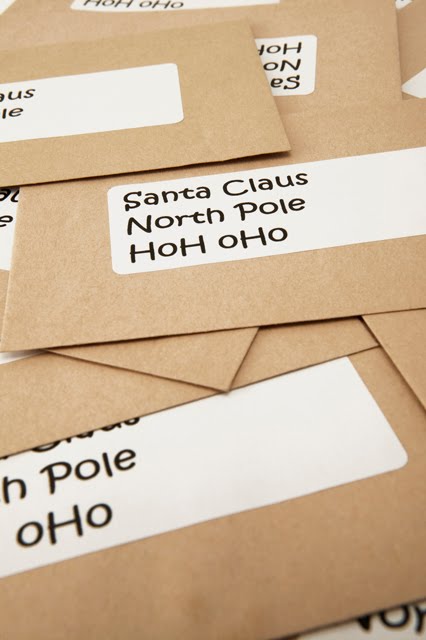
“Special Delivery”

Deanna Wilder clutched her delivery notice–by now a crumpled wad–and leaned forward onto the balls of her sneakers like a sprinter preparing for takeoff. After waiting in line for twenty minutes, she now looked on the postal window as an unclaimed prize.
Behind the counter, Abigail Watts puttered about: straightening the supply of stamps in her drawer, adjusting the tape in her adding machine, recapping her rubber stamps. Her position as the lone counter clerk of the Wilton Post Office gave Abigail power, a power she delighted in and exercised with impunity. Birthday gifts from distant relatives, anticipated catalogue orders, private correspondence intended for the post office box, the fate of these lie entirely with Abigail. And so the people of Wilton put up with her probing questions, her disapproving clucks, and her malicious gossip.

When she finally called out, “Next!” her tone suggested that it was she who had been kept waiting.

Deanna slapped her notice on the counter and, with a look that threatened violence, said, “I’ve come for my package.”

Abigail leaned forward on plump arms and gave the paper a poke. “Where were we on Saturday that we couldn’t accept delivery?”

Deanna clamped down on a retort and feigned a polite laugh. “We were running errands.”

The interrogation had only begun.

“I understand you interviewed a contractor to put in your new pool.”

Abigail said the word contractor as if the man’s qualifications were suspect. “Betsy Riven saw you having lunch with him at the Main Street Café.”

Deanna, assuming the woman had been coerced into offering up this tidbit in exchange for Abigail’s services, forgave Betsy immediately. She tapped the receipt. “My package?”

Abigail continued as if Deanna had not spoken. “Mulrony’s has the best reputation in town.” This was her nephew’s construction firm. She sighed loudly. “But, I expect you know what’s best, being the one with money to throw around.”

Deanna sniffed. “It is my house,” she said, but Abigail was no longer listening. Her black eyes beaded in on a new target in the long line behind Deanna.

Abigail pursed her small lips in disapproval. “Some people are looking better than they have a right to. Much too lively for what’s right, if you know what I mean,” she muttered. Deanna turned her head. Blank looks stared back.

Abigail toddled to the back room and returned with a medium sized box.

“Buying bras through the mail again?” Abigail referred to the return label, Silky Comfort. “I’d have thought you’d want to try them on first. A woman’s shape changes after gravity sets in.”

Deanna blushed and grabbed the box. Abigail called out after her retreating form.

“See you at seven!”

Deanna ignored the raspy laughter that followed her out the door.

As she adjusted her seatbelt, Deanna decided to make a concerted effort to find somebody else, anybody else in Wilton, who knew how to play Texas Hold Em. Doing Vegas in Style was Deanna’s latest class at the Wilton Adult Center for Knowledge and Education, known to the locals as WACKED. The final exam, a Texas Hold Em tournament, was less than three weeks away. Deanna had arranged a weekly Monday night game for practice. Not wanting to give an advantage to any of her classmates, she had scrounged up five satisfactory players to join her. But Abigail was wearing on Deanna’s last nerve. As she turned the key in the ignition, Deanna Wilder decided that tonight’s game would be Abigail’s last.

#

Harmony Drive was a short, dead end extension off Edinburgh Road. It ended abruptly in a small thatch of thorn bushes that separated the residential area from the lawn that surrounded Champs Middle School. The people who occupied the small, ranch houses that lined the drive felt no resentment over their limited options for escape; most of them had no place to go. The majority of residents had retired years ago, and their infrequent social visits, mainly grandchildren, came to them.

Midway down the block, at a shabby white house in need of care, Abigail Watts answered her doorbell. Her large frame, illuminated by the light from her living room, filled the entryway as she peered out at her visitor.

“I’m not surprised you came,” she said, her tiny lips puckering into what could pass for a smile. She stepped aside to allow the visitor entry into her home.

She leaned out onto the porch and searched the street. Although evening had progressed to the later hours of dusk, the streetlamps remained unlit. Shadowy mounds of hedges blocked her view.

“You’ve come alone?” She turned in time to see the visitor nod. “That’s a disappointment,” she said, closing the door and leaving the street in darkness. Anyone within hearing distance would have witnessed Abigail Watts’ final words.

“Now about that letter…”

#

Deanna Wilder nudged her daughter, Vanessa, with a sharp elbow to the rig-cage.

“Stop squirming.”

Vanessa glared at the grandfather clock and said, “You promised I’d be home in time for CSI: Miami. If we start playing now, we have time for a couple of hands.”

“It’s a re-run, for God’s sake.”

Ida Nichols, Deanna’s sister-in-law, shuffled a deck of cards with the skill of a Vegas dealer. “Young people aren’t the only ones with lives. Maybe we should call her again.”

“Maybe we should.” The woman mimicking Ida was her fraternal twin, Mabel. Mabel entered the world twenty minutes after her sister, left to scrounge up whatever attributes Ida had seen fit to leave behind. Mabel stood two inches shorter than her twin, was less striking in appearance and manner, and lacked a mind of her own.

“Abigail didn’t pick up the last three times I called,” Deanna said. “What makes you think four is the magic number?”

Roxanne, Deanna’s youngest daughter, had until now suffered the evening in silence. She set down her poker chips and said, “I’m driving over to see what’s keeping her.”

As the evening’s host, Deanna opted to remain behind in case Abigail showed up. She convinced Ida and Mabel to stay, primarily because she couldn’t trust the twins to return. Roxanne was stuck with Vanessa.

The drive across town took ten minutes, ten minutes filled with Vanessa’s complaints about her wasted evening.

“Just because Mother thinks I don’t have a life…” Vanessa fingered her curls and sniffed. “Well, if I don’t, it’s her fault. Every time she takes a class, I wind up as her guinea pig. Today it’s poker. You watch. Tomorrow it will be mind reading and I won’t have any secrets left.”

“I don’t know why you bother to argue,” Roxanne said. “I just agree with her and do what I want.”

“Then why are you spending Monday night running around town looking for some old hag?”

“You mean instead of learning the finer points of forensic science from David Caruso?” Roxanne referred to the red-headed star of CSI: Miami.

She turned the Chrysler New Yorker into the driveway of Fourteen Harmony Street and left the car idling. The windows of the house were dark.

“We probably just missed her.” She instructed Vanessa to wait and ran up to the front door.

Roxanne might have knocked harder than she intended because the door creaked open after the first hit. She leaned her head in.

“Abigail?”

There was no response.

The car headlamps cast a dim light over the living room, and Roxanne could make out the outline of a large lump in the middle of the rug. She felt along the entry wall for a switch.

Blazing light filled the room and exaggerated the purple, bloated features of Abigail Watts. Her large arms lay thrown over her head, the hem of her housedress rested in a position to expose the varicose veins threading up her plump thighs. A sickeningly sweet odor hung over the room.

Vanessa appeared at Roxanne’s side.

“What’s taking so long?” she asked. Then her eyes followed to where Roxanne pointed.

“I’m going to miss my show, aren’t I?”

#

Detective Sean Grady had a face like a bull and a body to match. Men who now resided at Joliet State Penitentary had mistaken his blank expression for a lack of intelligence. Others thought his shock of red hair might indicate a quick temper, but no one had ever witnessed him lose it. He sat at a small, square table opposite the Wilder sisters in Interview Room A.

“Tell me again what time you arrived at the victim’s home.”

Roxanne opened her mouth to speak, but Vanessa cut in.

“We already said. Ten minutes to eight.”

“And you’re sure of the exact time because –“

“I was watching the minutes tick away until my favorite show started.” Vanessa snorted. “Don’t worry yourself. It’s over now.”

Grady ignored her outburst and addressed Roxanne.

“You said the door wasn’t locked?”

Roxanne shifted in her seat, her rump sore after an hour on the cold, hard metal. “I only knocked once. The door opened on its own.”

“Abigail Watts was late for a poker game at your mother’s house.” Grady read from their statement. “Your mother, Deanna Wilder, tried phoning Ms. Watts three times, starting at twenty minutes after seven.”

“The game was set to start at seven,” Roxanne explained, shooting her sister a look. “Vanessa was impatient and insisted we call.”

Vanessa leaned toward the detective. “I do have better things to do than sit around playing cards with my mother.”

“I’m sure you do, Miss Wilder,” he said with practiced neutrality. He closed the file and folded his hands on the table. “I think that’s all for now.” He added the perfunctory, “Please be available for further questioning.”

Roxanne agreed for them both as Vanessa disappeared out the door.

#

Grady’s desk was one of several in a large open room that made up the Wilton Detective Squad Headquarters. It was now eleven o’clock at night; he had the room to himself. He scribbled notes in a manila folder that bore a handwritten label – Abigail Watts.

He considered the facts he had gathered so far.

Abigail Watts left her job at the Wilton Post Office at five-thirty in the evening, the usual time for her departure according to her boss, Leonard Miles. Leonard Miles’s reaction to the death of his long time employee was gratitude at having enough notice to find a replacement.

Abigail then proceeded to Walt’s Grocery store where she purchased a can of gourmet coffee beans and a package of lamb chops. He knew this from the dated receipt on her kitchen counter, verified by the pile of chop bones in her trash bin. The can of coffee, Starbuck’s, remained unopened at the time of her death. Walt’s had been closed since nine but Grady knew that Shirley Jakious worked the evening shift. He could question her tomorrow.

Grady reasoned that Abigail’s errand would have placed her back at home by six fifteen at the latest. Then she took the time to cook her dinner and eat it. That would place the time of death between a quarter to seven and eight o’clock at night. There were no signs of forced entry; Abigail Watts allowed her killer entry into her home.

First thing tomorrow, he would interview the neighbors. If he was lucky, someone would admit to poking their nose through their blinds around the same time that Abigail Watts received her visitor.

To be continued….

The Challenges of Putting on a Children’s Literacy Presentation

I was recently asked by a school administrator to put on an Author Presentation for Children’s Literacy Day. Having written an early middle reader, a talk to third through fifth graders sounded like an excellent opportunity. What a learning experience!

Fight to Get the Details

As the first Literacy Day this school had ever put on, the details about what the organizer needed and wanted were hazy, and they kept changing. I assumed the woman in charge would let me know what she finally decided on once she figured it all out, but we all know what Felix Unger said about ass-u-me. Mistake. Even as the day approached, the emails I received were few and lacking detail.

If the school is unclear about what they want, take charge and tell them what you’re willing to do. You may help them come to a decision. At the very least, if what you are willing to do and what they want are two different things, telling them may force out additional details they “thought” they had already given you.

At first I was one of several authors giving a half an hour presentation. A week before the event, that changed. I was the only author giving a forty-five minute presentation twice the same evening to two different groups of students. When I arrived, I discovered I was one of four choices that the students would be assigned and was assured that, however long my presentation was, it would be fine and I could dismiss the students when I finished.  Then the administrator told me I needed to fill an hour and a half!

Prepare More Than You Need

Before the event, I worked to fill the original half hour and then quickly added a few thoughts for the extra fifteen minutes. When I discovered upon arrival that I had to fill an additional foty-five minutes, I had to wing it. Not a pretty site.

Even Young Audiences Need A Warm Up

When the kids took their seats, I jumped right in. I had arranged an interactive presentation and was surprised by how shy the kids were when it came to participating. They finally got into it at the very end of my original presentation, which, due to a lack of participation, only filled ten minutes! Had I warmed them up with questions and jokes and stories, they would have been ready to jump in and enjoy by the time I started asking for volunteers.

Understand How Kids Learn

I thought that an interactive presentation would keep the children from getting bored, but jumping around and shouting in the classroom was foreign to them, and it took the kids a while to get used to the idea. When I ran out of content, the school administrator rustled up paper and pencils and we asked the children to use the information I’d given them to write their own story. Writing an assignment and then reading it aloud was something they understood! I like to think they enjoyed my original presentation, but like good little students, they were comfortable with familiar “homework”.

Literacy Day was a fun experience, and I hope to do more Author Presentations for other schools. Next time I’ll come prepared. I’ll take control by telling the school what I’m willing to do. I’ll prepare extra content for last minute surprises. Warming my audience up will take priority, and I’ll be sure to include some traditional methods of learning.

Does anyone have experience with these types of presentations? I’d love to hear about what you did to ensure a fun and educational time for the kids.

Interview with Author/Artist Gay Degani

Gay Degani writes surrounded by the frantic chortles of parrots. She has published in journals and anthologies including The Best of Every Day Fiction 2008 and TWO (2009). Her stories online can be read at The Battered Suitcase, Night Train, 10 Flash, 3 A.M. Magazine, as well as other publications. Pomegranate Stories is a collection of eight stories by Gay. She is the editor of EDF’s Flash Fiction Chronicles and all her online fiction can be accessed from her blog.  Welcome Gay!

Gay, you have an impressive list of short story credits. What attracted you to fiction in small packages?

Gay: Two reasons are at the bottom of my adventure into short stories. The first was to use short stories to help me learn the craft of fiction writing and the second was to actually publish something. I love movies, so when I started writing “with intent,” I wrote screenplays. I live in LA, what can I say?

I worked hard to learn the basic format—this in the old days with no Final Draft—and to write dialogue and lean narrative, and to master structure. Eventually, I decided to shift to novelizing a couple of my scripts, but I had trouble keeping track of the plot, the characters, the structure, and the language. Although screenwriting taught me some skills, I didn’t really know how to apply all of them to one integrated piece of work.

Solution: write short so I could practice using content, language, structure, and purpose all together in a manageable length. Also with the advent of online e-zines, short stories began to have real market value (if not monetary) and I was dying for a publishing credit. Not just so my family and friends would take me seriously, but so I would take me seriously.

What should a writer keep in mind when writing short stories versus longer narrative form?


Gay: The basics of short or long fiction writing are the same: tell a good story. The difference is that language, while always important, becomes uber-important in a short piece. There can be no wasted words. Vigor in verbs and specificity in nouns are essential to short fiction.

In a novel, a writer may get away with calling a tree, a tree, but in short fiction, not only does the tree have to be specific, it must do more in the story than offer the information that a character happens to be outside. It must set up a specific outside and be a tree that will suggest something else in the story, add another level, or give the reader symbolic visual. This something else may not be picked up by the reader on a conscious level, but on a sub-conscious level. A palm tree suggests California. A naked stick of a palm tree suggests something that has lost its beauty; it provides a more powerful image and therefore, does double-duty for the writer.

How long, on average, does it take to complete a short story? And do you adhere to a writing schedule?

Gay: Each story is different in its development cycle. Sometimes, but rarely, something will be fairly complete in an afternoon, but most of the time stories go through a slower writing with me.

For the last two or three years I have written something most days, either a free write from a prompt, or a piece for an e-zine I would like to get into, or because there’s some phrase or image or structure I want to play with. A part of my day is spent revising. And of course, there is the “novel” which I have written, but can’t bring myself to finish the editing process.

I go into my office in the garage around 6:30 and stay out most of the day, coming in for meals and breaks. I waste time out there too, occasionally painting or dare I admit it, napping.

Do you have several stories in play at one time or do you take one piece through the final editing process before beginning another?

Gay: As a devotee to the idea of process, I always have stories at different stages of the writing process. My first step with any story is to take whatever inspiration I have and draft a fast draft to discover where exactly it will take me. Ron Carlson’s little book Ron Carlson Writes a Story helped me to embrace this idea. Unlike Ron, however, my initial draft is never good-to-go. My work is strongest when I let something rest for a couple hours or days and then go back to it.

This second stage is when I discover what the story is really about, its purpose. This can be a single moment in a flash fiction piece, what that moment means to my character, good or bad. Or in a longer work, that purpose is what gives me the story arc. Once I know that, I can rewrite and edit so that everything in the story serves the story arc. This idea of serving the story is at the bottom of most strong short writing: no extra sentences can be kept because they are pretty, all unnecessary words are edited out, and a steady focus is maintained to achieve the impact the writer wants to leave with the reader.

In my short collection Pomegranate, the story, “Pomegranate,” is served by the story question, “Will this girl ever find her way home again and more importantly, will she be satisfied with her fate?” I didn’t know this when I started the story, especially the second part of the question. I only knew when I’d finished the first couple drafts.

The third step is to work toward the right language and tone, to make certain all aspects work, at least to me. This is the editing, revising, polishing, proof-reading stage that might take two drafts or even ten drafts.
At different stages of each story, however, I don’t count just on my own impressions. I have “designated readers” to help me see a piece the way the reader will see it and make any needed changes. Many online writing friends from communities such as Every Day Fiction, Facebook, Zoetrope, and Fictionaut have become my DRs.

Pomegranate is a compilation of short stories released in 2009. Could you tell us about your decision to put this book together and what steps you took?


Gay: Many publishers in the online writing community have chapbook contests and after entering a couple (and not winning), I decided sending off 50 pages of stories to various publishers and getting selected seemed to be a roundabout way to do this with sites like Lulu.com out there. Most convincing for me was that print publishers are even less likely to publish a collection of short fiction than online publishers because collections are less saleable unless the author is already an established novelist.

Could you elaborate on the theme of Pomegranate?


Gay: I wanted a theme for my chapbook contest entries because I thought I’d have a better shot at getting selected if I did. The most common thread seemed to be “ mother-daughters.” This made me think of Demeter and Persephone and if I wrote a story with this classic myth in mind, I would have something to tie everything together. I’d earn both my title and my theme. I made this decision at the same time that Jaycee Dugard was found. Something gelled for me and out came “Pomegranate.”

As an artist, you also did the artwork for the cover of Pomegranate. How do you turn a painting into a book cover?

Gay: I’m an abstract painter working in metallic acrylics, so I took about 20 photos of pomegranates and ran my favorite through Photoshop using several different filters. Part of this was because of time constraints since I wanted the book printed for Christmas of 2009. but also because I have less confidence creating representational art than abstract. Self-publishing, if you are cheap like me and you don’t want to hire one of the publishers’ consultants, is very demanding. I didn’t really have the time to stress about whether I could come up with a painting that would be graphically eye-catching.

Do painting and writing complement each other, or does each offer a different release?


Gay: The two arts offer me different experiences. They are a wonderful combination for me. I have no angst about painting whatsoever (unless it’s going to appear on the cover of my book!) I paint to please myself, but my ego is all wrapped up in writing. I have a desire to be good and continue to strive toward that goal.

What’s next for you?

Gay: I plan on continuing to write short fiction. It’s so much fun to experiment with different structures and subject matter that I can’t really see giving it up, but my major goal this year is to finish my novel. I’ve worked on it for a long time and I feel it can be good if I can force myself stay focused on it long enough to get it revised and polished. If anyone would like to read a version of the first chapter, I adapted it to flash form at Every Day Fiction. It’s called Stranger on the Porch.

Thank you so much for taking the time to be with us today!

Ladies Man – A Short Story in Four Parts – Part Four

Continued from yesterday…

Ladies Man
Part Four


by G.B.Pool

Now, I’m in L.A. Opportunity beckons.

Whataya know. The brown guy came back. He’s got a plate of food. For me? Hot dog. I found another friend.

I limped toward him. Sympathy never hurts. Unless they throw another rock. He set down the plate and pointed to it. I gave him a good long stare just to let him know I’m proud. I can take it or leave it. See?

He left it. Good. I’m starved.

I ambled over to the plate and darn near licked the restaurant’s name off the china. That’ll hold me for another day. I wished the brown guy would step back outside so I could let him know how much I appreciated the meal. But, hey, I’m really not the sentimental type.

Now let’s see what L.A. has to offer a guy like me. I’m resourceful. I sauntered down the street, feeling pretty sure of myself. The street was crowded. This time of day in Las Vegas, I’d be chillin’ somewhere until nightfall.

That’s when I saw him. He ran out of an alley and made a grab for some old broad’s purse. The woman tried holding on, but she was no match for the thug. He pushed her to the pavement and ran back down the alley.

I was after him in a flash. I could outrun the bum without breaking a sweat and was crawling up his back before he knew what hit him. I landed a few good swipes across his neck and he shrieked like a girl. The purse fell from his hand as he tried to stop the bleeding. I gave him a few more whacks and then got off him, snatched the purse, and dashed back up the alley.

People were helping the old woman off the sidewalk. She was pretty shaken, but when she saw the purse sitting at her feet and me smiling at her, she looked a whole lot better.

“My hero,” she said in a soft voice. “Wanna come home with me, big guy?”

It must be my face that gets ’em. She reached over and scratched under my chin. I swished my long, black tail and gave her a deep, sexy “meow.”
I followed her home.

I might stay a little longer this time.

I’m gettin’ old.

Ladies Man – A Short Story in Four Parts – Part Three

Continued from yesterday…

Ladies Man


Part Three


by G.B.Pool

I high-tailed it around the back of a restaurant, and then put on the breaks. Somethin’ smelled awful good, and I hadn’t eaten in a day. My mouth watered as I watched a short, brown man toss plastic bags into a dumpster. If the lid didn’t shut all the way, I could get in there, rip open one of those bags, and look for something to eat.

Ever since the car accident, I can’t ease under those heavy lids. But I could sure make short work of a plastic bag.

The brown guy was lookin’ at me. He said something I didn’t understand, but the expression on his face said he just might turn out to be a friend.

He got rid of the garbage, slammed the lid shut, and went back inside the diner.

Oh, well. I’ll find somebody else.

I remembered the middle-aged lady who took pity on me after the car hit me. It wasn’t her fault. She was a witness. The driver didn’t even stop. The lady shook her fist at the car and yelled a few choice words I didn’t think ladies used, while I was licking my wounds.

“You poor fella,” she said. “You hungry? I just might have something in the icebox for a good-looking guy like you. Want to come to my house?”

I could tell by the tone of her voice, she’d made the offer before. As for me, I’ve accepted before.

Sometimes I start out on the couch, but after a while, I’m making myself at home in the lady’s bed. And sometimes, if I’m lucky, I get more out of it than just a back rub.

I got my dark, good looks from my old man. The rest of the brood took after Mom, kinda puny with a standoffish attitude. I heard tell Mom had a reputation for sleepin’ around. I guess you could say the same for Pop. But he had class. Breeding, some said. He taught me the ropes, but when he split, I didn’t have any good reason for staying around.

Lucky for me, the ladies like me. I fancy them myself. They usually treat me good, and I try to repay the kindness, while I’m around. I clean up after myself and don’t snore. But when they start thinking they can tie me down, they got another thing comin’. I’m Splits Ville.

Ladies Man – A Short Story in Four Parts – Part Two

Continued from yesterday…

Ladies Man


Part Two


by G.B.Pool

Barstow and I parted company one night when I nearly got caught heisting a few tasty tidbits from an all-night grocery store. I had wandered in behind another late night customer and made my way to the rear. The morning staff was long gone, so I could graze through the crates of day-old bread, or week-old whatever, and dine in style.

I was wiping the last of a moldy meatloaf from my face when I heard running. I turned in time to see a broom aimed at my head. I ducked and ran. The guy in the white apron took another swing, but I was racing down the cookie isle before he could get past the sinks. I spotted a man making for the doors and sailed through after him. I was in the shadows, catching my breath, by the time “apron boy” made it outside.

It was time to move on.

I strolled over to my favorite diner at the crack of dawn and spotted an eighteen-wheeler loaded with wooden pallets idling in the parking lot. I ambled aboard right before it rumbled onto the street and headed south. The sun was getting hot. Before I turned into beef jerky, I wedged myself down between two piles of splintery wood and fell asleep.

After a while, the steady hum of the road turned into the roar of the city. I opened my eyes. The flat and endless desert had morphed into a mountainous terrain of concrete and steel.

So, this is L.A.

I hang around truckers because those guys know where to eat. “Pallet man” pulled into a local eatery and I decided this was the end of the line. I emerged from my hiding place and dropped lightly to the pavement.

A guy wearing a funny pair of rubber shorts and a cockroach-shaped hat careened through the parking lot on a bicycle and nearly ran me over. As I jumped out of the way, I had to dodge a kid on an oversize roller skate as he raced past me. Sheesh!

Ladies Man – A Short Story in Four Parts – Part One

As a special treat this week, G.B. Pool will share her short story, Ladies Man, in four parts. Gayle teaches short story construction seminars and on Saturday, April 10th, she will be on a panel of short story authors at the Burbank Library, Buena Vista Branch.

Ladies Man – Part One
by G.B.Pool

Call me Sly. That’s short for Sylvester. I started using the name after I snuck into a movie theater running old Stallone movies. It was just me and a bunch of strays with no place to go. I curled up on a seat and tried to catch forty. Gunshots jolted me from my nap and I decided to watch the flick. Boy, that Stallone could take care of himself. If I could have tied a red rag around my head, I would have called myself Rambo, but Sly’s good enough.

You see, I ran away from home when I was a punk. The mean streets have been my address, on and off, ever since. It’s rough out there. I’ve got the scars to prove it. But I’m tough.

It wasn’t all bad. I lived with this gorgeous showgirl in Las Vegas when I was younger. We both kept late hours, but she never asked me any questions. And I never asked her what she did between shows, so we got along great. I always had enough chow to eat at her place, but I didn’t like being tied down. So one night when she was takin’ out the garbage, I slipped out the back door, snuck aboard a southbound truck, and kissed Vegas goodbye.

I slept most of the way, not really knowing where I’d end up. The driver stopped at a diner somewhere along the freeway. I heard another trucker mention Barstow. That’s when my “chauffer” saw me stretched out in the back of his flatbed and started yelling.

“Hey! Get outta there you no good…”

He threw a rock at me. I’ve had worse. Remember the scars?

I ran down the dusty street, checking out my new digs. If times got lean, I could do some second story work. An open window on a hot night was easy. I’d sneak in, grab a few things, and scat before the owners or their dogs picked up the scent.

Dogs and I don’t get along. I tolerate them… from a distance.

Tune in tomorrow for Part Two!

Test the Integrity of Your Mystery – Part 4

Continued from last week.

This final blog involves the fourth column of your worksheet. You already know from the first three parts where your seen takes place, who’s involved in the scene, and what action takes place in those scenes. Now it’s time for:

Unanswered Questions.

Unanswered questions must be addressed. Remember the old adage about the gun on the mantle? To paraphrase, if the gun is there in ACT I, someone had better shoot something before the end of the story.

At the end of each scene, list the questions raised during the scene.

Let’s say that your slueth discovers a scrap of paper in the victim’s fireplace. The questions this raises in the reader’s mind are “What was written on the paper?” “Who tried to burn the paper?” “Is it relevant to the mystery?” List all three in the Unanswered Questions column.

When all of your columns are complete, scan down the Information column until you find the answer to each of your questions. It helps to place a checkmark next to both the Information and the corresponding Question. By the end of your story, everything in both of these columns should have a checkmark.

If Aunt Gertrude wonders aloud what ever happened to her diary, the reader will carry that question to the end of the story. Left unanswered, it won’t matter that the murderer has been caught and that the sleuth survives to solve his next case. The reader will want to know why no one ever found the diary and what information it contained.

Even if a piece of Information provided is a Red Herring, it will still raise questions. It doesn’t matter if the answer is “Aunt Gertrude’s diary has nothing to do with the murder.” As the author, you need to make sure that the slueth recognizes that the Question asked has been answered. If you leave anything hanging, you risk irritating your reader.

I hope that using this chart will ease the way to a balanced mystery with a tight plot. You should wind up with a story that makes sense and, as a result, satisfied readers.

Interview with Western author Will Davis

Will Davis is an award-winning author of Westerns. Living in the west for over fifty years, Will became interested in the region and its history. The books he writes are based on real historical events, which he researches to assure that they describe what they were like in the 1800’s. Parts are drawn from his experiences with wilderness horse pack trips, cattle drives, and rodeos. He also draws upon his studies of the Indians of Texas, New Mexico, and Arizona, and often includes them in his tales of the West.

His first novel, Bell Country Bushwhackers, was published in 2007; his latest, Six Points of Death, in 2008, both by Outskirts Press. His third novel, The Ring, is due out this fall. Welcome, Will!

Writing westerns involves more than putting a cowboy hat and boots on your protagonist. Can you describe what elements make a novel a Western? What is unique to that genre?

The genre is unique because the early West was unique. There were no states, there were no laws and most of the southwest weather and terrain was not kind to its invaders. The men of the early west had to have physical and mental fortitude. They were constantly defending themselves and their families from outlaws, Indians, unprincipled business men and scoundrels in general.

The Westerner, (Cowboy, Cowgirl), had to have strong survival skills. Their horsemanship was often a matter of life or death. If they were going to survive, they had to be proficient with firearms and had to know when to use them and when to refrain.

They followed an unwritten “code of the west” and those that failed to followed it often found themselves hanging from the end of a rope.

What is the special appeal that Westerns hold for their readers? How do you bring out those qualities in your books?

The technology revolution is fast causing the demise of the Westerner of the past. Novels of the early west help the upcoming generation understand and appreciate those that settled the West. There is a special appeal to the reader when they learn about the courage and the daily challenges of the early Westerner. Many of the man and women of the west would provide outstanding role models when it comes to “do what you believe in, and believe in what you do”

Your novels require a lot of research to get the details right. Can you tell us more about your research process? Any tips on how to successfully blend fact with fiction?

Research is by far the most difficult part of writing historical fiction. The stories must be believable and the locations and characters must closely represent the men and women of the times.

I visit the locations I write about. I spend time at their libraries and talking to families that have lived there for generations. I photograph the terrain and any of the original buildings still standing. I spend much of my time reading about the area and those that lived there. I decided to focus on the Apache tribe and I read any books I can find that describes their beliefs, rituals, wars, and social activities. I am careful that I blend the fact and fiction in such a way that I have famous (real) characters in my books in a place they could have been at the time. I also slightly change the names of some of the characters to make sure I am not reflecting badly on their descendents.

You are also an avid and talented photographer. Writers, like photographers, need to create three-dimensional images with a two-dimensional medium. Has your skill with the camera helped make your writing more visual?

My photography background helps me to get visuals of the areas I write about. I am able to select the best perspective that will help me describe the movements of my characters through the region.

There are many ways to publish today. Which method did you choose for your books, and what factors led you to make that choice?

I talked with many published authors and they all agreed the most difficult task of writing was getting their works published. In many cases, it took years. I am not known for my patience and I decided I didn’t want to wait years to see my work in print.

I looked into several self-publishers and decided on using Outskirts Press of Parker Colorado. I have been very happy with them and plan to have my third novel published by them. Once I have three books out, I plan to look into getting an agent to go to a more universal approach to publishing.

What are some of the pluses and minuses to self publishing? What should writers consider when they’re contemplating the self publishing route?

As in most things, there are pluses and minuses to self-publishing. First the pluses; it’s quick, you can have a book on the market in sixty to ninety days, you work directly with the publisher, no agents or promoters, you can customize your book size, print and cover and finally, you can maintain the rights to the work and move it to any publisher you like at any time you like.

Now the minuses; there are up-front cost, there are no agents to promote your work, and there is a requirement on the authors part to get their work in front of the public. The authors must do their own marketing to get the work in the chain bookstores. It is a challenge these days to convince the larger bookstores to carry your work.

The author of your books is Will Davis, which is not your real name. Why did you decide to publish under a pen name?

When I searched the book selves, I noticed that many of the authors had very western sounding names, i.e. Luke Short, Jack Slade, etc. I decided my German name was not a convincing western author’s name. My full name is David William Bushmire. I took my first two names, reversed them and came up with Will Davis. So far it has served me well.

Any last words?

My advice to any would-be authors of historical fiction is:

1. Know your subject

2. Write from experience when possible

3. Do research to make your story believable

4. Pay for a professional editor

5. Read other’s work on similar subjects

Visit Will at his website or purchase his books from Barnes and Noble online, Amazon, or online at the independent Page One Bookstore.