
by Gayle Bartos-Pool

We’ve all done it… Time Travel, in a book. Or maybe in a flight of fancy or even in a dream. But it’s that journey we get from a novel that interests me as a writer. I wouldn’t have thought about it had I not been reading a book by a favorite author. It was published in 1992. The title of the book and the author aren’t necessary to mention because I like him too much and obviously the publisher and booksellers and fans at the time weren’t thinking about how the book would be received in the future more than thirty years later. But I’m thinking about it now after I had finished some eight chapters of the best seller.
On almost every page there was a reference to a political figure of the time, a current joke going around, or a character in a popular television show or movie. I knew what the author was talking about, but I can bet quite a few of the people in the generation right behind mine wouldn’t understand half of the comments and people in Gens X, Y, Z or whatever young people are calling their particular era now wouldn’t have a clue to what was being said.
I personally can testify that 90% of the current actors, movies, on-line places one would go to be “entertained” or God forbid, enlightened, don’t mean anything to me today. I haven’t read a book written by the younger generations, at least those in their 30s or 40s, if they have ever written a book. Since many high school and even college graduates aren’t exactly proficient in writing our language or maybe even their contemporary slang, maybe there is nothing to read from their generation anyway.
Am I cynical? Yes. Should I be? Yes… and No. I have to be cynical when I see news stories that show some areas of the country have entire school systems with zero kids graduating who can read or do math. And No, it’s not cynical to want the country to do a better job educating our kids so they can write a book, much less read one and to know that 2 and 2 equals four, not five. (There’s a reference there if you care to look it up.)
But there have been books written by older contemporary authors who do a great job writing about bygone eras. How do they do it? They give the reader a nice history lesson along with the story. Their research lets us see what Jolly Old England looked like over two hundred years ago or other places in history. If they do a good job, the reader can “figuratively” walk down a street in London during Sherlock Holmes’ time or Berlin during World War II and see how people lived back then. The scenes are as much of the story as the plot and the characters and the reader gets to learn a little something along the way. Even in science fiction novels we can see the “future” through the writer’s eyes. That’s always fun.
But in a contemporary novel, what if every humorous or “ripped from the headlines” comment mentioned is so obscure the reader thirty-forty years hence won’t understand any of it? When I wrote my three spy novels covering the time from the Second World War up until the early Nineties, I understood the eras, but I had seen a lot of movies made during the war, read quite a few history books on the topics I was covering, and lived through the fifty-plus years after the war. I have to hope they still show some of those great movies made during that time period so future readers have a chance of understanding parts of that history in my books.
But what does a writer do now? Continue dropping current events into their stories just for current readers? How did Arthur Conan Doyle manage to write a story that has lasted through the ages? Even if you never saw the dozens of movies and television series based on his Sherlock Holmes character, the stories are still totally understandable. One thing I can say, he didn’t drop tons of humorous quips into the mix.
When I write a story told in the First Person, the character, if it’s a male, doesn’t have the opportunity to wax eloquently about the surroundings other than a casual mention. Perhaps a woman would comment about the furniture or wallpaper in a room or the fabric in a dress someone wore, but guys usually don’t do that if the story is in First Person. The book I was reading by that famous author wrote in Third Person and did drop in lots of references about everything: clothes, gadgets, politics, movie stars and other current events. My characters, whether it’s a guy or a gal, will often drop a clever remark about something reminding them of a television show or movie, but after reading the book that opened this article, I might not do it as much unless I give a few more details about the show I’m referencing.
I have actually watched reruns of a few television shows done maybe ten years earlier from this current time, but ones I had not watched when they were new, and even in those shows there were one or two references that I didn’t understand. Maybe that’s because I stopped watching television about twenty years ago and haven’t been to a movie in about thirty years. I can’t say it’s my loss, because when I have tried watching a few TV series that I missed when they were new, but was watching them in reruns, they weren’t very good and I stopped watching. To be honest, there have been a few movies and TV series I have watched on television done over these past 20-30 years that weren’t bad. Mostly science fiction or adventure: Galaxy Quest, Star Wars, The Mummy.
But if I want my books readable for a younger audience even when they get into their forties, what do I need to do? Watch contemporary stuff and try to mimic it? I don’t think that’s going to happen. But I will cut down the clever references to favorite television shows and old movies because a whole lot of those particular shows might never be shown again. The future’s loss. Or, perhaps, I will try to explain the reference to the show so even a space alien would understand it. That might work.
As often happens when I’m writing an article or even a book, I will have watched a movie that is pertinent. In this case it was Demolition Man starring Sylvester Stallone and Wesley Snipes. The movie was made in 1993, but the opening scene is supposed to be in 1996, when two guys, a rogue cop and a psychopath, lock horns, cause chaos, and as punishment are frozen for over thirty years for their deeds, but when Snipes is thawed out in 2032, he escapes and starts causing mayhem, but since the “new world” is supposedly crime free, they need to thaw out Stallone so he can catch the bad guy since nobody in this “future” knows how to deal with a criminal.
It’s a fun plot. But in the future, 2032, which is only ten years from the time of this writing, 2023, things are different from the world back in 1993 when the movie was made. But even though the writers of this movie were making up what the future would look like, they hit a few nails on the head. Nobody used cash anymore. Everything was credit card so your every move was watched by “Big Brother.” Another thing that hit me was a word one of the characters used: TikTok. That app didn’t raise its head until 2021. The new society around Los Angeles where the movie takes place had been devastated by an earthquake and this new, non-violent society, emerged where they banned everything and controlled everybody except for the underground rebels who try to get the world back to reality.

Even though the plot was eerily reminiscent of books like 1984 and Brave New World and Fahrenheit 451, most all of the references were familiar to me, but I wonder if younger folks will get the joke about the Arnold Schwarzenegger Presidential Library or even the underlying theme of Big Brother.
So what words or themes or references do writers use that will make it into the future? Should we care? As for caring, of course we should care. Books are what people use to learn things and understand what happened in the past. Movies are those same words in picture form. Are you familiar with the phrase: A picture is worth a thousand words?
But maybe when we write those words we should make sure we don’t overdo it. The book I read by that very famous author had way too many references to current events of his time and they got to be problematic after a while because I was wondering if folks in the future would understand any of them. But since we do have the Internet that allows readers to look up a name or TV show from the past or a fun quote from somewhere in history, maybe the readers in the future will look up a few of them if they want to be enlightened. Maybe they won’t call it the Internet in the future, but if there is a way to learn things, writers might use a few fun facts. Now we just have to make sure people in the future can read…
WRITE ON!
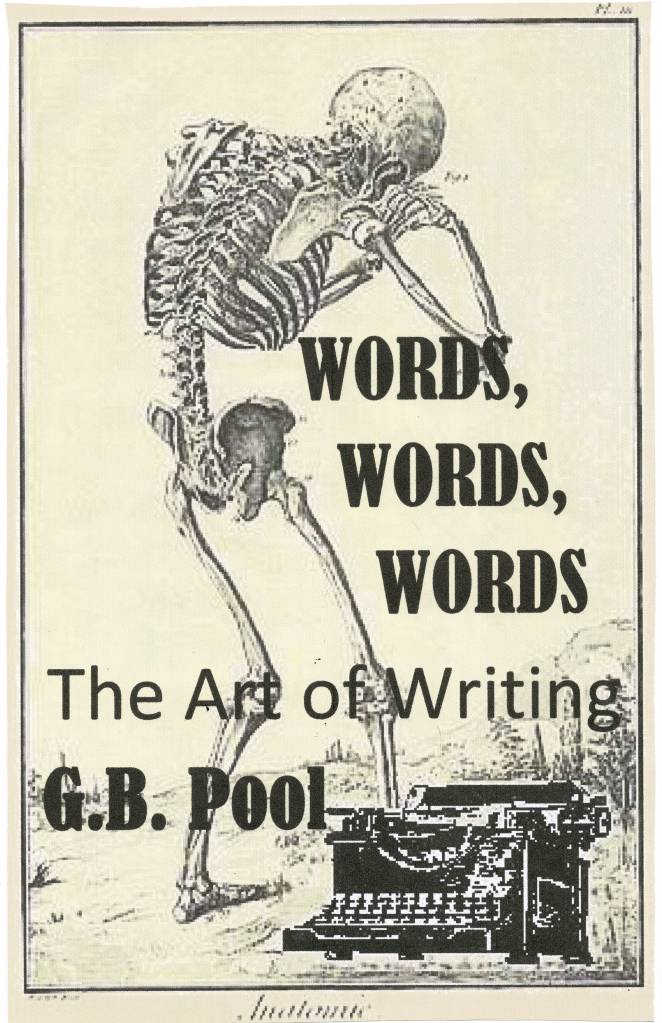
(This article and several others from The Writers-in-Residence blog written by G.B. Pool are in her latest book, Words, Words, Words – The Art of Writing, available on Amazon.)
Share this:


 The Writers in Residence
Gayle, such marvelous comments. You have covered all that needs saying about your subject. Certainly, you have given it so much thought and sharing your conclusions with us and your book readers is a gift for the ages. A touch Orwellian, indeed.
LikeLiked by 3 people
Thanks for the kind words. We do learn from each other in this writing business.
LikeLiked by 1 person
A writing teacher always, you have shown us how to make our stories “Evergreen.” We all think we need to add current events or thoughts into our stories (and sometimes that may be true, depending…) but by elemining those time-placing details while enriching our writing by character and plot and theme, we can assure readers that what we write today can be relevant today. And tomorrow. Thanks for the ensight, Gayle.
LikeLiked by 3 people
Thanks, Jaxon. I still want to put in current references so people know the era, but I try to keep them understandable. It gives we writers new things to think about.
LikeLike
I wrote some time travel romances long ago when I was starting out as a writer and really enjoyed doing it. These days, I tend to write, and read, only contemporaries–although I can’t say that I completely understand all the time what younger writers are trying to tell us. Very thought-provoking post, Gayle. Thanks for getting our minds rolling around time!
LikeLiked by 2 people
Linda, There are current movies that I don’t understand on many levels. I wonder what future viewers will think of them. Gone with the Wind is still understandable…but maybe not for those who never heard of the Civil War. Education needs to be better.
LikeLike
What a wonderful and thought provoking post, Gayle! I’m going to read again tomorrow because there are several aspects of writing that grabbed me! As a smart Alec aside, I’m mentally writing for myself…not for anyone in the future reading. I think most of my books have been sent to library of congress…but who’ll be able to read them down the road???, ha, ha!.
I think the balance between references to events that tie a novel to a time period, and making your story timeless is a difficult writing balance, and for me, not that easy.
Thanks for such a thought provoking post…
LikeLiked by 3 people
At least we can try to educate future readers, Mad. Maybe they will get a clue or two that other things happened in the world before TicToc entered their lives. And I write for myself just like you do. At least I know one person will enjoy my work and I am leaving it for the ages if people know how to read in that Brave New World.
LikeLike
Miko here. Part of it may be timing – it can take decades to go through cycles, so the recent past tends to feel dated while the more distant past is history. As a writer of historical fiction as well as a student of history (still learning), I notice so many parallels with the past and the present. Perhaps it was always so, which makes such themes universal. As for keeping stories evergreen, those that present realistic characters in real situations that readers can relate to will always find an audience. Otherwise we wouldn’t still be reading the classics.
LikeLiked by 2 people
You have a point there. Maybe writing stories in the past will make them more relevant to people now and in the future. After all, the book 1984 was written in 1948, and it sounds like it was written yesterday in this century. Mildly terrifying, but it works.
LikeLike
Gayle – as the others said – thought-provoking indeed! I find there’s a difference between dropping in a few words of explanation about a situation, or a time in history – and feeling obligated to explaining fully what’s happening in the world at that time. When I read the wonderful old mysteries written decades ago, I enjoy the references to a certain time. They take me right to that time. My favorite sort of time-travel. But if I felt obligated to provide a lot of explanation, I think that I shouldn’t be writing that book. I, too, write for myself. If I don’t enjoy it, then why would anyone else? So… write what you love!
LikeLiked by 2 people
You are so right, Rosie. I want to put just enough in a book to make the era I’m writing about seem clear. I will do it more for background and not just because I know the era I’m writing about, and maybe readers in the future will understand. Here’s hoping.
LikeLike
Gayle, another wonderfully helpful post. I had written a far lengthier reply but it failed to appear here, and in this 91-degree heat I lack the energy to repeat it! Many thanks.
LikeLiked by 2 people
Thanks, Jill. Stay cool.
LikeLike
This gets me thinking about my own writing, where I frequently reference social media platforms like Facebook and Instagram. Will they even exist in coming years? My identifying them as social media, which I guess will continue to exist, may help to keep my stories evergreen—or so I hope! Speaking of “evergreen,” how long will that term be understandable? Thanks for another thought-provoking post, Gayle.
LikeLiked by 2 people
I’m pretty sure folks in their eighties only know the term “evergreen” as a generic description. Young folks probably have their own interpretation. As you say, how will people in the future respond to the term. There has to be a basic understanding of words and writers will have to try to keep their work clear enough for all generations.
LikeLike
Miko again. We live in an age of rapid change and almost infinite information streams about those changes. In the past, if you invented something it would remain the standard for decades, even centuries. Now technology and equipment (as well as “some” ideas) become obsolete before their release and – I’m thinking of my beautiful baby Mac Book Air – orphaned in their prime.
LikeLiked by 2 people
A really great post Gayle and something definitely to think about. I think that’s what puts me off writing a historical i.e. for me, anything before I was born! It’s the research and it has to sound authentic to immerse us into the time period. I recently read Hilary Mantel’s Wolf Hall and I felt as if I WAS in Tudor England. Ditto The Diaries of Samuel Pepys but whereas Mantel’s was inspired by facts, Pepys was living the facts. Striking the balance between and info dump and revealing the time/geography/culture of the piece, is a challenge. Super helpful post!
LikeLiked by 1 person
Nothing wrong with letting people in the future know what the world was like in this part of this century even though they might not understand about every old TV show or slang expression. But writers decades ago managed to do it by just giving us a snapshot of the era without piling on too much extra stuff.
LikeLike