
I grew up in New York City, where outdoor wildlife was limited, particularly in winter. Pigeons, sparrows and the occasional squirrel coexisted with alley cats and leashed dogs until the robins and blue jays returned in spring.
The reverse was true in Los Angeles, where many bird species wintered in my backyard, at the foothills of the Verdugo Mountains. Some birds left by March, but not all. Red tailed hawks circled the hills, crows commandeered the scrub oaks, blue jays screeched from fences, and the largest hummingbirds I’d ever seen buzzed from yard to yard in search of nectar.
Other critters visited our neighborhood. The ever-present lizards scrambled across walkways and along fences, or lazed in the sun, doing push-ups to attract a mate. Squirrels, chipmunks, and skunks vied with deer for their share of fruit from garden trees. Less welcome were rattlesnakes, coyotes, bobcats, and the occasional mountain lion or bear.
I now live on an island in Washington, by an inland sound teeming with wildlife. Cormorants love to perch on the buoys, their wings outstretched to dry. Herons stand patiently on the beach at low tide, searching for fish. The sight of the birds hunched on tree branches reminds me of Gru from “Despicable Me”, and when they fly their prehistoric ancestry is evident. Seagulls and crows use our driveway to crack open mussels and cockleshells. As fall winds down, white-crown sparrows, golden nuthatches, robins and finches go into a feeding frenzy, devouring every blackberry left on the vines and then, as a last resort, the tiny red berries of our hawthorn tree. (Yuck. They taste like petroleum jelly.) In winter, when daytime tides are high, packs of mallards and scoters peacefully cohabit in the calm water near the shore.
I’ve watched deer eat the fallen apples from our trees and had the rare privilege of seeing a stark white fawn. I’ve observed families of river otters sprinting along the beach, and seals hunting in the eelgrass a hundred yards away. Rabbits nibble on our lawn (and tomatoes). In spring, when our hawthorn tree erupts in white flowers, it attracts so many bees it hums louder than a generator.
Several bald eagles nest in nearby trees. One of my great pleasures is watching them soar effortlessly across the sky, circling overhead and diving into the water as they hunt, hearing their distinctive twitter. It takes a few years for the birds to grow into their good looks. Eaglets, with their mottled feathers and ungraceful stance, remind me of awkward teenagers with acne. That was reinforced when I saw one youngster standing on the beach in front of my house, his parents observing from farther away. Crows began to pester him and he finally flew to his parent’s side as if to say, ‘Mom, they won’t leave me alone!’ Later, mom caught a fish and dropped it back in the water for Junior. He went for it, but couldn’t lift it out, so he extended his wings and swam back to shore. I once observed two cormorants fighting over a fish too large for either to swallow whole, when an eagle swooped down and stole it from their mouths. Priceless.
Don’t you agree that animals give an instant sense of place, time and mood? It’s a great technique for setting a scene, which can go beyond the visual:
By midnight, fog had rolled in from the coast, blurring visibility outside and misting the windshields of cars parked on the street. Around three a.m., a howling pack of coyotes in the foothills set off a chain reaction of yelps and barking from a chorus of neighborhood dogs, gradually settling down to a few whimpers as a dark car cruised slowly past the houses on Stargazer Circle.
Animals also make great similes: slippery as an eel, gentle as a lamb. And metaphors: black sheep, lone wolf. In my short story, “By Anonymous”, animals symbolize the disparity between my protagonist and his wealthy client. She lives in a luxury gated and guarded SoCal enclave carved out of coyote wilderness. He, an auto body mechanic working in a downscale industrial zone a few miles away, observes:
Here the gates are chain link topped with barbwire; the guards have four legs and the coyotes, two.
Birds make instant scene setters because they’re both universal and unique to their place – penguins and Polar regions, macaws and rainforests. I used avian references to show a different time and mood in one novel. The first time my protagonist walks through the forest, she hears songbirds and calls it, “God’s music”. Later, after a horrific incident, she’s back in the forest, but she experiences it differently:
Shrill cries pierced the sky and she jumped, sending her ball of laundry tumbling out of her hands. A hawk circled above the treetops, hunting for prey.
She maintains her fear of the forest for years. As an adult, she once again steps back into the woods and finds it peaceful:
Her feet sank into the mulch as she treaded deeper into the forest, her senses alert to danger. Birds rooting for food rustled the dead leaves, intruding on the silence. She caught movement out of the corner of her eye; turning, she watched a hare scoot away.
It’s no exaggeration to say animals are all around us. Many of us enjoy their companionship. Historically we’ve depended on them for food and labor. They provide adventure and entertainment, whether it’s hiking in the woods or going on safari. For some that means hunting, though I prefer to shoot them with cameras instead of guns.
When animals appear on the page, we see them as recognizable characters whether they’re there to comfort, amuse, or terrify us. Without their presence, the real world would be diminished. So would the worlds created on the page.

 “A solid, ginger mutt glanced up from his position on the couch, but he didn’t move his eighty pounds to greet me. I’d rescued Chauncey from a local shelter three months ago. Rescued animals usually brought baggage with them, but Chauncey had an entire set of luggage.”
 ng in his appointed chair, but his absolute favorite activity is eating, which caused one trainer to nickname him Bear.
 I haven’t met a dog I didn’t like, even the guard dog

 The first home our visiting short term missions team stayed at had Simba and Samson – father and son Great Dane/Rhodesian Ridgeback mix dogs. Their shoulders are at hip joint level. Their massive heads taller. Their shining fur, black as night.
 Their young children – fans of the Lord of the Rings series – named them Samwise and Frodo. They are only eleven months old and have some puppy ways, but let a horn sound at the gate and they are transformed into something like the Hound of the Baskervilles.
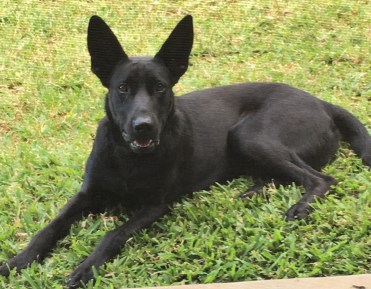 But as you rise and move toward him, a flimsy screen the only barrier separating you, and your eyes meet… he stands and growls deep in his throat and lifts a lip to show long canine teeth. His stiff-legged stance and erect tail warn of horrors to come should you venture closer.
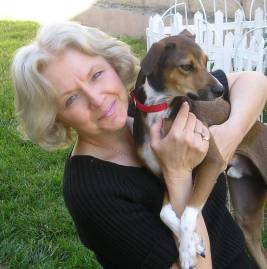 As for me, since I have always had a pet in my house, as a kid and as an adult, I never thought it odd to put a cat or dog in a story. My Ginger Caulfield private detective character has two dogs, Sherlock and Foxtrot. In reality, my husband and I got our two Italian Greyhounds, coincidentally named Sherlock and Foxtrot, from the Los Angeles pound. The two canines don’t solve mysteries in Gin Caulfield novels… yet. Though you never know. But I will tell you one thing… no dead dogs will EVER turn up in my stories.
 The three books in my Christmas series are full of animals even though Santa doesn’t consider them pets. After all, Bearnard, the Polar bear from Bearnard’s Christmas, works in the castle and even helps solve a mystery in the third book, Every Castle Needs a Dragon, coming out at Thanksgiving. Even the dragon, Orville by name, plays a rather large part in the story. (He reads as well as talks!)


 My spy novels reference Sukoshi, the Beagle I had as a kid and up until I was working as a private detective at the age of 21. She is mentioned because the books are loosely based on my dad’s career in the Air Force and Sukoshi went to France with us when my father was stationed there. When we were visiting West Berlin, she had a very long leash that allowed her to wander under the barricade into the no-man’s land that separated West and East Berlin, so she actually got closer to the commie-side than I did.
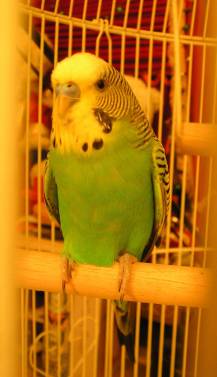 It really wasn’t a coincidence on my part to make these comparisons because, you see, I dedicated the book to Freddy J. Feathers, our beloved parakeet who recently passed away. I found Fred wandering in the backyard about six years ago and he got a “second chance” with us. That fact fit perfectly with this particular book. And the short piece at the end of the book ties my love of pets up with a big ribbon. (You’ll have to read that part for yourself.)

 The Writers in Residence
You must be logged in to post a comment.