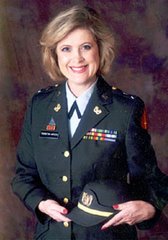
Interview with Short Story Guru Kate Thornton

With stories in three of SINC/LA’s anthologies and numerous books and magazines, retired US Army officer and federal agent Kate Thornton has been writing for publication for over ten years. She teaches workshops on writing short stories and enjoys writing both mysteries and science fiction. She lives in a marvelous mid-century modern house with her husband of 30 years and their pets.

Welcome Kate!

With more than a hundred short stories in print, you are the queen. Why do you think you are so successful?

I just keep on writing – then submitting – then writing more. There are many more writers with many more stories in print than I, but there is only one way to get your stuff out there. It’s persistence that makes your writing better and allows you to get your work published.

You teach a fabulous short story class. Which question are you most often asked and what is your answer?

Everyone always wants to know how to turn their idea into a story. If you break it down to a beginning, middle and some sort of satisfying ending, then you’ve got a story.

The first thing a writer should do is check the guidelines, but when you market your mysteries and science fiction, do you find that mainstream sites, if they don’t specifically state a preference, are receptive to genre fiction?

Yes – all good stories, regardless of genre, are about some aspect of the human condition. If your story appeals to that common thread, is well-written, and provides a satisfying experience, then genre fiction transcends its label.

How long should a writer wait for a response before she submits to another market?

If response times are not specified, I usually find out what the average is for that particular market, give them an extra couple of weeks, and then query. Sometimes, they never received the submission or lost it.

You’re going on your second mystery cruise next year. Can you tell us what that‘s like and what the cruise expects from you as an author?

Well, the first one wasn’t specifically a mystery cruise, but mystery author Sue Ann Jaffarian was aboard and gave a bang up presentation in which I participated. This year’s cruise, Mystery on the High Seas, is going to be quite a production. I believe I am going to speak on one of several formal panels, and the cruise is chock full of authors, agents, producers, editors and fans. Here’s the site: http://www.2010mysterycruise.blogspot.com/

Tell us about the book you have coming out in November!

I am working hard, although I’m not sure I’m going to make my self-imposed deadline on this one. It’s The Inhuman Condition: Tales of Mystery and Imagination and is a collection of twenty of my favorite stories.
Thank you!

Visit Kate’s blog It Doesn’t Take a Genius for great articles and short fiction that will entertain and move you.

Let it Rest

Let it rest.

We hear it again and again as writers–“Let it rest”–and each time we “let it rest” we wonder, right at the moment of completion, when we’re awed by our own brilliance, if maybe, just this once, just this one time, this particular piece of writing shouldn’t be on display for the world to see as soon as possible.

Hmmm. A little breathing room might have saved that first paragraph.

Last night, the hubby had to work through the night. Unable to sleep, I decided to take advantage of the extra time and write. Isn’t everybody in the perfect frame of mind to pen a blog at 3 AM?

Once I finished my masterpiece, that tiny voice said, “Let it rest.” Although positive my piece was ready for the send button, I took my own advice and walked away.

Things look much different at 8 AM. Last night, I was rehearsing my acceptance speech for the Nobel Prize in Literature. This morning, I saw a mess.
Are there warning signs that you should walk away and air out your writing before subjecting other people to reading it?

1. You think you’ve been extremely clever.
2. The subject matter rouses strong emotions.
3. Your sides still hurt from laughing over your own jokes.
4. You were in a hurry.

I had titled my wandering, blathering blog “Stick to the Point”.

My subconscious was having a laugh.

Interview with WinR Bonnie Schroeder

We are very excited to introduce you to WinR Bonnie Schroeder. An author of women’s fiction and short stories, Bonnie can effortlessly move her readers from tears to spine-tingling chills. She can also make you laugh while you squirm, recognizing yourself in her characters. You can read a sample of her fiction on The Rose City Sisters blog by clicking here.

Bonnie, you are one of the most positive people I know. Good fiction includes tension, but it surprises me how well you are able to show pain and anger and frustration in your characters. How do you access these “darker” places without bringing yourself down?

Therapy, and years of practice! Seriously, it’s kind of cathartic for me, to let all that dark stuff out, transfer my own bad feelings and experiences onto the page and give them to someone else. I learned in writing classes that you have to “let your characters get dirty.” And after dragging my protagonist through the mud, I can look at my own life and think, “Heck, it’s not so bad.” And when all else fails, I hug my sweet Elvie cat; it is impossible to feel down when a cat is purring in your ear.

I’ve heard speakers dismiss writing groups as a waste of time. You belong to several as well as a book club. What would you say are the benefits offered by both types of groups?

Each has its own advantages. From my writing groups I get support, encouragement and specific suggestions on how to improve my craft. Seeing my fellow writers struggle with language, plot, characterization, internal logic, etc., is priceless reassurance that I’m not alone on this weird journey.

And I’m very blessed to have found some amazing, insightful, sensitive writers whose work I admire and who have mastered the art of the critique: first tell the writer what worked, so he or she doesn’t want to give up and knows what strengths to build on. Then move on to what didn’t work, without rewriting the story from the ground up.

There are not that many writing groups around who can pull this off. But don’t give up until you find one, or build one yourself. Trust me: it’s worth the struggle.

My book club also contains several writers – fortunately none are in direct competition! The club introduces me to work by writers I might otherwise have overlooked and suggests new directions for my own fiction. The members are all intelligent, perceptive people with strong and specific opinions on the books we read. Their comments and reactions give me a ton of insight into what appeals to readers, and what turns them off.

You read a wide range of subjects. Can you tell us what your favorite type of fiction is?

I have a lot of faves. I like well done suspense thrillers like Michael Connelly’s Harry Bosch series, and then again I’m a sucker for anything by Alice Hoffman or Anne Tyler, those sweetly incisive, literary, relationship-type novels.

I also enjoy well-written fiction that involves animals, such as Spencer Quinn’s “Chet and Bernie” mystery series, or The Art of Racing in the Rain – a two-hankie novel if ever there was one!!!

I’m a huge fan of Stieg Larsson’s Millennium Trilogy (The Girl with the Dragon Tattoo, etc.) with all its violence and gore. I know, go figure. . .

Actually, my favorite book is one that doesn’t cheat the reader, that delivers on its initial promise. I can tolerate a few technical errors if the book meets that mark.

I know how to plot a murder mystery, but how do you plot a literary novel or women’s fiction? Do you start with a character? An inciting incident? A character goal?

It’s weird, because they come to me in different ways. Sometimes it’s a “situation”: for example in my novel Remember to Breathe, it started out as an idea involving a woman whose husband had left her for another man. What if. . . . what if she learned he was dying? How would she feel? What would she do? What kind of woman would she be? And the story evolved from that.

My latest project is mostly character-driven. I started by seeing the two main characters and am in the process of following them around and trying to figure out who they are and what they want. I know the beginning and the very end, but everything in between is still a mystery to me.

Can you tell us anything about your current project?

I’m kind of superstitious in that I think telling the story dissipates its energy. . . and other such whoo-whoo beliefs. But it’s (I hope) a literary/commercial novel about a woman who marries an artist. Starts in 1966 and ends in 2000-something. Famous artists romp through the pages, along with pot-smoking hippies, corporate pirates, and a folksinger/rock star. All of which is subject to change, of course.

My main challenge is that I was actually married to an artist in the swinging 60’s, and although the story is purely the product of my imagination, I worry people will think, “Oh, that’s all about her and John.” Take my word for it: it’s not. If only my life had been that interesting!

My Tried (and sometimes True) Interview Techniques

Last time, I wrote about where I got my ideas for the articles and profiles I write. I started out by getting the assignments from my editor.

Then I began seeing possibilities for my own stories everywhere i.e. in Starbucks, at bookstores, or on the street. I followed up on referrals from friends and information I found in newspapers, newsletters, or around my neighborhood. I let my curiosity lead me to hobbyists, collectors, and folks with unusual occupations.

So many people: so many interesting stories! Next I needed to to pick their brains, pry out their deepest secrets, find out how and why they do what they do! I had to interview them.

There are three main steps (or methods to my madness) in how I interview folks.

Before the interview

I first decide why I want to interview the person, what I hope to learn, what kind of story I want to write. (A lot of this will depend on where I hope to place or sell the story.) Will it be informative, inspiring, promotional, or…simply someone I personally want to know more about. (Having my own News & Reviews website, helps with that last one.)

I contact the person (on the spot or by phone) and set up a time and date. I let them know who I am, who I write for, and the general topic I want to cover.

Then I do a little research on the person or their specialty, occupation or craft. From my “research” I make a list of questions I want to ask.

I make sure I have a notebook, pens, MY CAMERA, and a tape recorder if it’s going to be a fact-heavy interview. (Fresh or recharged batteries are a given, of course)

During the Interview

I try to establish a conversational mood by commenting or complimenting (depending on where we meet) on our surroundings. I thank them for letting me interview them, tell them what I hope to write about, and get a bit of basic info from them (correct spelling of name, title if any, etc.)

Then I pick up my notebook and pen, turn on the recorder if using it, and dig right in with the first (and easiest) questions. I never stick strictly to my written questions. If something more interesting (or tantalizing) comes up in their answers, I will follow it like a vein of silver in a Colorado mine. And – confession-time here – sometimes I will ask a question I have no intention of using in my story, just because I want to know.

I mostly listen and add questions as promptings to keep them talking. I smile and encourage them with nods or soft, sympathetic sounds. I haven’t mastered the “silence strategy” yet, but I’m told that if you can simply remain silent, your subject will begin to fill it with more info. It’s usually too uncomfortable for me to do that.

I take “off the record” seriously and will never write something I’m asked not to. That doesn’t mean I don’t want to hear it, however. Secret confessions sometimes help me to understand where the person is coming from. I’ll take notes, and I might use the revelation to shade or slant the story, but not even that, if it is too sensitive.

If I get behind on my note taking, I ask them to repeat, slow down, or clarify what they said, especially if I plan to quote it in the story. (Quotes must be 100% accurate!) If they are showing me objects they’ve collected or made, I will ask if I can photograph them. Always at the end of the interview I will get several shots of them with something meaningful to the story. (Projects, pets, creations, gardens, workplace, etc.)

When the interview is winding down, I quickly look over my questions to see if I got everything I need, then I’ll ask if they want to tell me anything I didn’t ask about. (Great stuff sometimes comes out this way.)

I thank them, give them my card with contact info, and offer to send them a hard copy of the finished story (or the link, if it appears in an online magazine).

After the Interview

I review my notes (it’s easier to decipher my scribbling if I do this right away), underlining key words and looking for a really cool approach to the story. I also try to come up with a good strong opening statement – whether it’s dramatic, provocative, humorous, or teasing. What I want is something that will suck in the reader. Wait, that’s called a “hook” right?

I also look for facts that I might need clarified or explained. If I find any, I’ll do a brief call-back by phone.

And, the rule is to never show the interviewee the piece before it is published. But on occasion, under special circumstances, I have been known to do that.

(I’m such a softie!)

Next time: How I Edit or “Weight-watching for Writers”

Interview with Pamela Samuels-Young

There is a very exciting workshop coming up in July! In conjunction with Sisters in Crime Los Angeles, author/attorney Pamela Samuels-Young will present a “The Business of Books: Everything You Need to Know About Self-Publishing…And Then Some.”

The details follow, and we’ve also re-posted our interview with Pamela so you can get reacquainted with this fabulous writer!

Date:July 17, 2010

Time: 10 a.m. – 2 p.m.

Place: Hill Avenue Grace Lutheran Church, 73 N. Hill Avenue, Pasadena.

Author of the edge-of-your-seat Vernetta Henderson series, Ms. Samuels-Young will focus on the economics of self-publishing and distribution channels as well as promotional opportunities for the self-published author. Most writers do a lousy job of promoting their books. So whether you’re self-published or with a major publisher, this workshop will show you unique and cost-efficient ways to get your book in the hands of readers.

There will be time for lunch between the two sessions. Either bring your own lunch, or there are a few fast food places in the area. There is a refrigerator on the premises.
Cost for the workshop will be $25 for SinC members, $35 for non-members. (This might be the time to join SinC.) Checks may be sent to: SinC/LA, 1107 Fair Oaks. Ave., PMB 338, South Pasadena, CA 91030. NOTE: This workshop will fill up fast, so sign up early.
Workshops can also be paid through PayPal (if you have set up an account) by:
Going to the PayPal website: http://www.paypal.com
Clicking on: Send Money
Typing in recipient: sistersincrimela@gmail.com
Putting in dollar amount
Adding a note explaining what the payment is for; i.e. The Business of Books, July 17th
All questions should be directed to: lillianpritchard@earthlink.net

And now, for our interview with Pamela!

We are happy to have with us today author Pamela Samuels-Young, author of the Vernetta Henderson legal thrillers and a new stand-alone, Buying Time. Pamela is also an accomplished motivational speaker and corporate attorney. Welcome, Pamela! 

In Murder on the Down Low, the victims are all successful African-American men who claim to be straight, but have sex with men. Your latest book, Buying Time, involves buying the life insurance policies of terminally ill patients for profit. Where do you get such unusual and interesting ideas?

I find ideas everywhere. The Oprah show gets credit for Murder on the Down Low. I can still remember the day I watched in stunned silence as Oprah interviewed JL King, the author of On the Down Low. He boldly professed to sleeping with men, but at the same time, claimed that he was heterosexual. His shocking revelations about the secret world of men on the “down low” really shook me up. The very next day while I was driving to work, the plot for Murder on the Down Low came to me: What if attractive, successful African-African men were being gunned down on the streets of L.A. and no one knew why?
The idea for Buying Time came to me while chatting with a friend at a party. I knew he was in the insurance business, but when he explained that he was a viatical broker, I started asking lots of questions because I’d never heard of the viatical industry. When he finished explaining how he brokers the insurance policies of terminally ill patients, I knew there was a thriller in there someone. On the ride home, I thought to myself: What if a disbarred lawyer stumbles into the viatical business and his clients start dying before their time and he becomes the prime murder suspect?

I’m always on the lookout for interesting stories. My background as a television news writer helps me spot a unique and compelling story when I hear one. I don’t ever foresee having a problem coming up with interesting story ideas.

You have such strong female characters in your books. They are also complex—the level-headed female cop, the fiercely loyal friend who is ruled by her emotions, and the brilliant but insecure attorney. Are these characters a compilation of people you’ve met? And did you intentionally set out to make them so diverse?

While I outline my novels before I begin writing, I don’t have all the elements of the characters nailed down at the beginning. I spend a lot time on plot and very little on the specific personality traits of my characters. When I start writing, I simply let the characters develop. It’s a lot of fun to see where they go. I’m rarely thinking of specific people when I write. I do, however, set out to create a diverse cast of characters in terms of race, sex and class. I definitely like having strong female characters.
Murder on the Down Low deals with “straight” men having sex with men. Did you encounter any resistance or criticism from readers? And are you nervous about tackling controversial subjects?
I did receive an angry email from someone who accused me of “promoting homosexuality” in Murder on the Down Low. Someone else let me know that they did not plan to read the book (even though they enjoyed my other books) because it dealt with gay men. But that did not faze me one bit. I learned a great deal about HIV and AIDS while researching the book and I made a point of passing on what I learned to readers. For instance, before writing the book, I had no idea of the high HIV infection rates among African-American and Latina women. We are only 24% of the female population in the U.S., but more than 80% of new HIV diagnoses among women. There’s a clear message in the book that women must take responsibility for their own bodies. Murder on the Down Low is entertaining people, but educating them too.

New York Times bestselling author, Sheldon Siegel, refers to your “deft plotting” in Buying Time. I know from reading Murder on the Down Low that your books are impossible to put down. Do you have any advice for authors on how to keep the reader turning the page?
Before I became a published author, I spent lot of time studying the structure of books that I thought were page turners. Two of the earlier books that I literally took apart were The Firm by John Grisham and Roses are Red by James Patterson. I actually studied the dialogue, the action, the description, the length of the chapters, how the authors opened and closed each chapter. I asked myself: Why did I race through these books at lightning speed? After structurally dissecting several books, I came up with four techniques that I apply to each of my novels: 1) begin the book with something explosive that will immediately grab readers’ attention and pull them into the story; 2) hook readers at the end of the every chapter so that they are dying to know what happens next; 3) keep the chapters short, which makes readers feel as if they’re moving through the book at a faster pace than they really are; and 4) read the finished manuscript into a tape recorder and listen to the story as if it were a book on tape (editing while listening). It’s amazing the kinds of writing flaws that you can “hear” but not “see”. These techniques have helped me create novels that I’m proud to say are consistently described as page turners.
What made a successful and busy attorney step into the role of author?
Frankly, I got tired of never seeing women or African-Americans depicted as attorneys in the legal thrillers I read. I would close the books feeling satisfied with the story, but disappointed about the lack of diversity of the characters. One day, I decided that I would write the kind of characters that I wanted to see. In the process, I discovered my passion. At the time, I was an associate at O’Melveny & Myers, a large corporate law firm. Despite the demands of my law practice, I somehow managed to get up at four in the morning to squeeze in a couple of hours of writing before work. I wrote all weekend, in hotels, in airports, whenever and wherever I could find the time. I never really had a true passion until I discovered mystery writing. I’m currently practicing law as an in-house employment attorney for Toyota, yet I’ve still managed to publish a book a year for the last four years. Nothing short of passion made that possible.
There are plenty of sites that dispute the crime solving methods that investigators use on television and in books. Are there any attorney practices in fiction today that make you roll your eyes?
I will sometimes read something in a novel that is procedurally incorrect. I do roll my eyes and wonder why they didn’t do the research. But then again, mistakes are easy to make when you don’t write what you know. So if I’m off track with some of the non-law aspects of my novels, please forgive me!
Buying Time is your fourth book and your first stand-alone novel. When you parted ways with your publisher, you chose to self-publish a couple of your books in order to keep your name and books in the public eye. How has this worked for you? And would you recommend the experience to other authors?
I would definitely recommend self-publishing. Initially, I did not want to be self-published and resisted it every step of the way. But it has turned out to be a great experience for me. I felt very strongly that Murder on the Down Low was an entertaining book that readers would enjoy. After my previous publisher rejected it and my agent was unable to sell it to another publisher, I had three options: 1) put it on the shelf; 2) continue to try to sell it; or 3) publish it myself.
After developing a fan base with my first two books, I was really concerned about staying out of the market with a new book while I hoped and prayed that Murder on the Down Low was picked up. Victoria Christopher Murray, a very successful (financially successful!) Christian fiction writer, told me that publishing a book a year was one of the keys to her success. I definitely wanted to do the same. I felt that if I stayed out of the market, I would lose the momentum created by my first two books.
After a great deal of prodding from my husband, it finally dawned on me that if I really wanted to be a writer, I would have to take charge of my own career. I thoroughly researched the various publishing options and decided to create my own publishing company and find my own printer rather than go with a print-on-demand company. The distribution deal that I signed with the Independent Publishers Group (“IPG”) was definitely a Godsend. IPG got Murder on the Down Low on store shelves nationwide and even sold book club rights. As a result, both Murder on the Down Low and Buying Time are published in both hard cover and trade paperback.
I self-published Buying Time without giving my agent a chance to sell it because I knew that even if he got me a deal, it would be more than a year before the book made it to store shelves. Wherever I go, people are always asking me when the next book will be out, so I felt it would be a mistake to sit on the sidelines and wait for a book deal.
If a publisher decides to pick up one of my self-published books, great. If not, I’ll keep writing and publishing them myself. I’m about to enter my third printing of Murder on the Down Low and have made back my investment. In fact, Murder on the Down Low made more money than my first two book advances combined. So for me, that’s success.
Booksellers have their own ideas about how to categorize books. Have you ever had a problem with a bookstore wanting to place your mysteries solely in the African-American Fiction section? Where is your preference?
I’ve gone back and forth on this issue. Borders has my books in the African-American section. Barnes & Noble has me shelved in the general fiction section. Since I don’t have name recognition, I don’t mind having my books in the African-American section because they have a special appeal to African-American readers. But store placement isn’t a major concern for me. Most people don’t buy books solely by browsing bookstore shelves. There are so many other ways to reach readers. (Thank God for the Internet!) After the release of my first book, a bookstore owner in Atlanta told me that if I focus on my core audience, “crossing over” would happen in due course. I truly believe that. Once I nail down my core audience, I know my fan base will broaden. Mystery readers don’t care what color your characters are. They just want an engaging story, and that’s what I strive to write.
You are also a motivational speaker, and your topics range from the practical (how to self-publish) and the motivational (finishing your book despite your day job) to the spiritual (using faith to pick yourself up). If you had to pick one piece of advice that would most help our readers, what would it be?
Don’t let anyone deter you from pursuing your dream. Most successful authors experienced years of rejection. John Grisham, for instance, received 45 rejection letters and self-published A Time to Kill because people told him no one wanted to read about lawyers. How wrong they were! So if you think you have a marketable book, don’t give up on your dream. My goal is to become a New York Times bestselling author and to eventually write full time. I recognize that few authors ever achieve that level of success. That fact doesn’t stop me from dreaming big. I feel very strongly that there’s a significant market for my legal thrillers and I’m confident that I’ll eventually break out of the pack. Until that happens, I plan to continue publishing a book a year and watching my fan base grow. My best quality is my ability to get back up after a fall. The publishing industry may knock me down, but I’ll keep getting back up again and again and again.
As a follow up to the previous question, how would a group go about booking you as a speaker?
I love meeting new people and I enjoy public speaking and encouraging others to pursue their passion. (Take a look at my packed tour schedule!) To schedule me for a book club meeting or speaking engagement, visit my website at http://www.pamelasamuelsyoung.com or email me at author@pamelasamuelsyoung.com. I’ve attended more than 100 book club meetings either in person, via speaker phone or via webcam. My goal for 2010 is to double that number. So all invitations are welcomed!
Finally, could you tell us what you’re working on now? The next Vernetta Henderson mystery? Something completely different?
The legal thriller I’m currently working on is another Vernetta Henderson mystery and will be the fourth book in the series. It’s called Attorney-Client Privilege. Vernetta squares off against an unscrupulous female attorney in an explosive gender discrimination case that could bring down a corporation. The story line involving her best friend Special will make you laugh, cry and root for her until the very end. Assuming I can continue to keep all my balls in the air, Attorney-Client Privilege will be released in November 2010.
Thank you so much for sharing your time with us. Pamela has a website where you can check out her novels her audiobook Writing a Novel Despite Your Day Job, a great tip sheet 101 Essential Resources for Fiction Writers. You can order her latest book Buying Time .

Interview with Kay Mouradian

Kay Mouradian, Ed.D, is an author and educator whose writing, until recently, focused primarily on yoga and meditation. When her mother, a survivor of the 1915 Armenian genocide, predicted, “You’re going to write a book about my life,” Kay began an odyssey into her family’s past. The result was her novel, A Gift in the Sunlight.


You can find out more about Kay and her work at http://www.agiftinthesunlight.com


Welcome, Kay.

A Gift in the Sunlight was inspired by actual events that happened to your mother. How were you able to distance yourself emotionally from that traumatic history and craft a novel out of historical fact?

It was tough at times. I went through a lot of Kleenex and wrote a lot in a meditative state where the scenes would just come to me so I could write them. The driving force for me was a sense of responsibility to history. Some say I was too easy on the Turks in my novel, but that was intentional. I did not want to write something inflammatory or too painful to read. I just wanted to educate people about what really happened.

What sparked your interest in writing this book? You’ve remarked that you used to be uninterested in the story; what changed your attitude?

In the last five years of my mother’s life, she made some remarkable recoveries from death’s door, and her entire attitude and personality transformed. Her life until then had understandably been affected by the Armenian tragedy, and she held much anger and self-pity. However, in a series of miraculous physical recoveries, she also became more loving and appeared to have released her hatred of the Turks. In witnessing these changes in my mother, I became curious about the events that had shaped her life. Of course, she’d often told me stories about her childhood in Turkey, but I’d dismissed them as not relevant to me. However, my interest in my family’s history grew as I started reading about events that happened in the Ottoman Empire during World War I, and this research really opened my eyes.

You manage to avoid stereotypes in the characters of this novel; for example Captain Khourshid, who leads the Turkish soldiers enforcing the deportation order, is shown as a kind and honorable man. How did you manage to create such well-rounded characters?

Many of the characters are based on real people, so that helped. For example, the Captain really existed, and he did break his leg in my family’s village before the war. My mother’s aunt was actually the healer who treated him, but I needed to fictionalize some parts of the real story, to keep number of characters manageable, so she isn’t included. Some of the other characters were based on stories my mother told me.

Miss Webb, the missionary, was also based on a real person (in fact one of the translators I consulted regarding my family’s documents happened to know her.) I wanted readers to know she existed, as she was a very noble human being who made huge sacrifices to help the Armenians.

Your book is full of authentic details about life in that era and environment. Can you tell us a bit about how you went about your research?

There’s a saying: “If you want to know the facts, read the newspaper. If you want to know the truth, read a novel.” I kept that in mind as I became overwhelmed by the amount of material that confronted me.

I went to Turkey four times, and visited the village of Hadjin, where my family’s journey began. I followed their route into Syria, although I had to make two separates trips – you couldn’t just cross the border because of the political situation. I’d heard Hadjin described as a beautiful place, and it was – but also something of a letdown in comparison to some of the other scenery I encountered; it’s fairly isolated, as there aren’t many roads going there. In my family’s day, there were 20,000 to 30,000 people living there, but the number had dwindled to about 5,000 by the time of my visit, and these were mostly Kurds. Many Armenians, of course, didn’t survive the massacre.

I also read a lot of my family’s letters, although they were in Old Arabic and Turkish so I had to find translators.

And I did a lot of reading. I read books by diplomats, missionaries, and journalists. At Bart’s Books in Ojai, I looked at all their histories and memoirs, and if I saw “Constantinople” in the table of contents, I bought the book. At the UCLA Library, I researched Turkey during World War I. I contacted the Library of Congress and ordered ten reels of microfilmed documents written by Henry Morgenthau [who was the U.S. Ambassador to the Ottoman Empire during the First World War and the most prominent American to speak out against the genocide.]

I also contacted the Franklin Delano Roosevelt Library and got copies of Morgenthau’s “letters to his brother” which were essentially his typewritten diaries from that era.

Overall, I spent about three years doing the research.

You faced another set of challenges in getting published. How many times did you submit the novel to agents/publishers? How did you ultimately find your publisher?

My novel was rejected by 60 agents. One told me, “Only Armenians will read it.” I then located a small London publisher who specialized in historical works and emailed him the first chapter. He called me from London and said, “I want it.” It turned out that his family came from the same town as my grandparents.

You’ve written nonfiction books on yoga and meditation, as well as newspaper and magazine articles. What prompted the move into fiction?

I would’ve been too limited if I’d stuck to just the facts. I wanted to tell the whole story, not just pieces I knew to be facts. I wanted to be able to amplify the story, make it more emotional.

Because most of my writing until then had been academic, I had to learn how to write a different way. I enrolled in a class at Pasadena City College on getting published, and it led me into library research where I studied books on how to write a novel and began to understand principles like point of view and character development.

Have you been able to incorporate any of your experiences as an educator into your writing?

Yes, since so much of the studying for my Doctorate was research-oriented. And one of the real skills I learned in the process was determination. My social life, however, has never recovered!

You’ve “taken your show on the road” with presentations at libraries and other venues to explain the background to A Gift in the Sunlight. How has that worked out for you?

I’ve had to do most of my own publicity for the book. I started by phoning libraries and asking about speaking engagements. Persistence paid off at the Pasadena Library, and they asked me to speak to one of their book groups. After I created a Power Point presentation, the head librarian gave me advice on it. One of my tennis partners belonged to a book club, so I had an “in” there.

Some recent exciting developments are that Congressman Adam’s Schiff’s Deputy Director saw my Power Point presentation and requested a copy to Fed Ex to Washington DC. I also sent copies of my book to President Obama and Secretary of State Clinton; when I contacted Congressman Schiff’s office for the mailing addresses, they suggested I also send a copy to Michelle Obama – which of course I did.

Is there anything else you’d like our readers to know about you and/or your work?

My objective is to fulfill my responsibility to history. I have a strong desire to educate and a sense that there’s more for me to do. The Armenian story still feels like it hasn’t released me. Every time I think about releasing myself from it, something comes up to pull me back in. I have to see where it all leads me.

What’s up next in your writing agenda?

No more novels! You have to have a story. With A Gift in the Sunlight, I knew I had a story, and a structural understanding of how novels are written, but that’s it for me. I want to work on my yoga stuff, to rewrite my original book Reflective Meditation. It’s hard to find the time to do it all.

Hobbies, Passions, and Writing

by G.B. Pool

Writing may be your obsession, but you might also have a hobby or passion that sometimes helps you over those dry times when a story isn’t quite gelling and you need to leave the keyboard.

Some “crafty” writers use their hobbies, like quilting, cooking, or bookbinding, as a launching pad for their writing. I set up a mystery panel once called “Murder on the Menu” which featured authors who write stories around cooking. Joan Del Monte (Death Has a Yellow Thumb) mentioned that for some reason, mystery writers eat a lot in their books, so writing about food is a natural. Check it out.
Dick Francis gave his heroes a hobby or profession that always played a part in the story. And frankly, it’s fun for readers to learn something new about a topic they know little about. It’s the cherry on top of the sundae.
So if you have a hobby or an interesting job, why not incorporate it into your story? You are probably an expert on the subject, and you sure know the terminology, so why not share that knowledge with the reader?
Years ago I worked for a miniature shop. We sold dollhouses, tiny furniture, and precious little knick-knacks. I made many of the things for the store. We also had a Christmas shop in the back with hundreds of ornaments, Santas, and holiday decorations. I became obsessed. I have over 3500 Santas.
As a writer, I thought of a story that would include a Santa Castle, a talking Polar bear, and of course, Santa Claus. I designed a castle on paper and eventually wrote the story. Years later, I built the castle, furnished the rooms and crafted the Polar bear and even Santa. The story hasn’t been published as yet, but the creative work is done.
I was on a jury many years ago. It wasn’t a terribly exciting case, but my imagination came up with a much better story about a former private detective who ended up on a killer jury. I used to be a P.I. myself, so it wasn’t much of a stretch to write about my heroine’s background. The book is published, Media Justice. You can even get it on Kindle.

Your hobbies and life experiences can find great places to grow in your books. At least they are a starting point for ideas. After going with my husband to the horseraces at Santa Anita Racetrack, I wrote my second Gin Caulfield novel. And remember, if you have a hobby, an interesting job, or have been to a cool place, you have firsthand knowledge. That ring of truth will add to the reality of your story and you have already done the research.

Interview with Law of Attraction Coach Jen Connon Part II

Jennifer Connon is a Certified Law of Attraction Coach/Practitioner. She has studied Law of Attraction, Quantum Physics, New Thought, Science of Mind and Metaphysics passionately for the past few years. Jennifer enjoys teaching and coaching others on this important law of the universe.
Jennifer can be contacted via email at jenconnon@comcast.net or phone at 630-346-6650.

Continued from yesterday….

You say that we should focus on the positive. That’s very difficult when we are assaulted on all sides by propaganda, negative images and sales pitches that feed off fear.

First thing I would say is stop watching the news – as much anyway. I don’t watch it at all. I scan the newspaper enough to stay informed of the world affairs and then read the articles that are positive and uplifting (sometimes I even cut them out). Some people say that you should watch all of the devastation and suffering going on in the world. I say that you can be aware of it but you don’t need to wallow in it. The more time you spend focused on suffering the more you are adding suffering to your vibration. And not just adding it to your own vibration, but the whole world. Oh we could go on and on here with Quantum Physics and how everything is connected and the studies that have been done about how when monks meditated in war zones the fighting actually ceased for the time they were meditating, etc. But I am digressing from your original question…

You can’t ward anything off. As soon as you try to resist something it gets bigger. Whatever you resist persists. I don’t remember the exact quote but consider what Mother Theresa said about war. “I won’t go to a march against war, but if you have a march for peace I’ll be there.” Don’t push against. Replace with a positive thought. You always have the choice to change your focus. It takes a little practice, but fortunately with the way LOA works, the more you do it the easier it is.

Conversely the more you look at negative media hype, the more you will find. And yes it is in large part fear-based advertising isn’t it? Here’s another trick – record everything on tv and fast forward through those ads. I won’t let my son watch anything that hasn’t been recorded first. He doesn’t need to see 15 different ads for 15 different medical conditions he could possibly get someday and then hear all of the side effects for each drug they’re recommending. I once heard about a pharmaceutical company who had extra money one year and began running lots of ads for a drug to relieve restless leg syndrome. Prior to their ads, restless leg syndrome was almost unheard of. After the ads began running, there was a huge increase of diagnosis of people with RLS. After a couple of years, the company’s ad campaign ran out and guess what – the instances of RLS dramatically decreased. Surprising? Not really.

You have to know within you that all is really well and follow your own internal guidance. Follow what feels good. If you are looking at something and it doesn’t feel good to you, then it is not good for you. Meaning, you are currently focused on something that if you continue to focus there you will attract more like it into your life. Very simply if you are feeling upbeat, light and easy then you are attracting good things into your life. If you are feeling grumpy, fearful, anxious then you are attracting those types of experiences. You are literally pre-paving your life by what you choose to focus on.

One last thing – you mentioned it’s difficult not to be cynical; it’s difficult not to look at life as ½ empty. Try to rephrase that to something positive like – I’m looking forward to finding more reasons to see life as ½ full. Remember it is totally up to you what you focus on and the way you look at it. No one can force you to see it a certain way. That’s the beauty of freedom of thought. Don’t make what “they” say so important. It’s what you think that counts.

How does this process help a person and, more specifically, how could this help writers?

Samuel Clemens once said, “What work I have done I have done because it has been play. If it had been work I shouldn’t have done it.” There is quite a bit of LOA in that statement. It is easy to do anything when we are enjoying it. When a writer is completely in the moment and allowing the ideas to flow forth without worry, without struggle, then it is almost effortless. Working with the principle behind LOA, one learns to allow more good to flow into one’s life, to let go of the need to fight through it and push against. Remember, whatever you push against, pushes back with an equal and opposite force (Newton).

Also, what writer doesn’t want to be published? A LOA Coach could work with a writer on becoming more successful in that, or really any, area.

For those who are interested, how does this work? Are there classes or one-on-one sessions? Are there a minimum number of sessions required?

I do indeed offer classes on this subject. If you are interested and live in the Chicago area, let me know and I will keep you informed on when and where classes are being held. Otherwise, as a coach I offer one-on-one sessions which can be done in person but are more commonly conducted over the phone.

It is set up as a “bank” of time that I ask you to purchase (minimum: 3 hours = $180.00). There is great flexibility in how those 3 hours can be used. You can use as little as 15 minutes for a session or as much as 1.5 hrs. depending on what your needs are at that time.
Included in that price is unlimited emails in order to clarify something or answer a fairly simple question in between our sessions. The last option is coaching via email only. This includes one month of unlimited emailing – it is regular coaching but through email as some people’s preferred mode of communication is through the written word (you wouldn’t know anyone like that would you?) and would be as lengthy as needed for $180.00/mnth.

What’s one piece of advice or wisdom you’d like to leave with our readers?

If you accept the principle that we attract into our lives whatever we give our energy, attention and focus to, then it makes sense to give energy, attention and focus to the things we love in our lives.
One of the best exercises a person can do is to make time every day (preferably before bed) to write down all of the things that happened that day that were good – no matter how small. A smile from a stranger, helping someone out, a funny email, a hug from a child, an unexpected check in the mail or finding money on the ground, whatever it was that felt good and brought a smile. Write it down and give that good stuff some focus for awhile. Try that out for a couple of weeks and see what happens…

In the words of singer Jack Johnson, “Who’s to say what’s impossible and can’t be found?”

Thank you, Jennifer!

Interview with Law of Attraction Coach Jen Connon Part I

Writers often lead solitary work lives, and sometimes the biggest hurdle on the way to success can be ourselves. When I heard about Law of Attraction coaching, I thought it was a perfect topic to present to fellow writers–both beginners and published.
***Please note that this is the first of two parts. The second will appear tomorrow!***

Jennifer Connon is a Certified Law of Attraction Coach/Practitioner. She has studied Law of Attraction, Quantum Physics, New Thought, Science of Mind and Metaphysics passionately for the past few years. Jennifer enjoys teaching and coaching others on this important law of the universe.


Jennifer can be contacted via email at jenconnon@comcast.net or phone at 630-346-6650.

Welcome Jennifer!

You are a Certified Law of Attraction Practitioner/Coach. Could you explain to our readers what that is?

In order to understand what a Law of Attraction (LOA) Practitioner/Coach is, it is helpful to understand a bit about LOA. Though Law of Attraction may sound like the latest “catch phrase” the principle has been around since the beginning of time and has been taught for 1000s of years by many of the great thinkers and spiritual teachers of our past and present including Jesus, Buddha, Lao Tzu, Einstein and Eckhart Tolle to name just a few.

A basic definition of LOA could be stated as “I attract into my life whatever I give my energy, attention and focus to (whether I want it or not).” This is because everything is vibrational – everything – including our thoughts. We are all emitting vibrations similar to a radio signal. We receive whatever we are tuned into – be it a positive vibe or a negative one. Since everything is vibrational, everything is changeable; there is no solid hard fast reality. I could spend several pages on why that is and the science behind it, but for the purposes of this interview consider these quotes from some of the aforementioned teachers:

“Imagination is everything. It is the preview of life’s coming attractions.” Albert Einstein

“A man is what he thinks about all day long.” Ralph Waldo Emerson

“Therefore I tell you, whatever you ask in prayer, believe that you have received it, and it will be yours.” Mark 11:24.

“All that we are is the result of what we have thought. The mind is everything. What we think we become.” Buddha

Chances are you have heard at least some or even all of these quotes before, but did you ever stop to think about what they were really implying?

We are taught in society to look at reality and make our conclusions about our lives and what is possible based on what we see before us. The Law of Attraction states that WHATEVER I give my attention to be it in my imagination or in my reality is what I am creating more of – or bringing more of into my life.

For example, have you ever known someone who seems to go from one bad relationship to the next? He/She no sooner is out of one horrible relationship than they land in the next? or from one bad job situation? or financial situation? etc. Different places, different faces, same problems. If you understand that this is an attraction based universe, then you can see how that person is continually attracting the same problems over and over because of something they have going on in their vibration. Not only are they looking at the problem and therefore attracting more of what they’re looking at (the problem), but because of experiences they now have a belief about that subject that is keeping them from getting the relationship or whatever that they want.

My job as a LOA Coach is to help that person uncover what it is that they are thinking, feeling and believing about a particular subject that is keeping them stuck and help them to focus on what it is they are really wanting.

Could you tell us how you got into this field?

When I first heard about LOA, I was a HUGE skeptic. At the time I was focused on a health challenge that I had. I happened to turn Oprah on (something I do probably once every few months). She had on the people from the movie “The Secret”. I had never heard of the movie or LOA and only paused to watch the show for about 20 minutes. I was instantly infuriated by it because they kept mentioning that if you had a health problem it was because you had attracted it into your life. HA! I don’t think so!

I jumped on the computer, found Oprah.com and fired off an email to her. I don’t know what possessed me as I’d never done anything like that before. Immediately after that I went off to teach a fitness class (note the irony) and promptly forgot about it. The next day the phone rang. The caller ID showed Harpo, Inc. I froze. I let the phone go to voicemail, but they didn’t leave a message. Later that day they called back and this time I answered. It was one of the producers. He was interested in my point of view and invited me to come on the “Response to The Secret” show they were taping the following week. It was a fun experience but in the end I still didn’t understand what they were talking about and I left feeling frustrated.

To make a long story a little shorter – over the next 6 months various things about LOA kept popping up from many different sources. It wasn’t until I did a search for something completely unrelated (I thought) and LOA popped up in the definition that I finally said – “OK I get it, Universe, you want me to learn about LOA!!” Instantly, I felt this great joyfulness come over me and I was filled with an intense amount of energy. I was literally bouncing off the walls with joy. From that point (3 ½ years ago) on I have been studying LOA passionately and have found it to be the one thing that makes perfect sense to me. As they say, do what you love. So here I am.

What’s the difference between a Certified Law of Attraction Coach and a really upbeat friend?

A Certified LOA Coach has been trained to look at things a little differently than your average upbeat friend.

Yes, it is important to have someone there to support you and show you the silver lining, but if you’re not understanding why you’re attracting a problem into your life it can be a tiring cycle of ups and downs with no real progress towards what you’re wanting.

For example, let’s say that you are having financial difficulty. Sometimes the money is pouring in and sometimes there is barely enough to pay the bills. A LOA Coach would help you to determine where your beliefs are focused on the subject of money – chances are they are on lack. You might say – “Well, I’m focused on money so why aren’t I getting more money?” when what you are really focused on is lack of money. Every time you say, “I want more money.” What your vibration is saying is, “I don’t have enough money.”

You attract what you are vibrating not what you are saying. Not only will a LOA Coach help you to identify this, but we also have lots of really neat tricks to keep you focused on what you do want rather than what you don’t want.

If, for example, a writer wanted to get published, what would be the difference between focusing on “I would like to be published” and “I’m not published”? It sounds like a very fine line.

That is an excellent question. In the above answer, I meant to illustrate that it is not our words, but the attention, energy, belief behind the words that matter. Let’s take a more in depth look at that.
 
Anything that you are wanting has two ends to it. On the one end there is what you want – to be published, a better relationship, better health, more money, whatever. On the other end there is the lack of what you want – not published, a bad relationship, poor health, etc. And then there are all the points in between that come out to be a muddied combination of what you want and don’t want – a so, so relationship, pretty good health, published with extremely limited distribution, etc.
 
Whatever is happening in your life is a result of your mix of vibrations or in other words a result of the mix of where your attention and beliefs are on that subject. Just saying “I want to be published” means nothing. In fact it is really more focused on the fact that you are not published.
 
Instead, are you seeing yourself as published? Do you believe that you will be published? Are you willing to let go of the worry of whether or not you’ll get published and just enjoy the experience of writing?
 
Mostly we focus on ‘what is’ and so that continues to be our dominant reality. As a coach I would work with you to shift limiting beliefs and apply your focus to what you are wanting. You would begin to say (and really mean) things more like, “I am looking forward to getting published. I am a talented and relevant writer and people enjoy reading my work. I have already been published before and now have my foot in the door plus more experience to draw from.” These are positive and believable statements that help to keep you focused on where you are going.
 
Join us tomorrow for the conclusion of our interview with Jennifer Connon, Life Attraction Coach!