Interview with Author Hugo Cipriani

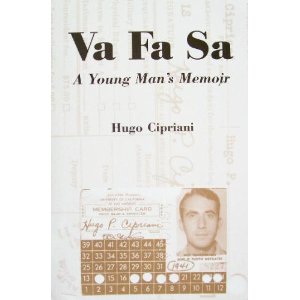
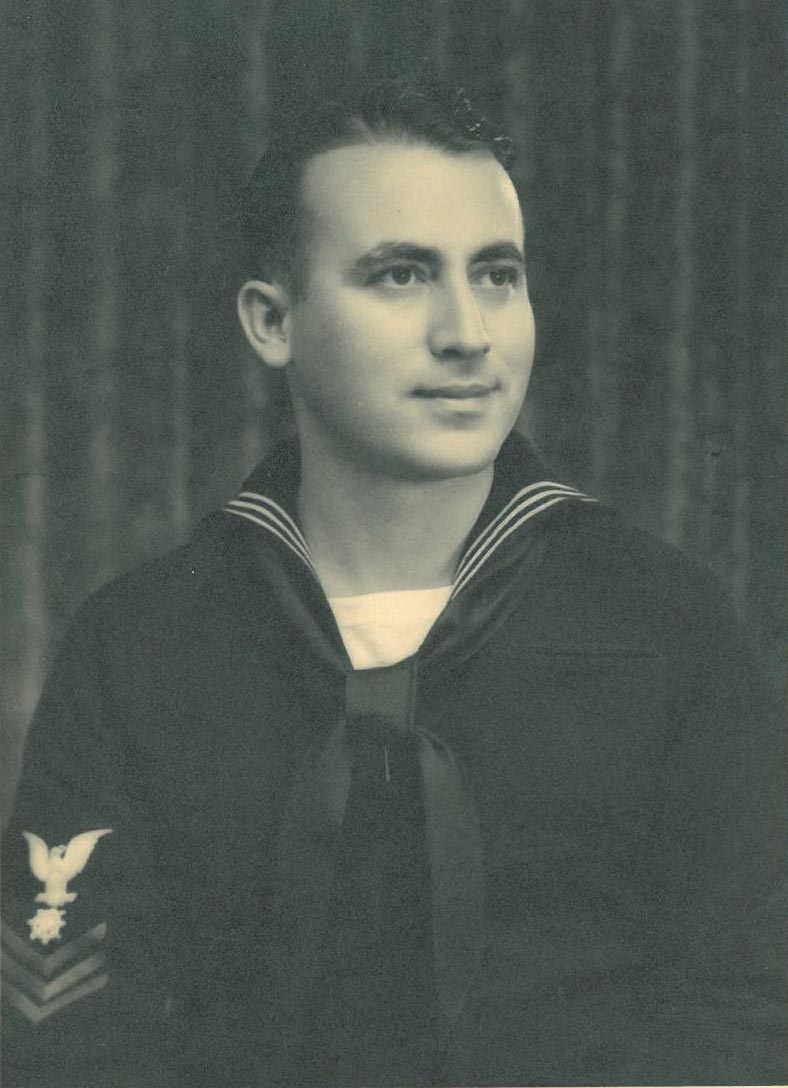
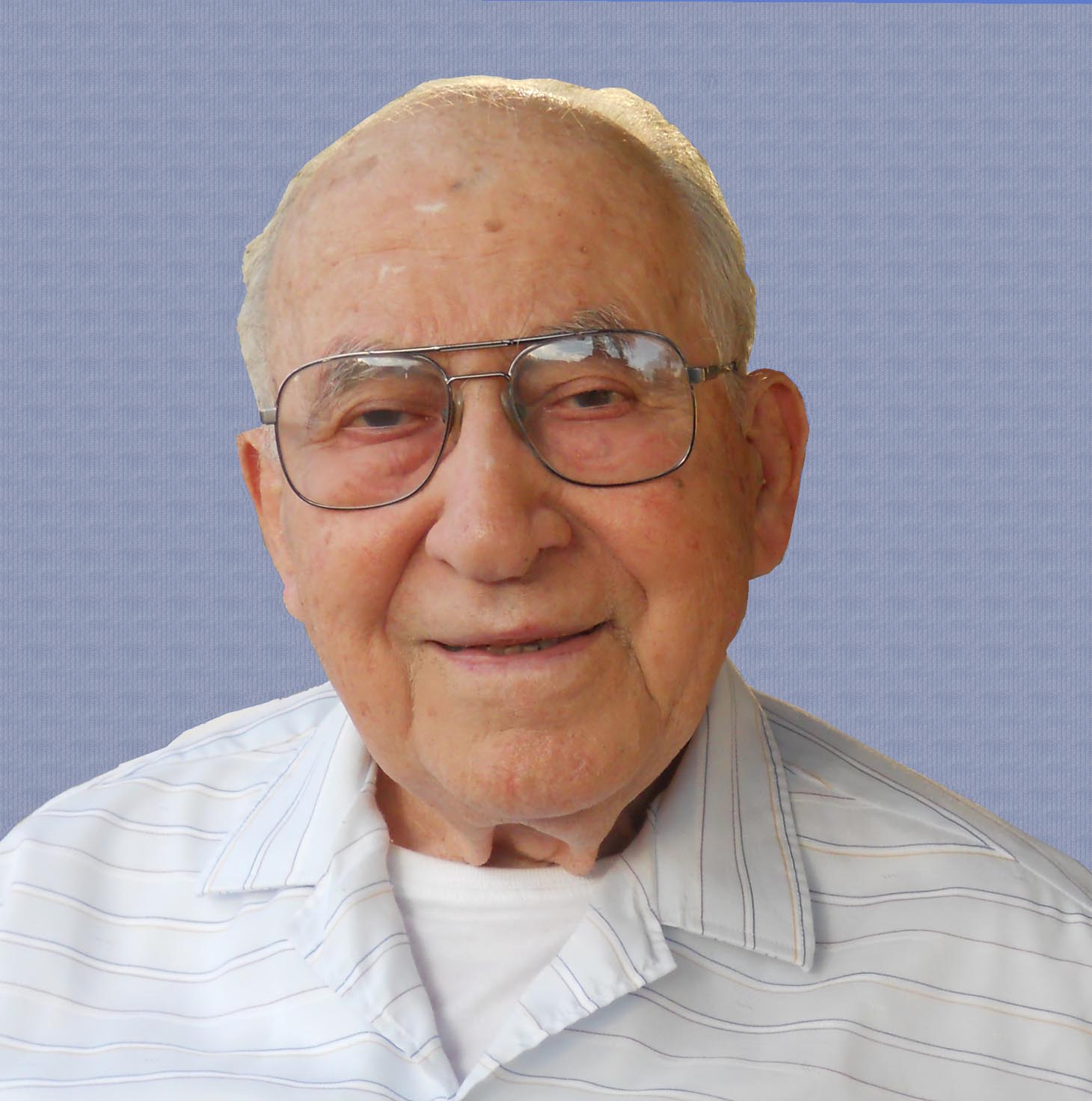
We are honored to have as our final guest on Writers in Residence the indomitable Hugo Cipriani, an inspiration to us all. While many writers worry that it may be too late to start a career, Mr. Cipriani released his first book at 94 years of age, making the rest of us sound like whiners! And, yes, he does get out there and do book signings, including at the Los Angeles Time Festival of Books!
Va Fa Sa” is the name of your first book. What does this mean, and why did you choose this as the title?
The Italian words Va Fa Sa translate simply as “you go, you do, you know”. Struggling to become a student at UCLA, I realized the wisdom of You Go–Courage first, Action follows.
You Do –Confronted by new conditions, you do what you have to do to surmount all obstacles. You Know–With new confidence and knowledge you know why this proverb is true.
Would you tell us what your book is about?
The memoir explains why I left home in 1934 and had to leave again in 1938. My fateful first departure on Sunday, September 9th may strike readers with disbelief. But the second departure on Tuesday, August 2nd, was believable and more significant. My story unfolds with the fateful events that lead me to overriding truths. Infused with courage and a new confidence I surmount hardships in the Great Depression.

Can you tell us how you came to start a new career as an author so late in life?

At age 88, I was diagnosed with cardiac heart failure. My doctor had recommended open heart surgery but I hesitated due to my advanced age and diabetes. With my life ebbing I got a sudden urge to write. I wanted to explain how my leaving home led to Va Fa Sa and my happiness at UCLA.

After typing a couple pages I was rushed to the hospital for surgery — a quadruple by-pass. While convalescing I returned to typing my first chapter, completing it in September, 2001. I was surprised when my grandson, Daniel Lowe, informed me that he put my chapter on his website and I was astonished that it made a “hit” with my family, friends and strangers. They encouraged me to continue writing. Four years later, with 18 chapters completed in 2005, it was prudent to close the memoir with my enlistment in the Navy. Still young at 29, my book’s title became “Va Fa Sa: A Young Man’s memoir”.

Personnel Addendum:

“My writing” began in 1934, after I left home. Writing letters became an obsession. In California, I had “free postage” during my stay in Camp Cummoche and in a CCC camp. I wrote profusely to family, relatives and friends and later, even more so, while at UCLA, Lockheed, and in the Navy. In writing those letters, I now realize, I began the writing of my Va Fa Sa memoir.

Note from WinR: You can find Va Fa Sa at Amazon.com, Independent Bookstores, and Barnes & Noble.

Interview with Author Hannah Dennison

Hannah Dennison is the author of the Vicky Hill mystery series. Like Vicky, Hannah was an obituary writer for a small English newspaper before crossing the pond to try her hand at screenwriting. Fortunately for us, she switched to long-form narrative and a mystery writer was born!
Welcome Hannah!

Now that your third book is in print, does the writing process come easier to you, or is it more difficult to keep a series fresh?

I love this question. It couldn’t be more timely! For me, it is just as hard meeting a deadline with my fourth book—due mid March—as it was my first. If anything, the pressure is worse because I want the book to be better than the last one! Keeping the series fresh is always a challenge but having a “season long mystery” (to borrow a TV phrase) is a useful. Vicky’s ongoing story arc is how to deal with her criminal parents who are increasingly encroaching on her life. Having Vicky gradually mature as a young woman also helps. She starts off being somewhat “naive” in the romantic department but as time moves on, Vicky starts to grow up.

Your books each revolve around an eccentric English event—snail racing and hedge jumping to name two. Were these sports popular when you lived in England, or have you had to dig to find these gems?

I came across hedge jumping completely by accident. I overheard a conversation in a restaurant between a couple that was fighting over “Charlie’s ridiculous hobby.” Eavesdropping – which is what we writers do best—I learned that Charlie had an obsession for jumping over hedges. His enthusiasm was so great that weekends were spent scouring the English countryside for suitable specimens—a neat, box privet, a comfortable, springy laurel or the deadly blackthorn for Charlie to leap over. My editor liked the idea so much, I thought, well, I’m English (and eccentric by default) so I wondered what other sports American readers would not know about. Once I started digging, I was stunned by the unusual sports my fellow countrymen enjoyed—hedge cutting, Naked Farmer competitions, worm charming, bog snorkeling, flaming Tar Barrel racing and Morris dancing. The list is endless. These plot backdrops inadvertently provide my series with a “hook.” A sort of … good grief, let’s see what she’s writing about this time.

Each book adds new depth to your protagonist, Vicky Hill, as she learns about betrayal and disappointment. How do you keep developing her character and yet retain the naivety and optimism that makes Vicky so loveable?

I’m happy you feel she is developing. Walking that fine line between naivety and being TSTL – (too stupid to live) is a constant challenge for me. But like everyone, Vicky has to grow up at some point. I hint at the battles she faces ahead on dealing with her father’s criminal activities but most of all, each book does bring her nearer to the Great Seduction scene that I am very excited about writing. I’ve even thought about conducting a reader survey to see who that lucky man might be!

Gipping-on-Plym is the village where Vicky currently resides. A product of your imagination or based on someplace you know?

I lived and worked in the real town of Tiverton as an obit writer for the Tiverton Gazette—no surprises there—so yes, it is an amalgamation of Tiverton in East Devon and Totnes in South Devon (an area that has taken recycling to a new level). I have included a few places that do exist. How could I not set a scene at The Nobody Inn pub in Doddiscombleigh. They have a delicious menu for anyone who might find themselves in Devon.

I love how you bring forward minor characters from previous stories and spotlight them in later books. How do you determine which minor characters are worth expanding on?

To add to your earlier question, expanding some of the minor characters really helps keep the series fresh though I don’t know which ones will make the cut ahead of time. They tend to tell me. They also don’t do as they’re told. I have a loveable paramedic called Sexpot Steve who is infatuated with Vicky Hill and who I have tried to kill off in both Scoop! and Expose! … but he just won’t listen!

The “Cabot Cove Syndrome” says that if you have a small village and you keep killing the residents off or jailing them for murder, soon the village will be empty. On the other hand, you don’t want the new guy in town to be the killer or victim every time. How do you avoid this writing pitfall?

Yes. That’s a hard one. One thing I’ve learned about human nature is that everyone has some kind of skeleton in the closet. As my plots are character driven, it is immensely satisfying to exploit those skeletons. I’ve always given every one of my characters – major or minor – a secret. It can be as small as being an obsessive collector of vinyl records to someone who has an unreasonable dislike of hedge jumpers. Sometimes a newcomer can survive but simply act as a catalyst. I feel that making the familiar characters fascinating can at least help soften the inevitable.

Tell us what’s next for you.

My fourth book—THIEVES!—will be out January 2011. I will be submitting a proposal to my publisher, Berkley Prime Crime, for two more in the series. I’d love to see our Vicky through her first real romantic encounter especially as one of her greatest fears is dying an old maid, “pure and unsullied.” I am determined to do everything in my power to make sure that won’t happen!

Thanks so much for having me today Jackie.

Vicly’s latest exploits can be found in “Expose!” at bookstores and online, and a review of the book is at Jackie Houchin’s New & Reviews. If you’d like to know more about Hanhah, visit her website.

Learning the Basics "Chapter One" at a Time Part 2

WinR MK Johnston brings you Part 2 of her tutorial, “Learning the Basics “Chapter One” at a Time. MK is a former print and television journalist and served on the board of the Alameda Writers Group. She is a current member of that group as well as Sisters in Crime and WIWA.

Note: Have you suffered from opening-itus? Did you come up with a brilliant solution? Or did you scrap your first line/paragraph/chapter and begin again. Tell us about it!

PART 2 – OPENINGS

Your opening line is the most vital sentence in your novel. If you can hook the reader with it, half the battle is won. The same is true for your first paragraph and chapter. Think about how you browse for a novel. How much do you read before you decide whether to continue, or look for something else? For most readers, it rarely exceeds three pages, and many will decide sooner. The same holds true for agents. If the beginning isn’t strong, nothing else matters.

WAYS TO OPEN YOUR STORY

Openings usually fall into one of these general methods:

1. Mid-action

2. Setting a scene that’s about to change

3. A statement or explanation

Most stories open mid-action – the cop drives to the crime scene, the single mom juggles work and child care, the newlyweds argue on their honeymoon. When writers suggest you begin your novel at the latest possible moment, this is what they mean. Using this method gives the reader a sense of joining a story already in progress. The idea is to get us engaged right away and weave in the details as you continue.

Setting a scene that’s about to change is common in mysteries, thrillers, and war or crime stories. It opens with a picture of everyday life, often so routine it’s almost cliché, or else with a description of a person or place. It may appear calm on the surface, but the reader must sense that this tranquility is about to explode, maybe literally. Think of a little girl in the front yard playing with her puppy just before the pervert snatches her; the woman at the dressing table, dressed for a special evening, deciding which dangly earrings she should wear as the gloved hand wraps the wire around her throat; the travelogue description of an exotic city that takes us along to the market place, where the bomb is about to go off. The key is to imply an approaching change and hold off the revelation just long enough to generate tension, but not so long that the reader begins to scratch her head and wonder where this is going.

The third method may be the most difficult to pull off because it is cerebral rather than dynamic. Using a statement or explanation employs a form of narration, either a nostalgic “I can remember” musing, a description, or a problem. The speaker can be your protagonist, or a narrator. Using this method draws the reader in slowly. It must hold our interest much longer until something “happens”, but if what is said intrigues us, we’ll keep reading.

Let’s see how these methods can be incorporated into the opening of a story:

PREMISE:

Barry, a hard luck kid turned homeless teenager, has always tried to do the right thing. After a chance meeting with a crime boss, Mr. H, he gets drawn into the man’s organization.

Method 1 –

Barry dives into the street to save a six year old girl from an oncoming car. The girl’s father is Mr. H, and when he comes to personally thank Barry for saving his daughter’s life, he learns that the teen is homeless.

Method 2 –

We follow Barry as he scrapes along, searching in dumpsters for food, wrapping himself in newspapers to keep warm, hunting for bottles and cans to recycle for spending money. As he’s rummaging in a trash can, he encounters a gang of wild teens who chase him through the streets. As the gang is about to close in with their bats and knives, they suddenly flee at the sight of a shadowy figure. Barry recognizes him from his picture in the newspaper – it’s Mr. H.

Method 3 –

Barry explains to us that thirty years ago, when he made the fateful decision to join Mr. H’s crime family, he knew it would play out in one of two ways. Now it’s over, and he’s free. The story commences in a flashback, but the reader has to wait until the end to learn if Barry’s fate was literal (he escaped that life) or figurative (he’s dead). The same would be true if he tells us he’s imprisoned; we’ll have to read the book to find out if he’s literally in jail, or imprisoned by his notoriety, his lifestyle, or something equally symbolic.

Each version introduces Barry in a different way, not only in terms of method, but in our first impression of his character – heroic, vulnerable, or wise. Which method works best? That depends on the theme, where you’re taking the story. If you haven’t figured that out yet, then consider the following:

• Why does Mr. H. offer Barry the position, and why does Barry accept?

• How long does it take for Barry to decide?

• Does Barry accept the offer easily, or is he conflicted about it? Does he say no at first?

• Will he eventually regret his decision? If so, why, and if not, why not?

• How does Mr. H. approach Barry; as a surrogate father, a seducer, or as a business man?

• Will this begin as a tenuous relationship and become closer, or the other way around?

• Are you writing this in Barry’s POV alone, or will there be other POV characters?

Answering these questions will guide your decision.
Now read the opening sentence or paragraph of your novel. Are you satisfied with it? If not, try these exercises:

o Pick a dozen or more books in the genre you write and read their opening paragraphs. Which method did the author use? Which openings grabbed you right away, and why? Which ones didn’t?

o Reread the beginning of novels you’ve enjoyed. How does the first paragraph relate to the rest of the book? Does it set the tone for the story? Does the first chapter mirror the ending?

o Decide which method best describes how your novel begins. Then write a new opening sentence or paragraph using each of the other methods. Which version works best?

o You can break down the exercise even more – write an opening sentence for your story using:

o A generalization

o A surprise

o Dialogue

o Action

o A problem

o Reminiscence

o A description

Use at least five of these methods and rank them from strongest to weakest.

How much description is enough and how much is too much? We’ll explore that next week in ADJECTIVES AND ADVERBS.

Reviews of Pamela Samuels-Young, Shiela Lowe, and Alice Zogg Books

There are so many fabulous books out there, and we’d like to take this Monday to catch up on some reviews for authors who have appeared as guests on our site. We hope you find these reviews helpful. Enjoy!

 Buying Time
by Pamela Samuels-Young
Goldman House Publishing, 2009, $14.95

Review by Jacqueline Vick

Pamela Samuels-Young has written another grip-your-seat-and-hang-on-for-the-ride book. Her chapters, filled with tension and twists, are short and brisk and leave the reader anxious to know what happens next.

In her first standalone novel, “Buying Time”, Samuels-Young introduces a new set of characters. Angela Evans is the bright but socially insecure Assistant U.S. Attorney heading a task force to investigate fraud of the most nefarious kind. The insurance policies of terminally people are being bought up by a company dealing in viatical settlements–they offer desperate people much needed money for their final days. Angela believes the company is pressuring sick people to sign away their policies for peanuts.

Enter Waverly Sloan, a recently disbarred attorney. He needs money to hang onto his materialistic wife, and viatical brokering for Live Now is a lucrative business. At least until his clients start dying ahead of schedule. Suspected of murder, Waverly’s troubles have only begun.

As usual, Samuels-Young’s characters have depth. While there are definite bad guys, many of the characters who are involved in shady activities are layered people, even likeable when they’re not selling crack or embezzling funds. And even when her characters make choices that cause you to scream “Don’t do it!”, their actions are the result of reasoning rather than fortuitous acts to make the plot work.

Samuels-Young is a master at raising the stakes, and just when you think the worst has happened, new complications set in.

Warning. The book begins in a very dark place. The reader is not only dealing with murder, but the hopelessness of terminally ill patients, and that can make for a depressing read. This discomfort is a tribute to Samuels-Young’s skills at creating a believable world, and once the action picks up, you’ll be so focused on the fate of the living characters, you won’t have time to feel sorry for the initial victims.

DEAD WRITE
By Sheila Lowe
Penguin Books, 2009, Paperback $6.99

Review by Jackie Houchin

Sheila Lowe’s latest Forensic Handwriting Mystery delves into the emotionally volatile world of matchmaking and makes anything you’ve watched on reality TV seem frivolous by comparison.

After a guest appearance on a local faux-news show brings her media attention, Claudia Rose receives a job offer from Baroness Olinetsky in New York.

The Baroness, who runs a world-class matchmaking service for the rich and powerful, needs a new handwriting expert. Her previous graphologist “made bad mistakes” and there were “consequences.”

Since a lot of Claudia’s work is for employers looking for good hiring matches Claudia sees how graphology could be helpful in the love-connection business. Still, something in the Baroness’ story makes Claudia hesitate.

Learning that the previous expert was her arch-rival doesn’t help. But a job is a job, and Claudia, who needs some “space” in her relationship with LAPD detective Joel Jovanic, accepts the offer.

In New York, when Claudia analyzes handwriting samples in the baroness’ client files, she finds many markers for violence that her predecessor ignored. Concerned about possible problems, she brings it to her employer’s attention.

Reluctantly the Baroness admits that there’s been a rash of “accidental” deaths among her clients.

Considering her findings, Claudia views the deaths as highly suspicious. But alerting the police is out of the question according to the Baroness, who claims the publicity would destroy her business.

Although Miss Rose says repeatedly that she is a graphologist and not a detective, her impressive investigative skills kick in as she works to uncover the person responsible for what she believes are four murders. But the killer has a lot to lose if caught and is determined to eliminate Claudia first.

Lowe’s list of credible suspects and well-place red herrings keeps us guessing about the villain’s identity till the end, and then, with only a few pages remaining, she delivers one more shocking “Kapow!”

Lowe’s expertise as a handwriting expert gives her books authenticity. From tics, t-bars and twisted loops, to dot grinding and word crowding, readers get a fascinating insider look at the tools and techniques used in graphology. It might even prompt them to look for homicidal tendencies in their own handwriting.

Note: Loyal readers to the series will see one of Claudia’s dark fantasies realized in this book. Hooray!

WRITTEN IN BLOOD
by Sheila Lowe
New York, Obsidian/Penguin, 2008, Paperback $6.99

Review by Jackie Houchin

Forensic handwriting expert Claudia Rose is back in her second mystery, WRITTEN IN BLOOD, and she sharper, tougher and more tenacious than ever. In this installment, Claudia is hired to authenticate the signature on a contested will.

Her client is Paige Sorensen, the widow of a wealthy older man who died following a series of debilitating strokes. His children, a pair of psycho-twins, believe their young and beautiful stepmother forged his signature on the will so she could inherit the estate, which includes the prestigious Sorenson Academy. Paige is headmistress of the school for “emotionally challenged” celebrity children, and wants it to continue. The twins have other plans for the property.

Claudia meticulously follows the prescribed steps to verify the signature on the will, giving readers a fascinating insider’s glimpse of what’s involved in the process. But in the tense courtroom scene that follows, her findings are challenged by the prosecution’s so called “expert.”

Impressed by Claudia’s expertise, Paige invites her to the Academy to speak to the girls about her profession. In class, she meets and is curiously drawn to a deeply troubled student named Annabelle. With Paige’s approval, Claudia attempts to help the girl through graphotherapy – specific hand movement exercises combined with therapeutic music – but before any success can be measured, tragedy strikes.

Claudia is soon locked in a violent maelstrom of greed, jealousy, revenge and murder. Her detective boyfriend is miles away working on his own case and Claudia must use her professional training as well as her wits to stay alive and to stand between the innocents and the monsters that pursue them.

Lowe’s first hand knowledge and experience as a graphologist are evident in her writing. She weaves in the several aspects of her profession – signature authentication, personality analysis/behavior profiling, and graphotherapy – so skillfully that readers are entertained and yet come away with a new respect for the science.

WRITTEN IN BLOOD is a fascinating and complex murder mystery that keeps readers involved and guessing till the exciting climax, and then adds a teaser epilogue to assure them that there’ll be more books in the series.

The Fall of Optimum House
by Alice Zogg
Aventine Press, 2007, $15.95

Review by Jacqueline Vick

R.A. Huber is an unusual sleuth. She’s sixty-something, petite, and as at home on skis as she is in a silk suit. So she’s the perfect choice to help ex-model Iris Camden and her former football star Jeffrey, owners of the exclusive Optimum House—a modeling school, weight loss center, and escape for the elite.

Someone’s been playing practical jokes on the residents of Optimum House. At first the pranks are harmless, such as hiding the principal’s alarm clock, but when a movie star’s diamond bracelet goes missing, Iris thinks it’s time to call in a private detective. There’s also been serious tragedy at Optimum House–the accidental drowning of a maid—and Iris worries about the emotional impact this will have on her clients. After all, they come there for a peaceful escape.

Huber accepts the assignment, but she surprises Iris when she sends someone else in her place. Antoinette “Andi” LeJeune, a young, leggy redhead who once asked Iris for a job, would easily fit in with the modeling students. Andi is thrilled to have the assignment, though she knows nothing of fashion and beauty. She soon makes friends with her roommate Cyrilla and a young health client, Troy.

Andi reports her findings back to Huber regularly, but when Jeffry Camden is beaten to death on the golf course and young Troy is sent to the hospital, Huber comes to Optimum House, personally.

She finds the staff frightened and the clientele uneasy. Parents are pulling the students out, and the high-paying patrons are ready to leave.

Before Huber can unmask the killer, tragedy strikes again. Will she be able to stop a fourth murder? Or will that murder be her own?

Optimum House moves at a quick pace because Zogg keeps her chapters short and crisp. The characters have secrets, some of them startling, and the addition of assistant Andi added depth to the investigation. A perfect book for that holiday flight.

Reviews of Pamela Samuels-Young’s Books

MURDER ON THE DOWN LOW
By Pamela Samuels Young
Goldman House, 2008, $14.95

Pamela Samuels Young knows the law and she knows the mystery-suspense genre. Now, in her third legal thriller, featuring attorney Vernetta Henderson, Young wrestles with a controversial social issue. But it’s not at the expense of her intricate plotting, memorable characters and intense action that readers have come to expect.

A series of apparently unconnected murders of affluent African-American men in Los Angeles has citizens as well as the police department on edge. From her preliminary investigation, LAPD Detective J. C. Sparks suspects a deeper motive than racial prejudice, but someone in the department has told her to back off.

At a funeral across town Vernetta Henderson, best friend Special Moore, sister attorney Nichelle Ayers, and J.C. mourn the death of a close friend, the victim of a different sort of crime. Maya died of AIDS, contracted from her secretly gay husband who got the HIV virus from one of his homosexual lovers… and failed to inform her.

The friends are outraged at how this “on the down low” creep killed Maya and got away with it. Determined to make him pay, they meet together with Maya’s mother to plan their revenge. But Special, who was cousin to Maya, has more in mind than a wrongful death suit. After publicly exposing the man’s lifestyle and accusing him of murder, she secretly – and viciously – begins to harass him. But later, when she is arrested and charged, it’s for much more than harassment.

As Vernetta and Nichelle research for the civil suit and Special’s criminal defense, they find a shocking link to the citywide murders. Suddenly J.C.’s investigation is hot again, and time is running out for Special.

With shades of James Patterson’s Women’s Murder Club, the four women use their skills to find justice in a world of deceit, addiction, prejudice and fear, where there are many motives and opportunities for murder.

Whether in the courtroom, the police station, a church or a private bedroom, Young writes with a confidence that comes from first-hand experience and extensive research. And her passion for injustice and the issues that effect women is seen strongly in MURDER IN THE DOWN LOW.

Firm Pursuit
By Pamela Samuels-Young
Kimani Press
January, 2007
$14.95

Reviewed by Jackie Houchin

Los Angeles attorney, Vernetta Henderson is on the partner track. She’s a lone black woman in an all male firm; but her case record is good and the managing partner is her mentor, so she’s confident she’ll make it.

That is, until a highly visible case she’s working on goes bad. Her client is a powerful company who is being sued by the employee they dismissed for sexual harassment. Traditionally they have refused to accept settlements, so Vernetta rejects an extremely low offer, believing she could easily win in court. But when new evidence surfaces, the company suddenly wants her to settle…at any cost. She is unable to negotiate a settlement with the new opposing counsel, and is dismissed from the case.

Her chances at partnership fade even more when a self-important junior associate circulates slanderous rumors about her. And when she most needs support from her husband, he has problems of his own with a sexy young secretary who’s making threats.

Despite stress in her career and personal life, Vernetta is more troubled about several discrepancies in her former client’s case. At the insistence of her best friend – but against her better judgment – she reluctantly begins to investigate. What she discovers puts lives in danger, including her own. Can she “argue” her way out of this one, or will she become just another statistic?

Pamela Samuels-Young has written a fast paced, legal thriller with a fascinating plot and a strong female protagonist. She’s packed her book with tense, dramatic scenes and flashy, memorable characters. She is just as comfortable writing legal dialogue (without sounding pompous) as she is writing sexy “sister talk.” And she handles touchy African-American workplace issues with style.

Whether reading Bonnie’s chilling short story, “Intervention”, or perusing her novel, “Remember to Breathe”, you’ll meet characters who can make you laugh and cry at the same time. So we asked her:

Your writing is known for its emotional depth. Is it difficult to reach this far into your characters? Are their experiences drawn from your own, or are you simply a master of empathy?

Gee, you mean all those years of therapy haven’t been wasted?

Seriously, I’ve always been fascinated by human nature. What motivates people? What makes them happy or sad or mad? Several years ago I decided to take a few psychology courses to deepen my insight, so I enrolled in L.A. City College and went through basic psych, physiological psych, and abnormal psych.

Warning: do NOT take abnormal psych unless you’re prepared to imagine you’re suffering a range of symptoms – kinda like watching “House” and then thinking you have the Disease of the Week.
And of course I’ve read tons of books and articles on the crafting of characters and getting into their hearts and heads. One of the best is Linda Seger’s Creating Unforgettable Characters – it’s not just for screenwriters.

Since I’m blessed (?) with a hyperactive imagination, I use it to put myself in a character’s shoes and tune in to how they might be feeling in a given situation. One good piece of advice I stumbled on in my copious how-to reading is that the key to showing a character’s emotions is to tell the reader what the character’s thinking, because thoughts reflect feelings. And combined with physical gestures and actions, it’s more effective than simply typing, “Fred was mad.”

Many of my characters’ experiences and feelings are, of course, drawn from my own life, but mangled and modified to suit the story. I’ve lived long enough to experience a fair range of human emotions: I’ve lost loved ones to illness and accident, I’ve been married and divorced, I labored in the trenches of Corporate America, and all those things have contributed to my slightly warped perspective on human nature. And as some smart writer (I think it was Philip Roth) once said, “Nothing bad can happen to a writer; it’s all material.”

Can it be painful to experience a character’s grief or rage, or to remember when I felt that way? You bet. But when I come across a scene I’ve written that brings tears to my eyes, or makes me want to slap another character’s face – or makes me laugh – then I suspect I’ve tapped into something real, something maybe even universal – and that’s one of the biggest rewards of being a writer.