Mind-numbing Numbers

by JILL AMADIO

What is it like to sell 10 million copies of your books? I found it mind-boggling until I recently watched the Jackie Collins documentary. She sold 500 million copies of her 32 novels. But, hold on, Barbara Cartland wrote 723 romances and sold over a billion of them.

I recently interviewed Jane Green, who wrote a chick lit book “for fun” and went on to pen 20 more romance novels. She’s the author who sold the 10 million copies, and every title was a New York Times bestseller. I guess the numbing numbers are all relative when you consider that many other writers’ sales are up in the stratosphere, too.

The way the book business is these days sudden fame and fortune can appear out of nowhere, even after you’ve given up hope.  J.K. Rowling wrote and self-published two books, one a Harry Potter, that went nowhere until a publisher picked it up from a bin in a secondhand bookstore as something to read on the train, as the story goes.

Fifty Shades by EL James, was also self-published as an eBook on an obscure Australian online blog site, The Writer’s Coffee Shop, until the novel was scooped up by traditional publisher Random House. The erotic novel subsequently sold 15.2 million copies. It is now a trilogy. Back in 2016 the original online publishers, two ladies, were fighting over royalties of the books in a Texas courthouse. It appears to be a tangled web as the plaintiff was a school teacher who claimed she was “done wrong” as Eliza would say, regarding her share of royalties. Which begs the question: why should the Coffee Shop blog owners receive royalties rather than a one-time fee?  My research failed to answer such questions, especially one on how Texas and the Coffee Shop, based in a Sydney suburb, became embroiled in a lawsuit in the U.S.  It sure sounds like a jolly interesting plot for a murder mystery.

Do I find it daunting to read about such sales? Do you? Should these figures encourage us to keep writing? Happily, I feel neither jealousy nor resentment. The more people are reading, the more they will buy books, although one is tempted to throw a few sex scenes into the mix.

Since moving to Connecticut and just an hour from New York City that throbs with best-selling authors, I feel inspired to keep going and in fact, I am resurrecting the Tosca mysteries between marketing the memoir I just published. It will be great to get back to creating a chilling murder after writing about aviation art.

There are book clubs galore here along the Eastern seaboard with Very Earnest Members, although I am still searching for one that discusses crime novels. Sisters In Crime Conneticut is a start.  I know there are some book clubs online but after two years locked up I am relishing attending meetings in person.

As for book sales, I think of the tortoise and the hare and I plod along, blessed by the fact that I am able to write as freely as I wish without worrying about numbers or having a publisher breathing down my neck. A local writer said his Big Five publisher made him change his POV twice, and another writer confessed she was forced to rewrite her ending to suit the Highly Important Editor. Thomas Wolfe is famous for arguing incessantly with his editor, Maxwell Perkins, about cutting his classic Look Homeward, Angel down to a reasonable word count from the 333,000 words Wolfe is said to have written, but it worked and the result was magnificent. It continues to sell today. As it should.

Your thoughts on the big bucks?


.

Image by kalhh from Pixabay 


Endings: the Good, the Bad, and the Ugly

by Jackie Houchin

There are many kinds of endings – your years in school or college, work (retirement), the last chemo session, the last crumbs in the cookie jar, cereal box, coffee canister, friendships and marriages, letters, books (reading or writing), payments on your home or car, a movie episode or series on TV, the ink in a favorite pen, a headache or toothache, a lovely vacation, a calendar, a blog.

Some endings you are grateful for, some leave you sorrowful, nostalgic, or simply inconvenienced. And with some, you are relieved and satisfied. You brush your hands together, stand up tall, and walk away. You’ll “think about it another day,” as Scarlett O’Hare so famously said.

**

Of course, this is a blog by and about writers, writing, publishing, marketing, and even for some (like me) reading and reviewing books.  Writers LOVE to type “The End” on a manuscript, be it a lengthy tome, a 3,000-word short story, or a 600-word review. There is a sense of accomplishment. And as writers, we hope those endings appeal to our readers and keep them coming back for more.  As readers, we want to be surprised, entertained, and yes, satisfied that the bad guy got caught, the mystery was solved, or the romance was sealed with a kiss and a ring.

Can you think of a book whose ending you absolutely loved for whatever reason? Mention it in the comments below.  Or one that was the worst ever – so bad that you threw the book across the room, or directly into the trash?

If you are a writer, how will you end the book (story, article, review) that you are working on right now?  Can you give us a hint?

**

A few of us here have discussed the demise of this blog at the end of 2022.  Oh, we still have some good posts lined up for you from us six “Writers In Residence” as well as a helpful guest blogger in November.

We would LOVE to hear your thoughts. Don’t just “massage our egos” but tell us outright how you feel. Would you miss reading this blog each Wednesday?  Or is it with a big sigh and resolute determination that you log on, once again?

If we vote for another year of The Writers in Residence, what topics would you like to see upcoming?  Are there guest bloggers you would love to hear from?  Is there someone you’d especially like for us to interview?  Would you enjoy some kind of quiz or giveaway (be specific!)?

Interests change, we know, and readers have less time to visit and perluse blogs. Maybe there are other venues that pique their interests or grab their attention. Is that you?  If so, please be honest.

What say ye? Please leave thoughts and suggestions in the comments section, or share them with any of us on Facebook.

The End

Photo by Ben White on Unsplash

..

A Debut Mystery and Using Cornish Cuss Words!

by Jill Amadio

Mystery writers are often asked how they decided to choose not only the genre but the plot itself. My revelation for my debut novel came about when I moved to the United States. I’d been a reporter and figured on continuing in that profession forever. I loved it. However, life has a way of setting one down a different path than planned.

Balboa Island isn’t too shabby a place to live if you are banished to the colonies as I was. As a result of my divorce conditions I agreed to live in America with our three children.  A job on a magazine brought me to Balboa Island that is part of Newport Beach on the edge of the Pacific Ocean, and the ritziest coastal town in Orange County, California. A virtual village, quaint and stunningly beautiful, Balboa is a place where nothing untoward ever, ever happens. Many of the beach “cottages” are stylish mansions with yachts bobbing at private docks and everyone goes to bed at 10 p.m.

In order not to confuse readers or tourists, I moved a few streets around for the plot and changed the name of the island to a fictional one in my book, “Digging Too Deep” naming it Isabel Island. When I lived there crime was non-existent except for an occasional purloined bicycle.  In short, the perfect setting for a murder or two.

After ghostwriting a crime novel for a Beverly Hills financier who never read books but wanted his name on one I decided mysteries were for me. I’d created a series character for him hoping we’d continue, and I was paid, to boot. But he declined after a lengthy book tour including a cruise while signing my book. Thus I plunged into writing my own first mystery.

A terrorist plot seemed the most shocking event to wake up the islanders but after meeting many authors who were writing violent, brutal thrillers I changed my mind.  In my bones are the books of Agatha Christie, Ruth Rendell. M.C. Beaton and P.D. James whose gentler murders fit more into the solve-the- puzzle, cat-and-mouse games I prefer rather than the graphic police procedurals and private detective plots so popular in the U.S.

Like most authors I bring a few personal experiences to my work and I wanted to establish a series character so my amateur sleuth, Tosca Trevant, is from Cornwall, UK. I’d dumped her onto Isabel Island where she grumbles about the lack of rain.

I asked poet and professor Pol Hodge in Redruth, Cornwall who teaches Cornish, for a supply of Cornish cuss words for my main character. He sent two pages of unbelievably descriptive and naughty ones – just as well my modified translations aren’t too precise — and I got to work on plot and setting.

I joined Sisters in Crime and its offshoot called Guppies, the Great Unpublished.  I also joined Mystery Writers of America, another national organization. Both offer excellent workshops and speakers but as we all know it’s the bum-on-the-chair that puts the words on the page.

After the book was polished I paid a professional editor to give it a look. He said I’d broken most of the Rules of Writing a Mystery; I had not followed The Formula publishers insisted upon; I was too free-wheeling with my character’s humor, and I should start all over again. Fat chance.

Next, there was the dreaded Perfect Query to be created.  Queries to agents must be specific, beautifully shaped, and, again, adhere to their golden rules as posted on their web sites. This time I paid great attention, followed the submission guidelines, reluctantly whittled my prose down to the required three paragraphs, and made up a list of unsuspecting agents.

There must be five thousand of them in America. The list was so lengthy I went to sleep reading it. I finally got it down to 60 agents after spending weeks checking each of their websites, a time-consuming exercise but no way around it at that time although today one can define the search.  I queried six simultaneously. I’d already talked to two agents – at $50 a pop – at writers’ conferences which were so frequent one’s bank balance is constantly depleted.

No takers. I queried 45 before giving up. Many sent me form letters of rejection, two asked for chapters before telling me No Thanks, and several never answered at all. It was depressing but my fellow writers urged me to keep submitting. So I next tried the small presses that can be approached directly without an agent. However, a few of those too have strict rules – no violence, no cruelty to animals, no swearing (Oh, dear), and no sex. That last bit was easy. I was British, after all.

After three editors rejected me the next on my list was Mainly Murder Press. Frankly, I fell in love with the name. It stated exactly and honestly what it published, and was on the East coast where all the big publishers were located, a fact that appealed to my snobbish instincts.  MMP only produced 12-15 books a year and its site stated “Absolutely No Submissions Until Late Spring.” Gosh. It was only January and I was impatient. Then I thought, well, it may be January on the East Coast but I was in Southern California and the daffies were already nodding their lovely yellow heads. I sent my query in, claiming that where I live it was already late spring.

The very next day MMP asked for chapters, then the full manuscript, and one week later I’d signed a 3-book contract. They thought my book was “wonderful”!  All of their editors and beta readers (a new term to me) loved “Digging Too Deep,” and I was in heaven.  I liked the book cover design although I requested the flag of Cornwall be added unobtrusively somewhere; the font was fine, and I waited anxiously for their digital ARC I was to send out to reviewers.

MMP did not promote nor send ARCs out early but it did distribute through Ingram, which was peachy, I thought. This publisher also did not give author advances but paid standard royalties and mailed catalogues to 650 independent U.S. bookstores, and to 4,000 public libraries.

Alas, the ARCs arrived barely a week before the paperback was published. Most reviewers refuse to accept such tardiness so I missed out on many reviews. However, I did my best. I thought that the bookstore on my island would order dozens of copies. Ha! I took the book in, asked them to stock it, and asked, May I please have a book signing here?

Again, I’d done everything wrong.  I was told, No, no, you have to create some buzz first! So I called a couple of local editors I knew. After they reviewed the book in their newspapers I took the clippings to the bookstore, thrust them into the owner’s hand, and said, Right. Here’s your buzz. I also sent the book to my UK hometown bookstore but never heard a word.

Nevertheless, I lined up more signings. One of the most enjoyable was at the annual Gathering of the California Cornish Cousins, a sly move I admit, but I sold a lot of books.  Thinking outside the box I also joined the Cornish-American Heritage Society which holds annual Gatherings along with a pasty-toss contest. Heaven forbid a pasty splits open and covers someone in meat and potatoes. My second mystery, “Digging Up the Dead,” earning a review from author Anne Perry.

So, while I am still ghostwriting biographies for a living having just finished a memoir and moved to Connecticut, Tosca’s third adventure is underway. After all, I have only used up nine Cornish cuss words.


Now About that Memoir…

By Gayle Bartos-Pool

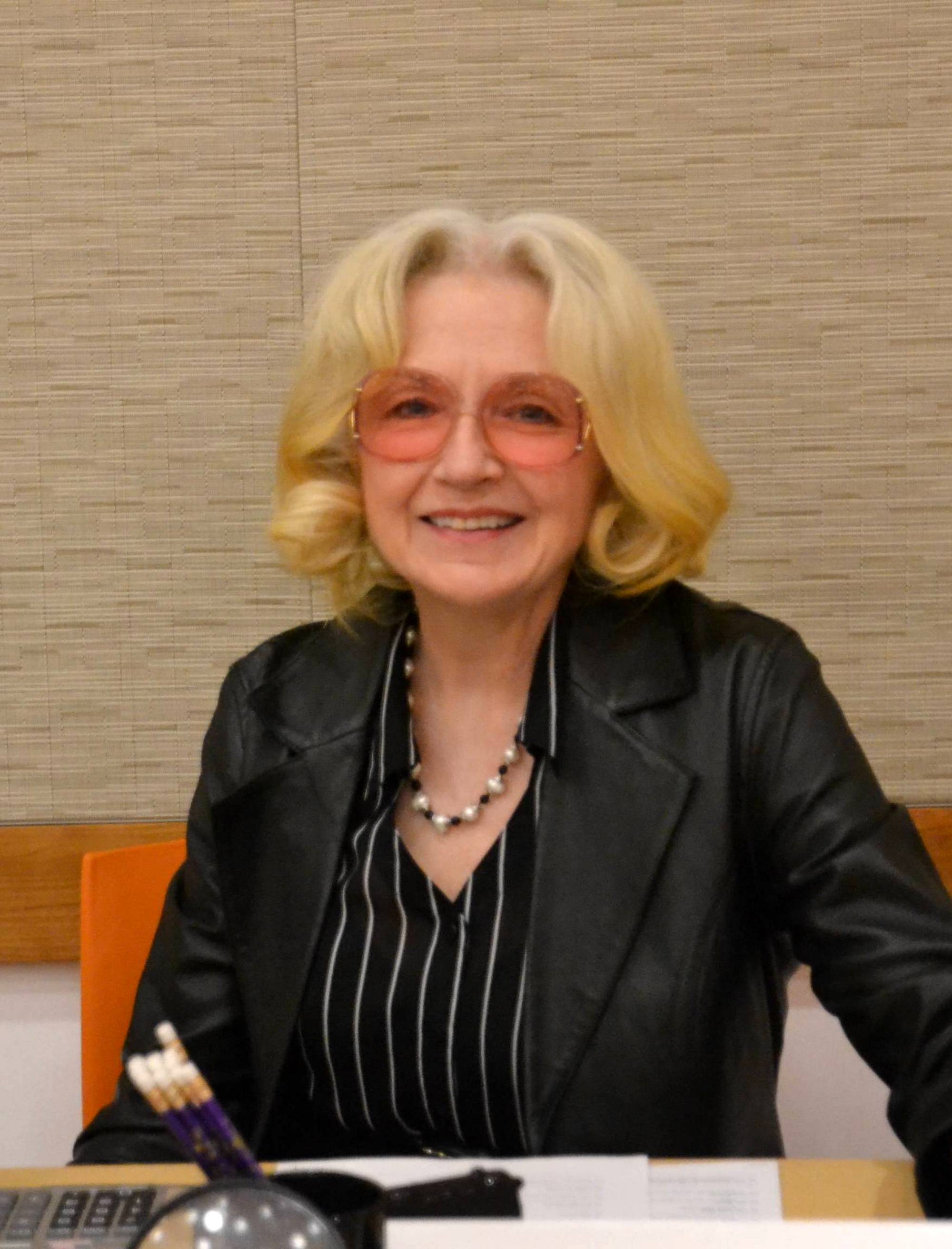
GlendaleEvent2018cropped

Several of us on The Writers-in-Residence blog have been mentioning writing a memoir recently. Maybe you’re thinking that it must be associated with people “of a certain age,” but frankly, younger people haven’t lived through nearly as many adventures, ups, downs, and life in general as we folks in that upper age bracket, so we do have more to write about, but that doesn’t mean you can’t start writing your own memoir now and keep adding to it.

But it is true that older folks have survived it all, the good, the bad, and what life threw in our path to make us who we are. And you want to know something else? We all learn from those things. I’m sure you all have stories to tell. So why not let others laugh and cry and say Wow! along with you? Your friends and family will enjoy reading about your life because they weren’t with you every step of the way unless you’re a Siamese twin. Younger people can actually learn things when they read how you became you.

And there is a bonus in there, too. You will start to understand who you are as well. There will be some things that you recall, maybe some that have been buried for a while, that will let you reevaluate your life and see that you were and still are a very interesting person. You won’t be able to change the past, but you can see what you did along the way. If there were problems in your life, what did you do to overcome them? Not everybody starts out a Rockefeller.

As for John D. Rockefeller, the head of one of the wealthiest families in America, he started out as a bookkeeper at sixteen in Cleveland in 1855. He sold and moved produce during the Civil War to the Union Army. He was an abolitionist, voted for Lincoln, and after the war when the need arose switched from food stuffs to oil. An oil glut had some refiners dump the excess in rivers and streams, J.D. used the surplus to run his refineries and turned the rest into other by-products. He wasn’t going to pollute the waterways or waste all that product. He founded Standard Oil. The guy had a philosophy: He said God had provided the opportunity to earn all the money he had made; J.D. didn’t mind making it. He also wanted to save as much as he could and give away as much as he could. He was a philanthropist and considered one of the richest men ever in American history. There were downsides to his businesses, but he did a lot of good in his life. But that is what makes people so interesting no matter what they have in the bank. The good, the bad and the interesting.

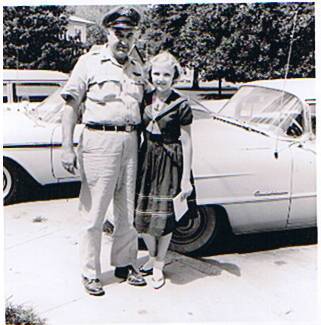
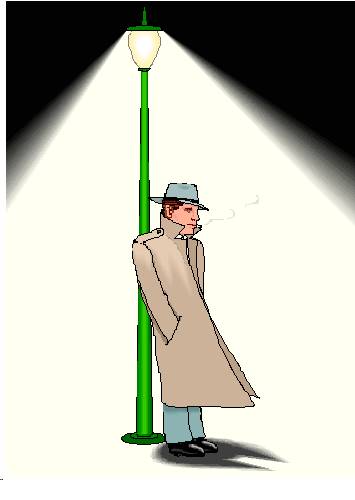
dad-and-meI had the opportunity to have a father in the United States Air Force. We lived on the island of Okinawa when I was 5-7 and in France when I was a teenager. I went to a boarding school that provided an education that exceeded my first year in college in Memphis. I switched schools because I wanted to actually learn something. To pay for my college education, my wonderful dad sold some of the French clocks he and my mom had collected while we lived in France. I worked a year between my sophomore and junior years in college as a private detective to earn money myself and to see what the world was all about. That was probably as important as the four years in college. After I graduated from Rhodes College in Memphis and worked another year to earn money, I moved to California. I took acting lessons so I could learn about the movie industry and especially how to write dialogue because I wanted to write for TV or the movies. I had a few scripts looked at, but none sold. I decided to write mystery novels instead. There is even a story in how that came about, but you’ll have to read my upcoming memoir to see how that happened. It’s a good story. Oh, I went on to write 24 books. I guess all this preparation in life laid the groundwork for that little endeavor.

I have a little saying that I wrote a while back:

It doesn’t matter what you don’t have; It’s what you do with what you have.

OLYMPUS DIGITAL CAMERA

I have been working on my memoir for nearly a year. I have over 40 scrapbooks with bits and pieces of my life from the time I was born to today. I even have my mom’s family album that I redid when it started to fall apart that has the family’s history in pictures. What a joy to look through it now with my niece and her kids. My brother and I still recall old stories and some of them are in the book. It’s full of pictures and memorabilia and stories of my family and me. It shows how I became who I am.

So when you are writing your memoir, even if it takes you a few years to go through your scrapbooks or diaries or old photographs or spend a few holidays with family and talk about old times, discover who you are and share it with others. We all have a story to tell. Frankly, we are all interesting. Write On!

From PI to Mystery Writer

A Do-Over Dilemma

by Miko Johnston

If you had your life to live over, would you change it in any way? And assuming the answer is yes, how – or more to the point,  how much – would you change it?

For me that’s not a philosophical question. I actually have the opportunity to change an entire life, only it isn’t mine. It’s my characters’.

When CAB, the publisher of my first three books, ceased operations, the rights reverted to me. I was fortunate to find a new publisher to accept all four books and after some consideration, decided to focus on getting the new book published before reissuing the previously issued novels.

I received my original publishing contract on July 4, 2014 for the first two books of the series, already completed, and first right of refusal for the next two. Six years later to the day, my new publisher notified me that proof copies for A Petal In The Wind 4 were on order. While I wait, I’m preparing the earlier three books.

I knew of two mistakes in the series that needed correcting: an engagement ring that mysteriously wound up on a different finger and a currency that wasn’t in use at the time the book took place. I felt certain I would also find some spelling, grammatical, and punctuation errors as I reread each book in order, which I did and noted for correcting. I also found something I didn’t consider – signs of an inexperienced writer.

If you’ve read this blog over time, you may recall me saying my writing has matured along with my character Lala, and that statement became abundantly clear as I returned to my earlier works.

As a novice working on my first book, I lacked confidence in my writing and kept many aspects simple. I didn’t understand how to show the passage of time, other than having the characters go to bed one night and wake up the next morning. The idea of carrying a story over weeks, let alone years, felt too complicated, so my first book takes place in the course of a week and has a linear plotline. Very few scenes have more than three characters interacting, and I kept the language simple. One reader, who gave me my worst review ever (two stars), said, “The book reads like it was written by a child.” My protagonist was a child, “almost eight”, so I relied on subtext to convey some plot points. I will admit I found some of it overly dramatic.

By the second book, I felt able to carry the main story over the course of several months and comfortably handle scenes with four or more characters. In it, Lala is a young woman who’s about to experience romantic love for the first time. My reaction was similar to the first book – very dramatic, perhaps overly so. If I were writing it today, I would have been more subtle, but does the heightened drama and verbal hand-wringing reflect the character, even if it no longer reflects my writing?

Now I’m faced with a dilemma similar to what Lala faced in that book, when a ruse she devises backfires and she finds herself trapped. She observes what she fears most “…hadn’t taken place—yet. It could be stopped. She could stop it.” Ultimately she does.

What about me? Should I correct the mistakes and leave the rest as is, or make changes to the book to reflect the writer I am today? I can do it, but it doesn’t mean I ought to.

Have you found yourself in a similar situation? What did you do? What would you advise me to do?

What will I choose to do? Keep posted.

Miko Johnston, a founding member of The Writers in Residence, is the author of the historical fiction saga A PETAL IN THE WIND, as well as a contributor to anthologies, including “LAst Exit to Murder” and the soon-to-be-released “Whidbey Landmarks.”

The fourth book in her series is available now.

Miko lives in Washington (the big one) with her rocket scientist husband. Contact her at mikojohnstonauthor@gmail.com

.

Here’s a Novel Idea: Read a Book

By Gayle Bartos-Pool

The first person whoever wrote a book didn’t have libraries and bookstores full of previously penned tomes to read and enjoy and from which to get inspiration to perhaps write their own story. They had a story to tell and wrote it. We, centuries later, don’t have any excuses. We not only have books, but plays, movies, and television shows overflowing with plots, characters, scenery, and dialogue to stir our imagination. Not that writers can’t get ideas from life around them, but sometimes actually reading something from another writer lets us know it can be done. Even a lousy book can inspire a would-be writer to say: “Hey. I can do better than that.” And they do just that every day. But first we have to pick up a book.

You might have friends or family members who recommend a particular favorite. You can always go to a bookstore, if there are any left, and ask the bookseller to point out a few books in a particular genre. Long ago I worked at a Waldonbooks in the Glendale Galleria in California. People were always asking where a particular section was. Mysteries, romance, kid’s books, self-help, religion. At times I would point out a favorite of mine. The store would set out best-selling books on tables in the front of the store complete with advertising paraphernalia from the publisher. We didn’t have to do that with the romance novels. They sold like hotcakes and we would sell down to the wall by month’s end. Unfortunately, the book chain decided they didn’t want to carry lots of books in all kinds of genres, only the top selling books. Obviously they didn’t know avid readers liked to pick out a ton of books of their choosing, old titles, newer ones, or try something different. Oh well. Management must have been more interested in their bottom line than their customers. I love capitalism, but I also love books.

But what can a writer or would-be writer do to get inspiration? They need to ask the one person who will have the most influence on their work what they prefer reading? And who is this veritable font of information? Themselves. Writers usually write what they like to read. But they need to read other writers in their chosen genre to see what’s out there. This means the good, the bad, and the: “Oh, God! That’s the best thing I ever read.” kind of book.

Now I might have loved mystery books and mystery shows on TV, but the first book I wrote, though it took a while to get published, was a disaster novel, CAVERNS. Then I spent ten years writing a spy trilogy, but that wasn’t finding a publisher, either. Then my wonderful husband, Richard, said these immortal words: “You used to be a private detective. Why don’t you write a mystery novel?” Ah!

But what did I know about writing a mystery? My spy novels were based on History and a bit about my dad’s life in the Air Force. I added a ton of facts and made up the rest. But a mystery. I needed to know more about the genre since mystery writing wasn’t like a stand-alone novel where the writer defined the parameters. What did I do? First, I joined Sisters-in-Crime in Los Angeles and Mystery Writers of America so I could hear what other mystery writers did. Those two groups had many famous speakers at their meetings who talked about their writing. I read their books and the books of some of the members of both groups. I was learning.

Since a writer needs a place in which to set a story, a few came up. First, I got called to jury duty. Then Richard got called. He went to downtown Los Angeles the same day the O.J. Simpson jurors were called. He came home and told me about the media circus down there with news cameras, helicopters, and microphones. My first Gin Caulfield book was called Media Justice about a high-profile case, the media’s influence, and Gin gets called to jury duty.

Next, Richard and I got free tickets to the Santa Anita Race Track. That became the opening of the second mystery in the Gin Caulfield Mystery Series, Hedge Bet. But then something else happened. I read another book.

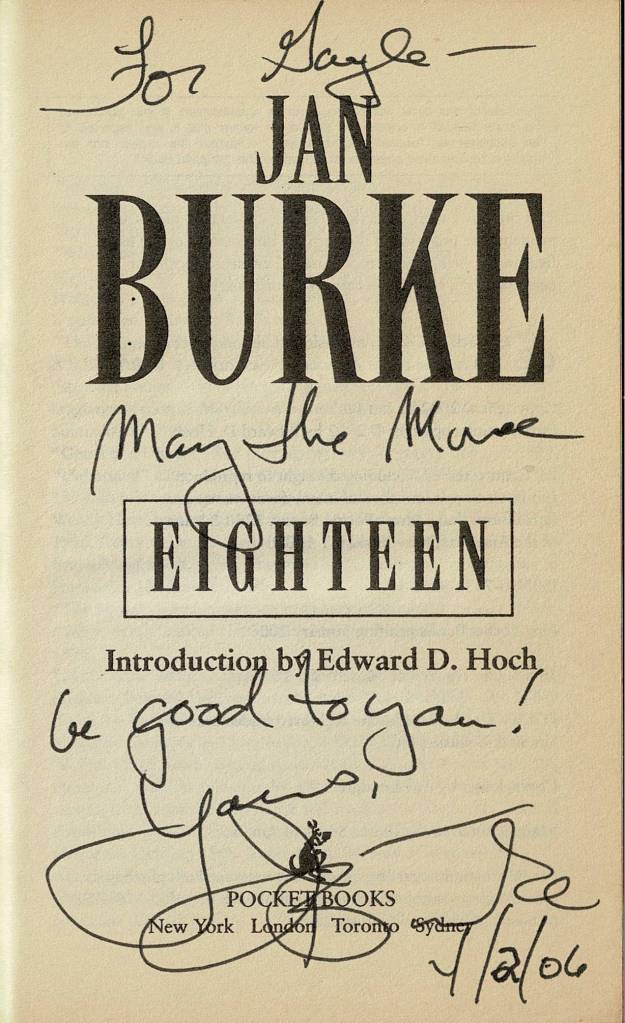
This book was Eighteen by Jan Burke. Jan was a member of Sisters-in-Crime and I picked up her book of short stories. I loved the book and the idea of writing a short story. So I wrote one about an ex-mobster turned private detective. Then I wrote another one about the same guy. Then Sisters-in-Crime announced their latest anthology and asked for submissions. The theme of the anthology was landmarks in Los Angeles. I had to write another story, but it just so happened Richard invited me downtown for lunch one day and we went to the Bonaventure Hotel. That landmark ended up being the one I used in my story and the story got in the anthology. I thanked Jan for her inspiration.

Now I had three stories with the same character. The reviews for my story in the anthology were good, so I wanted to write more with him as the lead. So I wrote a couple more, but can you do a book of short stories all about the same guy?

Then I met another writer. I had read a lot of his books as a teenager and read even more after I met him. His name: Ray Bradbury. Jackie Houchin, a fellow Writers-in-Residence member and good friend, and I went to the opening of his play Fahrenheit 451 since Jackie reviewed plays for a local newspaper as well as an on-line paper. She got to bring a guest, me, but I thought I should review the play, too, since we got in free. On Opening Night Mr. Bradbury mentioned the time he had a batch of short stories he wanted to have published so he asked his publisher what he should do with them. The publisher told Ray to link the stories together which he did and The Martian Chronicles was published. So I had my answer from a writer who got the job done. I linked the Johnny Casino short stories together like a TV series.

I have three books in the Johnny Casino Casebook Series out there now thanks to inspiration from my husband, a book by Jan Burke, some advice from one of the best writers in history, Ray Bradbury, a chance to review Ray’s play because of a friend, and the fact I liked mysteries and wanted to write them.

Ninety present of the books I read are mysteries. I have learned a lot from each one: What to do and what not to do. And also what I can do better. But reading sure made a difference in my writing. If you are a writer: Read On!

Designing A Book Cover

by Miko Johnston

Gayle, Madeline and guest blogger Elaine Orr have all recently posted about the importance of research in writing. It reminded me that the subject has been a constant theme on our website. Not surprisingly, I’d been preparing one on the same subject.

My entire Petal In The Wind saga is about to be reissued under a new imprint, in addition to the publication of my fourth book in the series. When my publisher ceased operations, I regained the rights to the three earlier novels, but not the cover art. New covers had to be designed. I knew an excellent source for that which resulted in two sets of designs from which to choose; I’ve put a sample of each for the newest book below. The good news: they were both fantastic. The bad news: they were both fantastic. I couldn’t choose.

I asked others for their opinion, which were divided. Part of me thought I couldn’t go wrong with either, but another part thought, “nah, too easy.” I researched the subject online and found some good information, but I still couldn’t decide which set I wanted.

I needed expert advice. Then it dawned on me who could give it.

In the town where I live, there’s a small independent bookstore, one of the perks of living in a tourist town (another is having many quaint shops, over a dozen restaurants, and two wine bars despite a local population of 2,000). While bookstores are not unique, many visitors stop in to ours to seek out local authors, a great way to discover new writers.

Despite its small size, Kingfisher Bookstore holds a remarkable array of books, everything from popular fiction to DIY hobby and craft books, history and historical fiction, books for kids of all ages and their grownups. When customers ask for local authors, Meg, the owner and book buyer, takes them to a table she’s dedicated to their works of fiction, memoir and poetry, and “hand-sells” them based on the customer’s interest.

I brought my computer to the store and asked Meg if she’d give me her opinion. She looked at both cover sets and asked me, “Is your book historical fiction or romance?” I told her the former. Then I got a valuable lesson in cover design.

Apparently, you can judge a book by its cover. Everything, from color to images to font, sends signals to a potential reader as to what the book is about. Meg guided me through the many subtleties of cover design, which helped me decide which to choose for my series.

For the record, I chose the set represented by the left image, above, but with a Serif font. Here’s why. The novel begins in the last year of World War I and takes the characters through the mid-twenties, with fascism on the rise. Darker images indicate the gravitas of the times. The “ripped paper” cover with the woman implies a love story more than historical fiction, which would be misleading to a reader looking for romance. Sans serif fonts fit better with modern writing. The Didot font I’ll use has a very 20th Century feel that’s neither too modern or too old-fashioned.

Will all this fuss over the cover guarantee sales? Probably not, but at least readers who purchase my book might have a better sense of what they’re getting.

Have you ever considered asking someone who owns or runs an independent bookstore for advice on any aspect of marketing, from what’s selling to what your cover should look like? I would strongly recommend it. And while you’re there, thank them for supporting writers. Where would we be without them?

*

Miko Johnston, a founding member of The Writers In Residence, is the author of the historical fiction saga A PETAL IN THE WIND, as well as a contributor to anthologies, including “LAst Exit to Murder” and the soon-to-be-released “Whidbey Landmarks”.

The fourth book in her series is scheduled to be published later this year. Miko lives in Washington (the big one) with her rocket scientist husband. Contact her at mikojohnstonauthor@gmail.com

What Makes a Good Mystery Series for the Author and the Reader?

While Jackie Houchin is on vacation (in Spain or France now) we have another Guest Author. (Thank-you, Elaine!)  Jackie hopes to return with her next scheduled post of June 8, 2022. 

by Elaine L.  Orr

Like most writers, I put words on paper because if they don’t get out that way I risk screaming on a street corner. I get those words into print because I think others would enjoy them.

When readers like the characters, they may clamor for more. Even if they don’t initially, we think they will. I consider several things when I start a new mystery series.

  • Is the setting or main topic interesting enough to keep exploring? My first series (the now twelve-book Jolie Gentil series) is set at the Jersey shore because I love small, east coast beach towns.
  • Can I connect to the characters enough that readers can too? This doesn’t mean does an author like the characters. Some of the most relatable ones are the evil ones.
  • Is the life of the main character part of a profession or hobby that makes discovering a lot of big problems (or bodies) realistic? Jolie is a real estate appraiser and runs a food pantry, both things that bring her into contact with many people in varied settings.
  • Is there a plan to have the characters evolve over time? If lead characters have the same strength and foibles in every book, they become predictable. That sameness can lead to reader (and writer) boredom.
  • Is the plan to write a certain number of books, culminating in a big event or life transition? Or can stories continue as long as the author has ideas?

I’ve used the Jolie Gentil Series as the example, so I’ll do it one more time. I envisioned three books, with the third being called Justice for Scoobie, a childhood friend she reconnects with as an adult. Wrong. He’s the favorite character. Couldn’t bump him off and have Jolie solve that crime!


My primary hobby is researching family history, a natural one seeing that I like U.S. history and finding my families’ links to it. Why did I never make that an important focus of a series? Beats me. It is now.

The Family History Mystery Series has the fourth book underway. And that tells me something. My other two series (River’s Edge and Logland) have three books each. I may start fourth books, but why not jump into them immediately after the third?

Did I not think through the first four questions above? I did, and I have more ideas. What was missing? Passion. Hard to define, but it’s another key component of writing. You have to REALLY want those characters’ lives to continue if they appear in a series.

Have you noticed I didn’t use the word plot once in this piece? All good stories need more than a beginning, middle and end. They need a compelling story and conflict, which doesn’t necessarily mean action. In mysteries, there are a myriad of criteria. For example, if the villain pops up at the end with very little role or foreshadowing, reviews may not be kind.

As in all books, plot matters in a series. But the characters (and their evolution) matter most. Main and even ancillary characters need to contribute to the story and have a clear purpose.

Reader reactions matter, but they can’t determine how your characters develop. They can, however, inform what you do after book one. Take them seriously, but don’t make them your guide.

Finally, enjoy writing the series. If you don’t, the series could meet an untimely demise.

###


Elaine L. Orr writes four mystery series, blogs, keeps in touch with lots of family and friends, and tromps cemeteries looking for long-dead ancestors.

To learn more, visit https://www.elaineorr.com.


WHAT ARE WE MISSING?

by Rosemary Lord

Well, we wanted this year to be different, didn’t we? Or, did we yearn for The Good Old Days of yore: that is pre-Covid? The truth is somewhere in the middle…

For two years, we did as we were told. Because lives were at stake, and livelihoods, businesses, careers. We shut our lives down, following the Covid-19 restrictions and guidelines. We did the best we could.

But now, not a moment too soon, our world is supposed to be opening up again. How’s that working for you?  What are you looking forward to doing, as we get out and about, and happily smile, bare-faced, at each other again?

I don’t know about you – but, as a writer, I really missed all the Writers’ Conferences and workshops. It was a chance to get together with other creative folk from all over the world – writers, publishers, readers, agents – and swap ideas, hear news and get inspired and encouraged once more. Whether we attended in person, participated via Zoom or read about them online. They always made me feel part of a wonderful, chattering, writers’ world.

I loved reading about the conferences far, far away. Especially those sublime Writers’ Retreats in Tuscany, Greece or exotic Eastern islands. I mean, who could afford them? Even the fare to get there? Who had the time? But it was lovely to dream about the ‘one day’ when I had several best-selling novels under my belt and knew I could write the expenses off from my high taxes of my super-successful writing career.

I also learned a lot reading the descriptions of the workshops offered. Some were business oriented, about how the super-successful J. K. Rowlings and her compadres ran their writing careers or businesses. Or had someone else do it for them. Details of the foreign retreats that focused on creativity had descriptions to drool over: the leisurely, dreamy days gazing out on azure seas, after early-morning yoga, while tutors encouraged one to write something totally different from your usual style. To explore hidden corners of our creative brains. A morning of writing would be followed by exquisitely prepared meals of fresh, local produce served ‘en-plein-air’ – in the shade of exotic trees. To be followed by an afternoon saunter to the local farmers’ markets – or perhaps a wine tasting at the local vineyard. Then return to your room for more writing time. That is, if you could stay awake after the food and wine! Those Writers’ Retreats are VERY expensive. But one can dream…

In reality, most of us attend the more practical conferences packed with workshops on different styles and genres, on research, on editing our tomes, and how to wrap them up with an eye-catching pitch. There are always plenty of opportunities to attend agent-lead workshops, meet publishers and editors and hear lectures by our successful counterparts. I used to love listening to the late (and dearly missed) Sue Grafton. She always made us feel that if she had achieved success, then we could surely do the same. Charlaine Harris, Ann Perry, Lee Child, Ann Cleeves, Michael Connelly – I could go on – but they all spoke at these numerous events, sharing advice and encouragement for their fellow writers.  

These conferences are held all over the country. The annual Bouchercon was to have been in New Orleans last year but was cancelled due to Covid. I was looking forward to that! This year it’s in Minneapolis in September. The last Left Coast Crime Writers Conference I attended was in Vancouver in 2019. The 2020 one in San Diego was cancelled. This next one is in Albuquerque in April. (I’m moderating a panel of screenwriters and guesting on a panel about Twentieth Century Mysteries.) Malice Domestic Conference will be in Bethesda late April. The International Thriller Writers Conference is June 4th in New York.

There are several more venues for writers to hone their craft and network, including the California Crime Writers, which has gone online due to Covid precautions. There’s something for every writer: romance writers, mystery writers, screen writers, short-story writers. Something for every genre, for beginners and experienced career writers, traditionally published, self-published and ‘pre-published.’ In that long conference weekend, we get to talk about writing, meet new writers and readers, new agents and publishers, learn the latest forensic discoveries, the new publishing trends – and often, we plot how to commit murders that we can get away with! For our literary characters that is, of course! Although that discussion might well happen at the Romance Writers Conference occasionally, too!

            Many conferences were in California, so I would drive to them. But other times I would fly to another state.  Apart from the fun adventure of travelling to these events, I’ve missed seeing my writer friends from all over the globe. We laugh a lot, catch up on each other’s lives, eat a lot – and the bars are always open. It’s a lovely escape – before we return home to our usually isolated writing life. There, we scribble in our endless notebooks, then tap away on our computers – until we have something completed that we can discuss at the next writers’ conference.

So, we’re back to normal – sort of.

Almost.

Yay!

What part of your writers’ life did you miss most these past couple of years?

A Final Pass

by Miko Johnston

By the time you read this, the manuscript for my fourth A Petal In the Wind novel will be back from the editor and ready for its final draft before publication. Prior to sending it out, I made several passes through it, each time searching for ways to fix or improve the work.

In my first pass I searched for everything from formatting issues to misspelled words. In light of recent events I found parts of the story, which I’d begun writing in 2017, had become dated. I couldn’t gloss over a worldwide pandemic and the social rifts that emerged from political discord. Several new characters who were introduced in chapters written years before the book’s conclusion sounded too generic; I’d gotten to know them better as the story progressed and that needed to be reflected in their earlier dialog and mannerisms.

Other passes looked for repetition, excess verbiage, more precise word choices, missed misspellings, lapses in logic, and incorrect information. With that complete, I sent out my manuscript, anticipating a few more changes would be needed once I heard back from my editor. I took advantage of the wait time to put together all the additional material needed – logline, book blurb and synopsis.

Whenever I have to write marketing stuff, I cringe. It’s not what like to do, or do well. I view it as a necessary evil, and many authors I know feel the same way. However it must be done, and the good news: I’ve found an advantage to it beyond promoting the book.

When you have to encapsulate your x-hundred page novel into a one page summary, then a teaser for the back cover, and finally a one-sentence logline, it forces you to look at your theme in a different way. Gone are the long passages of prose, the snappy dialogue, the transitional scenes and flashbacks. You must have a laser focus on what your story is about – what you’re trying to get across to the reader in terms of theme, character, and plot. By doing so you sometimes will see aspects of the story that are important but may not have been shown in a compelling or complete way. So beyond my editor’s input, I saw that I wasn’t done with my revising.

I came to that conclusion when I encapsulated a 106,500 book into a few paragraphs with just a hint of where the story will eventually wind up. I had my external conflict and internal struggle, and pointed that out in my blurb. Then I wrote my logline:

Amidst the social and political upheaval in the aftermath of WWI, a woman who identifies as an artist marries the love of her life, but chafes at being relegated to wife and mother.

We can understand the difficulties a woman would face in giving up her career to marry and have children, especially at a time when such notions weren’t as accepted as they are today. But had I adequately shown how she feels in the book? Could I have made it not only clearer, but on a much deeper level?

The logline hints at the deeper issue. What she rails against is not being married to the man she loves, or even the challenges of motherhood. It’s losing her identity, having to see herself as only a reflection of her husband and children. When Jane marries John Doe, she becomes Mrs. John Doe. Her baby’s mama. She’d wonder—what happened to Jane?

My character Lala is a woman who’s accomplished a great deal despite her youth. She not survived the trauma and hardships of WWI and kept her family alive, but her home town as well. It’s described as a factory town north of Prague throughout the series. In America we’d call it a company town, where a single business – in this case a furniture factory – provides the economic base of the area.  Circumstances force her to take charge of the factory and oversee its conversion to wartime production. If it had closed, which it nearly did, the town would have been devastated. How can someone like this ignore all she achieved, the skills she developed, the talent that resides within her?

When the manuscript returns from the editor, I will review the comments and make some changes, including a few of my own – adding more layers of my character’s internal dilemma to the story. Then I’ll probably rework my promotional material. A writer’s work is never done…that is, until it goes to the publisher.


Miko Johnston, a founding member of The Writers In Residence, is the author of the historical fiction saga A PETAL IN THE WIND, as well as a contributor to anthologies, including “LAst Exit to Murder” and the soon-to-be-released “Whidbey Landmarks”. The fourth book in her series is scheduled to be published later this year. Miko lives in Washington (the big one) with her rocket scientist husband. Contact her at mikojohnstonauthor@gmail.com